Category Archives: The Most High

Dilemma: Staying Focused on God

Staying focused on God is one of the most universal spiritual struggles, not because God is distant, but because distraction is loud; Scripture shows this pattern from Eden to the wilderness (Genesis 3:1–6, KJV).

To stay focused, the believer must first guard the mind, for the enemy battles through thought before behavior, and we are commanded to “bring into captivity every thought to the obedience of Christ” (2 Corinthians 10:5, KJV).

Focus on God begins with hunger—“Blessed are they which do hunger and thirst after righteousness: for they shall be filled” (Matthew 5:6, KJV), showing that spiritual focus is fueled by appetite for Him.

Prayer anchors the wandering heart; Jesus modeled intentional withdrawal to pray so that purpose would outweigh pressure (Mark 1:35, KJV).

Meditation on the Word is commanded day and night, because consistency prevents drifting—“Then shalt thou make thy way prosperous, and then thou shalt have good success” (Joshua 1:8, KJV).

Speaking the Word out loud shifts the atmosphere and focus, for faith responds to hearing—“faith cometh by hearing, and hearing by the word of God” (Romans 10:17, KJV).

David strengthened his focus by declaring God’s greatness to his own soul—“Bless the LORD, O my soul, and all that is within me…” (Psalm 103:1, KJV).

The tongue has life-directional power, so spiritual focus requires verbal alignment—“death and life are in the power of the tongue” (Proverbs 18:21, KJV).

Spiritual discipline protects focus; Paul compared the walk with Christ to intentional training, not aimless movement (1 Corinthians 9:24–27, KJV).

Fasting removes spiritual dullness and weakens fleshly noise, allowing God’s voice to regain center stage (Matthew 6:16–18, KJV).

Peter lost focus when fear overshadowed faith, sinking only when his eyes left Christ, reminding us that emotions must never outrank our gaze (Matthew 14:29–31, KJV).

Worship recenters focus more quickly than worry derails it, because God inhabits the place where He is exalted (Psalm 22:3, KJV).

Staying focused on God means rejecting double-mindedness, for an unstable mind cannot sustain spiritual direction (James 1:8, KJV).

We must also guard what we watch and absorb, knowing the eye is a gateway—“the light of the body is the eye…” (Matthew 6:22, KJV).

The believer remains focused by walking in obedience even when understanding trails behind, trusting that God orders steps, not explanations (Proverbs 3:5–6, KJV; Psalm 37:23, KJV).

Focus is fortified when believers surround themselves with those who also seek God, for company shapes continuity (Proverbs 27:17, KJV).

Memorizing Scripture protects focus in moments where the physical Bible is not present, following Christ’s example in spiritual combat (Matthew 4:1–11 where Jesus repeatedly said “It is written…”, KJV).

Staying focused also means rehearsing God’s past faithfulness, because remembrance is resistance to doubt (Lamentations 3:21–23, KJV).

Daily surrender keeps God in view; Jesus taught we must deny self and carry the cross continually, not occasionally (Luke 9:23, KJV).

Even when the heart feels pulled, focus is restored by returning to first love, guarding devotion above distraction (Revelation 2:4–5, KJV).

Spiritual focus is not attained by emotional force, but by covenant decision—choosing God repeatedly until distraction gives up, mirroring Ruth’s resolute declaration (Ruth 1:16–17, KJV).

The Word must not only be read but spoken, written on hearts, and repeated from mouths until our internal world obeys heaven’s voice (Deuteronomy 6:6–9, KJV).

The believer stays focused by clothing the spirit with God’s armor daily, for focus unprotected becomes focus attacked (Ephesians 6:10–18, KJV).

Focus on God must be a lifestyle, not a response plan, because a prepared believer cannot be a panicked one (Psalm 119:11, KJV).

Refusing distraction means sometimes standing alone, like Elijah who listened for God not in noise but the still small voice (1 Kings 19:11–12, KJV).

Staying focused means speaking God’s Word over circumstances, even when the world speaks louder than Scripture (Psalm 107:20, KJV).

The mind focused on God becomes the mind kept by God—“Thou wilt keep him in perfect peace, whose mind is stayed on thee…” (Isaiah 26:3, KJV).

Focus is strengthened by obedience and weakened by open compromise, shown when Lot’s divided vision led him too close to Sodom (Genesis 13:10–12, KJV).

A believer remains focused by choosing God’s approval over human applause, rejecting pride that seeks visibility over obedience (Galatians 1:10, KJV principle).

God must be spoken of constantly, not silently followed only inwardly, because testimony is focus spoken (Psalm 66:16, KJV).

Staying spiritually focused requires renewing the mind, replacing the old worldview with God’s blueprint (Romans 12:2, KJV).

Distraction grows where devotion shrinks, so the key is never feeding what fights your focus while starving what fuels it (Colossians 3:1–2, KJV principle of setting affections above).

Temptation is defeated by spoken Scripture, modeled by Christ Himself—He fought distraction with declaration, not silence (Matthew 4:4,7,10, KJV).

Staying focused means loving God not halfway, but wholly—“with all thy heart, and with all thy soul, and with all thy mind” (Matthew 22:37, KJV).

Clarity grows from Scripture saturation; confusion grows from spiritual starvation (Hosea 4:6, KJV warning principle).

To stay focused, you must stay filled, because an empty spirit is a wandering spirit (Psalm 81:10, KJV principle).

Staying focused on God means choosing God again at every crossroads, because focus is a series of decisions, not a moment of arrival (Deuteronomy 30:19, KJV choose-life command).

A focused believer becomes unshakeable because their foundation is a Person, not a season (Psalm 62:5–7, KJV).

Focus is kept when believers walk by Spirit, not flesh, letting God lead the lens of the heart (Galatians 5:16, KJV).

The final secret to staying focused is staying surrendered—God does not fight for a throne already occupied by self, but He defends the one yielded fully to Him (Exodus 14:14, KJV principle of stillness and trust).


References

  • The Holy Bible, King James Version. (1611). Cambridge Edition.
  • Washington, T., & Watson, J. (2023). Spiritual Discipline and Scriptural Internalization in African Diasporic Faith Practice. Journal of Biblical Psychology, 12(2), 44–60.

How to know God’s Voice…

Speak, God, for your servant is listening.

Hearing the voice of God is one of the most transformative experiences in the life of a believer. It is not mystical, strange, or reserved for a chosen few—Scripture shows that God speaks to His children, guides them, warns them, comforts them, and leads them into truth (John 10:27). To discern His voice, we must cultivate spiritual sensitivity and a lifestyle surrendered to His presence. This process is both beautiful and intentional, built on relationship, obedience, and quietness before the Lord.

One of the foundational ways to know God’s voice is recognizing that His voice always aligns with His Word. God will never contradict Scripture. If the thought, idea, or leading goes against biblical truth, it is not from Him (Psalm 119:105). The Word is the standard, the filter, and the mirror by which we evaluate every impression. This is why the psalmist says, “Thy word have I hid in mine heart, that I might not sin against thee” (Psalm 119:11). The more of God’s Word that is hidden in our hearts, the easier it becomes to discern when He is speaking.

Spending time in Scripture is essential because it trains the spiritual ear. When you read the Bible consistently, you become familiar with the tone, character, and rhythm of God’s heart. His Word shapes your discernment and sets a foundation for recognizing His direction. Just as sheep learn the voice of their shepherd through daily relationship, believers learn God’s voice through daily exposure to His truth (John 10:4).

Prayer is another vital doorway for hearing God. Prayer is not just talking—it is communion. Many believers pray passionately but never pause long enough to listen. After you finish pouring out your heart, you must also say, “Speak to me, Lord.” In the stillness that follows, the Holy Spirit brings clarity, conviction, ideas, or reassurance (1 Kings 19:12). Listening is a spiritual discipline that requires silence, patience, and expectation.

A major key to knowing God’s voice is slowing down. Many people miss God because they move too fast. Rushing leads to confusion. God often speaks in the quiet, not the chaos. When you eliminate distractions—phones, noise, people, busyness—you create space for God to guide your thoughts. Psalm 46:10 says, “Be still, and know that I am God.” Stillness is not laziness; it is spiritual positioning.

Wise counsel is another tool God uses to confirm His voice. Scripture teaches that “in the multitude of counsellors there is safety” (Proverbs 11:14). When you feel God is leading you, speak with people who are strong in faith, spiritually mature, and rooted in Scripture. They can provide confirmation, correction, or clarity. God often uses others to echo what He has already spoken to your heart.

Obedience is one of the clearest ways to train your spiritual hearing. When you obey God in small things, your ear becomes sharper for big things. Ignoring God repeatedly dulls spiritual sensitivity. Jesus said, “If any man will do his will, he shall know of the doctrine” (John 7:17). In other words, understanding God’s voice grows when we walk in obedience.

One of the greatest ways people miss God is by expecting His voice to always be loud or dramatic. Sometimes God speaks through peace, sometimes through discomfort, sometimes through a closed door, and sometimes through a gentle whisper. We must be spiritually flexible—ready for God to speak in whichever way He chooses.

Remaining open to hearing God requires humility. You cannot approach God with a hardened heart or with your own agenda. You must be willing to surrender your desires and say, “Lord, not my will, but Yours be done” (Luke 22:42). A humble heart is fertile ground for divine direction.

Another way to stay sensitive is by guarding your spiritual environment. The wrong people, toxic relationships, and negative influences can drown out God’s voice. What you consume—music, media, conversations—affects your clarity. Purity of heart sharpens discernment (Matthew 5:8).

Spiritual consistency is key. Weekend faith will not produce weekday hearing. Establishing a rhythm of prayer, worship, Scripture reading, and reflection trains your spirit to recognize God’s guidance quickly. The more consistently you seek God, the more naturally you will recognize His voice (Jeremiah 29:13).

Fasting also sharpens spiritual perception. When you deny your flesh, your spirit becomes more alert. Fasting quiets earthly cravings and heightens sensitivity to the Holy Spirit’s whispers (Isaiah 58:6–11).

One of the most overlooked aspects of hearing God is gratitude. A thankful heart is open, clear, and full of faith. Gratitude shifts your focus off the noise and onto God’s presence. When your heart is postured in thanksgiving, you become more aware of divine leading (1 Thessalonians 5:18).

God speaks through peace. Colossians 3:15 says, “Let the peace of God rule in your hearts.” The word “rule” means “act like an umpire.” When God is speaking, He brings a deep sense of peace—even if the instruction challenges you. If something brings confusion, panic, or turmoil, it is not from God (1 Corinthians 14:33).

He also speaks through conviction. Conviction is not condemnation; it is divine correction that pulls you toward righteousness. The Holy Spirit uses conviction to guide you back to God’s will (John 16:13). Ignoring conviction makes His voice harder to recognize over time.

God speaks through opportunities. Open doors and divine timing are ways He confirms His words. When God is directing you, He aligns circumstances, timing, and resources. What He ordains, He sustains.

He also speaks through burdens. Sometimes God puts a burden on your heart for prayer, a person, a mission, or a calling. This inward pull is often a signal of divine leading. When you feel a strong, consistent spiritual urge, pay attention—it may be God prompting you.

Journaling is a powerful tool for tracking how God speaks. Writing down dreams, impressions, Scriptures, and moments of clarity helps you identify patterns in how the Lord communicates with you.

To avoid missing God, remain spiritually teachable. Pride closes your ears; humility keeps them open. Stay sensitive to correction, remain flexible to His instruction, and be willing to change course when He says move.

Separation is sometimes necessary. Getting away from noise, people, or environments that cloud your spirit helps you hear with clarity. Jesus Himself withdrew often to lonely places to pray (Luke 5:16).

Hearing God also requires spiritual maturity. You grow in discernment by studying Scripture, applying wisdom, reflecting on past experiences, and learning from both mistakes and victories. Discernment is developed, not automatic.

God speaks through creation, through nudges, through dreams, and through the internal witness of the Holy Spirit. Learning these different channels increases your spiritual awareness.

Above all, you know God’s voice through a relationship. The closer you walk with Him, the clearer His voice becomes. Shepherds do not yell at sheep—they speak in tones the sheep learned through closeness. Intimacy is the key to clarity.

When you live a life that seeks God daily, listens for Him, obeys Him, and filters everything through His Word, you will not miss His guidance. God wants you to hear Him more than you want to hear Him. The more you pursue Him, the more unmistakable His voice will become.

References (KJV)
John 10:4; John 10:27; Psalm 119:105; Psalm 119:11; 1 Kings 19:12; Psalm 46:10; Proverbs 11:14; John 7:17; Luke 22:42; Matthew 5:8; Jeremiah 29:13; Isaiah 58:6–11; 1 Thessalonians 5:18; Colossians 3:15; 1 Corinthians 14:33; John 16:13; Luke 5:16.

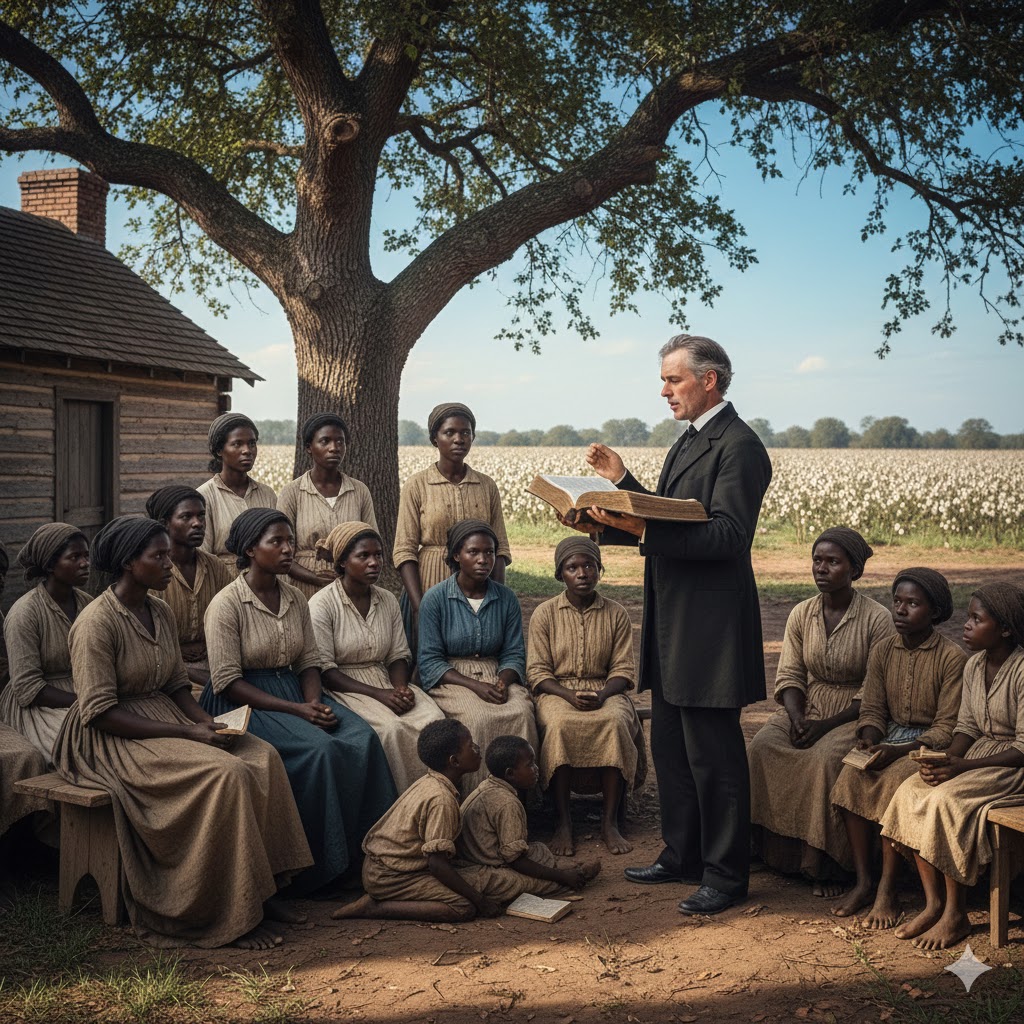
The Bible Series: What was the false Christianity used to control enslaved people?

During the transatlantic slave trade and the centuries of bondage that followed, enslavers in the Americas constructed a false version of Christianity designed to pacify, manipulate, and dominate African people. This was not true biblical faith but a political weapon deliberately engineered to uphold racial hierarchy, economic exploitation, and social control. Enslaved Africans quickly recognized that the Christianity of the slave master contradicted both Scripture and the spirit of the God of justice, yet this distorted theology was imposed on them through law, violence, and psychological manipulation.

The “Slave Bible”: Christianity Rewritten for Control

Slaveholders created an edited version of Scripture often called The Slave Bible (published in 1807 by the Society for the Conversion of Negro Slaves). This Bible omitted as much as 90% of the Old Testament and 50% of the New Testament.

Removed sections included:

  • The Exodus story
  • Passages about freedom and liberation
  • Scriptures against oppression
  • Texts about God judging unjust rulers
  • Lines affirming Israel’s identity, dignity, and divine purpose

Left in were:

  • Scriptures about obedience
  • Passages about servants submitting to masters
  • Verses promoting patience in suffering

It was a theological tool of psychological enslavement.


White Supremacist Christian Doctrine

Slaveholders used a twisted theology that claimed:

  • Africans were “cursed” (misusing the Curse of Ham)
  • Slavery was God’s will
  • Whites were divinely ordained rulers
  • Black people were naturally inferior
  • Saving souls was more important than saving bodies
  • Obedience to the master = obedience to God

This doctrine had no biblical basis, but it was taught to justify kidnapping, rape, brutality, terror, and forced labor.


Enslavement Suppressed the Real Biblical Themes

The enslavers intentionally hid the Bible’s central themes:

  • Liberation (Exodus, Isaiah, Luke 4:18)
  • God’s anger at oppression
  • Justice and righteousness
  • Equality of all people
  • Condemnation of kidnapping (Exodus 21:16)
  • Prophecy about Israel going into slavery (Deuteronomy 28)

Enslaved Africans quickly realized the true Bible was a book of freedom, not submission.


Christianity Was Used as Propaganda

White preachers delivered sermons tailored to slaves:

  • “Be obedient to your masters.”
  • “God wants you to accept your place.”
  • “Heaven will reward you for your suffering.”
  • “Do not question authority.”

This version of Christianity served plantations—not God.


Enslaved People Were Forbidden to Read

Slaveowners passed laws making it illegal for Africans to:

  • Read the Bible
  • Learn to read or write
  • Gather for worship without white oversight
  • Preach freely

Why?

Because the true Bible inspires:

  • liberation
  • identity
  • dignity
  • resistance to injustice
  • divine worthiness

Slaveholders knew the real Scriptures would destroy the slave system.


The Creation of the “Missionary Slave Church”

Enslavers established controlled churches with:

  • White pastors
  • Supervised sermons
  • Carefully selected verses
  • No teaching about Exodus or justice
  • No Hebrew identity
  • No African dignity

This church preached loyalty to the plantation rather than loyalty to God.


The Real Christianity of the Enslaved Was Different

The enslaved Africans created their own underground faith traditions:

  • Secret prayer meetings (“hush harbors”)
  • Spirit-led worship
  • Use of coded spirituals
  • Identification with ancient Israel
  • Reading the full Bible in secret
  • Hope of divine justice and liberation

They saw themselves as the children of Israel in bondage.


Misuse of Paul’s Letters

Slaveholders twisted Paul’s letters about servants in the Roman household system and applied them to chattel slavery, which is fundamentally different.

Biblically:

  • Chattel slavery is condemned.
  • Kidnapping is punishable by death.
  • God liberates oppressed people.
  • Masters and servants in Scripture were not racial, hereditary, or lifelong bondage.

Slaveowners selectively misinterpreted Scripture to protect their wealth.


The Curse of Ham: The Biggest Lie

Enslavers falsely taught that Africans were descendants of Ham and “cursed to be slaves.”
This lie:

  • is not in the Bible
  • misquotes Genesis
  • was created in the Middle Ages to justify racism
  • became a tool of colonial oppression

Biblically, the curse was on Canaan—not all African people.


Why Did Slaveholders Need This False Christianity?

Because true Christianity:

  • condemns slavery
  • empowers the oppressed
  • reveals the humanity of all people
  • uplifts the poor
  • demands justice
  • has a God who destroys oppressive empires (Egypt, Babylon, Assyria, Rome)

False Christianity was the only way to maintain slavery’s brutality while pretending to be righteous.


It Was Christianity Without Christ

It lacked:

  • love
  • justice
  • mercy
  • repentance
  • righteousness
  • truth
  • liberation

It was a political religion masquerading as faith.


The Real Bible Was a Threat to Slavery

Once enslaved Africans encountered the full Scriptures, many identified more with Moses than with Paul, and more with Israel than with Rome.

This realization fueled:

  • rebellions
  • escapes
  • abolitionist movements
  • The formation of independent Black churches

The real gospel is a gospel of freedom.


The false Christianity used to control enslaved people was:

  • a colonial weapon
  • a manipulated theology
  • a stripped-down Bible
  • a slave-owner-approved religion
  • a tool of white supremacy
  • a distortion of Scripture
  • completely opposed to true biblical teaching

The enslaved were given a religion of obedience, while they discovered a God of liberation.

The heart of this false Christianity lay in its selective use of Scripture. Slaveowners removed or rewrote large portions of the Bible to eliminate themes of liberation, divine justice, and human dignity. The infamous “Slave Bible,” published in 1807, cut out nearly all references to freedom, rebellion, and God’s judgment of oppressive rulers. What remained were verses emphasizing obedience, submission, and quiet suffering. This intentional mutilation of the Word of God reveals how deeply slave societies feared the truth of Scripture.

Another core component of this false faith was the misinterpretation of key biblical passages. Enslavers twisted Paul’s instructions to servants—directed at Roman household servants, not enslaved Africans—to justify racial slavery. They also weaponized the so-called Curse of Ham, falsely teaching that African people were destined by God to be slaves. This was a complete distortion of Genesis, where the curse was placed on Canaan, not on Ham, and certainly not on an entire continent of people. Such teachings served the interests of white supremacy, not the teachings of Christ.

To maintain control, slaveholders created highly monitored “plantation churches.” In these spaces, white preachers delivered sermons promoting obedience and reinforcing racial hierarchy. Enslaved people were forbidden to gather independently for worship or to read Scripture for themselves. Laws were enacted across the South prohibiting Black literacy, because the master class understood that an educated believer—armed with the full truth of the Bible—posed a threat to the entire slave system.

This corrupted Christianity also taught enslaved Africans that their suffering was divinely ordained and that they should accept their earthly bondage in exchange for heavenly reward. Such doctrine had no biblical foundation and directly contradicted the character of a God who liberates His people from oppression, from Egypt to Babylon. By promising spiritual salvation while denying physical freedom, enslavers created a theology that separated the soul from the body, ensuring Black labor remained controlled while white consciences remained untroubled.

Yet enslaved Africans discerned the difference between the slave master’s religion and the liberating God of Scripture. In secret gatherings known as “hush harbors,” they forged a true and living Christianity rooted in Exodus, the prophets, the Psalms, and the teachings of Jesus. These clandestine meetings were spaces of healing, communal strength, and spiritual resistance. They prayed for deliverance, sang coded spirituals, and interpreted Scripture through the lens of their lived suffering, affirming a God who hears the cries of the oppressed.

One of the most striking differences between enslaved people’s faith and the enslavers’ religion was the identification with Ancient Israel. Enslaved Africans saw themselves in the story of Moses and the Hebrews—people chosen, persecuted, and promised deliverance by the Most High. This connection was not accidental; it emerged from both spiritual intuition and cultural memory. The master’s Christianity feared this narrative because it empowered enslaved people to see themselves as a sacred people, not property.

The false Christianity of the slaveholder was a Christianity of control, not conversion. Its purpose was not salvation but subjugation. The gospel presented to enslaved people required no repentance from the enslaver, no justice, no righteousness, no love for neighbor. It fabricated a God who blessed the whip, sanctioned the auction block, and smiled upon exploitation. Such a God was an idol created in the image of white supremacy, not the God of Abraham, Isaac, and Jacob.

This enslaver religion also functioned as a political tool. It stabilized the economic foundation of the South by training enslaved people to be compliant, fearful, and psychologically dependent. The message was clear: disobedience to the master meant disobedience to God. This spiritual intimidation reinforced the legal and physical terror already used to maintain slavery.

Despite this oppressive system, enslaved Africans consistently resisted. They sought out the full Bible, interpreted Scripture on their own terms, and cultivated a theology of liberation centuries before formal emancipation. Their understanding of God was holistic—addressing body, spirit, community, and collective freedom. This real Christianity fueled rebellions, escapes, and abolitionist movements, demonstrating the power of faith when aligned with truth.

The false Christianity of slavery also had long-lasting effects. It helped build structures of racism within American churches that persist today. Segregated congregations, discriminatory theology, and racial bias in religious institutions can all be traced back to the slaveholder’s version of faith. This legacy demands honest reckoning and structural repentance from modern Christianity.

Theologically, the Christianity used to control enslaved people was heretical. It denied the prophetic tradition, ignored Christ’s teachings about justice, and contradicted the biblical command to free the oppressed. It rewrote Scripture to accommodate human cruelty. By transforming the Bible into a plantation manual, enslavers positioned themselves not as followers of Christ but as manipulators of His Word.

Enslaved people, however, preserved the truth. Their Christianity was closer to the biblical narrative than the faith preached by their captors. They understood God as deliverer, protector, and judge of unjust nations. Their spirituals, prayers, and testimonies proclaimed a theology of hope in the face of terror, dignity in the face of dehumanization, and destiny in the face of denial.

This distinction between the master’s religion and the enslaved people’s faith became central to the moral authority of Black churches after emancipation. The Black church emerged as a center of community empowerment, civil rights activism, and spiritual resilience precisely because its roots were grounded in liberation, not oppression.

The enslavers’ Christianity was an empire-serving religion, aligned with power rather than truth. It rejected the biblical mandate to “proclaim liberty to the captives” and comfort the brokenhearted. It silenced the prophets and crucified Christ, who stood with the marginalized. Enslaved Africans recognized this and refused to accept a God who endorsed their suffering.

In the end, the false Christianity used to enslave Black people was a counterfeit gospel—one designed to erase identity, suppress resistance, and perpetuate injustice. Yet the enslaved uncovered the true God beneath the lies, reading between the lines, trusting their own spiritual intuition, and embracing a faith that affirmed their humanity and promised their freedom.

This powerful distinction—between a religion of domination and a faith of liberation—continues to shape the spiritual landscape of Black communities today. The legacy of true Christianity, preserved by the enslaved, is a testament to resilience, revelation, and the unbreakable connection between divine truth and human freedom.

References
Blight, D. W. (2018). Frederick Douglass: Prophet of freedom. Simon & Schuster.
Cone, J. H. (2011). The cross and the lynching tree. Orbis Books.
Gomez, M. A. (1998). Exchanging our country marks: The transformation of African identities in the colonial and antebellum South. University of North Carolina Press.
Horsley, R. A. (2003). Jesus and empire: The kingdom of God and the new world disorder. Fortress Press.
Raboteau, A. J. (2004). Slave religion: The “invisible institution” in the antebellum South. Oxford University Press.
Williams, D. (1993). Theology and the Black experience. Fortress Press.

God, Where Are You? – Why Hast Thou Forsaken Me? #themosthighgodofIsrael

There are moments in every believer’s life when the heavens feel shut and prayer seems to fall back down in silence. These are the seasons that stretch the soul and test the very core of faith. When we cry, “God, where are You?” or ask, “Why hast Thou forsaken me?” we enter a sacred place of wrestling—a place where the silence of God feels louder than His voice. These moments can be frightening, humbling, and deeply transformative.

Throughout Scripture, many of God’s greatest servants faced long seasons of divine silence. The silence was not abandonment but preparation. It was not rejection but refining. In those quiet hours, God was shaping them into vessels strong enough to carry His glory. But in the moment, His silence often felt like distance. Even Jesus Himself, on the cross, cried out, “My God, my God, why hast thou forsaken me?” (Matthew 27:46, KJV). If the Son of God felt that anguish, how much more do we as His children?

Often, when God is silent, He is not absent. Silence is a language of Heaven—a divine classroom where the Holy Spirit teaches endurance, faith, and trust without visible evidence. Sometimes the Lord withdraws the feeling of His presence so that we learn to lean on what He has spoken, not on what we feel. “For we walk by faith, not by sight” (2 Corinthians 5:7, KJV). His silence tests whether our faith is built on feelings or on His Word.

Job is the ultimate example of suffering without explanation. He cried out repeatedly, asking God to answer him, defend him, and reveal the purpose of his pain. Yet for many chapters, Heaven remained silent. Job lost his children, his health, his wealth, and his comfort—yet God did not speak immediately. The silence was part of Job’s refining. And when God finally answered out of the whirlwind, Job realized that the silence had produced humility, revelation, and spiritual maturity (Job 38–42, KJV).

During silent seasons, God is often working behind the scenes in ways we cannot see. Daniel prayed for understanding, but the answer was delayed by spiritual warfare in the unseen realm for twenty-one days (Daniel 10:12–13, KJV). What looked like silence was actually a battle in the heavens on his behalf. Many believers experience similar unseen warfare, unaware that God’s response is on the way.

Sometimes God is silent because He is testing our obedience. King Saul lost his kingdom because he acted out of fear when God seemed slow in responding (1 Samuel 13:8–14, KJV). Silence exposes whether we will wait on God—or move ahead of Him. The silence becomes a spiritual X-ray, showing what is in our hearts.

Other times, God is teaching us to seek Him more deeply. When David said, “I cried unto the Lord… and He heard me not” (Psalm 22:2, KJV), it was not because God rejected him, but because God was drawing him into deeper intimacy. A silent God often produces a louder prayer life. We learn to press in, to cry out, to depend on Him alone.

God’s silence can also protect us. Sometimes, He withholds an answer because the timing is not right. If he opened a door too soon, it could destroy us. If he revealed a truth too early, it might overwhelm us. “To every thing there is a season” (Ecclesiastes 3:1, KJV). His silence becomes a shield, guarding us from premature blessings.

In many cases, silence is preparation for elevation. Joseph experienced thirteen years of silence—betrayed, enslaved, and imprisoned (Genesis 37–41, KJV). God never explained Himself during those years. But when the silence broke, Joseph stepped into destiny. What felt like divine abandonment was divine positioning.

The refining process during the silent seasons is often compared to gold being purified. “He shall sit as a refiner and purifier of silver” (Malachi 3:3, KJV). Gold is heated until impurities rise to the surface. In the same way, God allows pressure and silence to expose what must be removed from our hearts—fear, pride, impatience, insecurity, or doubt. He purifies us so that His image may shine in us.

The silence of God is also meant to strengthen spiritual hearing. Sometimes He whispers because He wants us closer. Elijah expected God in the wind, earthquake, and fire, yet the Lord spoke in a still small voice (1 Kings 19:11–12, KJV). Silence heightens sensitivity so we can discern His whisper when it comes.

Jesus experienced silence in Gethsemane. He prayed, “If it be possible, let this cup pass from me” (Matthew 26:39, KJV). Yet Heaven offered no alternative path. The silence confirmed the assignment. Sometimes God’s silence is not a “no,” but a divine affirmation that we must endure the path set before us.

When God is silent, He is often building spiritual endurance. James wrote, “The trying of your faith worketh patience” (James 1:3, KJV). Without trials, faith remains shallow. Silence strengthens the roots of belief so that we can withstand storms that feelings cannot.

Even when we cannot hear Him, God is speaking through His Word. Scripture becomes life in silent seasons. The promises of God become louder than the absence of His voice. “I will never leave thee, nor forsake thee” (Hebrews 13:5, KJV). Silence cannot contradict what He has already spoken.

Silent seasons also reveal the condition of our worship. Do we praise God only when we feel Him? Or do we praise Him because He is worthy? Job declared, “Though he slay me, yet will I trust in him” (Job 13:15, KJV). Worship in silence carries a fragrance that Heaven honors.

God’s silence may come before great revelation. After four hundred years of silence between Malachi and Matthew, God broke the silence with the birth of Jesus—the greatest revelation in human history. Long silence often precedes divine breakthrough.

When God is silent, believers must remain faithful in prayer, fasting, reading the Word, and serving. Silence is not a sign to stop; it is a sign to press forward. Those who endure the silence emerge stronger, wiser, and more anointed.

Eventually, God always answers. He may not answer the way we expect, but He answers in the way that transforms us. His silence molds us into vessels ready for His glory. When we look back, we realize He was closest in the moments that felt the loneliest.

God’s silence is not abandonment—it is divine refinement. It is the molding of character, the strengthening of faith, and the deepening of relationships. In the silence, God shapes us into gold. And when the season ends, He brings forth a testimony that could only be birthed in silence. God is Guide! HE is still in control. Be encouraged, my brothers and sisters.


KJV References
Job 13:15; Job 38–42; Psalm 22:2; Matthew 27:46; Matthew 26:39; Daniel 10:12–13; 1 Samuel 13:8–14; Ecclesiastes 3:1; Genesis 37–41; Malachi 3:3; 1 Kings 19:11–12; Hebrews 13:5; James 1:3; 2 Corinthians 5:7.

Biblical Order of the Family

From the beginning of creation, the Most High established divine order in the family as a reflection of His heavenly structure. The family is not merely a social construct—it is a sacred covenant designed to manifest the image of God in the earth. According to Scripture, the divine hierarchy is clear: “But I would have you know, that the head of every man is Christ; and the head of the woman is the man; and the head of Christ is God” (1 Corinthians 11:3, KJV). This is the biblical order of the family—God, Christ, Husband, Wife, and then Children.

Christ stands as the head of the entire family structure because He is the mediator between God and humanity. “For there is one God, and one mediator between God and men, the man Christ Jesus” (1 Timothy 2:5, KJV). His example of sacrificial love, leadership, and righteousness becomes the standard for every husband and father. Through Christ’s covering, the family walks in divine favor and protection.

The husband is called to lead the family under the authority of Christ. He is both protector and provider, priest and prophet of his household. His leadership is not tyranny, but love expressed through service and responsibility. “For the husband is the head of the wife, even as Christ is the head of the church” (Ephesians 5:23, KJV). True headship mirrors Christ’s leadership—sacrificial, wise, and faithful.

The husband’s duty is to protect his home from both spiritual and physical harm. He must guard the hearts and minds of his wife and children through prayer, discernment, and obedience to the Word. Just as Christ shields His church, so must a husband shield his family from ungodly influences. “Husbands, love your wives, even as Christ also loved the church, and gave himself for it” (Ephesians 5:25, KJV).

Provision is another sacred responsibility of the husband. He must ensure his family’s needs are met and that his household lacks nothing necessary for godly living. Scripture warns, “But if any provide not for his own, and specially for those of his own house, he hath denied the faith, and is worse than an infidel” (1 Timothy 5:8, KJV). Provision is not only material—it is also spiritual and emotional.

The husband is also called to lead with wisdom. He must seek divine counsel and govern his household according to biblical principles. A man’s authority is rooted in his submission to Christ. When he walks in righteousness, his leadership brings peace, order, and prosperity. “The steps of a good man are ordered by the Lord” (Psalm 37:23, KJV).

The wife, under this divine order, is the heart of the home. She is called to comfort, teach, and nurture her family with grace and wisdom. “Every wise woman buildeth her house: but the foolish plucketh it down with her hands” (Proverbs 14:1, KJV). Her role complements her husband’s leadership, creating balance and harmony in the home.

The wife’s role is not inferior—it is sacred. She represents the church, the bride of Christ. Her submission is not servitude but alignment with divine order. “Wives, submit yourselves unto your own husbands, as unto the Lord” (Ephesians 5:22, KJV). In doing so, she honors God and strengthens the unity of her family.

The virtuous woman of Proverbs 31 stands as the model of biblical womanhood. She is strong, industrious, wise, and nurturing. “She openeth her mouth with wisdom; and in her tongue is the law of kindness” (Proverbs 31:26, KJV). Her faith anchors her household, her kindness strengthens relationships, and her diligence ensures prosperity.

As nurturer, the wife shapes the emotional and spiritual atmosphere of the home. Her compassion comforts, her words heal, and her prayers intercede. Her strength is gentle but unbreakable. “She looketh well to the ways of her household, and eateth not the bread of idleness” (Proverbs 31:27, KJV). The family thrives under her care and faithfulness.

The children, in this divine structure, are the fruit of the union between husband and wife. They are a heritage from the Lord and must be raised according to His laws. “Lo, children are an heritage of the Lord: and the fruit of the womb is his reward” (Psalm 127:3, KJV). Parents have the sacred duty to train their children in righteousness.

Fathers are commanded to instruct their children with patience and love. “And, ye fathers, provoke not your children to wrath: but bring them up in the nurture and admonition of the Lord” (Ephesians 6:4, KJV). The father’s teaching grounds children in truth, while the mother’s love nurtures their emotional and spiritual development. Together, they shape the next generation.

Children are called to honor and obey their parents as an act of obedience to God. “Children, obey your parents in the Lord: for this is right. Honour thy father and mother; which is the first commandment with promise” (Ephesians 6:1–2, KJV). Obedience brings blessing, long life, and favor. The home flourishes when order is respected and love governs each relationship.

Love is the binding force that holds the family together. Without love, authority becomes oppression, and submission becomes resentment. Love ensures that every role functions with grace and humility. “Let all your things be done with charity” (1 Corinthians 16:14, KJV). The family’s strength lies not in power, but in unity through love.

The biblical family thrives when prayer is its foundation. A praying husband covers his wife and children; a praying wife strengthens her husband; praying children carry on the legacy of faith. “The effectual fervent prayer of a righteous man availeth much” (James 5:16, KJV). Prayer builds spiritual walls around the family that no enemy can breach.

Discipline and instruction are also vital in the biblical home. “Train up a child in the way he should go: and when he is old, he will not depart from it” (Proverbs 22:6, KJV). Discipline guided by love produces respect, order, and wisdom. It teaches children accountability and prepares them to lead their own homes in righteousness.

The biblical order of the family reflects the order of heaven itself. When Christ leads the man, the man leads the home, the woman supports in love, and the children obey with joy, the household becomes a mirror of divine harmony. It is a small kingdom under God’s ultimate reign.

In this divine design, no role is more important than another; each complements the other. The husband’s strength balances the wife’s wisdom. The wife’s nurture balances the husband’s leadership. The children’s obedience completes the circle of love. Together they form a spiritual ecosystem grounded in God’s Word.

When families align with biblical order, blessings flow. Peace reigns, love abounds, and righteousness endures from generation to generation. “Except the Lord build the house, they labour in vain that build it” (Psalm 127:1, KJV). The family built upon God’s foundation will withstand every storm.

Thus, the biblical family is more than a household—it is a living testimony of God’s design for humanity. Christ-centered, husband-led, wife-supported, and child-honoring—this is the order that reflects heaven on earth. When this order is embraced, families not only survive—they thrive, becoming beacons of faith, love, and divine purpose.

References
Holy Bible, King James Version.
1 Corinthians 11:3; 1 Timothy 2:5; Ephesians 5:22–25; 1 Timothy 5:8; Psalm 37:23; Proverbs 14:1; Proverbs 31:26–27; Psalm 127:1,3; Ephesians 6:1–4; 1 Corinthians 16:14; James 5:16; Proverbs 22:6.

Made in His Image: The Divine Reflection of a Man’s Beauty.

The Bible teaches that humanity is made in the image of God: “So God created man in his own image, in the image of God created he him; male and female created he them” (Genesis 1:27, KJV). This divine imprint reflects not only moral and spiritual qualities but also the inherent dignity and beauty of a man. True beauty in a man transcends physical appearance; it manifests in character, wisdom, integrity, and alignment with God’s will.

Physical beauty is a reflection of divine creativity. Just as God crafted nature with intricacy and balance, He has designed the human body with proportions, symmetry, and features that convey strength, harmony, and vitality. Yet, Scripture warns against idolizing outward appearance at the expense of inner character: “For the Lord seeth not as man seeth; for man looketh on the outward appearance, but the Lord looketh on the heart” (1 Samuel 16:7, KJV).

A man’s beauty is also expressed through strength tempered with humility. True masculinity honors God, protects the vulnerable, and nurtures relationships. Strength without virtue can become destructive, but strength rooted in divine guidance radiates beauty that captivates without superficiality. “A wise man is strong; yea, a man of knowledge increaseth strength” (Proverbs 24:5, KJV).

Wisdom is a cornerstone of divine beauty. The manner in which a man speaks, reasons, and governs his actions reflects God’s image. Eloquence, discernment, and prudence enhance his presence, making him admirable beyond mere physicality. “Let the wise hear, and increase in learning, and the man of understanding obtain guidance” (Proverbs 1:5, KJV).

Faithfulness and integrity also shape the reflection of God in a man. Honesty, loyalty, and moral steadfastness demonstrate an alignment with divine principles, creating a beauty that endures through trials and challenges. “He that walketh uprightly walketh surely: but he that perverteth his ways shall be known” (Proverbs 10:9, KJV).

A man’s beauty is seen in how he treats others. Gentleness, compassion, and respect for life mirror God’s character. Scripture elevates the heart’s posture over superficial appearance: “A soft answer turneth away wrath: but grievous words stir up anger” (Proverbs 15:1, KJV). True beauty lies in kindness and ethical conduct.

Discipline and self-control further reflect divine order. Physical fitness, grooming, and personal presentation demonstrate respect for the body, God’s temple: “Know ye not that your body is the temple of the Holy Ghost which is in you, which ye have of God, and ye are not your own?” (1 Corinthians 6:19, KJV). Attention to health and appearance is not vanity; it is stewardship.

Emotional intelligence enhances divine beauty. A man capable of empathy, understanding, and patience embodies a Christlike presence. Emotional stability and the ability to manage conflict are aspects of a beauty rooted in spiritual maturity. “He that is slow to anger is better than the mighty; and he that ruleth his spirit than he that taketh a city” (Proverbs 16:32, KJV).

Leadership and responsibility are part of God’s design. Men who serve as protectors, providers, and guides in families, communities, and workplaces reflect the image of God through purposeful action. Authority exercised with justice and mercy amplifies their attractiveness. “Where no counsel is, the people fall: but in the multitude of counsellors there is safety” (Proverbs 11:14, KJV).

A man’s beauty is enhanced by spiritual devotion. Prayer, worship, and obedience cultivate an inner radiance that transcends physical aesthetics. Holiness, humility, and reverence for God create a presence that commands respect and admiration. “But the path of the just is as the shining light, that shineth more and more unto the perfect day” (Proverbs 4:18, KJV).

Courage and perseverance reflect divine imprint. A man who faces adversity with faith and resilience mirrors God’s steadfastness. Enduring trials without compromising principles radiates a beauty that is both rare and compelling. “Be strong and of a good courage, fear not, nor be afraid of them: for the Lord thy God, he it is that doth go with thee” (Deuteronomy 31:6, KJV).

Humility grounds beauty in authenticity. Pride distorts perception, but humility aligns a man with divine intent. Recognizing dependence on God and valuing others’ worth enhances moral and social appeal. “Humble yourselves in the sight of the Lord, and he shall lift you up” (James 4:10, KJV).

A man’s beauty is reflected in faithful stewardship of talents. Creativity, skills, and gifts honed in service to God and community demonstrate purpose, discipline, and excellence. Such stewardship amplifies influence and inspires others. “As every man hath received the gift, even so minister the same one to another, as good stewards of the manifold grace of God” (1 Peter 4:10, KJV).

Integrity in relationships manifests divine beauty. Treating partners, family, and colleagues with respect, honesty, and honor reveals the man’s alignment with God’s image. “He that walketh uprightly walketh surely: but he that perverteth his ways shall be known” (Proverbs 10:9, KJV).

Gratitude and contentment further radiate beauty. A man who recognizes blessings and expresses thankfulness conveys joy, peace, and humility—qualities that reflect God’s goodness. “In every thing give thanks: for this is the will of God in Christ Jesus concerning you” (1 Thessalonians 5:18, KJV).

A man’s beauty is holistic, integrating body, mind, spirit, and character. Physical attractiveness may draw attention, but virtue, intelligence, and faith sustain admiration over a lifetime. “Let your light so shine before men, that they may see your good works, and glorify your Father which is in heaven” (Matthew 5:16, KJV).

Mentorship and guidance express beauty through legacy. Men who uplift others, model integrity, and teach godly principles reflect God’s image in society, passing on a standard of excellence and righteousness.

Patience and self-discipline in desires reflect divine reflection. By controlling impulses, avoiding lust, and living honorably, a man demonstrates obedience to God and moral beauty. “Flee fornication. Every sin that a man doeth is without the body; but he that committeth fornication sinneth against his own body” (1 Corinthians 6:18, KJV).

Ultimately, beauty is inseparable from purpose. Men created in God’s image are called to reflect His character, exercise wisdom, and honor Him in every facet of life. The combination of physical presence, moral excellence, spiritual devotion, and relational integrity forms a divine reflection that captivates both God and man.

A man who embraces his identity in Christ, cultivates virtue, and expresses love, humility, and strength, embodies true beauty, fulfilling the intent of being made in God’s image. This holistic expression reminds the world that man’s beauty is not superficial—it is sacred, purposeful, and eternal.

Girl Talk Series: Confidence in God — Seeking His Kingdom First.

Ladies, take a deep breath and be encouraged. I know life can test your strength, shake your faith, and make you question your worth. But I came to remind you today — you are not forgotten, you are not overlooked, and you are not unloved. God sees you exactly where you are, even in the moments when you feel unseen or unheard.

Sometimes we put so much energy into being strong for everyone else that we forget where our true strength comes from. But beloved, your confidence does not have to come from what you wear, who approves of you, or what you’ve accomplished. Your confidence comes from knowing who your Father is and trusting that He is in full control of your story.

When you seek God first, everything else begins to fall into divine order. When you trust Him through fasting, praying, and staying steadfast in His Word, your heart will find peace even in uncertainty. Remember the words of Matthew 6:33 (KJV):

“But seek ye first the kingdom of God, and his righteousness; and all these things shall be added unto you.”

Sis, you don’t have to chase what God has already prepared for you. The key is to keep your eyes on Him — not on fear, not on doubt, not on people. Be encouraged and walk in confidence knowing that your identity is rooted in Christ. He has chosen you, equipped you, and called you to rise above every storm with grace and faith.

So fix your crown, hold your head high, and trust that God’s plan for your life is still unfolding beautifully — even when you can’t see it yet. Stay strong, stay prayerful, and stay confident in God.

In a world that constantly tells women to find confidence in outer beauty, career success, or romantic validation, the Word of God calls us to anchor our confidence in something far greater — in Him. True confidence is not found in mirrors, money, or men; it is found in the quiet assurance that God’s promises never fail. When a woman places her identity and strength in God, she becomes unshakable — not because of her own power, but because she stands firmly on His.


Confidence Rooted in Faith, Not Feelings

Feelings shift with seasons, but faith stands when emotions falter. The world teaches self-confidence, but the Spirit teaches God-confidence. The difference is profound: self-confidence depends on human ability, while God-confidence depends on divine faithfulness.

Philippians 1:6 (KJV) reminds us:

“Being confident of this very thing, that he which hath begun a good work in you will perform it until the day of Jesus Christ.”

Confidence in God means trusting that He is not finished with you yet. Every trial, delay, and disappointment is shaping you for purpose. When your strength runs out, His grace steps in.


Seek His Kingdom First

The foundation of spiritual confidence begins with Matthew 6:33 (KJV):

“But seek ye first the kingdom of God, and his righteousness; and all these things shall be added unto you.”

Too often, we seek love, validation, or success before we seek God. But the order matters. When we prioritize His Kingdom — prayer, righteousness, service, and obedience — He aligns our desires with His divine timing. Seeking God first doesn’t mean ignoring your goals; it means allowing Him to guide your steps toward them.

Confidence comes from knowing that you don’t have to chase blessings — blessings will follow those who chase God.


Be Encouraged: God is Your Strength

When storms arise, remember that confidence in God is not denial of weakness but acknowledgment of His strength. Isaiah 40:31 (KJV) declares:

“But they that wait upon the Lord shall renew their strength; they shall mount up with wings as eagles; they shall run, and not be weary; and they shall walk, and not faint.”

Waiting is not weakness — it’s worship. The woman who waits on God is never stagnant; she’s being renewed. Every prayer whispered through tears, every moment spent in faith instead of fear, builds endurance and spiritual muscle.


Stay Strong in the Lord

Spiritual confidence is not arrogance; it is quiet resilience rooted in trust. The Apostle Paul reminds us in Ephesians 6:10 (KJV):

“Finally, my brethren, be strong in the Lord, and in the power of his might.”

To stay strong in the Lord means clothing yourself in His armor daily — truth, righteousness, faith, and prayer. The world may strip you of titles, relationships, or comfort, but nothing can remove what God placed within you. When your heart wavers, His Word stabilizes your soul.


Fast, Pray, and Stay Grounded in His Word

Confidence grows in consecration. Fasting and prayer disconnect you from worldly noise and reconnect you to divine clarity. Mark 9:29 (KJV) reminds us:

“This kind can come forth by nothing, but by prayer and fasting.”

When you fast, you feed your spirit and starve your doubt. When you pray, you strengthen your relationship with the One who holds your destiny. Through these disciplines, your confidence becomes unshakable — not because circumstances are perfect, but because your faith is anchored in the eternal.


Encouragement for the Waiting Season

Sometimes confidence in God means believing even when you don’t see results. Waiting is not punishment; it’s preparation. Habakkuk 2:3 (KJV) assures:

“For the vision is yet for an appointed time… though it tarry, wait for it; because it will surely come, it will not tarry.”

God’s delays are divine strategies. Your answered prayer may not come on your timeline, but it will come on His — and it will be worth every tear, every prayer, every test.


Confidence Through Trials

Trials do not destroy confidence; they reveal it. When your faith is tested, it proves your endurance. James 1:2-4 (KJV) encourages:

“My brethren, count it all joy when ye fall into divers temptations; knowing this, that the trying of your faith worketh patience.”

Confidence in God allows you to face the fire without fear. Like the three Hebrew boys in Daniel 3, your confidence must say, “Even if He doesn’t deliver me, I still won’t bow.” That is unbreakable trust.


Let Your Confidence Reflect His Glory

The confident woman of God walks with quiet authority. She doesn’t boast in herself but in the One who saved her. Her confidence is humility in motion — knowing her worth without pride, walking in faith without fear.

Jeremiah 17:7 (KJV) says:

“Blessed is the man that trusteth in the Lord, and whose hope the Lord is.”

Your confidence is not in how the world sees you but in how God designed you. You are fearfully and wonderfully made (Psalm 139:14), chosen (1 Peter 2:9), and loved with everlasting love (Jeremiah 31:3).


Encouraged to Persevere

Confidence in God means pressing forward when others would quit. The journey of faith is not always easy, but it is always worth it. Galatians 6:9 (KJV) reminds us:

“And let us not be weary in well doing: for in due season we shall reap, if we faint not.”

Be encouraged, woman of God. Stay consistent in prayer, steadfast in fasting, and strong in faith. You may be waiting, but you are not forgotten. You may be tested, but you are not defeated. Your confidence is your crown — and your faith is the key that unlocks divine reward.


Conclusion: Walk Boldly in Divine Confidence

Confidence in God is not a one-time decision; it’s a daily walk of faith. Every morning you rise, declare His promises over your life. Every challenge you face, remember who fights for you. When you seek His kingdom first, you’ll find that confidence isn’t something you must build — it’s something God plants within you.

Walk boldly, daughter of the King. Fast and pray. Stay strong and encouraged. Your confidence is not in what you can do, but in what God is already doing through you.


References

  • The Holy Bible, King James Version
  • Habakkuk 2:3; Matthew 6:33; Philippians 1:6; Isaiah 40:31; Ephesians 6:10; Mark 9:29; Jeremiah 17:7; Psalm 139:14; Galatians 6:9; 1 Corinthians 13:4–5; Proverbs 18:19; 1 Peter 2:9; Jeremiah 31:3

Girl Talk Series: Fear Not, My Child

Ladies, let’s have a heart-to-heart. Fear is something we’ve all faced — whether it’s fear of the future, fear of failure, fear of rejection, or fear of the unknown. But I came to remind you today: you are not alone, and God’s Word gives us power over fear. The same God who created the heavens and the earth whispers softly to your heart, “Fear not, my child, for I am with thee.” (Isaiah 41:10, KJV).

Fear often shows up when faith starts to waver, but the Lord calls us to stand firm and trust Him completely. You may not know what tomorrow holds, but you can rest in the truth that God holds tomorrow. He is Alpha and Omega, the beginning and the end, and nothing that happens to you escapes His watchful care.

When fear tries to creep in, remind yourself that God has already gone before you. Deuteronomy 31:8 (KJV) says, “And the Lord, he it is that doth go before thee; he will be with thee, he will not fail thee, neither forsake thee: fear not, neither be dismayed.” What a promise! God not only goes before you — He walks beside you and covers you on every side.

Sometimes fear disguises itself as anxiety, worry, or overthinking. It makes us feel like we must control every detail of life. But the Lord says otherwise: “Be still, and know that I am God” (Psalm 46:10, KJV). Sis, you don’t have to have all the answers. You just need to trust the One who does.

There will be moments when life feels uncertain — the job isn’t secure, the relationship feels unstable, the diagnosis is unclear — yet God says, “Peace, be still.” (Mark 4:39, KJV) When Christ is in your boat, even the storm must obey His voice. Fear cannot remain where faith is active.

Fear is one of the enemy’s greatest weapons, but it loses all power when we remember the truth of 2 Timothy 1:7 (KJV): “For God hath not given us the spirit of fear; but of power, and of love, and of a sound mind.” The spirit of fear is not from God — it’s a counterfeit spirit sent to confuse and paralyze you. But the spirit within you is stronger.

The enemy wants to keep you afraid because he knows that faith is your weapon. When you walk in fear, you shrink. When you walk in faith, you soar. The woman of God who chooses faith over fear becomes unstoppable, because her courage is rooted in divine assurance, not human understanding.

Beloved, don’t let fear silence your purpose. God placed gifts, dreams, and callings inside you that fear wants to suffocate. But hear the words of Joshua 1:9 (KJV): “Have not I commanded thee? Be strong and of a good courage; be not afraid, neither be thou dismayed: for the Lord thy God is with thee whithersoever thou goest.” You are not walking alone.

Even when you feel unworthy, broken, or uncertain, God calls you by name and says, “Fear not, for I have redeemed thee.” (Isaiah 43:1, KJV) You belong to Him. No past mistake, no painful memory, no fear of the future can separate you from His love.

Fear also shows up when God calls us out of our comfort zone. But growth always requires a stretch. Think of Peter walking on the water — he began to sink only when he took his eyes off Jesus (Matthew 14:30-31, KJV). The lesson? Keep your focus on Christ, not the waves around you.

When fear tries to speak louder than faith, speak the Word of God louder. Declare, “I will not fear what man shall do unto me” (Hebrews 13:6, KJV). Your confidence doesn’t come from circumstances — it comes from your covenant with God. He is your provider, your protector, and your peace.

Sometimes God allows situations that make you uncomfortable so you can grow in trust. Psalm 56:3 (KJV) says, “What time I am afraid, I will trust in thee.” Faith does not mean the absence of fear; it means choosing to trust God in spite of it. That’s where real strength is born.

Fear not, my child — God knows every tear you’ve cried. He knows every worry that keeps you awake at night. Matthew 10:29-31 (KJV) reminds us that not even a sparrow falls without the Father’s knowledge, and “ye are of more value than many sparrows.” If He cares for the birds, how much more does He care for you?

The peace of God is your weapon against fear. Philippians 4:6-7 (KJV) tells us, “Be careful for nothing; but in every thing by prayer and supplication with thanksgiving let your requests be made known unto God.” When you give your fears to Him, His peace will guard your heart and mind like a divine shield.

When your heart feels heavy, remember God’s love is perfect — and perfect love casts out fear (1 John 4:18, KJV). His love is not conditional, temporary, or earned. It’s eternal, and it destroys every lie that fear tries to plant in your spirit.

Even in the darkest moments, fear cannot outshine God’s light. Psalm 27:1 (KJV) declares, “The Lord is my light and my salvation; whom shall I fear? the Lord is the strength of my life; of whom shall I be afraid?” Let that verse be your anthem when life feels overwhelming.

You are not defined by what scares you — you are defined by the One who saves you. Every fear you surrender becomes a testimony of faith. What once terrified you will one day strengthen someone else through your story.

So, daughter of Zion, lift up your head. God has not forgotten you. He has not abandoned you. He is whispering, “Fear not, my child, for I am with you, always.” His promises stand firm even when the world feels unstable.

Walk boldly into your purpose, and when fear knocks, answer it with faith. Pray, fast, and remind yourself daily: “The Lord is on my side; I will not fear” (Psalm 118:6, KJV). You are protected, loved, and chosen for greatness.


References (KJV)
Isaiah 41:10; Deuteronomy 31:8; Psalm 46:10; Mark 4:39; 2 Timothy 1:7; Joshua 1:9; Isaiah 43:1; Matthew 14:30-31; Hebrews 13:6; Psalm 56:3; Matthew 10:29-31; Philippians 4:6-7; 1 John 4:18; Psalm 27:1; Psalm 118:6.

The Royal Remnant: The Lost Tribes and the Black Biblical Lineage.

Photo by Qarim Zam on Pexels.com

The story of Black people across the globe is not merely a social or historical narrative—it is a divine chronicle written in the pages of prophecy. From the deserts of Egypt to the plantations of the Americas, the descendants of Israel have walked a path that mirrors the covenantal pattern of exile, punishment, and eventual restoration. Scripture foretells not only their scattering but also their awakening, for God never breaks His promises to His people.

The Book of Deuteronomy outlines blessings for obedience and curses for disobedience. Among these prophecies lies a haunting resemblance to the Black experience in the Americas. “And the LORD shall bring thee into Egypt again with ships, by the way whereof I spake unto thee, thou shalt see it no more again: and there ye shall be sold unto your enemies for bondmen and bondwomen, and no man shall buy you” (Deuteronomy 28:68, KJV). Egypt in this verse is symbolic of bondage, and the only people in history taken into slavery by ships are those transported during the transatlantic slave trade.

This prophecy provides the foundation for a larger spiritual revelation—that many descendants of enslaved Africans may in fact be members of the Lost Tribes of Israel. Historians, anthropologists, and theologians have begun to reexamine the migratory patterns of ancient Hebrew peoples across Africa, tracing their presence through language, ritual, and oral tradition. This is not conjecture but continuity—the living memory of a covenant people scattered yet preserved.

The Igbo, Yoruba, Ashanti, and other West African tribes bear customs and names reminiscent of ancient Israelite traditions. Among the Igbo, for instance, circumcision on the eighth day, dietary laws resembling Leviticus, and reverence for the Almighty as Chukwu echo biblical faith. (Parfitt, 2002). Similarly, the Lemba of Southern Africa have priestly oral traditions tracing their lineage to Israel and possess DNA markers linked to the ancient Kohanim priesthood (Thomas et al., 2000).

These African traditions were not mere imitations—they were continuations. Before the European slave ships arrived, West Africa was already home to thriving spiritual nations influenced by ancient Hebraic customs. The presence of Hebrew inscriptions, Star of David-like symbols, and Torah-based laws among precolonial communities suggests that remnants of Israel had long found refuge across the African continent after successive dispersions.

Following the Assyrian captivity (2 Kings 17:6), the northern tribes of Israel were scattered across regions extending into Africa. Centuries later, after the destruction of Jerusalem in 70 A.D. by Rome, historians like Josephus record that many Jews fled into Africa to escape persecution. From North Africa they migrated westward, establishing communities throughout the Sahel and beyond. (Josephus, Antiquities of the Jews, Book 12).

Thus, the enslavement of Africans in the Americas was not a random historical tragedy—it was the culmination of prophetic dispersion. The slave routes from ports such as Elmina, Ouidah, and Luanda became the corridors of divine consequence. The people carried away in chains were not merely Africans—they were a covenant people fulfilling the ancient warnings of Deuteronomy 28:64: “And the LORD shall scatter thee among all people, from the one end of the earth even unto the other…”

Within the Americas, this scattered remnant endured unspeakable suffering—lynchings, colonization, systemic racism, and cultural erasure. Yet, through it all, they retained spiritual fire. The spirituals sung in bondage were coded psalms of deliverance—“Go Down Moses,” “Swing Low, Sweet Chariot”—rooted in Israelite longing for freedom. The very identity of the enslaved became intertwined with biblical hope: that the God who delivered Israel from Egypt would again deliver His people.

This connection between Africa and Israel is not a fabrication of modern Black consciousness—it is a restoration of historical truth. Early European explorers such as Portuguese chroniclers of the 15th century noted Jewish-like customs among tribes they encountered on the West African coast. Missionaries and colonial administrators often destroyed or suppressed these practices, labeling them pagan to maintain control. Yet remnants survived in song, name, and ritual, awaiting rediscovery.

In rediscovering their divine lineage, many African Americans and people of the diaspora have found spiritual and psychological healing. Identity is power. To know that one is not cursed but chosen, not inferior but covenantal, transforms despair into destiny. As Isaiah wrote, “Yet now hear, O Jacob my servant; and Israel, whom I have chosen… Fear not: for I have redeemed thee, I have called thee by thy name; thou art mine” (Isaiah 43:1, KJV).

The world has long hidden this revelation under layers of colonial theology and racial hierarchy. Eurocentric Christianity disconnected the descendants of slaves from their biblical roots, teaching them submission rather than sovereignty. The same Bible that empowered liberation was used to justify bondage. Yet, God’s Word endures beyond manipulation—truth has a way of resurrecting itself.

Rediscovering the Black biblical lineage also redefines the meaning of salvation history. If the children of Israel were scattered among all nations, then the gathering of the lost tribes is a sign of the approaching redemption. The awakening of Black consciousness and return to the covenant represents not racial supremacy, but divine restoration. As Jeremiah declared, “For, lo, the days come, saith the LORD, that I will bring again the captivity of my people Israel and Judah” (Jeremiah 30:3, KJV).

Anthropological data further supports the idea of ancient Hebrew migration into Africa. Linguistic parallels between Hebrew and West African dialects—such as the Igbo “Elohim” (Chukwu Abiama) or Yoruba terms for covenantal purity—indicate shared ancient roots. Cultural anthropologists note that these traditions often predate European influence, suggesting transmission through ancient Semitic-African interaction (Daniels, 2019).

DNA studies, while limited and controversial, provide intriguing evidence. The Lemba’s priestly gene (the Cohen Modal Haplotype) matches that found among Jewish priests in the Middle East. Although not all African groups carry this specific marker, the presence of such genetic continuity among select tribes implies a wider Israelite dispersion than previously acknowledged (Thomas et al., 2000).

In America, the prophetic echoes of Deuteronomy 28 resonate vividly: the yoke of iron, the loss of heritage, the separation of families, the economic exploitation, and the social degradation. “Thy sons and thy daughters shall be given unto another people… and thou shalt be only oppressed and crushed alway” (Deuteronomy 28:32–33, KJV). These verses describe not an ancient myth but the lived reality of the African diaspora.

The systemic racism, Jim Crow laws, and police brutality that plague the Black community today are extensions of the same captivity spirit. Though the chains have become invisible, the system still thrives on economic inequality, mass incarceration, and cultural erasure. Yet, even in captivity, the covenant people awaken. God promised restoration to those who remember His commandments and turn back to Him. “If they shall bethink themselves… and return unto thee with all their heart” (1 Kings 8:47–48, KJV).

Spiritual reawakening among descendants of the diaspora is evidence of prophecy unfolding. Across the world, people of African descent are reclaiming Hebrew names, keeping Sabbaths, and studying Torah through a Hebraic lens. This is not rebellion against Christianity but a return to the roots of faith before it was westernized. It is a restoration of covenant identity in the light of truth.

The revelation of Black biblical lineage challenges both religion and history to tell the truth. It demands that we see Christ not as a European savior, but as a man of the people who looked like those despised by the world. “And his feet like unto fine brass, as if they burned in a furnace, and his voice as the sound of many waters” (Revelation 1:15, KJV). Representation in Scripture is not cosmetic—it is cosmic.

This knowledge must not produce arrogance but humility. If the Black race is indeed among the covenant people, then the responsibility is great. To be chosen is to be called to holiness, justice, and service. The covenant demands obedience and righteousness. The purpose of restoration is not to exalt a race but to glorify the Creator through the redeemed.

The return of the royal remnant also signifies the return of divine order. As family, faith, and morality are restored among the descendants of the diaspora, so too does the presence of God return to dwell among His people. The true revolution is not political—it is spiritual. God is raising a generation who will know Him not through tradition, but through truth.

Our ancestors sang, “We shall overcome.” That was not just hope—it was prophecy. The awakening happening today among the scattered tribes is the fulfillment of that faith. The dry bones of Ezekiel’s vision are rising. “Behold, O my people, I will open your graves, and cause you to come up out of your graves, and bring you into the land of Israel” (Ezekiel 37:12, KJV).

As this knowledge spreads, the nations tremble, for it unravels centuries of deception. The world built on lies cannot stand when the truth of divine identity rises. Black people across the diaspora are no longer ashamed—they are awakening as the royal remnant of prophecy.

In the end, this revelation is not about color but covenant. The Most High is gathering His children from every corner of the earth. Yet it begins with those who suffered most, for through their suffering, they preserved the testimony of faith. The story of the Black biblical lineage is thus the story of redemption—of a people refined through fire to reveal divine glory.

The Awakening: The Spiritual Return of the Scattered Tribes

The story of the Black diaspora is one of exile, survival, and covenantal destiny. Centuries of slavery, colonialism, and systemic oppression sought to erase identity, yet Scripture promised that the covenant people would be restored. “For, lo, the days come, saith the LORD, that I will bring again the captivity of my people Israel and Judah” (Jeremiah 30:3, KJV). The modern awakening among Black believers signals the spiritual return of the scattered tribes, fulfilling ancient prophecy in both soul and society.

The dispersion of Israel, first through Assyrian conquest and later Roman destruction, scattered the tribes across nations. Some fled into Africa, others across Asia and Europe. These movements were not mere historical happenstance but divinely ordained exile. Ezekiel 37:21–22 proclaims, “I will take the children of Israel from among the heathen… and I will make them one nation in the land” (KJV). The scattered tribes would not be lost forever—they would awaken in their time.

In the Americas, the transatlantic slave trade completed this prophetic scattering. Africans, many of whom were descendants of the Lost Tribes, were transported across the ocean under conditions that mirrored biblical bondage. Deuteronomy 28:68 foresaw this: “And the LORD shall bring thee into Egypt again with ships… and there ye shall be sold unto your enemies for bondmen and bondwomen” (KJV). The diaspora became a living testament to divine prophecy.

The modern spiritual awakening begins with recognition—acknowledgment that Black people are not outsiders in God’s plan, but heirs of covenant promise. Afrocentric biblical studies, Hebraic Israelite movements, and revivalist churches have sparked this recognition, teaching that identity is both spiritual and historical. To know oneself as part of God’s chosen lineage is to reclaim lost authority and purpose.

The awakening manifests in reclaiming religious practice that aligns with Scripture rather than colonial reinterpretation. Observance of Sabbaths, dietary laws, and biblical festivals reflects a return to covenantal roots. These practices are not antiquarian; they reconnect the scattered tribes to God’s commands and to one another across the diaspora. “Sanctify yourselves therefore, and be ye holy: for I am the LORD your God” (Leviticus 11:44, KJV).

Through worship, song, and prayer, the spirit of the people awakens. Spirituals sung by enslaved ancestors contained coded knowledge of redemption. Today, gospel, contemporary Christian music, and prophetic praise continue this tradition, echoing the covenantal identity of a people once scattered but never forsaken.

Education serves as both instrument and catalyst for this awakening. Knowledge of African kingdoms, Hebraic lineage, and diaspora history empowers believers to view themselves through God’s lens. Moses commanded, “Hear, O Israel… and thou shalt teach them diligently unto thy children” (Deuteronomy 6:4–7, KJV). Awareness of spiritual heritage restores agency and counters centuries of erasure.

The awakening is also communal. The scattered tribes are not merely individuals but a body, called to reunite in identity, purpose, and mission. Psalm 133:1 declares, “Behold, how good and how pleasant it is for brethren to dwell together in unity” (KJV). Through fellowship, mentoring, and intergenerational teaching, the covenant people begin to experience wholeness.

Prophecy also informs the socio-political aspect of awakening. Economic empowerment, civil rights, and social justice are spiritual acts when pursued in covenantal consciousness. Isaiah 1:17 exhorts, “Learn to do well; seek judgment, relieve the oppressed, judge the fatherless, plead for the widow” (KJV). Spiritual restoration is inseparable from action that restores dignity to the oppressed.

The transatlantic slave trade and centuries of oppression left psychological scars. The awakening heals these wounds by restoring memory and affirming divine identity. Jeremiah 31:16–17 promises, “I will turn their mourning into joy… they shall obtain joy and gladness” (KJV). Spiritual revival brings mental and emotional restoration to a people long traumatized.

Afrocentric scholarship validates these spiritual insights, connecting African history to biblical prophecy. The Igbo, Yoruba, Lemba, and other tribes maintain customs reminiscent of Israelite law, demonstrating continuity of faith despite displacement (Parfitt, 2002; Thomas et al., 2000). This historical awareness underpins the modern awakening.

The spiritual return also corrects religious misrepresentation. For centuries, Europeanized Christianity erased Black biblical identity. The awakening challenges these narratives, demonstrating that Christ’s ministry and covenant were never exclusively European. Revelation 1:14–15 describes Christ’s hair “like wool” and feet “as if they burned in a furnace” (KJV), affirming a reflection of the African lineage in Scripture.

Diaspora movements emphasize prophetic education. Young Black believers are being taught Hebrew language, Torah study, and historical context. This literacy fosters spiritual authority and communal cohesion. Hosea 4:6 warns, “My people are destroyed for lack of knowledge” (KJV). Knowledge of covenant identity is a shield against spiritual and social oppression.

Family and generational restoration are central to awakening. Broken families, a legacy of slavery and systemic oppression, are rebuilt when the covenant identity is embraced. Proverbs 22:6 instructs, “Train up a child in the way he should go: and when he is old, he will not depart from it” (KJV). Spiritual teaching preserves lineage not just biologically but covenantally.

The awakening embraces cultural heritage. Music, dance, and art reflecting African and Israelite traditions become vehicles for spiritual remembrance. Festivals, Sabbath gatherings, and communal meals recall biblical practices, linking the scattered tribes across continents. “And they shall teach no more every man his neighbour… but they shall all know me, from the least of them unto the greatest” (Jeremiah 31:34, KJV).

Spiritual gifts and prophetic revelation emerge in this context. Believers report visions, dreams, and callings reminiscent of biblical patterns, signaling divine confirmation of lineage. Joel 2:28–29 promises, “I will pour out my spirit upon all flesh… and your old men shall dream dreams” (KJV). The awakening is not symbolic alone; it is supernatural.

Economic and social empowerment accompany spiritual revival. As Deuteronomy 28 promises blessings for obedience, the re-engagement of Black communities in commerce, education, and governance becomes a fulfillment of divine covenant. Restoration is holistic, addressing body, mind, and spirit.

The awakening confronts systemic racism directly. Police brutality, mass incarceration, and educational inequities are challenged not only through social activism but through covenantal consciousness. Exodus 23:9 warns, “The stranger that dwelleth with you shall be unto you as one born among you, and thou shalt love him as thyself” (KJV). True restoration requires justice aligned with divine law.

Prophetic movements reconnect African Americans to continental Africa, fostering pan-African awareness. Pilgrimages, exchanges, and heritage tours cultivate identity, bridging the diaspora to ancestral lands. Acts 17:26 declares, “And hath made of one blood all nations of men” (KJV), emphasizing unity and restoration.

The awakening cultivates intergenerational leadership. Elders, pastors, and scholars mentor youth in covenant knowledge, spiritual discipline, and community responsibility. 1 Timothy 4:12 encourages, “Let no man despise thy youth; but be thou an example of the believers” (KJV). Leadership ensures the survival of covenant identity.

Healing of trauma is both spiritual and psychological. The acknowledgment of ancestral suffering, coupled with divine affirmation, restores dignity. Isaiah 61:3 promises “the garment of praise for the spirit of heaviness” (KJV). Spiritual awakening transforms grief into joy and sorrow into purpose.

Community reconciliation is central. Colorism, denominational divides, and social class fractures are addressed through covenantal teaching. Ephesians 4:3 exhorts, “Endeavouring to keep the unity of the Spirit in the bond of peace” (KJV). Restoration is collective, not merely individual.

The awakening also reclaims prophetic voice. Preachers, teachers, and leaders speak with authority rooted in covenant lineage. Their message challenges societal lies and reinforces divine destiny. Micah 6:8 instructs, “He hath shewed thee, O man, what is good; and what doth the LORD require of thee… to walk humbly with thy God” (KJV).

Faith-based activism emerges as a natural outgrowth. Communities engage in service, political advocacy, and social reform as acts of covenant obedience. Galatians 5:13 reminds, “Use not liberty for an occasion to the flesh, but by love serve one another” (KJV). Spiritual restoration and social action are inseparable.

Art, music, and literature reflect this awakening, bridging cultural memory with covenant identity. The preservation and celebration of African traditions alongside biblical practices reinforce continuity and destiny. Psalm 78:4 emphasizes, “We will not hide them from their children, shewing to the generation to come the praises of the LORD” (KJV).

The awakening is visible globally. African communities, Caribbean nations, and African American populations are engaging in spiritual revival simultaneously, demonstrating prophetic fulfillment. Isaiah 49:22 declares, “I will lift up mine hand to the nations, and set up my standard to the people” (KJV). The scattered tribes are returning.

Personal transformation accompanies communal revival. Individuals embrace covenant identity, moral responsibility, and spiritual discipline. Romans 12:2 exhorts, “Be ye transformed by the renewing of your mind” (KJV). Spiritual awakening begins internally before manifesting externally.

Prophetic fulfillment is ongoing. Modern recognition of Israelite lineage among African descendants aligns with biblical promises of restoration. Ezekiel 36:24–25 states, “I will take you from among the heathen… and sprinkle clean water upon you” (KJV). The spiritual return is literal and symbolic.

The awakening also emphasizes repentance. Spiritual restoration is contingent upon turning from falsehood and sin, embracing covenant obedience. 2 Chronicles 7:14 prescribes, *“If my people… shall humble themselves, and pray… then will I hear from heaven, and will forgive their sin, and embracing covenant obedience. 2 Chronicles 7:14 prescribes, “If my people… shall humble themselves, and pray… then will I hear from heaven, and will forgive their sin, and will heal their land” (KJV).

As the royal remnant rises, hope becomes tangible. Communities once demoralized are empowered, spiritually equipped, and historically informed. Deuteronomy 32:10 affirms, “He found him in a desert land, and in the waste howling wilderness; he led him about, he instructed him, he kept him as the apple of his eye” (KJV). God has never abandoned His people.

The awakening unites history, prophecy, and practice. African Americans and continental Africans reclaim cultural memory while embracing spiritual truth. Psalms 126:1–2 declares, “When the LORD turned again the captivity of Zion, we were like them that dream” (KJV). Dreams of restoration become reality.

The spiritual return empowers leadership, advocacy, and stewardship. Communities embrace covenant responsibility, ensuring that the royal remnant is both preserved and active. Proverbs 29:18 notes, “Where there is no vision, the people perish” (KJV). Covenant vision restores purpose.

Ultimately, the awakening is both prophetic and personal. Every believer who understands their lineage contributes to the restoration of the scattered tribes. Isaiah 11:12 declares, “He shall set up an ensign for the nations, and shall assemble the outcasts of Israel” (KJV). The scattered tribes are awakening, returning to the covenant, and fulfilling divine prophecy.

The royal remnant rises, not in vengeance but in victory. We remember who we are: a chosen generation, a royal priesthood, a holy nation. The chains of slavery have become the symbols of survival. The story is no longer about oppression but restoration. For the God of Israel has not forgotten His people.


References

  • The Holy Bible, King James Version (KJV).
  • Asante, M. K. (2003). Afrocentricity: The Theory of Social Change. African American Images.
  • Ben-Jochannan, Y. (1970). African Origins of Major Western Religions. Alkebu-Lan Books.
  • Daniels, B. (2019). Hebrew Identity in Africa: Cultural and Linguistic Evidence. Journal of Africana Studies.
  • Josephus, F. (75 CE). Antiquities of the Jews.
  • Parfitt, T. (2002). The Lost Tribes of Israel: The History of a Myth. Phoenix Press.
  • Thomas, M. G., Parfitt, T., et al. (2000). Y Chromosomes Traveling South: The Cohen Modal Haplotype and the Origins of the Lemba. American Journal of Human Genetics, 66(2), 674–686.
  • Williams, C. (1987). The Destruction of Black Civilization. Third World Press.
  • Wilkerson, I. (2020). Caste: The Origins of Our Discontents. Random House.

Let God’s Will Be Done in Your Life

Photo by Nothing Ahead on Pexels.com

Introduction

To submit to the will of God is to align one’s life with divine purpose and wisdom. The KJV Bible emphasizes that God’s plans are perfect, even when human understanding is limited: “For my thoughts are not your thoughts, neither are your ways my ways, saith the Lord” (Isaiah 55:8). Letting His will be done requires trust, humility, and surrender, knowing that God’s design is ultimately for our good.


2. Trusting God’s Plan

Trust is the foundation of surrender. Proverbs 3:5–6 exhorts: “Trust in the LORD with all thine heart; and lean not unto thine own understanding. In all thy ways acknowledge him, and he shall direct thy paths.” Human desire often conflicts with divine intention, but yielding to God ensures guidance beyond our limited perception.


3. Patience in the Process

God’s timing differs from human timing. Ecclesiastes 3:1 reminds us: “To everything there is a season, and a time to every purpose under the heaven.” Letting His will be done requires patience, understanding that delays or detours may serve a higher purpose, shaping character and faith.


4. Surrendering Personal Desires

Surrender is not passive but an active choice to prioritize God’s will over self-interest. Jesus prayed in Gethsemane: “O my Father, if it be possible, let this cup pass from me: nevertheless not as I will, but as thou wilt” (Matthew 26:39). True spiritual maturity involves embracing God’s plan even when it diverges from personal preferences.


5. Obedience as Evidence of Faith

Obedience demonstrates trust in God’s sovereignty. James 1:22 instructs: “But be ye doers of the word, and not hearers only, deceiving your own selves.” Faith without action is incomplete; yielding to God’s will is expressed through daily choices aligned with His Word.


6. Letting Go of Control

Human beings naturally desire control over circumstances, yet God calls for relinquishment. Psalm 37:5 declares: “Commit thy way unto the LORD; trust also in him; and he shall bring it to pass.” By releasing control, believers allow God to orchestrate outcomes that surpass human imagination.


7. Spiritual Growth Through Trials

Challenges and trials often reveal God’s will. Romans 8:28 assures: “And we know that all things work together for good to them that love God, to them who are the called according to his purpose.” Embracing God’s will during hardships strengthens faith, perseverance, and reliance on His promises.


8. Prayer as a Means of Alignment

Prayer is a vital channel for understanding and accepting God’s will. Jesus taught: “After this manner therefore pray ye: Our Father which art in heaven, Hallowed be thy name. Thy kingdom come. Thy will be done in earth, as it is in heaven” (Matthew 6:9–10). Through consistent prayer, believers cultivate discernment and inner peace.


9. The Blessings of Submission

Submission to God brings spiritual fulfillment. Psalm 40:8 proclaims: “I delight to do thy will, O my God: yea, thy law is within my heart.” When the believer aligns life with divine purpose, blessings manifest in guidance, peace, and strengthened relationship with God.


10. Conclusion

Letting God’s will be done is a lifelong journey of faith, obedience, and trust. By surrendering desires, embracing patience, and practicing continual prayer, believers align with God’s perfect plan. As Philippians 2:13 reminds us: “For it is God which worketh in you both to will and to do of his good pleasure.” True peace and purpose arise when one yields fully to His will.