
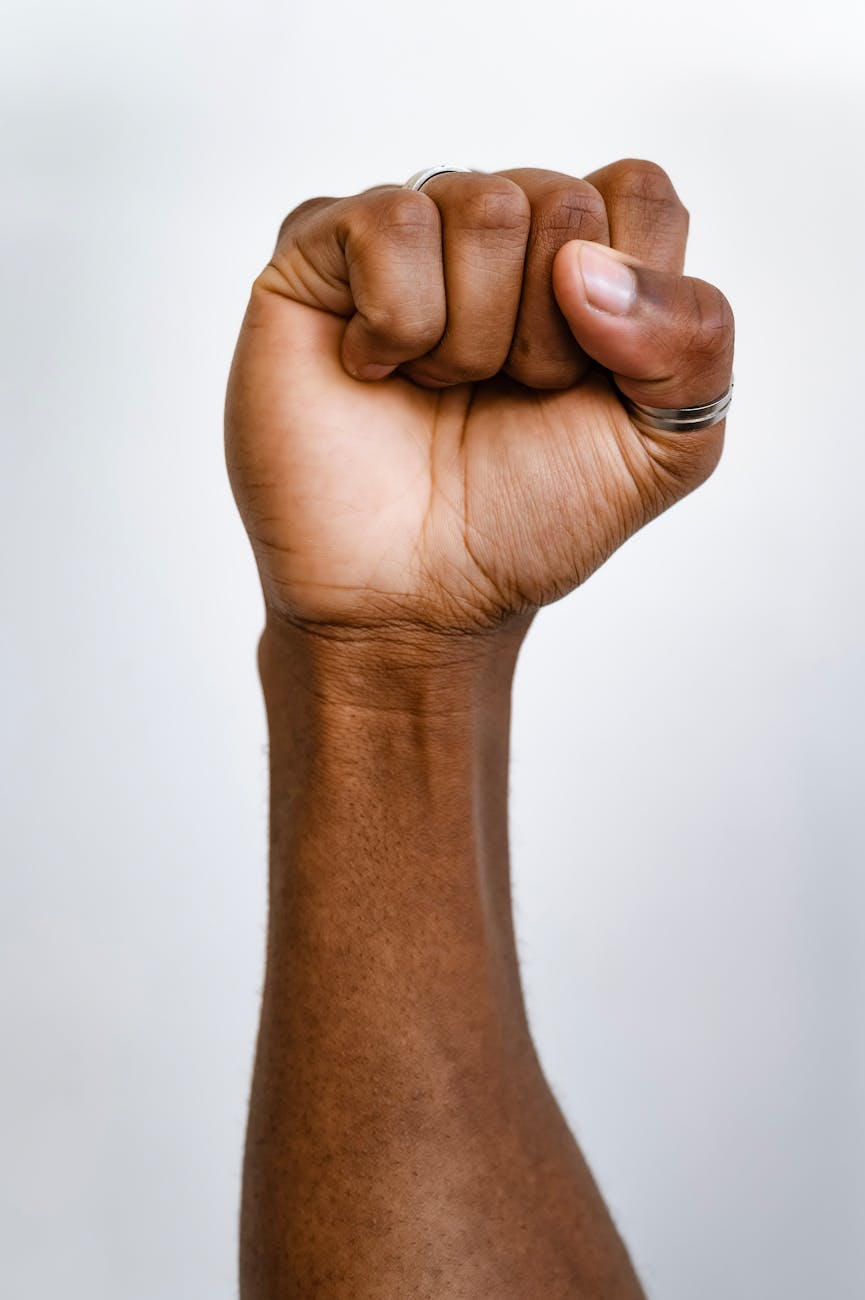
The Black Panther Party (BPP), founded in October 1966 in Oakland, California, by Huey P. Newton and Bobby Seale, emerged as one of the most influential yet misunderstood Black liberation movements of the 20th century. Rooted in a philosophy of self-defense, the Party was a response to police brutality, systemic racism, and economic inequality. While critics labeled them a hate group, their primary mission was to protect and uplift the Black community, not to incite racial hatred. The BPP’s adoption of black clothing, leather jackets, and berets symbolized both unity and resistance, representing a visual statement against oppression rather than an embrace of violence.
Were They a Hate Group?
Labeling the BPP a hate group is inaccurate. They were motivated by anti-injustice, not hatred of white people. Instead, they demanded accountability for systemic oppression. That said, the FBI, under J. Edgar Hoover, dubbed them “the greatest threat to the internal security of the country” and launched COINTELPRO, a covert sabotage campaign involving surveillance, false charges, and infiltration intended to “neutralize” the BPP Wikipedia+1BlackPast.orgNPR.
The founders, Huey Newton and Bobby Seale, were both politically active students inspired by the teachings of Malcolm X, Frantz Fanon, and other revolutionary thinkers. Newton, born in Monroe, Louisiana, in 1942, moved to Oakland as a child and later studied law at Merritt College, where he met Seale. Seale, born in Dallas, Texas, in 1936, was an Air Force veteran and activist who believed in Black self-determination. Together, they developed the Ten-Point Program, which called for freedom, full employment, decent housing, education that exposed the true history of Black people, and an end to police brutality.
The BPP established over 60 community programs, including free breakfast programs for children, health clinics, and educational initiatives. These programs addressed systemic neglect and provided vital resources to underserved Black neighborhoods. However, their armed patrols to monitor police activities and their revolutionary rhetoric drew intense attention from law enforcement. The FBI, under J. Edgar Hoover, deemed the Panthers the “greatest threat to the internal security of the country” and initiated the COINTELPRO (Counter Intelligence Program) to infiltrate, disrupt, and dismantle the movement. This campaign included surveillance, infiltration, false arrests, and targeted violence against members.
Fred Hampton, one of the most charismatic BPP leaders, rose to prominence in Chicago for his coalition-building efforts across racial lines. Born in 1948, Hampton became known for his “Rainbow Coalition,” uniting Black, Latino, and poor white communities. His leadership was cut short when he was killed in a 1969 FBI-coordinated police raid at the age of 21. Huey Newton’s trajectory was also deeply marked by the struggle; after multiple arrests, exile in Cuba, and internal party conflicts, Newton eventually returned to Oakland but was killed in 1989.
Fred Hampton and the Fate of Revolution
Fred Hampton, chair of the Chicago chapter, exemplified community-driven Black Power. In 1968, he organized a “Rainbow Coalition” of diverse marginalized groups—Panthers, Puerto Rican Young Lords, and white Appalachian activists—building solidarity across racial lines BlackPast.orgBiography.
However, FBI infiltration (via informant William O’Neal) led to a lethal police raid on December 4, 1969, in which Hampton and fellow Panther Mark Clark were killed while sleeping. The raid exposed official misconduct and ultimately led to a $1.85 million civil settlement against the government for violating civil rights BlackPast.org+1BiographyWikipediaNational Archives.
The Black Panthers were often accused of being anti-white, but their mission targeted injustice, not individuals based on race. They collaborated with various progressive groups, including white allies who supported anti-racist causes. While some members had interracial relationships, including marriages to white women, the movement’s focus remained centered on dismantling systemic oppression. Martin Luther King Jr. and Malcolm X had differing relationships to the Panthers’ ideology—King generally supported nonviolence, while Malcolm X’s earlier advocacy for armed self-defense influenced Panther philosophy.
Public perception of the Black Panthers was polarized—mainstream media often depicted them as violent extremists, while Black communities saw them as defenders and providers. FBI files, now public, confirm the extent of government efforts to neutralize the Panthers through misinformation, surveillance, and assassination. Although the original BPP disbanded in the early 1980s, splinter groups and modern movements continue to draw inspiration from their principles, adapting their mission to today’s struggles against police violence and racial inequality.
Conclusion: Legacy & Present Impact
The Black Panther Party emerged as a revolutionary force rooted in self-defense, community service, and radical political ideology. Far from being a hate group, it sought justice for Black communities through social programs and public resistance. Targeted by COINTELPRO and law enforcement, leaders like Huey Newton and Fred Hampton made enduring impacts, even in death. Their legacy—fierce, complex, and instructive—remains vital to understanding resistance, governance, and identity.
After federal assaults and internal decline, the Party dissolved by 1982 WikipediaNational Archives. Today, the legacy of the Panthers continues through:
- Panther cubs: children like Fred Hampton Jr. carry forward the spirit, though many also bear emotional and social burdens from surveillance and activism The Guardian.
- Cultural resurgence: Films like Judas and the Black Messiah and series like The Big Cigar have reignited interest in their story TIME+1.
While some people question if members married outside race—there’s no notable record. The Black Panther name and uniforms (black clothing) symbolized solidarity, militancy, and Black pride, embracing African roots and resistance.
References
- Bloom, J., & Martin, W. E. (2016). Black against empire: The history and politics of the Black Panther Party. University of California Press.
- Federal Bureau of Investigation. (1976). COINTELPRO: The counterintelligence program against the Black Panther Party. U.S. Government Printing Office.
- Hampton, F. (2009). The Assassination of Fred Hampton: How the FBI and the Chicago Police Murdered a Black Panther. Lawrence Hill Books.
- Newton, H. P. (1973). Revolutionary suicide. Harcourt Brace Jovanovich.
- Seale, B. (1991). Seize the time: The story of the Black Panther Party and Huey P. Newton. Black Classic Press.
- Williams, J. P. (2013). “The Black Panther Party and Black self-defense.” Journal of African American History, 98(1), 48–71.
Britannica – Black Panther Party origin & founders Encyclopedia Britannica+1
HISTORY.com – Party formation, programs, decline HISTORY
Wikipedia – Details on ideology & FBI targeting Wikipedia+1
BlackPast.org & Biography.com – Fred Hampton biography and assassination BlackPast.orgBiography
National Archives – BPP records and description National Archives
Time & Apple TV+ – Huey Newton escape story (The Big Cigar) TIME+1
The Guardian – Panther cubs’ legacy The Guardian
 THE BROWN GIRL DILEMMA