Category Archives: the bible

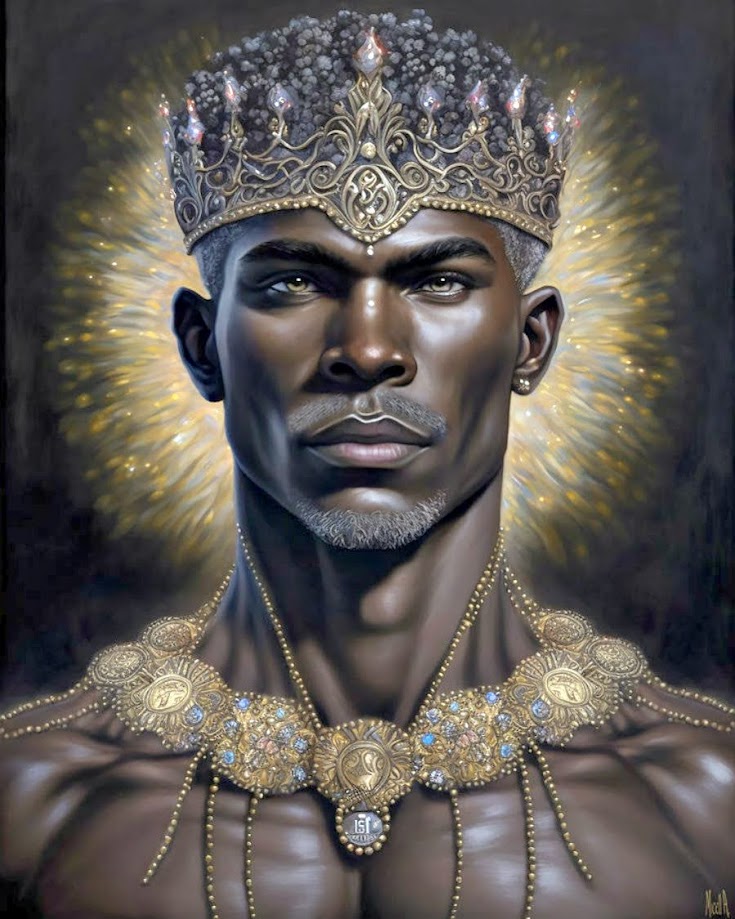
Biblical History: 👑 Queen Makeda (The Queen of Sheba)

Photo by John Ray Ebora on Pexels.com

👑 Wisdom, Beauty, and Global Influence 👑

Queen Makeda, famously known as the Queen of Sheba, is celebrated as one of the most iconic figures in both biblical and Ethiopian history. Her story reflects an extraordinary combination of beauty, intelligence, and diplomacy, setting the standard for melanated female leadership. The King James Version recounts: “And when the queen of Sheba heard of the fame of Solomon, she came to prove him with hard questions at Jerusalem, with a very great train, and camels that bare spices, and very much gold, and precious stones” (1 Kings 10:1–2, KJV). This narrative highlights her initiative, intellect, and regal presence.

Makeda’s journey to Jerusalem was a deliberate test of Solomon’s wisdom. She arrived not merely as a traveler but as an intellectual equal seeking knowledge and insight. Her ability to pose profound questions reflects a sophisticated understanding of governance, diplomacy, and theology. In doing so, she embodies the ideal that leadership is rooted in both mind and character.

Biblical accounts emphasize her discernment and spiritual awareness. Upon witnessing Solomon’s wisdom, she “praised the Lord with all her heart” (1 Kings 10:7, KJV), demonstrating that recognition of true wisdom extends beyond human intellect to divine insight. Makeda’s reverence for knowledge and God’s guidance aligns her story with Proverbs 3:13 (KJV): “Happy is the man that findeth wisdom, and the man that getteth understanding.”

Makeda’s wealth and strategic presentation of gifts — spices, gold, and precious stones — reflect her political acumen. These offerings were not mere tokens; they were symbolic of her nation’s prosperity and her ability to negotiate alliances. Proverbs 31:16 (KJV) similarly highlights foresight and resourcefulness: “She considereth a field, and buyeth it: with the fruit of her hands she planteth a vineyard.” Makeda’s diplomacy demonstrates that intellectual beauty complements material and strategic intelligence.

Psychologically, Makeda exemplifies the archetype of a melanated queen whose confidence derives from competence, presence, and poise. Leadership studies suggest that individuals who combine charisma with cognitive skill are often more persuasive and effective in negotiations (Bass & Riggio, 2006). Makeda’s story illustrates this principle: her influence extended beyond physical beauty to mental acuity and strategic thinking.

Culturally, Ethiopian traditions elevate Makeda’s legacy as a mother of kings. According to tradition, she bore King Solomon’s son, Menelik I, founder of the Solomonic dynasty. This lineage symbolizes a fusion of divine favor, royal authority, and melanated excellence. Her story continues to inspire pride in African heritage and affirm the historical significance of Black queenship.

Comparisons with other African queens reinforce her archetype. Queen Nzinga of Angola, like Makeda, combined beauty with exceptional military and diplomatic skill, resisting colonization and preserving her people’s autonomy. Similarly, Hatshepsut of Egypt balanced aesthetic elegance with political authority, ruling successfully as a pharaoh. These comparisons show that Makeda’s integration of intellect, beauty, and leadership is a recurring theme in African history.

Makeda’s beauty is consistently noted alongside her intellect. Biblical and historical texts emphasize her regal appearance, but her acclaim arose from her wisdom and discernment as much as from her looks. 1 Kings 10:10 (KJV) reports the lavish gifts she gave Solomon: “And she gave the king an hundred and twenty talents of gold, and of spices very great store, and precious stones: there came no more such abundance of spices as these which the queen of Sheba gave to king Solomon.” These gestures indicate her aesthetic refinement, strategic vision, and wealth.

From a psychological perspective, Makeda’s story demonstrates the principle of “integrated leadership,” in which beauty, charisma, and intellect reinforce one another. Leadership psychology argues that such integration enhances influence, credibility, and cross-cultural diplomacy. Makeda’s engagement with Solomon illustrates how aesthetics and intellect can operate synergistically to achieve diplomatic and spiritual outcomes.

Her global cultural impact is significant. Makeda has been celebrated in Ethiopian art, literature, and music for centuries. She inspired medieval European tales and modern novels, symbolizing a powerful, intelligent Black woman who navigates international relations with skill. Contemporary discussions of female leadership and melanated beauty often invoke her story as a reference point.

Makeda’s spiritual significance is also profound. Her recognition of Solomon’s God reflects alignment with divine wisdom and ethical governance. Proverbs 31:25 (KJV) states, “Strength and honour are her clothing; and she shall rejoice in time to come.” Her story exemplifies this scripture, demonstrating that true queenship intertwines moral integrity with worldly power.

Her legacy extends into symbolism and pedagogy. She is taught in Ethiopian schools and celebrated during cultural festivals, reinforcing the value of intellect, diplomacy, and beauty for young melanated women. By embodying a model where wisdom and aesthetics coexist, she challenges modern narratives that separate beauty from intelligence.

Makeda’s story also intersects with gender studies, illustrating the capacities of women to wield influence in patriarchal societies. Her ability to negotiate, question, and impress Solomon shows that melanated women historically exercised agency and power in both public and private spheres, often shaping dynastic and political trajectories.

In conclusion, Queen Makeda’s life reflects a timeless combination of wisdom, beauty, and leadership. Her diplomatic visit to King Solomon, the gifts she presented, and the lineage she established all reinforce her status as a paradigmatic melanated queen. She serves as a historical and spiritual model for intelligence, strategic thinking, and regal poise, leaving a legacy that continues to inspire leaders, scholars, and admirers of melanated beauty worldwide.


References

  • Bass, B. M., & Riggio, R. E. (2006). Transformational leadership. Psychology Press.
  • Hamilton, V. P. (1990). The Book of Kings: Commentary. Eerdmans.
  • Leslau, W. (1979). Ethiopian historical records and the Queen of Sheba. University of California Press.
  • The Holy Bible, King James Version.
  • Wasyliw, P. (2007). Queens and queenship in African history. African Studies Review, 50(2), 65–90.
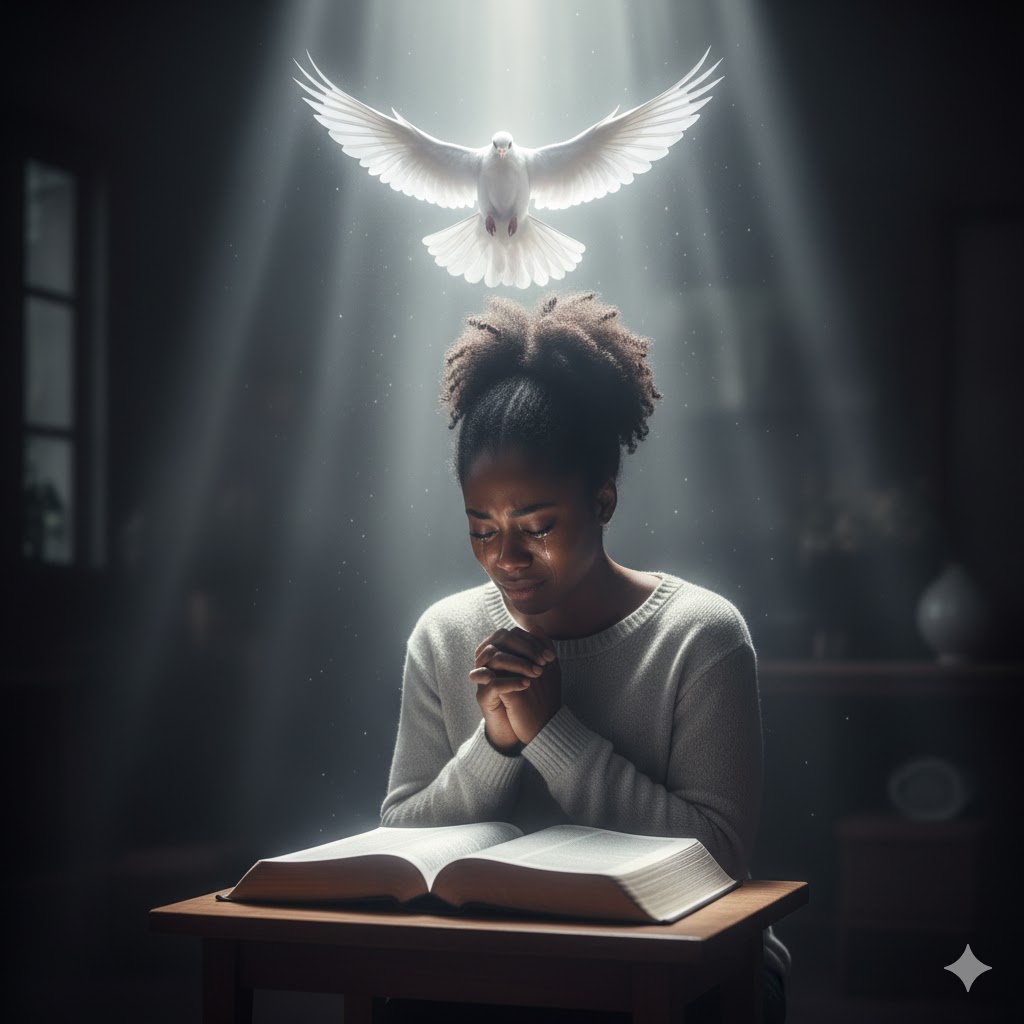

God, Where Are You? – Why Hast Thou Forsaken Me? #themosthighgodofIsrael

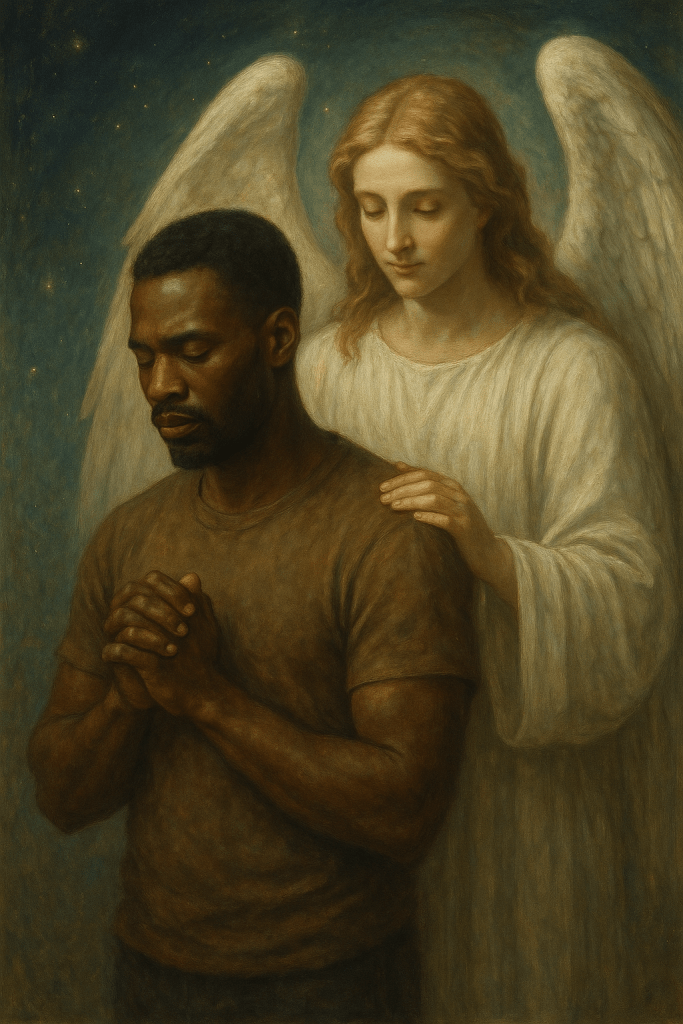
There are moments in every believer’s life when the heavens feel shut and prayer seems to fall back down in silence. These are the seasons that stretch the soul and test the very core of faith. When we cry, “God, where are You?” or ask, “Why hast Thou forsaken me?” we enter a sacred place of wrestling—a place where the silence of God feels louder than His voice. These moments can be frightening, humbling, and deeply transformative.

Throughout Scripture, many of God’s greatest servants faced long seasons of divine silence. The silence was not abandonment but preparation. It was not rejection but refining. In those quiet hours, God was shaping them into vessels strong enough to carry His glory. But in the moment, His silence often felt like distance. Even Jesus Himself, on the cross, cried out, “My God, my God, why hast thou forsaken me?” (Matthew 27:46, KJV). If the Son of God felt that anguish, how much more do we as His children?

Often, when God is silent, He is not absent. Silence is a language of Heaven—a divine classroom where the Holy Spirit teaches endurance, faith, and trust without visible evidence. Sometimes the Lord withdraws the feeling of His presence so that we learn to lean on what He has spoken, not on what we feel. “For we walk by faith, not by sight” (2 Corinthians 5:7, KJV). His silence tests whether our faith is built on feelings or on His Word.

Job is the ultimate example of suffering without explanation. He cried out repeatedly, asking God to answer him, defend him, and reveal the purpose of his pain. Yet for many chapters, Heaven remained silent. Job lost his children, his health, his wealth, and his comfort—yet God did not speak immediately. The silence was part of Job’s refining. And when God finally answered out of the whirlwind, Job realized that the silence had produced humility, revelation, and spiritual maturity (Job 38–42, KJV).

During silent seasons, God is often working behind the scenes in ways we cannot see. Daniel prayed for understanding, but the answer was delayed by spiritual warfare in the unseen realm for twenty-one days (Daniel 10:12–13, KJV). What looked like silence was actually a battle in the heavens on his behalf. Many believers experience similar unseen warfare, unaware that God’s response is on the way.

Sometimes God is silent because He is testing our obedience. King Saul lost his kingdom because he acted out of fear when God seemed slow in responding (1 Samuel 13:8–14, KJV). Silence exposes whether we will wait on God—or move ahead of Him. The silence becomes a spiritual X-ray, showing what is in our hearts.

Other times, God is teaching us to seek Him more deeply. When David said, “I cried unto the Lord… and He heard me not” (Psalm 22:2, KJV), it was not because God rejected him, but because God was drawing him into deeper intimacy. A silent God often produces a louder prayer life. We learn to press in, to cry out, to depend on Him alone.

God’s silence can also protect us. Sometimes, He withholds an answer because the timing is not right. If he opened a door too soon, it could destroy us. If he revealed a truth too early, it might overwhelm us. “To every thing there is a season” (Ecclesiastes 3:1, KJV). His silence becomes a shield, guarding us from premature blessings.

In many cases, silence is preparation for elevation. Joseph experienced thirteen years of silence—betrayed, enslaved, and imprisoned (Genesis 37–41, KJV). God never explained Himself during those years. But when the silence broke, Joseph stepped into destiny. What felt like divine abandonment was divine positioning.

The refining process during the silent seasons is often compared to gold being purified. “He shall sit as a refiner and purifier of silver” (Malachi 3:3, KJV). Gold is heated until impurities rise to the surface. In the same way, God allows pressure and silence to expose what must be removed from our hearts—fear, pride, impatience, insecurity, or doubt. He purifies us so that His image may shine in us.

The silence of God is also meant to strengthen spiritual hearing. Sometimes He whispers because He wants us closer. Elijah expected God in the wind, earthquake, and fire, yet the Lord spoke in a still small voice (1 Kings 19:11–12, KJV). Silence heightens sensitivity so we can discern His whisper when it comes.

Jesus experienced silence in Gethsemane. He prayed, “If it be possible, let this cup pass from me” (Matthew 26:39, KJV). Yet Heaven offered no alternative path. The silence confirmed the assignment. Sometimes God’s silence is not a “no,” but a divine affirmation that we must endure the path set before us.

When God is silent, He is often building spiritual endurance. James wrote, “The trying of your faith worketh patience” (James 1:3, KJV). Without trials, faith remains shallow. Silence strengthens the roots of belief so that we can withstand storms that feelings cannot.

Even when we cannot hear Him, God is speaking through His Word. Scripture becomes life in silent seasons. The promises of God become louder than the absence of His voice. “I will never leave thee, nor forsake thee” (Hebrews 13:5, KJV). Silence cannot contradict what He has already spoken.

Silent seasons also reveal the condition of our worship. Do we praise God only when we feel Him? Or do we praise Him because He is worthy? Job declared, “Though he slay me, yet will I trust in him” (Job 13:15, KJV). Worship in silence carries a fragrance that Heaven honors.

God’s silence may come before great revelation. After four hundred years of silence between Malachi and Matthew, God broke the silence with the birth of Jesus—the greatest revelation in human history. Long silence often precedes divine breakthrough.

When God is silent, believers must remain faithful in prayer, fasting, reading the Word, and serving. Silence is not a sign to stop; it is a sign to press forward. Those who endure the silence emerge stronger, wiser, and more anointed.

Eventually, God always answers. He may not answer the way we expect, but He answers in the way that transforms us. His silence molds us into vessels ready for His glory. When we look back, we realize He was closest in the moments that felt the loneliest.

God’s silence is not abandonment—it is divine refinement. It is the molding of character, the strengthening of faith, and the deepening of relationships. In the silence, God shapes us into gold. And when the season ends, He brings forth a testimony that could only be birthed in silence. God is Guide! HE is still in control. Be encouraged, my brothers and sisters.


KJV References
Job 13:15; Job 38–42; Psalm 22:2; Matthew 27:46; Matthew 26:39; Daniel 10:12–13; 1 Samuel 13:8–14; Ecclesiastes 3:1; Genesis 37–41; Malachi 3:3; 1 Kings 19:11–12; Hebrews 13:5; James 1:3; 2 Corinthians 5:7.

The Flesh wars after the Spirit

In every believer’s journey, there lies a hidden battlefield—the war between the flesh and the spirit. It is a conflict as old as humanity itself, one that Paul described vividly when he declared, “For the flesh lusteth against the Spirit, and the Spirit against the flesh” (Galatians 5:17, KJV). This war is not fought with swords or spears but within the chambers of the soul, where desires, thoughts, and willpower contend for dominance. The flesh seeks comfort and indulgence, while the spirit seeks holiness and eternal purpose.

When Adam and Eve fell in the Garden, the harmony between flesh and spirit was broken. The flesh became a vessel of weakness, bound to sin’s cravings, while the spirit longed to reconnect with its divine Source. This separation made mankind susceptible to every temptation that appealed to the senses—the lust of the eyes, the lust of the flesh, and the pride of life (1 John 2:16). The war began there and continues within every son and daughter of Adam.

To walk in the Spirit means to live according to God’s truth, resisting the impulses that draw us away from righteousness. Yet, this is easier said than done. The Apostle Paul confessed his struggle, saying, “For I know that in me (that is, in my flesh,) dwelleth no good thing” (Romans 7:18, KJV). Even the most faithful among us feel the tug-of-war between doing what is right and yielding to weakness.

The flesh wars by deception, whispering lies of pleasure, ease, and satisfaction. It convinces the heart that temporary gratification outweighs eternal gain. However, the spirit discerns the cost, reminding the believer that “to be carnally minded is death; but to be spiritually minded is life and peace” (Romans 8:6, KJV).

Each day presents a new skirmish. The mind becomes the battleground, and thoughts are the weapons. The flesh plants seeds of doubt, jealousy, and lust, while the spirit counters with truth, patience, and love. Victory belongs to the one who surrenders—not to the flesh, but to the will of God.

Fasting and prayer strengthen the spirit’s voice. When the body is denied indulgence, the spirit grows louder. Christ Himself modeled this discipline, fasting forty days in the wilderness while resisting the devil’s temptations (Matthew 4:1–11, KJV). He proved that obedience to God conquers every carnal desire.

But modern believers face new forms of fleshly warfare—materialism, vanity, lust, and the idolization of pleasure. The flesh now disguises itself in convenience, social media validation, and the pursuit of worldly success. Yet the spiritual principles remain unchanged: “They that are Christ’s have crucified the flesh with the affections and lusts” (Galatians 5:24, KJV).

To crucify the flesh is not a one-time act; it is a lifelong discipline. Every temptation is a nail, every denial a hammer. The believer must daily take up their cross, just as Christ commanded (Luke 9:23). Through this continual surrender, the spirit gains ascendancy.

The flesh seeks to enslave, but the spirit seeks to liberate. When we yield to the flesh, sin becomes our master. When we walk in the spirit, we are empowered by grace. This is the divine paradox: surrender brings freedom, and death to self brings life eternal.

Satan, the great manipulator, knows how to exploit the flesh. He tempted Eve through the senses, tempted David through lust, and tempted Christ through hunger and pride. His strategies never change because they still work. That is why the armor of God (Ephesians 6:11–18) is vital—to guard the spirit from the assaults of the flesh and the lies of the enemy.

Yet victory is not by human effort alone. The Spirit of God enables us to overcome. “Walk in the Spirit, and ye shall not fulfil the lust of the flesh” (Galatians 5:16, KJV). This means total dependence on divine strength rather than human willpower.

The fruit of the Spirit—love, joy, peace, longsuffering, gentleness, goodness, faith, meekness, and temperance—are not merely virtues but weapons of war (Galatians 5:22–23). Each one defeats a corresponding sin of the flesh. Love overcomes hatred, peace disarms anxiety, and temperance conquers gluttony.

The flesh wars through impatience and pride, but the spirit waits on the Lord. The mature believer learns to discern these internal battles, recognizing when the flesh is loud and when the spirit is whispering. Spiritual maturity comes when the spirit’s whisper becomes the soul’s command.

The war of flesh versus spirit also manifests in relationships. The flesh seeks dominance, control, and validation, while the spirit seeks humility, forgiveness, and truth. This is why marriages, friendships, and ministries fail—because one or both parties allow the flesh to lead.

Black believers, in particular, face a layered warfare: not only spiritual but social. The systems of racism, colorism, and materialism exploit fleshly divisions, weakening unity and peace. Yet, when the spirit governs, a people once broken can rise in righteousness, dignity, and divine strength.

Victory in the flesh wars demands awareness. The believer must daily examine motives, desires, and actions through the Word of God. Scripture is the mirror that reveals whether the spirit or flesh is winning. As James wrote, “Be ye doers of the word, and not hearers only” (James 1:22, KJV).

Even in moments of failure, grace remains. The blood of Christ cleanses, renews, and restores. God’s Spirit never abandons the repentant heart, for “a broken and a contrite heart, O God, thou wilt not despise” (Psalm 51:17, KJV). The war may continue, but victory is assured through Christ.

Ultimately, the flesh will perish, but the spirit endures forever. What we feed today—flesh or spirit—determines our eternal destiny. To invest in the spirit is to build treasure in heaven (Matthew 6:19–21).

The war may rage, but the outcome is already written. “Nay, in all these things we are more than conquerors through him that loved us” (Romans 8:37, KJV). The believer who walks by faith and not by sight will emerge victorious, clothed in righteousness, crowned with glory, and freed from the bondage of the flesh forevermore.

References

  • The Holy Bible, King James Version (Galatians 5:16–24; Romans 7:18–25; Romans 8:6–13; Matthew 4:1–11; Luke 9:23; Ephesians 6:11–18; James 1:22; Psalm 51:17).
  • Augustine, St. (398). Confessions. Oxford University Press.
  • Lewis, C. S. (1942). The Screwtape Letters. HarperCollins.
  • Tozer, A. W. (1948). The Pursuit of God. Christian Publications.
  • Wright, N. T. (2010). After You Believe: Why Christian Character Matters. HarperOne.

The Bible Series: The Rise and Fall of Nimrod

Nimrod is one of the most enigmatic figures in biblical history, mentioned briefly yet powerfully in the Book of Genesis. His story is veiled in mystery, layered with symbolism, and carries theological and historical weight. According to Genesis 10:8–10 (KJV), Nimrod was “a mighty one in the earth” and “a mighty hunter before the LORD.” These few words have inspired centuries of interpretation about who Nimrod was, what he represented, and how his legacy has shaped human civilization and rebellion against God.

The genealogy of Nimrod traces him to Cush, the son of Ham, who was one of Noah’s sons. Genesis 10:6 identifies Cush as Nimrod’s father, making Nimrod a great-grandson of Noah. This familial connection places him in the post-flood world—a time when humanity was beginning to rebuild, multiply, and spread across the earth. His lineage is significant because the descendants of Ham are often associated with the founding of great early civilizations, particularly in Mesopotamia and Africa.

Nimrod’s name itself carries deep meaning. Some scholars suggest it derives from the Hebrew root marad, meaning “to rebel.” Thus, Nimrod’s name can be interpreted as “The Rebel” or “We Shall Rebel.” This etymology aligns with his portrayal as a figure who defied divine authority and established his own rule. He is often regarded as the world’s first monarch, a man who sought dominion through power rather than through submission to God’s will.

The Bible records that the beginning of Nimrod’s kingdom was Babel, Erech, Accad, and Calneh in the land of Shinar (Genesis 10:10). These cities form the cradle of what would later become Babylon, one of the most infamous centers of idolatry and human pride. Nimrod is therefore credited with founding the first world empire—a symbol of human unity that turned into rebellion against the Creator. His rule marked the dawn of organized kingdoms and centralized power, which contrasted with God’s original design for human stewardship under divine authority.

Nimrod’s most notorious act is linked to the Tower of Babel, recounted in Genesis 11. Though his name is not explicitly mentioned in that passage, ancient Jewish and Christian traditions connect him to the building of the tower. Humanity, united under one language, sought to build a city and a tower “whose top may reach unto heaven” (Genesis 11:4, KJV). This act represented defiance—an attempt to achieve godlike status and independence from divine rule. Nimrod is thought to have been the mastermind or leader behind this movement, embodying the spirit of human pride and rebellion.

The fall of Nimrod’s empire came through divine intervention. God confounded the language of the people, scattering them across the earth and halting the construction of the tower. This act of confusion preserved divine order and prevented the complete corruption of humanity through unified arrogance. The fall of Babel is symbolic of the fall of all kingdoms that exalt themselves above God. In this way, Nimrod becomes a timeless archetype of human pride, representing the rise and fall of man-made empires that defy divine will.

Historically, Nimrod has been linked to several ancient rulers and deities. Some historians equate him with Sargon of Akkad, one of the earliest known empire builders. Others associate him with Gilgamesh, the legendary king of Uruk, or with the god Marduk, the chief deity of Babylon. These associations underscore his lasting influence in Mesopotamian mythology and demonstrate how his legend merged with the broader story of humanity’s attempt to rule apart from God.

In extra-biblical literature, particularly in the Book of Jasher and Josephus’s Antiquities of the Jews, Nimrod is portrayed as a tyrant who sought to rule over all men and turn them against God. Josephus writes that Nimrod “persuaded them not to ascribe [their strength] to God, as if it were through His means they were happy, but to believe that it was their own courage which procured that happiness” (Antiquities 1.4.2). This interpretation reinforces the notion that Nimrod was not merely a political leader but a spiritual rebel who introduced idolatry and the worship of self.

The spirit of Nimrod has been interpreted throughout history as symbolic of Babylonian influence—the tendency for societies to centralize power, glorify human achievement, and turn away from divine truth. Babylon itself became the prophetic symbol of rebellion and moral decay throughout Scripture. In Revelation, Babylon is portrayed as the mother of harlots and abominations, a continuation of the same defiant spirit that began with Nimrod’s empire (Revelation 17:5).

Nimrod’s fall was inevitable, as all who oppose divine authority must eventually submit to it. His story teaches that no matter how powerful human rulers or civilizations become, they cannot overthrow the sovereignty of God. The scattering at Babel serves as both judgment and mercy—it prevented humanity from destroying itself through total rebellion and preserved God’s plan for diversity among nations.

Theologically, Nimrod’s legacy can be understood as the first organized attempt to establish a kingdom independent of God’s governance. This rebellion echoes through time in every empire that exalts human glory over divine truth. From Babylon to Rome, from Egypt to modern systems of human pride, the “spirit of Nimrod” persists as a warning of what happens when humanity seeks to dethrone the Creator.

Nimrod’s family line also holds historical significance. As a descendant of Cush, he was part of the Hamitic lineage that gave rise to many ancient nations, including Ethiopia, Egypt, and parts of Canaan. The Cushite connection indicates that his empire may have extended influence into Africa as well as Mesopotamia, blending cultures and establishing the earliest forms of imperialism. His genetic and cultural legacy would thus contribute to the rise of civilizations known for their architectural and scientific achievements—but also for their spiritual corruption.

Archaeological evidence from ancient Mesopotamia reveals powerful city-states that align with the biblical description of Nimrod’s kingdom. The ziggurats, large step-pyramids used for worship, resemble the Tower of Babel in form and function. These structures were meant to connect heaven and earth, serving as symbols of human power and divine imitation. In this light, Nimrod’s influence extends beyond politics into religion—ushering in systems of false worship that mimicked but distorted divine order.

The prophetic implications of Nimrod’s story continue into modern theology. Many scholars see him as a prototype of the Antichrist—a ruler who exalts himself and unites humanity under rebellion against God. Just as Nimrod built Babel, the end-times leader will seek to establish a global system that opposes divine authority. The parallels are striking: centralized control, human pride, idolatry, and defiance of heaven.

Yet amid this darkness, the fall of Nimrod reminds believers that God’s purposes prevail. The dispersion at Babel set the stage for Abraham’s calling, through whom God would establish a covenant people. In this sense, Nimrod’s downfall opened the way for divine redemption and the unfolding of God’s plan for salvation. What man built in pride, God replaced with a promise rooted in faith.

Nimrod’s rise and fall also serve as a reflection of human psychology and leadership. He was charismatic, ambitious, and visionary—qualities often admired—but when severed from spiritual humility, such traits breed tyranny. His life warns against the dangers of unchecked power and the seduction of self-worship.

In later Jewish and Christian interpretation, Nimrod’s name became synonymous with rebellion and oppression. The “mighty hunter” became not just a hunter of animals but a hunter of men—subduing others through force. His strength, meant to serve creation, was instead used to dominate it.

Ultimately, the story of Nimrod stands as a microcosm of human history: the rise of ambition, the temptation of power, and the inevitable downfall of pride. It reminds us that all human kingdoms fade, but the kingdom of God endures forever.

In summary, Nimrod was more than a man—he was a symbol of humanity’s capacity for greatness and corruption. His rise marked the dawn of civilization, but his fall warned of the cost of rebellion. The biblical narrative closes on this truth: those who build without God build in vain.

References

Josephus, F. (1981). Antiquities of the Jews. (W. Whiston, Trans.). Hendrickson Publishers.
King James Bible. (1611). The Holy Bible. Oxford University Press.
Matthews, V. H. (2004). The Cultural World of the Bible: An Illustrated Guide to Manners and Customs. Hendrickson Publishers.
Sarna, N. M. (1989). Genesis: The Traditional Hebrew Text with the New JPS Translation. Jewish Publication Society.
Wenham, G. J. (1987). Genesis 1–15. Word Biblical Commentary. Word Books.
Tigay, J. H. (1982). The Evolution of the Gilgamesh Epic. University of Pennsylvania Press.
Heiser, M. S. (2015). The Unseen Realm: Recovering the Supernatural Worldview of the Bible. Lexham Press.

The Bible Series: The Temple of the Holy Spirit

The Temple of the Holy Spirit

(1 Corinthians 6:19–20 KJV)

“What? know ye not that your body is the temple of the Holy Ghost which is in you, which ye have of God, and ye are not your own?”

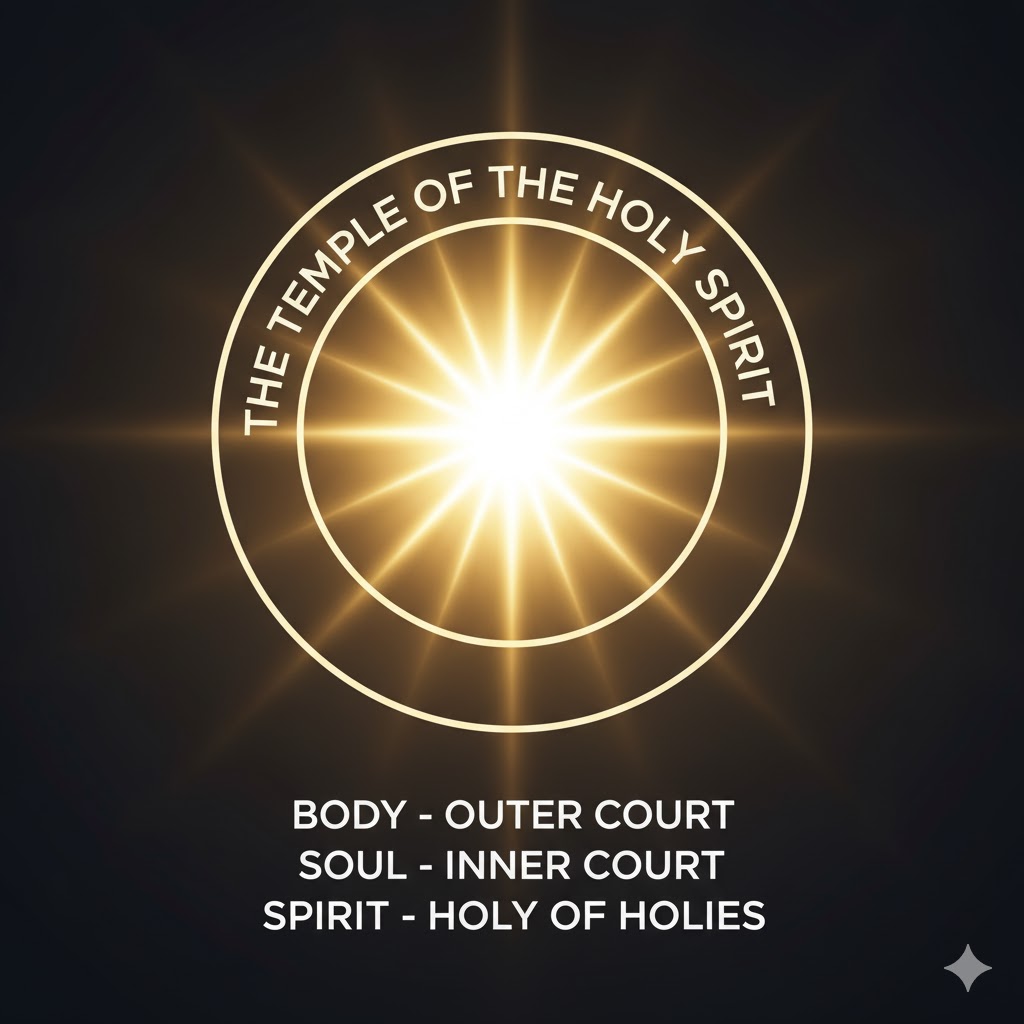
The human being is a sacred temple composed of three divine courtsthe body (outer court), the soul (inner court), and the spirit (Holy of Holies). Each has spiritual “gates” that must be guarded, purified, and dedicated to God.


🕊 Holy Spirit Gates (The Holy of Holies)

The dwelling place of the presence of God; where communion, revelation, and transformation occur.

  1. Truth Gate – The Spirit of truth guides believers into all understanding.
    • John 16:13: “When he, the Spirit of truth, is come, he will guide you into all truth.”
    • This gate opens discernment and alignment with God’s Word, rejecting deception.
  2. Revelation Gate – Unlocks divine mysteries and heavenly insight.
    • Ephesians 1:17: “That the God of our Lord Jesus Christ… may give unto you the spirit of wisdom and revelation in the knowledge of him.”
    • When open, this gate allows divine secrets to be revealed to the heart.
  3. Intuition Gate – The inner knowing that transcends logic.
    • 1 John 2:27: “Ye need not that any man teach you… the same anointing teacheth you of all things.”
    • The Spirit communicates through an inner sense or divine impression.
  4. Prayer Gate – Connects heaven and earth through constant communion.
    • 1 Thessalonians 5:17: “Pray without ceasing.”
    • This gate fuels spiritual life, keeping the fire of the altar burning within.
  5. Reverence Gate – Produces humility and awe before God’s holiness.
    • Psalm 111:10: “The fear of the LORD is the beginning of wisdom.”
    • Reverence guards against pride, keeping the temple pure and submissive.
  6. Faith Gate – The doorway to the supernatural.
    • Hebrews 11:6: “Without faith it is impossible to please him.”
    • Faith activates miracles and allows the believer to walk in divine authority.
  7. Hope Gate – Sustains endurance through trials.
    • Romans 15:13: “Now the God of hope fill you with all joy and peace in believing.”
    • Hope keeps the spirit alive and focused on God’s promises.
  8. Worship Gate – The highest expression of divine intimacy.
    • John 4:24: “God is a Spirit: and they that worship him must worship him in spirit and in truth.”
    • Worship sanctifies the atmosphere of the spirit, aligning the believer with heaven.
  9. Fear of God Gate – Protects from sin and awakens holiness.
    • Proverbs 14:27: “The fear of the LORD is a fountain of life, to depart from the snares of death.”
    • This gate anchors reverence, obedience, and purity in the believer’s spirit.

💠 Soul Gates (The Inner Court)

The seat of the mind, will, and emotions—where choices are made and spiritual warfare often occurs.

  1. Conscience Gate – The moral compass of the soul.
    • Romans 9:1: “My conscience also bearing me witness in the Holy Ghost.”
    • When pure, it warns against sin; when seared, it allows moral confusion.
  2. Reason Gate – The faculty of understanding and interpretation.
    • Proverbs 3:5–6: “Trust in the LORD… and lean not unto thine own understanding.”
    • This gate must be submitted to divine wisdom rather than worldly logic.
  3. Imagination Gate – The creative and visionary center of the soul.
    • Genesis 6:5: “Every imagination of the thoughts of his heart was only evil continually.”
    • When sanctified, imagination allows believers to visualize God’s glory and promises.
  4. Mind Gate – Governs thoughts, memory, and meditation.
    • Romans 12:2: “Be ye transformed by the renewing of your mind.”
    • A renewed mind brings the soul into harmony with the will of God.
  5. Will Gate – The power of choice and surrender.
    • Deuteronomy 30:19: “Choose life, that both thou and thy seed may live.”
    • This gate determines whether one obeys God or yields to the flesh.
  6. Emotions Gate – The realm of feelings and affections.
    • Proverbs 4:23: “Keep thy heart with all diligence; for out of it are the issues of life.”
    • Emotions must be ruled by the Spirit, not by circumstance.
  7. Choices Gate – Where decisions shape destiny.
    • Joshua 24:15: “Choose you this day whom ye will serve.”
    • Every choice opens or closes access to spiritual blessings.
  8. Will (as Dominion Gate) – Represents alignment of human will with divine purpose.
    • Luke 22:42: “Not my will, but thine, be done.”
    • This final gate in the soul ensures complete surrender to God’s plan.

🕯 Body Gates (The Outer Court)

The physical realm that interacts with the world—where obedience, discipline, and holiness must govern.

  1. Flesh Gate – Represents the fallen nature that seeks its own desires.
    • Galatians 5:17: “The flesh lusteth against the Spirit.”
    • The believer must crucify the flesh daily to keep the temple pure.
  2. Touch Gate – The sense of contact and intimacy.
    • 2 Corinthians 6:17: “Touch not the unclean thing; and I will receive you.”
    • This gate calls for purity and discernment in physical and spiritual connections.
  3. Taste Gate – Governs appetite, both physical and spiritual.
    • Psalm 34:8: “O taste and see that the LORD is good.”
    • Discipline in what one consumes symbolizes satisfaction in God, not excess.
  4. Smell Gate – Symbolic of spiritual discernment and worship.
    • Ephesians 5:2: “A sweet smelling savour.”
    • The anointing oil and incense of worship in the Old Testament mirror this gate’s holiness.
  5. Sight Gate – Controls vision and perception.
    • Job 31:1: “I made a covenant with mine eyes.”
    • What one watches or observes either sanctifies or corrupts the heart.
  6. Hearing Gate – Governs what influences faith and belief.
    • Romans 10:17: “Faith cometh by hearing, and hearing by the word of God.”
    • The ears determine what teachings, music, or words shape the soul.

When the Holy Spirit Gates are active, the believer walks in revelation and divine connection.
When the Soul Gates are renewed, the believer’s emotions, mind, and will align with truth.
When the Body Gates are disciplined, the believer’s actions reflect holiness.

Together, these gates form the Temple of the Holy Spirit—a living, breathing sanctuary through which God manifests His glory.

1 Thessalonians 5:23 (KJV): “And the very God of peace sanctify you wholly; and I pray God your whole spirit and soul and body be preserved blameless unto the coming of our Lord Jesus Christ.”

The human being is a divine masterpiece crafted in the image of God, designed to be a dwelling place for His presence. According to 1 Corinthians 6:19 (KJV), “What? know ye not that your body is the temple of the Holy Ghost which is in you, which ye have of God, and ye are not your own?” This scripture establishes a sacred truth: the human body, soul, and spirit are not merely biological or emotional structures, but holy vessels that mirror the very order of God’s tabernacle.

In the Old Testament, the temple of God had three parts: the outer court, the inner court, and the Holy of Holies. Each part symbolically represents a dimension of our being—the body, the soul, and the spirit. The outer court corresponds to the body, the inner court to the soul, and the Holy of Holies to the spirit. This divine structure reveals that true worship begins within, from the spirit, moving outward to influence the soul and body.

The body is the outer court, the physical representation of the inner life. It interacts with the world through five gates—touch, taste, smell, sight, and hearing. These gates determine what enters and exits, affecting the purity of the temple. 1 Corinthians 9:27 (KJV) says, “But I keep under my body, and bring it into subjection,” reminding believers that the flesh must be disciplined so it does not corrupt what is sacred.

The gate of sight determines vision—what one allows the eyes to behold. Job made a covenant with his eyes (Job 31:1), understanding that the eyes can either glorify God or lead one into temptation. Similarly, the gate of hearing must be guarded, for “faith cometh by hearing” (Romans 10:17), and what we listen to shapes belief and action.

The gate of taste influences appetite and desire. Proverbs 23:2 warns against overindulgence, teaching self-control in what one consumes. The touch gate represents intimacy and connection, reminding believers to “touch not the unclean thing” (2 Corinthians 6:17). Finally, the gate of smell connects to discernment—sensing what is holy versus profane, for in Exodus 30, God gave Moses instructions for the holy anointing oil, a sweet fragrance representing divine worship.

Beyond the body lies the soul, the inner court of human existence. The soul is where thoughts, emotions, and decisions are born. It is the seat of the mind, will, and emotions—the realm where spiritual battles occur. In Luke 21:19, Christ declares, “In your patience possess ye your souls.” This means the believer must govern the soul with divine wisdom and endurance.

The mind gate processes reasoning, imagination, and memory. Romans 12:2 instructs, “Be ye transformed by the renewing of your mind,” because the mind must be renewed daily through Scripture and prayer. The imagination gate, when sanctified, allows believers to envision God’s promises; but when corrupted, it becomes a tool of deception (Genesis 6:5).

The will gate represents choice—the power to obey or disobey. Deuteronomy 30:19 declares, “I have set before you life and death… therefore choose life.” The will determines which voice—God’s or the flesh’s—governs the temple. The emotion gate is deeply tied to worship, for God desires hearts that love Him sincerely. Proverbs 4:23 (KJV) says, “Keep thy heart with all diligence; for out of it are the issues of life.”

The conscience acts as a moral compass, bearing witness with the Spirit to what is right or wrong (Romans 9:1). When the conscience is purified by the blood of Christ, the soul becomes a place of peace and discernment. But if defiled, it leads to confusion and spiritual blindness (Titus 1:15).

The reason gate is where understanding is formed. Proverbs 3:5-6 (KJV) teaches, “Trust in the LORD with all thine heart; and lean not unto thine own understanding.” Reason must be submitted to revelation; for human wisdom alone cannot grasp divine truth.

The deepest part of the human temple is the spirit, the Holy of Holies. Here, communion with God occurs through the indwelling of the Holy Spirit. The spirit has its own gates—faith, reverence, prayer, revelation, intuition, worship, and the fear of God—each essential for divine connection.

The faith gate activates the believer’s trust in God. Hebrews 11:6 declares, “Without faith it is impossible to please Him.” The prayer gate keeps communication open between heaven and earth (1 Thessalonians 5:17). Prayer maintains the fire of the altar within the Holy of Holies, where God’s glory abides.

The revelation gate opens divine mysteries to those who seek truth. Ephesians 1:17 speaks of “the spirit of wisdom and revelation in the knowledge of Him.” The intuition gate allows one to perceive spiritual truths without human logic; it is the inner knowing that comes from the Spirit of God (1 John 2:27).

The reverence gate reflects holy respect and submission before the Lord. Psalm 111:10 declares, “The fear of the LORD is the beginning of wisdom.” Reverence keeps the spirit humble and the heart tender toward God.

The worship gate is the ultimate purpose of the temple—to glorify the Creator. John 4:24 reminds, “God is a Spirit: and they that worship him must worship him in spirit and in truth.” Worship purifies the temple and aligns every gate with heaven’s harmony.

Finally, the fear of God gate establishes holiness. Proverbs 14:27 declares, “The fear of the LORD is a fountain of life.” When this gate is open, sin cannot dominate, and the believer becomes a living sanctuary of divine power.

Thus, the temple of the Holy Spirit is a complete structure—body, soul, and spirit working together in divine order. When every gate is consecrated, the believer lives in alignment with heaven, walking as a vessel of light in a dark world.

The restoration of this temple begins with repentance and ends with transformation. Romans 8:11 declares that the Spirit that raised Jesus from the dead will quicken our mortal bodies. This quickening power renews the entire being, sanctifying each court and gate for God’s use.

Ultimately, the believer’s goal is not mere moral purity, but divine habitation. When the body, soul, and spirit operate in harmony under the authority of the Holy Spirit, heaven finds expression on earth. As Paul writes in 1 Thessalonians 5:23, “And the very God of peace sanctify you wholly; and I pray God your whole spirit and soul and body be preserved blameless unto the coming of our Lord Jesus Christ.”

References
1 Corinthians 6:19–20; Romans 12:1–2; Proverbs 4:23; 1 Thessalonians 5:23; John 4:24; Hebrews 11:6; Deuteronomy 30:19; Psalm 111:10; Ephesians 1:17; Romans 8:11 (KJV).

The Bible Series: Led by His Spirit

Photo by Oladimeji Ajegbile on Pexels.com

Key Scripture: Romans 8:14 – “For as many as are led by the Spirit of God, they are the sons of God.”

Introduction

Walking with Christ is not just about following rules or attending church; it’s about being led by the Holy Spirit. When the Spirit guides you, your life aligns with God’s will, your decisions are sanctified, and your heart reflects His love.


1. Understanding Spirit-Led Living

Being led by the Spirit means surrendering personal control and letting God guide your steps. It requires listening, discernment, and obedience.

  • Galatians 5:16 – “Walk in the Spirit, and ye shall not fulfil the lust of the flesh.”

2. The Evidence of Spirit-Led Life

A Spirit-led life produces fruit in character, decisions, and relationships.

  • Galatians 5:22-23 – “But the fruit of the Spirit is love, joy, peace, longsuffering, gentleness, goodness, faith, meekness, temperance.”

3. Daily Surrender

Spirit-led living requires daily submission: letting go of pride, self-will, and worldly desires. Prayer, meditation, and scripture study are key.

  • Proverbs 3:5-6 – “Trust in the LORD with all thine heart; and lean not unto thine own understanding. In all thy ways acknowledge him, and he shall direct thy paths.”

4. Discernment Through the Spirit

The Holy Spirit guides you in making godly decisions, discerning truth, and avoiding deception.

  • John 16:13 – “Howbeit when he, the Spirit of truth, is come, he will guide you into all truth…”

5. Spirit-Led Relationships

Being led by the Spirit transforms how you interact with others. Love, patience, forgiveness, and humility flow naturally.


6. Overcoming Challenges

Even in trials, the Spirit empowers you to persevere, resist temptation, and remain faithful.

  • Romans 8:26-27 – The Spirit helps us in our weaknesses, interceding when we cannot pray.

7. Living as a Child of God

Romans 8:14 reminds us that those who are led by the Spirit are God’s children. This identity brings peace, confidence, and purpose.


Conclusion

To be led by His Spirit is to walk daily in God’s guidance, let His truth shape your thoughts, and allow His love to flow through your actions. It is the ultimate expression of sonship and an intimate relationship with the Father.

Terrestrial and Celestial: A Biblical Examination.

There exists within Scripture a clear distinction between the terrestrial and the celestial — the earthly realm and the heavenly realm. Understanding this difference allows believers to recognize both the temporary nature of physical life and the eternal significance of spiritual existence. These categories encompass not only creation, but identity, purpose, and destiny (1 Corinthians 15:40, KJV).

The term terrestrial refers to things belonging to the earth — what is physical, temporal, and natural. Humanity was formed from the dust of the ground, making our bodies terrestrial by design (Genesis 2:7, KJV). We walk in this world as citizens of a physical creation, subject to natural laws, aging, and death.

The celestial, by contrast, refers to things belonging to heaven — spiritual, eternal, and divine. God, angels, and the eternal dwelling place of the saints are all celestial realities. The heavens declare the glory of God, revealing His majesty beyond earthly perception (Psalm 19:1, KJV). Celestial things are not bound by the limits of time or decay.

The apostle Paul draws a powerful comparison between these two states of existence. “There are also celestial bodies, and bodies terrestrial,” he writes, emphasizing two distinct forms of being (1 Corinthians 15:40, KJV). The terrestrial body is sown in corruption, yet the celestial body is raised in glory. This contrast points to resurrection hope and the transformation awaiting believers.

The terrestrial life is marked by weakness and limitation. Sickness, fatigue, struggle, and mortality testify to the fragility of earthly existence (Psalm 90:10, KJV). The body ages and returns to dust, reminding mankind that life on earth is fleeting and not the final form intended by God (Genesis 3:19, KJV).

In contrast, the celestial realm is characterized by immortality, holiness, and divine power. Heavenly bodies do not decay nor experience corruption. Those who inherit eternal life will be clothed in celestial glory, transformed by the power of resurrection (Philippians 3:21, KJV). This transformation reveals God’s intention to elevate humanity from dust to divine likeness.

Christ Himself illustrates the bridge between terrestrial and celestial. Born in flesh, He walked the earth in human form, yet His resurrection revealed a celestial nature beyond the limitations of mortality (Luke 24:39, KJV). He became the “firstfruits” of those who shall rise, demonstrating humanity’s destiny (1 Corinthians 15:20, KJV).

The terrestrial world is temporary. Scripture declares that heaven and earth shall pass away, but God’s word remains eternal (Matthew 24:35, KJV). Earthly kingdoms crumble, wealth fades, beauty withers, and glory evaporates. Earthly life is but a vapor that appears for a little time and then vanishes away (James 4:14, KJV).

The celestial kingdom, however, is everlasting. The throne of God endures forever, and the righteous shall dwell with Him in eternal light and glory (Revelation 21:23, KJV). This realm is the believer’s true homeland, for we are “strangers and pilgrims on the earth” awaiting heavenly promise (Hebrews 11:13-16, KJV).

The terrestrial mind focuses on earthly concerns — food, clothing, position, reputation, achievement. Yet Christ commands believers to seek first the kingdom of God, demonstrating that spiritual pursuit must outrank material survival (Matthew 6:33, KJV). Fleshly desires war against the soul because they are bound to earth (1 Peter 2:11, KJV).

The celestial mindset dwells on things above — faith, righteousness, holiness, compassion, truth, and eternity (Colossians 3:2, KJV). Such a mindset is evidence of spiritual maturity, for the spiritually minded live according to the Spirit rather than the flesh (Romans 8:5-6, KJV).

Earthly bodies bear the image of the first Adam, made of dust. Heavenly bodies bear the image of the second Adam, Christ, who is from heaven (1 Corinthians 15:47-49, KJV). This comparison shows that our earthly identity is not the final expression of God’s purpose.

The terrestrial body is weak, susceptible to temptation and influenced by the senses. It requires discipline and submission to the Spirit so that it does not dominate or corrupt the soul (Galatians 5:16-17, KJV). Spiritual warfare takes place within the earthly vessel.

The celestial nature, however, is perfect, unable to sin, and fully aligned with God’s will. It represents the perfection believers will experience in the resurrection, when mortality puts on immortality (1 Corinthians 15:53, KJV). In this transformed state, humanity fulfills its divine calling.

Death marks the separation of terrestrial and celestial identity. The body returns to earth, but the spirit returns to God who gave it (Ecclesiastes 12:7, KJV). This separation reveals the impermanence of flesh and the priority of spiritual existence.

Heavenly reward awaits those who walk by faith rather than sight (2 Corinthians 5:7, KJV). The terrestrial experience tests loyalty, obedience, and faith, shaping the soul for eternal destiny. Every trial on earth prepares believers for celestial glory.

Those who live only for the terrestrial life inevitably perish with it. Scripture warns not to lay treasures on earth, where moth and rust destroy, but to store treasure in heaven (Matthew 6:19-20, KJV). To cling to earthly life is to lose eternal life.

The terrestrial world exists under corruption and bondage due to sin. Creation itself groans for redemption, waiting for the manifestation of the sons of God (Romans 8:18-23, KJV). Redemption promises not only resurrection of the body but renewal of the heavens and earth.

The celestial realm operates under perfect righteousness and divine order. Angels excel in strength, obeying His commandments, revealing the purity of heaven’s structure (Psalm 103:20, KJV). There is no pain, sorrow, or death in the celestial kingdom (Revelation 21:4, KJV).

Believers are called to live as celestial heirs even while in terrestrial bodies. This means walking in the Spirit, practicing holiness, and manifesting the character of Christ on earth (1 John 3:2-3, KJV). The earthly life is training ground for eternal destiny.

Ultimately, terrestrial existence is preparation; celestial existence is fulfillment. The journey of faith moves us from dust to glory, from temporal to eternal, from flesh to Spirit, from earth to heaven. The wise live with eternity in view, recognizing that what is seen is temporary, but what is unseen is eternal (2 Corinthians 4:18, KJV).


References (KJV)
Genesis 2:7; Genesis 3:19; Psalm 19:1; Psalm 90:10; Psalm 103:20; Ecclesiastes 12:7; Matthew 6:19–20; Matthew 6:33; Matthew 24:35; Luke 24:39; John 3:16; Romans 8:5–6; Romans 8:18–23; 1 Corinthians 15:20, 40, 47–53; 2 Corinthians 4:18; 2 Corinthians 5:7; Galatians 5:16–17; Colossians 3:2; Hebrews 11:13–16; James 4:14; 1 Peter 2:11; Philippians 3:21; Revelation 21:4, 23.

The Soul

The nature of the soul has long stood at the center of theological inquiry, philosophical debate, and human reflection. Within Scripture, the soul transcends mere biological function; it is the immaterial essence of life, identity, consciousness, and eternal destiny. The soul animates the body, distinguishes humanity from animals, and connects mankind to the divine breath of the Most High (Genesis 2:7, KJV).

The Hebrew word for soul, nephesh, denotes a living, breathing being — a life force. In the New Testament, the Greek term psuchē carries similar implications, referring to the inner life and eternal self. Thus, the soul is not an abstract concept but the very seat of human existence, emotion, will, and spiritual continuity (Matthew 10:28, KJV).

The origin of the soul is divine. Humanity did not evolve into spiritual beings; we were formed intentionally and given life through the breath of God Himself. This divine impartation marks the soul as sacred and eternal, unlike the flesh which returns to dust (Ecclesiastes 12:7, KJV). The soul is our essence, while the body serves merely as temporary housing.

The soul experiences life beyond the physical realm. While earthly circumstances affect the body, the soul operates on an eternal timeline, destined to exist beyond death. Death does not extinguish life; it separates the soul from its earthly vessel (2 Corinthians 5:8, KJV). Therefore, death is not cessation but transition.

Human identity is rooted in the soul. It encompasses intellect, emotion, and will — the faculties that define personhood. The body expresses what the soul commands, illustrating that flesh is servant while soul is sovereign. Scripture affirms this hierarchy when emphasizing that outward beauty fades while inner life must be cultivated (1 Peter 3:3–4, KJV).

The vulnerability of the soul lies in its susceptibility to moral and spiritual corruption. Sin does not merely affect behavior; it stains the soul, distorting desire and redirecting purpose (Ezekiel 18:4, KJV). Thus, the battle of life is not against flesh alone but against spiritual forces vying for the soul’s allegiance (Ephesians 6:12, KJV).

The purpose of life, then, is to guard the soul and align it with righteousness. Christ warns that gaining the world at the cost of one’s soul is ultimate folly (Mark 8:36, KJV). Material pursuits perish with the body, but the state of the soul influences eternal destiny.

The soul longs for divine communion. Its truest fulfillment comes not from earthly pleasures but from alignment with the Creator. This is why David speaks of his soul thirsting for God as a deer thirsts for water (Psalm 42:1, KJV). The unrest many feel in life often stems not from lack but from spiritual disconnection.

Free will plays a decisive role in the destiny of the soul. God created humanity with the capacity to choose obedience or rebellion, blessing or destruction (Deuteronomy 30:19, KJV). The soul chooses pathways that either nurture spiritual life or accelerate decay. Choice is privilege and responsibility alike.

The flesh, however, wars against the soul. It desires comfort, pleasure, pride, and autonomy, while the soul yearns for holiness, obedience, and truth. Scriptural admonition to crucify the flesh speaks to this internal conflict (Galatians 5:17, KJV). Spiritual discipline is essential for soul preservation.

Sin enslaves the soul. When unchecked, it traps the spirit in cycles of bondage, distancing humanity from divine purpose. Deliverance and repentance restore the soul’s purity and orientation toward God (Psalm 51:10, KJV). Redemption is the divine solution for corrupted souls.

The soul is nourished not by physical food but by spiritual truth. Christ declares that man lives not by bread alone but by every word from God (Matthew 4:4, KJV). Scripture, prayer, worship, and obedience form the diet of a healthy soul.

Eternal judgment affirms the soul’s enduring nature. When earthly life ends, souls stand accountable before God (Hebrews 9:27, KJV). Heaven and hell are not metaphors but destinations shaped by earthly spiritual allegiance and submission to divine law.

Christ is the shepherd and redeemer of souls. His sacrifice restores what sin corrupts and grants eternal life to all who believe (John 3:16, KJV). Salvation is not merely rescue from death but transformation of the soul into the likeness of Christ.

Holiness beautifies the soul. While physical beauty fades and strength decays, spiritual refinement increases in radiance, becoming a reflection of divine glory (Psalm 34:5, KJV). True greatness is spiritual, not physical.

The soul is strengthened through trials. Suffering refines faith, produces endurance, and detaches the spirit from carnal dependence (James 1:2–4, KJV). Trials, therefore, are not punishment but purification.

Love is a mark of a transformed soul. It is patient, enduring, and self-sacrificing (1 John 4:7, KJV). Love flows from the Spirit and reveals the health and maturity of one’s inner life.

The destiny of the soul is eternal communion with God, yet this blessing is reserved for those who choose righteousness. Holiness is not optional but a requirement for seeing the Lord (Hebrews 12:14, KJV). The way of salvation is open, but the path must be walked.

In the end, the soul testifies to divine origin, eternal purpose, and spiritual accountability. This truth demands reverence, obedience, and conscious pursuit of the Most High. Life is temporary. Flesh fades. But the soul endures forever. To choose God is to choose life; to neglect the soul is to forfeit eternity (Joshua 24:15, KJV).


References (KJV)
Genesis 2:7; Ecclesiastes 12:7; Psalm 42:1; Psalm 51:10; Psalm 34:5; Deuteronomy 30:19; Ezekiel 18:4; Joshua 24:15; Matthew 4:4; Matthew 10:28; Mark 8:36; John 3:16; 1 Corinthians 3:16; 2 Corinthians 5:8; Galatians 5:17; Ephesians 6:12; Hebrews 9:27; Hebrews 12:14; James 1:2–4; 1 Peter 3:3–4; 1 John 4:7.

Beauty for Ashes

Photo by Charles Awelewa on Pexels.com

There comes a moment in every woman’s life when the reflection in the mirror no longer tells the whole story. Beneath the smile, there may be pain, regret, or memories of seasons when life felt broken. Yet the Most High, in His infinite mercy, specializes in restoration. He exchanges ashes for beauty, mourning for joy, and despair for praise. As Isaiah 61:3 (KJV) declares, “To appoint unto them that mourn in Zion, to give unto them beauty for ashes, the oil of joy for mourning, the garment of praise for the spirit of heaviness.” What was once a story of loss becomes a testimony of grace.

True beauty often emerges through the fires of affliction. The woman who has endured heartbreak, betrayal, or rejection knows the power of divine transformation. Her scars are no longer signs of defeat but reminders of survival. The Most High beautifies the soul that trusts in Him, turning sorrow into strength and pain into purpose. Psalm 147:3 (KJV) assures, “He healeth the broken in heart, and bindeth up their wounds.”

When you surrender your ashes—your broken dreams, past mistakes, and silent tears—to God, He breathes new life into you. Your glow begins from within, not from cosmetics or compliments, but from a heart that has been redeemed. The Most High makes you radiant with His presence, just as Psalm 34:5 (KJV) says, “They looked unto him, and were lightened: and their faces were not ashamed.”

Many women try to cover pain with beauty, but the Most High uncovers beauty within pain. What the world sees as ruin, He sees as a canvas for rebirth. When you walk with Him, even your past becomes part of His masterpiece. Romans 8:28 (KJV) reminds us that “all things work together for good to them that love God.” Every tear becomes oil for your anointing, every hardship a step toward holiness.

The ashes symbolize the remnants of what once was—dreams that died, relationships that faded, or confidence that was crushed. But the Most High never leaves His daughters in ashes. When you lay them at His feet, He adorns you with spiritual beauty that no man, mirror, or makeup can provide. Your inner light becomes the evidence of His glory at work in your life.

A woman transformed by God carries herself differently. She walks in peace, speaks with wisdom, and exudes grace. She knows that her beauty does not depend on worldly approval but on divine favor. Psalm 90:17 (KJV) says, “And let the beauty of the Lord our God be upon us.” When that beauty rests upon you, it draws others not to your face, but to your faith.

The Most High’s version of beauty is not fragile or fleeting—it’s eternal. It’s not measured by symmetry or style, but by sanctification. The world prizes perfection, but God prizes purity. He refines you through trials so that His image shines in you. Malachi 3:3 (KJV) says, “And he shall sit as a refiner and purifier of silver.” Through your endurance, you become a vessel of His brilliance.

Even in times of loss, your beauty is preserved in the promises of God. The woman who has lost everything but still worships—she is the embodiment of beauty for ashes. Her tears become seeds, and her faith brings forth a harvest of joy. Psalm 30:5 (KJV) encourages, “Weeping may endure for a night, but joy cometh in the morning.”

When your identity is rooted in the Most High, you no longer chase validation or comparison. You realize that being chosen by Him is the ultimate form of beauty. The ashes of your past no longer define you—they sanctify you. Through every trial, He is shaping a crown that only you can wear.

The beauty God gives is redemptive. It rebuilds, renews, and redefines. It tells the world that even after devastation, glory is possible. The ashes are not the end—they are the beginning of something holy. For every wound, He gives a promise; for every tear, He provides comfort. As Psalm 30:11 (KJV) testifies, “Thou hast turned for me my mourning into dancing.”

A woman of “beauty for ashes” is not ashamed of her story. She carries her testimony like a jewel, knowing that through her struggle, others will find strength. Her life becomes a reflection of God’s mercy—a living example that what was broken can be made whole again.

To receive this beauty, you must first let go of the ashes. Let go of self-hatred, shame, and the desire for worldly perfection. Let the Most High rewrite your story with grace. When you choose healing over hiding, His Spirit fills your heart with radiance that cannot fade.

Inner beauty is the fragrance of holiness. It’s what makes a woman captivating in a way that the world cannot counterfeit. Proverbs 31:25 (KJV) says, “Strength and honour are her clothing; and she shall rejoice in time to come.” This strength is born from faith; this honor comes from obedience.

Sometimes, beauty for ashes means forgiveness—of yourself and of others. It means choosing peace over bitterness, love over resentment. When you release the weight of the past, the Most High clothes you with peace, making your spirit light and free.

There is a sacred glow that follows those who have been through the fire and survived. It is not the glow of arrogance, but of anointing. Every hardship has purified you; every prayer has molded you. You are no longer who you were—you are who He called you to be.

The enemy meant to destroy you, but the Most High used those ashes to strengthen your faith. What the world calls damaged, He calls destined. Isaiah 43:2 (KJV) promises, “When thou walkest through the fire, thou shalt not be burned.”

Your beauty is not skin deep—it’s soul deep. It is born in worship, sustained by faith, and revealed through love. Every act of kindness, every moment of forgiveness, every word of wisdom is another brushstroke of divine beauty upon your life.

When the Most High restores, He doesn’t merely repair—He transforms. You emerge from the ashes not as you were, but as something greater: a reflection of His power and love. You become the living embodiment of Isaiah 61:3—a testimony that beauty can indeed rise from ashes.

So, daughter of Zion, lift your head. Your ashes are temporary, but your beauty is eternal. Walk in your divine purpose and let your heart reflect His glory. For when the Most High clothes you in beauty, no storm, loss, or trial can ever strip it away.

References
Holy Bible, King James Version. (1611). Isaiah 61:3; Psalm 147:3; Psalm 34:5; Romans 8:28; Psalm 90:17; Malachi 3:3; Psalm 30:5, 11; Proverbs 31:25; Isaiah 43:2.

The Bible Series: Adam & Eve

In the beginning, the Most High created the heavens and the earth, forming man from the dust and breathing into him the breath of life. Adam was created in the image of God, molded from the rich soil of the earth (Genesis 2:7, KJV). The Hebrew word for “Adam” means ruddy or of the ground, symbolizing the deep brown hue of the fertile soil. This suggests that Adam and Eve were people of color, their skin reflecting the richness of the earth from which they were formed. Their beauty was natural and divine, representing the perfection of humanity before sin entered the world.

Eve, the first woman, was taken from Adam’s rib—a profound act showing unity, love, and equality. She was not made from his head to rule over him, nor from his feet to be trampled by him, but from his side to walk with him (Genesis 2:21–22, KJV). Together, they embodied harmony, holiness, and purity in the Garden of Eden, a place untouched by corruption. The Most High gave them dominion over creation and one simple command—to abstain from eating from the Tree of the Knowledge of Good and Evil (Genesis 2:16–17, KJV).

The serpent, more subtle than any beast of the field, entered the garden with deception in his heart. This serpent, influenced by Satan, twisted the Most High’s words, planting doubt and rebellion in Eve’s mind. He said, “Ye shall not surely die: For God doth know that in the day ye eat thereof, then your eyes shall be opened” (Genesis 3:4–5, KJV). This manipulation was the seed of sin—the desire to know more than what God allowed, the craving for power and independence from divine authority.

Eve, captivated by what she saw, took the fruit and ate it, then gave it to Adam. The sin was not merely eating forbidden fruit but disobedience—the rejection of divine wisdom for self-gratification. Their eyes were opened, but instead of enlightenment, they found shame. They realized their nakedness and tried to cover themselves with fig leaves, symbolizing the birth of human guilt and fear.

Sin entered the world that day, not through the act itself, but through the spirit of rebellion against the Most High. Humanity was no longer innocent. What was once pure became tainted by pride, lust, and self-will. Their decision shifted the course of history, separating humanity from God and introducing death, pain, and corruption into the world.

The trees in the garden carried deep symbolism. In ancient Hebraic understanding, trees often represented elders or sources of knowledge. To eat from a tree was to partake in wisdom or counsel. Adam and Eve’s choice to eat from the forbidden tree meant seeking counsel apart from the Most High. They exchanged divine guidance for worldly wisdom—a mistake humanity continues to repeat.

The serpent’s deception exposed his true nature as the accuser and destroyer. His goal was to corrupt the image of God within man by appealing to desire and pride. He presented sin as enlightenment and rebellion as freedom. But true freedom comes only through obedience to the Creator, not rebellion against Him.

Adam and Eve’s fall did not only affect them but all of creation. Romans 5:12 (KJV) explains, “Wherefore, as by one man sin entered into the world, and death by sin; and so death passed upon all men.” This marked the beginning of a fallen world where toil, sorrow, and mortality replaced peace and eternal life.

Before the fall, Adam and Eve enjoyed direct fellowship with the Most High. Afterward, they hid among the trees, afraid to face Him. This separation reflected the spiritual death that accompanied their physical existence. Humanity’s bond with God was broken, requiring redemption that would only be fulfilled through Yahusha HaMashiach (Jesus Christ).

Even in judgment, the Most High showed mercy. He clothed them with coats of skins (Genesis 3:21, KJV), foreshadowing the sacrificial system and the ultimate covering through the Messiah’s blood. Though they were cast out of Eden, His love and plan for restoration never ceased.

The color of Adam and Eve, formed from the dust, connects deeply to Africa—the cradle of civilization. The fertile brown and red soils of the East are a reflection of the divine artistry that shaped the first humans. Science and scripture align in this, confirming that humanity’s origins are rooted in a melanated people from the rich lands of the East.

The sin of Adam and Eve also represents the human struggle between spirit and flesh. Their story is not simply about fruit but about the nature of temptation—how desire can cloud obedience, and how curiosity can lead to destruction. The devil still whispers the same lie today: that fulfillment can be found apart from the Most High.

Eve’s vulnerability was not weakness; it was human emotion exploited by deception. Adam’s failure was not ignorance; it was willful disobedience. Together, they symbolize the dual nature of humanity—the intellect and the emotion—both capable of leading astray without divine order.

The Most High’s question, “Where art thou?” (Genesis 3:9, KJV), was not one of location but relationship. Humanity had drifted from its Creator. That question still echoes through time, calling each generation back to repentance and restoration.

From their disobedience came pain in childbirth, toil in labor, and conflict between good and evil. Yet from their lineage came redemption. Eve was called the mother of all living, and through her seed came the promise of salvation. The Most High declared that the seed of the woman would bruise the serpent’s head (Genesis 3:15, KJV), a prophecy fulfilled in Yahusha’s victory over sin and death.

The devil’s act in Eden was the beginning of his war against mankind, but the Most High’s love has always been greater than the serpent’s lies. Though humanity fell, grace arose. The story of Adam and Eve is a mirror to our own lives—every choice we make is a step toward obedience or rebellion.

Their sin introduced death, but it also introduced grace. Through their fall, the Most High revealed His mercy, teaching that even when we fail, He provides a way back. The curse became a path to redemption, and the garden became a memory of what will one day be restored.

Adam and Eve’s story teaches that sin always promises elevation but delivers shame. The devil’s lies have not changed—they simply wear modern faces. But the same God who clothed Adam and Eve still covers us today with His righteousness.

In the end, Adam and Eve’s journey is humanity’s story: created in divine image, tested by temptation, fallen by choice, yet redeemed by grace. The Most High looked beyond their sin and saw their potential for repentance. Through their story, we learn that though sin changed humanity, God’s love never changed. He still calls us to return, to walk in righteousness, and to live by the Spirit rather than the flesh. For in Him alone is true life restored.