Category Archives: the bible

Faces of Scripture Series: Iranians

The people known today as Iranians trace their civilizational roots to the ancient world of the Near East, where empire, language, and lineage intersected in profound ways. Historically called Persians in Western sources, they descend from Indo-Iranian tribes who migrated onto the Iranian plateau in the second millennium BCE, forming the cultural and political foundation of what would become one of antiquity’s most influential empires.

The term “Aryan” originally derived from the Old Iranian word arya, meaning “noble” or “freeborn,” and was a self-designation used by early Indo-Iranian peoples. It appears in ancient inscriptions such as those of Darius I, who referred to himself as an Aryan and of Aryan lineage. In its original linguistic and cultural context, the term denoted Indo-Iranian identity, not the racial ideology later misappropriated in modern Europe.

The Iranian tribes included the Medes, Persians, Parthians, and others who settled across the plateau. The Medes first established a significant kingdom, followed by the rise of the Achaemenid Persians under Cyrus the Great, whose empire stretched from India to the Mediterranean. This imperial formation shaped the geopolitical landscape of the ancient Near East.

Biblically, the Persians are explicitly mentioned in the Hebrew Scriptures. The books of Ezra, Nehemiah, Daniel, and Esther occur within the Persian imperial context. The decree of Cyrus allowing the Jewish exiles to return to Jerusalem is recorded in Ezra 1:1–4, marking a pivotal moment in post-exilic restoration.

The Achaemenid Empire, often associated with the biblical “kings of Persia,” included rulers such as Xerxes I, commonly identified with Ahasuerus in the Book of Esther. This period demonstrates the direct intersection between Iranian imperial authority and Jewish covenant history.

From a genealogical standpoint, many biblical scholars associate the Persians and Medes with the descendants of Japheth, specifically through Madai (Genesis 10:2), who is traditionally linked to the Medes. The Table of Nations situates Madai among Japheth’s sons, suggesting an Indo-European lineage consistent with linguistic evidence.

Linguistically, Iranians belong to the Indo-Iranian branch of the Indo-European language family. Modern Persian (Farsi) evolved from Old Persian, written in cuneiform, and later Middle Persian (Pahlavi). Today, Persian remains the official language of Iran, alongside recognized minority languages such as Azeri, Kurdish, and Balochi.

The name “Iran” itself derives from “Ērān,” meaning “land of the Aryans.” In 1935, under Reza Shah Pahlavi, the country formally requested that the international community refer to it as Iran rather than Persia, reflecting indigenous historical terminology.

Iran’s religious identity transformed dramatically in the seventh century with the Islamic conquest, shifting from Zoroastrianism to Islam. Today, Iran is predominantly Twelver Shi’a Muslim, and religion plays a foundational role in its political system.

The current president of Iran is Masoud Pezeshkian, elected in 2024. A cardiac surgeon by training and a longtime parliamentarian, Pezeshkian has positioned himself as a reform-minded figure advocating for economic stabilization and measured diplomatic engagement.

Iran’s political system, however, vests ultimate authority in the Supreme Leader, currently Ali Khamenei, who oversees military, judicial, and strategic state functions. The presidency operates within this theocratic framework.

The relationship between Iran and the United States has been strained since the 1979 Islamic Revolution, which overthrew the U.S.-backed Shah and led to the hostage crisis at the American embassy in Tehran. Diplomatic relations were severed, and tensions have persisted for decades.

Key flashpoints include Iran’s nuclear program, regional proxy conflicts, and economic sanctions. The 2015 Joint Comprehensive Plan of Action (JCPOA) temporarily eased tensions before the U.S. withdrawal in 2018, reigniting sanctions and diplomatic friction.

Recent developments continue to center on nuclear negotiations, internal economic pressures, and regional security dynamics involving Israel and Gulf states. Iran remains a central actor in Middle Eastern geopolitics due to its strategic location, military capabilities, and energy resources.

Historically, Iran’s power derived not only from military strength but also from administrative sophistication. The Achaemenids pioneered systems of provincial governance (satrapies), infrastructure development, and cultural tolerance that influenced later empires, including Rome.

In prophetic literature, Persia appears in the Book of Daniel as part of the Medo-Persian Empire symbolized by the ram with two horns (Daniel 8). This imagery reflects the dual Medo-Persian authority that followed Babylon’s fall.

Ethnically, modern Iranians are diverse, encompassing Persians, Azeris, Kurds, Lurs, Arabs, and others. While the Indo-Iranian linguistic heritage aligns historically with Japhetite classifications in biblical ethnography, contemporary genetic and cultural realities reflect centuries of migration and intermarriage.

The Parthian and later Sassanian empires continued Persian imperial traditions until the Arab conquests. These dynasties preserved Iranian cultural identity even as religious transformations reshaped the region.

Iran’s strategic influence today stems from energy reserves, regional alliances, and ideological positioning within the Shi’a world. It exerts influence through political networks in Iraq, Syria, Lebanon, and Yemen, shaping Middle Eastern power balances.

The question of whether Iranians descend from Shem or Japheth remains a matter of theological interpretation rather than modern genetics. Traditional biblical scholarship associates the Medes with Japheth through Madai, yet Iran’s historical interactions with Semitic peoples—including Assyrians, Babylonians, and Hebrews—demonstrate intertwined destinies rather than isolated bloodlines.

Thus, the Iranians stand in Scripture not as peripheral figures but as imperial actors through whom divine providence unfolded restoration and prophetic vision. Their story bridges Genesis genealogies, prophetic symbolism, imperial governance, and contemporary geopolitics—an enduring testament to how ancient bloodlines and modern nationhood intersect within sacred and secular history.


References

The Holy Bible, King James Version.

Briant, P. (2002). From Cyrus to Alexander: A History of the Persian Empire. Eisenbrauns.

Curtis, V. S., & Stewart, S. (2005). Birth of the Persian Empire. I.B. Tauris.

Frye, R. N. (1984). The History of Ancient Iran. C.H. Beck.

Kuhrt, A. (2007). The Persian Empire: A Corpus of Sources from the Achaemenid Period. Routledge.

Daniel 8; Ezra 1; Esther; Nehemiah.

Forgiveness & Wisdom

Photo by Anna Shvets on Pexels.com

Forgiveness is one of the most powerful acts a believer can choose, yet it is often misunderstood. Many people equate forgiveness with reconciliation, assuming that to forgive means to resume the same relationship or trust level as before. Scripture teaches otherwise. Forgiveness is a command, but reconciliation is conditional. You can release someone from your anger without giving them the same access to your heart.

Jesus modeled this distinction throughout His ministry. While He forgave freely, He also withdrew from people and situations that were harmful or draining. Luke 5:16 tells us that Jesus “withdrew himself into the wilderness, and prayed.” This was not rejection but wisdom — a way of protecting His assignment and maintaining spiritual clarity. Sometimes walking away is necessary for healing and protection.

Forgiveness begins with a decision of the will, not an emotion. Many wait to “feel” forgiving, but Scripture calls us to act in faith. Colossians 3:13 instructs believers to forgive as Christ forgave us. Forgiveness is not minimizing the offense but releasing the offender from the debt they owe you. It frees your heart from bitterness and allows God to be the ultimate Judge (Romans 12:19).

Wisdom, however, requires discernment. Forgiveness does not mean reentering a toxic situation or allowing abuse to continue. Proverbs 22:3 advises, “A prudent man foreseeth the evil, and hideth himself.” Boundaries are not unforgiveness — they are tools for protecting the progress you have made and honoring your own worth in Christ.

One practical tip for forgiveness is journaling prayers of release. Writing down the names of those who hurt you and then surrendering them to God in prayer can be deeply therapeutic. This act mirrors Psalm 55:22: “Cast thy burden upon the Lord, and he shall sustain thee.” Journaling gives form to pain and helps you track your healing journey.

Refusing bitterness is another crucial step. Hebrews 12:15 warns against allowing “any root of bitterness” to grow, as it can defile many. Bitterness poisons not just your emotions but your physical health and relationships. Choosing forgiveness uproots bitterness before it takes hold.

Renewing the mind is central to forgiveness and emotional healing. Romans 12:2 calls believers to be transformed by renewing their minds. When hurtful memories arise, counter them with Scripture: “I am free from anger. I choose peace. I am not a prisoner of the past.” Speaking these truths aloud helps reset your thinking.

Cognitive-behavioral therapy (CBT) aligns well with biblical principles in this area. CBT teaches you to identify distorted thinking (“I’ll never trust anyone again,” “I must get revenge”) and challenge it with healthier alternatives. This is similar to the biblical practice of taking every thought captive (2 Corinthians 10:5).

Spiritual disciplines like fasting, prayer, and meditation on Scripture restore mental clarity and soften the heart. Fasting helps you let go of pride and vengeance, while prayer invites God’s perspective into the situation. Philippians 4:6–7 promises that when we bring our requests to God with thanksgiving, His peace will guard our hearts and minds.

Another helpful tool is practicing empathy — not to excuse the offense, but to see the humanity of the offender. Jesus prayed for those who crucified Him, saying, “Father, forgive them; for they know not what they do” (Luke 23:34). Empathy reframes the hurt and helps you see beyond your pain, opening the door to grace.

It is also wise to seek counsel from spiritually mature believers. Proverbs 11:14 reminds us that “in the multitude of counsellors there is safety.” Trusted mentors, pastors, or therapists can help you navigate the process of forgiveness and make wise decisions about reconciliation.

Choosing forgiveness does not erase consequences. Sometimes relationships end, trust must be rebuilt slowly, or legal actions are necessary for protection. Forgiveness means surrendering the outcome to God and releasing the need to control how justice is carried out.

A key part of healing is gratitude. Thanking God for what you have learned through the trial reframes the pain into growth. James 1:2–4 encourages believers to “count it all joy” when facing trials, because they produce endurance and maturity. Gratitude helps you see the redemptive purpose in suffering.

Over time, forgiveness leads to freedom. The memories may remain, but they lose their power to control you. Your emotional energy is restored, and you become more resilient. Forgiveness transforms pain into testimony, allowing you to comfort others who are walking the same road (2 Corinthians 1:4).

Ultimately, forgiveness is an act of worship. It reflects the heart of Christ, who forgave us when we did not deserve it. When you forgive, you mirror God’s mercy and participate in His redemptive work. Wisdom ensures that you walk in peace without sacrificing safety or dignity. Together, forgiveness and wisdom create a path to wholeness.


References

  • Holy Bible, King James Version (KJV).
  • Beck, J. S. (2021). Cognitive Behavior Therapy: Basics and Beyond. Guilford Press.
  • Cloud, H., & Townsend, J. (2017). Boundaries: When to Say Yes, How to Say No to Take Control of Your Life. Zondervan.
  • Enright, R. D. (2015). Forgiveness Therapy: An Empirical Guide for Resolving Anger and Restoring Hope. American Psychological Association.

The Journey to God: Spiritual Habits that Transform Your Life.

Developing a deep and meaningful relationship with God requires intentionality, discipline, and spiritual focus. The Christian life is often described as a journey—a process of growth, transformation, and alignment with divine purpose (Philippians 3:12–14, KJV). Spiritual habits, when practiced consistently, form the foundation of this journey, shaping character, strengthening faith, and fostering intimacy with the Lord.

Prayer is one of the most fundamental habits for spiritual transformation. Through prayer, believers communicate with God, express gratitude, seek guidance, and intercede for others (1 Thessalonians 5:16–18). Consistent prayer cultivates dependence on God and trains the heart to align with His will. The practice of private, uninterrupted prayer develops patience, self-discipline, and sensitivity to the Holy Spirit (Matthew 6:6).

Scripture study is another essential habit. The Bible is described as “the sword of the Spirit” and a lamp to guide the believer’s path (Ephesians 6:17; Psalm 119:105). Daily engagement with Scripture allows the mind to be renewed (Romans 12:2), equips believers for spiritual battles, and teaches wisdom, discernment, and godly living. Meditating on God’s Word fosters internal transformation by embedding divine truth in thought patterns and behavior.

Worship and praise—both private and corporate—help believers experience God’s presence and cultivate gratitude. Worship is not limited to music but includes acts of obedience, service, and thanksgiving (Psalm 100:2; Colossians 3:16). Regular praise reorients the heart away from self-reliance and toward recognition of God’s sovereignty. It strengthens faith, increases joy, and fosters a sense of spiritual community.

Fasting and self-discipline play a critical role in focusing the believer’s spiritual energy. Fasting is a biblical practice for humbling oneself, seeking clarity, and deepening reliance on God (Matthew 4:1–2; Isaiah 58:6). By denying the flesh, believers cultivate spiritual sensitivity, patience, and resilience. Self-discipline in other areas, such as controlling speech, thoughts, and desires, reinforces obedience to God and encourages a Christ-centered life (1 Corinthians 9:27).

Service and acts of love are practical habits that transform the believer’s heart while honoring God. Serving others reflects Christ’s love and fulfills the command to love one’s neighbor (Matthew 22:37–39; James 1:27). Regular acts of service cultivate humility, empathy, and a broader perspective that transcends self-interest. Spiritual growth is inseparable from outward expressions of God’s love in action.

Fellowship and accountability with other believers are also crucial. The Bible emphasizes the importance of mutual encouragement and correction in spiritual communities (Hebrews 10:24–25; Proverbs 27:17). Consistent fellowship helps believers stay steadfast, gain wisdom, and receive guidance from mature Christians. Accountability encourages integrity, reduces spiritual drift, and reinforces the application of spiritual habits in daily life.

Finally, gratitude and reflection are habits that nurture a continuous awareness of God’s presence. Reflecting on His faithfulness and recording answered prayers or spiritual lessons can strengthen faith during trials and maintain perspective in success (1 Thessalonians 5:18; Psalm 77:11–12). Gratitude reorients the heart toward God and fosters joy, peace, and contentment.

In essence, the journey to God is not a single event but a lifelong process of intentional spiritual practice. By cultivating prayer, Scripture study, worship, fasting, service, fellowship, and gratitude, believers align their hearts and minds with God’s will. These spiritual habits transform character, deepen intimacy with the Lord, and empower the believer to navigate life’s challenges with wisdom, faith, and perseverance. The Christian journey is a sacred rhythm of learning, growing, and reflecting God’s love in every aspect of life.


References

Alexander, T. D. (2001). 1 & 2 Timothy and Titus: An exegetical and theological exposition of Holy Scripture. B&H Publishing.

Dever, M. (2012). A display of God’s glory: The beauty of living the gospel. Crossway.

Foster, R. (1998). Celebration of discipline: The path to spiritual growth. HarperCollins.

Keller, T. (2012). Every good endeavor: Connecting your work to God’s work. Dutton.

Willard, D. (2002). Renovation of the heart: Putting on the character of Christ. NavPress.

The Holy Bible, King James Version. (1611/2017). Cambridge University Press.

The Onyx Stone: A Family Affair — Joseph and His Brothers.

Onyx, dark as the midnight sky yet polished with hidden light,
a stone of mystery shaped by time and pressure,
a gem that carries both beauty and burden,
whispering of destinies forged through suffering,
and of souls refined in the fire of betrayal.

Onyx holds deep symbolic meaning in the biblical tradition, representing endurance, spiritual depth, and divine remembrance. In Scripture, onyx is one of the stones set in the high priest’s breastplate, engraved with the names of the tribes of Israel, signifying that each tribe was carried before God in sacred memory.

Joseph, the eleventh son of Jacob and the firstborn of Rachel, stands as one of the most compelling figures among the twelve tribes of Israel. His life narrative is not merely historical but theological, illustrating divine providence, generational conflict, and the mystery of chosenness within a fractured family system.

According to rabbinic and later symbolic traditions, Joseph is associated with the onyx stone, reflecting both his dark trials and radiant destiny. Onyx becomes a metaphor for Joseph’s life—polished through suffering, yet ultimately exalted through divine purpose.

Joseph’s story begins with favor, as he is given the coat of many colors by his father, a garment symbolizing distinction, authority, and emotional preference. This visible sign of love ignites jealousy among his brothers, sowing the seeds of betrayal long before the act itself unfolds.

The dreams Joseph receives intensify this conflict. In his visions, the sun, moon, and stars bow before him, along with sheaves of grain belonging to his brothers. These dreams are not merely youthful imagination but prophetic revelations that foreshadow his future role as a ruler and preserver of life.

Yet divine insight does not shield Joseph from human cruelty. His brothers, consumed by envy, conspire against him, stripping him of his garment and casting him into a pit before selling him to Midianite traders for silver, effectively turning family into traffickers and blood into profit.

This act of betrayal reflects one of the Bible’s deepest moral tensions: how God’s purpose often unfolds through human sin. Joseph is innocent, yet he becomes the vessel through which divine redemption will later flow, revealing the paradox of suffering as preparation.

Joseph’s descent into Egypt marks the beginning of his transformation. Though enslaved, he maintains integrity, resisting moral compromise even when falsely accused and imprisoned. His righteousness becomes a quiet rebellion against despair.

In prison, Joseph’s gift of dream interpretation resurfaces, proving that divine calling cannot be silenced by circumstance. His spiritual insight becomes the very instrument that elevates him from prisoner to prince.

Pharaoh’s dreams of famine and abundance position Joseph as a savior figure, entrusted with authority over Egypt’s economy. He rises not by lineage but by wisdom, embodying the principle that divine favor transcends social status.

Joseph’s beauty is also noted in Scripture, described as fair in form and appearance, making him both desired and tested. His physical attractiveness parallels his spiritual calling, showing how outward beauty can coexist with inner discipline.

When famine strikes, Joseph’s brothers unknowingly come before him in search of food, fulfilling the very dreams they once mocked. Their bowing becomes not an act of submission to a man, but to the divine orchestration behind his life.

Joseph’s emotional response reveals the complexity of forgiveness. He weeps privately, torn between memory and mercy, justice and compassion. His power is not in revenge, but in restraint.

The moment of reconciliation becomes one of the Bible’s most profound theological revelations. Joseph declares that what his brothers meant for evil, God intended for good, reframing trauma as testimony.

This declaration does not erase the pain of betrayal but redeems it. Joseph becomes the preserver of the family that once sought his destruction, turning the wound into a wellspring of survival.

Onyx, in this context, becomes more than a gemstone; it is a symbol of Joseph himself—darkened by suffering, refined by pressure, and set in divine memory as part of Israel’s eternal identity.

The family affair of Joseph is not merely about sibling rivalry but about generational inheritance, divine election, and moral responsibility. His story challenges the illusion of fairness and exposes the deeper logic of providence.

Joseph’s life reveals that destiny is not destroyed by betrayal, but often activated by it. The pit becomes the passageway, the prison becomes the platform, and the wound becomes the witness.

Through Joseph, the tribe associated with onyx emerges as a testament to spiritual endurance. He becomes a living stone in the architecture of Israel’s story, bearing both the scars of rejection and the seal of divine favor.

Onyx thus stands as a sacred metaphor for Joseph’s journey, reminding readers that God often engraves glory upon the darkest surfaces, and that what is polished by suffering may one day shine in sovereignty.


References
The Holy Bible, King James Version. (2017). Hendrickson Publishers. (Original work published 1611).
Exodus 28:9–12, 28:20 (KJV).
Genesis 37–50 (KJV).
Alter, R. (2018). The Hebrew Bible: A translation with commentary. W. W. Norton & Company.
Sarna, N. M. (1989). Genesis: The traditional Hebrew text with the new JPS translation. Jewish Publication Society.
Brown, F., Driver, S. R., & Briggs, C. A. (2001). The Brown-Driver-Briggs Hebrew and English lexicon. Hendrickson.

Dilemma: The Slave Bible

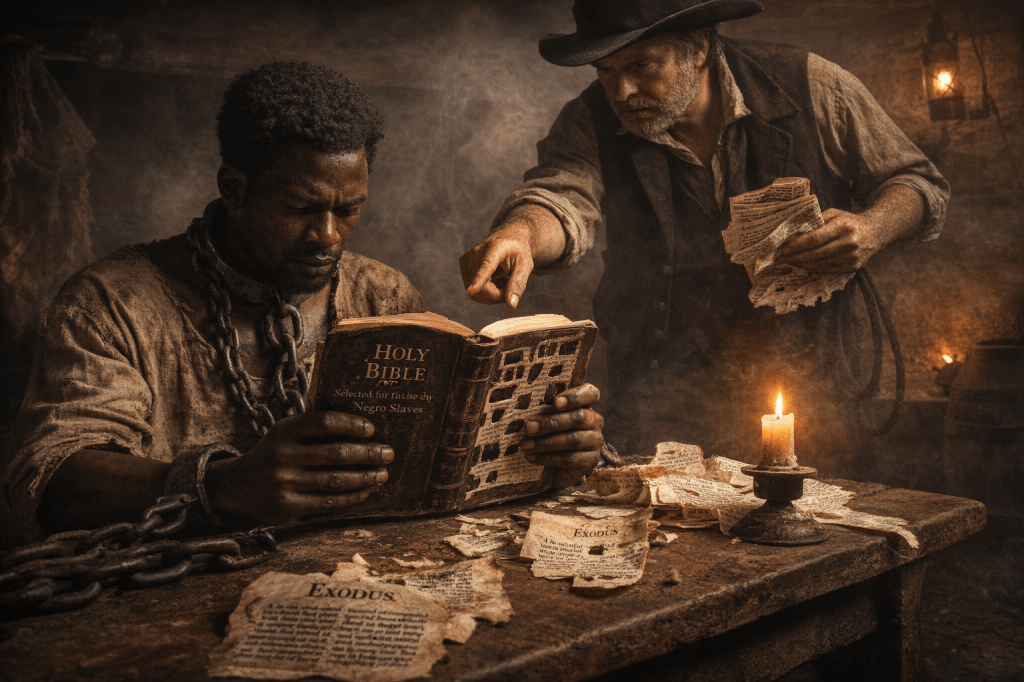
The history of the Slave Bible reveals one of the most calculated spiritual manipulations in modern history—an intentional distortion of sacred scripture used to justify racial domination and suppress liberation. Far from promoting Christian faith in its fullness, the Slave Bible was engineered as a tool of control, ensuring that enslaved Africans would encounter a theology of obedience rather than a gospel of freedom.

Christianity was introduced to enslaved Africans under coercive conditions. European slaveholders claimed religious benevolence while simultaneously denying enslaved people access to the full biblical text. Literacy itself was criminalized; laws across the American South forbade enslaved Africans from learning to read, as literacy was directly linked to resistance, organization, and revolt (Williams, 2005).

The Slave Bible, formally titled Parts of the Holy Bible, Selected for the Use of the Negro Slaves, in the British West-India Islands (1807), was produced by Anglican missionaries affiliated with the Society for the Conversion of Negro Slaves. This was not a complete Bible but a heavily redacted version designed to serve plantation interests rather than spiritual truth (Thompson, 1998).

Of the 1,189 chapters in the Protestant Bible, approximately 90 percent of the Old Testament was removed, along with nearly half of the New Testament. Entire books central to liberation theology—Exodus, Deuteronomy, Joshua, Judges, and large portions of the prophets—were omitted because they emphasized deliverance from bondage and divine justice against oppressors.

Exodus was especially dangerous to slaveholders. The story of Israel’s deliverance from Egypt offered enslaved Africans a clear theological parallel: a God who hears the cries of the oppressed, confronts empire, and breaks chains. By removing Exodus 1–20 almost entirely, slaveholders eliminated the most explicit biblical narrative of emancipation (Raboteau, 2004).

Passages affirming equality before God were likewise excised. Galatians 3:28—“There is neither Jew nor Greek, bond nor free”—was absent. So too were scriptures condemning manstealing, such as Exodus 21:16 and 1 Timothy 1:10, which explicitly define kidnapping humans as a crime punishable by death under Mosaic law.

What remained were verses emphasizing submission, obedience, and silence. Ephesians 6:5—“Servants, be obedient to them that are your masters”—was retained without its broader theological context. Colossians and 1 Peter were selectively edited to reinforce a one-sided doctrine of servitude stripped of moral accountability for masters.

This selective theology created a distorted Christ—one who demanded submission but never confronted injustice. The radical Jesus who overturned tables, rebuked elites, and proclaimed freedom to the captives (Luke 4:18) was minimized or erased entirely.

The suppression of biblical literacy extended beyond redaction. Enslaved Africans caught with books or attempting to read scripture independently faced brutal punishment. Slaveholders understood that the Bible, when read holistically, posed a direct threat to the institution of slavery (Douglass, 1845/2003).

Despite these restrictions, enslaved Africans developed clandestine religious practices. “Hush harbors” and secret prayer meetings allowed them to reinterpret scripture orally, often preserving the liberation themes that slaveholders sought to erase. Oral theology became a form of resistance and survival (Raboteau, 2004).

Enslaved preachers often re-centered Exodus, Revelation, and prophetic justice through song, spirituals, and coded language. Songs like Go Down, Moses were not merely hymns but theological declarations of impending freedom and divine judgment against Pharaoh-like systems.

The Slave Bible also reveals the racialization of God. White supremacy reimagined Christianity as inherently European, positioning whiteness as godly and Blackness as cursed—often through misinterpretations of the so-called “Curse of Ham,” a doctrine now widely rejected by scholars (Haynes, 2002).

This theological distortion had lasting psychological consequences. By weaponizing scripture, slaveholders attempted to sever enslaved Africans from a God of justice and reframe oppression as divine order. This contributed to generational trauma and religious confusion within Black communities.

Yet, history shows that the strategy ultimately failed. Enslaved Africans did not abandon God; they reclaimed Him. Black Christianity emerged as a counter-theology—one rooted in liberation, survival, and divine reversal of power structures.

The legacy of the Slave Bible demands critical reflection today. It exposes how scripture can be manipulated when removed from historical, linguistic, and ethical context. It also warns against any theology that aligns God with the empire rather than the oppressed.

Modern scholarship recognizes the Slave Bible as evidence not of Christian faithfulness, but of moral corruption. It stands as a testament to how religion can be weaponized when truth threatens power.

Importantly, the Slave Bible also affirms why unrestricted access to scripture matters. When people read the Bible for themselves, they encounter a God who repeatedly sides with the marginalized, condemns exploitation, and demands justice.

The full biblical canon—especially the prophets, the law, and the teachings of Christ—cannot coexist with chattel slavery without contradiction. This is precisely why it had to be edited.

Today, the Slave Bible is preserved in museums not as a sacred text, but as a warning. It reminds us that oppression often fears education more than rebellion and that truth, once uncovered, cannot remain chained.

Ultimately, the story of the Slave Bible is not just about what was removed, but about what endured. Faith survived censorship. Hope survived mutilation. And the God of the oppressed could not be erased—even when His words were.


References

Douglass, F. (2003). Narrative of the life of Frederick Douglass, an American slave (Original work published 1845). Penguin Classics.

Haynes, S. R. (2002). Noah’s curse: The biblical justification of American slavery. Oxford University Press.

Raboteau, A. J. (2004). Slave religion: The “invisible institution” in the antebellum South (Updated ed.). Oxford University Press.

Thompson, V. B. (1998). The making of the African diaspora in the Americas, 1441–1900. Longman.

Williams, J. E. (2005). Religion and violence in early American slavery. Routledge.

Society for the Conversion of Negro Slaves. (1807). Parts of the Holy Bible, selected for the use of the Negro slaves, in the British West-India Islands. London: Law and Gilbert.

The Holy Bible, King James Version. (1611/1769). Cambridge University Press.

The Bible Series: The Narrow Path – (Matthew 7:14)

Key Scripture: Matthew 7:14 – “Because strait is the gate, and narrow is the way, which leadeth unto life, and few there be that find it.”


The journey of a believer is not meant to follow the broad, easy roads of the world. God calls us to walk the narrow path, a life of obedience, faith, and discipline that leads to eternal life. Though it may be difficult and sometimes lonely, the reward is eternal.


1. Understanding the Narrow Path

The narrow path represents a life dedicated to Christ, aligned with His Word, and obedient to His commands. It is countercultural and requires discernment to stay on course.


2. The Gate is Strait

Entry into this path requires intentional commitment. Jesus calls for repentance, surrender, and faith.

  • Luke 13:24 – “Strive to enter in at the strait gate: for many, I say unto you, will seek to enter in, and shall not be able.”

3. Few Will Find It

The narrow path is exclusive not because God is selective, but because few are willing to embrace sacrifice, discipline, and holiness.


4. The Broad Road vs. The Narrow Path

The world offers an easy, wide path that caters to fleshly desires, comfort, and instant gratification. The narrow path challenges these impulses and calls for faith-driven choices.

  • Matthew 7:13 – “Enter ye in at the strait gate: for wide is the gate, and broad is the way, that leadeth to destruction…”

5. Faith Over Convenience

Walking the narrow path requires trusting God over worldly wisdom, convenience, or peer pressure.


6. Discipline and Holiness

This path demands a daily commitment to prayer, scripture, and righteous living. It is narrow because it rejects compromise and sin.


7. Overcoming Obstacles

Trials, opposition, and temptations are inevitable. The narrow path tests perseverance, character, and dependence on God.

  • James 1:12 – “Blessed is the man that endureth temptation: for when he is tried, he shall receive the crown of life…”

8. Guidance from the Spirit

The Holy Spirit illuminates the path, strengthens the believer, and provides discernment in choices.


9. Community of Believers

Though few, the fellow travelers on the narrow path offer encouragement, accountability, and fellowship.

  • Hebrews 10:24-25 – “And let us consider one another to provoke unto love and to good works…”

10. Eternal Perspective

The narrow path is not about worldly success but eternal reward. Every sacrifice, act of obedience, and step of faith has lasting significance.


Conclusion

Walking the narrow path is challenging, but it leads to life abundant and eternal. Choosing this path reflects faith, obedience, and love for God. It requires courage to walk differently from the crowd, but in doing so, we experience God’s promise, protection, and everlasting reward.

Making It Through: Trusting God in Every Season.

Life unfolds in seasons, each marked by its own challenges, lessons, and transformations. Some seasons are filled with joy and abundance, while others are heavy with loss, uncertainty, and waiting. Trusting God in every season requires faith that extends beyond circumstances and anchors itself in His unchanging nature. Scripture reminds us that God remains faithful whether life feels stable or shaken (Ecclesiastes 3:1, KJV).

Trusting God begins with acknowledging that life’s difficulties are not evidence of His absence. Trials often refine faith rather than destroy it. James 1:2–3 teaches that trials work patience, shaping spiritual endurance that cannot be produced through ease alone. Making it through life requires learning to see hardship as a season, not a sentence.

In seasons of uncertainty, fear often competes with faith. Human instinct seeks control, but Scripture calls believers to surrender. Proverbs 3:5–6 instructs us to trust in the Lord with all our heart and not lean on our own understanding. Trust grows when reliance on God replaces reliance on self.

Prayer becomes essential in seasons of pressure. It is not merely a request for deliverance but a posture of dependence. Through prayer, believers align their hearts with God’s will, even when answers are delayed. Philippians 4:6–7 promises peace that surpasses understanding when prayer replaces anxiety.

Some seasons test endurance more than belief. Waiting seasons, in particular, stretch patience and challenge hope. Yet Isaiah 40:31 assures that those who wait upon the Lord shall renew their strength. Trusting God in delay means believing that His timing is purposeful, not neglectful.

Loss is one of life’s most painful seasons. Grief can shake even the strongest faith, leaving questions unanswered. Scripture does not deny sorrow but offers comfort, reminding believers that the Lord is near to the brokenhearted (Psalm 34:18). Trust in grief is not the absence of tears but the presence of hope.

There are seasons when obedience feels costly. Doing what is right may result in misunderstanding, rejection, or isolation. Yet Galatians 6:9 encourages perseverance, promising that in due season believers will reap if they faint not. Trusting God means believing that obedience is never wasted.

God often uses difficult seasons to develop character. Romans 5:3–4 teaches that tribulation produces patience, experience, and hope. What feels like breaking is often building something deeper and stronger within the soul. Trust allows transformation to occur without bitterness.

Trusting God also requires humility. Seasons of success can be as spiritually dangerous as seasons of suffering. Deuteronomy 8 warns against forgetting God when blessings increase. Faithfulness in abundance means remembering that every good gift comes from Him.

Community plays a vital role in making it through life. God often uses others to provide encouragement, wisdom, and accountability. Ecclesiastes 4:9–10 reminds us that two are better than one, for when one falls, another helps lift them up. Trust includes allowing others to walk alongside us.

Some seasons expose spiritual fatigue. Weariness can dull prayer and weaken resolve. Yet Matthew 11:28 records Christ’s invitation to the weary to find rest in Him. Trusting God includes resting in His sufficiency rather than striving in our own strength.

There are seasons when prayers seem unanswered. Silence from heaven can feel confusing and discouraging. However, God’s silence does not indicate indifference. Lamentations 3:31–33 assures that the Lord does not afflict willingly and that His mercy is still present, even in quiet seasons.

Trust grows through remembrance. Recalling past deliverance strengthens present faith. Psalm 77 reflects how remembering God’s works restores hope in times of distress. Looking back reminds believers that God has carried them through before and will do so again.

Faith matures when it is rooted in God’s character rather than circumstances. Hebrews 13:8 declares that Jesus Christ is the same yesterday, today, and forever. Seasons change, but God does not. Trust rests on His consistency.

Obedience during trials is a powerful testimony. Others witness faith not through words alone but through perseverance under pressure. 1 Peter 2:12 encourages believers to live honorably so that God is glorified, even in adversity.

Making it through life also requires forgiveness. Holding onto bitterness prolongs pain and hinders healing. Ephesians 4:31–32 calls believers to let go of resentment and extend grace, reflecting the forgiveness received from God. Trusting God includes trusting Him with justice.

Seasons of refinement often precede seasons of renewal. Psalm 66 speaks of being brought through fire and water into a wealthy place. God’s process may be painful, but His purpose is restorative. Trust believes that restoration is coming.

Joy is not reserved for perfect seasons. Nehemiah 8:10 teaches that the joy of the Lord is strength. Even in hardship, joy rooted in God sustains the soul. Trusting God allows joy to coexist with struggle.

Making it through every season ultimately requires surrender. Life cannot be controlled, but it can be entrusted to God. Psalm 37:5 encourages believers to commit their way to the Lord and trust Him to bring it to pass.

In the end, trusting God in every season is an act of faith renewed daily. It is choosing belief over fear, obedience over comfort, and hope over despair. God remains faithful through every season, carrying His people until purpose is fulfilled.


Prayer

Heavenly Father,
I come before You, acknowledging that You are God over every season of my life. In times of joy and in times of sorrow, help me to trust You fully. Strengthen my faith when I feel weak, and grant me peace when answers seem delayed. Teach me patience in waiting, humility in abundance, and endurance in hardship. Guard my heart from fear, bitterness, and discouragement, and fill me with hope that rests in You alone. I commit my path, my future, and every season of my life into Your hands, trusting that You are faithful to carry me through. In Jesus’ name, Amen.


References (KJV Bible)

Ecclesiastes 3:1
James 1:2–3
Proverbs 3:5–6
Philippians 4:6–7
Isaiah 40:31
Psalm 34:18
Galatians 6:9
Romans 5:3–4
Deuteronomy 8:11–18
Ecclesiastes 4:9–10
Matthew 11:28
Lamentations 3:31–33
Psalm 77:11–14
Hebrews 13:8
1 Peter 2:12
Ephesians 4:31–32
Psalm 66:10–12
Nehemiah 8:10
Psalm 37:5

Weaponizing Scripture: How the Bible Was Used to Justify Enslavement

This photograph is the property of its respective owner. No copyright infringement intended

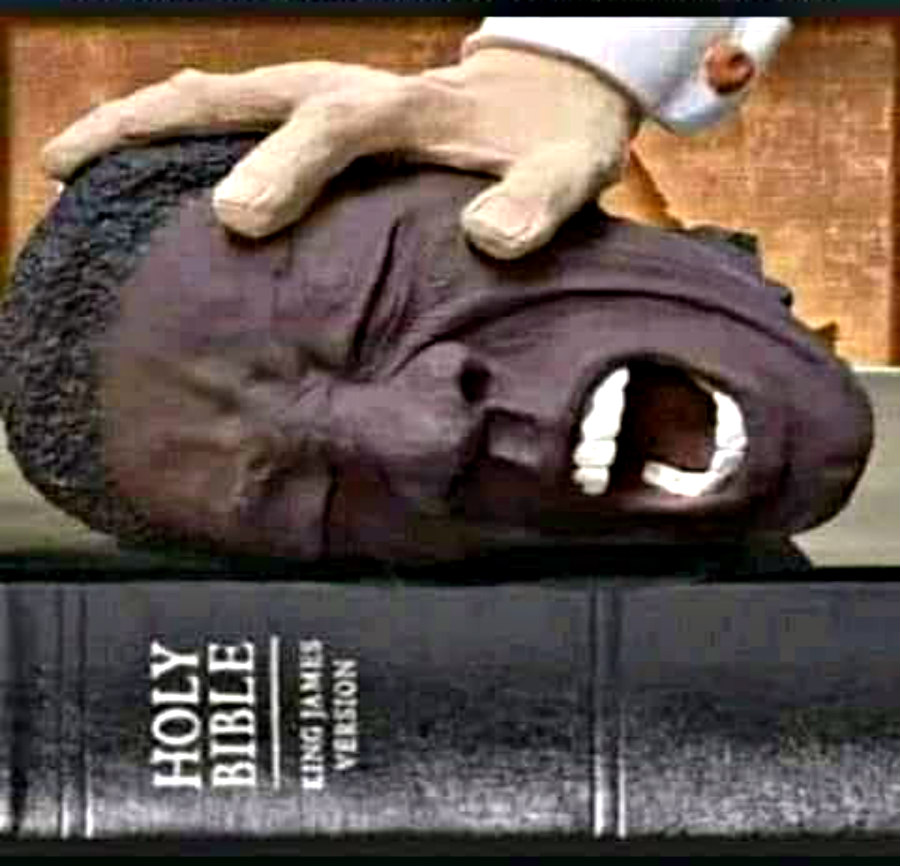
Weaponizing Scripture was one of the most devastating tools used to sustain the transatlantic slave system. The Bible, a text meant to proclaim liberation, justice, and the dignity of humanity, was distorted into an instrument of control. Enslavers did not merely use chains and whips; they used theology, selectively interpreted and strategically taught, to shape belief, obedience, and identity.

European slaveholders understood that physical domination alone was insufficient. To maintain long-term control, they needed mental and spiritual submission. Christianity, when stripped of its liberatory core, became a mechanism for conditioning enslaved Africans to accept suffering as divinely ordained rather than violently imposed.

One of the most common tactics was the selective reading of Scripture. Enslavers emphasized verses that appeared to support servitude while suppressing passages that spoke of freedom, justice, and God’s judgment against oppression. This manipulation created a counterfeit Christianity that served the empire rather than God.

A frequently cited passage was Ephesians 6:5, “Servants, be obedient to them that are your masters” (KJV). This verse was taught without context, stripped of its historical setting, and severed from the broader biblical narrative. Enslavers ignored that the same chapter commands masters to act justly and warns that God shows no partiality.

Similarly, Colossians 3:22 and 1 Peter 2:18 were weaponized to portray submission to abuse as holy obedience. These verses were never intended to endorse racialized, chattel slavery, yet they were recast to sanctify lifelong bondage based on skin color, a concept entirely foreign to the biblical world.

At the same time, enslavers deliberately removed or discouraged engagement with texts that threatened their power. The book of Exodus, which narrates God’s deliverance of an enslaved people, was often censored or reframed. Moses was rarely preached as a liberator, and Pharaoh’s defeat was downplayed or spiritualized to avoid political implications.

In many plantations, enslaved Africans were given a heavily edited text known as the “Slave Bible.” This version removed large portions of the Old Testament and New Testament passages that emphasized freedom, equality, or divine justice. What remained was a hollowed-out gospel engineered for compliance.

This theological distortion extended beyond omission into outright deception. Enslavers taught that Black people were cursed by God, often invoking a twisted interpretation of the so-called “Curse of Ham” in Genesis 9. This lie ignores the text itself, which never condemns Ham’s descendants to perpetual slavery and never mentions race.

By redefining God as a white authoritarian figure aligned with European power, enslavers reshaped spiritual imagination. Blackness became associated with sin, inferiority, and divine disfavor, while whiteness was falsely aligned with righteousness and authority. This inversion was not biblical; it was ideological.

Such misuse of Scripture produced mental slavery, a condition where the enslaved internalized the oppressor’s theology. Over time, some came to believe their suffering was God’s will, that resistance was rebellion against heaven, and that liberation was spiritually dangerous.

Yet even under these conditions, enslaved Africans demonstrated remarkable theological resistance. Through spirituals, coded language, and communal worship, they reclaimed biblical themes of deliverance, judgment, and hope. Songs about crossing Jordan, escaping Egypt, and seeing the promised land were not metaphorical escapism; they were theological protest.

The Bible itself consistently condemns man-stealing, the foundation of chattel slavery. Exodus 21:16 declares that kidnapping a human being and selling them is a capital crime. This verse alone dismantles the moral legitimacy of the slave trade, yet it was systematically ignored.

The prophets repeatedly denounce exploitation of the poor and vulnerable. Isaiah, Jeremiah, and Amos all portray God as hostile toward nations that enrich themselves through oppression. These texts reveal that the God of Scripture sides with the crushed, not the conqueror.

Jesus’ ministry further exposes the lie of slaveholding theology. Christ announced His mission as one to “preach deliverance to the captives” and to set the oppressed free (Luke 4:18). Any theology that sanctifies captivity directly contradicts the words of Christ Himself.

The apostolic message affirms spiritual equality among believers. Galatians 3:28 declares that there is neither slave nor free in Christ, undermining any doctrine that elevates one group over another. While early Christians lived within existing social systems, the gospel planted seeds that inevitably challenged them.

Weaponized Scripture also served to fracture Black identity. African spiritual systems were demonized, ancestral memory was erased, and biblical literacy was restricted. This was not evangelism; it was cultural warfare masquerading as salvation.

The long-term consequences of this distortion persist today. Many descendants of the enslaved wrestle with inherited religious trauma, mistrust of Christianity, or internalized inferiority rooted in centuries of theological abuse. This is one of slavery’s most enduring scars.

Yet the Bible itself is not the enemy. The problem has never been Scripture, but who interprets it, how it is taught, and whose interests it serves. When read holistically, the Bible exposes slavery as sin and oppression as rebellion against God.

Reclaiming Scripture requires restoring context, history, and truth. It demands confronting how Christianity was used as a colonial tool while also recognizing how Black faith communities preserved the liberating heart of the gospel against all odds.

Weaponized Scripture enslaved bodies for centuries, but redeemed Scripture continues to awaken minds. When the Bible is freed from manipulation, it testifies not to chains, but to justice, dignity, and divine judgment against every system built on human suffering.


References

Cone, J. H. (1975). God of the oppressed. New York, NY: Seabury Press.

Douglas, K. B. (1994). The black Christ. Maryknoll, NY: Orbis Books.

Haynes, S. R. (2002). Noah’s curse: The biblical justification of American slavery. Oxford, UK: Oxford University Press.

Raboteau, A. J. (2004). Slave religion: The “invisible institution” in the antebellum South. New York, NY: Oxford University Press.

The Holy Bible, King James Version. (1769/2017). Cambridge Edition.

Wilmore, G. S. (1998). Black religion and Black radicalism (3rd ed.). Maryknoll, NY: Orbis Books.

The Bible Series: “”Joseph”” The Faithful Dreamer and His Eternal Legacy.

This photograph is the property of its respective owner. No copyright infringement intended.

Joseph, the eleventh son of Jacob, was born to Rachel, Jacob’s beloved wife, and immediately marked as a child of promise (Genesis 30:22–24, KJV). From his earliest years, he demonstrated a spirit favored by God and recognized by his father, who bestowed upon him the coat of many colors, a garment symbolizing both love and divine favor (Genesis 37:3, KJV). Yet this symbol of distinction also stirred deep envy among his brothers, planting seeds of rivalry that would shape Joseph’s early trials.

Each of the twelve sons of Jacob, founders of Israel’s tribes, had a corresponding precious stone on the High Priest’s breastplate, representing God’s covenant with them. Joseph’s stone was onyx, described in Exodus 28:20: “And the fourth row a beryl, and an onyx, and a jasper: they shall be set in gold in their inclosings” (KJV). Onyx symbolizes resilience, layered strength, and divine protection, foreshadowing Joseph’s ability to endure hardship while preserving his faith and integrity. The stone’s complex beauty reflects his life: layered with trials yet polished by God’s providence.

Joseph’s early life was defined by extraordinary dreams, foretelling that he would rise above his family: “Behold, I have dreamed a dream more; and, behold, the sun and the moon and the eleven stars made obeisance to me” (Genesis 37:9, KJV). These dreams fueled his brothers’ jealousy, motivating them to betray him. They initially plotted to kill him, but ultimately sold him into slavery to Midianite traders, demonstrating the destructive power of envy (Genesis 37:18–28, KJV).

Sold to Potiphar, an officer of Pharaoh, Joseph’s character quickly distinguished him. Despite being a foreigner and a slave, he found favor in Potiphar’s sight, “and the Lord was with Joseph, and he was a prosperous man” (Genesis 39:2, KJV). Joseph’s diligence and faithfulness exemplify how God’s presence can elevate and sustain His servants even in adversity.

Potiphar’s wife tested Joseph’s moral integrity, attempting to seduce him. Joseph resisted, declaring, “How then can I do this great wickedness, and sin against God?” (Genesis 39:9, KJV). His refusal highlights the principle that consecration is not only about obedience but also about protecting the sanctity of the body and the soul from defilement.

False accusations led to Joseph’s imprisonment, yet even there God’s favor remained. “But the Lord was with Joseph, and shewed him mercy, and gave him favour in the sight of the keeper of the prison” (Genesis 39:21–23, KJV). Joseph’s life demonstrates that God’s providence can operate through trials, shaping character, wisdom, and resilience.

Joseph’s God-given gift of dream interpretation became central to his rise. He accurately interpreted the dreams of Pharaoh’s servants in prison (Genesis 40:8, KJV), and later Pharaoh’s troubling dreams of seven years of plenty followed by seven years of famine (Genesis 41:15–32, KJV). This prophetic insight elevated him to second-in-command over Egypt, entrusted with the nation’s resources during a time of impending crisis.

His administration during the famine revealed extraordinary wisdom, foresight, and humility. “Thou shalt be over my house, and according unto thy word shall all my people be ruled” (Genesis 41:40, KJV). Joseph’s leadership saved Egypt and positioned him to fulfill God’s covenant promises to his family, demonstrating that consecrated service benefits both the individual and God’s broader plan.

The famine brought Joseph’s brothers to Egypt seeking sustenance. Initially unrecognized, Joseph tested their hearts to discern repentance (Genesis 42–44, KJV). His careful discernment, mercy, and wisdom underscore the spiritual maturity cultivated through suffering.

Ultimately, Joseph revealed his identity, saying, “I am Joseph; doth my father yet live?” (Genesis 45:3, KJV). His forgiveness reconciled his family, turning their envy and betrayal into instruments of divine providence. Joseph exemplified how God can transform human malice into salvation and blessing.

Joseph’s personal gifts—wisdom, discernment, humility, and prophetic insight—were manifestations of God’s Spirit (Genesis 41:16, KJV). These gifts allowed him to preserve nations, restore his family, and serve as a model of faithfulness. His consecrated life demonstrates that spiritual gifts function best when aligned with obedience and trust in God.

His marriage to Asenath and the birth of Ephraim and Manasseh ensured his lineage and the continuation of God’s covenant through his descendants (Genesis 41:45; 41:50–52, KJV). The tribes of Ephraim and Manasseh inherited prominence in Israel, reflecting the enduring blessing of Joseph’s faithfulness and the symbolic double portion often associated with the firstborn.

Joseph’s onyx stone reflects his layered resilience. Like the stone, his life endured pressures of betrayal, slavery, and false accusation, emerging strengthened and polished. Onyx symbolizes moral fortitude, protection, and divine favor, qualities that Joseph embodied throughout his trials.

The tribes of Ephraim and Manasseh illustrate Joseph’s enduring legacy. Ephraim, often a leading tribe, and Manasseh, settled east of the Jordan, both carried forward Joseph’s influence, demonstrating how God multiplies the faithfulness of one servant into blessings for generations.

Spiritually, Joseph’s life reveals the principle of refinement through adversity. God used suffering to cultivate patience, wisdom, and discernment in him. His faithfulness in small matters, like serving in Potiphar’s house and prison, prepared him for enormous responsibilities, showing that consecration is a process shaped by trials.

Forgiveness and reconciliation were central to Joseph’s legacy. By forgiving his brothers, he preserved covenantal unity, demonstrating that divine leadership is rooted not only in authority but in mercy and relational wisdom (Genesis 50:17, KJV).

Joseph’s prophetic dreams, from youth through adulthood, symbolized God’s sovereign plan. While initially misunderstood and resented, these dreams guided him toward his destiny, revealing that God’s guidance often unfolds gradually and through trials (Genesis 37:5–11, KJV).

The onyx stone, embedded in the High Priest’s breastplate, represents the visible presence of God’s covenant, mirrored in Joseph’s life as a conduit of divine providence. Just as the stone endures layers of pressure and emerges brilliant, Joseph’s integrity and faithfulness shone through adversity, blessing nations and securing his family’s survival.

Joseph’s trials and triumphs exemplify God’s providential care. Romans 8:28 parallels his story: “And we know that all things work together for good to them that love God, to them who are the called according to his purpose” (KJV). Every betrayal and hardship in Joseph’s life served a higher purpose, demonstrating God’s sovereignty.

In conclusion, Joseph’s life, marked by divine favor, prophetic insight, moral integrity, and leadership, serves as a model of faithfulness and consecration. His onyx stone symbolizes resilience, divine protection, and layered beauty revealed through trials. Through his sons, Ephraim and Manasseh, his legacy endured, blessing Israel for generations. Joseph exemplifies how God transforms adversity into purpose, and how consecrated obedience produces enduring spiritual fruit.

The Bible Series: Reading the 1611 KJV Bible with Apocrypha: A Guide to Living a Godly Life

The 1611 King James Version (KJV) of the Bible, including the Apocrypha, is a monumental work that has guided millions in understanding God’s purpose for humanity. Its language, poetry, and depth offer both instruction and inspiration. The KJV is not merely a historical artifact; it is a blueprint for righteous living, a spiritual map for navigating the complexities of life.

Living life according to the 1611 KJV requires recognition that God is the ultimate guide. The scriptures repeatedly emphasize that human understanding is limited, and divine wisdom is essential. Proverbs 3:5–6 instructs, “Trust in the Lord with all thine heart; and lean not unto thine own understanding. In all thy ways acknowledge him, and he shall direct thy paths.”

The inclusion of the Apocrypha in the 1611 KJV provides additional wisdom and moral instruction. Books such as Wisdom of Solomon, Ecclesiasticus (Sirach), and Tobit offer guidance on ethics, discipline, and the rewards of godly living. They reinforce principles of honesty, compassion, and humility, which are central to a life pleasing to God.

A key aspect of the Bible as a guidebook is its emphasis on obedience to God’s laws. The Torah, Psalms, and prophetic writings illustrate that blessings follow adherence to divine instruction. Deuteronomy 28, for instance, outlines the consequences of obedience and disobedience, highlighting that life thrives under God’s guidance.

The KJV with Apocrypha also reveals the identity of the biblical Israelites, providing a historical and spiritual context for understanding God’s covenant people. Scriptural genealogies, tribal delineations, and prophetic visions clarify who the Israelites were and their enduring legacy in spiritual and earthly history. Recognizing this lineage helps believers see themselves within God’s plan and encourages faithfulness to His commands.

The Bible serves as a blueprint for moral and ethical conduct. The teachings of Jesus in the Gospels, complemented by the wisdom literature of the Old Testament and the Apocrypha, emphasize love, integrity, and justice. Followers are called to live honorably, treating others with fairness, showing mercy, and practicing humility.

Prayer and meditation are central practices derived from the scriptures. Engaging with God daily, reading His Word, and reflecting upon it allows believers to internalize divine guidance. Psalms, in particular, provide models for prayer, lamentation, praise, and thanksgiving, demonstrating a holistic spiritual life.

The 1611 KJV teaches that life is a journey of righteousness, not merely a pursuit of personal gain. Ecclesiasticus 2:1–6 in the Apocrypha reminds readers that God tests the faithful, but perseverance, patience, and humility lead to spiritual maturity and divine favor. Life is meant to be lived in alignment with God’s principles rather than worldly expectations.

One of the most profound lessons of the 1611 KJV is the centrality of truth. John 17:17 declares, “Sanctify them through thy truth: thy word is truth.” Living according to God’s Word means embracing reality as God presents it, rejecting deception, and striving for integrity in all areas of life.

The scriptures also provide guidance on community and relationships. The biblical Israelites were taught to honor parents, care for neighbors, and protect the vulnerable. This communal ethic extends to modern life, encouraging believers to cultivate strong, morally grounded relationships and to resist selfishness or exploitation.

Wisdom and discernment are recurring themes in the 1611 KJV with Apocrypha. Readers are encouraged to seek knowledge and understanding that aligns with God’s will. Proverbs and Wisdom literature offer instructions on avoiding foolishness, envy, and pride, guiding individuals toward righteous decision-making.

The Apocrypha emphasizes justice and equity, reinforcing moral principles found in canonical texts. It challenges readers to act fairly, assist the poor, and maintain honesty in trade and social interactions. Living by these standards cultivates a life pleasing to God and beneficial to society.

The Bible also teaches spiritual resilience. Trials, adversity, and temptation are inevitable, but scripture provides encouragement. Psalms, Lamentations, and Wisdom literature affirm that God’s presence offers comfort, strength, and guidance through hardships. Believers are encouraged to trust in God’s providence rather than succumb to despair.

A key aspect of using the Bible as a guide is understanding the historical and prophetic context. Knowledge of the biblical Israelites, their covenant, and prophetic messages allows readers to interpret lessons meaningfully. History demonstrates God’s faithfulness and warns of consequences for disobedience, making scripture both instructional and cautionary.

The 1611 KJV encourages moral reflection and self-examination. Believers are instructed to examine their motives, actions, and desires in light of God’s Word. Apocryphal texts, like Ecclesiasticus, reinforce this by advocating introspection and the correction of moral failings.

Faith expressed through action is another cornerstone. The Bible teaches that belief must manifest in deeds. Generosity, charity, and ethical behavior are proof of one’s commitment to God, aligning personal conduct with spiritual principles rather than mere lip service.

Righteous leadership is modeled in the Bible. Leaders are called to serve with humility, wisdom, and justice. The example of Moses, David, and other biblical figures illustrates that God values character and faithfulness above political or military power. These lessons guide modern believers in positions of influence.

The 1611 KJV with Apocrypha also addresses human frailty and repentance. Scriptures remind readers that sin is inevitable, but God provides a path to restoration. Confession, repentance, and renewed commitment are essential for spiritual health and maintaining alignment with God’s will.

Education and knowledge are vital. Understanding scripture requires study, contemplation, and discussion. The Bible is not merely read; it is studied as a guide for daily life, moral decisions, and spiritual growth, with the Apocrypha enriching comprehension of historical and ethical lessons.

Ultimately, the 1611 KJV Bible with Apocrypha is a complete guide to life. It outlines moral principles, spiritual practices, historical truths, and prophetic insights. It offers a framework for righteous living, teaches obedience, provides wisdom, and reveals God as the ultimate guide. By studying it faithfully, believers gain clarity on their purpose, the nature of the biblical Israelites, and the truths necessary for living a life aligned with God’s will.

References

The Holy Bible, King James Version, 1611. Including the Apocrypha.

Anderson, B. W. (1999). Understanding the Old Testament. Prentice Hall.

Frymer-Kensky, T. (2002). Reading the Bible as History: The New Historicism. Yale University Press.

Aitken, J. K. (2007). A Short History of the Bible. Continuum International.

McKenzie, J. L., & Graham, L. K. (1998). The Hebrew Bible Today: An Introduction to Critical Issues. Westminster John Knox Press.

Knight, G. A. F. (2011). The Biblical Israelite Identity: Origins, History, and Faith. Cambridge Scholars Publishing.

Sanders, E. P. (2007). The Historical Figure of Jesus. Penguin.