Category Archives: The Bible Series

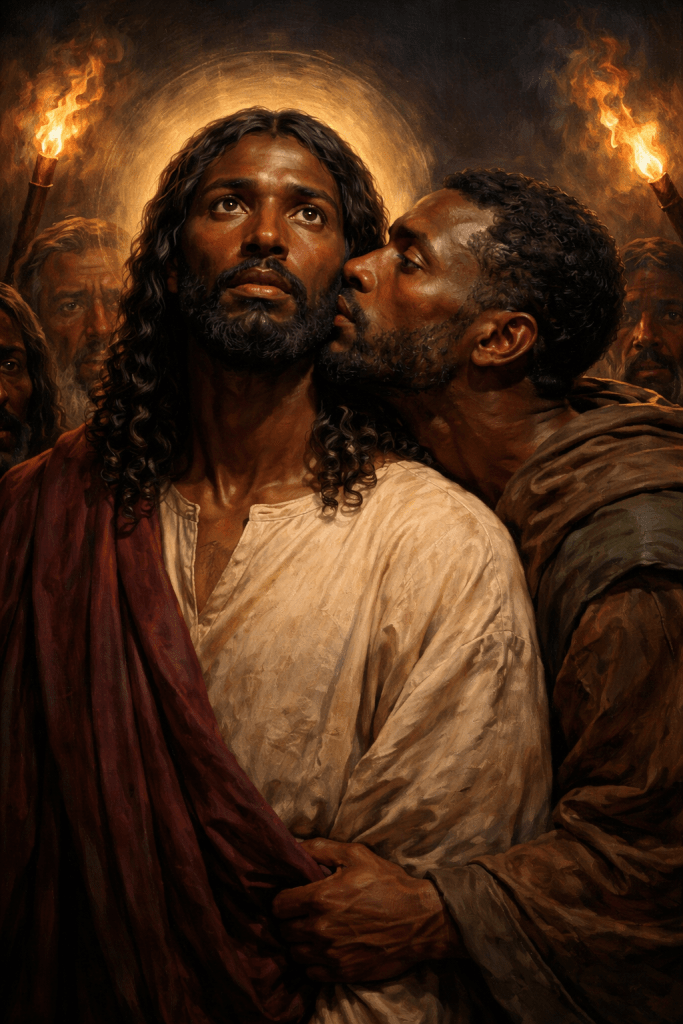
The Bible Series: The Kiss – Betrayal, Destiny, and the Fulfillment of Prophecy

The moment commonly known as “the kiss of betrayal” is one of the most dramatic and spiritually significant events recorded in the New Testament. In the Gospels, the disciple Judas Iscariot identifies Jesus to the arresting authorities with a kiss on the cheek in the Garden of Gethsemane. This act, described in the Gospel of Matthew 26:47–50 and the Gospel of Luke 22:47–48, transformed a gesture of affection and respect into a symbol of treachery. The event has since become an enduring metaphor for betrayal carried out under the appearance of friendship.

Judas Iscariot was one of the original twelve disciples chosen personally by Jesus. The twelve apostles represented the foundational leadership of the early Christian movement, entrusted with spreading Christ’s teachings. According to the Gospel of Mark 3:13–19, Judas was called just like the others—Peter, James, John, and the rest—and he traveled with Jesus during His ministry. Judas witnessed miracles, heard Christ’s teachings, and participated in the communal life of the disciples.

Despite his privileged position, the Gospels portray Judas as having a conflicted character. In the Gospel of John 12:4–6, he is described as the keeper of the disciples’ money bag and is accused of stealing from it. This detail suggests that Judas struggled with greed and personal ambition, weaknesses that eventually contributed to his betrayal. His role among the disciples was therefore paradoxical: a trusted follower who secretly harbored moral corruption.

The betrayal begins to take shape during the final days of Jesus’ ministry in Jerusalem. Religious authorities viewed Jesus as a political and theological threat. His growing influence among the people alarmed the leaders of the temple, who feared unrest and Roman intervention. According to the Gospel of Matthew 26:14–16, Judas approached the chief priests and asked what they would give him if he delivered Jesus to them.

The priests agreed to pay Judas thirty pieces of silver. This amount, referenced in the Gospel of Matthew 26:15, carries symbolic significance because it echoes the prophecy found in the Book of Zechariah 11:12–13, where thirty pieces of silver is the price placed on a shepherd rejected by his people. In ancient Israelite law, this sum also corresponded to the compensation paid for a slave accidentally killed (Exodus 21:32). Thus, the price reflects both prophetic fulfillment and the tragic undervaluation of Christ.

The Gospel writers also emphasize the spiritual dimension behind Judas’s decision. In the Gospel of Luke 22:3, it is written that “Satan entered into Judas.” This phrase suggests that Judas’s betrayal was not merely a human act of greed but part of a larger spiritual conflict between divine purpose and demonic influence. The narrative frames Judas as someone who opened himself to evil through his choices.

Similarly, the Gospel of John 13:27 recounts that after receiving bread from Jesus at the Last Supper, Satan entered Judas again, prompting Jesus to say, “What thou doest, do quickly.” This passage illustrates the tension between human free will and divine foreknowledge. Jesus knew the betrayal was imminent and allowed it to unfold according to the plan that would ultimately lead to redemption.

The betrayal itself occurs in the Garden of Gethsemane shortly after the Last Supper. Judas leads a crowd of soldiers and temple officials to the place where Jesus had gone to pray. To identify Him in the darkness, Judas tells the authorities that the man he greets with a kiss is the one they should arrest. This signal transforms an intimate greeting into an act of deception.

When Judas approaches Jesus, he greets Him respectfully and kisses Him on the cheek. According to the Gospel of Matthew 26:49, he says, “Hail, Rabbi.” Jesus responds with calm awareness, asking, “Friend, wherefore art thou come?” The response reveals both sorrow and understanding. In the Gospel of Luke 22:48, Jesus asks, “Judas, betrayest thou the Son of man with a kiss?”

The kiss, therefore, becomes symbolic of betrayal disguised as loyalty. In the ancient Mediterranean world, a kiss was a sign of respect between a disciple and a teacher. By using this gesture as a signal to arrest Jesus, Judas weaponized trust. The act represents the tragedy of intimate betrayal—being harmed by someone within one’s own circle.

The question of why Judas betrayed Jesus has been debated for centuries by theologians and historians. Some scholars argue that greed motivated him, as suggested by the payment of silver. Others believe he may have been disillusioned with Jesus, expecting a political messiah who would overthrow Roman rule. When Jesus instead spoke of sacrifice and the spiritual kingdom, Judas may have turned against Him.

Another interpretation suggests that Judas attempted to force Jesus to reveal His power. Some scholars speculate that Judas believed arresting Jesus would provoke Him to demonstrate divine authority and establish His kingdom. If this theory holds, Judas’s betrayal may have been rooted in misunderstanding rather than pure malice.

Theologically, Judas also plays a role within the framework of prophecy and divine purpose. Jesus’ betrayal was foretold in passages such as the Book of Psalms 41:9, which says, “Mine own familiar friend… hath lifted up his heel against me.” Early Believers interpreted this as a prophetic foreshadowing of Judas’s actions.

Because of these prophecies, some theologians argue that Judas fulfilled a role necessary for the events leading to the crucifixion. Without the betrayal, Jesus might not have been arrested in the manner described in the Gospels. From this perspective, Judas’s actions became part of the unfolding plan for redemption.

However, the presence of divine purpose does not eliminate personal responsibility. Christian theology generally holds that Judas acted out of his own choices and desires. His betrayal demonstrates how human weakness can align with darker spiritual forces, resulting in tragic consequences.

After Jesus was condemned, Judas experienced deep remorse. According to the Gospel of Matthew 27:3–5, he returned the thirty pieces of silver to the priests, confessing that he had betrayed innocent blood. The priests refused responsibility, leaving Judas overwhelmed by guilt.

Judas then threw the silver into the temple and left. The Gospel account states that he went away and hanged himself. This tragic end illustrates the destructive weight of guilt and the devastating consequences of betrayal.

The chief priests later used the returned money to purchase a field known as the “Field of Blood.” This event again aligns with the prophecy in Zechariah 11:13 and contributes to the narrative symbolism surrounding Judas’s actions.

Despite his betrayal, the story of Judas serves as a cautionary lesson within Biblical teaching. It demonstrates how proximity to truth does not guarantee faithfulness. Judas walked with Jesus, witnessed miracles, and heard divine teaching, yet still chose betrayal.

The message behind the story of Judas and the kiss is therefore multifaceted. It warns against greed, hypocrisy, and spiritual vulnerability. It also emphasizes the sovereignty of God, showing that even acts of betrayal cannot ultimately thwart divine purpose.

Finally, the betrayal leads directly to Jesus’ crucifixion and resurrection, which form the foundation of the followers of Christ. What appeared to be a moment of darkness ultimately became part of the narrative of redemption. The kiss of betrayal, therefore, stands as both a symbol of human treachery and a turning point in the story of salvation.


References

Bauckham, R. (2015). Jesus: A very short introduction. Oxford University Press.

Brown, R. E. (1994). The death of the Messiah: From Gethsemane to the grave. Yale University Press.

Ehrman, B. D. (2014). How Jesus became God. HarperOne.

The Holy Bible, King James Version. (1769/2017). Cambridge University Press.

Wright, N. T. (2012). How God became king: The forgotten story of the Gospels. HarperOne.

The Bible Series: The Narrow Path – (Matthew 7:14)

Key Scripture: Matthew 7:14 – “Because strait is the gate, and narrow is the way, which leadeth unto life, and few there be that find it.”


The journey of a believer is not meant to follow the broad, easy roads of the world. God calls us to walk the narrow path, a life of obedience, faith, and discipline that leads to eternal life. Though it may be difficult and sometimes lonely, the reward is eternal.


1. Understanding the Narrow Path

The narrow path represents a life dedicated to Christ, aligned with His Word, and obedient to His commands. It is countercultural and requires discernment to stay on course.


2. The Gate is Strait

Entry into this path requires intentional commitment. Jesus calls for repentance, surrender, and faith.

  • Luke 13:24 – “Strive to enter in at the strait gate: for many, I say unto you, will seek to enter in, and shall not be able.”

3. Few Will Find It

The narrow path is exclusive not because God is selective, but because few are willing to embrace sacrifice, discipline, and holiness.


4. The Broad Road vs. The Narrow Path

The world offers an easy, wide path that caters to fleshly desires, comfort, and instant gratification. The narrow path challenges these impulses and calls for faith-driven choices.

  • Matthew 7:13 – “Enter ye in at the strait gate: for wide is the gate, and broad is the way, that leadeth to destruction…”

5. Faith Over Convenience

Walking the narrow path requires trusting God over worldly wisdom, convenience, or peer pressure.


6. Discipline and Holiness

This path demands a daily commitment to prayer, scripture, and righteous living. It is narrow because it rejects compromise and sin.


7. Overcoming Obstacles

Trials, opposition, and temptations are inevitable. The narrow path tests perseverance, character, and dependence on God.

  • James 1:12 – “Blessed is the man that endureth temptation: for when he is tried, he shall receive the crown of life…”

8. Guidance from the Spirit

The Holy Spirit illuminates the path, strengthens the believer, and provides discernment in choices.


9. Community of Believers

Though few, the fellow travelers on the narrow path offer encouragement, accountability, and fellowship.

  • Hebrews 10:24-25 – “And let us consider one another to provoke unto love and to good works…”

10. Eternal Perspective

The narrow path is not about worldly success but eternal reward. Every sacrifice, act of obedience, and step of faith has lasting significance.


Conclusion

Walking the narrow path is challenging, but it leads to life abundant and eternal. Choosing this path reflects faith, obedience, and love for God. It requires courage to walk differently from the crowd, but in doing so, we experience God’s promise, protection, and everlasting reward.

The Bible Series: The Story of Hosea

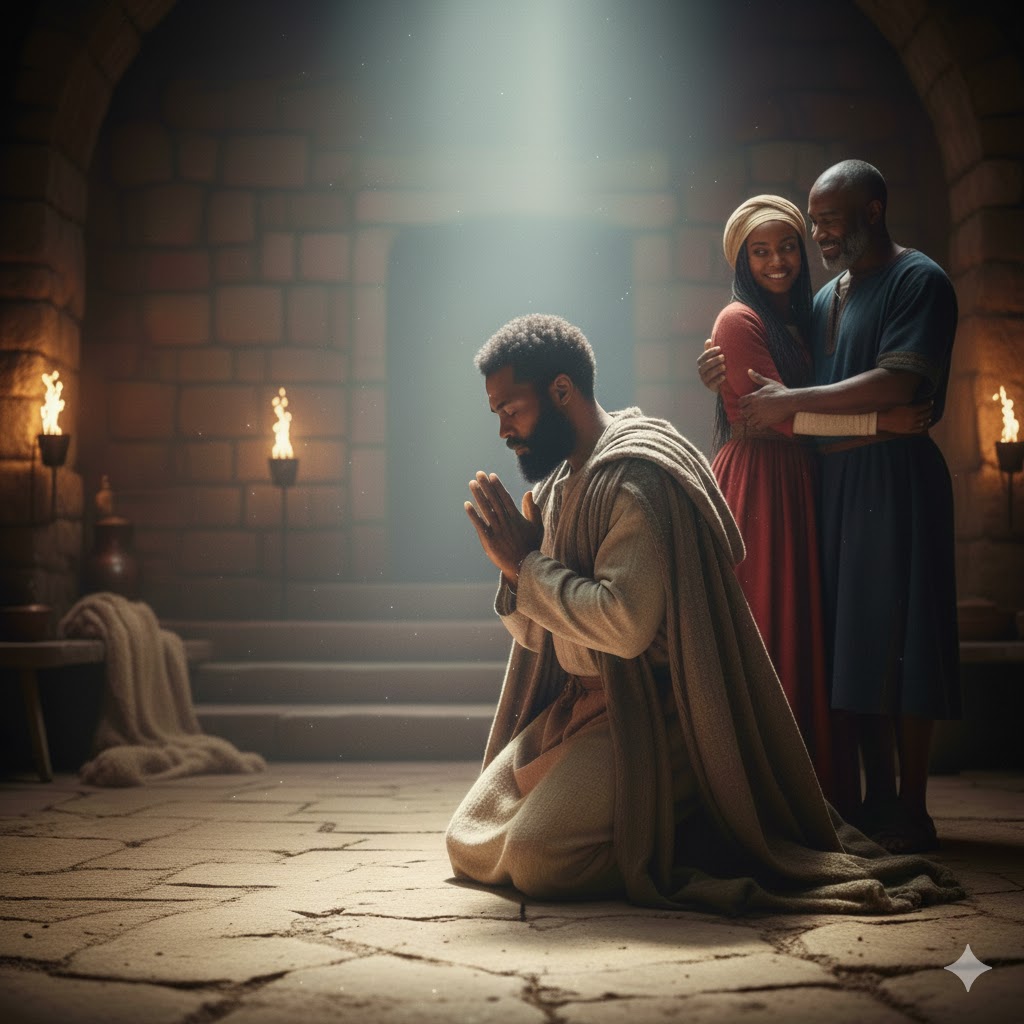
The story of Hosea is one of profound prophecy, divine love, and enduring mercy. Hosea, a prophet in the northern kingdom of Israel, was called by God to deliver a message of judgment and restoration. His life became a living parable, demonstrating God’s steadfast love for a wayward people.

Hosea’s ministry took place during a time of moral decay, idolatry, and political instability in Israel. The people had turned from God, worshiping Baal and following sinful practices. God chose Hosea to confront this rebellion and call Israel back to repentance.

The Lord commanded Hosea to marry Gomer, a woman described as being of harlotry (Hosea 1:2, KJV). This marriage symbolized Israel’s unfaithfulness to God. Just as Gomer would betray Hosea, Israel had forsaken the Lord despite His covenantal love.

Hosea’s relationship with Gomer served as a living message. Each betrayal and reconciliation mirrored the spiritual adultery of Israel and God’s unwavering desire to restore His people. “And the Lord said unto him, Go again, love a woman beloved of her friend, yet an adulteress” (Hosea 3:1, KJV).

The children of Hosea were named with prophetic significance. His first son, Jezreel, symbolized coming judgment on the house of Jehu (Hosea 1:4, KJV). His daughter, Lo-Ruhamah, represented God’s temporary withdrawal of mercy (Hosea 1:6, KJV). His second son, Lo-Ammi, signified that Israel was not His people (Hosea 1:9, KJV).

Despite Israel’s infidelity, God’s heart was filled with compassion. Hosea’s life illustrated that God’s love persists even when His people stray. “How shall I give thee up, Ephraim? how shall I deliver thee, Israel?” (Hosea 11:8, KJV). God’s patience and desire for repentance shine through Hosea’s narrative.

Hosea’s prophecies were both warnings and invitations. He admonished the Israelites to return to God and forsake idolatry. “O Israel, return unto the Lord thy God; for thou hast fallen by thine iniquity” (Hosea 14:1, KJV). Repentance was central to restoration.

Idolatry was depicted as spiritual adultery. The people’s worship of other gods mirrored unfaithfulness in a covenant relationship. Hosea’s symbolic marriage underscored the seriousness of covenant breaking and the pain it caused the heart of God.

Hosea’s life teaches the power of forgiveness. Gomer’s repeated infidelity did not sever the covenantal bond. Similarly, God’s forgiveness remains available to Israel and to believers who return to Him in sincere repentance.

Hosea’s message emphasizes the depth of God’s mercy. Though judgment was inevitable, restoration was promised. “I will heal their backsliding, I will love them freely: for mine anger is turned away from him” (Hosea 14:4, KJV). Restoration follows true repentance.

The story of Hosea highlights divine patience. God waits for His people to return, demonstrating a love that transcends human failure. “He hath not dealt with us after our sins; nor rewarded us according to our iniquities” (Psalm 103:10, KJV).

God’s love is active, not passive. Hosea was called to enact a tangible example of God’s compassion. Through marriage, family life, and prophecy, Hosea displayed the tension between judgment and mercy.

Hosea also addresses communal responsibility. The nation’s leaders and people were accountable for perpetuating sin. Prophets like Hosea reminded them that leadership entails righteousness and moral guidance.

The book of Hosea encourages self-reflection. Believers today are called to examine personal fidelity to God, turning from idolatry—whether literal or metaphorical—and embracing covenant faithfulness.

Faithfulness is central. Hosea’s life illustrates that God desires not merely obedience, but loyalty of heart. Spiritual devotion requires commitment, consistency, and integrity.

The story also conveys hope. Even when consequences are severe, God promises renewal for those who seek Him. Restoration is not earned, but freely given to repentant hearts.

Hosea demonstrates that love often requires sacrifice. The prophet’s obedience came at personal cost, yet his fidelity modeled God’s own willingness to redeem and restore humanity.

God’s justice and mercy coexist. Hosea portrays a God who judges sin yet extends grace, showing that divine love is both righteous and redemptive.

Ultimately, the story of Hosea is a call to return, to love, and to remain faithful. It reminds believers that God’s heart is always inclined toward reconciliation, teaching lessons of patience, forgiveness, and covenant loyalty.

Hosea’s life and prophecies continue to inspire believers to pursue holiness, love God wholeheartedly, and reflect His mercy in relationships and communities.


References

The Holy Bible, King James Version. (1769/2017). Cambridge University Press.

Oswalt, J. N. (1998). The Book of Hosea: An exegetical and theological commentary. Eerdmans.

Motyer, J. A. (2005). The Message of Hosea: God’s unfailing love. Inter-Varsity Press.

Allen, L. C. (2008). Hosea: A commentary. Westminster John Knox Press.

The Bible Series: “”Joseph”” The Faithful Dreamer and His Eternal Legacy.

This photograph is the property of its respective owner. No copyright infringement intended.

Joseph, the eleventh son of Jacob, was born to Rachel, Jacob’s beloved wife, and immediately marked as a child of promise (Genesis 30:22–24, KJV). From his earliest years, he demonstrated a spirit favored by God and recognized by his father, who bestowed upon him the coat of many colors, a garment symbolizing both love and divine favor (Genesis 37:3, KJV). Yet this symbol of distinction also stirred deep envy among his brothers, planting seeds of rivalry that would shape Joseph’s early trials.

Each of the twelve sons of Jacob, founders of Israel’s tribes, had a corresponding precious stone on the High Priest’s breastplate, representing God’s covenant with them. Joseph’s stone was onyx, described in Exodus 28:20: “And the fourth row a beryl, and an onyx, and a jasper: they shall be set in gold in their inclosings” (KJV). Onyx symbolizes resilience, layered strength, and divine protection, foreshadowing Joseph’s ability to endure hardship while preserving his faith and integrity. The stone’s complex beauty reflects his life: layered with trials yet polished by God’s providence.

Joseph’s early life was defined by extraordinary dreams, foretelling that he would rise above his family: “Behold, I have dreamed a dream more; and, behold, the sun and the moon and the eleven stars made obeisance to me” (Genesis 37:9, KJV). These dreams fueled his brothers’ jealousy, motivating them to betray him. They initially plotted to kill him, but ultimately sold him into slavery to Midianite traders, demonstrating the destructive power of envy (Genesis 37:18–28, KJV).

Sold to Potiphar, an officer of Pharaoh, Joseph’s character quickly distinguished him. Despite being a foreigner and a slave, he found favor in Potiphar’s sight, “and the Lord was with Joseph, and he was a prosperous man” (Genesis 39:2, KJV). Joseph’s diligence and faithfulness exemplify how God’s presence can elevate and sustain His servants even in adversity.

Potiphar’s wife tested Joseph’s moral integrity, attempting to seduce him. Joseph resisted, declaring, “How then can I do this great wickedness, and sin against God?” (Genesis 39:9, KJV). His refusal highlights the principle that consecration is not only about obedience but also about protecting the sanctity of the body and the soul from defilement.

False accusations led to Joseph’s imprisonment, yet even there God’s favor remained. “But the Lord was with Joseph, and shewed him mercy, and gave him favour in the sight of the keeper of the prison” (Genesis 39:21–23, KJV). Joseph’s life demonstrates that God’s providence can operate through trials, shaping character, wisdom, and resilience.

Joseph’s God-given gift of dream interpretation became central to his rise. He accurately interpreted the dreams of Pharaoh’s servants in prison (Genesis 40:8, KJV), and later Pharaoh’s troubling dreams of seven years of plenty followed by seven years of famine (Genesis 41:15–32, KJV). This prophetic insight elevated him to second-in-command over Egypt, entrusted with the nation’s resources during a time of impending crisis.

His administration during the famine revealed extraordinary wisdom, foresight, and humility. “Thou shalt be over my house, and according unto thy word shall all my people be ruled” (Genesis 41:40, KJV). Joseph’s leadership saved Egypt and positioned him to fulfill God’s covenant promises to his family, demonstrating that consecrated service benefits both the individual and God’s broader plan.

The famine brought Joseph’s brothers to Egypt seeking sustenance. Initially unrecognized, Joseph tested their hearts to discern repentance (Genesis 42–44, KJV). His careful discernment, mercy, and wisdom underscore the spiritual maturity cultivated through suffering.

Ultimately, Joseph revealed his identity, saying, “I am Joseph; doth my father yet live?” (Genesis 45:3, KJV). His forgiveness reconciled his family, turning their envy and betrayal into instruments of divine providence. Joseph exemplified how God can transform human malice into salvation and blessing.

Joseph’s personal gifts—wisdom, discernment, humility, and prophetic insight—were manifestations of God’s Spirit (Genesis 41:16, KJV). These gifts allowed him to preserve nations, restore his family, and serve as a model of faithfulness. His consecrated life demonstrates that spiritual gifts function best when aligned with obedience and trust in God.

His marriage to Asenath and the birth of Ephraim and Manasseh ensured his lineage and the continuation of God’s covenant through his descendants (Genesis 41:45; 41:50–52, KJV). The tribes of Ephraim and Manasseh inherited prominence in Israel, reflecting the enduring blessing of Joseph’s faithfulness and the symbolic double portion often associated with the firstborn.

Joseph’s onyx stone reflects his layered resilience. Like the stone, his life endured pressures of betrayal, slavery, and false accusation, emerging strengthened and polished. Onyx symbolizes moral fortitude, protection, and divine favor, qualities that Joseph embodied throughout his trials.

The tribes of Ephraim and Manasseh illustrate Joseph’s enduring legacy. Ephraim, often a leading tribe, and Manasseh, settled east of the Jordan, both carried forward Joseph’s influence, demonstrating how God multiplies the faithfulness of one servant into blessings for generations.

Spiritually, Joseph’s life reveals the principle of refinement through adversity. God used suffering to cultivate patience, wisdom, and discernment in him. His faithfulness in small matters, like serving in Potiphar’s house and prison, prepared him for enormous responsibilities, showing that consecration is a process shaped by trials.

Forgiveness and reconciliation were central to Joseph’s legacy. By forgiving his brothers, he preserved covenantal unity, demonstrating that divine leadership is rooted not only in authority but in mercy and relational wisdom (Genesis 50:17, KJV).

Joseph’s prophetic dreams, from youth through adulthood, symbolized God’s sovereign plan. While initially misunderstood and resented, these dreams guided him toward his destiny, revealing that God’s guidance often unfolds gradually and through trials (Genesis 37:5–11, KJV).

The onyx stone, embedded in the High Priest’s breastplate, represents the visible presence of God’s covenant, mirrored in Joseph’s life as a conduit of divine providence. Just as the stone endures layers of pressure and emerges brilliant, Joseph’s integrity and faithfulness shone through adversity, blessing nations and securing his family’s survival.

Joseph’s trials and triumphs exemplify God’s providential care. Romans 8:28 parallels his story: “And we know that all things work together for good to them that love God, to them who are the called according to his purpose” (KJV). Every betrayal and hardship in Joseph’s life served a higher purpose, demonstrating God’s sovereignty.

In conclusion, Joseph’s life, marked by divine favor, prophetic insight, moral integrity, and leadership, serves as a model of faithfulness and consecration. His onyx stone symbolizes resilience, divine protection, and layered beauty revealed through trials. Through his sons, Ephraim and Manasseh, his legacy endured, blessing Israel for generations. Joseph exemplifies how God transforms adversity into purpose, and how consecrated obedience produces enduring spiritual fruit.

The Bible Series: Reading the 1611 KJV Bible with Apocrypha: A Guide to Living a Godly Life

The 1611 King James Version (KJV) of the Bible, including the Apocrypha, is a monumental work that has guided millions in understanding God’s purpose for humanity. Its language, poetry, and depth offer both instruction and inspiration. The KJV is not merely a historical artifact; it is a blueprint for righteous living, a spiritual map for navigating the complexities of life.

Living life according to the 1611 KJV requires recognition that God is the ultimate guide. The scriptures repeatedly emphasize that human understanding is limited, and divine wisdom is essential. Proverbs 3:5–6 instructs, “Trust in the Lord with all thine heart; and lean not unto thine own understanding. In all thy ways acknowledge him, and he shall direct thy paths.”

The inclusion of the Apocrypha in the 1611 KJV provides additional wisdom and moral instruction. Books such as Wisdom of Solomon, Ecclesiasticus (Sirach), and Tobit offer guidance on ethics, discipline, and the rewards of godly living. They reinforce principles of honesty, compassion, and humility, which are central to a life pleasing to God.

A key aspect of the Bible as a guidebook is its emphasis on obedience to God’s laws. The Torah, Psalms, and prophetic writings illustrate that blessings follow adherence to divine instruction. Deuteronomy 28, for instance, outlines the consequences of obedience and disobedience, highlighting that life thrives under God’s guidance.

The KJV with Apocrypha also reveals the identity of the biblical Israelites, providing a historical and spiritual context for understanding God’s covenant people. Scriptural genealogies, tribal delineations, and prophetic visions clarify who the Israelites were and their enduring legacy in spiritual and earthly history. Recognizing this lineage helps believers see themselves within God’s plan and encourages faithfulness to His commands.

The Bible serves as a blueprint for moral and ethical conduct. The teachings of Jesus in the Gospels, complemented by the wisdom literature of the Old Testament and the Apocrypha, emphasize love, integrity, and justice. Followers are called to live honorably, treating others with fairness, showing mercy, and practicing humility.

Prayer and meditation are central practices derived from the scriptures. Engaging with God daily, reading His Word, and reflecting upon it allows believers to internalize divine guidance. Psalms, in particular, provide models for prayer, lamentation, praise, and thanksgiving, demonstrating a holistic spiritual life.

The 1611 KJV teaches that life is a journey of righteousness, not merely a pursuit of personal gain. Ecclesiasticus 2:1–6 in the Apocrypha reminds readers that God tests the faithful, but perseverance, patience, and humility lead to spiritual maturity and divine favor. Life is meant to be lived in alignment with God’s principles rather than worldly expectations.

One of the most profound lessons of the 1611 KJV is the centrality of truth. John 17:17 declares, “Sanctify them through thy truth: thy word is truth.” Living according to God’s Word means embracing reality as God presents it, rejecting deception, and striving for integrity in all areas of life.

The scriptures also provide guidance on community and relationships. The biblical Israelites were taught to honor parents, care for neighbors, and protect the vulnerable. This communal ethic extends to modern life, encouraging believers to cultivate strong, morally grounded relationships and to resist selfishness or exploitation.

Wisdom and discernment are recurring themes in the 1611 KJV with Apocrypha. Readers are encouraged to seek knowledge and understanding that aligns with God’s will. Proverbs and Wisdom literature offer instructions on avoiding foolishness, envy, and pride, guiding individuals toward righteous decision-making.

The Apocrypha emphasizes justice and equity, reinforcing moral principles found in canonical texts. It challenges readers to act fairly, assist the poor, and maintain honesty in trade and social interactions. Living by these standards cultivates a life pleasing to God and beneficial to society.

The Bible also teaches spiritual resilience. Trials, adversity, and temptation are inevitable, but scripture provides encouragement. Psalms, Lamentations, and Wisdom literature affirm that God’s presence offers comfort, strength, and guidance through hardships. Believers are encouraged to trust in God’s providence rather than succumb to despair.

A key aspect of using the Bible as a guide is understanding the historical and prophetic context. Knowledge of the biblical Israelites, their covenant, and prophetic messages allows readers to interpret lessons meaningfully. History demonstrates God’s faithfulness and warns of consequences for disobedience, making scripture both instructional and cautionary.

The 1611 KJV encourages moral reflection and self-examination. Believers are instructed to examine their motives, actions, and desires in light of God’s Word. Apocryphal texts, like Ecclesiasticus, reinforce this by advocating introspection and the correction of moral failings.

Faith expressed through action is another cornerstone. The Bible teaches that belief must manifest in deeds. Generosity, charity, and ethical behavior are proof of one’s commitment to God, aligning personal conduct with spiritual principles rather than mere lip service.

Righteous leadership is modeled in the Bible. Leaders are called to serve with humility, wisdom, and justice. The example of Moses, David, and other biblical figures illustrates that God values character and faithfulness above political or military power. These lessons guide modern believers in positions of influence.

The 1611 KJV with Apocrypha also addresses human frailty and repentance. Scriptures remind readers that sin is inevitable, but God provides a path to restoration. Confession, repentance, and renewed commitment are essential for spiritual health and maintaining alignment with God’s will.

Education and knowledge are vital. Understanding scripture requires study, contemplation, and discussion. The Bible is not merely read; it is studied as a guide for daily life, moral decisions, and spiritual growth, with the Apocrypha enriching comprehension of historical and ethical lessons.

Ultimately, the 1611 KJV Bible with Apocrypha is a complete guide to life. It outlines moral principles, spiritual practices, historical truths, and prophetic insights. It offers a framework for righteous living, teaches obedience, provides wisdom, and reveals God as the ultimate guide. By studying it faithfully, believers gain clarity on their purpose, the nature of the biblical Israelites, and the truths necessary for living a life aligned with God’s will.

References

The Holy Bible, King James Version, 1611. Including the Apocrypha.

Anderson, B. W. (1999). Understanding the Old Testament. Prentice Hall.

Frymer-Kensky, T. (2002). Reading the Bible as History: The New Historicism. Yale University Press.

Aitken, J. K. (2007). A Short History of the Bible. Continuum International.

McKenzie, J. L., & Graham, L. K. (1998). The Hebrew Bible Today: An Introduction to Critical Issues. Westminster John Knox Press.

Knight, G. A. F. (2011). The Biblical Israelite Identity: Origins, History, and Faith. Cambridge Scholars Publishing.

Sanders, E. P. (2007). The Historical Figure of Jesus. Penguin.

The Bible Series: The Story of Gideon and Midian.

The account of Gideon and the Midianites unfolds during a dark period in Israel’s history, when the people repeatedly turned away from the covenant and suffered oppression as a consequence. The book of Judges situates this narrative in a cycle of sin, servitude, supplication, and salvation, revealing both human frailty and divine mercy according to the LORD’s enduring faithfulness.

Midian’s oppression of Israel was severe and systematic, stripping the land of its produce and driving the people into dens and caves. The Israelites cried unto the LORD, acknowledging that their distress was linked to disobedience, and the text emphasizes that economic devastation and fear had become daily realities in the promised land.

Before deliverance came, the LORD sent a prophet to remind Israel of His saving acts, declaring that He brought them out of Egypt and delivered them from the hand of all their oppressors. This rebuke framed the coming salvation as an act of grace rather than reward, exposing the spiritual root of Israel’s suffering.

Gideon is introduced not as a mighty warrior but as a fearful man threshing wheat by the winepress to hide it from Midian. This setting underscores the humility of Gideon’s beginnings and the contrast between human weakness and divine calling.

The Angel of the LORD greeted Gideon with words that seemed contradictory to his circumstances, calling him a “mighty man of valour.” This divine address reveals God’s perspective, which speaks identity and purpose into situations that appear barren and defeated.

Gideon questioned how deliverance could come through him, citing his clan’s insignificance and his own low status. The LORD’s response redirected Gideon’s focus from self-assessment to divine presence, promising, “Surely I will be with thee.”

A sign was given to Gideon through an offering consumed by fire, confirming the LORD’s commission. Gideon’s fear turned to reverence as he recognized the holiness of the encounter, building an altar and naming it “The LORD is peace.”

The call to deliver Israel began at home, as Gideon was instructed to tear down his father’s altar to Baal and cut down the grove beside it. This act demonstrated that spiritual reform must precede national victory and that idolatry could not coexist with covenant faithfulness.

Though Gideon acted by night out of fear, the LORD honored his obedience. When opposition arose from the men of the city, Gideon’s father defended him, declaring that Baal should plead for himself if he were truly a god.

As Midian gathered with Amalek and the children of the east, the Spirit of the LORD clothed Gideon, empowering him to call Israel to arms. Yet even in leadership, Gideon sought reassurance, revealing the patience of God with those who desire confirmation of His will.

The sign of the fleece demonstrated God’s condescension to Gideon’s weakness, granting clarity without rebuke. This moment highlights the balance between faith and divine compassion within the narrative.

When the army assembled, the LORD reduced Gideon’s forces to prevent Israel from boasting that victory came by human strength. The deliberate shrinking of the army underscored that salvation belongs to the LORD alone.

The final selection of three hundred men emphasized obedience and alertness rather than military might. Through this unlikely company, God prepared to display His power unmistakably.

On the eve of battle, the LORD strengthened Gideon by revealing a Midianite’s dream foretelling defeat by Gideon’s hand. Gideon’s worship in response illustrates faith matured through divine reassurance.

The strategy of trumpets, pitchers, and lamps defied conventional warfare, signaling that the victory would be miraculous. When the men cried, “The sword of the LORD, and of Gideon,” confusion seized the enemy camp.

The Midianites turned their swords upon one another and fled, fulfilling the LORD’s promise of deliverance. Israel pursued, and the oppressors were subdued, marking a decisive turning point.

Despite victory, Gideon refused kingship, declaring that the LORD alone would rule over Israel. This confession affirmed divine sovereignty, though later actions revealed lingering human weakness.

Gideon’s request for gold led to the creation of an ephod that became a snare to Israel, reminding readers that even faithful leaders can falter. The narrative remains honest about the complexity of righteousness and leadership.

The land had rest for forty years in the days of Gideon, reflecting the peace that follows obedience and divine intervention. Yet the cycle of Judges warns that peace is often temporary when remembrance fades.

The story of Gideon and Midian ultimately testifies to God’s power perfected in weakness, calling every generation to trust not in numbers or strength, but in the presence and promises of the LORD.

References

The Holy Bible, King James Version. Judges 6–8.

The Bible Series: Footsteps of Faith

Theme Scripture: 2 Corinthians 5:7 – “For we walk by faith, not by sight.”

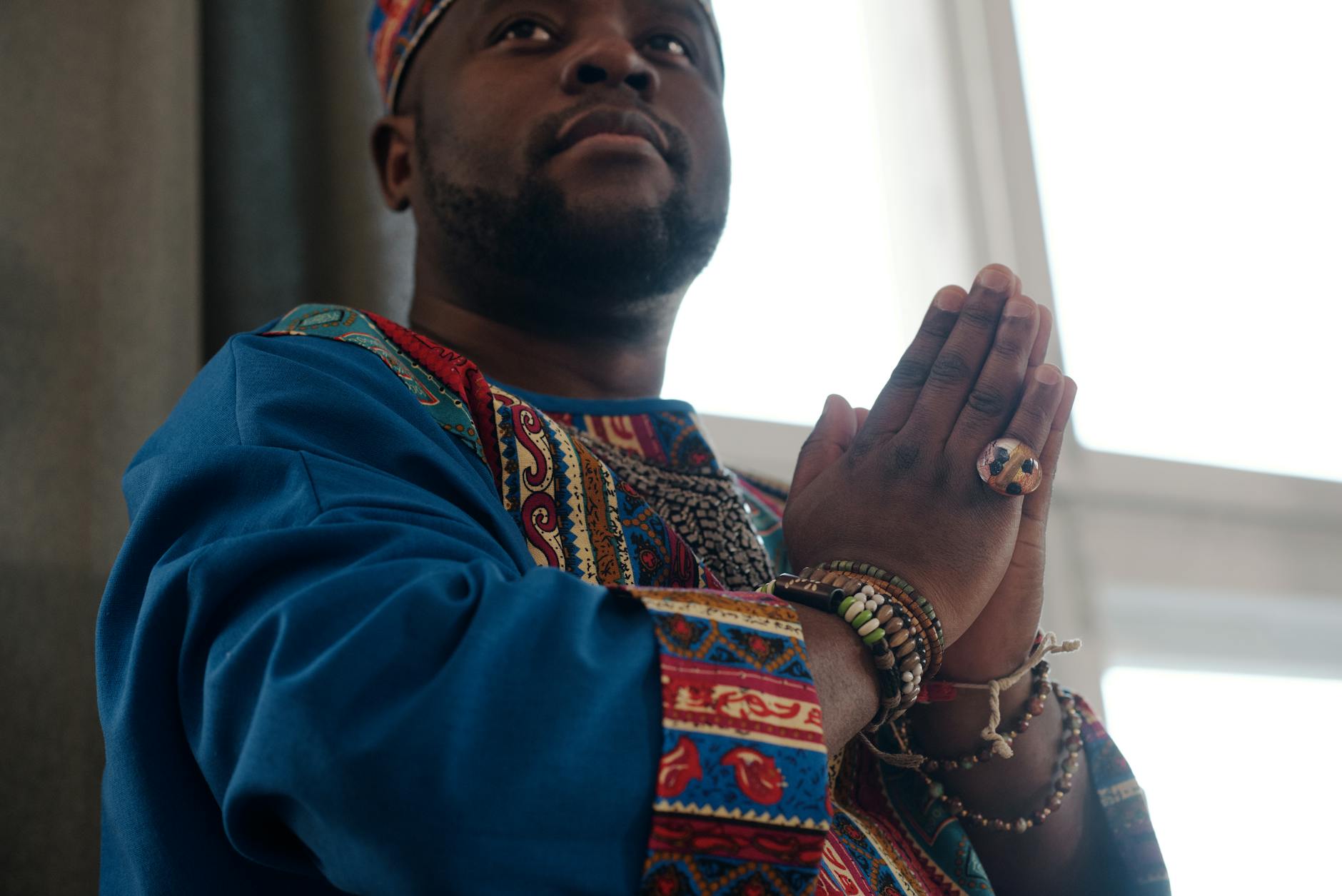
Photo by Askar Abayev on Pexels.com

Introduction

Faith is not passive—it is active movement in the direction God calls us, even when the path is uncertain. Every step taken in obedience to His Word, guided by prayer and trust, becomes a testimony of His faithfulness.


1. Faith is the Foundation of Every Step

Walking with God begins with trusting Him fully, believing His promises, and surrendering personal understanding.

  • Hebrews 11:1 – “Now faith is the substance of things hoped for, the evidence of things not seen.”
  • Faith requires stepping forward, even when the destination is not visible.

2. Trust Over Circumstance

Life often presents obstacles that challenge our trust. Footsteps of faith are not dictated by fear but by confidence in God’s plan.

  • Proverbs 3:5-6 – Trust in the LORD with all thine heart; lean not unto thine own understanding…

3. Guided by the Word

The Bible serves as our map and compass, providing direction for every step.

  • Psalm 119:105 – “Thy word is a lamp unto my feet, and a light unto my path.”

4. Courage in the Unknown

Faith involves moving forward where you cannot see, knowing God sees the full journey.

  • Joshua 1:9 – “Be strong and of a good courage; be not afraid, neither be thou dismayed…”

5. Daily Commitment

Faithful footsteps are built daily through prayer, worship, obedience, and meditation on God’s promises.

  • Lamentations 3:22-23 – “His mercies are new every morning; great is thy faithfulness.”

6. The Power of Small Steps

Even incremental acts of faith matter. Every step aligned with God produces spiritual growth and strengthens character.

  • Zechariah 4:10 – “For who hath despised the day of small things?”

7. Overcoming Fear and Doubt

Fear may tempt us to stop walking, but faith presses forward with trust in God’s provision.

  • Isaiah 41:10 – “Fear thou not; for I am with thee…”

8. Community Encouragement

Walking in faith is often strengthened through fellowship, mentorship, and shared testimony.

  • Hebrews 10:24-25 – “And let us consider one another to provoke unto love and to good works…”

9. Faith in Action

Faith is proven by action. Walking by faith means making choices, helping others, and living in obedience even when it costs us.

  • James 2:17 – “Faith, if it hath not works, is dead, being alone.”

10. Eternal Perspective

Footsteps of faith look beyond temporary trials to the eternal reward God promises.

  • 2 Corinthians 4:18 – “While we look not at the things which are seen, but at the things which are not seen…”

Conclusion

To walk in the footsteps of faith is to trust, obey, and move forward with courage, knowing that God goes before you. Each step is a declaration that His promises are true, His love is steadfast, and His plan is perfect.

The Bible Series: Masculine Archetypes — David, Joseph, Boaz, Solomon, and Christ-Like Manhood.

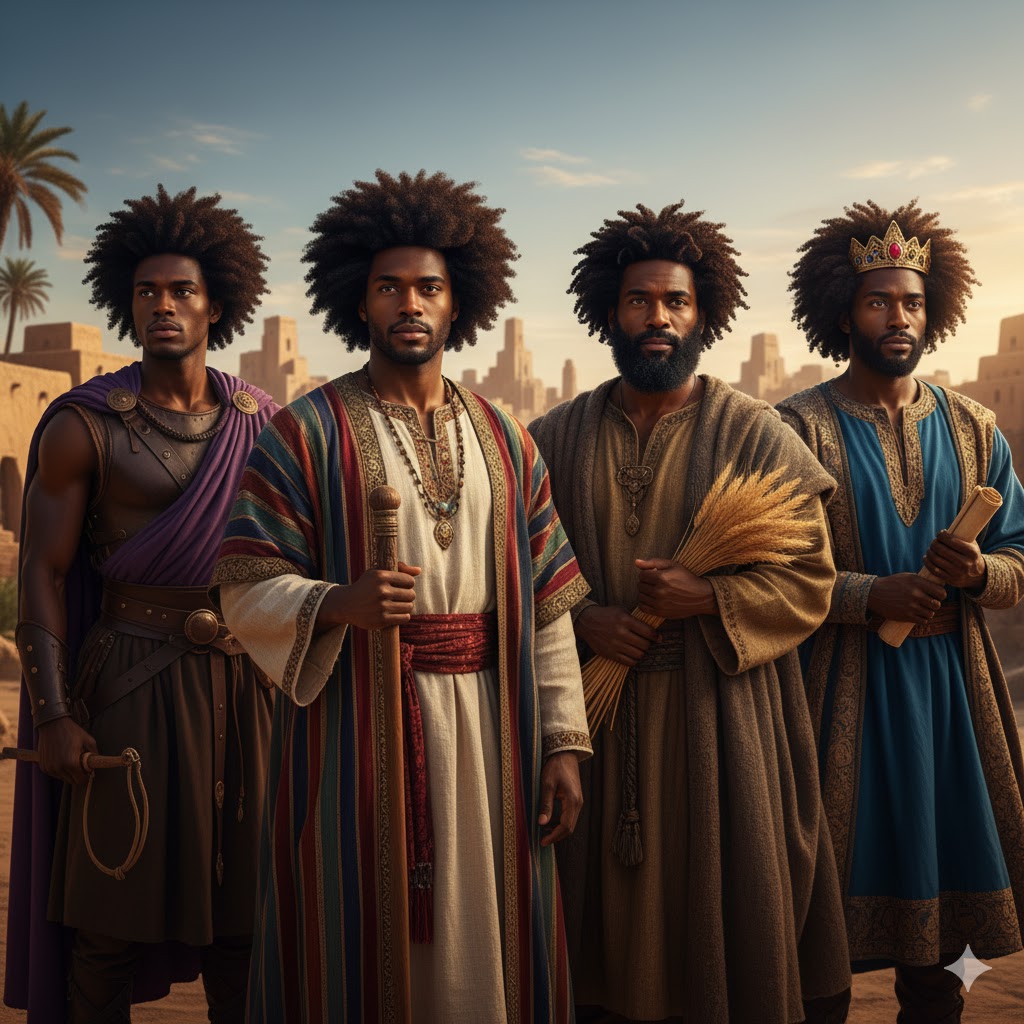
Biblical masculinity is not defined merely by physical strength or social status. Rather, it is rooted in covenant identity, moral authority, obedience to God, protective leadership, and sacrificial love. The Scriptures present layered archetypes—each revealing a dimension of righteous manhood and offering a blueprint for spiritual, emotional, and cultural formation. These archetypes counter modern distortions of masculinity rooted in ego, domination, and superficial conquest. Instead, they elevate purpose, humility, stewardship, and divine calling as the true hallmarks of masculine greatness.

David: The Warrior-Poet King
David embodies paradoxical masculine beauty—ferocity in battle paired with artistic tenderness. His courage against Goliath reflects heroic faith, not arrogance. Scripture declares, “The LORD saveth not with sword and spear” (1 Samuel 17:47, KJV), showing that David’s strength came from trust in God. Yet he also wept, repented, wrote psalms, and worshiped openly. His masculinity embraced emotional intelligence and spiritual intimacy. His failures remind men to repent quickly and return to righteousness. David teaches that a man can wield both the harp and the sword—balanced power rooted in divine purpose.

Joseph: The Moral Leader and Visionary Provider
Joseph reveals integrity under pressure and excellence in adversity. Sold into slavery, falsely accused, and imprisoned, he maintained righteousness. When tempted sexually, he fled, declaring, “How then can I do this great wickedness, and sin against God?” (Genesis 39:9, KJV). His restraint and purity positioned him for elevation. As a provider during famine, Joseph exemplifies strategic wisdom, patience, and forgiveness. He shows that real masculine power is self-control, foresight, and the ability to rise without bitterness. Joseph models destiny leadership—meekness that matures into national authority.

Boaz: The Noble Protector and Redeemer
Boaz personifies protective masculinity rooted in kindness and covenant responsibility. He noticed Ruth not merely for beauty but for character and loyalty. Boaz protected her dignity, provided provision, and acted honorably as kinsman-redeemer, reflecting a man who values lineage preservation and community ethics. Scripture notes his generosity and godliness: “The LORD recompense thy work” (Ruth 2:12, KJV). He demonstrates that masculine strength serves, protects, and uplifts womanhood. Boaz teaches that a man does not exploit vulnerability; he covers it with dignity, commitment, and righteous leadership.

Solomon: The Wise King and Builder
Solomon represents intellectual brilliance, kingly refinement, and creative authority. His request for wisdom rather than riches reflects spiritual maturity (1 Kings 3:9–12). He constructed the Temple—symbolizing that masculinity builds, organizes, and leaves legacy. Although his later life warns against unchecked desire and divided loyalty, Solomon’s wisdom literature (Proverbs, Ecclesiastes, Song of Solomon) shapes biblical ethics of discipline, justice, and godly courtship. Solomon’s archetype emphasizes mental strength, discernment, cultural sophistication, and the stewardship of power under divine law.

Christ-Like Manhood: The Perfect Model
Christ embodies the fulfillment of righteous masculinity. He was firm yet gentle, authoritative yet humble, lion and lamb. He washed feet, blessed children, confronted corruption, healed the broken, and gave His life for His people. Scripture declares, “Greater love hath no man than this, that a man lay down his life for his friends” (John 15:13, KJV). Christ-like masculinity rejects pride, domination, and violence for their own sake; instead, it champions sacrifice, servant-leadership, holiness, truth, discipline, emotional capacity, and uncompromising moral courage.

Unity of Archetypes in Biblical Manhood
David teaches bravery and worship; Joseph teaches purity and perseverance; Boaz teaches honorable love and protection; Solomon teaches wisdom and excellence; Christ synthesizes them all into godly kingship and sacrificial love. These archetypes reveal that a biblical man is warrior, provider, visionary, priest, protector, and servant. He leads not by ego but by obedience. He conquers not nations, but himself. He builds not just houses, but homes and legacies rooted in righteousness.

In an age confused by shallow masculinity—defined by appearance, dominance, and applause—Scripture calls men to deeper identity. Biblical manhood is covenant manhood: purposeful, disciplined, humble, courageous, and rooted in divine calling. True masculine glory shines brightest not through force, but through faithfulness, character, and love.


References

Henry, M. (2010). Commentary on the whole Bible. Hendrickson.
Lewis, G. (2019). Biblical masculinity and covenant leadership. Kingdom Press.
Tripp, P. D. (2012). War of words: Redeeming communication. P&R Publishing.
Wright, N. T. (2011). Jesus and the victory of God. Fortress Press.

The Bible Series: Joseph’s Journey – Integrity in the Face of Temptation.

Joseph, son of Jacob, is one of the most remarkable figures in the Old Testament, celebrated for his steadfast integrity, unwavering faith, and divine insight. His life illustrates the intersection of human vulnerability and God’s providence, revealing how integrity can sustain one through trials, temptation, and betrayal. Joseph’s journey begins in Canaan, as the favored son of Jacob, where his early dreams of prominence foreshadowed a destiny shaped by divine orchestration (Genesis 37:3-11, KJV).

The beauty of Joseph, as described in Scripture, was not merely physical. Genesis 39:6 (KJV) notes that “the LORD blessed the Egyptian’s house for Joseph’s sake; and the blessing of the LORD was upon all that he had in the house, and in the field.” His countenance, demeanor, and charisma reflected a harmony of spiritual favor and personal presence. This external attractiveness was intertwined with moral and spiritual virtues, making him admired by those around him while simultaneously inciting envy.

Joseph’s beauty and favored status with his father generated jealousy among his brothers. Their resentment led to betrayal: Joseph was sold into slavery, stripped of familial protection, and sent to Egypt (Genesis 37:28, KJV). From the outset, Joseph’s life demonstrates a paradox familiar to many of God’s faithful: blessings can attract both opportunity and opposition. His response to betrayal set the tone for the integrity that would define his journey.

In Egypt, Joseph’s initial trials were compounded by Potiphar’s household. Despite being a slave in a foreign land, he quickly distinguished himself through diligence, wisdom, and reliability (Genesis 39:4, KJV). His integrity was evident in his work ethic and his ability to maintain trust, establishing his reputation for righteousness. Joseph’s commitment to ethical conduct, even in servitude, exemplifies the principle that integrity is not situational but rooted in character.

The pivotal test of Joseph’s moral fortitude came through temptation. Potiphar’s wife attempted to seduce him repeatedly, but Joseph steadfastly resisted, declaring, “How then can I do this great wickedness, and sin against God?” (Genesis 39:9, KJV). This declaration highlights the inseparable link between faith and moral action. Joseph’s refusal was not merely a personal decision; it was an affirmation of his loyalty to God above human desire.

Joseph’s rejection of sin had immediate consequences. Falsely accused, he was imprisoned despite his innocence (Genesis 39:20, KJV). Yet even in confinement, Joseph’s integrity and divine favor were evident. He quickly gained the trust of the prison keeper and earned responsibility over all inmates, demonstrating that virtuous character transcends circumstance (Genesis 39:22-23, KJV).

The narrative of Joseph illustrates a recurrent biblical theme: integrity often carries cost but yields long-term reward. While betrayal and false accusation caused temporary suffering, these challenges positioned Joseph for greater divine purpose. The testing of his character cultivated patience, wisdom, and humility—qualities necessary for leadership in the broader trajectory of God’s plan (Genesis 41:39-41, KJV).

Joseph’s gift of interpreting dreams was another arena in which integrity intersected with divine favor. When he accurately interpreted the dreams of Pharaoh’s cupbearer and baker, his insight reflected spiritual discernment and reliance on God rather than self-interest (Genesis 40:8, KJV). His interpretations were not for personal gain but a faithful service to God, a hallmark of his unwavering moral compass.

The story emphasizes the theme of providence. Although Joseph’s brothers acted out of malice, God’s hand was evident in every event, preparing Joseph for leadership over Egypt and the preservation of Israel during famine (Genesis 50:20, KJV). Joseph’s integrity, patience, and moral clarity enabled him to serve effectively, demonstrating that ethical steadfastness aligns with divine destiny.

In the broader context of temptation, Joseph’s life is instructive for understanding the relationship between desire, discipline, and divine alignment. Resisting immediate gratification or ethical compromise often requires foresight, trust, and moral courage. Joseph’s ability to maintain integrity in the face of repeated provocations exemplifies a spiritual principle that transcends historical and cultural context.

Joseph’s life also illustrates the interplay between humility and influence. Despite his elevated position, he consistently attributed success to God rather than personal skill or cunning (Genesis 41:16, KJV). Integrity in leadership, as Joseph demonstrates, involves recognizing one’s dependence on divine guidance while exercising authority responsibly.

His relationship with his brothers later reveals the transformative power of integrity. Rather than seeking revenge, Joseph extended forgiveness and provision during famine (Genesis 45:4-11, KJV). His ability to maintain righteousness while exercising authority shows how moral character enhances leadership, fostering reconciliation and social restoration.

Joseph’s stewardship in Egypt demonstrates the practical application of integrity. He managed resources wisely, planned for future scarcity, and implemented equitable policies to sustain a nation (Genesis 41:46-57, KJV). Integrity, in Joseph’s example, is not passive virtue but active diligence and wise governance.

Temptation recurs in Joseph’s story beyond sexual advances, extending to political and social pressures. He navigated complex relationships with Pharaoh, Egyptian officials, and foreign emissaries, maintaining ethical discernment while fulfilling divine purpose. Joseph’s life illustrates that integrity requires consistency across all spheres of life, not just in moments of overt moral challenge.

Theological reflections on Joseph highlight that integrity is integrally linked to trust in God. His unwavering faith and ethical conduct in the midst of hardship align with Psalm 112:1-3 (KJV), which praises the man who fears the Lord, highlighting the blessings of righteousness, security, and influence. Joseph embodies the principle that personal integrity attracts divine favor and societal trust.

Joseph’s narrative also underscores the redemptive potential of suffering. His trials, though painful, shaped character, fortified patience, and deepened reliance on God (Romans 5:3-5, KJV). Integrity in adversity does not prevent trials but transforms them into instruments of spiritual and practical preparation.

Joseph’s capacity for foresight, mercy, and resourcefulness reflects the holistic nature of integrity. He combined ethical steadfastness with practical wisdom, demonstrating that moral character is both internal and relational—affecting not only oneself but entire communities.

The beauty of Joseph is reflected in the congruence of his physical presence, moral character, and spiritual alignment. He was handsome in appearance, attractive in demeanor, and noble in spirit (Genesis 39:6, KJV). This holistic beauty symbolizes the harmony between divine favor, human virtue, and natural gifts—a reflection of God’s grace in shaping character and presence simultaneously.

Ultimately, Joseph’s journey teaches that integrity is not situational; it is a lifelong practice rooted in God-centered values. It involves courage to resist temptation, patience through trials, wisdom in leadership, and humility before God. His life affirms that divine purpose is inseparable from ethical consistency, and that steadfastness in virtue enables both personal fulfillment and communal restoration.

Joseph’s story serves as a model for believers navigating moral challenges today. His journey reminds us that temptation is inevitable, suffering may be unjust, and yet, with faith and integrity, one can fulfill God’s calling. The alignment of character, courage, and divine guidance creates a life that not only endures trials but also shapes history for generations.

The Life of Joseph:

  • Joseph born to Rachel; favored son; given a coat of many colors
  • Include a small icon of a colorful coat

Dreams of Prominence (Genesis 37:5-11) – Green

  • Joseph shares dreams of leadership; brothers’ jealousy begins
  • Icon: Sun, moon, and stars representing dreams

Betrayal by Brothers (Genesis 37:18-28) – Red

  • Brothers sell Joseph into slavery; deception
  • Icon: Hands exchanging silver coins

Potiphar’s House / First Temptation (Genesis 39:1-12) – Red

  • Joseph excels as a slave; resisted Potiphar’s wife
  • Icon: House with a warning symbol

Imprisonment (Genesis 39:19-23) – Red

  • Falsely accused and imprisoned, retains integrity
  • Icon: Prison bars

Cupbearer and Baker Dreams (Genesis 40:1-23) – Green

  • Joseph interprets dreams in prison; God’s gift revealed
  • Icon: Scroll or dream bubble

Pharaoh’s Dreams & Promotion (Genesis 41:1-41) – Green

  • Interprets Pharaoh’s dreams; appointed ruler of Egypt
  • Icon: Egyptian crown

Famine Management (Genesis 41:46-57) – Blue

  • Implements food storage plan; demonstrates wisdom and integrity
  • Icon: Grain or storehouse

Reunion with Brothers (Genesis 42:1-38; 45:1-15) – Blue

  • Forgives brothers; provides for family; maintains righteousness
  • Icon: Handshake or olive branch

Jacob’s Family Settles in Egypt (Genesis 46:1-34) – Blue

  • Entire family preserved; God’s plan fulfilled
  • Icon: Tent or family group

Joseph’s Death and Legacy (Genesis 50:22-26) – Green

  • Maintains faith until death; prophetic blessing for Israel
  • Icon: Tomb or folded hands

Through his life, Joseph illustrates the timeless principle that God’s providence operates in concert with human integrity. By faithfully maintaining righteousness, resisting temptation, and trusting divine timing, one embodies the essence of spiritual calling, reflecting both the beauty of virtue and the power of God’s design.


References

The Holy Bible, King James Version.

Childs, B. S. (2001). Introduction to the Old Testament as Scripture. Fortress Press.

Hamilton, V. P. (1990). The Book of Genesis, Chapters 18–50. Eerdmans.

Sailhamer, J. H. (1992). Genesis: The Expositor’s Bible Commentary. Zondervan.

Motyer, J. A. (2008). The Message of Genesis 1–11. InterVarsity Press.

Kitchen, K. A. (2003). On the Reliability of the Old Testament. Eerdmans.

The Bible Series: What was the false Christianity used to control enslaved people?

During the transatlantic slave trade and the centuries of bondage that followed, enslavers in the Americas constructed a false version of Christianity designed to pacify, manipulate, and dominate African people. This was not true biblical faith but a political weapon deliberately engineered to uphold racial hierarchy, economic exploitation, and social control. Enslaved Africans quickly recognized that the Christianity of the slave master contradicted both Scripture and the spirit of the God of justice, yet this distorted theology was imposed on them through law, violence, and psychological manipulation.

The “Slave Bible”: Christianity Rewritten for Control

Slaveholders created an edited version of Scripture often called The Slave Bible (published in 1807 by the Society for the Conversion of Negro Slaves). This Bible omitted as much as 90% of the Old Testament and 50% of the New Testament.

Removed sections included:

  • The Exodus story
  • Passages about freedom and liberation
  • Scriptures against oppression
  • Texts about God judging unjust rulers
  • Lines affirming Israel’s identity, dignity, and divine purpose

Left in were:

  • Scriptures about obedience
  • Passages about servants submitting to masters
  • Verses promoting patience in suffering

It was a theological tool of psychological enslavement.


White Supremacist Christian Doctrine

Slaveholders used a twisted theology that claimed:

  • Africans were “cursed” (misusing the Curse of Ham)
  • Slavery was God’s will
  • Whites were divinely ordained rulers
  • Black people were naturally inferior
  • Saving souls was more important than saving bodies
  • Obedience to the master = obedience to God

This doctrine had no biblical basis, but it was taught to justify kidnapping, rape, brutality, terror, and forced labor.


Enslavement Suppressed the Real Biblical Themes

The enslavers intentionally hid the Bible’s central themes:

  • Liberation (Exodus, Isaiah, Luke 4:18)
  • God’s anger at oppression
  • Justice and righteousness
  • Equality of all people
  • Condemnation of kidnapping (Exodus 21:16)
  • Prophecy about Israel going into slavery (Deuteronomy 28)

Enslaved Africans quickly realized the true Bible was a book of freedom, not submission.


Christianity Was Used as Propaganda

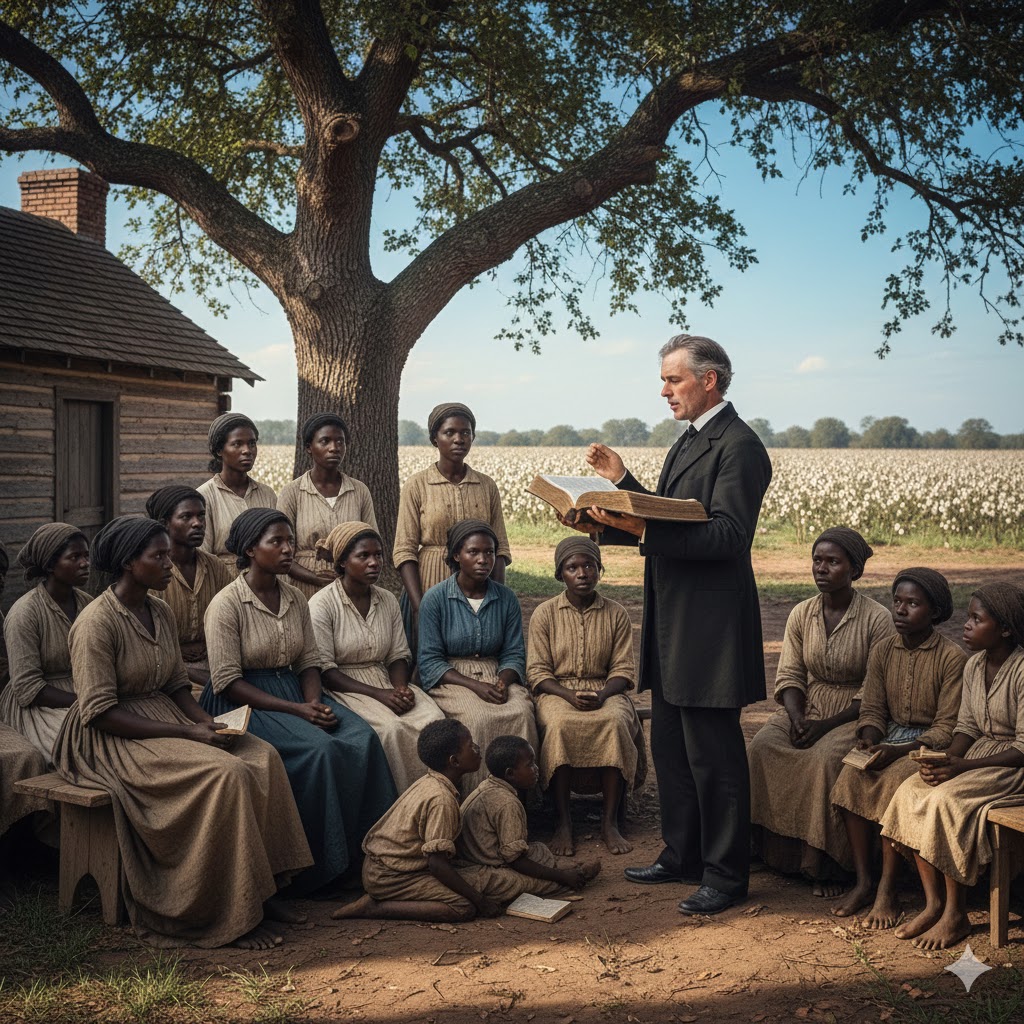
White preachers delivered sermons tailored to slaves:

  • “Be obedient to your masters.”
  • “God wants you to accept your place.”
  • “Heaven will reward you for your suffering.”
  • “Do not question authority.”

This version of Christianity served plantations—not God.


Enslaved People Were Forbidden to Read

Slaveowners passed laws making it illegal for Africans to:

  • Read the Bible
  • Learn to read or write
  • Gather for worship without white oversight
  • Preach freely

Why?

Because the true Bible inspires:

  • liberation
  • identity
  • dignity
  • resistance to injustice
  • divine worthiness

Slaveholders knew the real Scriptures would destroy the slave system.


The Creation of the “Missionary Slave Church”

Enslavers established controlled churches with:

  • White pastors
  • Supervised sermons
  • Carefully selected verses
  • No teaching about Exodus or justice
  • No Hebrew identity
  • No African dignity

This church preached loyalty to the plantation rather than loyalty to God.


The Real Christianity of the Enslaved Was Different

The enslaved Africans created their own underground faith traditions:

  • Secret prayer meetings (“hush harbors”)
  • Spirit-led worship
  • Use of coded spirituals
  • Identification with ancient Israel
  • Reading the full Bible in secret
  • Hope of divine justice and liberation

They saw themselves as the children of Israel in bondage.


Misuse of Paul’s Letters

Slaveholders twisted Paul’s letters about servants in the Roman household system and applied them to chattel slavery, which is fundamentally different.

Biblically:

  • Chattel slavery is condemned.
  • Kidnapping is punishable by death.
  • God liberates oppressed people.
  • Masters and servants in Scripture were not racial, hereditary, or lifelong bondage.

Slaveowners selectively misinterpreted Scripture to protect their wealth.


The Curse of Ham: The Biggest Lie

Enslavers falsely taught that Africans were descendants of Ham and “cursed to be slaves.”
This lie:

  • is not in the Bible
  • misquotes Genesis
  • was created in the Middle Ages to justify racism
  • became a tool of colonial oppression

Biblically, the curse was on Canaan—not all African people.


Why Did Slaveholders Need This False Christianity?

Because true Christianity:

  • condemns slavery
  • empowers the oppressed
  • reveals the humanity of all people
  • uplifts the poor
  • demands justice
  • has a God who destroys oppressive empires (Egypt, Babylon, Assyria, Rome)

False Christianity was the only way to maintain slavery’s brutality while pretending to be righteous.


It Was Christianity Without Christ

It lacked:

  • love
  • justice
  • mercy
  • repentance
  • righteousness
  • truth
  • liberation

It was a political religion masquerading as faith.


The Real Bible Was a Threat to Slavery

Once enslaved Africans encountered the full Scriptures, many identified more with Moses than with Paul, and more with Israel than with Rome.

This realization fueled:

  • rebellions
  • escapes
  • abolitionist movements
  • The formation of independent Black churches

The real gospel is a gospel of freedom.


The false Christianity used to control enslaved people was:

  • a colonial weapon
  • a manipulated theology
  • a stripped-down Bible
  • a slave-owner-approved religion
  • a tool of white supremacy
  • a distortion of Scripture
  • completely opposed to true biblical teaching

The enslaved were given a religion of obedience, while they discovered a God of liberation.

The heart of this false Christianity lay in its selective use of Scripture. Slaveowners removed or rewrote large portions of the Bible to eliminate themes of liberation, divine justice, and human dignity. The infamous “Slave Bible,” published in 1807, cut out nearly all references to freedom, rebellion, and God’s judgment of oppressive rulers. What remained were verses emphasizing obedience, submission, and quiet suffering. This intentional mutilation of the Word of God reveals how deeply slave societies feared the truth of Scripture.

Another core component of this false faith was the misinterpretation of key biblical passages. Enslavers twisted Paul’s instructions to servants—directed at Roman household servants, not enslaved Africans—to justify racial slavery. They also weaponized the so-called Curse of Ham, falsely teaching that African people were destined by God to be slaves. This was a complete distortion of Genesis, where the curse was placed on Canaan, not on Ham, and certainly not on an entire continent of people. Such teachings served the interests of white supremacy, not the teachings of Christ.

To maintain control, slaveholders created highly monitored “plantation churches.” In these spaces, white preachers delivered sermons promoting obedience and reinforcing racial hierarchy. Enslaved people were forbidden to gather independently for worship or to read Scripture for themselves. Laws were enacted across the South prohibiting Black literacy, because the master class understood that an educated believer—armed with the full truth of the Bible—posed a threat to the entire slave system.

This corrupted Christianity also taught enslaved Africans that their suffering was divinely ordained and that they should accept their earthly bondage in exchange for heavenly reward. Such doctrine had no biblical foundation and directly contradicted the character of a God who liberates His people from oppression, from Egypt to Babylon. By promising spiritual salvation while denying physical freedom, enslavers created a theology that separated the soul from the body, ensuring Black labor remained controlled while white consciences remained untroubled.

Yet enslaved Africans discerned the difference between the slave master’s religion and the liberating God of Scripture. In secret gatherings known as “hush harbors,” they forged a true and living Christianity rooted in Exodus, the prophets, the Psalms, and the teachings of Jesus. These clandestine meetings were spaces of healing, communal strength, and spiritual resistance. They prayed for deliverance, sang coded spirituals, and interpreted Scripture through the lens of their lived suffering, affirming a God who hears the cries of the oppressed.

One of the most striking differences between enslaved people’s faith and the enslavers’ religion was the identification with Ancient Israel. Enslaved Africans saw themselves in the story of Moses and the Hebrews—people chosen, persecuted, and promised deliverance by the Most High. This connection was not accidental; it emerged from both spiritual intuition and cultural memory. The master’s Christianity feared this narrative because it empowered enslaved people to see themselves as a sacred people, not property.

The false Christianity of the slaveholder was a Christianity of control, not conversion. Its purpose was not salvation but subjugation. The gospel presented to enslaved people required no repentance from the enslaver, no justice, no righteousness, no love for neighbor. It fabricated a God who blessed the whip, sanctioned the auction block, and smiled upon exploitation. Such a God was an idol created in the image of white supremacy, not the God of Abraham, Isaac, and Jacob.

This enslaver religion also functioned as a political tool. It stabilized the economic foundation of the South by training enslaved people to be compliant, fearful, and psychologically dependent. The message was clear: disobedience to the master meant disobedience to God. This spiritual intimidation reinforced the legal and physical terror already used to maintain slavery.

Despite this oppressive system, enslaved Africans consistently resisted. They sought out the full Bible, interpreted Scripture on their own terms, and cultivated a theology of liberation centuries before formal emancipation. Their understanding of God was holistic—addressing body, spirit, community, and collective freedom. This real Christianity fueled rebellions, escapes, and abolitionist movements, demonstrating the power of faith when aligned with truth.

The false Christianity of slavery also had long-lasting effects. It helped build structures of racism within American churches that persist today. Segregated congregations, discriminatory theology, and racial bias in religious institutions can all be traced back to the slaveholder’s version of faith. This legacy demands honest reckoning and structural repentance from modern Christianity.

Theologically, the Christianity used to control enslaved people was heretical. It denied the prophetic tradition, ignored Christ’s teachings about justice, and contradicted the biblical command to free the oppressed. It rewrote Scripture to accommodate human cruelty. By transforming the Bible into a plantation manual, enslavers positioned themselves not as followers of Christ but as manipulators of His Word.

Enslaved people, however, preserved the truth. Their Christianity was closer to the biblical narrative than the faith preached by their captors. They understood God as deliverer, protector, and judge of unjust nations. Their spirituals, prayers, and testimonies proclaimed a theology of hope in the face of terror, dignity in the face of dehumanization, and destiny in the face of denial.

This distinction between the master’s religion and the enslaved people’s faith became central to the moral authority of Black churches after emancipation. The Black church emerged as a center of community empowerment, civil rights activism, and spiritual resilience precisely because its roots were grounded in liberation, not oppression.

The enslavers’ Christianity was an empire-serving religion, aligned with power rather than truth. It rejected the biblical mandate to “proclaim liberty to the captives” and comfort the brokenhearted. It silenced the prophets and crucified Christ, who stood with the marginalized. Enslaved Africans recognized this and refused to accept a God who endorsed their suffering.

In the end, the false Christianity used to enslave Black people was a counterfeit gospel—one designed to erase identity, suppress resistance, and perpetuate injustice. Yet the enslaved uncovered the true God beneath the lies, reading between the lines, trusting their own spiritual intuition, and embracing a faith that affirmed their humanity and promised their freedom.

This powerful distinction—between a religion of domination and a faith of liberation—continues to shape the spiritual landscape of Black communities today. The legacy of true Christianity, preserved by the enslaved, is a testament to resilience, revelation, and the unbreakable connection between divine truth and human freedom.

References
Blight, D. W. (2018). Frederick Douglass: Prophet of freedom. Simon & Schuster.
Cone, J. H. (2011). The cross and the lynching tree. Orbis Books.
Gomez, M. A. (1998). Exchanging our country marks: The transformation of African identities in the colonial and antebellum South. University of North Carolina Press.
Horsley, R. A. (2003). Jesus and empire: The kingdom of God and the new world disorder. Fortress Press.
Raboteau, A. J. (2004). Slave religion: The “invisible institution” in the antebellum South. Oxford University Press.
Williams, D. (1993). Theology and the Black experience. Fortress Press.