Category Archives: poems

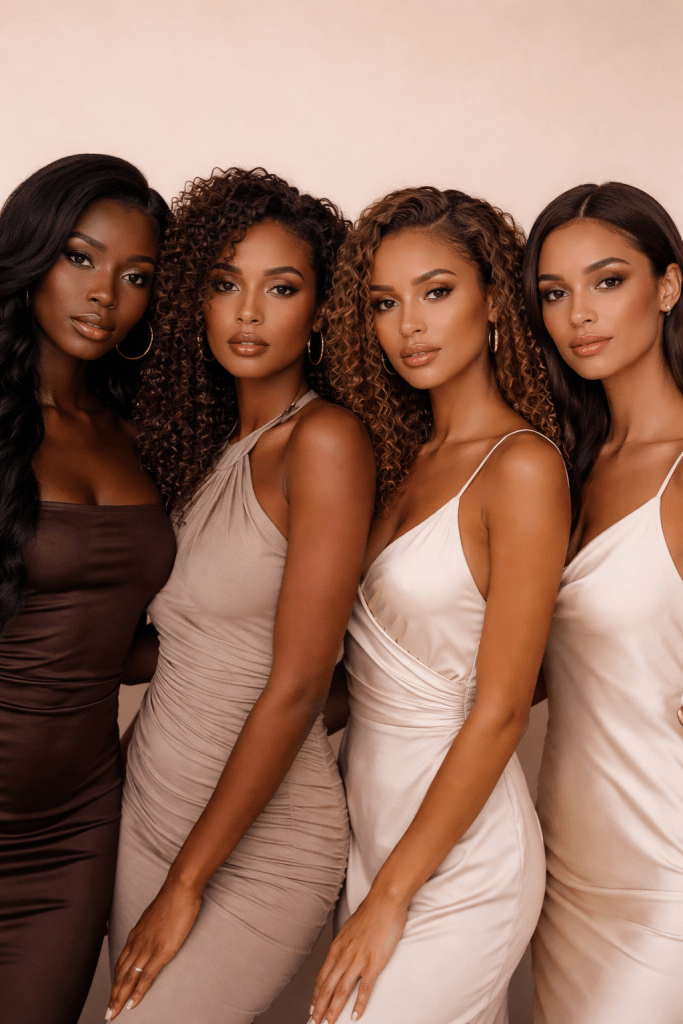
Ode to the shades of Brown

Oh, the shades of brown, rich as the earth,
From the deepest mahogany to the honeyed warmth of birth.
You tell stories of ancestry, of kings and queens,
Of rivers crossed and lands unseen.

Your skin, a tapestry woven by God’s own hand,
A palette divine, too vast to understand.
Every tone a hymn, every hue a song,
A testament of resilience, proud and strong.

In sunlight, you shimmer like burnished gold,
A brilliance no lens nor mirror can hold.
In shadow, you speak of depth and grace,
Of sacred histories, time cannot erase.

Oh, chestnut, cocoa, and espresso hues,
Each a reflection of ancient truths.
Each freckle, each mole, a jewel to behold,
A story of courage, of valor untold.

Caramel whispers of warmth and light,
Mocha radiates quiet power in sight.
Amber gleams with a gentle fire,
Chestnut glows with ancestral desire.

The shades of brown, both subtle and bold,
Carry legacies neither bought nor sold.
From slave cabins to palaces, from fields to streets,
Your beauty defies oppression, never retreats.

KJV Truth sings in your radiant skin:
Psalm 139:14 – “I am fearfully and wonderfully made.”
Every shade, every tone, every nuance,
A reflection of God’s artistry, perfect and true.

Celebrate your brown, in all its delight,
From dawn’s soft glow to the velvet of night.
No pigment dictates your worth or your place,
Your brown is divine, imbued with God’s grace.

Oh, the shades of brown, a spectrum so vast,
From subtle taupe to the boldest cast.
You are power, beauty, endurance, and art,
A masterpiece woven straight from God’s heart.

So rise, brown daughters, with pride in your skin,
Let no world’s bias define what’s within.
Your shade is a crown, your hue is a song,
In the orchestra of creation, you alone belong.

The phrase “shades of brown” reflects more than just physical variation in skin tone—it represents a complex social reality shaped by history, power, and perception. Across the African diaspora and other communities of color, differences in skin tone have been given meaning within systems that rank and assign value to people based on how light or dark they appear. This phenomenon, known as Colorism, continues to influence identity, opportunity, and self-perception.

Colorism has deep roots in the history of slavery and colonialism. During the transatlantic slave trade, lighter-skinned enslaved individuals—many of whom were of mixed ancestry—were sometimes given preferential treatment, such as working in the house rather than in the fields. These divisions were not accidental; they reinforced a hierarchy that placed whiteness, and proximity to it, at the top. Over time, these patterns became internalized within communities, creating lasting divisions based on complexion.

The legacy of these practices can still be seen today. Lighter skin is often associated with beauty, success, and desirability, while darker skin is unfairly stigmatized. This bias is reinforced through media representation, where lighter-skinned individuals are frequently overrepresented in leading roles, advertisements, and positions of influence. As a result, societal standards of beauty often reflect a narrow range of features tied to Eurocentric ideals.

From a sociological perspective, colorism operates as a learned norm within Sociology, passed down through generations and reinforced by institutions such as media, education, and family structures. Individuals absorb these messages early in life, shaping how they view themselves and others. Children, for example, may begin to associate lighter skin with positive traits and darker skin with negative ones, even without explicit instruction.

The psychological impact of colorism is significant. Studies have shown that individuals with darker skin tones may experience lower self-esteem, higher levels of discrimination, and reduced access to opportunities in areas such as employment and education. This aligns with Social Identity Theory, which explains how people derive part of their self-worth from how their group is perceived in society. When darker skin is devalued, it can negatively affect individual identity and confidence.

In addition to its psychological effects, colorism also has economic consequences. Research suggests that lighter-skinned individuals, on average, earn higher incomes and are more likely to be perceived as professional or trustworthy. These disparities highlight how deeply embedded color bias is within social and institutional structures.

The concept of “shades of brown” also intersects with ideas of mixed race and racial ambiguity. Individuals with lighter or racially ambiguous features are often treated differently, sometimes receiving privileges not afforded to darker-skinned individuals. However, this can also come with its own challenges, including questions about identity and belonging.

The Media continues to play a central role in reinforcing color hierarchies. Through film, television, and social media, certain looks are elevated while others are marginalized. The lack of diverse representation contributes to a limited understanding of beauty and perpetuates harmful stereotypes.

At the same time, there has been a growing movement to challenge colorism and celebrate darker skin tones. Campaigns promoting inclusivity and representation have begun to shift public perception, encouraging a broader and more authentic definition of beauty. Social media, while part of the problem, has also become a platform for advocacy and empowerment.

Education and awareness are key to addressing colorism. By understanding its historical roots and recognizing its modern impact, individuals and communities can begin to dismantle these biases. Conversations about colorism help to bring attention to an issue that is often overlooked but deeply felt.

Ultimately, the “shades of brown” are a testament to human diversity, not a hierarchy of value. Skin tone variation is a natural result of genetic adaptation and ancestry, not a measure of worth. Challenging colorism requires both individual reflection and collective action to redefine standards and promote equity.

The journey toward dismantling colorism is ongoing, but it begins with recognizing that all shades carry equal beauty, dignity, and significance. By confronting these biases, society can move closer to a more inclusive and just understanding of identity.


References

Hunter, M. (2007). The persistent problem of colorism: Skin tone, status, and inequality. Sociology Compass, 1(1), 237–254.

Keith, V. M., & Herring, C. (1991). Skin tone and stratification in the Black community. American Journal of Sociology, 97(3), 760–778.

Monk, E. P. (2015). The cost of color: Skin color, discrimination, and health among African Americans. American Journal of Sociology, 121(2), 396–444.

Dixon, T. L., & Telles, E. E. (2017). Skin color and colorism: Global research, concepts, and measurement. Annual Review of Sociology, 43, 405–424.

Hall, R. E. (2018). The Bleaching Syndrome: African Americans’ Response to Cultural Domination. Springer.
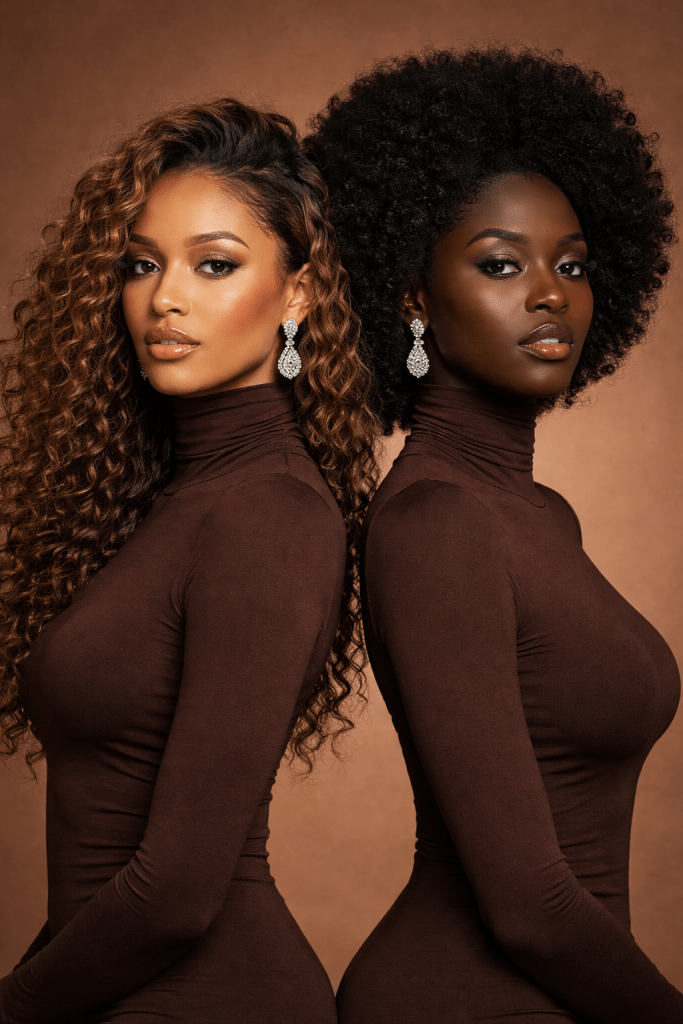
My Light-Skinned Privilege, Her Dark-Skinned Disadvantage.

From a Light Brown Girl, To all Brown Girls

I walk through doors,
They open wide for me,
A shade lighter, a step brighter,
The world smiles differently on me.

Her skin, kissed by night,
Absorbs the sun, absorbs the stares,
She carries the weight of centuries,
Of whispers, judgments, and unseen bars.

I’ve tasted doors that swung freely,
Opportunities served on silver plates,
She knocks, waits, sometimes bleeds,
The world is unsure if she belongs at all.

I see her in mirrors, in classrooms,
In magazines that promise beauty
But only echo my reflection back,
Ignoring her rich, radiant hue.

We share the same blood, the same roots,
But the world measures our worth differently,
She’s exotic, she’s dangerous, she’s wrong,
While I float, almost invisible, in favor.

I want to hug her, lift her, tell her—
The color of her skin is not a curse,
Though the world has learned to punish it,
We must learn to celebrate it.

Her darkness is not a shadow,
Not a fault, not a mistake;
It’s the soil from which strength blooms,
It’s the sun that refuses to fade.

I feel guilt in my privilege,
A heaviness I cannot ignore,
For every door that opens for me,
I remember one that stayed shut for her.

Still, we are sisters in melanin,
Bound by love and shared history,
I will use my lighter shade as leverage,
To fight for her, lift her, honor her.

Brown girl, do not bow to the bias,
Do not shrink, do not fade;
Your hue is power, your skin is glory,
And together, we rewrite the story.

Colorism, the preferential treatment of lighter-skinned individuals within the same racial or ethnic group, is a pervasive and often unspoken issue in society. Growing up as a light-skinned Black woman, I have noticed the subtle advantages afforded to me: from assumptions of intelligence and beauty to greater social acceptance and professional opportunities. My complexion has often allowed me to navigate spaces more easily, receiving compliments and access that my darker-skinned peers, particularly women, frequently do not. These advantages, though sometimes invisible to me, are real and cumulative, shaping opportunities and perceptions over a lifetime.

Conversely, darker-skinned Black women often face systemic biases that limit their visibility and opportunities. From media representation to workplace dynamics, society tends to privilege lighter complexions, equating them with beauty, sophistication, and competence. My darker-skinned sisters encounter microaggressions, exclusion, and negative stereotypes that are often justified as personal preference but rooted in historical oppression. This disparity highlights not only societal prejudice but also the internalized hierarchies that continue to divide and marginalize within our communities.

The tension between light and dark skin is further complicated by interpersonal relationships and professional networking. I have witnessed situations where lighter-skinned colleagues are promoted faster, receive more public recognition, or are perceived as more approachable, while darker-skinned peers are overlooked despite equal or superior skill. These inequities reinforce a system where privilege operates quietly yet powerfully, subtly shaping careers, friendships, and social mobility. Understanding this dynamic requires acknowledgment of both historical factors and contemporary manifestations of colorism, recognizing that the skin tone divide has tangible and lasting effects.

Addressing these disparities requires both awareness and action. Those of us with light-skinned privilege must consciously leverage our advantages to uplift darker-skinned peers rather than perpetuate subtle hierarchies. Celebrating the beauty, intellect, and leadership of darker-skinned individuals, challenging biased perceptions, and advocating for equity in representation and opportunity are essential steps. By examining the dual realities of light-skinned privilege and dark-skinned disadvantage, we can confront the insidious ways colorism shapes our communities and begin fostering a culture of genuine inclusivity.

References

Hunter, M. L. (2007). The persistent problem of colorism: Skin tone, status, and inequality. Sociology Compass, 1(1), 237–254. https://doi.org/10.1111/j.1751-9020.2007.00006.x

Keith, V. M., & Herring, C. (1991). Skin tone and stratification in the black community. American Journal of Sociology, 97(3), 760–778. https://doi.org/10.1086/229750

Russell-Cole, K., Wilson, M., & Hall, R. E. (2013). The color complex: The politics of skin color among African Americans (2nd ed.). Harper Perennial.

Maddox, K. B., & Gray, S. A. (2002). Cognitive representations of Black Americans: Re-examining the role of skin tone. Personality and Social Psychology Bulletin, 28(2), 250–259. https://doi.org/10.1177/0146167202282008

Hill, M. L. (2017). Beauty, privilege, and colorism in Black communities. Journal of African American Studies, 21(3), 243–262. https://doi.org/10.1007/s12111-017-9345-0

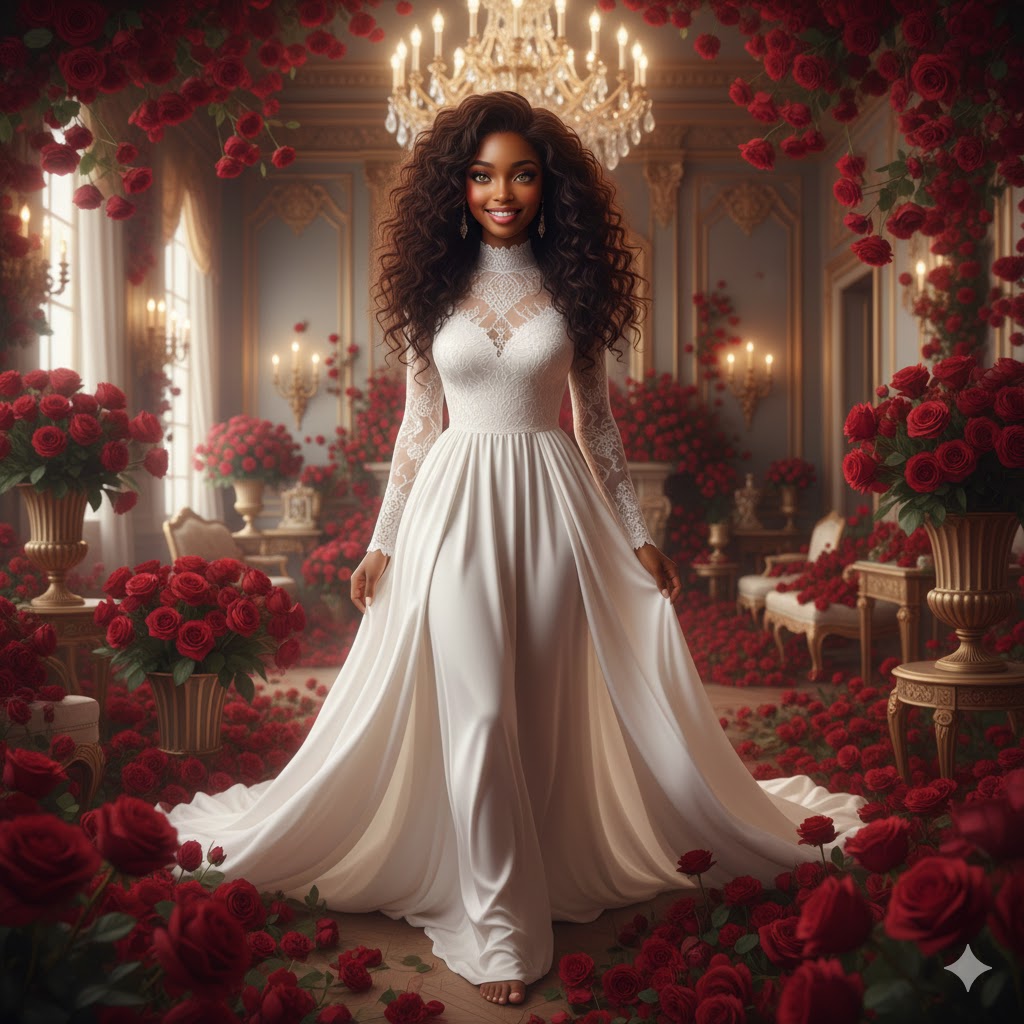
🌹 1000 Roses 🌹

From Author: I want to take a moment to express my gratitude to the men who have honored me with roses throughout my life—1,000 roses, given on 11 different occasions. Some were gestures from royalty, others from friends, and some from my late husband, whose love and memory remain etched in my heart. Every 1000 roses, no matter the giver, has been a symbol of affection, devotion, and the moments of beauty that have graced my journey. This poem, 1000 Roses, is a reflection of that gratitude and the emotions woven into every petal.


1000 Roses

A thousand roses, each a whispered vow,
In moments fleeting, I remember them now.
Blush of dawn, crimson fire, softest white,
Each bloom a story, a memory alight.

Some came with crowns, from men of high place,
Royalty’s hand, a gesture of grace.
Their petals spoke of elegance, rare,
A fleeting dance of splendor and care.

Some came from friends, steady and true,
With laughter and warmth in every hue.
No titles, no crowns, just hearts aligned,
In the giving, love’s simplicity I find.

And some came from the one who shared my days,
My late husband, whose love lit my way.
Each rose a heartbeat, tender and near,
A fragrance of comfort that lingers here.

I traced their petals, soft as whispered prayer,
Felt their presence, their thoughtfulness rare.
A thousand roses, yet each distinct,
A tapestry of hearts, delicately linked.

Some roses wore the blush of shy delight,
Some burned with passion, fierce as night.
Some whispered secrets only I could hear,
Some held laughter, some held a tear.

Each occasion, a mark upon my soul,
A thousand roses, making me whole.
The numbers grow, yet the feeling stays,
In silent reflection, in sunlight rays.

I thank the givers, known and unknown,
For every rose, how my heart has grown.
In velvet folds, love’s language unfurls,
A thousand roses, a thousand worlds.

They remind me that love wears many hues,
In red and gold, and gentle blues.
In every petal, a story of grace,
A thousand roses, a thousand embraces.

Through time and memory, each bloom survives,
A fragrant echo of cherished lives.
And though some hands now rest beyond,
Their roses remain, forever fond.

A thousand roses, yet still I see,
The depth of love that surrounds me.
Royalty, friendship, a husband’s devotion,
All carried to me on petals’ motion.

So here I stand, with gratitude deep,
For every rose, for every keep.
A thousand roses, eleven times given,
Each a whisper of heaven, a fragment of heaven.

Brown Girl Paradigm: A Psychology and Poetry of Self

The journey of a brown-skinned girl is both a psychological and spiritual odyssey—a navigation of identity, societal perception, and self-affirmation. From the earliest moments of self-awareness, she encounters a world that categorizes, judges, and at times diminishes her. Yet within the contours of her skin lies a universe of history, resilience, and divine purpose. The Brown Girl Paradigm is not merely about survival; it is about reclamation, self-love, and the deliberate crafting of identity.

Psychologically, colorism and societal bias shape self-perception from a young age. Studies show that darker-skinned girls often experience lower self-esteem due to internalized societal standards of beauty (Hunter, 2007). The media’s glorification of Eurocentric features exacerbates this effect, making self-acceptance a revolutionary act. The brown girl learns early that her worth is not always affirmed externally, yet she finds in this challenge an opportunity for resilience.

The poetic self emerges as a method of coping, reflection, and empowerment. Words become mirrors and shields. She writes:

“My melanin is sunlight captured in skin,
A map of ancestry that refuses to fade.
I am the echo of queens whose crowns were unseen,
And the promise of daughters who will rise unafraid.”

Psychology teaches that self-narrative is foundational to mental health. By embracing a personal narrative of strength and beauty, the brown girl rewrites the stories imposed upon her. She moves from internalized oppression to conscious affirmation, aligning her self-image with her inherent value (Hooks, 2000).

Biblical scripture provides spiritual reinforcement for this journey. Psalm 139:14 (KJV) declares, “I will praise thee; for I am fearfully and wonderfully made: marvellous are thy works; and that my soul knoweth right well.” This verse validates the intrinsic worth of the brown girl, affirming that her creation is intentional, unique, and magnificent.

In adolescence, identity formation is a critical phase. Erikson’s stages of psychosocial development identify this period as one of seeking identity versus role confusion (Erikson, 1968). For the brown girl, this stage is complicated by external prejudices and societal expectations. Yet it also presents an opportunity to claim her narrative, to assert her beauty, intellect, and moral compass against a backdrop of historical erasure.

Poetry, art, and self-expression serve as instruments of both healing and declaration. Through creative outlets, she confronts stereotypes, celebrates heritage, and communicates truths that statistics or theories cannot capture. Each stanza and brushstroke becomes a reclamation of voice, an assertion of selfhood in a world often intent on misrepresentation.

The intersection of faith and psychology offers further empowerment. By integrating spiritual practices—prayer, meditation on scripture, and community worship—the brown girl fortifies her self-concept and builds resilience against societal marginalization. Proverbs 31:25 (KJV) illustrates this principle: “Strength and honour are her clothing; and she shall rejoice in time to come.” Strength and honor, here, are internalized qualities cultivated through awareness, reflection, and faith.

Family and community profoundly influence self-perception. Supportive mentors, relatives, and peers can reinforce confidence and guide the brown girl in embracing her unique identity. Conversely, neglect or internalized bias within these systems can challenge self-esteem. The duality underscores the importance of intentional teaching, affirmation, and cultural education, ensuring the continuity of pride and purpose.

The brown girl’s psychology is also shaped by historical consciousness. Understanding ancestry, the legacies of slavery, colonialism, and African civilizations provides context and validates her experiences. This historical anchoring transforms perceived disadvantage into resilience, highlighting survival, creativity, and leadership embedded in her lineage.

Self-care, both psychological and physical, becomes an act of rebellion and affirmation. Caring for the body, mind, and spirit counters societal messages of neglect and invisibility. As 1 Corinthians 6:19-20 (KJV) notes, “What? know ye not that your body is the temple of the Holy Ghost which is in you, which ye have of God, and ye are not your own? For ye are bought with a price: therefore glorify God in your body, and in your spirit, which are God’s.” Mindful attention to oneself aligns with both spiritual and psychological integrity.

The brown girl also negotiates societal expectations around beauty, intellect, and behavior. She learns to assert her voice in academic, professional, and social spaces while preserving authenticity. This requires psychological dexterity: the capacity to navigate multiple cultural contexts without internalizing limiting stereotypes.

Peer influence plays a crucial role in shaping self-image. Positive reinforcement from peers, mentors, and media representations of brown-skinned women thriving can counteract the pervasive messages of inferiority. Conversely, negative reinforcement may perpetuate self-doubt. Intentional exposure to affirming role models is, therefore, a psychological strategy of empowerment.

Poetry further bridges psychology and spirituality, offering a reflective sanctuary:

“I walk in the light of ancestors’ eyes,
Their wisdom flows through my veins.
Every step I take is resistance,
Every breath I exhale, inheritance.”

This form of expression validates emotion, strengthens identity, and cultivates resilience. It is a testament to the brown girl’s capacity for introspection, self-healing, and transformative growth.

In adulthood, the Brown Girl Paradigm evolves into a framework for self-advocacy and societal contribution. Psychological resilience enables her to navigate workplace discrimination, relational challenges, and societal bias while preserving self-worth and moral integrity. She embodies both wisdom and power, grounded in her historical, spiritual, and psychological heritage.

The cultivation of self-love is an ongoing process. Affirmations, reflective practices, and spiritual engagement help maintain self-concept amid societal fluctuations. Brown girls who embrace this paradigm model for others the possibility of thriving despite systemic oppression.

Ultimately, the Brown Girl Paradigm is a synthesis of psychology, poetry, and faith. It celebrates identity, confronts societal bias, and nurtures resilience. It transforms inherited trauma into empowerment, internalized oppression into affirmation, and invisibility into radiance.

The journey of self-discovery is both intimate and universal. By integrating psychological insight, creative expression, and spiritual grounding, brown girls assert their rightful place as confident, capable, and beautiful beings. In doing so, they embody a paradigm of excellence, resilience, and divine design.


References

Erikson, E. H. (1968). Identity: Youth and Crisis. New York: Norton.
Hooks, B. (2000). Where We Stand: Class Matters. New York: Routledge.
Hunter, M. L. (2007). The Persistent Problem of Colorism: Skin Tone, Status, and Inequality. Sociology Compass, 1(1), 237–254.
Psalm 139:14, KJV.
Proverbs 31:25, KJV.
1 Corinthians 6:19-20, KJV.
Cross, W. E., Jr., & Fhagen-Smith, P. E. (2001). African-American identity development and mental health. In C. L. Wijeyesinghe & B. W. Jackson III (Eds.), New perspectives on racial identity development: A theoretical and practical anthology (pp. 21–34). New York: New York University Press.
Tatum, B. D. (2017). Why Are All the Black Kids Sitting Together in the Cafeteria? And Other Conversations About Race. New York: Basic Books.

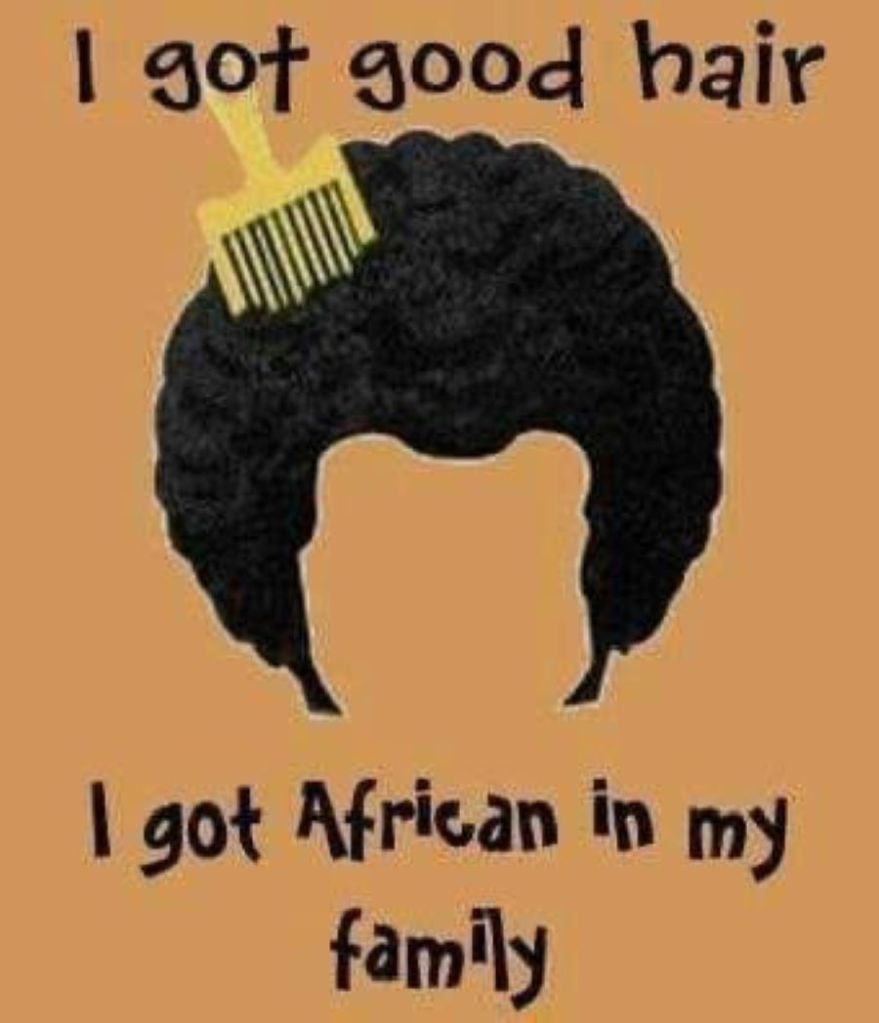
Good Hair (Poem)

Good Hair
A Poem by www.thebrowngirldilemma.com

Good hair is the crown God wove with His own hands,
A tapestry of coils, curls, kinks, and strands,
A language spoken in spirals and waves,
A history braided through mothers and graves.

Good hair is the rhythm of roots that rise,
Defying gravity, touching the skies,
A halo of strength that the world once denied,
Yet still blooms boldly with unbroken pride.

Good hair is Sunday mornings with warm oil’s sheen,
Auntie’s hands parting like a quiet routine,
The pull, the twist, the tender care,
Love is passed down in every braid we wear.

Good hair is shrinkage—magic in motion—
A spring of life, a living ocean,
Proof that what looks small can expand with grace,
Proof of resilience woven in place.

Good hair is softness wrapped in a tough embrace,
A garden of texture no copy can trace,
A map of identity, sacred and true,
A signature style the Creator drew.

Good hair is locs that speak of time,
Twists that whisper, “I am divine,”
Afros that rise like a new dawn’s fire,
Edges that swoop with artistic desire.

Good hair is the right to choose,
To press, to braid, to twist, to fuse,
To rock it natural or wear it long,
Each style a verse in a freedom song.

Good hair is not what others decide—
Not a scale, not a standard, not a measure of pride.
Good hair is the hair God placed on your head,
Alive with stories your ancestors said.

Good hair is heritage, holy and deep,
A beauty the world tried to steal but couldn’t keep,
A reflection of glory, regal and rare—
You don’t have good hair.
You have good hair.