
Category Archives: neuroscience

What are the Neuro Linguistic Programming Techniques You Can Use Instantly?

Neuro-Linguistic Programming, commonly known as NLP, explores how language, thought patterns, and behavior interact to shape human experience. At its core, NLP suggests that small shifts in perception and communication can produce immediate changes in emotional states and responses.

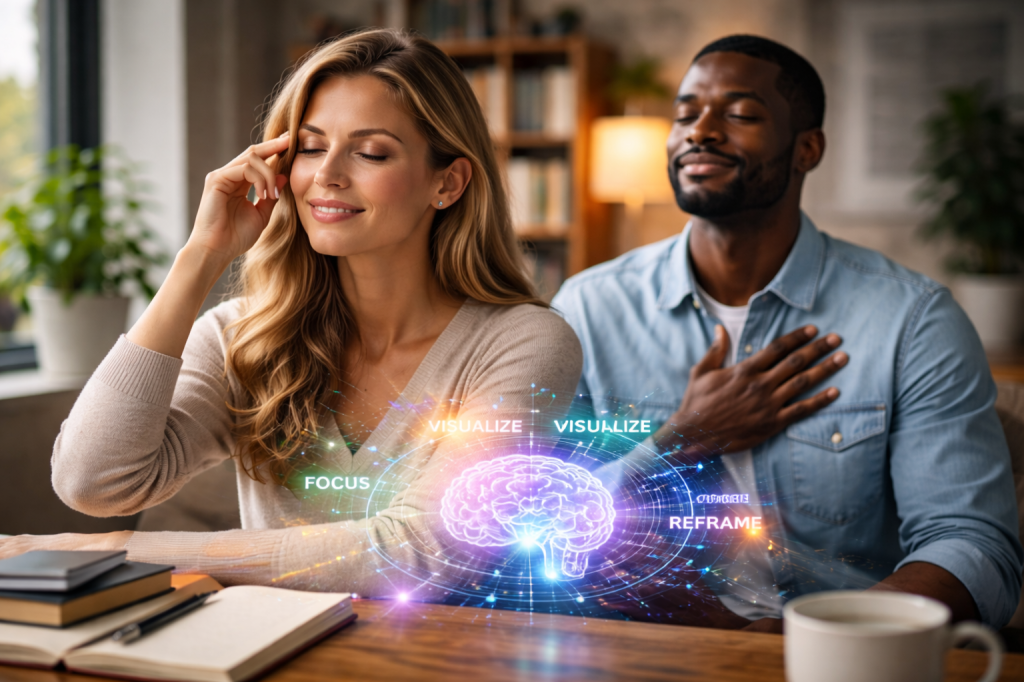
One instantly usable NLP technique is anchoring. Anchoring involves associating a specific physical action, word, or image with a desired emotional state. By consciously recalling a confident or calm moment and pairing it with a gesture, individuals can later activate that state on demand.

Reframing is another foundational NLP tool that can be applied immediately. This technique involves changing the meaning assigned to a situation rather than the situation itself. By asking what else an experience could represent or what lesson it offers, emotional responses often shift rapidly.

Mirroring and matching are interpersonal NLP techniques that improve rapport. Subtly aligning posture, tone, or pacing with another person can create a sense of psychological safety and connection. When people feel understood, communication becomes more fluid and effective.

Language patterns play a critical role in NLP. Simply changing from absolute language such as “always” or “never” to more flexible phrasing like “sometimes” or “so far” can reduce internal pressure and open space for growth and problem-solving.

Visualization is an NLP strategy that engages the brain’s sensory systems. By vividly imagining a successful outcome using sight, sound, and feeling, individuals prime their nervous system for confidence and preparedness. The brain often responds to imagined success similarly to real experience.

The swish pattern is a rapid NLP technique designed to interrupt unwanted habits or thoughts. It works by replacing a negative mental image with a compelling positive one in quick succession, weakening the old association and strengthening a new, empowering response.

State management is central to NLP practice. Instead of asking why one feels a certain way, NLP focuses on how to shift states. Simple actions such as changing posture, breathing rhythm, or focus can immediately alter emotional energy.

Meta-cognition, or thinking about thinking, is another NLP-aligned skill. Becoming aware of internal dialogue allows individuals to challenge unhelpful narratives and consciously replace them with constructive language.

NLP emphasizes sensory awareness through representational systems. Paying attention to whether one thinks primarily in images, sounds, or feelings can enhance communication and self-understanding. Adjusting language to match these systems increases clarity and impact.

Future pacing is an NLP technique that mentally rehearses desired behaviors in upcoming situations. By imagining oneself responding calmly or confidently in advance, the brain becomes familiar with the behavior, making it easier to execute when the moment arrives.

Chunking is a cognitive NLP strategy that manages overwhelm. Breaking large goals into smaller, achievable steps reduces resistance and increases motivation. Conversely, chunking up helps individuals reconnect with purpose by seeing the bigger picture.

Pattern interruption is a fast NLP tool for shifting emotional states. Doing something unexpected, such as changing physical position or altering speech tempo, disrupts automatic reactions and creates space for conscious choice.

NLP also teaches precision in questioning. Asking better questions, such as “What specifically do I want instead?” directs attention toward solutions rather than problems, influencing both mindset and behavior instantly.

Submodalities refer to the fine details of mental imagery, such as brightness, size, or distance. Changing these qualities can dramatically alter emotional intensity. For example, shrinking or dimming a distressing image often reduces its emotional charge.

Rapport with oneself is just as important as rapport with others. NLP encourages aligning values, beliefs, and actions to reduce internal conflict. When inner communication improves, external behavior often follows.

NLP techniques can be particularly effective in moments of anxiety or self-doubt. Redirecting attention, shifting language, or adjusting body posture can calm the nervous system within minutes, restoring a sense of control.

Critics note that NLP varies in empirical support, yet many techniques align with established cognitive-behavioral and psychological principles. Its practical appeal lies in its accessibility and immediate applicability.

Ethical use of NLP is essential. Techniques designed to enhance communication and self-regulation should never be used to manipulate or coerce. Responsible practice prioritizes consent, authenticity, and personal growth.

Ultimately, NLP offers a toolkit rather than a doctrine. The techniques that work best are those applied with self-awareness, intention, and consistency. Small shifts in language, focus, and behavior can create meaningful changes in daily life.


References

Bandler, R., & Grinder, J. (1975). The structure of magic I: A book about language and therapy. Science and Behavior Books.

Dilts, R. (1990). Changing belief systems with NLP. Meta Publications.

Dilts, R., Grinder, J., Bandler, R., DeLozier, J., & Cameron-Bandler, L. (1980). Neuro-Linguistic Programming: The study of the structure of subjective experience. Meta Publications.

Kahneman, D. (2011). Thinking, fast and slow. Farrar, Straus and Giroux.

Linder-Pelz, S., & Hall, L. M. (2007). The empirical case for NLP. NLP World.

Tosey, P., & Mathison, J. (2010). Neuro-linguistic programming as an innovation in education and teaching. The Curriculum Journal, 21(4), 433–456.

Neuroscience, African Ancestry, and the Contributions of Black Neuroscientist.

Photo by RDNE Stock project on Pexels.com

1. Introduction: Defining Neuroscience

Neuroscience is the interdisciplinary scientific study of the nervous system, with a primary focus on the brain’s structure, function, and its role in behavior, cognition, and mental health. This field integrates biology, psychology, physics, and computational sciences to address questions about perception, memory, consciousness, and disease. The scope of neuroscience ranges from molecular studies of neurons to neuroimaging, brain–computer interface technology, and neuromodulation therapies (StudyRaid, 2024).


2. Neuroscience and Black Communities

Historically, neuroscience research has often lacked representation from people of African ancestry, which has contributed to knowledge gaps in understanding the prevalence, onset, and progression of neurological and psychiatric disorders among Black populations (Wolfe, 2024). Initiatives such as the African Ancestry Neuroscience Research Initiative (AANRI), a collaboration between Morgan State University, the Lieber Institute for Brain Development, and Duke University, aim to bridge this gap. AANRI studies postmortem brain tissue from African American donors to better understand how genetics, epigenetics, and environmental stressors—such as systemic racism—affect brain health (AANRI, 2024). Findings suggest that while genetic variation explains much of the difference in brain profiles, environmental exposures significantly influence neural function and gene expression, underscoring the importance of culturally inclusive neuroscience research (HBCU News, 2024).


3. Prominent Black Neuroscientists and Their Contributions

Emery N. Brown, M.D., Ph.D.

One of the most prominent Black neuroscientists globally, Emery N. Brown is renowned for his expertise in computational neuroscience and anesthesiology. He has developed advanced statistical models for analyzing neuronal data and pioneered research into the neural mechanisms of anesthesia, redefining clinical approaches and safety protocols (MIT News, 2023). His work has not only advanced brain science but has also saved lives in surgical contexts worldwide.

Uraina S. Clark, Ph.D.

Clark’s research uses functional MRI to examine how life stressors—such as discrimination and chronic illness—affect brain structure and function, particularly in African American communities. Her work links social determinants of health to neural outcomes, highlighting the interplay between lived experience and brain physiology (Clark, 2022).

Sherilynn Black, Ph.D.

Black focuses on the neurobiology of emotion regulation. Using optogenetics, her work demonstrates how precise stimulation of cortical neurons can produce antidepressant-like effects and restore coordinated activity across emotion-related brain networks (Black, 2019).

Crystal C. Watkins Johansson, M.D., Ph.D.

A neuropsychiatrist at Johns Hopkins University, Johansson specializes in geriatric psychiatry and neuroimaging. Her work on cognitive health in aging African Americans has advanced the understanding of Alzheimer’s disease and led to patented treatments for diabetic gastrointestinal dysfunction (Johns Hopkins Medicine, 2021).


4. How Neuroscience Has Changed the World

Neuroscience has revolutionized medicine through technologies like deep brain stimulation, transcranial magnetic stimulation, and brain–computer interfaces (BCIs), enabling communication and motor control for paralyzed individuals (FT, 2025). In education, neuroscience informs teaching strategies by explaining how the brain learns and retains information. In ethics and law, neuroethics addresses concerns about “cognitive liberty” and the protection of brain data. The corporate sector uses neuroscience principles for improving productivity and leadership (SpringerOpen, 2024).


References

African Ancestry Neuroscience Research Initiative. (2024). First study from AANRI. https://aanri.org/first-study-from-aanri/

Black, S. (2019). Neural circuits of emotion and their modulation in depression. Duke University Neuroscience Center.

Clark, U. S. (2022). Neurocognitive consequences of discrimination and chronic disease in African Americans. Columbia University Medical Center.

Financial Times. (2025). Brain–computer interface technology advances. https://www.ft.com/content/f4cd1130-6adc-4dbd-b74b-9813ae008166

HBCU News. (2024). How a Baltimore neuroscience study is rewriting Black America’s relationship with medical research. https://hbcunews.com/2024/06/25/how-a-baltimore-neuroscience-study-is-rewriting-black-americas-relationship-with-medical-research/

Johns Hopkins Medicine. (2021). Crystal Watkins Johansson profile. https://www.hopkinsmedicine.org

MIT News. (2023). Emery N. Brown receives National Medal of Science. https://news.mit.edu

SpringerOpen. (2024). The impact of neuroscience on society. https://fbj.springeropen.com/articles/10.1186/s43093-024-00369-7

StudyRaid. (2024). The impact of neuroscience on society. https://app.studyraid.com/en/read/2345/46219/the-impact-of-neuroscience-on-society

Wolfe, J. (2024). Neuroscience has a race problem. Nautilus. https://nautil.us/neuroscience-has-a-race-problem-262340/

Dilemma: Mental Illness

The Silent Suffering and Mental Illness in the Black Community, Historical Roots, Case Studies, and Paths to Healing

Photo by Ketut Subiyanto on Pexels.com

Mental illness remains one of the most underdiagnosed and undertreated health crises in the Black community. Systemic racism, historical trauma from slavery, socioeconomic inequities, and cultural stigma have compounded the challenges of diagnosis and treatment. This paper examines the prevalence and types of mental illness affecting Black populations, case studies illustrating their manifestations, neuroscience research, biblical perspectives from the King James Version (KJV), and potential pathways to prevention and healing. The analysis further explores Post-Traumatic Slave Syndrome (PTSS), Stockholm Syndrome, and intergenerational trauma as they relate to mental health outcomes.


The mental health crisis within the Black community is often hidden behind layers of cultural stigma, systemic neglect, and historical trauma. According to the National Alliance on Mental Illness (NAMI), approximately 19% of Black adults live with a mental health condition, yet only one-third receive treatment[^1]. The mortality rate for those with untreated severe mental illness is significantly higher than the general population[^2]. This disparity is not merely the result of modern health care inequalities but is rooted in centuries of enslavement, oppression, and racialized violence that have reshaped generational mental health patterns.


Defining Mental Illness

The American Psychiatric Association (APA) defines mental illness as “health conditions involving changes in emotion, thinking, or behavior (or a combination thereof)” which cause distress and impair functioning[^3]. Common types include:

  • Bipolar Disorder
  • Autism Spectrum Disorder (ASD)
  • Borderline Personality Disorder (BPD)
  • Post-Traumatic Stress Disorder (PTSD)
  • Dissociative Identity Disorder (Multiple Personality Disorder)
  • Major Depressive Disorder
  • Schizophrenia
  • Obsessive-Compulsive Disorder (OCD)
  • Psychopathy and Sociopathy
  • Anxiety Disorders

Historical Roots: Why Black People Developed Certain Mental Illnesses

Slavery in America imposed continuous psychological harm: separation of families, sexual violence, physical brutality, and the stripping of cultural identity. This environment produced Post-Traumatic Slave Syndrome (PTSS), a concept by Dr. Joy DeGruy[^4], describing multigenerational trauma and adaptive survival behaviors that persist today. Furthermore, Stockholm Syndrome—a psychological phenomenon where victims develop empathy toward their oppressors—was observed in some enslaved populations who internalized slaveholder values to survive[^5].


Case Studies of Mental Illness in the Black Community

1. Bipolar Disorder

Case Study: An African American man in Detroit experienced alternating manic episodes of hyper-productivity and depressive episodes of immobilization. During an untreated manic state, he committed an armed robbery under delusional beliefs of “helping” his neighborhood. This resulted in imprisonment instead of psychiatric treatment[^6].

2. Autism Spectrum Disorder (ASD)

Case Study: A Black adolescent in Georgia went undiagnosed for years due to teachers misinterpreting his social withdrawal as defiance. His delayed diagnosis deprived him of early intervention that could have improved his academic and social functioning[^7].

3. Borderline Personality Disorder (BPD)

Case Study: A young Black woman with BPD in Chicago engaged in impulsive self-harm and unstable relationships. Her behavior escalated into violence during emotional dysregulation, leading to an assault charge. She later improved through dialectical behavior therapy (DBT)[^8].

4. Post-Traumatic Stress Disorder (PTSD)

Case Study: A Gulf War veteran from the Black community returned with severe PTSD and hypervigilance. The trauma of combat was compounded by racial discrimination in the military, making reintegration into civilian life difficult[^9].

5. Schizophrenia

Case Study: A Black man in Los Angeles suffered from paranoid schizophrenia. Misdiagnosed initially as bipolar disorder, he murdered a stranger he believed was “following orders” from a gang. Correct diagnosis and antipsychotic medication reduced symptoms[^10].

6. Dissociative Identity Disorder (DID)

Case Study: A Black woman who had endured severe childhood abuse developed multiple personalities to compartmentalize traumatic memories. One alter was aggressive and committed a theft offense during dissociation[^11].

7. Psychopathy and Sociopathy

Case Study: A sociopathic male gang leader in New York exhibited callousness and manipulative charm, orchestrating violent crimes without remorse. His behavior aligned with antisocial personality disorder criteria[^12].


Neuroscience and Mental Illness in Black Communities

Neuroscience research reveals that chronic trauma alters brain structure and function. The amygdala, hippocampus, and prefrontal cortex—regions governing fear response, memory, and decision-making—can shrink or become hyperactive in trauma survivors[^13]. Studies on intergenerational trauma show epigenetic changes in stress-response genes among descendants of enslaved Africans[^14].


Solutions: Psychology, Therapy, Medicine, and Faith

Psychological Interventions

Evidence-based approaches include Cognitive Behavioral Therapy (CBT), DBT, Eye Movement Desensitization and Reprocessing (EMDR) for PTSD, and Applied Behavior Analysis (ABA) for autism[^15].

Top Online Therapy Platforms:

  • BetterHelp
  • Talkspace
  • 7 Cups
  • Therapy for Black Girls
  • Open Path Collective

Medical Treatments

Medication such as SSRIs, mood stabilizers, and antipsychotics can reduce symptoms when combined with therapy.

Biblical Solutions (KJV Perspective)

  • Renewing the Mind: “Be not conformed to this world: but be ye transformed by the renewing of your mind” (Romans 12:2).
  • Peace in Anxiety: “Casting all your care upon him; for he careth for you” (1 Peter 5:7).
  • Healing the Brokenhearted: “He healeth the broken in heart, and bindeth up their wounds” (Psalm 147:3).

Faith-based counseling integrates spiritual disciplines, prayer, and scriptural meditation to complement medical and psychological care.


Conclusion

Mental illness in the Black community is a complex interplay of biology, history, culture, and systemic oppression. Addressing it requires not only medical and psychological interventions but also a historical reckoning with the trauma of slavery and racism. Neuroscience underscores the plasticity of the brain, meaning healing is possible, while the Bible offers enduring hope for transformation.

References

American Psychiatric Association. (2022). Diagnostic and statistical manual of mental disorders (5th ed., text rev.). American Psychiatric Publishing.

Boyd-Franklin, N. (2003). Black families in therapy: Understanding the African American experience (2nd ed.). Guilford Press.

Comas-Díaz, L., Hall, G. N., & Neville, H. A. (2019). Racial trauma: Theory, research, and healing: Introduction to the special issue. American Psychologist, 74(1), 1–5.

Cutchin, M. P., & McCray, E. (2021). Post-traumatic stress disorder in African Americans: Historical roots and contemporary implications. Journal of Black Psychology, 47(5), 415–432.

Franklin, A. J., Boyd-Franklin, N., & Kelly, S. (2006). Racism and invisibility: Race-related stress, emotional abuse and psychological trauma for people of color. Journal of Emotional Abuse, 6(2–3), 9–30.

Grier, W. H., & Cobbs, P. M. (1992). Black rage. Basic Books.

Herman, J. L. (2015). Trauma and recovery: The aftermath of violence—from domestic abuse to political terror (Rev. ed.). Basic Books.

National Alliance on Mental Illness. (2023). Mental health facts in African American communities. NAMI.

Neal-Barnett, A., Statom, D., & Stadulis, R. (2010). A pilot study of a culturally relevant intervention for African American women with anxiety disorders. Journal of Anxiety Disorders, 24(2), 246–252.

Pieterse, A. L., Todd, N. R., Neville, H. A., & Carter, R. T. (2012). Perceived racism and mental health among Black American adults: A meta-analytic review. Journal of Counseling Psychology, 59(1), 1–9.

Resmaa, M. (2017). My grandmother’s hands: Racialized trauma and the pathway to mending our hearts and bodies. Central Recovery Press.

Sue, D. W., Capodilupo, C. M., Torino, G. C., Bucceri, J. M., Holder, A., Nadal, K. L., & Esquilin, M. (2007). Racial microaggressions in everyday life: Implications for clinical practice. American Psychologist, 62(4), 271–286.

Tutu, D., & Tutu, M. (2014). The Book of Forgiving: The Fourfold Path for Healing Ourselves and Our World. HarperOne.

Van der Kolk, B. A. (2014). The body keeps the score: Brain, mind, and body in the healing of trauma. Viking.

Watkins, D. C., Allen, J. O., Goodwill, J. R., & Noel, B. (2017). Strengths and weaknesses of the mental health diagnostic system for African American men. International Journal of Men’s Health, 16(1), 1–14.

Williams, D. R., & Mohammed, S. A. (2009). Discrimination and racial disparities in health: Evidence and needed research. Journal of Behavioral Medicine, 32(1), 20–47.