Category Archives: natural hair

Crowns Shorn: Black Hair, Wealth, Tribal Identity, and the Economics of Enslavement in Africa and the Atlantic World

Black hair has long functioned as a cultural archive in Africa, encoding information about lineage, spirituality, marital status, age, occupation, and wealth. Across the continent, hair was never merely aesthetic; it was social language. Intricate braiding, sculptural coiffures, and the use of oils, beads, shells, gold thread, and cowries communicated rank and prosperity, situating the individual within a complex web of kinship and economy.

In many West and Central African societies, the care and styling of hair signified time, labor, and communal investment. Hairstyles that took hours or days to complete demonstrated access to leisure, skilled labor, and social networks—markers of wealth in precolonial economies where time itself was a resource. Hair thus operated as visible capital, reflecting one’s position within agrarian, mercantile, or royal systems.

Among the Yoruba, hair (irun) was closely associated with ori, the spiritual head believed to house destiny. Elaborate hairstyles accompanied rites of passage and royal ceremonies, underscoring hair’s sacred dimension. To damage or desecrate the hair was to threaten both social standing and spiritual integrity, a concept widely shared across African cosmologies.

In Wolof, Mandé, Akan, and Fulani cultures, hairstyles distinguished nobility from commoners and free people from the enslaved. Certain styles were restricted to royal households or warrior classes, while others marked griots, healers, or married women. Hair was a regulated symbol, reinforcing social order and economic hierarchy without written law.

Wealth in Africa was not only material but relational. Hairstyles often incorporated trade goods—beads from trans-Saharan routes, gold dust from Akan fields, or indigo-dyed threads—linking hair to continental and global commerce. These adornments made the head a site of economic display and interregional exchange.

Gendered meanings of hair further reflected socioeconomic status. Women’s hair often communicated fertility, marital eligibility, and household stability, while men’s hair could signify age-grade, military readiness, or priestly calling. In both cases, hair connected the body to productive and reproductive labor essential to wealth creation.

The violent rupture of the transatlantic slave trade deliberately targeted these meanings. Upon capture, African men, women, and children were often forcibly shaved. This act was not incidental hygiene; it was a calculated assault on identity, dignity, and memory. Shaving erased tribal markers, spiritual protections, and visible signs of status, rendering captives symbolically “blank.”

European slave traders justified head-shaving as a means to control lice and disease, yet the practice also facilitated commodification. Stripped of recognizable cultural signifiers, enslaved Africans were transformed into fungible labor units. The removal of hair assisted in breaking communal bonds and accelerating psychological disorientation.

On the auction block, shaved heads standardized bodies for sale. Without hairstyles to indicate nobility, skill, or ethnic origin, buyers assessed Africans primarily by age, musculature, and perceived productivity. The economics of slavery demanded depersonalization, and hair—once a ledger of social wealth—became an obstacle to profit.

The plantation regime extended this logic. Enslaved Africans were denied time, tools, and autonomy to care for their hair according to tradition. Scarcity of oils, combs, and communal grooming spaces disrupted cultural continuity. Over time, coerced neglect was weaponized as evidence of supposed African inferiority.

Colonial ideologies later pathologized African hair textures, labeling them “woolly” or “unkempt” in contrast to European norms. These racial hierarchies mapped aesthetics onto economics, positioning straight hair as “professional” and kinky hair as “primitive,” a legacy that persisted into post-emancipation labor markets.

After emancipation, hair became a site of survival. Many Black people altered or concealed natural hair to access employment and safety within white-dominated economies. Straightening practices, while often framed as assimilation, were pragmatic responses to structural exclusion rooted in slavery’s visual economy.

Despite this, African-descended communities preserved hair knowledge through oral tradition and innovation. Braiding patterns carried maps, kinship codes, and resistance strategies during enslavement, while post-slavery styles became acts of reclamation. Hair quietly remembered what history tried to erase.

In the twentieth century, Pan-Africanism and Black liberation movements explicitly reclaimed natural hair as political economy. Afros and locs rejected Eurocentric beauty standards and asserted continuity with African heritage, reframing hair as cultural wealth rather than liability.

Contemporary Africa and the diaspora continue to negotiate hair within global capitalism. The multibillion-dollar hair industry—often dominated by non-Black ownership—extracts value from Black bodies while stigmatizing natural textures. This paradox mirrors earlier patterns of exploitation, albeit in modern form.

Yet natural hair movements challenge this imbalance by re-centering African aesthetics as assets. Locally sourced shea butter, palm oil, and traditional grooming practices reconnect hair to indigenous economies and ecological knowledge, echoing precolonial systems of value.

Hair discrimination laws emerging in the United States and elsewhere acknowledge that hair-based bias is a civil rights issue, not mere preference. These policies implicitly recognize that hair has always been tied to access, labor, and economic mobility—just as it was during slavery.

Understanding the history of Black hair reveals slavery as not only a system of forced labor but of cultural theft. The shaving of African heads was an opening move in a broader project to sever people from their wealth—material, spiritual, and social.

To study Black hair is to study African political economy, cosmology, and resistance. It is a reminder that what grows from the head once carried nations, and that reclaiming it is an act of historical repair.

Today, as African and diasporic communities reassert control over their hair, they also reclaim narratives of wealth and worth long denied. In this sense, Black hair remains what it has always been: a crown, once shorn, now rising again.


References

Byrd, A. D., & Tharps, L. L. (2014). Hair story: Untangling the roots of Black hair in America. St. Martin’s Press.

Gomez, M. A. (1998). Exchanging our country marks: The transformation of African identities in the colonial and antebellum South. University of North Carolina Press.

Herskovits, M. J. (1958). The myth of the Negro past. Beacon Press.

Lovejoy, P. E. (2012). Transformations in slavery: A history of slavery in Africa (3rd ed.). Cambridge University Press. https://doi.org/10.1017/CBO9781139030116

Patton, T. O. (2006). Hey girl, am I more than my hair?: African American women and their struggles with beauty, body image, and hair. NWSA Journal, 18(2), 24–51. https://doi.org/10.2979/NWS.2006.18.2.24

Raboteau, A. J. (2004). Slave religion: The “invisible institution” in the antebellum South. Oxford University Press.

Sieber, R., & Herreman, F. (Eds.). (2000). Hair in African art and culture. Museum for African Art / Prestel.

Thornton, J. (1998). Africa and Africans in the making of the Atlantic world, 1400–1800 (2nd ed.). Cambridge University Press. https://doi.org/10.1017/CBO9780511583749
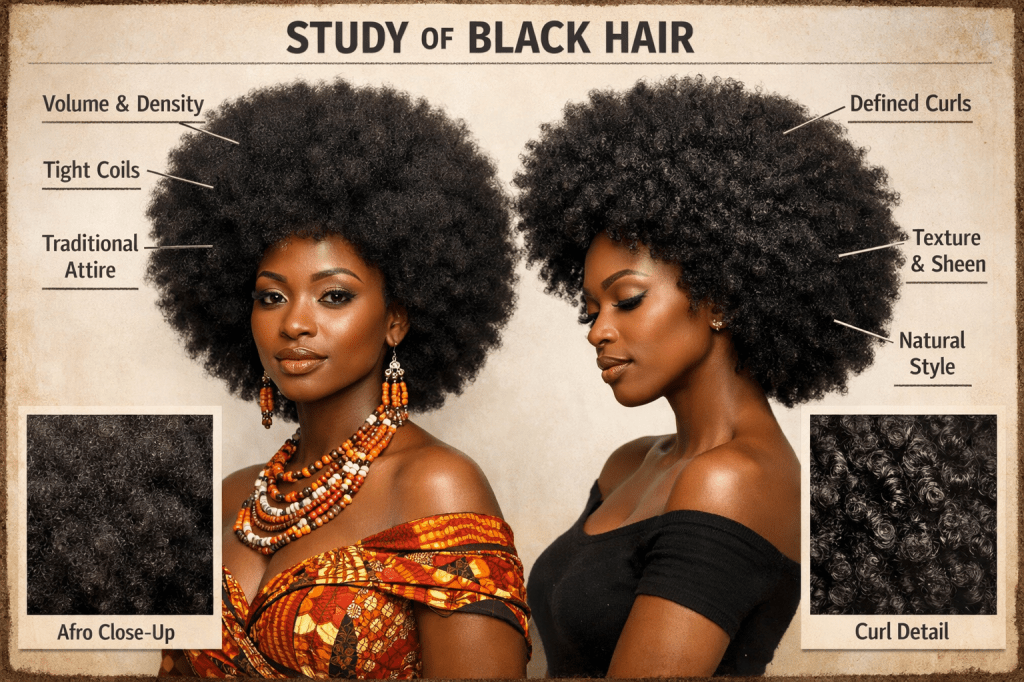
Study of Black Hair

Black hair is not merely a biological feature but a profound cultural, historical, and spiritual marker that has shaped identity across the African continent and the African diaspora. Its textures, patterns, and styles communicate lineage, status, resistance, creativity, and survival. To study Black hair is to study a living archive of African civilizations, colonial disruption, and modern reclamation.

From an anthropological perspective, Black hair exhibits the widest range of natural textures found in human populations, particularly tightly coiled and spiral patterns commonly categorized as Type 4 hair. These textures are not accidental; they are adaptive traits shaped by evolution in equatorial climates, aiding thermoregulation and protecting the scalp from intense ultraviolet radiation (Jablonski, 2012).

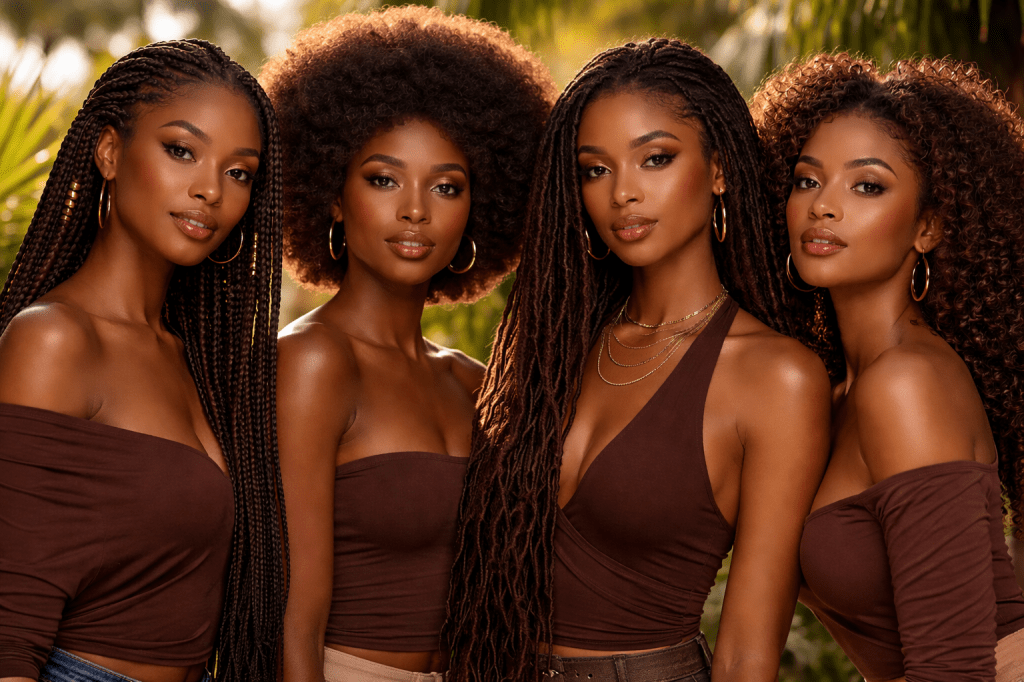
In precolonial African societies, hair functioned as a sophisticated language. Styles signified age, marital status, ethnic affiliation, wealth, fertility, and spiritual rank. Among the Yoruba, Himba, Maasai, and Wolof peoples, hair was adorned with beads, cowrie shells, clay, and oils, transforming the head into a crown that reflected both communal belonging and divine order (Sieber & Herreman, 2000).

Hair care itself was a communal ritual. Grooming involved social bonding, storytelling, and intergenerational knowledge transfer. Natural oils such as shea butter and palm oil were used not only for aesthetics but for scalp health and protection, underscoring an advanced understanding of cosmetic science long before Western industrial products emerged (Byrd & Tharps, 2014).

The transatlantic slave trade violently disrupted these traditions. Enslaved Africans were often forcibly shaved upon capture, a symbolic stripping of identity, dignity, and ancestry. This act was not hygienic alone; it was psychological warfare designed to erase memory and enforce submission (White & White, 1995).

During slavery in the Americas, Black hair became politicized. European beauty standards elevated straight hair as “civilized” and denigrated African textures as inferior. These ideologies were embedded into laws, social hierarchies, and labor systems, reinforcing racial domination through aesthetics (Banks, 2000).

Post-emancipation, many Black people adopted hair straightening practices as survival strategies within hostile racial economies. Straight hair often afforded greater access to employment and social mobility. This was not self-hatred, but adaptation within systems that punished African appearance (Rooks, 1996).

The 20th century marked a turning point as Black intellectuals and artists challenged Eurocentric norms. The Harlem Renaissance and later the Black Power Movement reframed natural hair as political resistance. The Afro became a visible declaration of pride, autonomy, and rejection of assimilation (Van Deburg, 1992).

Scientifically, Black hair has been misunderstood and understudied. Traditional cosmetology training and dermatological research historically centered straight hair models, leading to misclassification of Black hair as “problematic” rather than biologically distinct. Contemporary research now recognizes the unique elliptical follicle shape and curl geometry of Afro-textured hair (Franbourg et al., 2003).

Psychologically, hair plays a critical role in self-concept and racial identity development. Studies show that acceptance of natural hair correlates with higher self-esteem among Black women and girls, while hair discrimination is linked to anxiety, workplace bias, and internalized racism (Rosette & Dumas, 2007).

Black women, in particular, bear the heaviest social burden regarding hair. Their hair has been hyper-policed in schools, workplaces, and the military, prompting legal interventions such as the CROWN Act, which affirms natural hairstyles as protected expressions of racial identity (Greene, 2021).

In African spiritual systems, hair is often seen as sacred—an extension of the soul and a conduit of spiritual energy. Many traditions hold that the head is the highest point of the body and closest to the divine, making hair an integral component of ritual purity and spiritual discipline (Mbiti, 1990).

The global natural hair movement of the 21st century represents a reclamation of ancestral knowledge. Social media, digital archives, and grassroots education have empowered millions to unlearn colonial beauty myths and embrace their God-given design. This movement is both aesthetic and epistemological.

Economically, Black hair has fueled a multibillion-dollar global industry, yet Black communities have historically been excluded from ownership and profit. Recent shifts toward Black-owned brands and ethical sourcing reflect a growing demand for economic justice within beauty culture (Wilkinson-Weber & DeNicola, 2016).

From a genetic standpoint, African hair diversity mirrors the deep genetic diversity of African populations themselves. Africa contains the oldest and most varied human gene pools, and hair texture variation is a visible testament to this biological richness (Tishkoff et al., 2009).

Education systems are increasingly recognizing the importance of inclusive representation. When Black hair is normalized in textbooks, media, and academic studies, it disrupts deficit narratives and affirms Black children’s embodied identities as worthy of study and respect.

In media and visual culture, the afro, locs, braids, and twists function as counter-hegemonic symbols. They resist homogenization and assert presence in spaces that once demanded erasure. Representation of natural hair is thus inseparable from struggles for visibility and equity.

The study of Black hair also intersects with gender, class, and theology. In many faith traditions, debates around modesty, submission, and beauty are projected onto Black women’s hair, revealing how control over hair often mirrors control over bodies and voices.

In diasporic contexts, Black hair connects past and present, Africa and the Americas. It carries memory even when language and geography are lost. Each coil becomes a lineage marker, a living genealogy etched into the body.

Ultimately, Black hair is evidence of survival. Despite centuries of violence, ridicule, and regulation, it continues to grow—defiant, adaptive, and beautiful. To study Black hair is to study resilience written in keratin and culture.

As scholarship expands, Black hair must be treated not as a niche topic but as a legitimate interdisciplinary field encompassing anthropology, biology, history, psychology, theology, and cultural studies. Its significance reaches far beyond appearance into the core of human identity.

In honoring Black hair, academia participates in restorative justice—correcting historical distortions and affirming that what was once marginalized is, in truth, central to understanding humanity itself.


References

Banks, I. (2000). Hair matters: Beauty, power, and Black women’s consciousness. NYU Press.

Byrd, A. D., & Tharps, L. L. (2014). Hair story: Untangling the roots of Black hair in America (2nd ed.). St. Martin’s Press.

Franbourg, A., Hallegot, P., Baltenneck, F., Toutain, C., & Leroy, F. (2003). Current research on ethnic hair. Journal of the American Academy of Dermatology, 48(6), S115–S119.

Greene, T. (2021). The CROWN Act and the fight against hair discrimination. Harvard Civil Rights–Civil Liberties Law Review, 56, 487–515.

Jablonski, N. G. (2012). Living color: The biological and social meaning of skin color. University of California Press.

Mbiti, J. S. (1990). African religions and philosophy (2nd ed.). Heinemann.

Rooks, N. (1996). Hair raising: Beauty, culture, and African American women. Rutgers University Press.

Rosette, A. S., & Dumas, T. L. (2007). The hair dilemma: Conformity versus authenticity in corporate America. Academy of Management Journal, 50(4), 785–807.

Sieber, R., & Herreman, F. (2000). Hair in African art and culture. The Museum for African Art.

Tishkoff, S. A., et al. (2009). The genetic structure and history of Africans and African Americans. Science, 324(5930), 1035–1044.

Van Deburg, W. L. (1992). New day in Babylon: The Black Power movement and American culture. University of Chicago Press.

Wilkinson-Weber, C. M., & DeNicola, A. (2016). Critical craft: Technology, globalization, and capitalism. Bloomsbury.

The Hair Diaries: The Myth of Good Hair

The idea of “good hair” is a myth rooted not in biology or beauty, but in power. Hair, in all its textures, is a natural extension of the human body, growing exactly as it was designed to grow. No strand that emerges from a healthy scalp is bad, defective, or inferior. Scripture affirms that God’s creation is intentional and good in every form (Genesis 1:31, KJV).

The “good hair versus bad hair” narrative emerged from colonialism and slavery, not from truth. European features were elevated as the standard of beauty, while African features were devalued to justify domination. Hair texture became a visible marker used to rank humanity along racial lines (Byrd & Tharps, 2014).

During slavery, hair texture was tied to social survival. Straighter hair was associated with proximity to whiteness and, in some cases, less brutal treatment. This produced a hierarchy within Black communities that persists today, even though its origin is rooted in trauma rather than preference.

Coily, kinky, and tightly curled hair was labeled “excessive” because it resisted assimilation. It could not easily conform to European grooming norms without chemical or mechanical alteration. Resistance, not inferiority, is what made this hair political.

Biologically, coily hair is a marvel of design. Its spiral structure helps protect the scalp from intense sun exposure and reduces heat absorption. These textures evolved as an adaptive strength, not a flaw (Jablonski, 2015).

Black hair also demonstrates incredible versatility. It can be braided, twisted, loc’d, coiled, stretched, sculpted, wrapped, and worn free. Few hair types carry such cultural, artistic, and functional range.

Historically, African hairstyles communicated age, marital status, tribe, spirituality, and social role. Hair was language before colonization disrupted these systems. To demean Black hair is to demean African knowledge systems (Thompson, 1983).

The hatred directed toward Black hair often reflects fear of difference rather than aesthetic judgment. What cannot be controlled is often labeled unprofessional, wild, or inappropriate. This language exposes anxiety, not truth.

The Bible does not rank hair textures. Scripture emphasizes modesty, order, and reverence—not conformity to Eurocentric appearance. God looks at the heart, not the curl pattern (1 Samuel 16:7, KJV).

Black hair has been policed in schools, workplaces, and public spaces, revealing how deeply the myth of “good hair” is institutionalized. Laws like the CROWN Act exist because natural hair was treated as a threat to order rather than a neutral human trait.

The pressure to alter Black hair has often been framed as professionalism. Yet professionalism is a social construct shaped by those in power. Hair that grows naturally from the head cannot be unprofessional by nature.

Internalized hair bias is one of the most painful legacies of colonialism. When Black children learn to dislike their own hair, it is not personal insecurity but inherited harm. Healing begins with truth-telling and affirmation.

Speaking positively about Black hair is not exclusionary; it is corrective. Affirmation restores balance where distortion has reigned. Celebrating Black hair does not diminish other hair types—it ends false hierarchy.

Coily hair teaches patience, care, and attentiveness. It thrives when treated gently and intentionally. This relationship fosters self-awareness and self-respect rather than shame.

The Bible describes God as a creator of diversity, not uniformity. If variety glorifies God in nature, it also glorifies Him in human appearance (Psalm 104:24, KJV).

The myth of “good hair” survives because it benefits systems that profit from insecurity. Entire industries were built on convincing Black people that their natural hair needed correction.

Black hair is not a trend, a rebellion, or a statement—it is a reality. Its presence does not require justification or explanation. It simply exists because God designed it to.

When Black people wear their hair freely, it is an act of self-acceptance, not defiance. Freedom should not be mistaken for aggression.

Restoring reverence for Black hair is part of restoring dignity. What was once mocked is now being reclaimed, not as fashion, but as truth.

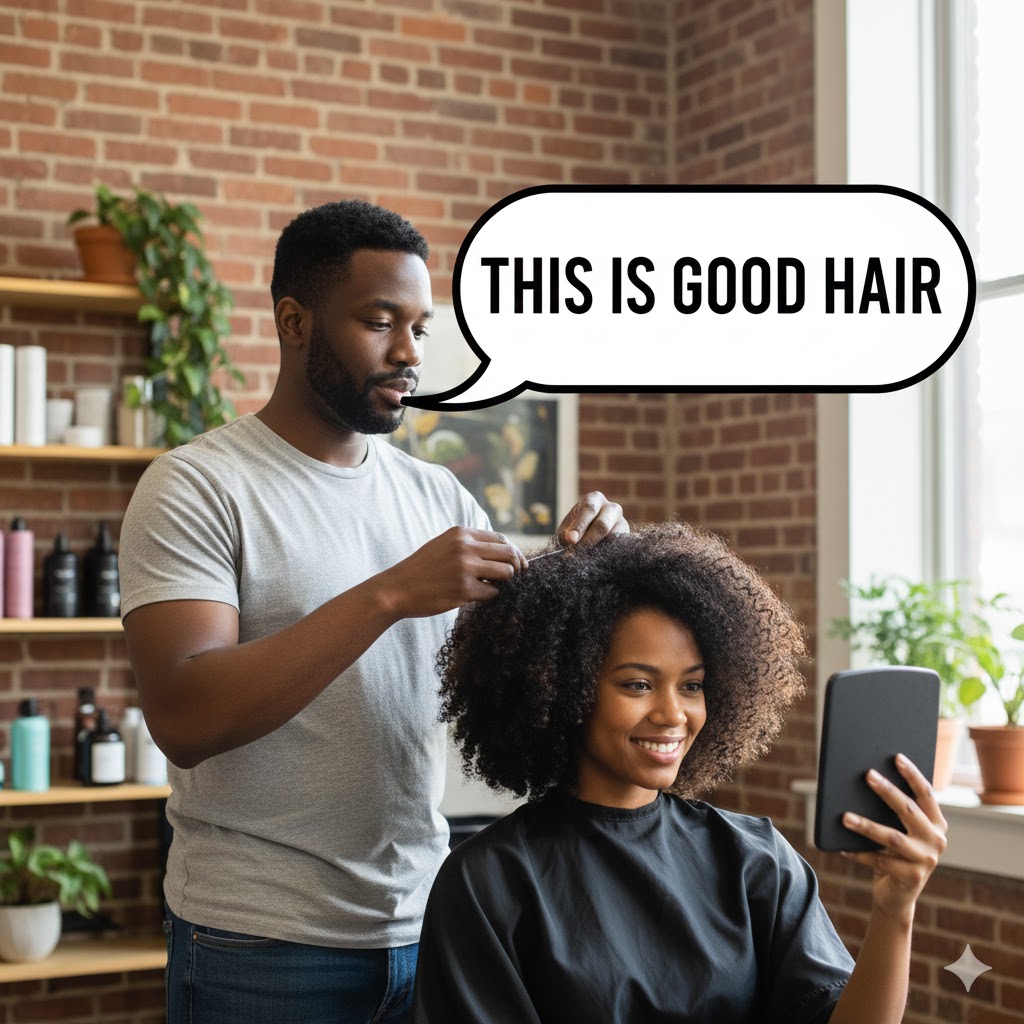
All hair that grows from the head is good hair. Coily hair is not excessive; it is expressive. Kinky hair is not unmanageable; it is powerful. Curly hair is not a problem to solve, but a gift to honor.

The myth of good hair collapses when truth stands upright. Black hair needs no permission to exist beautifully—it already does.


References

Byrd, A. D., & Tharps, L. L. (2014). Hair story: Untangling the roots of Black hair in America. St. Martin’s Press.

Jablonski, N. G. (2015). Skin color: A natural history. University of California Press.

Thompson, R. F. (1983). Flash of the spirit: African and Afro-American art and philosophy. Vintage Books.

The Holy Bible, King James Version (Genesis 1:31; 1 Samuel 16:7; Psalm 104:24).

Natural Hair: Identity, Beauty, and the Power of Embracing Your Roots

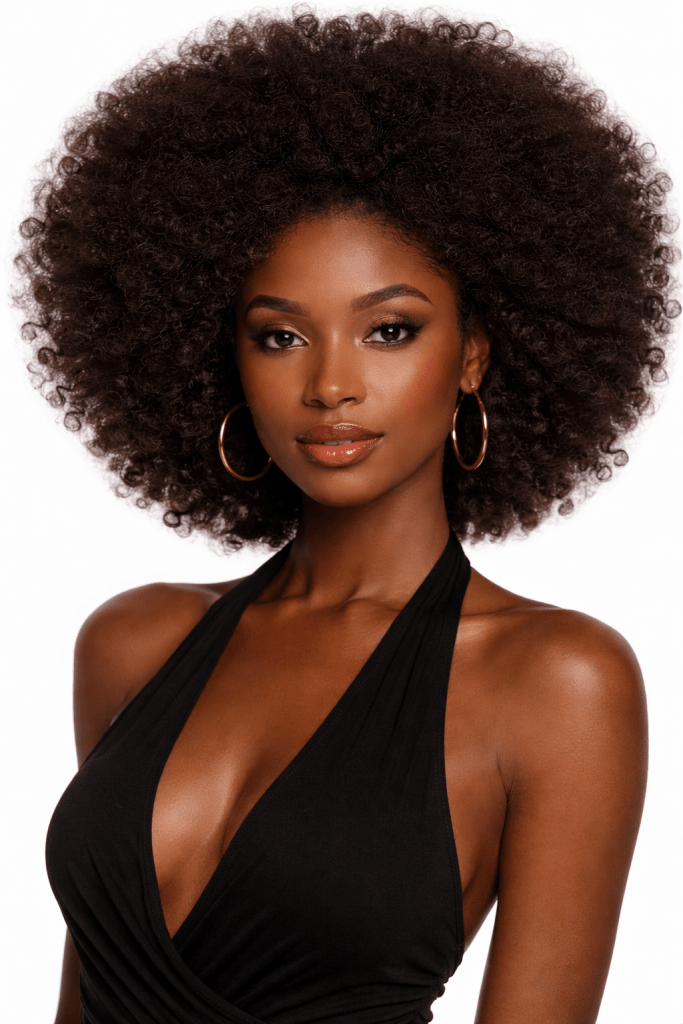
This photograph is the property of its respective owner. No copyright infringement intended.

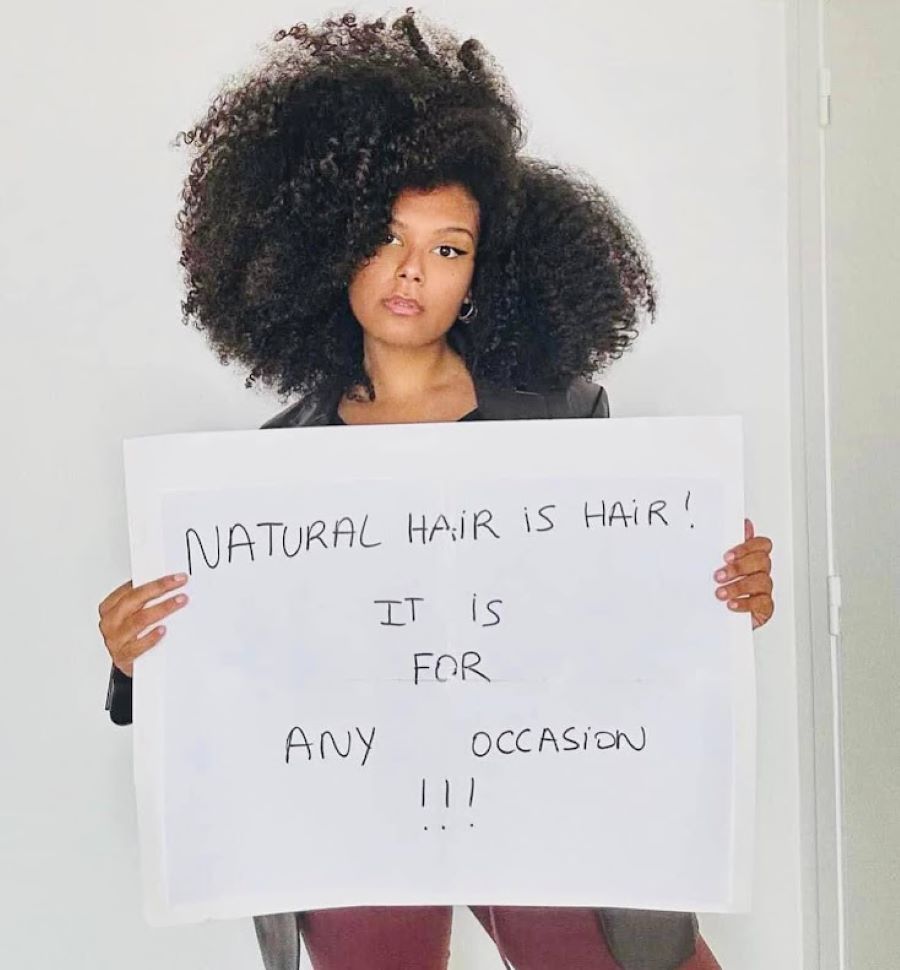
Natural hair is more than a style—it is an expression of identity, culture, and self-acceptance. For many Black women and men, natural hair represents a return to authenticity and a refusal to conform to standards that were never created with them in mind. The beauty and freedom of natural hair stretch beyond aesthetics; it is deeply spiritual, emotional, historical, and physical.

Natural hair carries tremendous benefits, starting with its health. Free from harsh chemicals, relaxers, and heat damage, natural hair can thrive in its truest state. Without chemical breakdown, the curl pattern stays strong, the strands retain elasticity, and the scalp experiences less irritation. The health benefits alone encourage many to embrace their natural texture unapologetically.

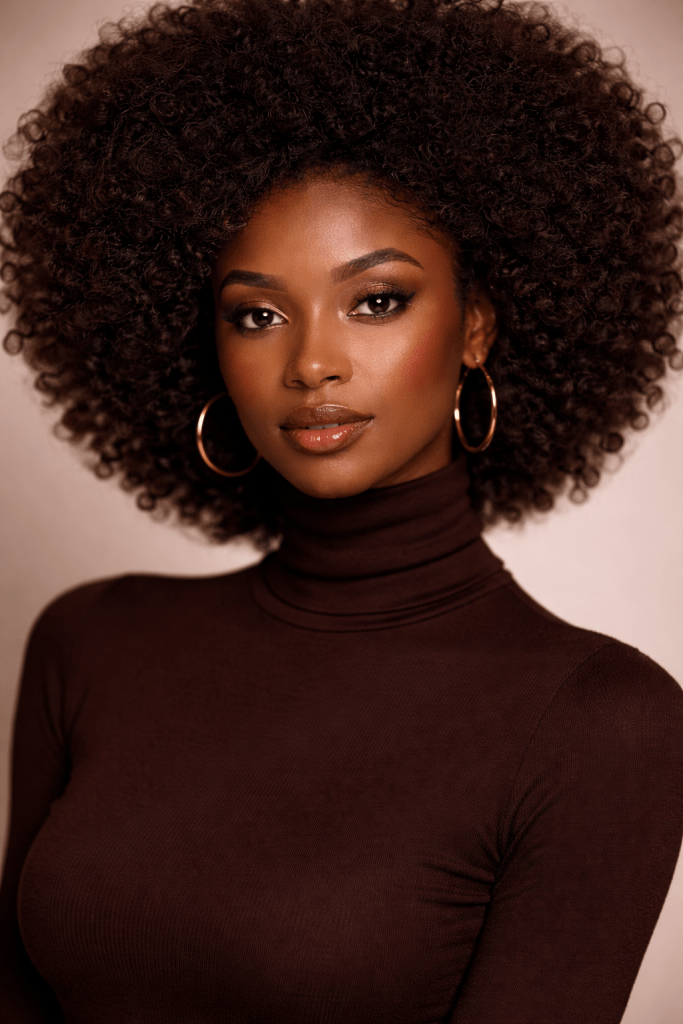
Natural hair also promotes self-love by encouraging individuals to connect with their authentic selves. It requires one to accept their God-given crown exactly as it grows. This acceptance builds confidence, identity, and pride, especially in a world where European beauty standards still dominate mainstream perceptions.

Another benefit of natural hair is its versatility. Curls, coils, kinks, locs, twist-outs, braid-outs, afros, bantu knots, silk presses—natural hair offers endless styling options. This adaptability allows creative expression and empowers individuals to showcase their personality through their look.

Beyond versatility, natural hair symbolizes heritage. It carries the stories of ancestors who braided maps into hair, used it to store seeds during the Middle Passage, and saw their identity attacked and regulated through laws. Wearing natural hair today is a reclaiming of dignity and cultural power.

Despite its value, natural hair has often been misunderstood or unaccepted in society. Many people struggle with it because they were conditioned to believe straight hair is “neat,” “professional,” or “beautiful,” while natural hair was labeled as “wild” or “unmanageable.” These beliefs are rooted in racism and Eurocentric standards that have shaped beauty norms for centuries.

Even today, some individuals do not like their natural hair because they were taught to see it as an inconvenience rather than a blessing. Internalized bias can lead people to reject their curl patterns, compare themselves to others, or feel pressure to alter their appearance. Healing this mindset requires unlearning generational narratives and embracing new ones.

Social acceptance of natural hair has improved, yet discrimination still exists. Workplaces, schools, and public spaces have historically penalized natural textures. Laws like the CROWN Act prove that acceptance is still evolving, highlighting the need for continued advocacy and education surrounding Black hair.

Though society’s acceptance fluctuates, natural hair is gaining visibility and representation. More public figures, influencers, and everyday people proudly embrace their coils, helping normalize natural textures and expand definitions of beauty. The movement encourages younger generations to grow up loving their hair.

Caring for natural hair requires patience, understanding, and consistency. It begins with moisture—water, leave-ins, oils, and butters all support hydration. Natural hair tends to be dry because the curl pattern makes it difficult for natural oils to travel down the strands. This means moisture must be intentionally added.

Protective styles also play a major role in natural hair care. Braids, twists, locs, and updos help prevent breakage, reduce manipulation, and promote growth. Protective styling paired with proper maintenance keeps natural hair healthy and strong.

Understanding your hair type—whether loose curls, tight coils, or somewhere in between—helps determine what products and methods work best. Each curl type has its own needs, and learning them builds a personalized routine that supports growth and retention.

Natural hair care also includes scalp health. A clean, moisturized scalp encourages healthy growth. Oils such as castor, peppermint, jojoba, and rosemary stimulate circulation and nourish the roots. Healthy hair begins with a healthy foundation.

Detangling is another crucial aspect. Using gentle tools, wide-tooth combs, or fingers reduces breakage. Natural hair thrives when handled with care, especially when wet or stretched to minimize tangles.

Heat usage should be kept to a minimum to preserve the curl pattern. Occasional silk presses are fine, but regular heat can cause damage or loss of curl texture. Natural hair flourishes when heat is controlled and used properly.

One essential fact about natural hair is that shrinkage is a sign of health. Shrinkage shows your curls have elasticity and bounce, which means your strands are strong. Instead of being seen as a flaw, shrinkage should be celebrated as proof of vibrancy.

Another fact is that natural hair grows at the same rate as all human hair—about half an inch per month. What affects length retention is breakage, not growth speed. When natural hair is moisturized and protected, it retains its length effortlessly.

Natural hair is deeply spiritual. For many, it represents liberation, self-discovery, and healing. It is a crown God placed on Black heads—a symbol of royalty and resilience. Embracing natural hair becomes an act of honoring oneself and honoring the Creator.

Ultimately, natural hair is beauty, culture, and power woven together. It is a reminder that Black identity is rich, divine, and unique. Embracing natural hair is not just about appearance—it is about reclaiming worth, rejecting narrow beauty standards, and walking confidently in the glory of one’s natural design. Embracing your natural hair is embracing yourself, fully and fearlessly.

References
CROWN Act resources
Psalm 139:14 (identity and creation)
Historical scholarship on Black hair and culture