

Category Archives: mankind

The Mirror Between Two Worlds

Between the physical and the spiritual, between what is seen and what is felt, there exists a mirror — a reflection that reveals not merely the face, but the soul. The Mirror Between Two Worlds represents the threshold where identity, morality, and divinity converge. It is the space where humanity confronts both its beauty and its brokenness, where truth and illusion battle for dominion over the heart.

Every individual lives in two realms: the material world of flesh and ambition, and the spiritual world of conscience and eternity. The mirror between them does not merely show what we appear to be, but who we have become. In this reflection, one must ask: Am I living for this world or for the one beyond?

The physical world teaches us to chase visibility — to be admired, accepted, and envied. It prizes appearance over authenticity. The spiritual world, by contrast, measures not how we look but how we love, not how high we rise but how deeply we serve. The mirror between these two worlds exposes the tension of modern existence — the war between ego and essence.

In Scripture, mirrors often symbolize revelation and reflection. The Apostle Paul wrote, “For now we see through a glass, darkly; but then face to face” (1 Corinthians 13:12, KJV). Humanity’s understanding of truth is partial, obscured by sin and self-deception. Yet as we draw nearer to God, the reflection clarifies, revealing our true image — one made in His likeness.

This mirror is not a passive object; it is alive with moral consequence. It shows both the masks we wear and the wounds we hide. Many are afraid to look too long, for the reflection exposes compromise, vanity, and spiritual neglect. But transformation begins with honest confrontation. We cannot heal what we refuse to see.

In the age of social media and self-curation, the mirror has multiplied. We are surrounded by digital reflections — selfies, filters, and public personas — each crafted to project perfection. Yet the soul, neglected and unfiltered, remains restless. The world teaches us to polish the image but ignore the spirit, to upgrade the mirror but forget the reflection.

The “two worlds” also represent time and eternity. In this life, we chase possessions, pleasure, and recognition; in the next, only righteousness will endure. The mirror between them reminds us that what is temporary often disguises itself as eternal, and what is unseen carries the greatest value. “While we look not at the things which are seen, but at the things which are not seen…” (2 Corinthians 4:18, KJV).

Every choice we make tilts the reflection toward one world or the other. When we choose truth over convenience, compassion over cruelty, faith over fear — we align with the divine reflection. But when we yield to pride, envy, or greed, the mirror darkens. It becomes clouded by self-interest, unable to reflect the light of God’s image.

For centuries, mystics and theologians have described life as a mirror of the soul. The more one polishes it through repentance and humility, the more clearly it reflects the Creator. Sin, however, scratches the glass, distorting the divine resemblance. The process of sanctification is, in essence, the cleaning of the mirror — the restoration of spiritual clarity.

In psychological terms, the mirror represents self-awareness — the courage to observe one’s own motives, biases, and brokenness. It demands vulnerability, for the truth is rarely flattering. Yet through this inner reflection, spiritual maturity is born. The unexamined soul remains divided, trapped between the two worlds.

The mirror also symbolizes duality — light and shadow, heaven and earth, the sacred and the profane. It reminds us that humans are not merely bodies seeking pleasure, but spirits seeking purpose. When the material dominates, the reflection becomes superficial; when the spiritual leads, beauty flows from within.

The tragedy of modern humanity is that many have mistaken the reflection for the reality. They worship the image — fame, status, self — and forget the source. This idolatry of the self is the ancient sin reborn in digital form. The mirror becomes an altar where the ego reigns supreme, yet leaves the soul starving.

Yet, hope endures. The mirror between worlds is not meant to condemn but to awaken. When one gazes into it with humility, the illusion fades and truth emerges. One begins to see that divine beauty is not external adornment but internal alignment — the harmony of heart, mind, and spirit under God’s light.

In every generation, prophets, poets, and philosophers have urged humanity to look inward. “Know thyself,” inscribed on the Temple of Delphi, echoes the same wisdom Christ imparted: “The kingdom of God is within you” (Luke 17:21, KJV). The mirror between two worlds, then, is not found in glass but in the heart.

The reflection we see in others often reveals what remains unresolved within us. Judgment, envy, and resentment are projections of our own unrest. Thus, relationships become mirrors too — sacred tools of revelation meant to refine rather than condemn. Each encounter is an invitation to greater understanding.

The moment we surrender vanity and face our truest reflection, transformation begins. The mirror ceases to divide the worlds and instead unites them. Heaven and earth meet within the redeemed heart — a space where spiritual truth animates physical existence.

The goal, then, is not to shatter the mirror but to see clearly through it. To live with integrity between both worlds — fully human yet divinely guided. To reflect the Creator while walking through creation.

In the end, every soul must stand before the ultimate mirror — the presence of God — where no filters, excuses, or disguises remain. There, reflection becomes revelation. And in that sacred unveiling, we will finally see ourselves as He always saw us — not divided, but whole.

References

Foster, R. (1998). Celebration of discipline: The path to spiritual growth. HarperCollins.
Lewis, C. S. (1942). The Screwtape letters. HarperOne.
Nouwen, H. (1981). The wounded healer: Ministry in contemporary society. Doubleday.
Tozer, A. W. (1991). The pursuit of God. Christian Publications.
The Holy Bible, King James Version. (1611). London: Oxford University Press.
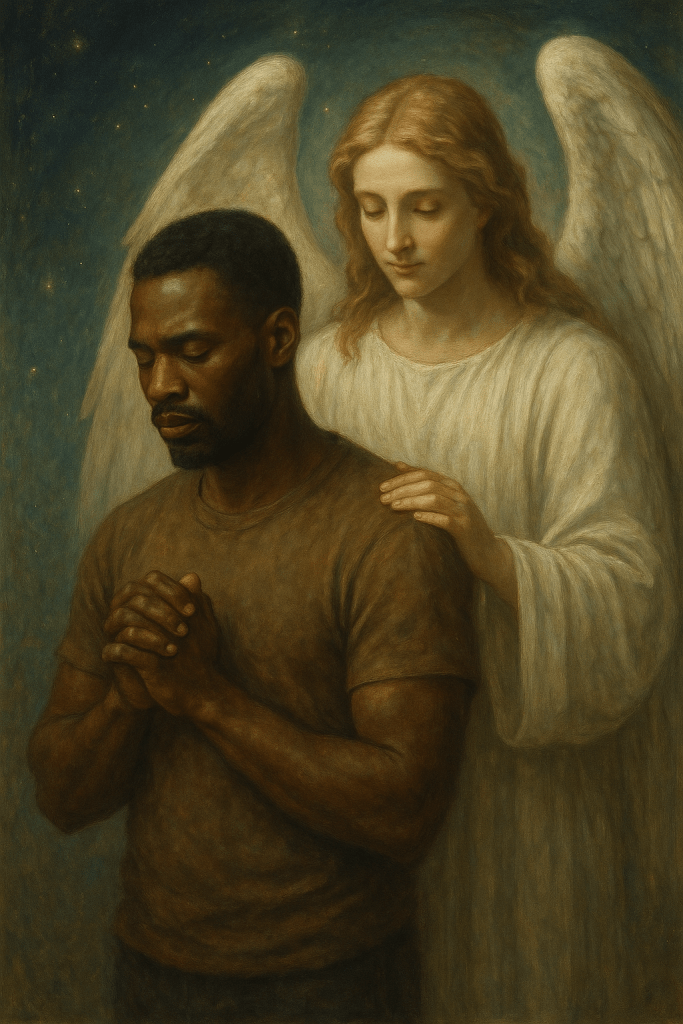
Terrestrial and Celestial: A Biblical Examination.

There exists within Scripture a clear distinction between the terrestrial and the celestial — the earthly realm and the heavenly realm. Understanding this difference allows believers to recognize both the temporary nature of physical life and the eternal significance of spiritual existence. These categories encompass not only creation, but identity, purpose, and destiny (1 Corinthians 15:40, KJV).

The term terrestrial refers to things belonging to the earth — what is physical, temporal, and natural. Humanity was formed from the dust of the ground, making our bodies terrestrial by design (Genesis 2:7, KJV). We walk in this world as citizens of a physical creation, subject to natural laws, aging, and death.

The celestial, by contrast, refers to things belonging to heaven — spiritual, eternal, and divine. God, angels, and the eternal dwelling place of the saints are all celestial realities. The heavens declare the glory of God, revealing His majesty beyond earthly perception (Psalm 19:1, KJV). Celestial things are not bound by the limits of time or decay.

The apostle Paul draws a powerful comparison between these two states of existence. “There are also celestial bodies, and bodies terrestrial,” he writes, emphasizing two distinct forms of being (1 Corinthians 15:40, KJV). The terrestrial body is sown in corruption, yet the celestial body is raised in glory. This contrast points to resurrection hope and the transformation awaiting believers.

The terrestrial life is marked by weakness and limitation. Sickness, fatigue, struggle, and mortality testify to the fragility of earthly existence (Psalm 90:10, KJV). The body ages and returns to dust, reminding mankind that life on earth is fleeting and not the final form intended by God (Genesis 3:19, KJV).

In contrast, the celestial realm is characterized by immortality, holiness, and divine power. Heavenly bodies do not decay nor experience corruption. Those who inherit eternal life will be clothed in celestial glory, transformed by the power of resurrection (Philippians 3:21, KJV). This transformation reveals God’s intention to elevate humanity from dust to divine likeness.

Christ Himself illustrates the bridge between terrestrial and celestial. Born in flesh, He walked the earth in human form, yet His resurrection revealed a celestial nature beyond the limitations of mortality (Luke 24:39, KJV). He became the “firstfruits” of those who shall rise, demonstrating humanity’s destiny (1 Corinthians 15:20, KJV).

The terrestrial world is temporary. Scripture declares that heaven and earth shall pass away, but God’s word remains eternal (Matthew 24:35, KJV). Earthly kingdoms crumble, wealth fades, beauty withers, and glory evaporates. Earthly life is but a vapor that appears for a little time and then vanishes away (James 4:14, KJV).

The celestial kingdom, however, is everlasting. The throne of God endures forever, and the righteous shall dwell with Him in eternal light and glory (Revelation 21:23, KJV). This realm is the believer’s true homeland, for we are “strangers and pilgrims on the earth” awaiting heavenly promise (Hebrews 11:13-16, KJV).

The terrestrial mind focuses on earthly concerns — food, clothing, position, reputation, achievement. Yet Christ commands believers to seek first the kingdom of God, demonstrating that spiritual pursuit must outrank material survival (Matthew 6:33, KJV). Fleshly desires war against the soul because they are bound to earth (1 Peter 2:11, KJV).

The celestial mindset dwells on things above — faith, righteousness, holiness, compassion, truth, and eternity (Colossians 3:2, KJV). Such a mindset is evidence of spiritual maturity, for the spiritually minded live according to the Spirit rather than the flesh (Romans 8:5-6, KJV).

Earthly bodies bear the image of the first Adam, made of dust. Heavenly bodies bear the image of the second Adam, Christ, who is from heaven (1 Corinthians 15:47-49, KJV). This comparison shows that our earthly identity is not the final expression of God’s purpose.

The terrestrial body is weak, susceptible to temptation and influenced by the senses. It requires discipline and submission to the Spirit so that it does not dominate or corrupt the soul (Galatians 5:16-17, KJV). Spiritual warfare takes place within the earthly vessel.

The celestial nature, however, is perfect, unable to sin, and fully aligned with God’s will. It represents the perfection believers will experience in the resurrection, when mortality puts on immortality (1 Corinthians 15:53, KJV). In this transformed state, humanity fulfills its divine calling.

Death marks the separation of terrestrial and celestial identity. The body returns to earth, but the spirit returns to God who gave it (Ecclesiastes 12:7, KJV). This separation reveals the impermanence of flesh and the priority of spiritual existence.

Heavenly reward awaits those who walk by faith rather than sight (2 Corinthians 5:7, KJV). The terrestrial experience tests loyalty, obedience, and faith, shaping the soul for eternal destiny. Every trial on earth prepares believers for celestial glory.

Those who live only for the terrestrial life inevitably perish with it. Scripture warns not to lay treasures on earth, where moth and rust destroy, but to store treasure in heaven (Matthew 6:19-20, KJV). To cling to earthly life is to lose eternal life.

The terrestrial world exists under corruption and bondage due to sin. Creation itself groans for redemption, waiting for the manifestation of the sons of God (Romans 8:18-23, KJV). Redemption promises not only resurrection of the body but renewal of the heavens and earth.

The celestial realm operates under perfect righteousness and divine order. Angels excel in strength, obeying His commandments, revealing the purity of heaven’s structure (Psalm 103:20, KJV). There is no pain, sorrow, or death in the celestial kingdom (Revelation 21:4, KJV).

Believers are called to live as celestial heirs even while in terrestrial bodies. This means walking in the Spirit, practicing holiness, and manifesting the character of Christ on earth (1 John 3:2-3, KJV). The earthly life is training ground for eternal destiny.

Ultimately, terrestrial existence is preparation; celestial existence is fulfillment. The journey of faith moves us from dust to glory, from temporal to eternal, from flesh to Spirit, from earth to heaven. The wise live with eternity in view, recognizing that what is seen is temporary, but what is unseen is eternal (2 Corinthians 4:18, KJV).


References (KJV)
Genesis 2:7; Genesis 3:19; Psalm 19:1; Psalm 90:10; Psalm 103:20; Ecclesiastes 12:7; Matthew 6:19–20; Matthew 6:33; Matthew 24:35; Luke 24:39; John 3:16; Romans 8:5–6; Romans 8:18–23; 1 Corinthians 15:20, 40, 47–53; 2 Corinthians 4:18; 2 Corinthians 5:7; Galatians 5:16–17; Colossians 3:2; Hebrews 11:13–16; James 4:14; 1 Peter 2:11; Philippians 3:21; Revelation 21:4, 23.