
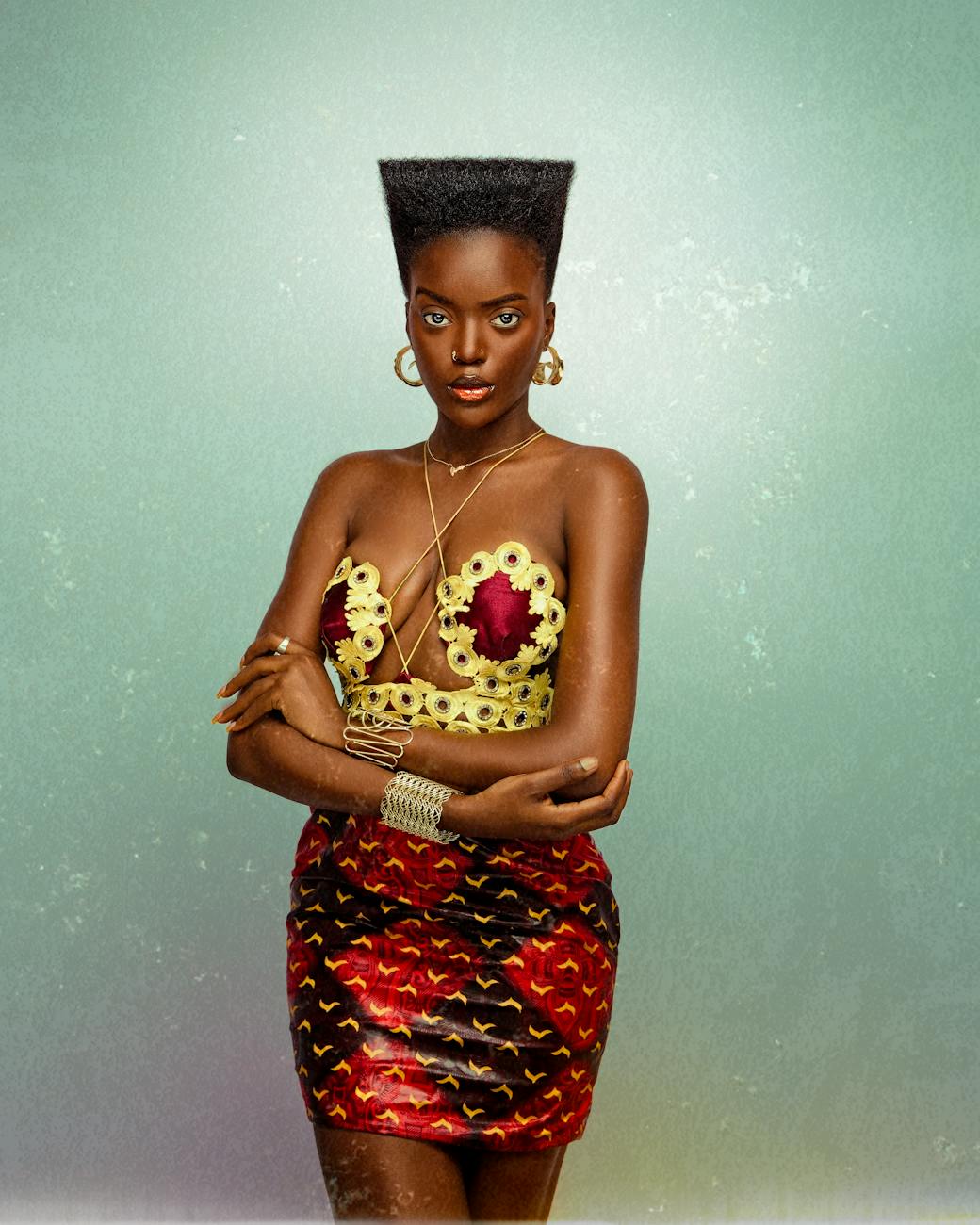
Racism, colorism, and lookism represent a triad of psychological violence that shapes human experience, distorting both identity and emotional well-being. These constructs intertwine to create hierarchies of worth rooted in superficial attributes—skin color, facial symmetry, and physical appearance—while leaving lasting scars on the psyche of those marginalized by them. Their effects extend far beyond social exclusion; they penetrate the self-concept, dismantling the foundations of self-esteem and belonging.
Racism is not merely an external act of discrimination—it is an internalized poison that teaches individuals to view themselves through the eyes of their oppressors. When a person of African descent absorbs racist messages about inferiority or hyper-visibility, a split occurs between their authentic self and their socially imposed identity. This psychological rupture, described by W.E.B. Du Bois (1903) as “double consciousness,” forces Black individuals to exist between two conflicting perceptions: who they truly are and how they are seen.
Colorism deepens this fracture by introducing an internal hierarchy within racial groups, privileging lighter skin as more beautiful, intelligent, or desirable. Rooted in colonial history, colorism functions as an inherited trauma that reinforces Eurocentric standards of worth. Studies have shown that darker-skinned individuals face harsher judgments in employment, education, and romantic desirability (Hunter, 2007). This creates an invisible caste system within the same racial identity, perpetuating cycles of low self-esteem and division.
The emotional consequences of colorism are profound, particularly for women. Dark-skinned women are often depicted as less feminine or less worthy of love, a stereotype perpetuated by media and societal norms. The absence of representation or the presence of negative portrayals leads to what psychologists term “internalized colorism”—a form of self-loathing or constant comparison to lighter peers. This condition manifests in depression, anxiety, and body dysmorphia, echoing generations of colonial degradation.
Men, too, are not immune to this system of valuation. In a world where light skin and European features are exalted, darker-skinned men are frequently stereotyped as aggressive or undesirable unless they attain wealth or fame. This conditional acceptance feeds into what scholars call “compensatory masculinity,” where self-worth becomes tied to external achievements rather than intrinsic identity (Majors & Billson, 1992). The psychological toll is heavy, fostering performance-based validation instead of authentic self-acceptance.
Lookism—the discrimination based on physical appearance—intersects with both racism and colorism, reinforcing social hierarchies of attractiveness that favor Eurocentric beauty ideals. The psychological effects of lookism can be as damaging as racial prejudice, leading to social anxiety, isolation, and chronic insecurity. Individuals who deviate from mainstream beauty standards often develop what psychologists refer to as “appearance-based self-worth,” where self-esteem fluctuates based on perceived attractiveness.
Racism, colorism, and lookism collectively weaponize the human gaze. The eyes of others become a source of judgment and trauma, transforming the act of being seen into an emotional burden. Frantz Fanon (1952) described this phenomenon in Black Skin, White Masks, recounting how the colonial gaze reduces the Black body to an object of otherness. Such dehumanization fractures the self, replacing the joy of identity with the anxiety of perception.
The family, often a place of refuge, can also become the site where these hierarchies are reinforced. Generations of internalized color preference lead parents to praise lighter children or to discourage darker-skinned ones from embracing their natural features. This subtle form of intra-racial discrimination plants seeds of insecurity early in life. Over time, these messages crystallize into adult self-doubt and relational struggles, perpetuating a cycle of self-denial.
In the context of love and relationships, colorism and lookism operate as silent dictators of desirability. Studies show that both men and women subconsciously associate lighter skin and Eurocentric features with higher social status and compatibility (Maddox & Gray, 2002). For darker individuals, this creates a psychological dilemma—wanting to be loved authentically yet fearing rejection for something immutable.
The emotional depth of these issues cannot be understood without addressing media influence. Hollywood, fashion, and advertising have historically upheld narrow definitions of beauty, centering whiteness as the ideal. Even when diversity is celebrated, it is often curated within acceptable limits—favoring lighter tones, looser curls, and symmetrical features. This reinforces the narrative that true beauty requires proximity to whiteness.
Social media, though often praised for democratizing visibility, has amplified lookism. Platforms that reward filtered perfection encourage constant comparison and digital self-surveillance. The curated self replaces the authentic self, and validation becomes addictive. For Black and brown users, the algorithm often mirrors historical biases—prioritizing lighter-skinned influencers or Eurocentric aesthetics.
Psychologically, this environment breeds what some researchers term “mirror trauma”—a form of emotional distress that arises from seeing distorted versions of oneself reflected in culture and technology. The self becomes fragmented between the reality of one’s body and the idealized digital fantasy that gains approval. Over time, this can lead to emotional numbness, perfectionism, and identity confusion.
The intersection of racism, colorism, and lookism also shapes social mobility. Those who visually conform to beauty norms often experience what sociologists call “aesthetic privilege.” This unearned advantage affects job opportunities, income levels, and even criminal sentencing outcomes. Studies reveal that lighter-skinned Black individuals are more likely to receive lenient treatment in the justice system (Viglione, 2018). Beauty thus becomes currency—a silent economy of worth rooted in colonial logic.
In educational settings, these biases shape teacher expectations and peer interactions. Research indicates that darker-skinned students are disciplined more harshly and perceived as less capable, even when their performance matches that of their lighter peers. These early experiences internalize inferiority, breeding self-doubt and academic disengagement (Hannon et al., 2013).
From a psychological standpoint, the internalization of beauty hierarchies functions as a form of self-surveillance—a mental colonization where individuals police their own features. This creates what bell hooks (1992) described as “aesthetic trauma,” where Black individuals struggle to see themselves as beautiful outside of white validation. Healing from this requires unlearning centuries of visual propaganda.
Spiritually, the damage runs deeper still. Many who grow up under the shadow of colorism question their divine worth. They subconsciously associate lighter skin with purity or godliness, reflecting how colonial religion once depicted holiness through whiteness. Reclaiming one’s spiritual identity, therefore, becomes an act of resistance—seeing oneself as made in the image of the Creator, not the colonizer.
Healing from these intertwined oppressions requires collective re-education. Communities must confront how they perpetuate colorist and lookist narratives through jokes, preferences, or casting choices. Recognizing these patterns allows for intentional change, transforming inherited bias into self-awareness.
Therapeutically, interventions must address both the individual and societal dimensions of appearance-based trauma. Cognitive-behavioral therapy can help reframe distorted beliefs about worth, while cultural therapy reconnects individuals to ancestral pride and historical truth. For many, embracing natural hair, melanin, or cultural fashion becomes a symbolic act of psychological liberation.
Emotionally, the journey toward self-acceptance involves mourning—grieving the years lost to self-hate, rejection, or invisibility. This grief process allows for rebirth, where identity is no longer contingent upon comparison but rooted in divine and cultural truth.
Art, literature, and music serve as tools of resistance. From Nina Simone’s defiant “To Be Young, Gifted and Black” to contemporary movements like #MelaninMagic, creative expression reclaims narrative control. These acts remind the world—and the self—that beauty is not a European export but a human inheritance.
The emotional healing of colorism and lookism requires a mirror reimagined—not one that distorts but one that reflects truth. Each shade, each feature, carries ancestral memory and divine intention. When individuals learn to see themselves as sacred art, the gaze of oppression loses power.
Ultimately, the psychological liberation from racism, colorism, and lookism is both personal and collective. It demands that we dismantle the systems that define beauty as hierarchy and worth as appearance. True freedom begins not when others affirm us, but when we affirm ourselves beyond their gaze.
References
Du Bois, W. E. B. (1903). The souls of Black folk. Chicago: A.C. McClurg.
Fanon, F. (1952). Black skin, white masks. Grove Press.
Hannon, L., Defina, R., & Bruch, S. (2013). The relationship between skin tone and school suspension for African Americans. Race and Social Problems, 5(4), 281–295.
hooks, b. (1992). Black looks: Race and representation. South End Press.
Hunter, M. (2007). The persistent problem of colorism: Skin tone, status, and inequality. Sociology Compass, 1(1), 237–254.
Majors, R., & Billson, J. M. (1992). Cool pose: The dilemmas of Black manhood in America. Lexington Books.
Maddox, K. B., & Gray, S. A. (2002). Cognitive representations of Black Americans: Reexploring the role of skin tone. Personality and Social Psychology Bulletin, 28(2), 250–259.
Viglione, J. (2018). The impact of skin tone on the criminal justice process. Race and Justice, 8(2), 175–200.
 THE BROWN GIRL DILEMMA