Category Archives: latin America

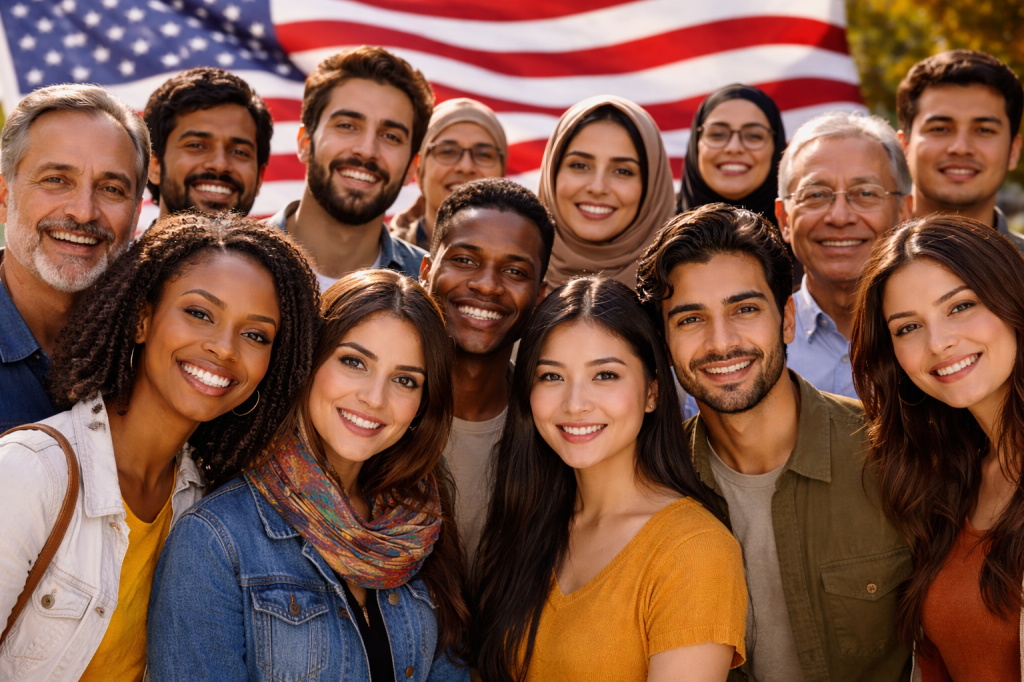
Voices of the Americas: Black, Hispanic, Asian, Italian, and the Tapestry of Minority Sacrifice

The story of the United States is inseparable from the stories of its minorities. America’s economic strength, cultural vitality, and democratic evolution were built not by a single people, but by a convergence of nations, languages, and bloodlines. From forced migration to voluntary arrival, each community has carried both hope and hardship into the American narrative.

African Americans represent one of the oldest continuous minority presences in the nation, arriving first through the transatlantic slave trade in 1619. Enslaved Africans were forcibly transported, stripped of homeland and lineage, yet they laid the agricultural and economic foundation of early America. Their labor undergirded plantation wealth and national expansion, even as their humanity was denied.

Following emancipation, Black Americans faced Reconstruction’s collapse, Jim Crow segregation, racial terror, and systemic exclusion. The Great Migration reshaped northern cities as millions sought industrial opportunity and safety. The Civil Rights Movement, led by figures such as Martin Luther King Jr., transformed American law and conscience, yet disparities in wealth, policing, and healthcare persist.

Hispanic and Latino Americans trace their roots to Spanish colonization long before the United States existed. Regions such as California, Texas, and Florida were once part of Spain and later Mexico. After the Mexican-American War, many Mexicans became Americans overnight when borders shifted rather than people moving.

Immigration from Mexico, Puerto Rico, Cuba, and Central America increased in the twentieth century due to labor demands, political instability, and economic opportunity. Programs such as the Bracero Program recruited Mexican workers during World War II. Today, Latinos face immigration debates, labor inequities, and language-based discrimination, even as they contribute profoundly to agriculture, construction, military service, and entrepreneurship.

Asian Americans arrived in significant numbers during the nineteenth century, beginning with Chinese laborers who helped build the Transcontinental Railroad. Their sacrifice was met with exclusionary policies such as the Chinese Exclusion Act of 1882. Despite this discrimination, Chinese communities established resilient cultural and economic enclaves.

Japanese immigrants faced incarceration during World War II under Executive Order 9066, despite many being American citizens. Korean, Filipino, Indian, and Vietnamese immigrants followed in later waves, often shaped by war, colonial ties, or refugee resettlement policies. Asian Americans today continue to confront stereotypes and periodic surges of xenophobia, particularly during geopolitical tensions.

Italian Americans migrated in large numbers between 1880 and 1920, fleeing poverty and political instability in southern Italy. Upon arrival, they often encountered nativist hostility and were stereotyped as criminals or anarchists. Over time, they built tight-knit communities, contributing to urban labor, cuisine, art, and public service.

Irish Americans, though now often perceived as fully integrated, endured severe discrimination during the nineteenth century. Fleeing the Great Famine, they were met with “No Irish Need Apply” sentiments. They filled industrial jobs, shaped urban political machines, and gradually ascended into mainstream civic life.

Native Americans represent the original inhabitants of the Americas and have endured forced displacement, broken treaties, and cultural suppression. The Trail of Tears and the reservation system stand as painful reminders of conquest and survival. Despite systemic marginalization, Indigenous communities preserve language, sovereignty, and cultural identity.

Arab Americans began migrating in the late nineteenth century, often from Lebanon and Syria, and later from other parts of the Middle East. Many arrived seeking economic opportunity. Post-9/11 suspicion intensified scrutiny and discrimination, yet Arab Americans remain active in business, medicine, and public service.

Caribbean Americans, including Haitian and Jamaican immigrants, have shaped music, healthcare, and entrepreneurship. Migration increased in the twentieth century due to economic and political pressures in the Caribbean basin. These communities often navigate racial identity within broader Black American experiences while maintaining distinct cultural traditions.

African immigrants, distinct from descendants of enslaved Africans, have arrived in increasing numbers since the Immigration and Nationality Act of 1965. Highly educated and entrepreneurial, they contribute to academia, healthcare, and technology sectors while adapting to America’s racial frameworks.

Filipino Americans, whose migration ties date to U.S. colonial governance of the Philippines, have long served in the U.S. Navy and healthcare professions. Their presence illustrates how imperial history shaped migration patterns.

South Asian Americans, including Indian and Pakistani immigrants, expanded significantly after 1965 immigration reforms favored skilled labor. They have made substantial contributions in medicine, engineering, and technology while navigating religious discrimination and post-9/11 scrutiny.

Latina and Asian women have played pivotal roles in garment factories, domestic labor, and nursing, often underpaid and underrecognized. Their sacrifices fueled urban economies while supporting transnational families.

Military service stands as a shared thread across minority communities. From the Buffalo Soldiers to Hispanic Medal of Honor recipients, from Japanese American units in World War II to contemporary immigrant enlistments, minority sacrifice has defended freedoms not always fully extended to them.

Today, minorities collectively face wealth gaps, educational inequities, healthcare disparities, and political polarization. Yet they also represent demographic growth, entrepreneurial dynamism, and cultural innovation. American music, cuisine, language, and art reflect their imprint.

The American experiment is thus not a singular inheritance but a chorus. Black resilience, Hispanic heritage, Asian diligence, Italian and Irish perseverance, Jewish scholarship, Indigenous endurance, Arab entrepreneurship, Caribbean rhythm, and African ambition form a mosaic rather than a monolith.

Voices of the Americas are not peripheral to the nation’s story—they are foundational. Their migrations, whether forced or chosen, their sacrifices in labor and war, and their ongoing pursuit of equity define the evolving meaning of American identity.


References

Daniels, R. (2002). Coming to America: A History of Immigration and Ethnicity in American Life. HarperCollins.

Foner, E. (2014). Give Me Liberty!: An American History. W.W. Norton.

Takaki, R. (2008). A Different Mirror: A History of Multicultural America. Back Bay Books.

The Holy Bible, King James Version (for general themes of migration and diaspora).

U.S. Census Bureau. (2023). Demographic Profile of the United States.
Covenant Echoes in the Latin World

The Latin world represents one of the most complex intersections of empire, faith, language, and covenant memory in global history. Stretching from the Iberian Peninsula to the Americas, Latin identity emerged from Roman foundations, Catholic expansion, Indigenous civilizations, African diaspora currents, and layered migrations. To understand covenant echoes in this world is to examine how sacred narratives are intertwined with conquest, colonization, and cultural survival.

The term “Latin” derives from Latium, the region surrounding ancient Rome. The expansion of the Roman Empire institutionalized the Latin language, law, and governance across Europe. After Rome’s Christianization under Constantine the Great, Christianity fused with imperial administration, creating a theological-political framework that would later shape Iberian expansion.

Spain and Portugal, inheritors of Roman Catholic identity, carried this fusion into the Age of Exploration. Under monarchs such as Isabella I of Castile and Ferdinand II of Aragon, Spain unified religiously and politically. The 1492 expulsion of Jews and Muslims from Spain marked a turning point, intertwining covenant theology with national consolidation.

The same year witnessed the voyage of Christopher Columbus, which initiated sustained European contact with the Americas. Spanish and Portuguese explorers justified expansion through missionary zeal, often framing colonization as a divine mandate. Biblical imagery of covenant and chosen mission shaped rhetoric, though practice frequently contradicted Christian ethics.

Indigenous civilizations such as the Aztec, Maya, and Inca possessed complex spiritual systems prior to European arrival. Conquest imposed Catholic structures upon these societies, yet syncretism emerged. Indigenous cosmologies blended with biblical motifs, producing unique Latin Christian expressions that endure in festivals, iconography, and communal rituals.

African covenantal memory entered the Latin world through the transatlantic slave trade. Millions of Africans were forcibly transported to Brazil, the Caribbean, and Spanish America. They carried with them spiritual traditions that merged with Catholic symbolism, giving rise to syncretic faith expressions such as Candomblé and Santería.

Theological scholarship in colonial Latin America wrestled with moral questions about Indigenous humanity. Figures like Bartolomé de las Casas argued for Indigenous rights, challenging the brutality of encomienda systems. His advocacy demonstrates early covenantal debates about justice and dignity.

The Bible itself became a contested text in the Latin world. For centuries, Catholic authority restricted vernacular translations. With Protestant missions in the nineteenth century, Spanish and Portuguese Bibles became more widely accessible, reshaping lay engagement with scripture.

Liberation theology in the twentieth century reinterpreted covenant through the lens of the oppressed. Thinkers such as Gustavo Gutiérrez framed the Exodus narrative as paradigmatic for Latin American struggles against poverty and dictatorship. Covenant became a language of social justice rather than imperial mandate.

Migration reshaped covenant echoes once more. Latin Americans migrated northward in the twentieth and twenty-first centuries, carrying Marian devotion, Pentecostal fervor, and communal Catholic traditions into the United States. Spanish-language congregations transformed urban religious landscapes.

The concept of covenant also intersects with Sephardic Jewish memory in the Iberian diaspora. Following expulsion, conversos and crypto-Jews carried fragments of Hebrew tradition into the Americas. Recent genealogical research has revived awareness of these hidden lineages in regions of Mexico and the American Southwest.

Brazil, the largest Portuguese-speaking nation, embodies covenant complexity. Its colonial society intertwined Catholic orthodoxy, African resilience, and Indigenous survival. Afro-Brazilian religious traditions illustrate how covenant identity adapts under coercion yet persists symbolically.

Political upheavals in Latin America often invoked biblical language. Revolutionary leaders employed Exodus imagery, while authoritarian regimes sometimes claimed divine sanction. Covenant rhetoric thus oscillated between liberation and control.

Language itself carries covenant echoes. Spanish and Portuguese, Romance languages rooted in Latin, preserve ecclesiastical vocabulary shaped by centuries of theological discourse. Words like alianza (covenant) reflect deep scriptural inheritance.

The relationship between the Latin world and the United States adds another layer. Economic interdependence, migration policy, and cultural exchange create ongoing dialogue. Religious networks span borders, forming transnational faith communities.

Modern Latin America faces challenges of inequality, political instability, and violence. Yet churches often function as social anchors, providing education, healthcare, and communal solidarity. Covenant in this context signifies resilience amid systemic strain.

Pentecostal growth across Latin America represents one of the most significant religious shifts of the last century. Emphasis on personal covenant with God, spiritual gifts, and communal worship reshapes Catholic-majority landscapes.

Indigenous movements increasingly reclaim precolonial spiritual identities while engaging Christian frameworks. This dual negotiation reflects a broader pattern: covenant memory in the Latin world is neither static nor singular but layered and adaptive.

Diaspora communities in North America reinterpret Latin covenant identity within multicultural contexts. Faith becomes a bridge between heritage and assimilation, preserving language and communal bonds.

Ultimately, covenant echoes in the Latin world reveal a history marked by conquest and compassion, oppression and advocacy, syncretism and reform. From Iberian monarchies to liberation theologians, from Sephardic memory to Afro-Latin spirituality, the Latin world demonstrates how sacred narratives travel, fracture, and reform across continents. Covenant here is not merely theological—it is historical, cultural, and profoundly human.


References

Brading, D. A. (1991). The First America: The Spanish Monarchy, Creole Patriots, and the Liberal State. Cambridge University Press.

Gutiérrez, G. (1973). A Theology of Liberation. Orbis Books.

Las Casas, B. de. (1992). A Short Account of the Destruction of the Indies. Penguin Classics.

Noll, M. A. (2012). The New Shape of World Christianity. IVP Academic.

Pew Research Center. (2023). Religion in Latin America.

The Effect of Colorism in Latin America & the Caribbean.

Photo by Keira Burton on Pexels.com

Colorism, the preferential treatment of lighter-skinned individuals over darker-skinned individuals within the same racial or ethnic group, is a pervasive social issue in Latin America and the Caribbean. Unlike racism, which typically operates between racial groups, colorism functions within communities, shaping beauty standards, social mobility, and economic opportunities. The colonial history of the region, combined with complex racial hierarchies, has deeply entrenched the preference for lighter skin.

In Brazil, colorism is heavily influenced by the legacy of Portuguese colonization and the transatlantic slave trade. Lighter-skinned Brazilians often enjoy greater social acceptance, higher economic opportunities, and more visibility in media and politics. Darker-skinned individuals, including Afro-Brazilians, frequently face systemic disadvantages in employment, education, and social interactions.

Colombia presents a similar pattern. The country’s stratified society historically valued European ancestry and lighter skin, relegating Afro-Colombians and Indigenous populations to lower socioeconomic positions. Studies reveal that lighter-skinned Colombians are more likely to secure professional jobs and attain higher wages, while darker-skinned individuals face barriers to upward mobility.

In the Dominican Republic, colorism intersects with national identity and postcolonial ideals of beauty. Lighter-skinned Dominicans are often celebrated in media, popular culture, and advertising, reinforcing the association between fair skin and social prestige. Conversely, darker-skinned Dominicans experience marginalization and negative stereotyping.

Puerto Rico’s complex racial and cultural landscape similarly reflects colorist biases. Fair-skinned Puerto Ricans, often of European descent, are frequently afforded higher social status, while Afro-Puerto Ricans may encounter limited opportunities and social discrimination. These disparities extend to politics, media, and employment sectors.

Cuba’s history of colonialism and slavery has contributed to persistent colorist attitudes. Afro-Cubans, particularly those with darker skin, are disproportionately represented in lower-paying jobs and are underrepresented in government and media. Skin color continues to influence social hierarchy, marriage prospects, and access to resources.

Haiti, despite its predominantly Black population, exhibits colorism rooted in French colonial legacy. Lighter-skinned Haitians historically held more economic power and social influence, a dynamic that persists in contemporary society. Colorism affects access to education, professional advancement, and social acceptance.

Mexico demonstrates the entrenchment of colorist ideals in beauty standards, media representation, and social mobility. Lighter-skinned Mexicans, often perceived as more European, are preferred in modeling, television, and advertising. Darker-skinned individuals face subtle and overt discrimination in professional, educational, and social contexts.

In Panama, lighter-skinned citizens are often associated with higher social and economic status. The Afro-Panamanian population, particularly those with darker skin, experiences limited access to professional opportunities, societal marginalization, and biased treatment in various institutions.

Costa Rica and Nicaragua also reflect similar dynamics. European features and lighter skin are socially valued, while Indigenous and Afro-descendant populations with darker skin are disproportionately underrepresented in media, education, and government.

Peru’s complex racial hierarchy demonstrates how colorism intersects with Indigenous and mestizo identities. Lighter-skinned individuals often achieve greater social mobility, while darker-skinned populations face marginalization, limited economic opportunities, and underrepresentation in leadership roles.

Venezuela has historically celebrated lighter skin in media and social elites. Fair-skinned Venezuelans dominate beauty pageants, television, and political representation, whereas Afro-Venezuelans and darker-skinned individuals remain socially and economically disadvantaged.

In Ecuador, lighter skin continues to confer social advantage. Indigenous and Afro-Ecuadorian populations are frequently subject to prejudice, unequal treatment, and limited access to quality education and professional careers.

In Trinidad and Tobago, colorism affects social stratification, particularly among Afro-Caribbean and Indo-Caribbean communities. Lighter-skinned individuals often receive more social recognition, while darker-skinned individuals face systemic barriers in employment, education, and media representation.

Jamaica exhibits similar patterns, with lighter-skinned Jamaicans often celebrated in popular culture and the entertainment industry. Darker-skinned individuals may encounter prejudice, reduced opportunities, and negative stereotyping in society.

In Belize, lighter skin is frequently associated with European ancestry and social privilege. Afro-Belizeans and Indigenous populations with darker skin experience economic and social marginalization, reflecting the colonial influence on racial hierarchy.

In Guyana, colorism affects both Afro-Guyanese and Indo-Guyanese populations. Lighter skin is socially desirable, influencing marriage patterns, professional opportunities, and media representation. Darker-skinned individuals often face systemic bias.

Barbados and other smaller Caribbean nations similarly reflect entrenched colorist attitudes. Lighter-skinned citizens are often privileged in professional advancement, social acceptance, and media visibility, while darker-skinned individuals face systemic discrimination.

Across Latin America and the Caribbean, the media plays a critical role in perpetuating colorism. Television, film, and advertising frequently feature lighter-skinned individuals as idealized beauty standards, reinforcing societal biases and influencing self-perception among darker-skinned populations.

Table: The Impact of Colorism Across Latin America & the Caribbean

Country/RegionCommunities Most AffectedForms of Colorism & Social Impact
BrazilAfro-Brazilians, Indigenous peoplesLighter skin linked to higher income, visibility in media, and political representation; darker-skinned Brazilians experience systemic racism and underrepresentation.
ColombiaAfro-Colombians, Indigenous groupsLighter-skinned Colombians receive better employment and education opportunities; darker skin associated with lower social class.
Dominican RepublicAfro-Dominicans, Haitian descendantsNational identity tied to whiteness; darker-skinned Dominicans often face denial of citizenship and discrimination.
Puerto RicoAfro-Puerto Ricans, mixed-race populationsLighter skin associated with beauty and privilege; darker-skinned individuals face workplace and media bias.
CubaAfro-Cubans, mixed-race citizensLighter skin favored in tourism and professional sectors; Afro-Cubans underrepresented in media and politics.
HaitiDarker-skinned Haitians (majority), mulatto elitesHistorical “mulatto elite” dominance; darker-skinned citizens face limited economic opportunities.
MexicoIndigenous and Afro-Mexican communitiesTelevision and politics dominated by light-skinned Mexicans; darker-skinned citizens face classism and racial stereotyping.
PanamaAfro-Panamanians, Indigenous groupsColorism intersects with class; lighter-skinned individuals hold most elite and visible positions.
Costa RicaAfro-Costa Ricans, Indigenous peoplesDarker-skinned individuals experience employment discrimination and limited media presence.
NicaraguaAfro-Nicaraguans, Indigenous populationsSkin color determines access to education, tourism jobs, and social status.
PeruIndigenous Andeans, Afro-PeruviansLighter-skinned mestizos have better mobility; darker-skinned citizens face political and social exclusion.
VenezuelaAfro-Venezuelans, Indigenous groupsMedia and beauty industries glorify light skin; darker-skinned Venezuelans face discrimination and poverty.
EcuadorIndigenous, Afro-EcuadoriansLighter skin equated with modernity and wealth; darker skin seen as backward or poor.
Trinidad & TobagoAfro-Trinidadians, Indo-TrinidadiansFair skin often linked to higher desirability and media preference; darker tones marginalized socially.
JamaicaAfro-JamaicansSkin-lightening products normalized; lighter skin considered more beautiful and commercially valuable.
BelizeAfro-Belizeans, Garifuna, MayaLighter skin associated with colonial-era privilege; darker-skinned citizens face social bias.
GuyanaAfro-Guyanese, Indo-GuyaneseColorism influences dating, employment, and social class distinctions.
BarbadosAfro-BarbadiansLighter skin preferred in entertainment and business leadership; darker skin linked to lower income.
Dominica & St. LuciaAfro-Caribbean populationsColorism manifests in beauty pageants and tourism; lighter skin favored for visibility and employment.
BahamasAfro-BahamiansLight-skinned elite families hold social influence; darker-skinned individuals experience class-based prejudice.

Observations

  • Common Thread: In every country, lighter skin is associated with higher socioeconomic status, beauty, and modernity, while darker skin is often linked to poverty, backwardness, or undesirability — a colonial legacy that still shapes identity and opportunity.
  • Media’s Role: Regional television, advertisements, and pageantry largely portray fair skin as ideal, reinforcing intergenerational color biases.
  • Globalization Influence: Western beauty standards continue to affect local perceptions, fueling a growing skin-lightening industry across Latin America and the Caribbean.
  • Resistance Movements: Recent years have seen Afro-Latino and Indigenous activists push for representation through art, education, and social media — reclaiming pride in darker complexions and African ancestry.

Efforts to address colorism in Latin America and the Caribbean require multifaceted approaches. Education, media representation reform, and public awareness campaigns are essential to challenge entrenched biases, promote inclusivity, and foster a society where individuals are valued regardless of skin tone.


References

Rohinianand.com. (n.d.). Colorism’s global manifestations. https://www.rohinianand.com/post/colorism-s-global-manifestations?utm_source=chatgpt.com

News.uga.edu. (n.d.). History of colorism sheds light on discrimination. University of Georgia. https://news.uga.edu/history-of-colorism-sheds-light-on-discrimination/?utm_source=chatgpt.com

PMC. (n.d.). Psychological effects of colorism and internalized bias. https://pmc.ncbi.nlm.nih.gov/articles/PMC11696280/?utm_source=chatgpt.com

PubMed. (2023). Health consequences of skin-lightening practices and biases in medical care. National Library of Medicine. https://pubmed.ncbi.nlm.nih.gov/40063294/?utm_source=chatgpt.com

Teen Vogue. (n.d.). Celebrating Black and brown beauty on social media. https://www.teenvogue.com/story/black-and-brown-beauty-celebration-instagram-accounts-impact?utm_source=chatgpt.com

Axios. (2020, September 8). Hollywood casting and colorism in global media. https://www.axios.com/2020/09/08/hollywood-casting-china-colorism-light-skinned?utm_source=chatgpt.com