
Category Archives: israelites

The Genetics of Black People #thescienceofblackbeauty

Photo by Merlin Lightpainting on Pexels.com

The genetics of Black people provides a profound window into human history, identity, and resilience. Through the lens of science, anthropology, and biblical reflection, one discovers that African-descended populations carry the richest genetic diversity on Earth. This diversity not only traces back to the earliest human origins but also tells the story of migration, adaptation, and survival. To understand Black genetics is to understand the foundations of humanity itself.

Africa as the Genetic Cradle

Modern genetics affirms what archaeology and anthropology have long suggested: Africa is the cradle of humanity. Studies of mitochondrial DNA (mtDNA) and Y-chromosome lineages confirm that all modern humans trace their ancestry to Africa approximately 200,000 years ago (Tishkoff et al., 2009). This means that the genetic diversity seen among Black people is not only vast but also foundational to the human story.

Haplogroups and Lineages

Among African and African diasporic populations, haplogroups such as E1b1a are highly prevalent. This Y-DNA lineage is especially common among West and Central Africans, as well as among African Americans and Afro-Caribbeans (Underhill et al., 2001). Such markers provide genetic evidence of ancestral ties that link dispersed Black populations back to Africa, particularly the regions most affected by the transatlantic slave trade.

Melanin as a Genetic Gift

One of the most visible genetic traits of Black people is melanin, the pigment responsible for skin color. Far from being a mere aesthetic trait, melanin serves as a protective adaptation against ultraviolet radiation. It reduces the risk of DNA damage while regulating vitamin D synthesis (Jablonski & Chaplin, 2000). In biblical reflection, one could argue that melanin symbolizes divine design: “I am black, but comely” (Song of Solomon 1:5, KJV).

Adaptation and Survival

Genetics reveals that traits common among African populations were shaped by evolutionary pressures. For example, the sickle cell trait—a genetic adaptation—provides resistance against malaria, a deadly disease endemic to parts of Africa. This illustrates how Black genetics embodies survival strategies written into DNA through centuries of environmental challenges.

The Transatlantic Slave Trade and Genetic Disruption

The forced displacement of millions of Africans through the transatlantic slave trade disrupted genetic continuity, yet it also created new diasporic lineages. African Americans, for example, typically show a mixture of West and Central African ancestry, with smaller proportions of European and Native American ancestry due to centuries of enslavement, coercion, and survival (Bryc et al., 2015). Genetics, therefore, serves as a testimony of trauma but also of resilience.

Diaspora Diversity

The African diaspora is far from monolithic. Afro-Caribbeans, Afro-Latinos, and African Americans all share African genetic roots but reflect distinct admixture histories. For instance, Afro-Brazilians often display higher proportions of African ancestry compared to African Americans, due to Brazil’s massive role in the slave trade (Telles, 2004). Yet across the diaspora, the shared thread is an undeniable African genetic legacy.

Health Implications in Genetics

The genetics of Black people also intersects with health in powerful ways. Certain conditions such as hypertension and diabetes are disproportionately prevalent among African-descended populations, influenced not only by genetics but also by systemic inequalities (Gravlee, 2009). Understanding genetic predispositions must go hand in hand with addressing structural racism in healthcare.

Misuse of Genetics in Racism

History has shown how genetics was misused to justify slavery, colonialism, and segregation. Pseudoscientific racism claimed that Black people were biologically inferior. Modern genetics refutes these falsehoods, affirming that race is a social construct, while genetic diversity within Africa surpasses that of all other continents combined (Lewontin, 1972).

Biblical Reflections on Ancestry

The Bible teaches that all humanity is made in the image of God (Genesis 1:27, KJV). Yet for Black people, genetics and scripture converge in unique ways. Deuteronomy 28 has been interpreted by some as prophetic, aligning the experiences of the African diaspora with the curses of Israel. While debated, this perspective connects genetics, history, and spiritual identity in profound ways.

Marriage of Science and Scripture

Rather than conflict, genetics and scripture can complement one another. Science reveals the pathways of migration and adaptation, while scripture reminds us of divine purpose. Acts 17:26 (KJV) declares: “And hath made of one blood all nations of men for to dwell on all the face of the earth.” This verse resonates deeply with the genetic truth that all humans share common African ancestry.

Genetics and Identity Formation

For many Black individuals, DNA testing has become a tool for reclaiming lost heritage. Commercial genetic tests allow descendants of the diaspora to trace their lineages back to specific African regions. This process provides not only scientific validation but also psychological healing from centuries of disconnection caused by slavery.

Psychology of Genetic Roots

Psychology suggests that knowing one’s ancestry strengthens self-esteem and identity formation (Phinney, 1990). For Black people, genetic awareness can counter narratives of erasure. By affirming African origins and resilience, genetics helps restore pride and a sense of belonging within the larger human family.

🧬 The Genetic Makeup of Black People

1. Genetic Diversity in Africa

Science shows that people of African descent carry the highest genetic diversity in the world. This is because Africa is the cradle of humankind, where modern Homo sapiens first evolved about 200,000 years ago (Tishkoff et al., 2009). Populations that migrated out of Africa carried only a subset of this genetic variation, which makes non-African groups less genetically diverse.


2. Haplogroups in African Populations

One of the most common paternal lineages in Sub-Saharan Africa is the Y-DNA haplogroup E1b1a. It is especially dominant among West and Central Africans and their descendants in the Americas due to the Transatlantic Slave Trade (Wood et al., 2005).

On the maternal side, African women often carry mtDNA haplogroups L0–L3, some of the oldest lineages in the world. These haplogroups trace directly back to the first mothers of humanity (Salas et al., 2002).


3. Skin Color and Melanin

The dark skin of Black people is due to high melanin production (specifically eumelanin). This adaptation evolved in Africa to protect against ultraviolet (UV) radiation, reducing risks of skin cancer and preserving folate, a vitamin essential for reproduction (Jablonski & Chaplin, 2010).


4. Health and Genetic Traits

Certain genetic traits in African populations arose as adaptations to local environments. For example:

  • The sickle-cell trait provides protection against severe malaria, which is widespread in Africa (Kwiatkowski, 2005).
  • Variants in the Duffy antigen receptor gene protect many West Africans from Plasmodium vivax malaria (Miller et al., 1976).

However, these adaptations can have trade-offs. For instance, carrying two sickle-cell alleles leads to sickle-cell disease.


5. Admixture and the Diaspora

Black populations outside Africa, especially in the Americas, often have mixed ancestry. African Americans, for example, typically have West and Central African ancestry but also varying degrees of European and Native American admixture due to historical slavery, colonization, and forced mixing (Bryc et al., 2015).


6. Genetics, Identity, and Misuse

Science has confirmed that while genetic diversity exists, race is not a strict biological category. Instead, it reflects clusters of ancestry shaped by migration and geography. Unfortunately, genetics has been historically misused to justify racism. Today, genetic studies highlight shared humanity and deep African origins of all people (Graves, 2005).


📖 Biblical Reflection (KJV)

  • “And hath made of one blood all nations of men for to dwell on all the face of the earth” (Acts 17:26).
  • “I will say to the north, Give up; and to the south, Keep not back: bring my sons from far, and my daughters from the ends of the earth” (Isaiah 43:6).

Genetic Continuity Across Generations

Despite centuries of oppression, African-descended people carry forward genetic continuity that cannot be erased. Each generation inherits not only biological traits but also stories of endurance. Psalm 139:14 (KJV) reminds us: “I will praise thee; for I am fearfully and wonderfully made.” Genetics affirms this biblical truth.

Cultural Implications of Genetics

Black culture—music, food, language, and spirituality—often reflects deep genetic memory. Anthropologists note that certain rhythms, agricultural practices, and even healing traditions among diasporic communities trace back to African roots. Genetics, therefore, is not only biological but also cultural.

The Ethics of Genetic Research

While genetic science holds promise, ethical considerations remain. Historically, Black communities have been exploited in medical and genetic research, such as the Tuskegee Syphilis Study. Thus, the pursuit of genetic knowledge must be grounded in justice, equity, and respect.

Future of Black Genetics

As technology advances, the genetics of Black people will play a central role in medicine, anthropology, and identity studies. Genetic research promises better healthcare outcomes when tailored to African ancestry. Moreover, it enriches global understanding of human origins and diversity.

Spiritual Continuity and Covenant

In scripture, covenant symbolizes continuity. Just as marriage is a covenant binding two into one flesh, so too does genetics bind generations into one continuous story (Genesis 2:24, KJV). For Black people, genetics reveals that despite historical fractures, divine continuity has preserved identity across centuries.

Walk Toward Eternal Truth

Genetics is not merely about physical lineage—it also points toward eternal truth. For believers, DNA testifies of God’s handiwork, inscribed into the very code of life. It calls humanity to unity rather than division, reminding us that science and scripture both declare the dignity of Black people.

Conclusion

The genetics of Black people is a narrative of origins, endurance, and divine purpose. From the haplogroups of Africa to the diasporic survival of slavery, from melanin’s protective gift to the misuse of science in racism, genetics tells a story of resilience. Scripture confirms this dignity, affirming that God’s covenant transcends race and history. To study Black genetics is not only to learn about biology but also to witness the unfolding of both science and spirit in one of humanity’s most profound stories. The genetics of Black people tells a story that stretches from the dawn of humanity in Africa to the present-day struggles for justice and identity. It encompasses haplogroups, slavery, melanin, health, psychology, and theology. More than science, genetics is a living testimony of survival, a record of God’s providence, and a foundation for future generations to reclaim both heritage and destiny.


📚 References

Bryc, K., Durand, E. Y., Macpherson, J. M., Reich, D., & Mountain, J. L. (2015). The genetic ancestry of African Americans, Latinos, and European Americans across the United States. The American Journal of Human Genetics, 96(1), 37–53. https://doi.org/10.1016/j.ajhg.2014.11.010

Gravlee, C. C. (2009). How race becomes biology: Embodiment of social inequality. American Journal of Physical Anthropology, 139(1), 47–57. https://doi.org/10.1002/ajpa.20983

Jablonski, N. G., & Chaplin, G. (2000). The evolution of human skin coloration. Journal of Human Evolution, 39(1), 57–106. https://doi.org/10.1006/jhev.2000.0403

Lewontin, R. C. (1972). The apportionment of human diversity. Evolutionary Biology, 6, 381–398. https://doi.org/10.1007/978-1-4684-9063-3_14

Phinney, J. S. (1990). Ethnic identity in adolescents and adults: Review of research. Psychological Bulletin, 108(3), 499–514. https://doi.org/10.1037/0033-2909.108.3.499

Telles, E. E. (2004). Race in another America: The significance of skin color in Brazil. Princeton University Press.

Tishkoff, S. A., et al. (2009). The genetic structure and history of Africans and African Americans. Science, 324(5930), 1035–1044. https://doi.org/10.1126/science.1172257

Underhill, P. A., et al. (2001). The phylogeography of Y chromosome binary haplotypes and the origins of modern human populations. Annals of Human Genetics, 65(1), 43–62. https://doi.org/10.1046/j.1469-1809.2001.6510043.x

Bryc, K., Durand, E. Y., Macpherson, J. M., Reich, D., & Mountain, J. L. (2015). The genetic ancestry of African Americans, Latinos, and European Americans across the United States. American Journal of Human Genetics, 96(1), 37–53. https://doi.org/10.1016/j.ajhg.2014.11.010

Graves, J. L. (2005). The race myth: Why we pretend race exists in America. Dutton.

Jablonski, N. G., & Chaplin, G. (2010). Human skin pigmentation as an adaptation to UV radiation. Proceedings of the National Academy of Sciences, 107(Supplement 2), 8962–8968. https://doi.org/10.1073/pnas.0914628107

Kwiatkowski, D. P. (2005). How malaria has affected the human genome and what human genetics can teach us about malaria. American Journal of Human Genetics, 77(2), 171–192. https://doi.org/10.1086/432519

Miller, L. H., Mason, S. J., Clyde, D. F., & McGinniss, M. H. (1976). The resistance factor to Plasmodium vivax in Blacks: The Duffy-blood-group genotype, FyFy. New England Journal of Medicine, 295(6), 302–304. https://doi.org/10.1056/NEJM197608052950602

Salas, A., Richards, M., De la Fe, T., Lareu, M. V., Sobrino, B., Sánchez-Diz, P., … & Carracedo, Á. (2002). The making of the African mtDNA landscape. American Journal of Human Genetics, 71(5), 1082–1111. https://doi.org/10.1086/344348

Tishkoff, S. A., Reed, F. A., Friedlaender, F. R., Ehret, C., Ranciaro, A., Froment, A., … & Williams, S. M. (2009). The genetic structure and history of Africans and African Americans. Science, 324(5930), 1035–1044. https://doi.org/10.1126/science.1172257

Wood, E. T., Stover, D. A., Ehret, C., Destro-Bisol, G., Spedini, G., McLeod, H., … & Hammer, M. F. (2005). Contrasting patterns of Y chromosome and mtDNA variation in Africa: Evidence for sex-biased demographic processes. European Journal of Human Genetics, 13(7), 867–876. https://doi.org/10.1038/sj.ejhg.5201370

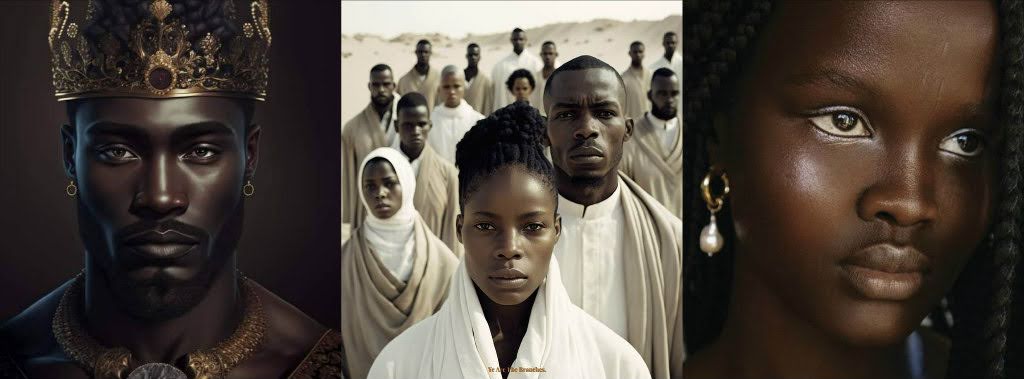
Why Do God’s Chosen Ones Walk Alone?

Biblical and Psychological Reflections

Photo by Aidi Tanndy on Pexels.com

Throughout Scripture, God’s chosen ones often endured seasons of solitude. Abraham left his country and kin at God’s command (Genesis 12:1, KJV). Joseph was betrayed by his brothers and isolated in Egypt before being exalted (Genesis 37–41). Even Christ Himself withdrew to lonely places to pray (Luke 5:16, KJV) and endured Gethsemane’s solitude before the cross. This recurring theme suggests that aloneness is not abandonment, but a sacred space where God develops His chosen vessels.

One reason God’s chosen ones walk alone is preparation for divine assignment. Separation from the crowd allows for spiritual formation, free from distractions and competing voices. In psychology, solitude is associated with self-reflection, emotional regulation, and identity development (Long & Averill, 2003). Spiritually, it allows God’s voice to become clearer, as illustrated when Elijah heard not the earthquake or fire but the “still small voice” (1 Kings 19:12, KJV).

Another reason is that destiny often isolates. The path of the chosen is narrow and cannot be walked by everyone. Jesus taught, “Enter ye in at the strait gate… narrow is the way, which leadeth unto life, and few there be that find it” (Matthew 7:13–14, KJV). Psychology similarly affirms that individuals pursuing uncommon goals or higher callings often experience loneliness, as their values and direction diverge from the majority.

Walking alone also functions as a test of faith and endurance. God uses seasons of isolation to strengthen resilience and dependence on Him. Joseph’s prison years, David’s wilderness hiding from Saul, and Job’s losses all reflect this refining process. Psychologically, enduring solitude can foster resilience and autonomy, teaching individuals to derive self-worth from God and internal strength rather than constant external validation.

Moreover, walking alone guards the chosen against corruption and compromise. When separated, they are less susceptible to the pressures of conformity and worldliness. “Be ye not unequally yoked together with unbelievers” (2 Corinthians 6:14, KJV). Healthy solitude preserves purity of purpose. Psychology supports this principle through the concept of boundary-setting, where distance from toxic influences is necessary for personal growth and emotional well-being.

7 Reasons God’s Chosen Ones Walk Alone

Scripture + Psychology

  1. Preparation for Purpose
  • Genesis 12:1 (KJV): God called Abraham to leave his kin.
  • Psychology: Solitude promotes self-reflection and identity development.
  1. Clarity of God’s Voice
  • 1 Kings 19:12 (KJV): Elijah heard God in the “still small voice.”
  • Being alone quiets distractions so God’s direction becomes clear.
  1. Destiny Requires Separation
  • Matthew 7:14 (KJV): The narrow way is found by few.
  • Psychology: Those pursuing unique callings often experience isolation.
  1. Strength Through Testing
  • Job 23:10 (KJV): “When he hath tried me, I shall come forth as gold.”
  • Trials in solitude refine faith and resilience.
  1. Protection from Corruption
  • 2 Corinthians 6:14 (KJV): “Be ye not unequally yoked…”
  • Healthy solitude guards against negative influence and compromise.
  1. Spiritual Growth and Dependence on God
  • Psalm 62:5 (KJV): “My soul, wait thou only upon God.”
  • Psychology: Solitude develops autonomy and inner strength.
  1. Set Apart for Greatness
  • Jeremiah 1:5 (KJV): “Before I formed thee… I sanctified thee.”
  • God sets apart His chosen to prepare them for higher assignments.

In conclusion, God’s chosen ones walk alone because solitude is the crucible of calling. It is where vision is clarified, faith is tested, character is refined, and destiny is secured. While loneliness may feel like abandonment, Scripture reveals it as preparation: “Lo, I am with you alway, even unto the end of the world” (Matthew 28:20, KJV). To walk alone with God is never truly to be alone; rather, it is to be set apart for greatness.


📚 References

  • The Holy Bible, King James Version.
  • Long, C. R., & Averill, J. R. (2003). Solitude: An exploration of benefits of being alone. Journal for the Theory of Social Behaviour, 33(1), 21–44.
  • Weiss, R. S. (1973). Loneliness: The experience of emotional and social isolation. MIT Press.

The Bible’s Secrets About Black People That Were Hidden.

These photographs are the property of their respective owners. No copyright infringement intended.

For centuries, the presence of Black people in the Bible has been minimized or obscured through Eurocentric interpretations of Scripture. Yet, the King James Version (KJV) and the Apocrypha contain numerous references to African nations, dark-skinned peoples, and the true identity of the children of Israel. These connections reveal that Black people were not only present but central to the biblical narrative.


Cush, Ham, and the African Lineage

The Bible traces much of the African world back to Ham, the son of Noah. Genesis 10 (the Table of Nations) records: “And the sons of Ham; Cush, and Mizraim, and Phut, and Canaan” (Genesis 10:6, KJV).

  • Cush refers to Ethiopia (modern Sudan/Ethiopia).
  • Mizraim refers to Egypt (Kemet).
  • Phut refers to Libya/North Africa.
  • Canaan refers to the land that Israel later inhabited.

This genealogy directly places Africans at the root of early civilization, showing that people of dark skin were present in the earliest biblical times.


The Israelites and Their Appearance

Many hidden scriptures reveal the physical appearance of Israel. Contrary to the Eurocentric depictions, the Bible describes Israel as a people of dark skin.

  • Jeremiah 8:21 (KJV): “For the hurt of the daughter of my people am I hurt; I am black; astonishment hath taken hold on me.”
  • Lamentations 5:10 (KJV): “Our skin was black like an oven because of the terrible famine.”
  • Song of Solomon 1:5-6 (KJV): “I am black, but comely, O ye daughters of Jerusalem, as the tents of Kedar, as the curtains of Solomon. Look not upon me, because I am black…”

These passages show that Israelite figures, including prophets and kings, were described with dark skin, connecting them to African and Afro-Asiatic peoples.


Egypt, Ethiopia, and Black Royalty

The Bible honors Ethiopia and Egypt as powerful nations:

  • Amos 9:7 (KJV): “Are ye not as children of the Ethiopians unto me, O children of Israel?” – God directly compares Israel to Ethiopians, emphasizing their shared heritage.
  • Jeremiah 13:23 (KJV): “Can the Ethiopian change his skin, or the leopard his spots?” – highlighting the natural dark complexion of Africans.
  • Acts 8:27 (KJV): The Ethiopian eunuch, a royal servant of Candace, queen of Ethiopia, was one of the first Gentiles baptized, showing Africa’s early role in the spread of the Gospel.

The Apocrypha and Hidden Identity

The Apocrypha, often removed from modern Bibles, holds more insight into the suffering and scattering of Israel.

  • 2 Esdras 6:54-56 (Apocrypha): Describes Israel as God’s chosen people above all nations, though later scattered.
  • 2 Esdras 13:40-45 (Apocrypha): Describes the migration of the ten tribes of Israel into distant lands—interpreted by many as part of the scattering into Africa and eventually the Americas during slavery.
  • Baruch 2:29-30 (Apocrypha): “If ye will not hear my voice, surely this very great multitude shall be turned into a small number among the nations, where I will scatter them.”

This aligns with Deuteronomy 28, where curses were placed upon Israel for disobedience, including being taken on ships into slavery:

  • “And the LORD shall bring thee into Egypt again with ships… and there ye shall be sold unto your enemies for bondmen and bondwomen, and no man shall buy you” (Deuteronomy 28:68, KJV).

This prophecy eerily parallels the Transatlantic Slave Trade, where millions of Africans—descendants of Israel—were sold into bondage.


The Revelation of Christ’s Image

One of the most concealed truths involves the description of Christ Himself:

  • Revelation 1:14-15 (KJV):“His head and his hairs were white like wool, as white as snow; and his eyes were as a flame of fire; and his feet like unto fine brass, as if they burned in a furnace.”
    • Hair like wool = texture associated with Black people.
    • Feet like burned brass = a dark, brown/black complexion.

This description directly challenges Eurocentric images of a pale-skinned Christ.


Conclusion

The Bible contains profound truths about Black people that were long hidden through translation bias, colonialism, and Eurocentric theology. From the line of Ham and Cush to the descriptions of Israel’s skin color, from the curses of Deuteronomy 28 to the Apocryphal accounts of scattering, the evidence shows that Black people are deeply woven into the story of Scripture. The hidden truth is that the people of the Bible were not European, but Afro-Asiatic—people of color, many of whom would be recognized today as Black.


References

  • Holy Bible, King James Version.
  • The Apocrypha (2 Esdras, Baruch, Ecclesiasticus).
  • Ben-Jochannan, Y. (1993). African Origins of the Major Western Religions. Baltimore: Black Classic Press.
  • Windsor, R. (1969). From Babylon to Timbuktu: A History of Ancient Black Races Including the Black Hebrews. Atlanta: Windsor’s Golden Series.

The 10 Attributes of a Good Man

Biblical Wisdom and Psychological Insight on Character and Relationships

This photograph is the property of its respective owners. No copyright infringement intended.

A good man is defined not merely by his outward appearance or words but by the integrity, character, and values he demonstrates in daily life. The Bible emphasizes that true strength is rooted in faith and moral integrity. Psalm 112:1 (KJV) declares, “Blessed is the man that feareth the Lord: that delighteth greatly in his commandments.” This reverence for God provides a foundation for all other virtues. Psychologically, a man guided by values and spiritual principles demonstrates stability, resilience, and a clear sense of purpose, which positively impacts his relationships and community.

First, a good man is faithful, honest, and transparent. Trustworthiness forms the cornerstone of lasting relationships. Scripture teaches, “Providing for honest things, not only in the sight of the Lord, but also in the sight of men” (2 Corinthians 8:21, KJV). Psychologically, honesty and transparency foster emotional safety and strengthen bonds, allowing intimacy to flourish without fear of deception or betrayal.

Second, a good man is responsible, disciplined, and self-controlled. Proverbs 14:29 (KJV) states, “He that is slow to wrath is of great understanding.” Responsibility ensures that a man can care for himself and those who depend on him, while self-discipline predicts long-term achievement and emotional stability. From a psychological perspective, self-control is strongly correlated with better stress management, goal attainment, and relational satisfaction.

Third, he is loving, compassionate, patient, and understanding. Ephesians 5:25 (KJV) instructs, “Husbands, love your wives, even as Christ also loved the church.” Emotional intelligence, including empathy and patience, allows a man to navigate conflict gracefully and maintain supportive relationships. Psychology confirms that men who cultivate compassion and patience experience more satisfying and enduring partnerships, as they respond thoughtfully rather than react impulsively.

Fourth, a good man is wise, humble, and teachable. Proverbs 9:10 (KJV) declares, “The fear of the Lord is the beginning of wisdom.” Humility allows him to learn from mistakes, accept counsel, and grow continually. Psychologically, humility reduces defensiveness and increases adaptability, making a man more capable of resolving challenges and nurturing meaningful relationships.

Finally, a good man is hardworking and a provider. Proverbs 10:4 (KJV) teaches, “The hand of the diligent maketh rich.” Providing goes beyond financial support; it encompasses emotional, spiritual, and practical stewardship of one’s household. Psychologically, ambition and diligence signal responsibility, motivation, and reliability. A man who strives to provide is not only demonstrating care but also creating stability for his family, reflecting both biblical principles and sound relational psychology.

Biblical Wisdom and Psychological Insight

  1. Faithful and God-Fearing
  • Biblical Basis: “Blessed is the man that feareth the Lord” (Psalm 112:1, KJV).
  • Psychological Insight: Spiritual grounding provides moral stability and resilience in life and relationships.
  1. Honest and Transparent
  • Biblical Basis: “Providing for honest things, not only in the sight of the Lord, but also in the sight of men” (2 Corinthians 8:21, KJV).
  • Psychological Insight: Honesty fosters trust and emotional safety, essential for intimacy and long-term partnerships.
  1. Responsible and Accountable
  • Biblical Basis: “But let every man prove his own work” (Galatians 6:4, KJV).
  • Psychological Insight: Responsibility and accountability predict reliability and the ability to handle life’s challenges effectively.
  1. Loving and Compassionate
  • Biblical Basis: “Husbands, love your wives, even as Christ also loved the church” (Ephesians 5:25, KJV).
  • Psychological Insight: Emotional intelligence and empathy are linked to healthier relationships and conflict resolution.
  1. Disciplined and Self-Controlled
  • Biblical Basis: “He that is slow to wrath is of great understanding” (Proverbs 14:29, KJV).
  • Psychological Insight: Self-discipline predicts goal achievement, stress management, and emotional stability.
  1. Protective and Supportive
  • Biblical Basis: “The just man walketh in his integrity: his children are blessed after him” (Proverbs 20:7, KJV).
  • Psychological Insight: A supportive man promotes security, growth, and confidence in those he loves.
  1. Patient and Understanding
  • Biblical Basis: “With all lowliness and meekness, with longsuffering, forbearing one another in love” (Ephesians 4:2, KJV).
  • Psychological Insight: Patience and tolerance reduce conflict and enhance relationship satisfaction.
  1. Wise and Discerned
  • Biblical Basis: “The fear of the Lord is the beginning of wisdom” (Proverbs 9:10, KJV).
  • Psychological Insight: Wisdom and critical thinking aid in making sound decisions and maintaining long-term stability.
  1. Hardworking and A Provider
  • Biblical Basis: “The hand of the diligent maketh rich” (Proverbs 10:4, KJV).
  • Psychological Insight: Motivation and persistence indicate reliability and the ability to provide and achieve goals.
  1. Humble and Teachable
  • Biblical Basis: “Humble yourselves in the sight of the Lord, and he shall lift you up” (James 4:10, KJV).
  • Psychological Insight: Humility allows growth, self-reflection, and healthy relationship dynamics.

In conclusion, a good man integrates faith, integrity, emotional intelligence, wisdom, humility, and diligence into his life. By embodying these ten attributes—faithful, honest, responsible, disciplined, loving, compassionate, patient, wise, humble, and a hardworking provider—he fulfills the biblical vision of manhood while fostering stable, thriving relationships. Aligning spiritual wisdom with psychological understanding ensures that a man is not only admired but also genuinely equipped to lead, love, and protect with purpose and integrity.


📚 References

  • Stanley, S. M., Rhoades, G. K., & Whitton, S. W. (2010). Commitment: Functions, formation, and the securing of romantic attachment. Journal of Family Theory & Review, 2(3), 243–257.
  • Sternberg, R. J. (1986). A triangular theory of love. Psychological Review, 93(2), 119–135.
  • The Holy Bible, King James Version.