Category Archives: inner beauty

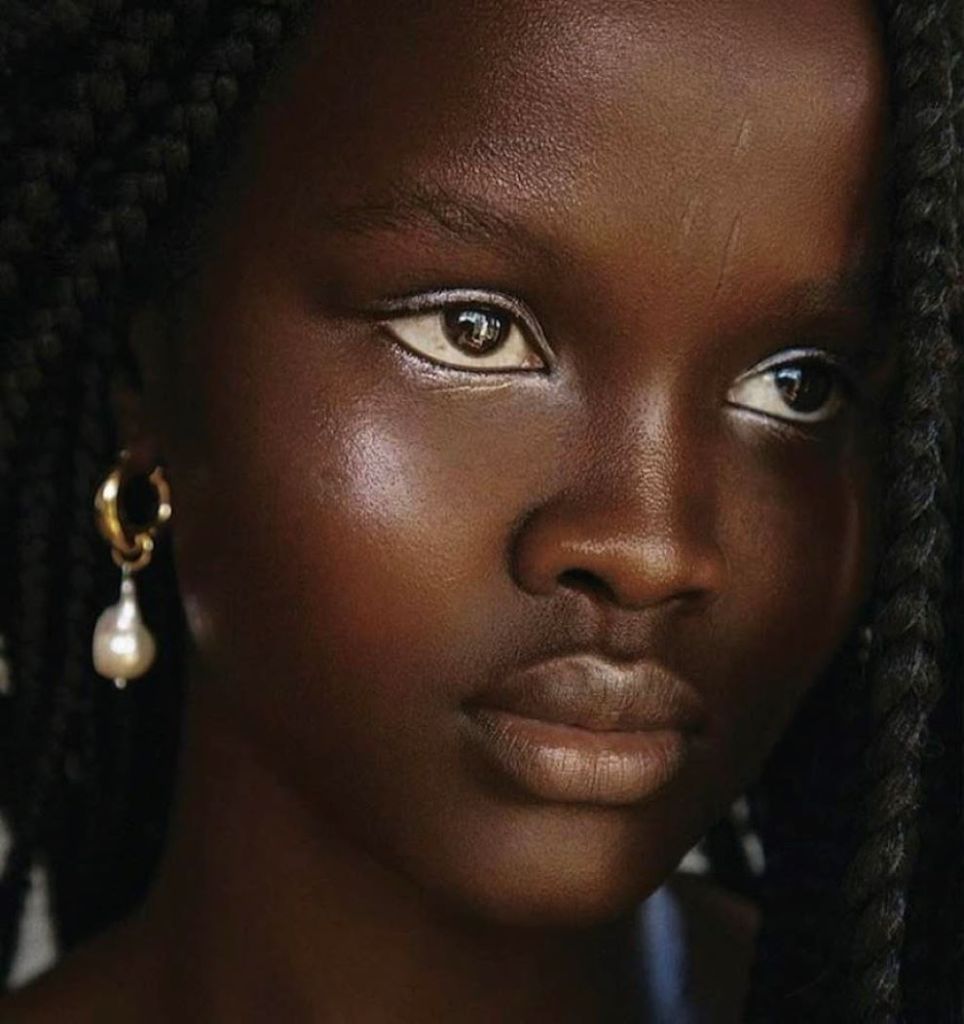
The Light in His Eyes: A Sign of Divine Focus and Inner Beauty

The eyes are one of the deepest expressions of the human soul, and Scripture affirms that “the light of the body is the eye” (Matthew 6:22, KJV), revealing that vision carries spiritual meaning.

A Black man’s eyes, rich with melanin and history, often hold both the weight of generations and the hope of tomorrow—reflecting endurance beyond struggle (Psalm 34:19, KJV).

When light is captured in the pupil, known artistically as a catchlight, it signals life, alertness, depth, and openness—symbolizing spiritual awakening.

God Himself uses eyes as metaphors for divine attention, declaring that “the eyes of the LORD are in every place, beholding the evil and the good” (Proverbs 15:3, KJV).

A glowing reflection in one eye is reminiscent of God’s calling to fix one’s gaze on Him, uninterrupted by worldly distraction (Colossians 3:2, KJV principle).

Beauty in a man’s eyes is not merely aesthetic—it is evidence of emotion, intellect, faith, and sensitivity woven into one vessel.

King David often acknowledged God’s presence through internal meditation, something that shifts one’s emotional and spiritual lens (Psalm 19:14, KJV).

Eyes full of light reflect a heart that still seeks God even when noise competes for devotion (Psalm 46:10, KJV).

The enemy attempted to redirect Eve’s gaze, reminding us that distraction often begins with what we observe before what we believe (Genesis 3:6, KJV).

Conversely, Abraham was called to lift his eyes beyond limitation, proving that spiritual focus elevates perception (Genesis 13:14, KJV).

A Black man who carries divine light in his eyes carries purpose in his spirit, even when unspoken (Jeremiah 29:11, KJV principle).

Catchlight resembles revelation moments in Scripture, where sudden spiritual insight illuminates personal understanding (Psalm 119:130, KJV).

The glow in his eye may symbolize hope, reminding us that God keeps watch over the faithful (Psalm 121:8, KJV).

Eyes that appear beautiful often show gentleness and strength coexisting, mirroring how Christ carried both compassion and authority (John 11:35; Matthew 28:18, KJV principles).

The physical glow can represent spiritual fire—clarity that burns through emotional fog, waking dormant faith (Hebrews 12:29, KJV principle).

Beautiful eyes can reveal peace when the soul is anchored, fulfilling Isaiah’s declaration that God keeps the stayed mind in peace (Isaiah 26:3, KJV).

One eye reflecting intense light resembles undivided devotion—refusing a double-minded spiritual stance (James 1:8, KJV warning).

A Black man’s eyes can also be maps of identity, heritage, sorrow, triumph, intelligence, love, and spiritual yearning all in one frame.

Paul warned against aimless spiritual wandering, teaching believers to live with intentional direction (1 Corinthians 9:26, KJV).

Thus, light in a man’s eye may resemble focus regained, devotion renewed, and passion restored.

Every believer faces seasons where focus blurs, but spiritual sight is restored by repentance and return, not perfection (Revelation 2:5, KJV).

Eyes reflecting light display openness to transformation—believing God can outshine past shadows (2 Corinthians 5:17, KJV principle).

The glow in one eye may also imply calling—like Moses turning toward the burning bush when light demanded attention (Exodus 3:3, KJV).

A Black man who carries light in his eyes carries spiritual receptivity and inner depth beyond surface features.

The LORD invites believers to seek Him wholeheartedly—love without division, devotion without half-measure (Deuteronomy 6:5, KJV).

His eye catching the light may mirror Heaven marking him for spiritual focus, emotional depth, and divine pursuit.

Even Samson’s downfall began when his spiritual gaze shifted toward the wrong allegiance (Judges 16:20–21, KJV principle), reminding us to guard vision.

A man whose internal world shines outward does so because God has illuminated inward first (2 Samuel 22:29, KJV principle).

Light in one eye may reflect spiritual intensity, resembling those whose hearts burn for God above themselves (Luke 24:32, KJV principle).

God calls His sons to keep watch, remain anchored, rise in identity, and reflect Him rather than the world (Psalm 119:11, KJV).

A Black man’s beautiful eyes displaying light represent not weakness, but openness to purpose, sensitivity, faith, depth, and divine focus.

Spiritual beauty is most visible through the eyes when covenant outweighs distraction (Ruth 1:16, KJV devotion principle mirrored in relational loyalty).

Finally, eyes full of God’s light reflect a spirit that refuses to dim—one that watches God watching him, focused on Heaven until Heaven looks back within the frame (Psalm 25:15, KJV).

The Woman Who Defines Beauty

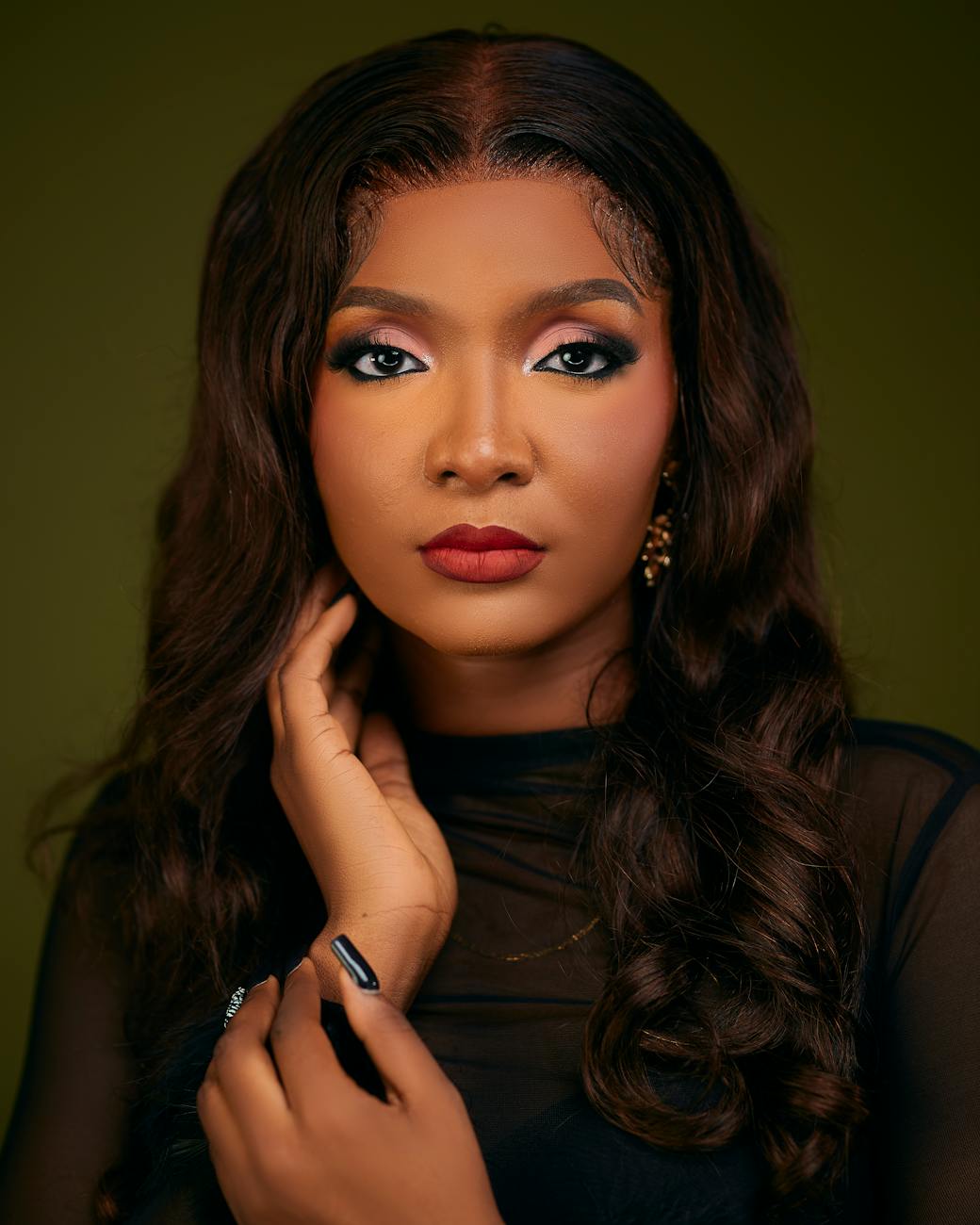
Beauty has always been a powerful force—celebrated, debated, pursued, and misunderstood. Yet there is a rare kind of woman who does not merely possess beauty; she defines it. Her presence shifts atmospheres, her character elevates the room, and her essence transcends trends, standards, and expectations. She is the woman whose beauty radiates from the inside out, whose worth is not measured by symmetry or style, but by the depth of her spirit and the truth of her heart, reflecting the truth of Psalm 139:14 that she is “fearfully and wonderfully made.”

Her beauty begins with her inner world. Society often teaches women that beauty is a surface experience—skin, shape, hair, clothes, and presentation—but true beauty is born in the unseen places. It is the quiet strength of a disciplined mind, the softness of a healed heart, and the courage of a woman who knows her value. Inner beauty is not fragile; it is the most enduring kind of beauty because it grows with wisdom, maturity, and purpose. It echoes 1 Peter 3:4 where the hidden woman of the heart carries “a meek and quiet spirit,” which God calls precious.

This woman understands that her worth is not in her appearance alone but in her identity. She knows who she is in God, who she is becoming, and who she refuses to be. Her confidence is rooted in truth, not applause. Her glow comes from peace, not pressure. Her beauty is consistent because it is anchored in something eternal. Proverbs 31:30 declares that “beauty is vain,” yet the woman who fears the Lord is praised not for her looks but for her spirit.

The woman who defines beauty walks with grace. She does not have to announce her presence; her presence announces her. She is gentle yet powerful, humble yet impactful. Her kindness leaves imprints, her compassion changes lives, and her wisdom lights paths for others. Her voice carries the same wisdom described in Proverbs 31:26, where a virtuous woman opens her mouth with wisdom and speaks with kindness.

Her inner beauty shapes her outer expression. She dresses with thought, not for validation but as an extension of who she is. Her smile carries warmth. Her eyes speak truth. Her posture shows dignity. Her voice brings calm or conviction depending on what is needed. In this, she fulfills Matthew 5:16 by letting her light shine before others through her character and presence.

What sets this woman apart is her heart. A beautiful heart is generous, forgiving, nurturing, discerning, and full of faith. She gives without expecting recognition, listens without judgment, and loves without manipulation. Her empathy is her superpower, and her character is her crown. She models the fruit of the Spirit described in Galatians 5:22–23 through love, peace, gentleness, and goodness.

The woman who defines beauty is also resilient. She has endured storms, disappointments, betrayals, and heartbreaks, yet she rises with dignity. Her scars do not make her bitter—they make her wiser. Her challenges did not destroy her—they refined her. She becomes living proof of Romans 8:28, that God works all things for her good.

Inner beauty demands self-awareness, emotional intelligence, and self-respect. This woman invests in herself—mind, body, and spirit. She practices self-care not as indulgence but as stewardship. She protects her peace, sets boundaries, and honors her worth. This aligns with Proverbs 4:23, which teaches her to guard her heart because it shapes the course of her life.

Her beauty also reveals itself through purpose. She is driven not by vanity but by vision. Whether she leads, teaches, creates, nurtures, or serves, she moves with intention. Her life leaves a mark, not because of what she looks like but because of what she builds, heals, and inspires in others. She walks as God’s workmanship, created for purpose as Ephesians 2:10 affirms.

For this woman, beauty is not a competition—it is a calling. It is a responsibility to walk in love, truth, and excellence. She does not compare herself to others because she understands that every woman carries her own kind of beauty. She celebrates others without losing herself, expressing the love found in 1 John 4:7.

In relationships, her beauty is felt deeply. She loves with loyalty, communicates with clarity, and supports with sincerity. She does not use beauty as manipulation but as ministry—her presence comforts, encourages, and uplifts. Her love flows from the truth of 1 John 4:19, that she loves because God first loved her.

Her inner beauty becomes a light that others gravitate toward. People feel safe around her, inspired by her, and strengthened by her presence. She radiates confidence without arrogance, elegance without pretension, and strength without hardness. Her beauty is balanced and rooted in the peace that Philippians 4:7 promises.

The woman who defines beauty also knows the value of silence. She is not loud, chaotic, or desperate for attention. Her peace speaks louder than her words. Her calm becomes a sanctuary for herself and others. Her spirit remains aligned, grounded, and spiritually centered.

Her life is a garden of virtues—faith, patience, kindness, humility, gratitude, and wisdom. These qualities shape the way she thinks, speaks, and moves. They create an atmosphere of grace around her. Her beauty is a reflection of this inner garden, cultivated with intention and prayer.

She understands that outward beauty may open doors, but inward beauty keeps them open. People may be drawn to her appearance, but they stay because of her spirit. Her character creates loyalty, trust, and admiration.

Ultimately, the woman who defines beauty is a reflection of God’s handiwork. She embodies both strength and softness, purpose and peace, elegance and endurance. Her beauty is not accidental; it is divinely designed. She carries the dignity of Proverbs 31:25—“Strength and honour are her clothing.”

She is the woman who defines beauty because she has learned to define herself—not by the world’s standards, but by God’s truth. She is a living example that real beauty is not something you see; it is something you feel. It is not temporary; it is eternal.

Her legacy will not be her appearance but her impact, her love, her wisdom, her faith, and her inner radiance. Her beauty will continue to shine long after physical looks fade. She will always be the woman who defines beauty—inside and out.

Girl Talk Series: Inner Beauty

Ladies, let’s talk heart to heart. In a world that constantly tells us our worth depends on how we look—our makeup, our clothes, our shape—the Most High reminds us of a deeper truth. Real beauty isn’t about the eyelashes, the designer labels, or the perfect selfie. It’s about the heart. Don’t let your beauty be defined by your outer appearance, because the Most High doesn’t look at what man sees; He looks upon the heart (1 Samuel 16:7, KJV). What truly captivates Him is a spirit of humility, kindness, and faith. When your heart is pure, gentle, and anchored in love for the Most High, that’s when your beauty shines the brightest. True beauty is not in your reflection—it’s in your righteousness.

In a world saturated with vanity and self-promotion, many young women are taught that their worth lies in their appearance. The length of their hair, the contour of their face, or the brand of their clothing often becomes a measure of self-esteem. Yet, the Word of God teaches a higher standard of beauty—one not defined by outer adornment, but by a gentle and meek spirit that pleases the Most High. As 1 Peter 3:3–4 (KJV) reminds us, “Whose adorning let it not be that outward adorning of plaiting the hair, and of wearing of gold, or of putting on of apparel; but let it be the hidden man of the heart.”

True beauty radiates from within, and it cannot be purchased, enhanced, or filtered. It is the quiet confidence that comes from knowing who you are in the Most High. A godly woman understands that charm is deceitful and beauty is vain, but a woman who fears the Lord shall be praised (Proverbs 31:30 KJV). Her glow comes not from highlighter or foundation, but from the light of righteousness that rests upon her countenance.

Modesty in clothing reflects humility in spirit. It does not mean neglecting self-care or beauty—it means dressing in a way that honors God and commands respect. 1 Timothy 2:9–10 (KJV) advises, “In like manner also, that women adorn themselves in modest apparel, with shamefacedness and sobriety… but (which becometh women professing godliness) with good works.” The modest woman knows her worth and does not need to reveal her body to be validated.

When a woman uses her appearance or body to manipulate others, she forfeits her dignity and power. The world may applaud seduction, but the Most High values purity and wisdom. A godly woman walks with grace, not for attention but to glorify her Creator. She understands that her body is a temple of the Holy Spirit, not a billboard for lust (1 Corinthians 6:19–20 KJV).

Kindness is one of the rarest and most captivating forms of beauty. A gentle word, a forgiving heart, and a compassionate touch leave an impression that no physical trait can surpass. The woman who treats others with respect, who uplifts instead of tearing down, embodies the love of Christ. As Proverbs 31:26 (KJV) says, “She openeth her mouth with wisdom; and in her tongue is the law of kindness.”

Meekness, often misunderstood as weakness, is in fact a strength of divine proportion. It takes tremendous power to remain humble, patient, and composed in a world that glorifies arrogance and pride. The Most High delights in the meek, for “the meek shall inherit the earth” (Matthew 5:5 KJV). A woman of meekness carries herself with quiet authority, never needing to shout her worth.

A godly personality reflects the fruit of the Spirit. She is loving, joyful, peaceful, patient, gentle, good, faithful, and self-controlled (Galatians 5:22–23 KJV). These virtues do not come from external grooming but from a heart transformed by obedience and prayer. Her presence brings calm where there is chaos and light where there is darkness.

Being “beautiful” means more than having flawless skin or a perfect smile. It means having a soul that shines with gratitude and love for the Most High. The woman who seeks His face daily finds her reflection in His Word. Her beauty deepens as her relationship with Him grows, and her heart becomes a vessel of His glory.

Many in today’s culture confuse confidence with narcissism. But confidence rooted in vanity is hollow and fragile. A narcissistic spirit thrives on admiration and dominance, while a godly spirit thrives on service and humility. True confidence flows from knowing that one is fearfully and wonderfully made (Psalm 139:14 KJV) and that her identity is secure in God’s love.

Outer beauty fades with time, but character endures forever. The woman who cultivates righteousness and integrity will still shine when her youthful glow is gone. Her laughter, wisdom, and inner peace will make her radiant even in old age. She becomes a living testimony of Proverbs 16:31 (KJV): “The hoary head is a crown of glory, if it be found in the way of righteousness.”

It is not a sin to desire beauty or to take care of one’s appearance, but it becomes dangerous when vanity consumes the soul. The woman who obsesses over perfection forgets that she was already made in divine image. She must learn to look in the mirror and see herself as the Most High does—complete, valuable, and chosen.

When you love God with all your heart, your spirit reflects His presence. That love purifies your motives, softens your speech, and strengthens your actions. Even your eyes will reveal His peace, for “the light of the body is the eye” (Matthew 6:22 KJV). The love of the Most High is the truest beauty any woman can possess.

A beautiful heart forgives, prays, and uplifts others. It does not envy another woman’s looks or achievements. It celebrates sisterhood, recognizing that all women are created uniquely for a divine purpose. A woman of inner beauty knows her value without comparing herself to anyone else.

When a woman carries herself with dignity, she teaches others how to treat her. She does not compromise her morals for attention or approval. Her quiet strength earns respect because it is rooted in righteousness, not rebellion. She knows that the Most High crowns her with honor when she walks in truth.

Inner beauty blossoms in those who spend time in God’s Word. Meditation on Scripture nurtures peace, and prayer cultivates spiritual confidence. Over time, that spiritual discipline transforms the heart, radiating outward through posture, smile, and speech. Her beauty is no longer external—it becomes divine.

A loving personality can disarm even the hardest hearts. When you are gentle and patient with others, you become a reflection of Christ’s love. A woman with inner beauty knows that every word carries power; therefore, she speaks life, not gossip or cruelty. Her words bring healing where others bring harm.

The true mark of beauty is found in how you make others feel. If people leave your presence feeling valued and uplifted, then your beauty has fulfilled its divine purpose. The godly woman uses her influence to inspire, not to intimidate; to comfort, not to compete.

In a society obsessed with appearances, the woman of God stands out because her light comes from within. Her modesty is not repression—it is revelation of her worth. Her faith is her fragrance, her kindness her adornment, and her humility her crown.

True beauty is eternal because it reflects the eternal God. A woman who lives to please Him becomes more beautiful with every act of obedience and love. Her reflection in the mirror becomes less about her features and more about His glory shining through her.

Let every daughter of Zion remember: your worth is not in your clothing, body, or popularity, but in your relationship with the Most High. Walk in modesty, speak with kindness, love without condition, and let your inner light testify of His power. For when you love God first, everything about you—inside and out—becomes beautifully divine.

References
Holy Bible, King James Version. (1611). 1 Peter 3:3–4; Proverbs 31:26, 30; 1 Timothy 2:9–10; Matthew 5:5; Galatians 5:22–23; 1 Corinthians 6:19–20; Psalm 139:14; Proverbs 16:31; Matthew 6:22.

12 Habits That Make You More Attractive

Blending KJV Scripture and Psychology

Photo by Al Ameen Saddiq on Pexels.com

Attractiveness is more than physical beauty—it is the product of character, habits, and the way we present ourselves to others. Both psychology and the Bible reveal that true charm is cultivated inwardly and expressed outwardly. Below are twelve habits that increase attractiveness in meaningful ways.


1. Confidence Without Arrogance
Confidence is magnetic because it signals security and trustworthiness. Psychological studies show that people are drawn to those who display healthy self-assurance (Swann et al., 2007). Yet arrogance repels. The Bible balances this by teaching, “For the LORD shall be thy confidence” (Proverbs 3:26, KJV). True attractiveness is rooted in confidence in God, not in pride.

2. Good Hygiene and Grooming
Attraction is heavily influenced by cleanliness. Psychologists note that proper grooming signals health and responsibility, key factors in partner selection. God Himself emphasized preparation through cleanliness: “Sanctify them today and tomorrow, and let them wash their clothes” (Exodus 19:10, KJV). A clean and well-kept appearance honors God and attracts others.

3. Kindness and Compassion
Kindness makes one unforgettable. Research demonstrates that altruistic people are rated as more attractive and more desirable long-term partners. Scripture commands, “Be ye kind one to another, tenderhearted” (Ephesians 4:32, KJV). A compassionate spirit shines brighter than external beauty, drawing people through genuine care.

4. Active Listening
In a world where many talk but few listen, giving undivided attention is profoundly attractive. Psychology shows that active listening builds intimacy and emotional closeness. The Bible advises, “Let every man be swift to hear, slow to speak” (James 1:19, KJV). Listening communicates respect and makes others feel valued, deepening relationships.

5. Positive Attitude
Negativity drains, but positivity uplifts. Studies reveal that optimism not only improves one’s own mental health but also makes others more likely to want companionship with you. The Apostle Paul reminds us, “Rejoice in the Lord alway: and again I say, Rejoice” (Philippians 4:4, KJV). A joyful spirit radiates attractiveness.

6. Good Posture and Body Language
Nonverbal communication speaks volumes. Psychology shows that confident posture, open gestures, and a relaxed demeanor make one appear approachable and appealing (Mehrabian, 1972). David declared, “I will praise thee; for I am fearfully and wonderfully made” (Psalm 139:14, KJV). Carrying oneself with dignity reflects inner assurance and God-given worth.

7. Ambition and Purpose
People are drawn to those who have goals and direction. Purpose signals maturity, responsibility, and resilience. Psychological studies confirm that ambition is an attractive trait in both men and women. Scripture affirms, “Write the vision, and make it plain” (Habakkuk 2:2, KJV). A life driven by godly purpose inspires others.

8. Sense of Humor
Laughter is a universal connector. Humor reveals intelligence, creativity, and emotional resilience. Studies show people prefer partners who make them laugh, as it eases tension and builds closeness. The Bible states, “A merry heart doeth good like a medicine” (Proverbs 17:22, KJV). A joyful spirit makes one irresistible.

9. Generosity
Giving increases attractiveness because it shows selflessness and abundance of spirit. Psychology observes that generosity signals both kindness and capability, enhancing desirability. Christ Himself declared, “Give, and it shall be given unto you” (Luke 6:38, KJV). Generosity reflects God’s love and makes relationships thrive.

10. Emotional Stability
Few traits are more attractive than peace under pressure. Emotional stability fosters trust and security, while instability repels. Psychology confirms that people seek partners who remain calm in adversity. Paul wrote, “For God hath not given us the spirit of fear; but of power, and of love, and of a sound mind” (2 Timothy 1:7, KJV). Stability brings beauty to relationships.

11. Self-Discipline
Those who exercise control over their desires and actions earn respect and admiration. Psychology links self-discipline to long-term success and relational reliability. The Apostle Paul modeled this: “But I keep under my body, and bring it into subjection” (1 Corinthians 9:27, KJV). Discipline makes one trustworthy and more attractive as a partner.

12. Spiritual Depth
Ultimately, true attractiveness flows from inner spirituality. Psychology acknowledges that shared faith and moral grounding strengthen bonds. Scripture declares, “Favour is deceitful, and beauty is vain: but a woman that feareth the LORD, she shall be praised” (Proverbs 31:30, KJV). Spiritual character sustains relationships long after physical beauty fades.

12 Habits That Make You More Attractive

Blending KJV Scripture and Psychology

  1. Confidence Without Arrogance
    • Psychology: Confidence signals competence and security (Swann et al., 2007).
    • Proverbs 3:26 (KJV): “For the LORD shall be thy confidence.”
  2. Good Hygiene and Grooming
    • Psychology: Cleanliness increases perceived attractiveness.
    • Exodus 19:10 (KJV): God commanded Israel to “wash their clothes” before meeting Him—purity matters.
  3. Kindness and Compassion
    • Psychology: Altruism makes people more desirable as partners.
    • Ephesians 4:32 (KJV): “Be ye kind one to another, tenderhearted.”
  4. Active Listening
    • Psychology: Attentive listening strengthens emotional bonds.
    • James 1:19 (KJV): “Let every man be swift to hear, slow to speak.”
  5. Positive Attitude
    • Psychology: Optimism draws others in and reduces stress.
    • Philippians 4:4 (KJV): “Rejoice in the Lord alway.”
  6. Good Posture and Body Language
    • Psychology: Open, confident posture increases attractiveness (Mehrabian, 1972).
    • Psalm 139:14 (KJV): “I will praise thee; for I am fearfully and wonderfully made.”
  7. Ambition and Purpose
    • Psychology: Drive and goals signal stability and direction.
    • Habakkuk 2:2 (KJV): “Write the vision, and make it plain.”
  8. Sense of Humor
    • Psychology: Humor signals intelligence and relatability.
    • Proverbs 17:22 (KJV): “A merry heart doeth good like a medicine.”
  9. Generosity
    • Psychology: Giving increases social bonds and attraction.
    • Luke 6:38 (KJV): “Give, and it shall be given unto you.”
  10. Emotional Stability
  • Psychology: Calmness makes relationships safe and secure.
  • 2 Timothy 1:7 (KJV): “For God hath not given us the spirit of fear; but of power, and of love, and of a sound mind.”
  1. Self-Discipline
  • Psychology: People admire those with self-control and resilience.
  • 1 Corinthians 9:27 (KJV): Paul speaks of keeping his body under discipline.
  1. Spiritual Depth
  • Psychology: Faith and moral grounding increase trust and long-term attractiveness.
  • Proverbs 31:30 (KJV): “A woman that feareth the LORD, she shall be praised.”

Conclusion
Attractiveness is not a mystery reserved for the outwardly beautiful—it is a set of habits cultivated daily. Psychology shows us that qualities like kindness, confidence, and stability foster lasting appeal. The Bible reminds us that inner beauty, rooted in godliness, outshines temporary charm. When we practice these twelve habits, we not only become more attractive to others but also align ourselves with the character God desires.

References

  • The Holy Bible, King James Version.
  • Swann, W. B., Jr., Chang-Schneider, C., & McClarty, K. L. (2007). Do people’s self-views matter? Self-concept and self-esteem in interpersonal relationships. Psychological Science, 18(3), 200–206.
  • Mehrabian, A. (1972). Nonverbal communication. Aldine-Atherton.
  • Rhodes, G. (2006). The evolutionary psychology of facial beauty. Annual Review of Psychology, 57, 199–226.
  • Byrne, D. (1971). The Attraction Paradigm. Academic Press.
  • Aron, A., Aron, E. N., & Smollan, D. (1997). Inclusion of Other in the Self Scale and the structure of interpersonal closeness. Journal of Personality and Social Psychology, 63(4), 596–612.
  • Bowlby, J. (1988). A Secure Base: Parent-child attachment and healthy human development. Basic Books.
  • Cialdini, R. B. (2009). Influence: Science and practice (5th ed.). Pearson.
  • Peterson, C., & Seligman, M. E. P. (2004). Character strengths and virtues: A handbook and classification. Oxford University Press.

🌑 The Ebony Dolls: Introduction -The History of Melanated Beauty 🌑

The Ebony Dolls series celebrates the extraordinary beauty, brilliance, and timeless femininity of Black women across generations. This collection honors the women whose presence reshapes standards, whose elegance defies shallow stereotypes, and whose radiance reflects both royal ancestry and divine craftsmanship. Each profile explores not only physical beauty but the depth behind it — resilience, artistry, heritage, intellect, and the unique glow that only melanin can produce.

This series highlights the royalty, actresses, models, musicians, public figures, entrepreneurs, and cultural icons who embody the full spectrum of Black womanhood. From deep chocolate to light warm caramel, from soft curls to sculpted coils, from statuesque silhouettes to girl-next-door sweetness, The Ebony Dolls pays homage to the diversity and glory of Black feminine identity. Their lives tell stories of triumph, discipline, creativity, spiritual rootedness, and the unbreakable grace passed down from African queens to modern-day trailblazers.

With each installment, readers will encounter a stunning profile — a blend of biography, cultural commentary, beauty analysis, career achievements, and personal reflections. Every woman will be honored in her own right: her skin, her features, her accomplishments, her family, her growth, her legacy. The Ebony Dolls is more than a beauty series; it is a celebration of sacred womanhood, Black excellence, and the divine imprint upon every daughter of the diaspora.

The story of melanated beauty is one of power, grace, and divine design. Melanin, the pigment that gives skin its rich and radiant tone, is not merely biology — it is a cultural and spiritual emblem. The Bible captures this truth beautifully when the Shulamite woman proclaims, “I am black, but comely” (Song of Solomon 1:5, KJV). In this statement, dark skin is affirmed as beautiful and desirable, worthy of admiration and dignity.

🌑 What is Melanin and Why It Matters

Melanin is a complex polymer produced by melanocytes, responsible for the pigmentation of skin, hair, and eyes. People with higher levels of eumelanin (brown/black melanin) not only possess deeper skin tones but also benefit from natural UV protection, reduced visible aging, and a lower risk of sun-related skin cancers (Taylor, 2020). This unique biological gift is part of the reason why melanated women are often noted for their youthful glow well into middle and later life.

Beyond biology, melanin carries cultural symbolism. African traditions often link dark skin to vitality, fertility, and divine connection. Psychologists note that embracing skin tone can be an act of resistance against colorism, boosting self-esteem and promoting psychological resilience (Hunter, 2011).

🌑 The Beauty of Queen Nefertiti

Queen Nefertiti of Ancient Egypt is perhaps the earliest celebrated icon of melanated beauty. Her name literally means “the beautiful one has come,” and her iconic limestone bust — with its regal posture, almond-shaped eyes, and perfect symmetry — continues to mesmerize the world thousands of years later. Nefertiti was more than a queen; she was a leader who helped guide Egypt through a religious revolution alongside Pharaoh Akhenaten. Her image remains a symbol of grace, authority, and divine femininity.

🌑 Naomi Campbell: The Supermodel Pioneer

Naomi Campbell redefined fashion. Born in 1970 in London, she became the first Black model to appear on the covers of French Vogue and TIME magazine. Known for her fierce walk and striking cheekbones, Campbell’s career opened doors for future melanated models. She turned the runway into a global stage, proving that Black women’s beauty is universal.

🌑 Lupita Nyong’o: Dark Skin as Royalty

Oscar-winning actress Lupita Nyong’o uses her platform to uplift girls with dark skin, urging them to love themselves. Her natural hair, deep complexion, and regal red-carpet presence challenged industries that favored lighter-skinned women. Lupita is living proof that Blackness is not just beautiful — it is royal.

🌑 Skai Jackson: The New Generation

Young doll-like actress Skai Jackson has become a role model for Gen Z, using her voice against bullying and injustice. She represents a generation of melanated girls embracing natural hair, deep skin tones, and self-confidence at an early age. Her presence in the media encourages young girls to see their beauty reflected on screen.

🌑 Halle Berry: Hollywood’s Trailblazer

Halle Berry shattered barriers by becoming the first Black woman to win an Academy Award for Best Actress. Known for her delicate facial features, big eyes, and magnetic screen presence, Berry opened doors for other actresses of color in leading roles.

🌑 Yara Shahidi: Beauty Meets Brilliance

Actress and activist Yara Shahidi combines intelligence with elegance. Known for her curls, poise, and thoughtful activism, Yara exemplifies a new standard for melanated beauty — one that prizes intellect, social justice, and self-expression.

🌑 Josephine Baker: The Bronze Venus

Josephine Baker, born in 1906, became one of the most famous entertainers in the world during the Jazz Age. Known as the “Bronze Venus,” she captivated Paris with her performances, bringing African and African American beauty to international stages. She was not just a performer — she was also a spy for the French Resistance during World War II and a civil rights activist. Her elegance, short hair, and magnetic stage presence made her one of the first global Black beauty icons.

🌑 Diana Ross: The Supreme Star

Diana Ross, lead singer of The Supremes, defined glamour in the Motown era. Her big hair, dazzling gowns, and signature voice helped elevate Black beauty into mainstream America. Ross inspired generations with her confidence, proving that Black women could be both elegant and unapologetically bold in their style.

🌑 Eartha Kitt: The Catwoman of Class

Eartha Kitt, with her sultry voice and feline grace, became one of Hollywood’s most distinctive stars. Known for her role as Catwoman in the 1960s Batman series, she embodied mystery and sensuality. Kitt was also outspoken against injustice, famously criticizing the Vietnam War during a White House luncheon — a testament that beauty and courage often walk hand in hand.

🌑 Ebony Dolls of the Past: Fashion Pioneers

Donyale Luna, the first Black model on the cover of Vogue (1966), and Beverly Johnson, the first on American Vogue (1974), broke racial barriers in fashion. They made it possible for Naomi Campbell and countless others to dominate runways decades later.

🌑 African Queens: The Divine Legacy of Melanated Beauty

The history of melanated beauty is inseparable from the power, wisdom, and elegance of African queens and goddesses. These figures not only defined aesthetic standards but also embodied leadership, courage, and spiritual authority, reminding the world that beauty and power coexist.

Queen Makeda (The Queen of Sheba) — Celebrated in Ethiopian and biblical history, Makeda is renowned for her wisdom, diplomacy, and regal presence. According to tradition, she visited King Solomon in Jerusalem, bearing gifts and profound questions, demonstrating intellect matched by beauty (1 Kings 10:1–13, KJV). Makeda represents the archetype of the melanated queen whose beauty is inseparable from intelligence and influence.

Cleopatra VII — Perhaps the most famous African queen in Western history, Cleopatra combined political genius with striking beauty. Although her lineage was Macedonian, historical records suggest her Egyptian identity and cultural integration contributed to her iconic appearance and persona. Cleopatra’s charm, eloquence, and strategic acumen make her an enduring symbol of melanated allure and leadership.

Queen Nzinga Mbande — The 17th-century warrior queen of Ndongo and Matamba (modern-day Angola) fought Portuguese colonizers to protect her people. Nzinga’s beauty was legendary, but it was her courage, tactical brilliance, and diplomacy that cemented her legacy. She embodies the idea that melanated beauty is inseparable from power and resilience.

Queen Hatshepsut — One of Ancient Egypt’s most successful female pharaohs, Hatshepsut ruled with wisdom and stability. Often depicted in statues and reliefs with the regalia of kings, her beauty was paired with authority, showing that melanated women could command both respect and admiration in societies dominated by men.

🌑 Psychology of Beauty and the Melanated Woman

Research shows that symmetrical faces and certain waist-to-hip ratios are universally attractive, but culture plays a major role in determining beauty standards (Rhodes, 2006; Singh, 1993). In Western media, melanated women were historically excluded from beauty narratives, leading to internalized biases. The recent resurgence of celebrating natural hair, full lips, and dark skin has created a cultural shift that affirms mental wellness and positive identity development for Black girls (Awad et al., 2015).

🌑 Spiritual Dimensions of Melanated Beauty

Biblically, beauty is connected to character and purpose. 1 Peter 3:3–4 (KJV) reminds us that inner beauty — the “ornament of a meek and quiet spirit” — is of great value in God’s sight. Proverbs 31:30 (KJV) warns, “Favor is deceitful, and beauty is vain: but a woman that feareth the Lord, she shall be praised.” This frames melanated beauty not just as physical adornment but as spiritual power.

🌑 Legacy and Future

From Queen Nefertiti to Josephine Baker, from Naomi Campbell to Lupita Nyong’o, from Diana Ross to Yara Shahidi, melanated beauty has defined eras and inspired the world. These women — past and present — are more than muses. They are leaders, visionaries, and cultural architects. They remind us that Black beauty is not a passing trend but an eternal standard, a reflection of divine creativity and human brilliance.


References

  • Awad, G. H., Norwood, C., Taylor, D. S., et al. (2015). Beauty and body image concerns among African American college women. Journal of Black Psychology, 41(6), 540–564.
  • Hunter, M. (2011). Buying racial capital: Skin-bleaching and cosmetic surgery in a globalized world. The Journal of Pan African Studies, 4(4), 142–164.
  • Rhodes, G. (2006). The evolutionary psychology of facial beauty. Annual Review of Psychology, 57, 199–226.
  • Singh, D. (1993). Adaptive significance of waist-to-hip ratio and female physical attractiveness. Journal of Personality and Social Psychology, 65(2), 293–307.
  • Taylor, S. (2020). Advances in understanding of skin of color. Journal of the American Academy of Dermatology, 82(1), 157–166.
  • The Holy Bible, King James Version.