

Category Archives: Holy Spirit

Divine Court: The Laws of Heaven and the Judgments of Earth.

Photo by Summer Stock on Pexels.com

In every realm of existence—visible and invisible—there is order. The universe itself is not governed by chaos, but by a hierarchy of divine authority. Scripture reveals that God sits as the Supreme Judge, presiding over a heavenly court that governs all creation. “God standeth in the congregation of the mighty; he judgeth among the gods” (Psalm 82:1, KJV). While humanity debates justice in earthly courts, heaven operates on eternal law, where truth cannot be bribed, hidden, or manipulated.

The Divine Court is not metaphorical; it is a spiritual reality. Every act, word, and thought carries spiritual weight, recorded as testimony in the unseen realm. “For God shall bring every work into judgment, with every secret thing, whether it be good, or whether it be evil” (Ecclesiastes 12:14, KJV). Unlike human courts, where corruption and partiality prevail, divine justice is pure and absolute.

Heaven’s courtroom operates through divine order: the Father as Judge, Christ as Advocate, the Holy Spirit as Witness, and angels as ministering officers of the law. Satan, whose name literally means “the accuser,” functions as the prosecutor, presenting charges against humanity. Job’s trial offers one of the clearest depictions of this heavenly process—Satan appearing before God to question the righteousness of a man (Job 1:6–12). This court was not held on earth, but in the spiritual realm, revealing that every life is subject to divine review.

In this celestial tribunal, righteousness serves as the legal currency. Faith, obedience, and repentance are admissible evidence of justification. When Jesus died on the cross, He became both substitute and attorney—our Advocate before the Father. “If any man sin, we have an advocate with the Father, Jesus Christ the righteous” (1 John 2:1, KJV). The blood of Christ serves as eternal testimony that the debt of sin has been paid in full.

Human courts deal with evidence and argument; divine court deals with truth and intention. God does not merely judge what we do, but why we do it. “Man looketh on the outward appearance, but the Lord looketh on the heart” (1 Samuel 16:7, KJV). This truth is both comforting and convicting, for while the world may misjudge our motives, heaven sees them clearly.

The laws of heaven transcend the temporal codes of men. While civil law regulates behavior, divine law reforms character. Earthly systems punish outward crime, but God’s justice transforms inward nature. “For the word of God is quick, and powerful, and sharper than any two-edged sword… and is a discerner of the thoughts and intents of the heart” (Hebrews 4:12, KJV).

Every soul will one day stand before the Great White Throne, where the ultimate judgment will occur. “And I saw the dead, small and great, stand before God; and the books were opened” (Revelation 20:12, KJV). These “books” are spiritual records—documents of deeds, decisions, and destinies. Nothing escapes divine documentation. Heaven’s justice is comprehensive and eternal.

Psychologically, this awareness corresponds to the human conscience—the inner court of moral awareness where guilt, repentance, and restoration take place. The conscience is not self-created; it is the echo of the divine courtroom within the human soul. When we experience conviction, it is the Holy Spirit testifying to the truth. “When he is come, he will reprove the world of sin, and of righteousness, and of judgment” (John 16:8, KJV).

Divine justice is restorative, not merely punitive. God’s goal is not condemnation but correction. “For whom the Lord loveth he chasteneth, and scourgeth every son whom he receiveth” (Hebrews 12:6, KJV). Discipline is divine mercy in motion—a verdict meant to restore alignment, not destroy relationship. When heaven convicts, it is always for redemption.

The courts of Earth often fail because they lack moral purity. But the divine court operates without flaw. It is not swayed by wealth, influence, or race. “He shall judge the world with righteousness, and the people with his truth” (Psalm 96:13, KJV). Every injustice ignored by men will eventually face divine arbitration. History’s silence will be shattered by heaven’s gavel.

In the realm of intercession, prayer operates as legal petition. Jesus instructed, “What things soever ye desire, when ye pray, believe that ye receive them, and ye shall have them” (Mark 11:24, KJV). Prayer is not mere speech—it is a legal presentation before heaven’s court. When prayers align with divine statutes, heaven enforces them. Faith becomes evidence; Scripture becomes precedent.

Spiritual warfare is often a courtroom battle, not just a battlefield struggle. The adversary accuses, presenting claims of sin or disobedience to deny blessings or delay destinies. Yet repentance vacates those charges. “If we confess our sins, he is faithful and just to forgive us our sins” (1 John 1:9, KJV). Confession clears the legal ground, allowing divine favor to flow unhindered.

Heavenly verdicts manifest on earth through divine timing. Justice may seem delayed, but it is never denied. “Though it tarry, wait for it; because it will surely come, it will not tarry” (Habakkuk 2:3, KJV). The divine court does not move on human schedules; it operates according to eternal wisdom. Every decision is perfectly timed for both justice and mercy to be revealed.

The Psalms are filled with courtroom language—appeals, judgments, and vindications. David frequently petitioned God as Judge, crying out, “Judge me, O Lord, for I have walked in mine integrity” (Psalm 26:1, KJV). Such prayers were not complaints but legal declarations of innocence and calls for divine intervention. David understood that vindication belongs to God alone.

Every believer has spiritual standing in heaven’s court. “Let us therefore come boldly unto the throne of grace” (Hebrews 4:16, KJV). This boldness is not arrogance—it’s legal confidence. When aligned with Christ, we approach not as defendants but as redeemed heirs. Through His blood, our record is expunged, and our case eternally settled.

The laws of heaven also operate in the collective dimension. Nations, churches, and families stand before divine review. When systems oppress, when leaders exploit, when people forsake truth, divine court intervenes. God told Israel, “I will plead with you face to face” (Ezekiel 20:35, KJV). Spiritual legislation ensures that no structure—however powerful—can escape divine audit.

In psychology, moral accountability brings healing through acknowledgment. In theology, divine accountability brings salvation through repentance. The courtroom imagery of heaven teaches that confession is not humiliation—it is liberation. To admit guilt before God is to invoke grace.

Justice, in its truest form, is the revelation of divine balance. Mercy and judgment are not enemies; they are co-laborers. The cross is where they kissed. “Mercy and truth are met together; righteousness and peace have kissed each other” (Psalm 85:10, KJV). At Calvary, the gavel of judgment struck the heart of mercy, and salvation was legislated forever.

The Divine Court reminds us that justice, though delayed on earth, is guaranteed in heaven. Every wrong shall be righted, every tear accounted for, and every truth vindicated. The Judge of all the earth will indeed do right (Genesis 18:25). To live in awareness of this court is to walk in reverence, righteousness, and rest—knowing that the final verdict belongs to God alone.

References

  • The Holy Bible, King James Version (KJV)
  • Wright, N. T. (2010). After You Believe: Why Christian Character Matters. HarperOne.
  • McMinn, M. R. (2011). Psychology, Theology, and Spirituality in Christian Counseling. Tyndale House.
  • Lewis, C. S. (1943). The Abolition of Man. HarperOne.
  • Frangipane, F. (1992). The Three Battlegrounds: An In-Depth View of the Three Arenas of Spiritual Warfare. Arrow Publications.

How to know God’s Voice…

Speak, God, for your servant is listening.

Hearing the voice of God is one of the most transformative experiences in the life of a believer. It is not mystical, strange, or reserved for a chosen few—Scripture shows that God speaks to His children, guides them, warns them, comforts them, and leads them into truth (John 10:27). To discern His voice, we must cultivate spiritual sensitivity and a lifestyle surrendered to His presence. This process is both beautiful and intentional, built on relationship, obedience, and quietness before the Lord.

One of the foundational ways to know God’s voice is recognizing that His voice always aligns with His Word. God will never contradict Scripture. If the thought, idea, or leading goes against biblical truth, it is not from Him (Psalm 119:105). The Word is the standard, the filter, and the mirror by which we evaluate every impression. This is why the psalmist says, “Thy word have I hid in mine heart, that I might not sin against thee” (Psalm 119:11). The more of God’s Word that is hidden in our hearts, the easier it becomes to discern when He is speaking.

Spending time in Scripture is essential because it trains the spiritual ear. When you read the Bible consistently, you become familiar with the tone, character, and rhythm of God’s heart. His Word shapes your discernment and sets a foundation for recognizing His direction. Just as sheep learn the voice of their shepherd through daily relationship, believers learn God’s voice through daily exposure to His truth (John 10:4).

Prayer is another vital doorway for hearing God. Prayer is not just talking—it is communion. Many believers pray passionately but never pause long enough to listen. After you finish pouring out your heart, you must also say, “Speak to me, Lord.” In the stillness that follows, the Holy Spirit brings clarity, conviction, ideas, or reassurance (1 Kings 19:12). Listening is a spiritual discipline that requires silence, patience, and expectation.

A major key to knowing God’s voice is slowing down. Many people miss God because they move too fast. Rushing leads to confusion. God often speaks in the quiet, not the chaos. When you eliminate distractions—phones, noise, people, busyness—you create space for God to guide your thoughts. Psalm 46:10 says, “Be still, and know that I am God.” Stillness is not laziness; it is spiritual positioning.

Wise counsel is another tool God uses to confirm His voice. Scripture teaches that “in the multitude of counsellors there is safety” (Proverbs 11:14). When you feel God is leading you, speak with people who are strong in faith, spiritually mature, and rooted in Scripture. They can provide confirmation, correction, or clarity. God often uses others to echo what He has already spoken to your heart.

Obedience is one of the clearest ways to train your spiritual hearing. When you obey God in small things, your ear becomes sharper for big things. Ignoring God repeatedly dulls spiritual sensitivity. Jesus said, “If any man will do his will, he shall know of the doctrine” (John 7:17). In other words, understanding God’s voice grows when we walk in obedience.

One of the greatest ways people miss God is by expecting His voice to always be loud or dramatic. Sometimes God speaks through peace, sometimes through discomfort, sometimes through a closed door, and sometimes through a gentle whisper. We must be spiritually flexible—ready for God to speak in whichever way He chooses.

Remaining open to hearing God requires humility. You cannot approach God with a hardened heart or with your own agenda. You must be willing to surrender your desires and say, “Lord, not my will, but Yours be done” (Luke 22:42). A humble heart is fertile ground for divine direction.

Another way to stay sensitive is by guarding your spiritual environment. The wrong people, toxic relationships, and negative influences can drown out God’s voice. What you consume—music, media, conversations—affects your clarity. Purity of heart sharpens discernment (Matthew 5:8).

Spiritual consistency is key. Weekend faith will not produce weekday hearing. Establishing a rhythm of prayer, worship, Scripture reading, and reflection trains your spirit to recognize God’s guidance quickly. The more consistently you seek God, the more naturally you will recognize His voice (Jeremiah 29:13).

Fasting also sharpens spiritual perception. When you deny your flesh, your spirit becomes more alert. Fasting quiets earthly cravings and heightens sensitivity to the Holy Spirit’s whispers (Isaiah 58:6–11).

One of the most overlooked aspects of hearing God is gratitude. A thankful heart is open, clear, and full of faith. Gratitude shifts your focus off the noise and onto God’s presence. When your heart is postured in thanksgiving, you become more aware of divine leading (1 Thessalonians 5:18).

God speaks through peace. Colossians 3:15 says, “Let the peace of God rule in your hearts.” The word “rule” means “act like an umpire.” When God is speaking, He brings a deep sense of peace—even if the instruction challenges you. If something brings confusion, panic, or turmoil, it is not from God (1 Corinthians 14:33).

He also speaks through conviction. Conviction is not condemnation; it is divine correction that pulls you toward righteousness. The Holy Spirit uses conviction to guide you back to God’s will (John 16:13). Ignoring conviction makes His voice harder to recognize over time.

God speaks through opportunities. Open doors and divine timing are ways He confirms His words. When God is directing you, He aligns circumstances, timing, and resources. What He ordains, He sustains.

He also speaks through burdens. Sometimes God puts a burden on your heart for prayer, a person, a mission, or a calling. This inward pull is often a signal of divine leading. When you feel a strong, consistent spiritual urge, pay attention—it may be God prompting you.

Journaling is a powerful tool for tracking how God speaks. Writing down dreams, impressions, Scriptures, and moments of clarity helps you identify patterns in how the Lord communicates with you.

To avoid missing God, remain spiritually teachable. Pride closes your ears; humility keeps them open. Stay sensitive to correction, remain flexible to His instruction, and be willing to change course when He says move.

Separation is sometimes necessary. Getting away from noise, people, or environments that cloud your spirit helps you hear with clarity. Jesus Himself withdrew often to lonely places to pray (Luke 5:16).

Hearing God also requires spiritual maturity. You grow in discernment by studying Scripture, applying wisdom, reflecting on past experiences, and learning from both mistakes and victories. Discernment is developed, not automatic.

God speaks through creation, through nudges, through dreams, and through the internal witness of the Holy Spirit. Learning these different channels increases your spiritual awareness.

Above all, you know God’s voice through a relationship. The closer you walk with Him, the clearer His voice becomes. Shepherds do not yell at sheep—they speak in tones the sheep learned through closeness. Intimacy is the key to clarity.

When you live a life that seeks God daily, listens for Him, obeys Him, and filters everything through His Word, you will not miss His guidance. God wants you to hear Him more than you want to hear Him. The more you pursue Him, the more unmistakable His voice will become.

References (KJV)
John 10:4; John 10:27; Psalm 119:105; Psalm 119:11; 1 Kings 19:12; Psalm 46:10; Proverbs 11:14; John 7:17; Luke 22:42; Matthew 5:8; Jeremiah 29:13; Isaiah 58:6–11; 1 Thessalonians 5:18; Colossians 3:15; 1 Corinthians 14:33; John 16:13; Luke 5:16.

The Bible Series: The Temple of the Holy Spirit

The Temple of the Holy Spirit

(1 Corinthians 6:19–20 KJV)

“What? know ye not that your body is the temple of the Holy Ghost which is in you, which ye have of God, and ye are not your own?”

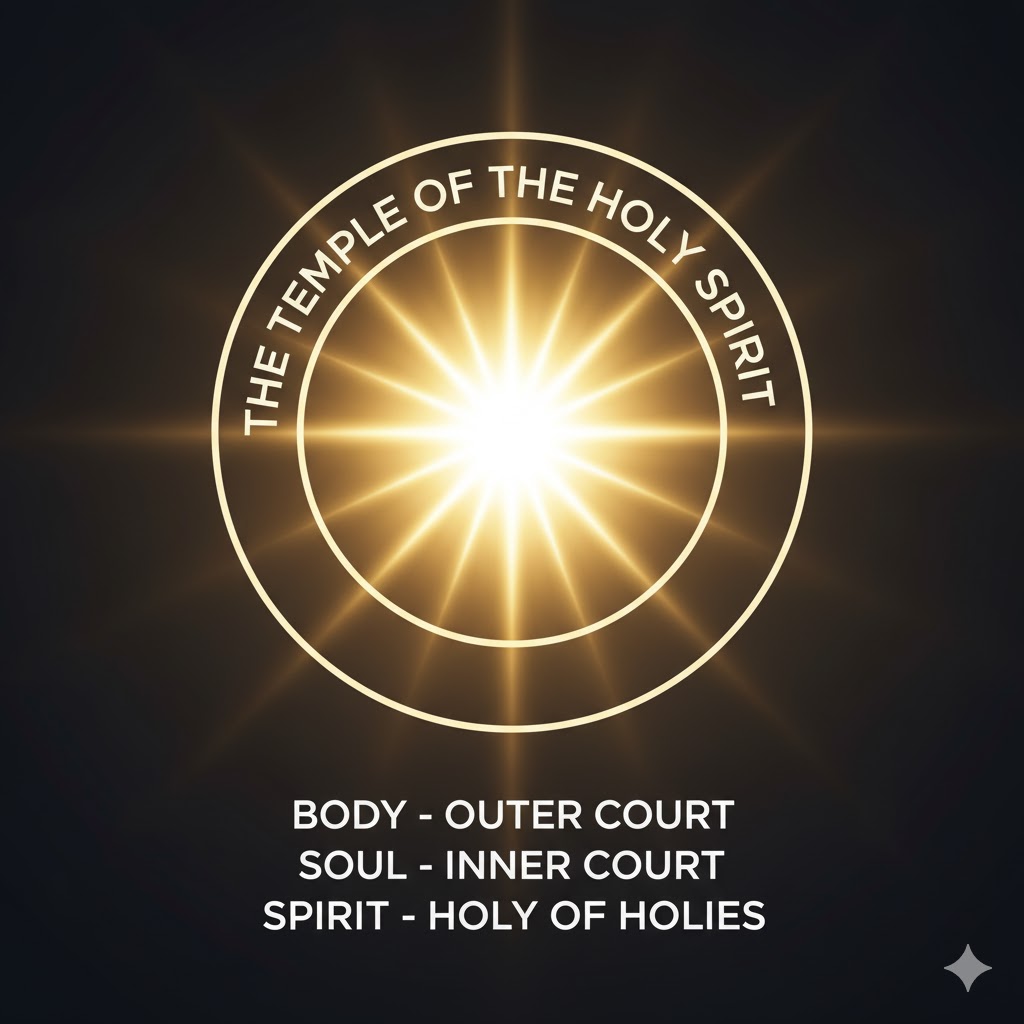
The human being is a sacred temple composed of three divine courtsthe body (outer court), the soul (inner court), and the spirit (Holy of Holies). Each has spiritual “gates” that must be guarded, purified, and dedicated to God.


🕊 Holy Spirit Gates (The Holy of Holies)

The dwelling place of the presence of God; where communion, revelation, and transformation occur.

  1. Truth Gate – The Spirit of truth guides believers into all understanding.
    • John 16:13: “When he, the Spirit of truth, is come, he will guide you into all truth.”
    • This gate opens discernment and alignment with God’s Word, rejecting deception.
  2. Revelation Gate – Unlocks divine mysteries and heavenly insight.
    • Ephesians 1:17: “That the God of our Lord Jesus Christ… may give unto you the spirit of wisdom and revelation in the knowledge of him.”
    • When open, this gate allows divine secrets to be revealed to the heart.
  3. Intuition Gate – The inner knowing that transcends logic.
    • 1 John 2:27: “Ye need not that any man teach you… the same anointing teacheth you of all things.”
    • The Spirit communicates through an inner sense or divine impression.
  4. Prayer Gate – Connects heaven and earth through constant communion.
    • 1 Thessalonians 5:17: “Pray without ceasing.”
    • This gate fuels spiritual life, keeping the fire of the altar burning within.
  5. Reverence Gate – Produces humility and awe before God’s holiness.
    • Psalm 111:10: “The fear of the LORD is the beginning of wisdom.”
    • Reverence guards against pride, keeping the temple pure and submissive.
  6. Faith Gate – The doorway to the supernatural.
    • Hebrews 11:6: “Without faith it is impossible to please him.”
    • Faith activates miracles and allows the believer to walk in divine authority.
  7. Hope Gate – Sustains endurance through trials.
    • Romans 15:13: “Now the God of hope fill you with all joy and peace in believing.”
    • Hope keeps the spirit alive and focused on God’s promises.
  8. Worship Gate – The highest expression of divine intimacy.
    • John 4:24: “God is a Spirit: and they that worship him must worship him in spirit and in truth.”
    • Worship sanctifies the atmosphere of the spirit, aligning the believer with heaven.
  9. Fear of God Gate – Protects from sin and awakens holiness.
    • Proverbs 14:27: “The fear of the LORD is a fountain of life, to depart from the snares of death.”
    • This gate anchors reverence, obedience, and purity in the believer’s spirit.

💠 Soul Gates (The Inner Court)

The seat of the mind, will, and emotions—where choices are made and spiritual warfare often occurs.

  1. Conscience Gate – The moral compass of the soul.
    • Romans 9:1: “My conscience also bearing me witness in the Holy Ghost.”
    • When pure, it warns against sin; when seared, it allows moral confusion.
  2. Reason Gate – The faculty of understanding and interpretation.
    • Proverbs 3:5–6: “Trust in the LORD… and lean not unto thine own understanding.”
    • This gate must be submitted to divine wisdom rather than worldly logic.
  3. Imagination Gate – The creative and visionary center of the soul.
    • Genesis 6:5: “Every imagination of the thoughts of his heart was only evil continually.”
    • When sanctified, imagination allows believers to visualize God’s glory and promises.
  4. Mind Gate – Governs thoughts, memory, and meditation.
    • Romans 12:2: “Be ye transformed by the renewing of your mind.”
    • A renewed mind brings the soul into harmony with the will of God.
  5. Will Gate – The power of choice and surrender.
    • Deuteronomy 30:19: “Choose life, that both thou and thy seed may live.”
    • This gate determines whether one obeys God or yields to the flesh.
  6. Emotions Gate – The realm of feelings and affections.
    • Proverbs 4:23: “Keep thy heart with all diligence; for out of it are the issues of life.”
    • Emotions must be ruled by the Spirit, not by circumstance.
  7. Choices Gate – Where decisions shape destiny.
    • Joshua 24:15: “Choose you this day whom ye will serve.”
    • Every choice opens or closes access to spiritual blessings.
  8. Will (as Dominion Gate) – Represents alignment of human will with divine purpose.
    • Luke 22:42: “Not my will, but thine, be done.”
    • This final gate in the soul ensures complete surrender to God’s plan.

🕯 Body Gates (The Outer Court)

The physical realm that interacts with the world—where obedience, discipline, and holiness must govern.

  1. Flesh Gate – Represents the fallen nature that seeks its own desires.
    • Galatians 5:17: “The flesh lusteth against the Spirit.”
    • The believer must crucify the flesh daily to keep the temple pure.
  2. Touch Gate – The sense of contact and intimacy.
    • 2 Corinthians 6:17: “Touch not the unclean thing; and I will receive you.”
    • This gate calls for purity and discernment in physical and spiritual connections.
  3. Taste Gate – Governs appetite, both physical and spiritual.
    • Psalm 34:8: “O taste and see that the LORD is good.”
    • Discipline in what one consumes symbolizes satisfaction in God, not excess.
  4. Smell Gate – Symbolic of spiritual discernment and worship.
    • Ephesians 5:2: “A sweet smelling savour.”
    • The anointing oil and incense of worship in the Old Testament mirror this gate’s holiness.
  5. Sight Gate – Controls vision and perception.
    • Job 31:1: “I made a covenant with mine eyes.”
    • What one watches or observes either sanctifies or corrupts the heart.
  6. Hearing Gate – Governs what influences faith and belief.
    • Romans 10:17: “Faith cometh by hearing, and hearing by the word of God.”
    • The ears determine what teachings, music, or words shape the soul.

When the Holy Spirit Gates are active, the believer walks in revelation and divine connection.
When the Soul Gates are renewed, the believer’s emotions, mind, and will align with truth.
When the Body Gates are disciplined, the believer’s actions reflect holiness.

Together, these gates form the Temple of the Holy Spirit—a living, breathing sanctuary through which God manifests His glory.

1 Thessalonians 5:23 (KJV): “And the very God of peace sanctify you wholly; and I pray God your whole spirit and soul and body be preserved blameless unto the coming of our Lord Jesus Christ.”

The human being is a divine masterpiece crafted in the image of God, designed to be a dwelling place for His presence. According to 1 Corinthians 6:19 (KJV), “What? know ye not that your body is the temple of the Holy Ghost which is in you, which ye have of God, and ye are not your own?” This scripture establishes a sacred truth: the human body, soul, and spirit are not merely biological or emotional structures, but holy vessels that mirror the very order of God’s tabernacle.

In the Old Testament, the temple of God had three parts: the outer court, the inner court, and the Holy of Holies. Each part symbolically represents a dimension of our being—the body, the soul, and the spirit. The outer court corresponds to the body, the inner court to the soul, and the Holy of Holies to the spirit. This divine structure reveals that true worship begins within, from the spirit, moving outward to influence the soul and body.

The body is the outer court, the physical representation of the inner life. It interacts with the world through five gates—touch, taste, smell, sight, and hearing. These gates determine what enters and exits, affecting the purity of the temple. 1 Corinthians 9:27 (KJV) says, “But I keep under my body, and bring it into subjection,” reminding believers that the flesh must be disciplined so it does not corrupt what is sacred.

The gate of sight determines vision—what one allows the eyes to behold. Job made a covenant with his eyes (Job 31:1), understanding that the eyes can either glorify God or lead one into temptation. Similarly, the gate of hearing must be guarded, for “faith cometh by hearing” (Romans 10:17), and what we listen to shapes belief and action.

The gate of taste influences appetite and desire. Proverbs 23:2 warns against overindulgence, teaching self-control in what one consumes. The touch gate represents intimacy and connection, reminding believers to “touch not the unclean thing” (2 Corinthians 6:17). Finally, the gate of smell connects to discernment—sensing what is holy versus profane, for in Exodus 30, God gave Moses instructions for the holy anointing oil, a sweet fragrance representing divine worship.

Beyond the body lies the soul, the inner court of human existence. The soul is where thoughts, emotions, and decisions are born. It is the seat of the mind, will, and emotions—the realm where spiritual battles occur. In Luke 21:19, Christ declares, “In your patience possess ye your souls.” This means the believer must govern the soul with divine wisdom and endurance.

The mind gate processes reasoning, imagination, and memory. Romans 12:2 instructs, “Be ye transformed by the renewing of your mind,” because the mind must be renewed daily through Scripture and prayer. The imagination gate, when sanctified, allows believers to envision God’s promises; but when corrupted, it becomes a tool of deception (Genesis 6:5).

The will gate represents choice—the power to obey or disobey. Deuteronomy 30:19 declares, “I have set before you life and death… therefore choose life.” The will determines which voice—God’s or the flesh’s—governs the temple. The emotion gate is deeply tied to worship, for God desires hearts that love Him sincerely. Proverbs 4:23 (KJV) says, “Keep thy heart with all diligence; for out of it are the issues of life.”

The conscience acts as a moral compass, bearing witness with the Spirit to what is right or wrong (Romans 9:1). When the conscience is purified by the blood of Christ, the soul becomes a place of peace and discernment. But if defiled, it leads to confusion and spiritual blindness (Titus 1:15).

The reason gate is where understanding is formed. Proverbs 3:5-6 (KJV) teaches, “Trust in the LORD with all thine heart; and lean not unto thine own understanding.” Reason must be submitted to revelation; for human wisdom alone cannot grasp divine truth.

The deepest part of the human temple is the spirit, the Holy of Holies. Here, communion with God occurs through the indwelling of the Holy Spirit. The spirit has its own gates—faith, reverence, prayer, revelation, intuition, worship, and the fear of God—each essential for divine connection.

The faith gate activates the believer’s trust in God. Hebrews 11:6 declares, “Without faith it is impossible to please Him.” The prayer gate keeps communication open between heaven and earth (1 Thessalonians 5:17). Prayer maintains the fire of the altar within the Holy of Holies, where God’s glory abides.

The revelation gate opens divine mysteries to those who seek truth. Ephesians 1:17 speaks of “the spirit of wisdom and revelation in the knowledge of Him.” The intuition gate allows one to perceive spiritual truths without human logic; it is the inner knowing that comes from the Spirit of God (1 John 2:27).

The reverence gate reflects holy respect and submission before the Lord. Psalm 111:10 declares, “The fear of the LORD is the beginning of wisdom.” Reverence keeps the spirit humble and the heart tender toward God.

The worship gate is the ultimate purpose of the temple—to glorify the Creator. John 4:24 reminds, “God is a Spirit: and they that worship him must worship him in spirit and in truth.” Worship purifies the temple and aligns every gate with heaven’s harmony.

Finally, the fear of God gate establishes holiness. Proverbs 14:27 declares, “The fear of the LORD is a fountain of life.” When this gate is open, sin cannot dominate, and the believer becomes a living sanctuary of divine power.

Thus, the temple of the Holy Spirit is a complete structure—body, soul, and spirit working together in divine order. When every gate is consecrated, the believer lives in alignment with heaven, walking as a vessel of light in a dark world.

The restoration of this temple begins with repentance and ends with transformation. Romans 8:11 declares that the Spirit that raised Jesus from the dead will quicken our mortal bodies. This quickening power renews the entire being, sanctifying each court and gate for God’s use.

Ultimately, the believer’s goal is not mere moral purity, but divine habitation. When the body, soul, and spirit operate in harmony under the authority of the Holy Spirit, heaven finds expression on earth. As Paul writes in 1 Thessalonians 5:23, “And the very God of peace sanctify you wholly; and I pray God your whole spirit and soul and body be preserved blameless unto the coming of our Lord Jesus Christ.”

References
1 Corinthians 6:19–20; Romans 12:1–2; Proverbs 4:23; 1 Thessalonians 5:23; John 4:24; Hebrews 11:6; Deuteronomy 30:19; Psalm 111:10; Ephesians 1:17; Romans 8:11 (KJV).