
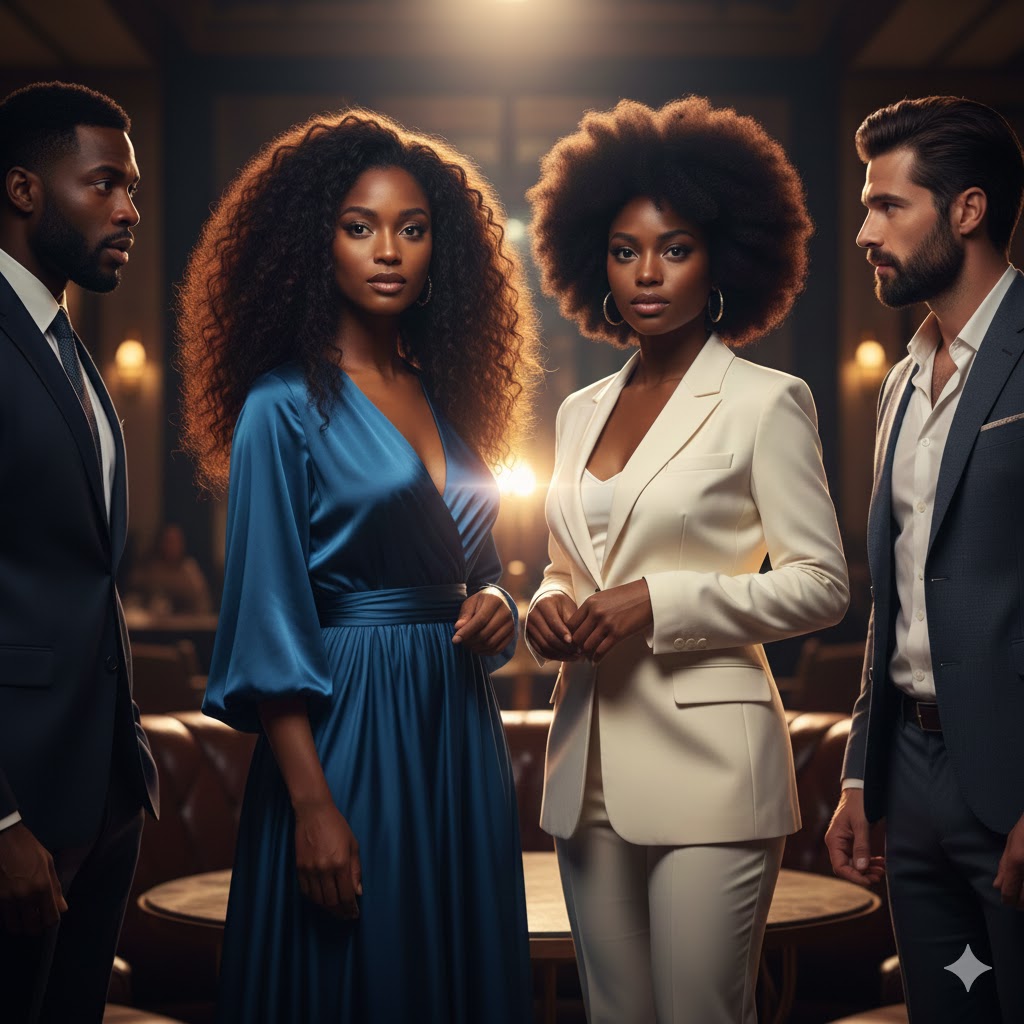
Beauty within the Black community carries layers of complexity that intersect with history, culture, and social perception. Favoritism toward lighter skin, often called “colorism,” has roots in colonialism, slavery, and Western beauty standards. Lighter skin is frequently perceived as more attractive or socially advantageous, creating a hierarchy within the Black community itself.
Among Black men, lighter-skinned women are sometimes favored because of internalized colorism, societal pressures, or perceived social mobility. Historical narratives—such as preferential treatment of mixed-race enslaved women by European overseers—have left a lasting impact, shaping perceptions of desirability and social capital. Favor may manifest as attention, romantic pursuit, or elevated status in social circles.
The fetishization of Black women, however, often moves beyond admiration into objectification. Men, regardless of race, sometimes reduce women to physical features, exoticizing skin tone, hair texture, body shape, or facial features. This fetishism can be sexual, cultural, or aesthetic, but it often strips women of agency and humanity, valuing them primarily for appearance.
White men, particularly British men historically, have long expressed fascination with African women, stemming from colonial exploration, imperialist imagination, and exposure to cultural difference. This fascination often focuses on perceived “exotic” traits—skin tone, hair, facial features, or body proportions—rather than individuality or character.
Specific features are fetishized across cultures. For example, hair—especially natural or textured hair—may be fetishized as a symbol of authenticity or novelty. Feet, skin, and body shape can become objects of obsessive admiration, reducing women to parts rather than whole persons. Fetishism often perpetuates stereotypes and reinforces unequal power dynamics.
Black women experience a dual reality: favored within certain communities and fetishized by others. While some attention may feel flattering, it often carries a hidden hierarchy of control or dominance. Favor is relational and nuanced, whereas fetishism is transactional and objectifying, centering desire over respect.
Men of other races also fetishize Black women in ways shaped by historical and social contexts. European, American, and Asian men may exoticize Black women through lenses of colonial imagination, media representation, or cultural stereotypes. Such behavior often ignores the cultural and spiritual significance of Black identity, reducing complex humanity to aesthetic novelty.
British colonial history provides a notable example of this dynamic. African women were often eroticized and idealized within imperialist literature and visual art. Preference for certain features, such as body shape, skin tone, or hair, was reinforced by cultural exposure and romanticized narratives. Fetishization was intertwined with power, conquest, and fantasy.
The fetishization of hair, skin, and body features often intersects with societal assumptions about sexuality, morality, and availability. Black women are simultaneously exoticized and policed, admired yet criticized. This tension can distort self-perception, complicate relationships, and reinforce systemic biases.
Colorism complicates intra-racial dynamics as well. Lighter-skinned women may receive preferential treatment in dating, media, or social status, while darker-skinned women may face marginalization. This internalized bias often mirrors the fetishistic tendencies of outsiders, creating layered pressure and inequity.
Black men sometimes fetishize specific features of Black women, such as lips, curves, or hair texture, often influenced by cultural norms, media representation, or personal preference. While attraction is natural, fetishization occurs when admiration disregards personality, intellect, or autonomy.
White men and men of other races may adopt similar behaviors, often exoticizing the “other” through a lens of desire. Historically, this has roots in colonialism, slavery, and cross-cultural power dynamics. Objectification often follows patterns of dominance and idealization of perceived difference.
Historical media, literature, and art reinforced these tendencies. African women were depicted as exotic, wild, or hypersexualized, shaping perceptions in both colonial and modern contexts. Contemporary media continues to amplify these stereotypes through music videos, films, and advertising.
The line between admiration and fetishization is discernible through intention. True respect acknowledges the entirety of a person—their intellect, spirituality, and agency. Fetishization isolates features or traits, prioritizing physical or racial novelty over human complexity.
Psychologically, fetishization can be damaging. Black women may internalize the gaze, equating attention with worth, or experience objectification, where validation is tied to physical appeal rather than character. This affects self-esteem, mental health, and interpersonal relationships.
Fetishization also intersects with romantic and sexual dynamics. Men may pursue relationships primarily based on physical attraction or stereotype, creating imbalanced power dynamics. Women are pressured to perform according to perceived desire, rather than authentic self-expression.
Recognizing the difference between favor and fetish is essential. Favor may reflect genuine admiration, mutual respect, and spiritual alignment. Fetish is transactional, objectifying, and often linked to power imbalance or exoticism. Awareness allows women to navigate attention wisely and assert boundaries.
Education, historical understanding, and self-awareness provide tools for mitigating the impact of fetishization. By understanding colonial history, colorism, and social dynamics, Black women can contextualize attention, affirm their worth, and demand respect beyond superficial traits.
Ultimately, beauty is a powerful but complex social force. For Black women, navigating favor and fetishization requires discernment, prayer, and alignment with God’s truth. Recognition of objectification, celebration of authentic identity, and adherence to spiritual principles can empower women to claim their value holistically.
Favor and fetish are intertwined yet distinct. Favor acknowledges character and holistic admiration; fetish reduces identity to objectified traits. Understanding this difference equips Black women to engage with the world intentionally, guarding their hearts while embracing their God-given beauty.
References
Hunter, M. (2007). The persistent problem of colorism: Skin tone, status, and inequality. Sociology Compass, 1(1), 237–254.
Eze, E. C. (2013). Fetishization and racialized desire in Western media. Routledge.
Russell, R. (2019). Beauty, colorism, and black femininity: Social dynamics in the diaspora. Palgrave Macmillan.
Twenge, J. M., & Campbell, W. K. (2009). The Narcissism Epidemic: Living in the Age of Entitlement. Free Press.
The Holy Bible, King James Version.
Pilcher, J. (1998). Sexuality, race, and imperialism: A historical perspective. Journal of Social History, 32(2), 235–258.
 THE BROWN GIRL DILEMMA