Category Archives: Fear Not, My Child

Two Doors Before the Soul: Fear’s Panic Room or Faith’s War Room.

Every day, the human spirit stands in a hallway of decision—one door leads to fear and hiding, the other to prayer and spiritual battle.
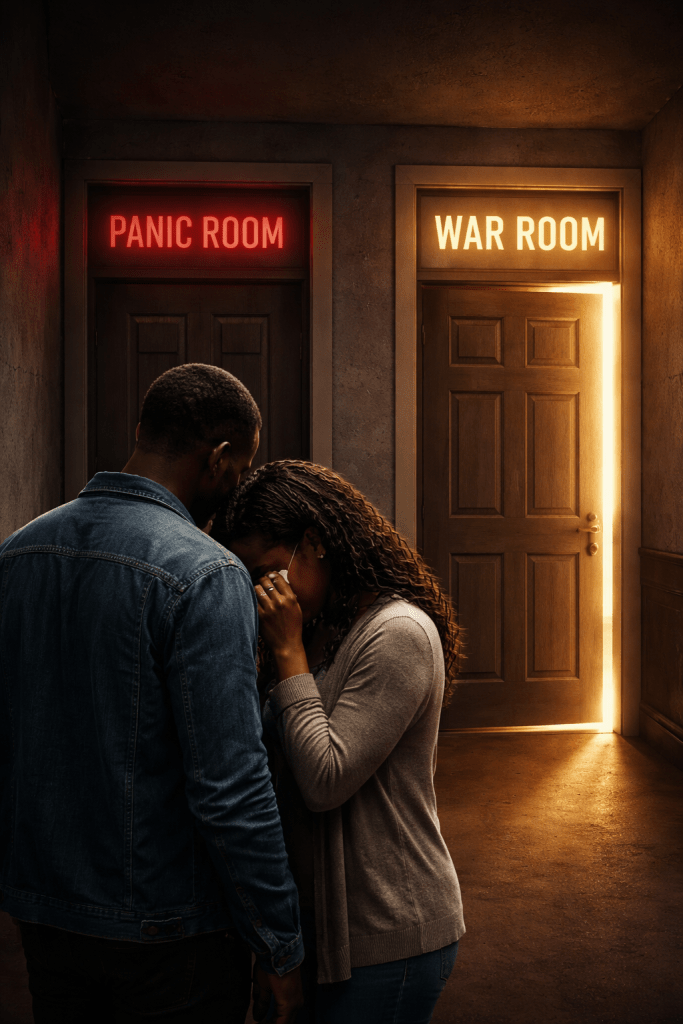
Life often presents itself as a quiet hallway with two doors. The setting is not always visible to the eyes, yet it exists in the interior landscape of the mind and spirit. On one side stands a door labeled the Panic Room. On the other side rests the door to the War Room. Every day, consciously or unconsciously, individuals choose which door they will enter. The choice is not merely emotional but deeply spiritual, reflecting whether a person will surrender to fear or rise in prayerful resistance.

The Panic Room is built from accumulated anxieties. Its walls are constructed from past disappointments, financial worries, relational failures, and the lingering echoes of traumatic experiences. Once inside, the air grows heavy with thoughts such as I cannot handle this, life is too difficult, or nothing will ever change. It is a place designed for hiding rather than healing, for survival rather than transformation.

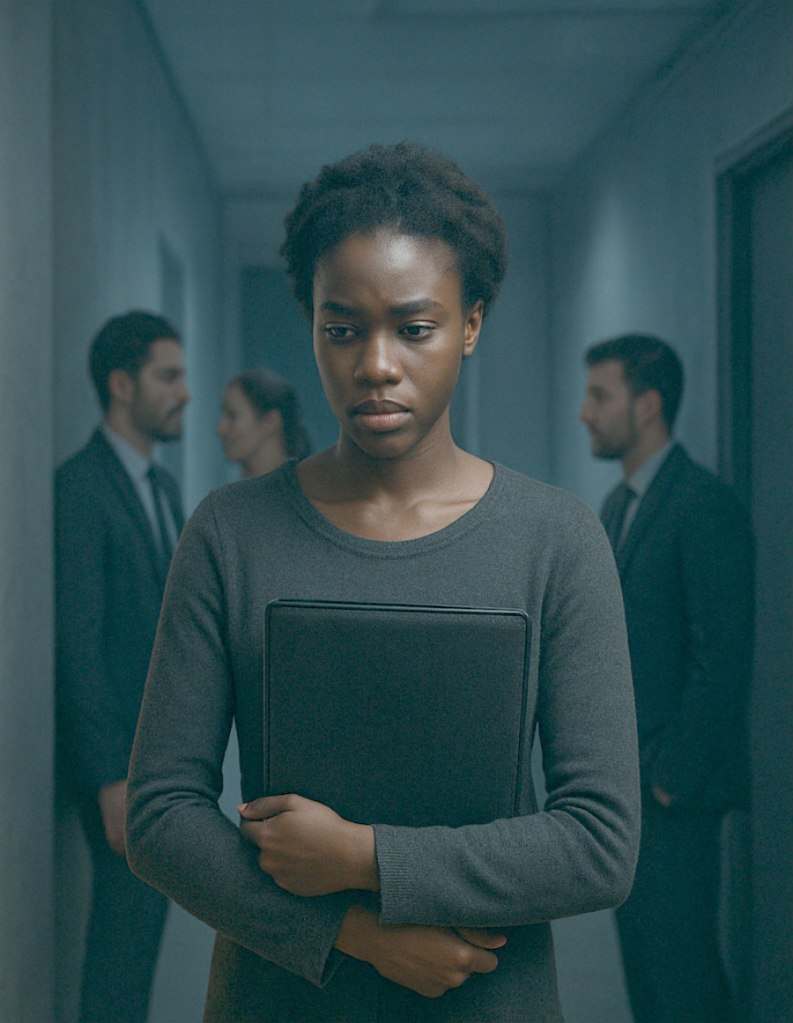
Fear is often persuasive because it masquerades as protection. The Panic Room promises temporary safety from overwhelming circumstances. Individuals retreat there when the pressures of life seem unbearable—economic instability, broken relationships, health concerns, or uncertainty about the future. In this chamber of dread, the mind rehearses worst-case scenarios, replaying them until anxiety becomes normalized.

Yet the Panic Room rarely offers true refuge. Instead, it traps individuals in cycles of overthinking and emotional paralysis. Problems are magnified, hope diminishes, and darkness settles into the corners of the soul. Fear convinces people that hiding is wisdom when in reality, it is spiritual stagnation.

Psychologically, fear activates survival mechanisms within the brain. Scholars of stress and cognition explain that repeated exposure to perceived threats can trigger chronic anxiety responses (McEwen, 2007). When individuals remain mentally confined within their Panic Rooms, their thoughts begin to revolve around crisis rather than solutions, reinforcing helplessness.

This room is filled with the voices of doubt. One voice says the economy is collapsing and survival is uncertain. Another whispers that relationships will always end in betrayal. Yet another warns that the future holds only disappointment. These voices feed despair until individuals become convinced that darkness is their permanent dwelling place.

In contrast, the War Room stands across the hallway as a radically different environment. This room is not designed for hiding but for spiritual confrontation. Its walls are covered not with fear but with written prayers, declarations of faith, and reminders of divine promises. Within this sacred space, individuals prepare themselves for the battles of life.

The War Room is a metaphor for intentional prayer and spiritual discipline. Instead of retreating from problems, believers enter this room to face them through communion with God. Prayer transforms panic into strategy and anxiety into spiritual focus.

Within the War Room, faith becomes an active force. Scriptures, affirmations, and prayers are placed upon the walls as reminders that spiritual authority exists beyond human weakness. The atmosphere is one of hope rather than despair, expectation rather than defeat.

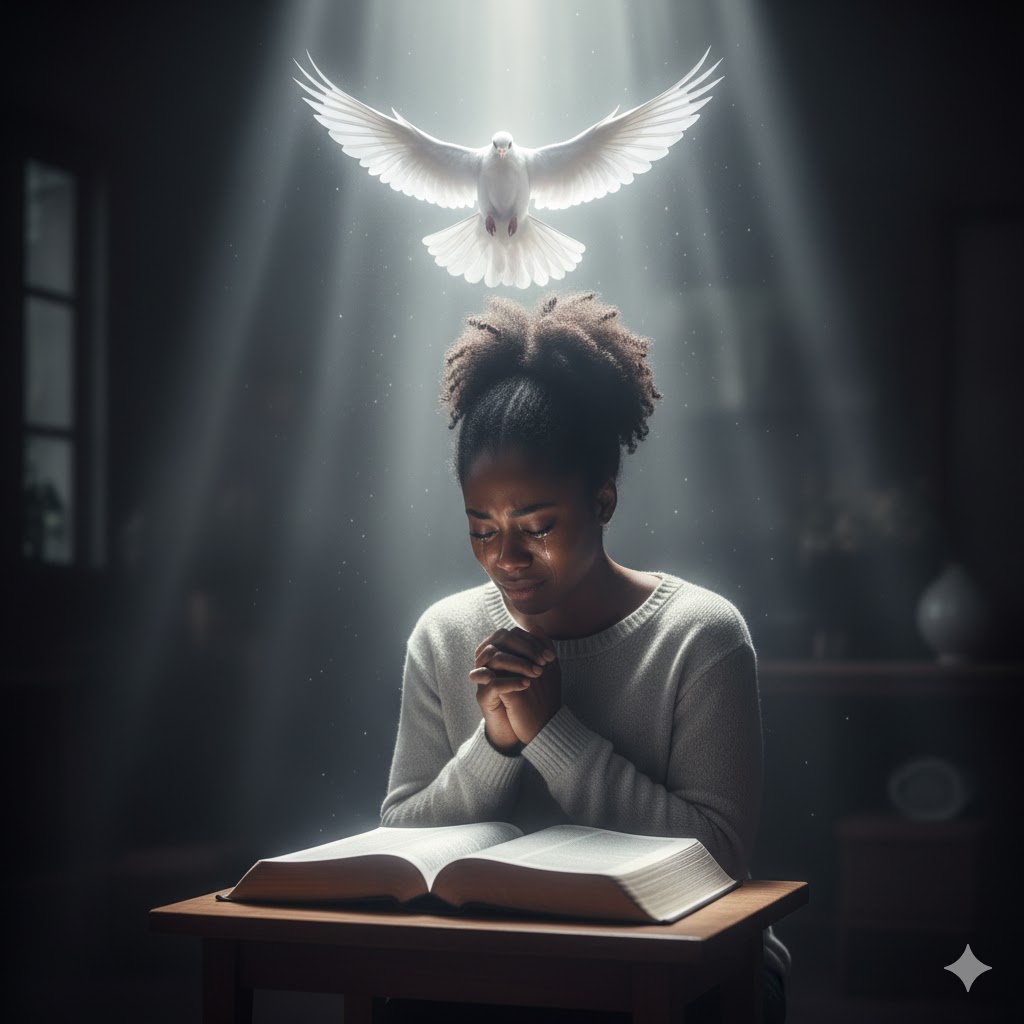
The Bible repeatedly encourages believers to confront fear through prayer. In Philippians 4:6–7, the apostle Paul instructs believers to present their requests to God rather than surrender to anxiety. Prayer becomes the doorway through which divine peace enters the troubled mind.

Similarly, the War Room embodies the principle of spiritual warfare. The New Testament describes believers as participants in a spiritual struggle against unseen forces of darkness. In Ephesians 6:12, Paul the Apostle explains that the true battle is not merely physical but spiritual in nature.

Prayer in this room is not passive. It is strategic, intentional, and persistent. Individuals bring their fears before God and replace them with declarations of trust. Economic fears become prayers for provision. Relationship struggles become petitions for wisdom and healing.

Over time, the War Room becomes a place of clarity. Instead of magnifying problems, it magnifies divine sovereignty. Fear loses its grip when faith begins to dominate the narrative of the mind.

Psychologists have also observed the stabilizing effects of prayer and meditation on emotional health. Studies suggest that spiritual practices can reduce stress and improve psychological resilience (Koenig, 2012). In this sense, the War Room is both a spiritual and psychological refuge.

The difference between the two rooms is profound. The Panic Room amplifies problems, while the War Room amplifies possibilities. One encourages hiding while the other encourages spiritual engagement. One breeds anxiety while the other cultivates peace.

Importantly, the hallway between the two rooms represents a daily choice. Life constantly places individuals at this intersection. When adversity arises, the question becomes whether one will retreat into fear or rise into prayer.

Many people unintentionally live inside their Panic Rooms for years. They accept anxiety as a permanent condition rather than recognizing the open door to spiritual empowerment. Yet the War Room remains available to anyone willing to step inside.

Faith does not eliminate challenges, but it changes the posture with which individuals face them. Instead of asking, “How will I survive this?” the believer begins to ask, “How will God work through this?”

Peace eventually fills the War Room because prayer invites divine presence. Fear loses its authority where trust resides. What once felt overwhelming becomes manageable through spiritual perspective.

Ultimately, life presents two doors every day. One leads to panic, isolation, and despair. The other leads to prayer, courage, and spiritual victory. The hallway remains the same, but the choice of room determines the atmosphere of the soul.

The profound truth is that individuals choose their rooms daily. Fear invites them into hiding, but faith invites them into battle. The Panic Room may feel familiar, yet the War Room holds the power to transform fear into peace.


References

Koenig, H. G. (2012). Religion, spirituality, and health: The research and clinical implications. ISRN Psychiatry. https://doi.org/10.5402/2012/278730

McEwen, B. S. (2007). Physiology and neurobiology of stress and adaptation. Physiological Reviews, 87(3), 873–904.

The Holy Bible, King James Version. (1769/2017). Cambridge University Press.

Dilemma: Fear

Fear is one of the oldest human emotions, woven into the survival instincts of the body and the spiritual consciousness of the soul. It alerts, warns, and protects, yet when fear governs the heart, it becomes a tyrant rather than a teacher. In today’s world, fear has shifted from momentary danger to a constant psychological atmosphere, shaping how people think, plan, and hope.

Modern fears are no longer limited to immediate threats. Many live under the weight of persistent uncertainty—fear of not having enough food, fear of financial collapse, fear of illness, fear of violence, and fear of what tomorrow may bring. These anxieties quietly influence decisions and erode peace, even when danger has not yet arrived.

Scripture acknowledges fear as a real human experience, not an imaginary weakness. Throughout the Bible, men and women of faith faced famine, war, exile, and loss. Their fears were not dismissed; instead, God addressed them directly. This reveals that fear itself is not sin, but what one does with fear determines its outcome.

Economic instability has revived ancient fears of scarcity. Rising food prices, supply shortages, and global disruptions have caused many to wonder how they will eat, provide, or survive. These fears echo biblical times when famine tested faith and obedience. Yet Scripture reminds believers that provision does not originate in systems alone but in God Himself.

The Bible speaks directly to the fear of lack. “Therefore I say unto you, Take no thought for your life, what ye shall eat, or what ye shall drink… Is not the life more than meat?” (Matthew 6:25, KJV). This passage does not deny physical need but challenges fear-driven obsession, calling the heart back to trust.

War is another dominant fear of the modern age. News cycles are filled with violence, rumors of war, and global conflict. The Bible foretold such times, stating, “And ye shall hear of wars and rumours of wars: see that ye be not troubled” (Matthew 24:6, KJV). Fear increases when events are misunderstood, but scripture frames these moments within divine sovereignty.

Fear also thrives in the anticipation of loss. Many fear losing loved ones, freedom, stability, or identity. This fear is often intensified by trauma and historical memory, particularly among communities that have repeatedly endured displacement and injustice. Fear becomes generational when wounds are left unhealed.

God repeatedly addresses His people with the phrase “fear not.” This command appears not as a rebuke, but as reassurance. “Fear thou not; for I am with thee: be not dismayed; for I am thy God” (Isaiah 41:10, KJV). The absence of fear is rooted not in circumstances improving, but in God’s presence remaining.

Fear has the power to distort perception. When fear dominates, problems appear larger than they are, and solutions seem unreachable. Scripture counters this distortion by reminding believers that strength does not originate in human ability alone. “God hath not given us the spirit of fear; but of power, and of love, and of a sound mind” (2 Timothy 1:7, KJV).

The fear of the future is particularly paralyzing. Questions about what will happen next—economically, politically, spiritually—consume many minds. Yet the Bible reframes the future as known by God even when hidden from man. “Take therefore no thought for the morrow: for the morrow shall take thought for the things of itself” (Matthew 6:34, KJV).

Spiritual fear often arises when people feel abandoned or forgotten. In moments of despair, fear whispers that God is distant. Scripture responds decisively: “When thou passest through the waters, I will be with thee” (Isaiah 43:2, KJV). Fear loses authority when presence is assured.

The Apostle Paul described fear through the lens of spiritual warfare and resilience. “We are troubled on every side, yet not distressed; we are perplexed, but not in despair; persecuted, but not forsaken; cast down, but not destroyed” (2 Corinthians 4:8–9, KJV). This passage acknowledges pressure while affirming survival and divine preservation.

Fear often intensifies when control is lost. Humans attempt to manage fear by controlling outcomes, but this strategy usually deepens anxiety. Scripture invites surrender instead. “Cast thy burden upon the LORD, and he shall sustain thee” (Psalm 55:22, KJV). Burdens are lifted not by strength alone, but by trust.

Children today inherit a world saturated with fear—climate anxiety, violence, instability, and digital overload. God’s message to the next generation remains unchanged. “Fear not, little flock; for it is your Father’s good pleasure to give you the kingdom” (Luke 12:32, KJV). Fear is met with promise, not panic.

Faith does not deny danger; it reframes it. Biblical faith stands in the presence of fear without bowing to it. Courage is not the absence of fear but obedience in spite of it. This distinction is vital in understanding biblical strength.

The fear of death is one of humanity’s deepest dilemmas. Scripture confronts this fear with eternal perspective. “Yea, though I walk through the valley of the shadow of death, I will fear no evil” (Psalm 23:4, KJV). Death is acknowledged, but fear is rejected because God remains present.

Communal fear spreads rapidly, especially during crises. Scripture warns against collective panic, urging discernment and faith. “Say ye not, A confederacy… neither fear ye their fear, nor be afraid” (Isaiah 8:12, KJV). God calls His people to resist fear-driven alliances and reactions.

Fear can either drive people away from God or push them closer to Him. The biblical pattern shows that fear, when surrendered, becomes a doorway to deeper dependence. “The LORD is my light and my salvation; whom shall I fear?” (Psalm 27:1, KJV). Fear is challenged by relationship.

Ultimately, fear reveals what the heart trusts most. When fear rules, trust is misplaced. When trust is restored, fear loses its grip. Scripture consistently redirects fear toward reverence for God rather than terror of circumstances.

The dilemma of fear remains real, but it is not final. God’s word repeatedly speaks life into fearful hearts, reminding humanity that though the world shakes, He does not. Fear may cast one down, but in God, they are never destroyed.


References

The Holy Bible, King James Version. (1611/2017). Cambridge University Press.

Matthew 6:25–34, KJV
Matthew 24:6, KJV
Isaiah 41:10, KJV
Isaiah 43:2, KJV
2 Timothy 1:7, KJV
Psalm 55:22, KJV
2 Corinthians 4:8–9, KJV
Luke 12:32, KJV
Psalm 23:4, KJV
Psalm 27:1, KJV

God, Where Are You? – Why Hast Thou Forsaken Me? #themosthighgodofIsrael

There are moments in every believer’s life when the heavens feel shut and prayer seems to fall back down in silence. These are the seasons that stretch the soul and test the very core of faith. When we cry, “God, where are You?” or ask, “Why hast Thou forsaken me?” we enter a sacred place of wrestling—a place where the silence of God feels louder than His voice. These moments can be frightening, humbling, and deeply transformative.

Throughout Scripture, many of God’s greatest servants faced long seasons of divine silence. The silence was not abandonment but preparation. It was not rejection but refining. In those quiet hours, God was shaping them into vessels strong enough to carry His glory. But in the moment, His silence often felt like distance. Even Jesus Himself, on the cross, cried out, “My God, my God, why hast thou forsaken me?” (Matthew 27:46, KJV). If the Son of God felt that anguish, how much more do we as His children?

Often, when God is silent, He is not absent. Silence is a language of Heaven—a divine classroom where the Holy Spirit teaches endurance, faith, and trust without visible evidence. Sometimes the Lord withdraws the feeling of His presence so that we learn to lean on what He has spoken, not on what we feel. “For we walk by faith, not by sight” (2 Corinthians 5:7, KJV). His silence tests whether our faith is built on feelings or on His Word.

Job is the ultimate example of suffering without explanation. He cried out repeatedly, asking God to answer him, defend him, and reveal the purpose of his pain. Yet for many chapters, Heaven remained silent. Job lost his children, his health, his wealth, and his comfort—yet God did not speak immediately. The silence was part of Job’s refining. And when God finally answered out of the whirlwind, Job realized that the silence had produced humility, revelation, and spiritual maturity (Job 38–42, KJV).

During silent seasons, God is often working behind the scenes in ways we cannot see. Daniel prayed for understanding, but the answer was delayed by spiritual warfare in the unseen realm for twenty-one days (Daniel 10:12–13, KJV). What looked like silence was actually a battle in the heavens on his behalf. Many believers experience similar unseen warfare, unaware that God’s response is on the way.

Sometimes God is silent because He is testing our obedience. King Saul lost his kingdom because he acted out of fear when God seemed slow in responding (1 Samuel 13:8–14, KJV). Silence exposes whether we will wait on God—or move ahead of Him. The silence becomes a spiritual X-ray, showing what is in our hearts.

Other times, God is teaching us to seek Him more deeply. When David said, “I cried unto the Lord… and He heard me not” (Psalm 22:2, KJV), it was not because God rejected him, but because God was drawing him into deeper intimacy. A silent God often produces a louder prayer life. We learn to press in, to cry out, to depend on Him alone.

God’s silence can also protect us. Sometimes, He withholds an answer because the timing is not right. If he opened a door too soon, it could destroy us. If he revealed a truth too early, it might overwhelm us. “To every thing there is a season” (Ecclesiastes 3:1, KJV). His silence becomes a shield, guarding us from premature blessings.

In many cases, silence is preparation for elevation. Joseph experienced thirteen years of silence—betrayed, enslaved, and imprisoned (Genesis 37–41, KJV). God never explained Himself during those years. But when the silence broke, Joseph stepped into destiny. What felt like divine abandonment was divine positioning.

The refining process during the silent seasons is often compared to gold being purified. “He shall sit as a refiner and purifier of silver” (Malachi 3:3, KJV). Gold is heated until impurities rise to the surface. In the same way, God allows pressure and silence to expose what must be removed from our hearts—fear, pride, impatience, insecurity, or doubt. He purifies us so that His image may shine in us.

The silence of God is also meant to strengthen spiritual hearing. Sometimes He whispers because He wants us closer. Elijah expected God in the wind, earthquake, and fire, yet the Lord spoke in a still small voice (1 Kings 19:11–12, KJV). Silence heightens sensitivity so we can discern His whisper when it comes.

Jesus experienced silence in Gethsemane. He prayed, “If it be possible, let this cup pass from me” (Matthew 26:39, KJV). Yet Heaven offered no alternative path. The silence confirmed the assignment. Sometimes God’s silence is not a “no,” but a divine affirmation that we must endure the path set before us.

When God is silent, He is often building spiritual endurance. James wrote, “The trying of your faith worketh patience” (James 1:3, KJV). Without trials, faith remains shallow. Silence strengthens the roots of belief so that we can withstand storms that feelings cannot.

Even when we cannot hear Him, God is speaking through His Word. Scripture becomes life in silent seasons. The promises of God become louder than the absence of His voice. “I will never leave thee, nor forsake thee” (Hebrews 13:5, KJV). Silence cannot contradict what He has already spoken.

Silent seasons also reveal the condition of our worship. Do we praise God only when we feel Him? Or do we praise Him because He is worthy? Job declared, “Though he slay me, yet will I trust in him” (Job 13:15, KJV). Worship in silence carries a fragrance that Heaven honors.

God’s silence may come before great revelation. After four hundred years of silence between Malachi and Matthew, God broke the silence with the birth of Jesus—the greatest revelation in human history. Long silence often precedes divine breakthrough.

When God is silent, believers must remain faithful in prayer, fasting, reading the Word, and serving. Silence is not a sign to stop; it is a sign to press forward. Those who endure the silence emerge stronger, wiser, and more anointed.

Eventually, God always answers. He may not answer the way we expect, but He answers in the way that transforms us. His silence molds us into vessels ready for His glory. When we look back, we realize He was closest in the moments that felt the loneliest.

God’s silence is not abandonment—it is divine refinement. It is the molding of character, the strengthening of faith, and the deepening of relationships. In the silence, God shapes us into gold. And when the season ends, He brings forth a testimony that could only be birthed in silence. God is Guide! HE is still in control. Be encouraged, my brothers and sisters.


KJV References
Job 13:15; Job 38–42; Psalm 22:2; Matthew 27:46; Matthew 26:39; Daniel 10:12–13; 1 Samuel 13:8–14; Ecclesiastes 3:1; Genesis 37–41; Malachi 3:3; 1 Kings 19:11–12; Hebrews 13:5; James 1:3; 2 Corinthians 5:7.

Girl Talk Series: Fear Not, My Child

Ladies, let’s have a heart-to-heart. Fear is something we’ve all faced — whether it’s fear of the future, fear of failure, fear of rejection, or fear of the unknown. But I came to remind you today: you are not alone, and God’s Word gives us power over fear. The same God who created the heavens and the earth whispers softly to your heart, “Fear not, my child, for I am with thee.” (Isaiah 41:10, KJV).

Fear often shows up when faith starts to waver, but the Lord calls us to stand firm and trust Him completely. You may not know what tomorrow holds, but you can rest in the truth that God holds tomorrow. He is Alpha and Omega, the beginning and the end, and nothing that happens to you escapes His watchful care.

When fear tries to creep in, remind yourself that God has already gone before you. Deuteronomy 31:8 (KJV) says, “And the Lord, he it is that doth go before thee; he will be with thee, he will not fail thee, neither forsake thee: fear not, neither be dismayed.” What a promise! God not only goes before you — He walks beside you and covers you on every side.

Sometimes fear disguises itself as anxiety, worry, or overthinking. It makes us feel like we must control every detail of life. But the Lord says otherwise: “Be still, and know that I am God” (Psalm 46:10, KJV). Sis, you don’t have to have all the answers. You just need to trust the One who does.

There will be moments when life feels uncertain — the job isn’t secure, the relationship feels unstable, the diagnosis is unclear — yet God says, “Peace, be still.” (Mark 4:39, KJV) When Christ is in your boat, even the storm must obey His voice. Fear cannot remain where faith is active.

Fear is one of the enemy’s greatest weapons, but it loses all power when we remember the truth of 2 Timothy 1:7 (KJV): “For God hath not given us the spirit of fear; but of power, and of love, and of a sound mind.” The spirit of fear is not from God — it’s a counterfeit spirit sent to confuse and paralyze you. But the spirit within you is stronger.

The enemy wants to keep you afraid because he knows that faith is your weapon. When you walk in fear, you shrink. When you walk in faith, you soar. The woman of God who chooses faith over fear becomes unstoppable, because her courage is rooted in divine assurance, not human understanding.

Beloved, don’t let fear silence your purpose. God placed gifts, dreams, and callings inside you that fear wants to suffocate. But hear the words of Joshua 1:9 (KJV): “Have not I commanded thee? Be strong and of a good courage; be not afraid, neither be thou dismayed: for the Lord thy God is with thee whithersoever thou goest.” You are not walking alone.

Even when you feel unworthy, broken, or uncertain, God calls you by name and says, “Fear not, for I have redeemed thee.” (Isaiah 43:1, KJV) You belong to Him. No past mistake, no painful memory, no fear of the future can separate you from His love.

Fear also shows up when God calls us out of our comfort zone. But growth always requires a stretch. Think of Peter walking on the water — he began to sink only when he took his eyes off Jesus (Matthew 14:30-31, KJV). The lesson? Keep your focus on Christ, not the waves around you.

When fear tries to speak louder than faith, speak the Word of God louder. Declare, “I will not fear what man shall do unto me” (Hebrews 13:6, KJV). Your confidence doesn’t come from circumstances — it comes from your covenant with God. He is your provider, your protector, and your peace.

Sometimes God allows situations that make you uncomfortable so you can grow in trust. Psalm 56:3 (KJV) says, “What time I am afraid, I will trust in thee.” Faith does not mean the absence of fear; it means choosing to trust God in spite of it. That’s where real strength is born.

Fear not, my child — God knows every tear you’ve cried. He knows every worry that keeps you awake at night. Matthew 10:29-31 (KJV) reminds us that not even a sparrow falls without the Father’s knowledge, and “ye are of more value than many sparrows.” If He cares for the birds, how much more does He care for you?

The peace of God is your weapon against fear. Philippians 4:6-7 (KJV) tells us, “Be careful for nothing; but in every thing by prayer and supplication with thanksgiving let your requests be made known unto God.” When you give your fears to Him, His peace will guard your heart and mind like a divine shield.

When your heart feels heavy, remember God’s love is perfect — and perfect love casts out fear (1 John 4:18, KJV). His love is not conditional, temporary, or earned. It’s eternal, and it destroys every lie that fear tries to plant in your spirit.

Even in the darkest moments, fear cannot outshine God’s light. Psalm 27:1 (KJV) declares, “The Lord is my light and my salvation; whom shall I fear? the Lord is the strength of my life; of whom shall I be afraid?” Let that verse be your anthem when life feels overwhelming.

You are not defined by what scares you — you are defined by the One who saves you. Every fear you surrender becomes a testimony of faith. What once terrified you will one day strengthen someone else through your story.

So, daughter of Zion, lift up your head. God has not forgotten you. He has not abandoned you. He is whispering, “Fear not, my child, for I am with you, always.” His promises stand firm even when the world feels unstable.

Walk boldly into your purpose, and when fear knocks, answer it with faith. Pray, fast, and remind yourself daily: “The Lord is on my side; I will not fear” (Psalm 118:6, KJV). You are protected, loved, and chosen for greatness.


References (KJV)
Isaiah 41:10; Deuteronomy 31:8; Psalm 46:10; Mark 4:39; 2 Timothy 1:7; Joshua 1:9; Isaiah 43:1; Matthew 14:30-31; Hebrews 13:6; Psalm 56:3; Matthew 10:29-31; Philippians 4:6-7; 1 John 4:18; Psalm 27:1; Psalm 118:6.