Category Archives: Brown Woman

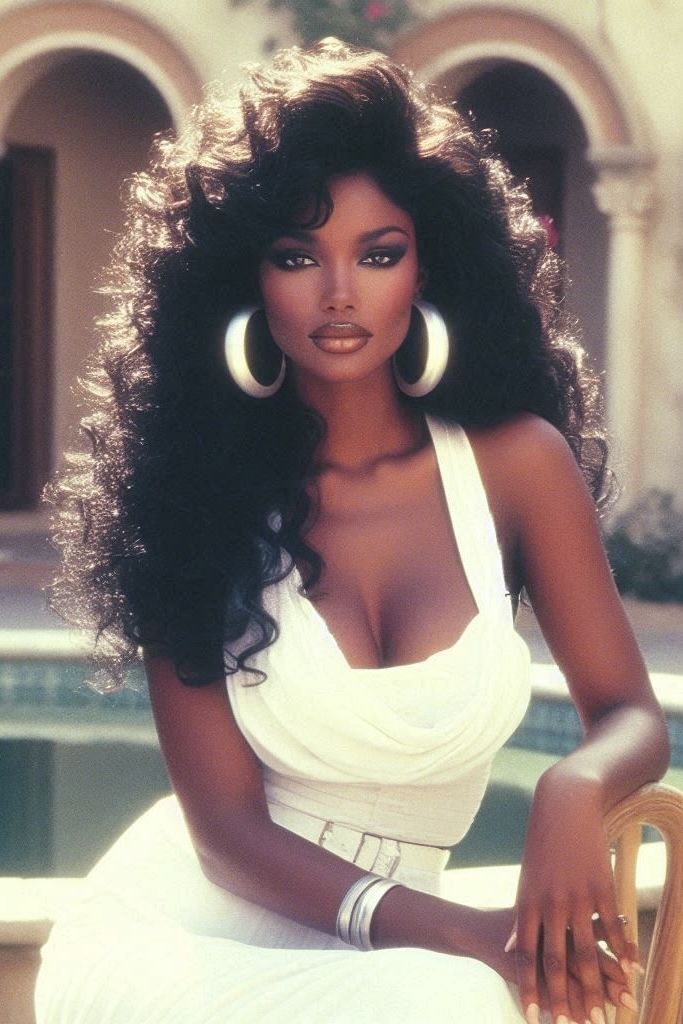
🌺 Colored Girls: The Beauty and The Brains 🌺

Photo by Fernanda Simu00f5es on Pexels.com

The term “colored girls” historically referred to Black women, often during eras of segregation and inequality. Though originally used as a label of exclusion, it has been reclaimed to celebrate the beauty, intellect, and resilience of women of African descent. The Bible affirms this dignity, saying, “I am black, but comely” (Song of Solomon 1:5, KJV). This declaration turns what society once treated as inferior into a statement of divine pride and purpose.

Black women have always been pillars of strength, intellect, and creativity. They have excelled in education, becoming one of the fastest-growing demographics in higher education enrollment (NCES, 2022). Proverbs 31:26 (KJV) perfectly describes this brilliance: “She openeth her mouth with wisdom; and in her tongue is the law of kindness.” From classrooms to boardrooms, colored girls are showing that their intelligence is as radiant as their physical beauty.

Psychologists argue that Black women’s determination is partly shaped by generations of survival under oppression. These challenges have forged a strong sense of identity and agency (Collins, 2000). Resilience, often called “the superwoman schema,” is both a blessing and a challenge — a source of strength but also a weight that requires rest and balance.

Culturally, the beauty of colored girls is celebrated worldwide. From our glowing melanin to our full lips, textured hair, and diverse body shapes, Black women are natural trendsetters. Global beauty markets have responded with bronzers, lip plumpers, and hairstyles inspired by Black women’s natural features. Psalm 139:14 (KJV) reminds us: “I will praise thee; for I am fearfully and wonderfully made.”

Psychology and science confirm why Black beauty is so striking. Facial symmetry, often associated with genetic health, is highly represented in African phenotypes (Little et al., 2011). Fuller lips, higher cheekbones, and wider-set eyes are viewed as youthful and attractive across cultures. Melanin provides natural photoprotection, slowing skin aging and giving Black women a radiant glow well into later life (Taylor, 2020). These biological features make colored girls admired around the globe.

This admiration has sometimes led to cultural appropriation, where others mimic the aesthetics of colored girls without acknowledging the history or struggles that come with them (Russell et al., 2013). Despite this, Black women continue to lead the way in music, fashion, art, and pop culture, influencing trends and shaping global beauty standards.

Examples abound of Black women who have shattered stereotypes. Michelle Obama, the first African American First Lady, is a symbol of grace, intelligence, and poise. Her advocacy for education, health, and empowerment of girls worldwide embodies the “brains” of colored girls. Her book Becoming became a bestseller, inspiring millions with her journey.

Maya Angelou is another powerful example. As a poet, writer, and activist, her work gave voice to generations of Black women. Her words “Still I rise” resonate with the resilience of colored girls everywhere. Her life demonstrates that beauty is not just physical but intellectual and spiritual.

In the realm of sports, Serena Williams exemplifies strength, discipline, and excellence. She not only dominated tennis but also challenged narrow definitions of femininity and beauty in athletics. Her journey shows that colored girls are multifaceted — strong competitors and nurturing mothers, unapologetically themselves.

Entertainment also celebrates the beauty and brains of colored girls. Viola Davis, an award-winning actress, uses her platform to tell authentic Black stories and advocate for diversity in Hollywood. Lupita Nyong’o, with her dark skin celebrated on magazine covers, shifted global beauty narratives and encouraged young Black girls to embrace their natural beauty.

Spiritual leadership is another area where Black women shine. Throughout history, they have been prayer warriors, deaconesses, and gospel singers who carried the church through trials. Their faith is not just for survival but for thriving. 1 Peter 3:3–4 (KJV) reminds us that true beauty is “the hidden man of the heart… even the ornament of a meek and quiet spirit.”

Psychologically, their strength has sometimes been romanticized as if they must always be strong. This expectation can lead to stress and emotional exhaustion. Mental health professionals now emphasize that Black women need safe spaces to rest and heal, reclaiming the right to be soft and cared for. Jesus’ words “Come unto me, all ye that labour and are heavy laden, and I will give you rest” (Matthew 11:28, KJV) remind them that strength also means knowing when to lay burdens down.

Globally, colored girls are admired not only for their beauty but also for their intellect and leadership. Nobel Prize winner Toni Morrison transformed literature by centering Black voices. Chimamanda Ngozi Adichie challenges global audiences to rethink feminism and identity through her books and speeches. These women embody beauty with depth and intellect that changes culture.

Even in STEM, women like Dr. Mae Jemison, the first Black woman in space, prove that colored girls literally reach for the stars. Their contributions remind the world that brains and beauty are not mutually exclusive — they coexist powerfully.

In everyday life, colored girls continue to set trends, educate communities, raise leaders, and stand on the frontlines of justice movements. They are the heartbeat of neighborhoods and the backbone of families, carrying forward legacies of survival and triumph.

In conclusion, “colored girls” are indeed the beauty and the brains — fearfully and wonderfully made, leaders in intellect, trailblazers in culture, and examples of strength and faith. The world may try to imitate their features, but it can never duplicate the soul, resilience, and brilliance that define them.


References

  • Collins, P. H. (2000). Black feminist thought: Knowledge, consciousness, and the politics of empowerment. Routledge.
  • Little, A. C., Jones, B. C., & DeBruine, L. M. (2011). Facial attractiveness: Evolutionary based research. Philosophical Transactions of the Royal Society B: Biological Sciences, 366(1571), 1638–1659.
  • National Center for Education Statistics (NCES). (2022). Status and trends in the education of racial and ethnic groups. U.S. Department of Education.
  • Russell, K., Wilson, M., & Hall, R. (2013). The color complex: The politics of skin color among African Americans. Anchor Books.
  • Taylor, S. (2020). Advances in understanding of skin of color. Journal of the American Academy of Dermatology, 82(1), 157–166.
  • The Holy Bible, King James Version.
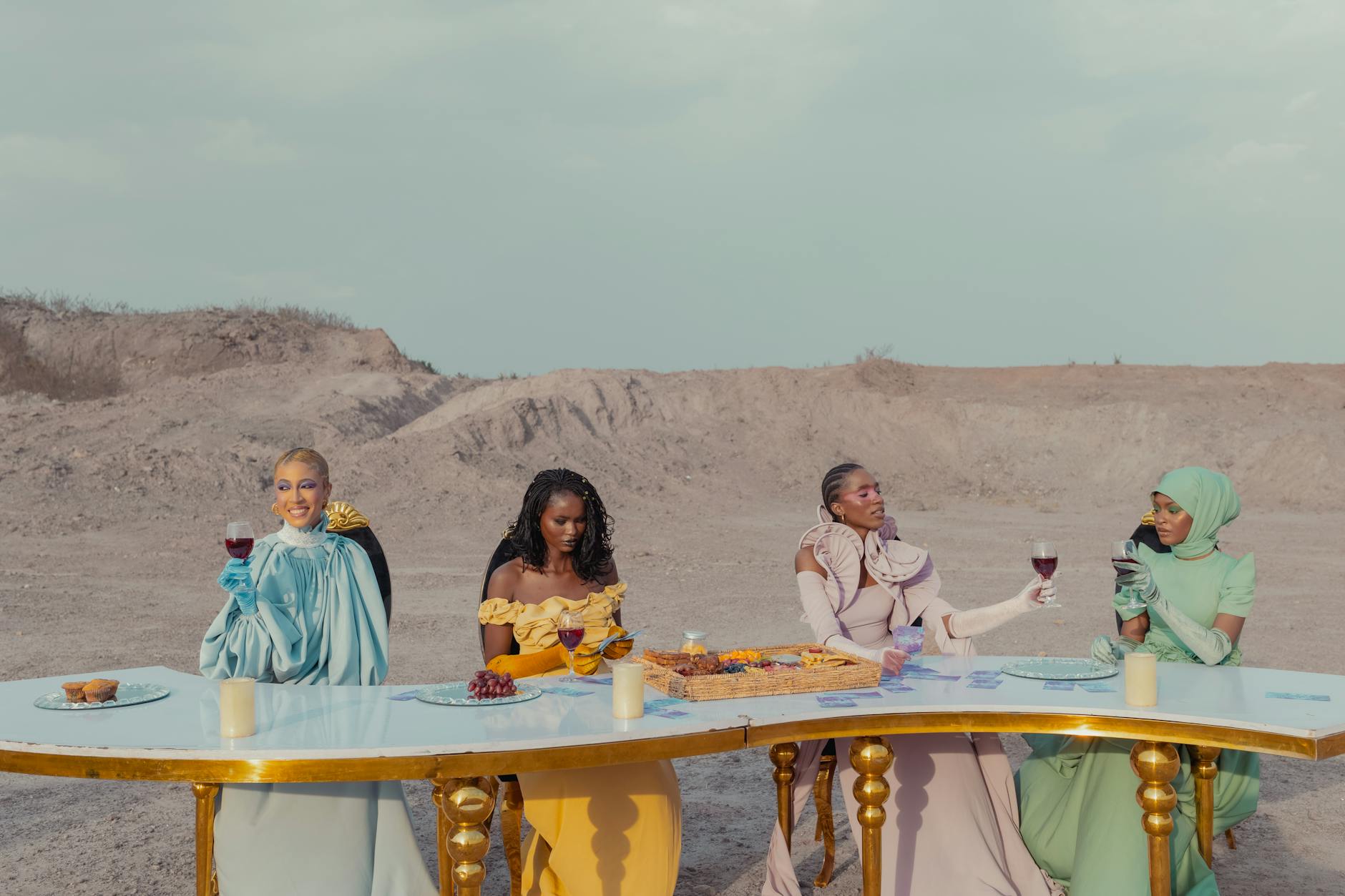
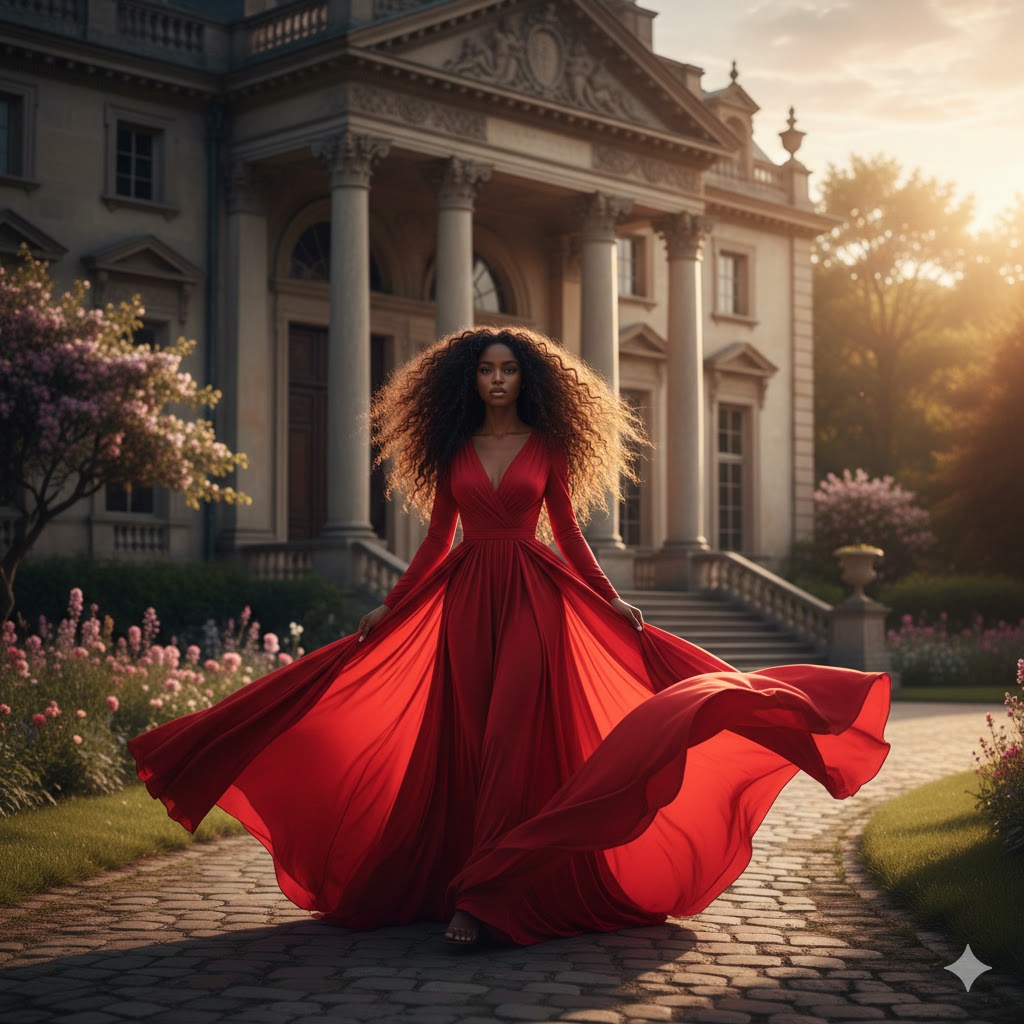
Shades of Power: Celebrating the Beauty of Brown Skin. #Shadesofglory

This photograph is the property of its respective owner.

Brown skin has long been a symbol of resilience, beauty, and cultural heritage. Across the African diaspora, it embodies a spectrum of history, identity, and pride, reflecting both ancestral lineage and lived experiences. From deep mahogany to honey tones, brown skin carries with it a narrative of survival, creativity, and empowerment. Its beauty is not merely aesthetic; it is political, cultural, and psychological—a declaration of self-worth in a world that has often devalued it.

The Science and Psychology of Melanin

Melanin, the pigment responsible for brown skin, offers more than visual appeal. Scientifically, it provides protection against ultraviolet rays, reducing risks of certain skin cancers while preserving youthful skin. Psychologically, research shows that people with higher melanin levels may experience a unique sense of identity formation, pride, and cultural belonging (Hunter, 2007). Yet, this very characteristic has been historically targeted through colorism, slavery, and systemic oppression, positioning brown skin at the intersection of beauty and societal prejudice.

Historical Reverence and Cultural Representation

Globally, brown skin has inspired admiration and reverence. In ancient African civilizations such as Nubia and Mali, darker skin was celebrated as a symbol of divine ancestry and nobility (Diop, 1974). Today, figures like Naomi Campbell, Adut Akech, and Morris Chestnut exemplify the global recognition of melanated beauty, blending talent, poise, and representation. Across art, literature, and media, brown skin has become both a canvas and a statement—asserting the legitimacy of Black excellence and aesthetic power.

Shades and Diversity

Brown skin is not monolithic. The spectrum includes deep espresso, warm caramel, golden bronze, and light almond tones. Each shade reflects complex genetic histories, from Sub-Saharan Africa to the Caribbean and Latin America. This diversity is a reminder of the richness within Black communities and challenges narrow standards of beauty that have historically marginalized darker tones. Embracing these variations strengthens cultural identity and encourages a more inclusive understanding of beauty.

The Biblical Perspective

Scripturally, beauty is celebrated in the context of God’s creation. The Bible emphasizes the intrinsic value of human beings, often referencing the beauty of skin and complexion as part of divine craftsmanship (Song of Solomon 1:5 KJV: “I am black, but comely, O ye daughters of Jerusalem”). Such affirmations counter societal devaluation, reminding communities of the inherent dignity and power embedded in melanin-rich skin.

Colorism and Societal Challenges

Despite its beauty, brown skin faces societal bias and systemic discrimination. Colorism, rooted in colonialism and slavery, perpetuates hierarchies within communities and cultures. Darker shades are often unjustly associated with negative stereotypes, affecting self-esteem, opportunities, and social perception. Addressing these challenges requires education, representation, and the celebration of all shades as inherently valuable.

Empowerment Through Representation

Representation matters. The rise of Black influencers, entrepreneurs, and creatives has shifted narratives around brown skin. By showcasing the diversity of melanated beauty in fashion, media, and leadership, these figures challenge entrenched biases and inspire younger generations. They redefine beauty not as a narrow, Eurocentric standard but as an expansive, inclusive celebration of identity.

The Spectrum of Power: Celebrating the Shades of Brown Skin

Brown skin comes in a stunning variety of hues, each with its own story, beauty, and cultural significance. By exploring these shades, we celebrate both the science of melanin and the lived experiences of those who wear it with pride.

1. Deep Espresso
Deep espresso skin embodies richness and resilience. It often carries historical significance, reflecting ancestry rooted in Sub-Saharan Africa.
Notable Figures: Lupita Nyong’o, Viola Davis, Idris Elba
Why it’s powerful: Deep tones challenge societal biases, offering a bold declaration of beauty that defies Eurocentric standards.

2. Rich Chocolate
Warm and velvety, chocolate tones are both elegant and versatile, often celebrated in media and fashion.
Notable Figures: Naomi Campbell, Morris Chestnut, Gabrielle Union
Why it’s powerful: These shades are often associated with sophistication and strength, embodying a balance of natural beauty and global recognition.

3. Caramel Glow
Caramel skin carries a golden warmth that radiates vibrancy and energy. Its luminous undertones are often highlighted in photography and fashion.
Notable Figures: Beyoncé, Zendaya, Kerry Washington
Why it’s powerful: Caramel skin bridges communities across the diaspora, symbolizing adaptability, visibility, and modern beauty.

4. Honey Bronze
Honey bronze represents a lighter, sun-kissed hue that glows with health and vitality. It reflects diversity within Black communities and mixed heritage.
Notable Figures: Rihanna, Janelle Monáe, Adut Akech
Why it’s powerful: This shade exemplifies versatility and creativity, highlighting the wide spectrum of melanin-rich skin tones.

5. Almond Radiance
Soft almond tones are subtle yet captivating, often perceived as delicate but deeply rooted in cultural pride.
Notable Figures: Tracee Ellis Ross, Lupita Tsimba, Issa Rae
Why it’s powerful: Almond skin celebrates understated beauty and reminds us that every tone deserves recognition and admiration.

Why Celebrating All Shades Matters

Every shade of brown tells a story of ancestry, survival, and empowerment. In a world that often favors lighter skin, showcasing the full spectrum combats colorism and affirms self-worth. It reminds communities that melanin is a crown, not a limitation.

Science and Spirituality

Melanin provides physical protection, while brown skin embodies spiritual and cultural significance. Biblically, dark and brown skin has been celebrated as comely and honorable (Song of Solomon 1:5 KJV). By embracing these hues, people of the diaspora reclaim pride, confidence, and legacy.

Conclusion

“Shades of Power” is more than a celebration—it is a reclamation. Brown skin embodies resilience, legacy, and excellence. Its diverse hues reflect history, science, and culture, affirming that beauty transcends societal limitations. By embracing, representing, and celebrating the richness of brown skin, communities empower themselves and reshape the world’s understanding of aesthetic, cultural, and spiritual worth. From deep espresso to almond radiance, brown skin is more than a shade—it’s a statement. Each tone is a testament to heritage, resilience, and beauty. Celebrating the spectrum empowers individuals, strengthens communities, and reshapes the global narrative about Black excellence and aesthetics..


References

  • Diop, C. A. (1974). The African Origin of Civilization: Myth or Reality. Chicago: Lawrence Hill Books.
  • Hunter, M. (2007). The Persistent Problem of Colorism: Skin Tone, Status, and Inequality. Sociology Compass, 1(1), 237–254.
  • The Holy Bible, King James Version. (1611). Song of Solomon 1:5.

The Black Woman: The Force of Nature

The Black woman is a force of nature—powerful, unbreakable, and extraordinary. She carries a presence that cannot be imitated or minimized. Her soul holds a depth that comes from surviving centuries of oppression while still producing brilliance, culture, and generational resilience. The Most High has gifted her with a spirit that stands tall in storms and shines even in darkness. She is not merely strong—she is strength itself.

Her beauty is unparalleled. From the richness of her melanin to the depth of her features, the Black woman embodies divine artistry. Her skin, kissed by the sun, radiates warmth and royalty. Her hair, in all its textures and forms, is a crown of glory that speaks of identity, culture, and heritage. She is beauty beyond measure—beauty that the world often tries to imitate but can never fully replicate.

The Black woman’s heart is expansive. She loves deeply, often beyond her own capacity, because she understands sacrifice. She loves with intention, commitment, and soul. She shows up for others even when her own heart is weary. Her compassion is not weakness—it is spiritual strength that transforms families, communities, and nations.

Black women are the backbone of their households. They nurture, teach, build, discipline, and uplift. Many have raised generations with limited resources yet produced kings, queens, scholars, and leaders. Their motherhood is a sacred duty, executed with grace and power. Proverbs 31:25 describes her perfectly: “Strength and honour are her clothing; and she shall rejoice in time to come.”

The Black woman carries a unique spiritual intuition. She discerns danger, reads emotion, and senses the unseen. Her prayers cover entire families. Her intercession has saved countless lives. She is a warrior in the spiritual realm, fighting battles that others may never know about.

Her strength is unmatched. Not only does she endure trials, but she transforms them into triumph. History proves this—from surviving slavery, segregation, and systemic injustice, to rising as leaders, educators, innovators, and cultural icons. The Black woman embodies resilience that cannot be taught; it is inherited, divine, and ancestral.

Black women hold up Black men with loyalty, encouragement, and unwavering belief. Even when society tears Black men down, the Black woman often stands beside them as a pillar of support. She speaks life into her husband, her father, her sons, and her brothers. She sees their greatness even when the world tries to blind them.

For Black sons, she is the first love, the first teacher, the first safe place. She nurtures them into men, instilling courage and identity. For Black daughters, she is the blueprint. She models strength, elegance, intelligence, and survival. Her daughters learn womanhood by watching her endure with dignity.

Her intellect is sharp and expansive. Black women are scholars, scientists, theologians, mothers, CEOs, creators, and innovators. Despite being doubted and underestimated, they continue to excel in every field imaginable. They shatter ceilings that were never designed to include them.

The Black woman’s creativity breathes life into culture. Music, fashion, language, dance, and art—Black women have shaped global culture with little credit and even less recognition. Their ingenuity inspires the world, even when the world refuses to honor its source.

Her emotional strength is both beautiful and misunderstood. She feels deeply yet carries herself with composure. Her pain becomes poetry. Her wounds become wisdom. Her journey becomes testimony. Through heartbreak, she rebuilds; through betrayal, she forgives; through loss, she rises again.

Black women are natural leaders. Their presence commands respect not because they demand it, but because they embody it. They lead with compassion, strategy, intuition, and power. Their leadership has sustained movements, communities, and families throughout generations.

She carries cultural memory. Within her is the story of her ancestors—their survival, their songs, their traditions. She subconsciously preserves history through her cooking, her storytelling, her faith, and her rituals. She is a living heritage.

She is a healer. From herbal knowledge to emotional nurturing, the Black woman restores what is broken. Her hands comfort, her words soothe, and her presence brings peace. Her resilience heals generations that come after her.

The Black woman is loyal. She stands when others walk away. She believes when others doubt. She gives when others take. Her loyalty is not naive—it is rooted in her spiritual calling to uplift those she loves.

She is fierce when necessary. Her fire is sacred. She defends her children, her family, her purpose, and her identity with unwavering determination. She does not fear challenges because she has faced greater battles and conquered them.

Her faith is powerful. Through every trial, she calls on the Most High. Her relationship with God sustains her in ways the world cannot understand. She is a woman of prayer, a woman of scripture, a woman of faith. As Psalm 46:5 affirms, “God is in the midst of her; she shall not be moved.”

Her presence elevates spaces. When a Black woman walks into a room, the atmosphere shifts. Her confidence, her elegance, her energy—these things are felt, not just seen. She is a force, a storm, a sunrise.

The Black woman is worthy of honor. Worthy of rest. Worthy of celebration. Worthy of love. Her contribution to the world is immeasurable and irreplaceable. She is the heartbeat of her community, the anchor of her family, and the embodiment of God’s creativity.

The Black woman is a force of nature—powerful, breathtaking, essential, and divine. The world is better because she exists.


References

  • Proverbs 31:25 (KJV)
  • Psalm 46:5 (KJV)
  • Collins, P. H. (2000). Black Feminist Thought.
  • hooks, bell. (1981). Ain’t I a Woman: Black Women and Feminism.
  • Martin, D. (2017). Black Women in the United States: Progress and Pitfalls.

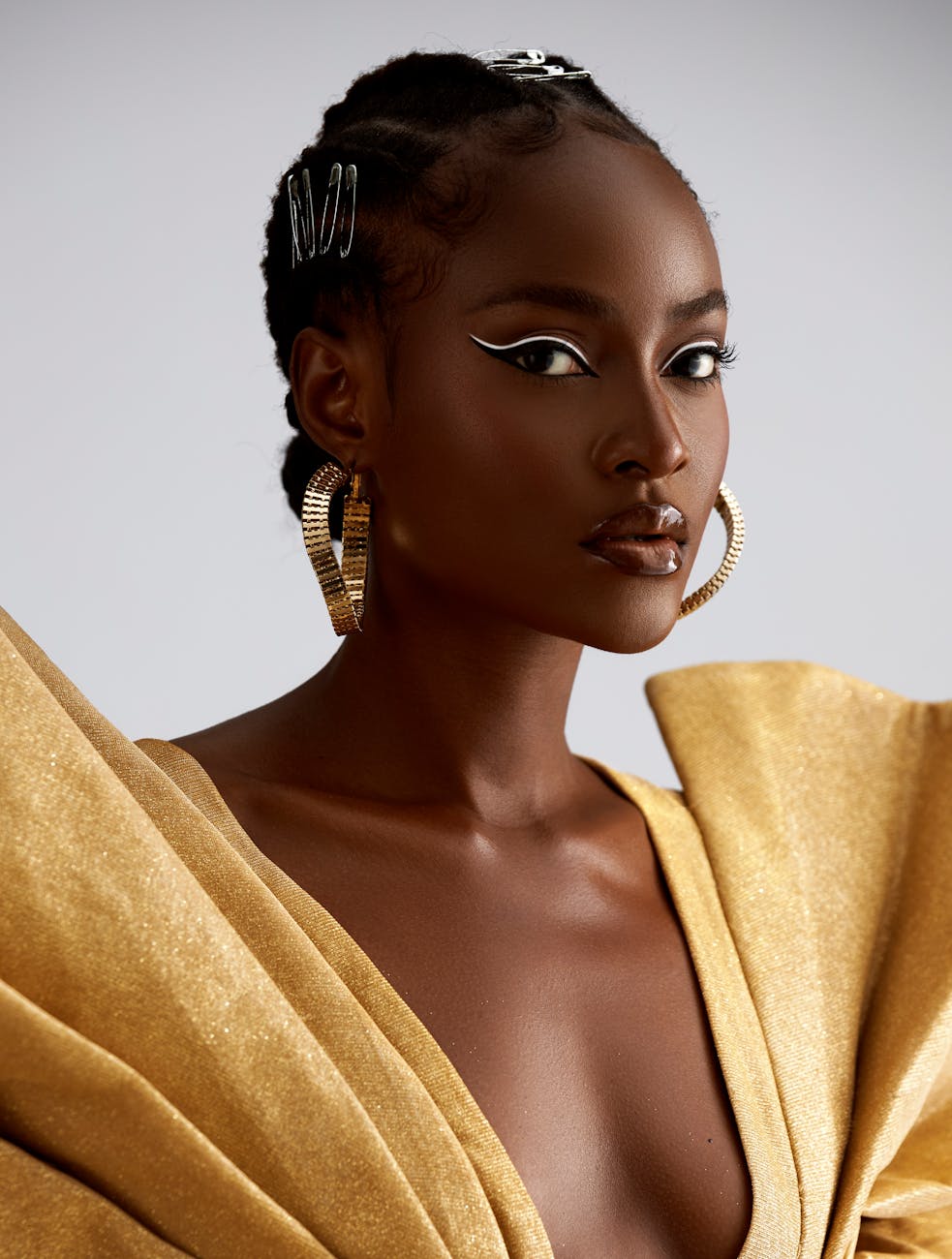
Redefining Glam: How Brown Women Are Changing the Beauty Narrative.

Photo by Seun Oderinde on Pexels.com

The concept of glamour has long been narrowly defined by Eurocentric standards of beauty, often privileging lighter skin tones, specific facial features, and Western fashion ideals. However, brown women worldwide are redefining what it means to be glamorous, using their presence, style, and cultural pride to challenge outdated norms and celebrate a more inclusive, authentic vision of beauty.

Challenging Traditional Beauty Standards

Historically, mainstream media has marginalized brown women, either underrepresenting them or promoting lighter skin tones as the aspirational ideal. This limited portrayal perpetuated internalized colorism and constrained self-perception. Today, brown women are claiming visibility, showcasing the richness and diversity of their features—from deep mocha to light caramel skin, from curly and coily hair textures to almond-shaped eyes—and proving that glamour transcends conventional norms (Hunter, 2007).

Influencers Leading the Change

Celebrities, models, and entrepreneurs are central to this narrative shift. Lupita Nyong’o, Tracee Ellis Ross, Issa Rae, and Adut Akech have embraced their natural features, representing a spectrum of brown skin tones and textures in mainstream media. Their influence extends beyond aesthetics; it is cultural, social, and psychological. By publicly celebrating heritage and authenticity, they inspire millions of brown women to embrace their own glam identity.

Redefining Glam: Celebrating Brown Women in Beauty

1. Lupita Nyong’o – Elegance Through Authenticity

  • Signature Features: Dark melanin-rich skin, natural hair, radiant glow.
  • Impact: Redefines glamour by embracing African heritage and natural beauty on global red carpets.
  • Visual Idea: Photo collage of red carpet looks and editorial shoots highlighting her skin and styling.

2. Tracee Ellis Ross – Bold Hair and Fashion Statements

  • Signature Features: Voluminous natural curls, expressive fashion choices.
  • Impact: Celebrates natural hair as chic and sophisticated, influencing beauty and hair industry standards.
  • Visual Idea: Showcase iconic hairstyles paired with bold fashion ensembles.

3. Issa Rae – Empowering Everyday Glam

  • Signature Features: Caramel skin tone, versatile hairstyles, confident style.
  • Impact: Represents approachable, modern glamour that blends authenticity with elegance.
  • Visual Idea: Screenshots from media appearances and Instagram fashion posts demonstrating everyday glam.

4. Adut Akech – High Fashion Meets Cultural Pride

  • Signature Features: Deep brown skin, elegant runway presence.
  • Impact: Brings diversity to international modeling, redefining high-fashion glamour with cultural pride.
  • Visual Idea: Runway shots highlighting her poise, skin tone, and culturally inspired styling.

5. Fenty Beauty – Inclusive Glam for Every Shade

  • Product Focus: Foundations and makeup lines covering the full spectrum of brown skin tones.
  • Impact: Makes glamour accessible and inclusive, validating beauty across melanin-rich shades.
  • Visual Idea: Swatches of Fenty Beauty foundation on diverse skin tones with quotes from influencers.

Redefining Glam Through Fashion and Beauty

Fashion and beauty industries are gradually adapting to reflect this shift. Inclusive makeup lines like Fenty Beauty, culturally relevant hairstyling, and editorial representation highlight the versatility and elegance of brown women. Glamour is no longer defined by assimilation to Eurocentric ideals; it is measured by confidence, authenticity, and the ability to celebrate one’s heritage visually and stylistically.

Psychological Impact of Representation

Representation matters deeply. When brown women see themselves celebrated in media and fashion, it fosters self-esteem, pride, and empowerment (Russell, Wilson, & Hall, 1992). Glamour becomes not only a visual statement but a psychological affirmation: brown skin is beautiful, strong, and worthy of admiration. This shift also challenges societal biases, encouraging audiences of all backgrounds to broaden their perception of beauty.

Cultural Pride as Glamour

Redefining glam is inherently tied to cultural pride. Hairstyles, clothing, and aesthetics rooted in African, Caribbean, and diasporic traditions are now celebrated as chic and sophisticated. This integration of heritage and style communicates authenticity, honors ancestry, and asserts that brown women’s beauty is multifaceted, powerful, and global.

Conclusion

Brown women are transforming glamour from a narrow, exclusionary concept into an inclusive, empowering celebration of identity, heritage, and self-expression. By embracing their natural features, advocating for representation, and integrating cultural pride into fashion and beauty, they are not only redefining what it means to be glamorous—they are reshaping the global beauty narrative. Glamour is no longer confined to conformity; it is rooted in confidence, authenticity, and the brilliance of brown skin.


References

  • Hunter, M. (2007). The Persistent Problem of Colorism: Skin Tone, Status, and Inequality. Sociology Compass, 1(1), 237–254.
  • Russell, K., Wilson, M., & Hall, R. E. (1992). The Color Complex: The Politics of Skin Color in a New Millennium. Anchor Books.

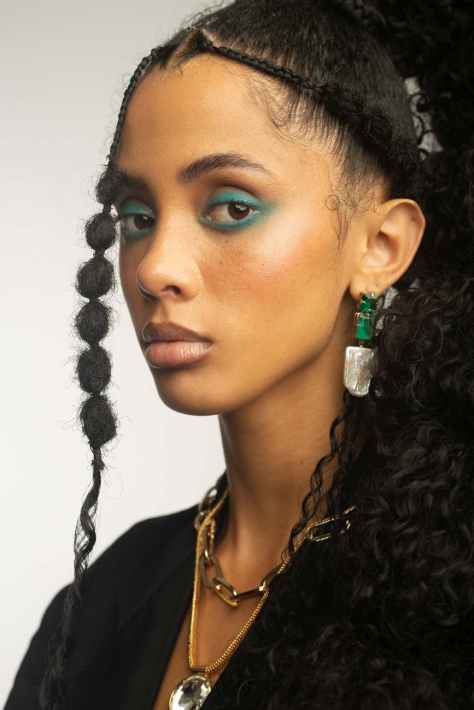
Heritage in Every Hue: Embracing the Legacy of Brown Skin.

Photo by magapls . on Pexels.com

Brown skin carries with it a rich history, cultural significance, and an enduring legacy of resilience. For centuries, women of color have navigated societies that devalue their features and privilege lighter complexions, yet they have also cultivated beauty traditions, artistry, and cultural pride that transcend these limitations. Embracing brown skin is not just an aesthetic choice—it is an act of honoring ancestry, reclaiming identity, and asserting worth in the face of systemic colorism.

The Historical Context of Brown Skin

Colorism, a byproduct of colonialism and slavery, created hierarchies that valued lighter skin while marginalizing darker complexions (Hunter, 2007). These social constructs infiltrated media, employment, and even interpersonal relationships, perpetuating the notion that beauty is synonymous with fairness. Despite these historical pressures, women of brown skin have contributed significantly to art, literature, science, and culture, asserting their presence and redefining societal standards of beauty.

Cultural Pride and Beauty Traditions

Across Africa, the Caribbean, South Asia, and Latin America, brown skin has been celebrated through rituals, adornments, and fashion that reflect heritage and creativity. From intricate hairstyles to vibrant fabrics, jewelry, and skincare practices, these traditions affirm identity and beauty in culturally meaningful ways. Such practices highlight the connection between aesthetics and ancestry, showing that embracing brown skin is simultaneously an act of self-love and cultural preservation.

Representation in Media and Fashion

Modern media plays a critical role in shaping perceptions of beauty. Historically, mainstream platforms prioritized Eurocentric features, marginalizing brown skin in advertising, television, and film. However, today, more Brown women are taking control of narratives through modeling, acting, and digital platforms, challenging stereotypes and increasing representation. Public figures like Lupita Nyong’o, Adut Akech, and Tracee Ellis Ross exemplify the beauty, versatility, and influence of brown skin, inspiring younger generations to embrace their own tones.

The Science of Melanin and Health

Beyond cultural and aesthetic significance, brown skin has biological advantages. Higher melanin content provides natural protection against ultraviolet (UV) radiation, reduces the risk of skin cancer, and contributes to skin elasticity, often resulting in slower aging (Brenner & Hearing, 2008). Understanding the science of melanin not only reinforces appreciation for brown skin but also empowers individuals to care for it in informed and intentional ways.

12 Tips for Brown Girls to Celebrate and Care for Their Skin

  1. Embrace Your Natural Tone – Wear your skin proudly without trying to lighten it. Celebrate the unique shades that make you who you are.
  2. Practice Daily Skincare – Use moisturizers, sunscreens, and gentle cleansers suited for melanin-rich skin to maintain health and glow.
  3. Highlight, Don’t Hide – Use makeup or fashion to enhance your natural features rather than masking your complexion.
  4. Wear Color That Compliments Your Hue – Jewel tones, earth tones, and vibrant colors often enhance brown skin beautifully.
  5. Protect Against UV Damage – Even though melanin provides some protection, always apply sunscreen to prevent hyperpigmentation and premature aging.
  6. Celebrate Hair and Texture – Embrace natural hairstyles, braids, curls, or twists as expressions of cultural pride.
  7. Consume Affirming Media – Follow influencers, celebrities, and content creators who celebrate brown skin and diversity in beauty.
  8. Engage in Skin-Positive Communities – Join groups online or offline that promote self-love and reject colorist standards.
  9. Educate Yourself on Skin Health – Understand the biology of melanin and how to care for it; knowledge empowers self-confidence.
  10. Reject Colorist Products and Messages – Avoid products or media that suggest lighter skin is superior; affirm your natural beauty instead.
  11. Affirm Your Worth Daily – Use positive self-talk and reminders such as: “I am beautiful, I am resilient, I am enough.”
  12. Turn Compliments Into Inspiration – Celebrate others’ beauty while embracing your own; upliftment reinforces self-esteem and community pride.

Psychological Impact of Affirming Brown Skin

Affirming one’s brown skin is crucial for mental health and self-esteem. Social comparison theory explains how constant exposure to lighter-skinned ideals can negatively impact confidence (Festinger, 1954). By celebrating brown skin, women counteract these influences, develop resilience, and cultivate positive identity formation. Affirmation can take many forms, from consuming media that celebrates melanin-rich beauty to participating in online movements like #MelaninMagic or #BrownSkinPoppin.

Reclaiming Beauty as Empowerment

Embracing brown skin is also a form of resistance against colorism and systemic oppression. Each act of self-love—wearing natural hair proudly, rejecting skin-lightening products, or sharing authentic images online—challenges dominant narratives and empowers others. Brown skin becomes not just a physical attribute, but a symbol of cultural pride, historical resilience, and empowerment for future generations.

Conclusion

Heritage in every hue is a celebration of history, identity, and resilience. Brown skin embodies centuries of culture, artistry, and strength, and embracing it affirms both personal and collective legacy. By honoring the beauty of brown skin, women reclaim narratives, challenge colorism, and inspire confidence in themselves and others. In doing so, they ensure that the legacy of brown skin is recognized, celebrated, and preserved for generations to come.


References

  • Brenner, M., & Hearing, V. (2008). The protective role of melanin against UV radiation. Photochemistry and Photobiology, 84(3), 539–549.
  • Festinger, L. (1954). A theory of social comparison processes. Human Relations, 7(2), 117–140.
  • Hunter, M. (2007). The persistent problem of colorism: Skin tone, status, and inequality. Sociology Compass, 1(1), 237–254.

Building a Personal Brand as a Brown Woman.

Photo by Anna Nekrashevich on Pexels.com

In the contemporary landscape, personal branding has emerged as a critical strategy for professional growth, social influence, and cultural representation. For Brown and Black women, the stakes are even higher. Building a personal brand goes beyond self-promotion; it is an act of reclaiming narrative authority in a society that has often misrepresented or silenced their voices. Personal branding, therefore, becomes a tool of visibility, resilience, and empowerment. This essay examines the personal branding strategies of two iconic Black women: Oprah Winfrey and Issa Rae. By comparing their approaches across generations and platforms, this analysis highlights the evolving dynamics of branding, authenticity, and representation.

The Power of Self-Definition

Personal branding begins with self-definition—the process of clarifying identity, values, and purpose. For Brown women, this is particularly important given the intersectional challenges of racism, sexism, and colorism. Building a brand requires intentional resistance against stereotypes that often confine women of color to narrow roles. Instead, personal branding allows them to craft narratives of multidimensionality: as leaders, creatives, entrepreneurs, and change-makers. The cases of Oprah Winfrey and Issa Rae reveal that the ability to define oneself, rather than be defined by others, is the foundation of lasting influence.

Oprah Winfrey: Authenticity as a Brand Pillar

Oprah Winfrey represents the archetype of authentic branding. Rising from poverty in rural Mississippi to becoming a billionaire media mogul, her story embodies resilience and transformation. Throughout her career, Oprah cultivated a brand rooted in vulnerability, empathy, and empowerment. By openly discussing her struggles with trauma, weight, and self-worth, she established a deep emotional connection with audiences (Konieczka, 2019). This authenticity became the cornerstone of her influence, allowing her to transcend cultural barriers and emerge as a global figure of inspiration.

Expansion into Multimedia Empire

Oprah’s brand expanded beyond her iconic talk show into publishing (O, The Oprah Magazine), television (OWN: The Oprah Winfrey Network), philanthropy (The Oprah Winfrey Leadership Academy for Girls), and digital platforms. Each extension of her brand reinforced her identity as a figure of empowerment, wisdom, and compassion. Importantly, Oprah leveraged her personal brand to amplify others, launching the careers of authors like Iyanla Vanzant and Dr. Phil. Her model demonstrates that for Brown women, personal branding can function as a multiplier effect—empowering not only the individual but also their community.

Issa Rae: The Digital Blueprint

In contrast, Issa Rae represents the millennial and digital-native approach to personal branding. Her breakout project, The Misadventures of Awkward Black Girl (2011), began as a YouTube web series. It disrupted mainstream media portrayals of Black women by showcasing vulnerability, humor, and awkwardness—traits often denied to women of color (Everett, 2019). Rae’s use of digital platforms exemplifies how social media democratizes branding, allowing creators to bypass traditional gatekeepers and directly connect with audiences. Her success illustrates how authenticity, relatability, and representation can generate strong brand loyalty in the digital age.

Transition to Mainstream Media

Issa Rae’s leap from YouTube to HBO with Insecure marked a significant evolution in her brand. While staying true to her digital roots, Rae successfully navigated into mainstream entertainment without losing her cultural authenticity. Her brand emphasizes representation, often centering the complexities of Black womanhood, relationships, and identity. Unlike Oprah’s brand, which often appeals to a universal ethos of resilience and inspiration, Rae’s brand thrives on specificity—portraying stories that resonate with a generation of Black women navigating contemporary realities (Harris, 2020).

Community Building Through Branding

Both Oprah and Issa Rae exemplify how personal branding can extend beyond individual success to community impact. Oprah built platforms to amplify other voices through her talk show and publishing ventures. Similarly, Issa Rae has leveraged her brand to uplift Black creatives by launching Raedio, a music platform, and collaborating with production teams to ensure diversity in Hollywood. This shows that personal branding, for Brown women, often becomes a form of cultural activism—challenging systemic exclusion while creating opportunities for others.

Generational Shifts in Branding Strategies

A generational comparison reveals key shifts in branding strategies. Oprah’s rise relied heavily on broadcast television, a centralized medium that demanded broad appeal. Her brand was universal, designed to resonate across diverse demographics. In contrast, Issa Rae’s rise leveraged decentralized, digital platforms where niche communities thrive. Her brand thrives on specificity and cultural authenticity rather than universal appeal. This reflects broader societal changes: where Oprah had to code-switch for mainstream acceptance, Rae capitalized on digital spaces that rewarded cultural specificity.

The Role of Authenticity in Both Journeys

Despite generational differences, authenticity remains the common denominator in both women’s brands. Oprah’s openness about her struggles with poverty and trauma humanized her brand. Rae’s willingness to embrace awkwardness and vulnerability challenged stereotypes about Black women. Authenticity, then, emerges as the most powerful branding tool for Brown women navigating industries shaped by racialized and gendered perceptions. Authenticity transforms personal branding from a mere marketing strategy into a form of empowerment.

Comparative Overview

CategoryOprah WinfreyIssa Rae
Era & Platform1980s–2000s, Broadcast TV & Print Media2010s–present, Digital & Streaming Platforms
Brand FoundationAuthenticity, Empathy, EmpowermentAuthenticity, Humor, Cultural Specificity
Signature StyleTalk show host, media mogul, philanthropistWriter, producer, actress, digital creative
Expansion StrategyMagazine, OWN Network, Book Club, PhilanthropyYouTube, HBO series, Raedio (music platform)
Audience ReachGlobal, universal appeal across demographicsMillennials, Gen Z, niche cultural communities
Community ImpactLaunched careers of authors, created school for girlsCreated opportunities for Black creatives in Hollywood
ChallengesNavigating racism & sexism in mainstream TVBreaking into Hollywood as a digital-native Black woman
Legacy/InfluenceGlobal cultural icon, reshaped daytime televisionModel for digital-first, culturally authentic branding

Personal Branding as Resistance

For Brown women, branding is inherently political. In societies where media has historically perpetuated negative or narrow stereotypes, self-branding becomes an act of resistance. Oprah redefined the role of a Black woman in daytime television by centering empathy and empowerment. Issa Rae redefined portrayals of young Black women in scripted television by normalizing their complexities. Both women demonstrate that personal branding is not only about visibility but about reshaping cultural narratives and resisting erasure.

Implications for Future Generations

The branding journeys of Oprah and Issa Rae offer valuable lessons for future generations of Brown women. Oprah illustrates the power of authenticity, resilience, and legacy-building through mainstream platforms. Issa Rae illustrates the importance of digital entrepreneurship, cultural specificity, and grassroots community building. Together, their stories reveal that personal branding is not monolithic but adaptable—shaped by time, technology, and cultural context. Future Brown women leaders can draw from both models to navigate new industries and claim their space with confidence.

Conclusion

Building a personal brand as a Brown woman is an act of empowerment, resistance, and cultural affirmation. Oprah Winfrey and Issa Rae, though separated by generation and platform, both demonstrate the transformative potential of personal branding when rooted in authenticity and intentionality. Oprah pioneered a universal, broadcast-centered brand that reshaped global narratives about Black women. Issa Rae built a digital-first, culturally specific brand that amplified representation in new media landscapes. Together, they highlight that personal branding is not merely about individual success but about reshaping collective identity, amplifying marginalized voices, and leaving a legacy for generations to come.


References

  • Everett, A. (2019). Digital diaspora: Race, gender and space in digital media culture. SUNY Press.
  • Harris, T. (2020). Issa Rae and the power of representation in media branding. Journal of Black Media Studies, 7(2), 145–160.
  • Konieczka, S. (2019). Oprah Winfrey as a cultural icon: Branding authenticity and empowerment. Journal of Popular Culture, 52(1), 1–19.