Category Archives: black models

Color-Coated Casting in the Entertainment and Fashion Industries.

Color-coated casting—commonly understood as colorism within media industries—remains one of the most insidious and underexamined forms of discrimination affecting Black entertainers. It operates not through outright exclusion alone, but through selective inclusion, where lighter skin is consistently privileged over darker skin within the same racial group. This hierarchy shapes who is seen, who is celebrated, and ultimately, who is remembered.

The origins of colorism in entertainment can be traced to the historical aftermath of slavery and colonialism, where proximity to whiteness was associated with privilege, safety, and access. During early American theater and film, Black representation was either absent or distorted through caricature. As Black actors slowly entered the industry, lighter-skinned individuals were often chosen because they aligned more closely with Eurocentric ideals of beauty and acceptability.

By the Golden Age of Hollywood, these biases had become institutionalized. Studios, largely controlled by white executives, curated an image of Blackness that was palatable to white audiences. This meant casting individuals who visually softened racial difference—lighter skin, looser curls, and more “ambiguous” features—while excluding darker-skinned actors from leading roles.

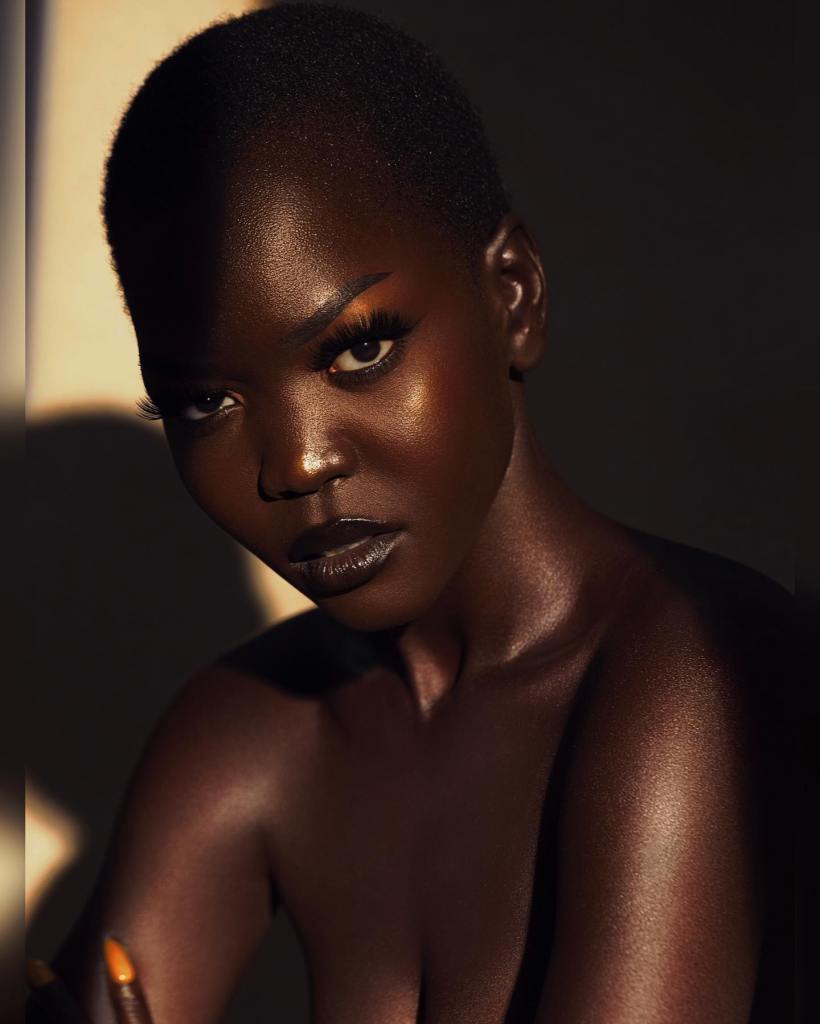
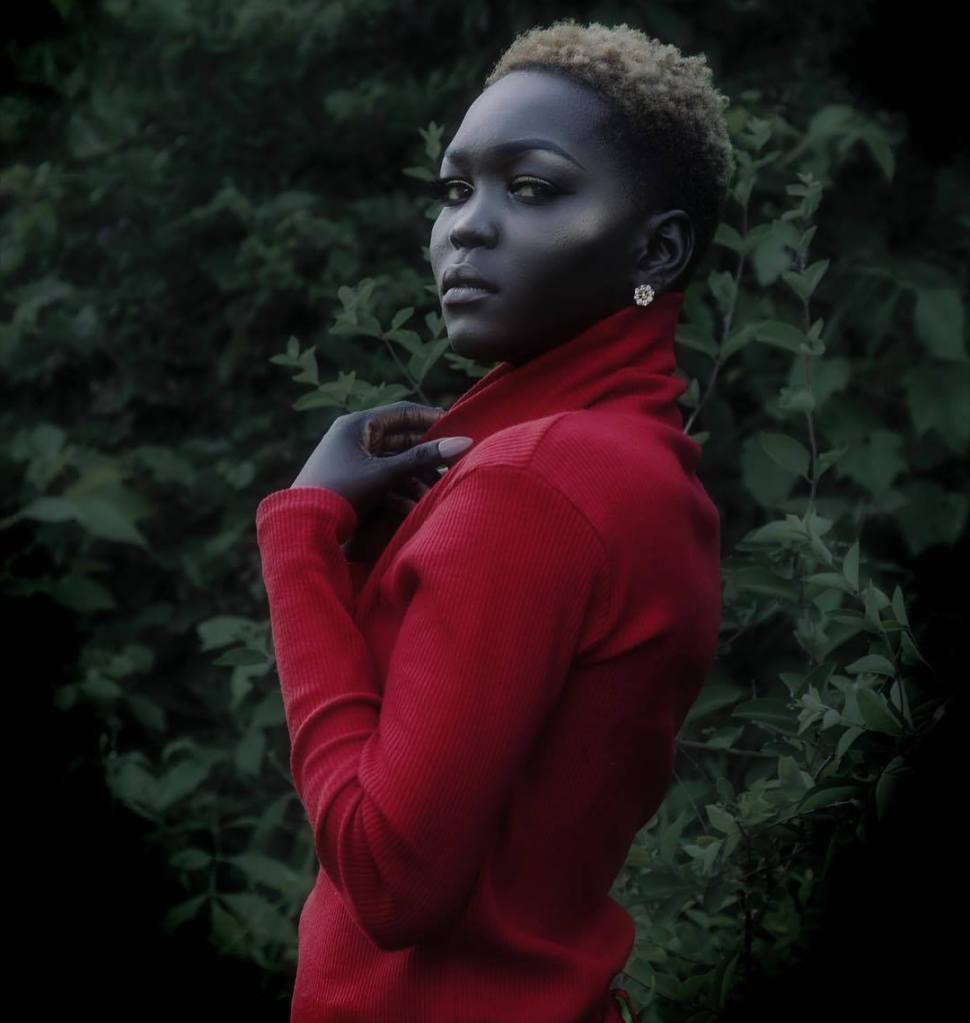
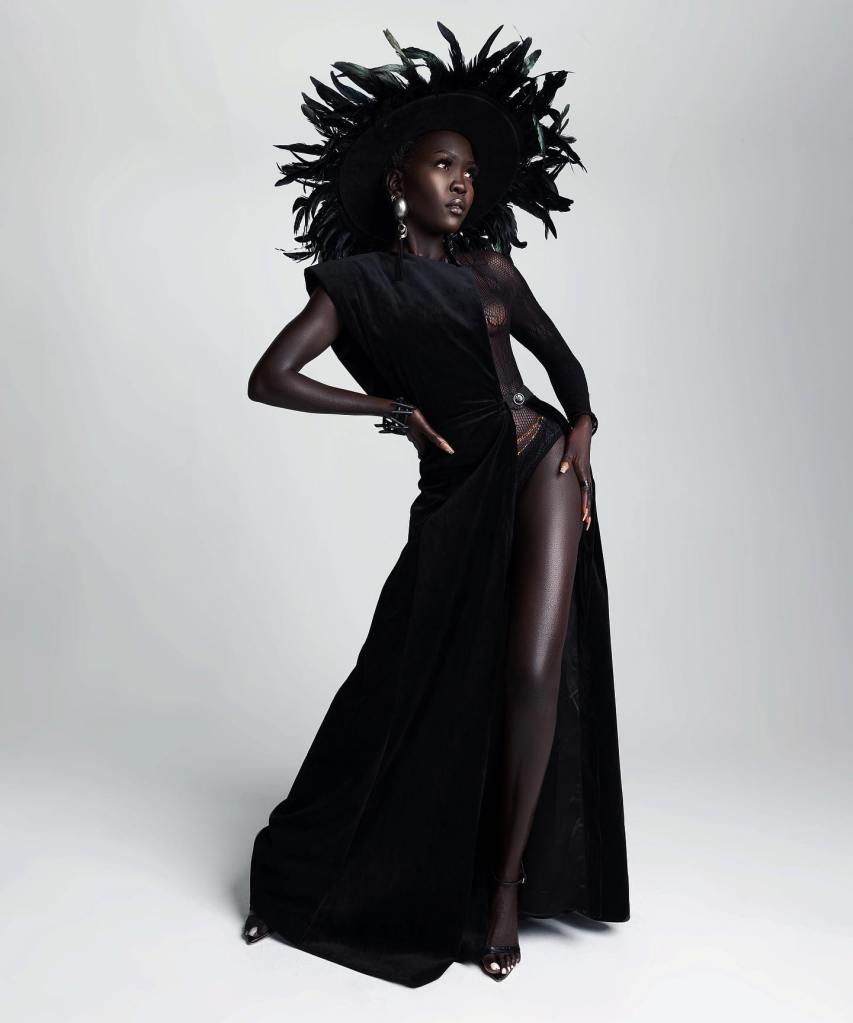
Color-coated casting has had a profound impact on the fashion industry, where models of darker skin tones have historically been underrepresented or relegated to niche categories such as “ethnic” or “urban.” Runways, magazine covers, and high-profile campaigns have favored lighter-skinned or biracial models, who are perceived as more commercially viable or “relatable” to global audiences. This preference not only limits opportunities for darker-skinned models but also reinforces narrow beauty standards that equate desirability with proximity to whiteness. Even when darker-skinned models are featured, they are often styled, photographed, or digitally lightened to align with these Eurocentric aesthetics, sending the implicit message that darker tones are less acceptable. Iconic Black models such as Naomi Campbell and Alek Wek have challenged these norms, yet the industry continues to grapple with systemic bias, showing that talent alone is not enough to overcome deeply entrenched colorism. This practice affects not only careers but also the perception of beauty in society at large, shaping cultural ideals and influencing consumer preferences.

The practice persists today under the guise of “marketability.” Industry decision-makers often argue that lighter-skinned actors have broader appeal, particularly in international markets. This economic justification masks a deeper issue: the continued prioritization of whiteness as the universal standard.

The experiences of Lupita Nyong’o powerfully illustrate this reality. Before her rise to global acclaim, she has spoken openly about being told she was “too dark” for television. Even after winning an Academy Award, she encountered a narrow range of roles, many of which were rooted in historical trauma rather than contemporary complexity.

Similarly, Halle Berry, despite becoming the first Black woman to win the Academy Award for Best Actress, has acknowledged the persistent lack of substantial roles for Black women. Her success did not dismantle the system; rather, it exposed how rare such breakthroughs are.

Actresses like Viola Davis have also addressed colorism directly, noting that darker-skinned women must often work twice as hard for half the recognition. Davis has spoken about how her appearance influenced the types of roles she was offered, often being cast in characters defined by struggle rather than desirability.

In contrast, lighter-skinned or racially ambiguous actresses such as Zendaya and Zoë Saldana have frequently been positioned as the “face” of diversity. While their success is valid, it also reflects the industry’s preference for representations of Blackness that align more closely with Eurocentric aesthetics.

Colorism extends beyond film into the fashion industry, where beauty standards are even more rigid. Darker-skinned models have historically been underrepresented on runways, in advertising campaigns, and on magazine covers. When they are included, they are often styled in ways that exoticize rather than normalize their beauty.

There have also been documented cases where the skin tones of Black celebrities, including Beyoncé, were digitally altered in post-production to appear lighter. This practice reinforces harmful messages about which shades of Blackness are considered acceptable or aspirational.

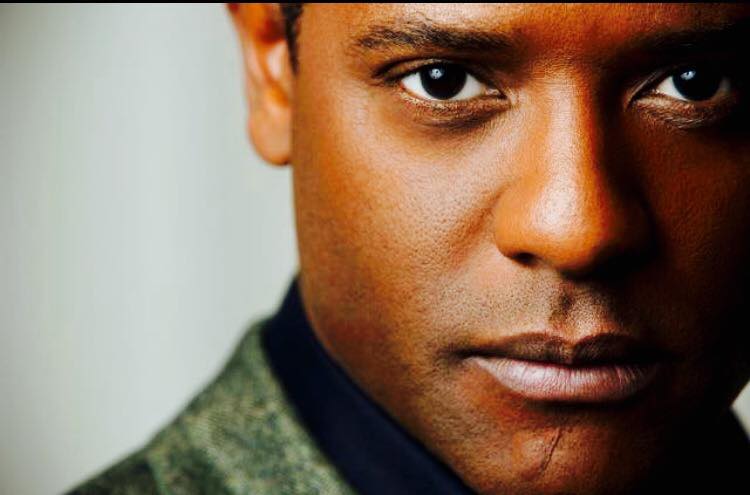
For Black men, colorism manifests differently but remains equally impactful. Darker-skinned male actors are often typecast into roles that emphasize physicality, aggression, or hardship, while lighter-skinned men are more likely to be portrayed as romantic leads or emotionally complex characters.

Actors such as Idris Elba have broken through some of these barriers, yet even his career reflects a pattern where recognition often comes with roles that emphasize strength and intensity rather than vulnerability or softness.

In sports, the effects of colorism are visible in media representation and endorsement deals. Lighter-skinned athletes are frequently marketed as more relatable or marketable, while darker-skinned athletes are reduced to their physical abilities. This dynamic perpetuates stereotypes that extend far beyond the playing field.

The responsibility for color-coated casting lies in multiple layers of power. Studio executives, casting directors, fashion editors, and brand managers all contribute to maintaining these standards. However, these decisions are also influenced by broader societal biases that have been conditioned over centuries.

Media ownership plays a critical role. When decision-making power is concentrated among individuals who benefit from existing hierarchies, there is little incentive to challenge them. This lack of diversity behind the scenes directly impacts the diversity seen on screen and on runways.

Audience conditioning is another factor. Generations of viewers have been exposed to narrow representations of beauty, leading to internalized preferences that reinforce industry practices. This creates a feedback loop where demand and supply continuously validate one another.

Importantly, colorism is not solely imposed from outside the Black community. It can also be perpetuated internally, as historical conditioning has influenced perceptions of beauty and worth within the community itself. This internalization complicates efforts to dismantle the system.

Despite these challenges, resistance has emerged. Movements advocating for darker-skinned representation have gained momentum, and more creators are intentionally casting actors who reflect the full spectrum of Black identity.

Actresses, models, and public figures are increasingly using their platforms to challenge beauty norms and demand equitable treatment. Their voices have sparked critical conversations about inclusion, authenticity, and representation.

However, progress remains uneven. While there are more opportunities than in previous decades, systemic change has been slow, and colorism continues to shape casting decisions in subtle yet significant ways.

Ultimately, color-coated casting is not just about who gets hired—it is about whose stories are told, whose beauty is validated, and whose humanity is fully recognized. Until the industry confronts its biases at both structural and cultural levels, true equity will remain out of reach.

References (APA Style)

Berry, H. (2002). Academy Award acceptance speech and subsequent interviews on representation.

Davis, V. (2016). Emmy acceptance speech and interviews on race and colorism in Hollywood.

Hunter, M. (2007). The persistent problem of colorism: Skin tone, status, and inequality. Sociology Compass, 1(1), 237–254.

Nyong’o, L. (2014). Speech at Essence Black Women in Hollywood Luncheon.

Norwood, K. J. (2015). Color matters: Skin tone bias and the myth of a postracial America. Routledge.

Thompson, M. S., & Keith, V. M. (2001). The blacker the berry: Gender, skin tone, self-esteem, and self-efficacy. Gender & Society, 15(3), 336–357.

Wilder, J. (2015). Color stories: Black women and colorism in the 21st century. Temple University Press.
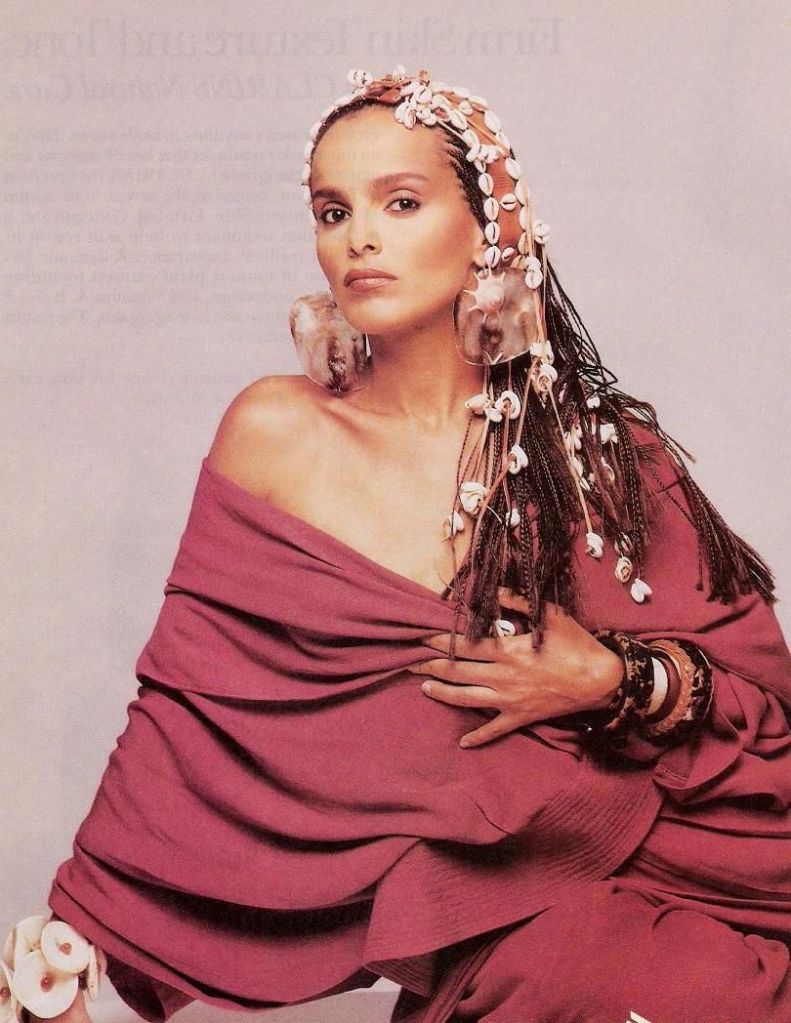
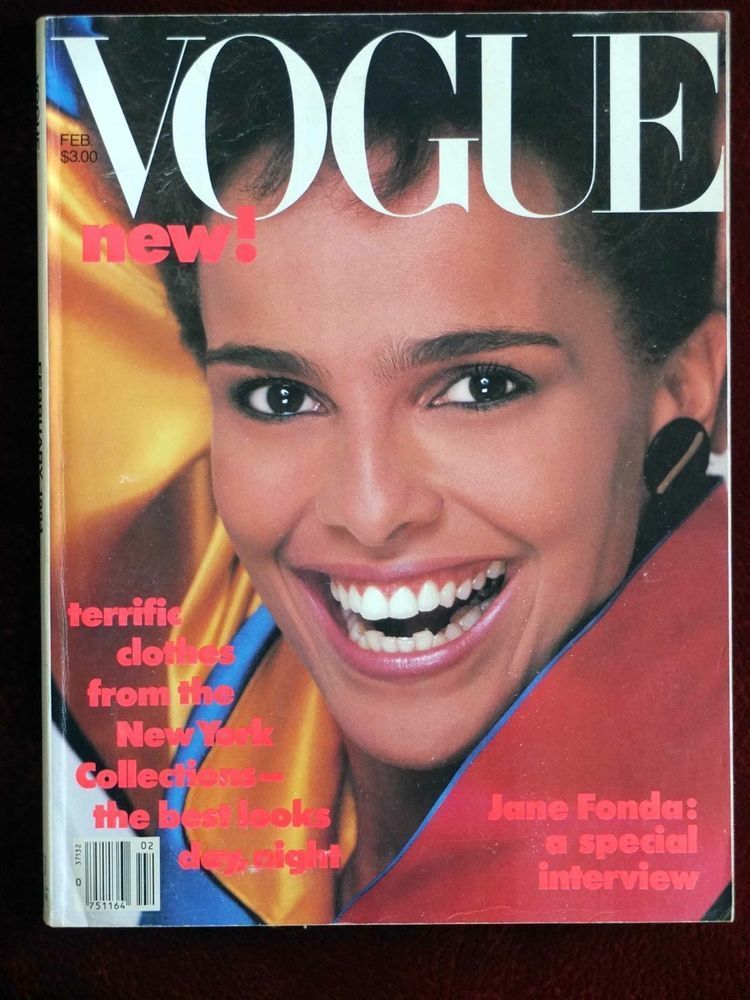
The Ebony Dolls: Shari Belafonte

The Exotic Muse of Fashion and Television

This photograph is the property of its respective owner.

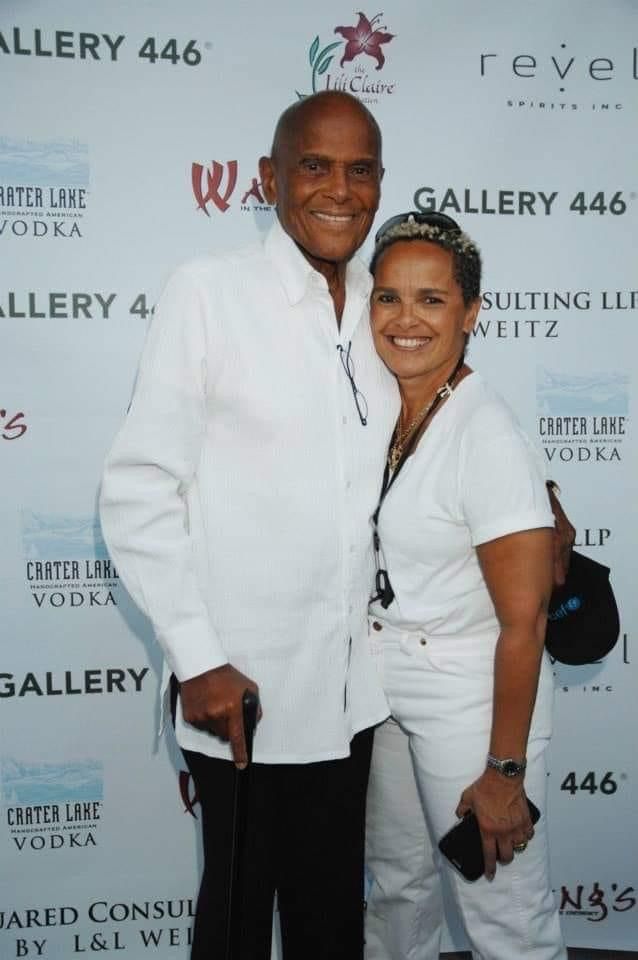
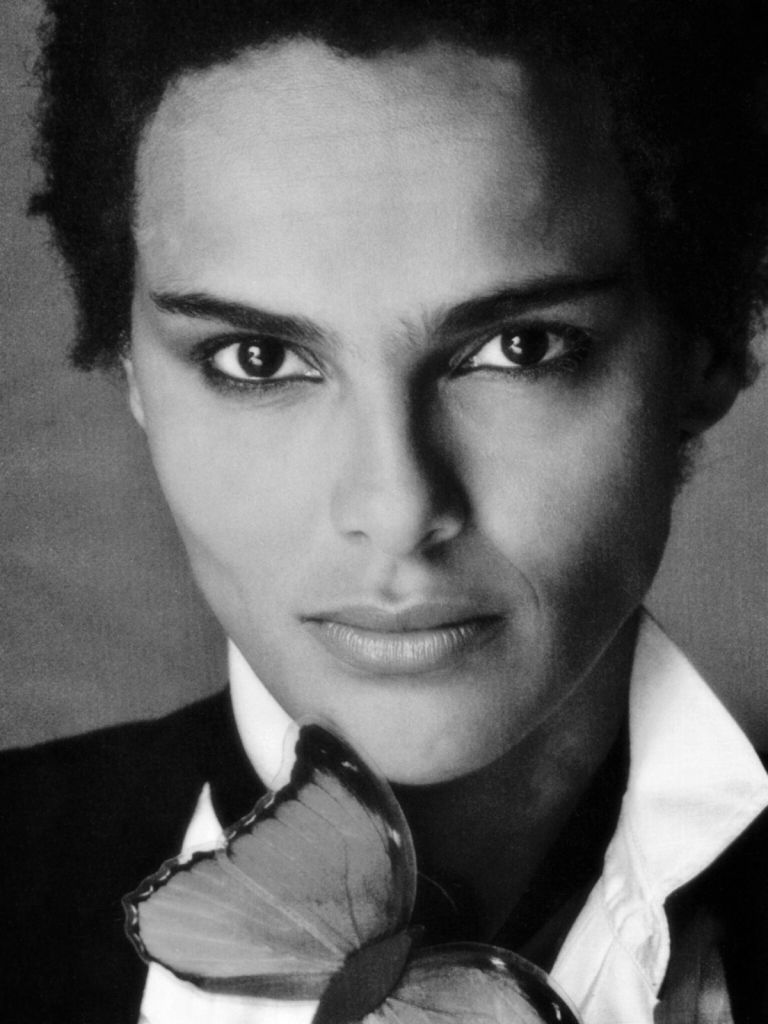
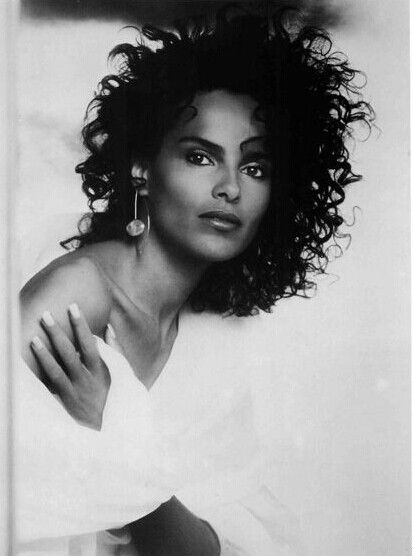
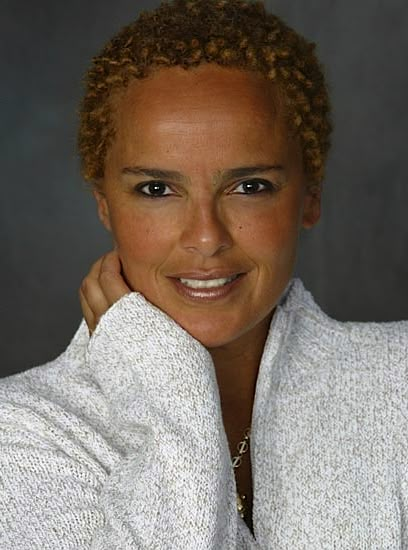
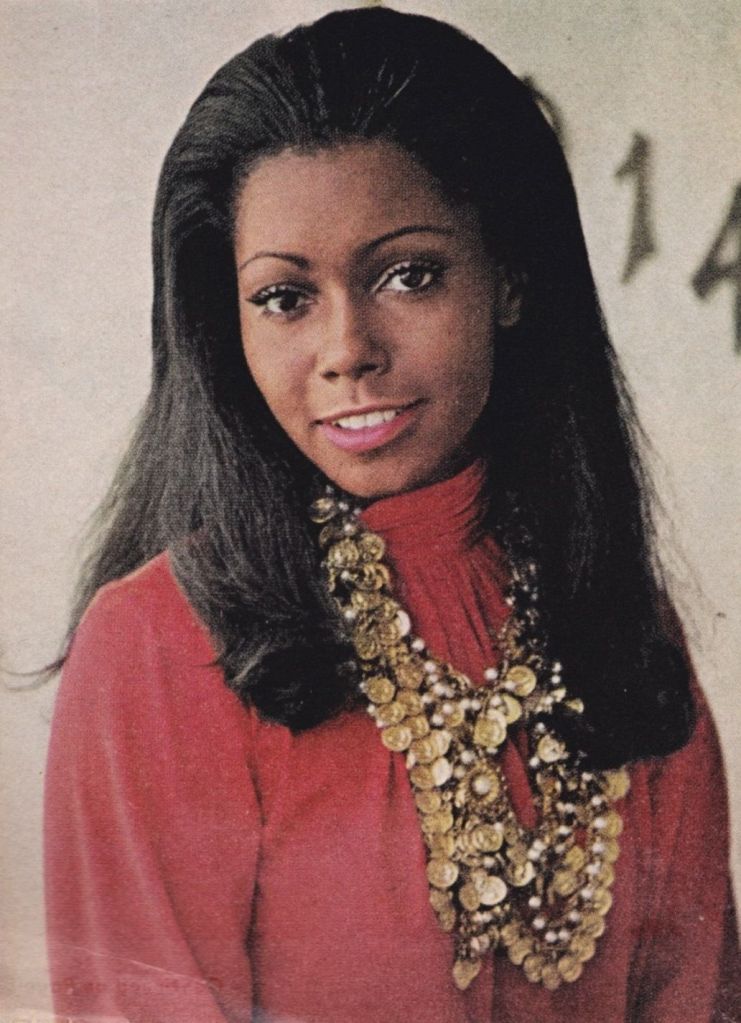
In the realm of fashion and television, certain women possess a rare combination of elegance, beauty, and cultural presence that captivates audiences across generations. Shari Belafonte is one of those women. With her luminous complexion, striking features, petite frame, and sophisticated style, Belafonte emerged in the 1980s as a striking symbol of refined Black beauty. Her graceful presence on magazine pages, television screens, and red carpets embodied a type of aesthetic often described in popular culture as the “Ebony Doll”—a woman whose beauty appears sculpted, radiant, and timeless, much like a living work of art.

This photograph is the property of its respective owner.

Shari Lynn Belafonte was born on September 22, 1954, in New York City. She is the daughter of legendary entertainer and civil rights activist Harry Belafonte and Marguerite Byrd. Growing up in a family deeply rooted in music, culture, and social activism gave Belafonte a unique upbringing that blended artistic creativity with global awareness. Her father’s influence exposed her to international culture and the power of representation in media.

with her father, Harry Belafonte – This photograph is the property of its respective owner.

Belafonte spent portions of her childhood traveling and experiencing diverse environments. These early experiences helped cultivate her polished demeanor and cosmopolitan outlook. Even at a young age, she carried herself with the poise and confidence that would later define her public image.

The term “Ebony Doll” has historically been used within Black culture to describe a woman whose beauty appears refined, polished, and almost sculptural. It celebrates deep, radiant skin tones, balanced facial symmetry, and elegant presentation. In Belafonte’s case, her smooth complexion, high cheekbones, almond-shaped eyes, and graceful posture strikingly embodied this aesthetic. Her presence evoked the elegance of classic fashion dolls, yet with the depth and authenticity of a living woman.

This photograph is the property of its respective owner.

Belafonte first gained widespread attention through modeling. During the late 1970s and early 1980s, she appeared in major fashion magazines and advertising campaigns. Her statuesque beauty and confident gaze made her an ideal subject for high-fashion photography, where her natural elegance could shine through the lens.

In the fashion world, Belafonte quickly developed a reputation for sophisticated glamour. Her style combined classic femininity with contemporary edge, making her a standout figure in an industry still expanding its representation of Black beauty. At a time when mainstream fashion media often overlooked darker complexions, Belafonte’s visibility helped challenge narrow beauty standards.

Her modeling career also included collaborations with major fashion houses and cosmetics brands. Through these campaigns, she presented an image of refined glamour that resonated with audiences seeking broader representation in beauty and fashion imagery.

Belafonte’s transition from modeling to acting further elevated her visibility. She gained national recognition when she starred in the popular television drama Hotel during the 1980s. In the series, she portrayed Julie Gillette, the poised and intelligent assistant manager of a luxurious San Francisco hotel. The role showcased her natural sophistication and calm authority.

Her performance on Hotel helped redefine how Black women were portrayed on primetime television. Rather than limiting her character to stereotypical roles, the show presented Julie Gillette as professional, stylish, and capable. Belafonte’s elegance brought authenticity and credibility to the role.

While acting brought her fame, Belafonte continued exploring creative pursuits beyond television. She also pursued music, recording songs that reflected her artistic heritage and love for performance. Although her music career was more limited than her acting work, it demonstrated the versatility that runs through her artistic identity.

Belafonte eventually developed a deep passion for photography as well. Over time she became a respected photographer whose work has appeared in exhibitions and publications. Through photography she discovered another medium for storytelling and artistic expression.

Her photographic work reflects the same appreciation for beauty and composition that defined her modeling career. As both subject and artist, Belafonte understands how lighting, posture, and expression can create powerful visual narratives.

This photograph is the property of its respective owner.

Throughout her career, Belafonte has maintained a reputation for refined style. Whether appearing at public events or in editorial photographs, she consistently projects elegance, grace, and quiet confidence. Her fashion choices often emphasize clean silhouettes, rich textures, and classic design.

The concept of the “Ebony Doll” also speaks to presentation. It reflects not only physical beauty but also the art of self-possession—the ability to carry oneself with dignity and composure. Belafonte exemplifies this quality through her calm demeanor and poised public presence.

Her cultural influence extends beyond fashion and television. Inspired by the activism of her father, Belafonte has also participated in charitable and humanitarian efforts. She has supported causes related to environmental protection, education, and social justice.

Belafonte’s longevity in entertainment reflects a career built on adaptability and artistic curiosity. From modeling to acting to photography, she has explored multiple creative paths while maintaining the elegance that first captivated audiences.

Her legacy also highlights the evolving representation of Black beauty in media. During the 1980s, when opportunities for Black models and actresses were still limited, Belafonte helped expand the visual vocabulary of glamour and sophistication.

Today, she continues to engage with artistic and cultural projects, sharing her photography and creative work with audiences. Her enduring presence reminds admirers that beauty, creativity, and intellect can coexist gracefully throughout life.

This photograph is the property of its respective owner.

What makes Shari Belafonte an “Ebony Doll” is not merely her physical appearance but the harmony between elegance, artistry, and self-confidence. Her beauty feels sculptural yet warm, refined yet authentic.

In many ways, she represents a living portrait of Black elegance—an image that blends heritage, artistry, and timeless grace.

Ultimately, Shari Belafonte’s story is one of beauty, culture, and creative exploration. Her career reflects the power of representation and the importance of celebrating diverse expressions of glamour.

In every sense of the phrase, Shari Belafonte stands as a true “Ebony Doll”—a woman whose radiant beauty, sophistication, and artistic spirit continue to inspire admiration.


References

Belafonte, S. (Interviews and public statements).

Britannica. (2026). Harry Belafonte. Encyclopaedia Britannica.

IMDb. (2026). Shari Belafonte Filmography. IMDb Database.

Smith, S. (2018). Black Women in Television: A Cultural History. New York University Press.
Vogue Archive. (1980–1990). Fashion and modeling features. Vogue Magazine.

The Ebony Dolls: Judy Pace

The Black Barbie

This photograph is the property of its owner. No copyright infringement intended.

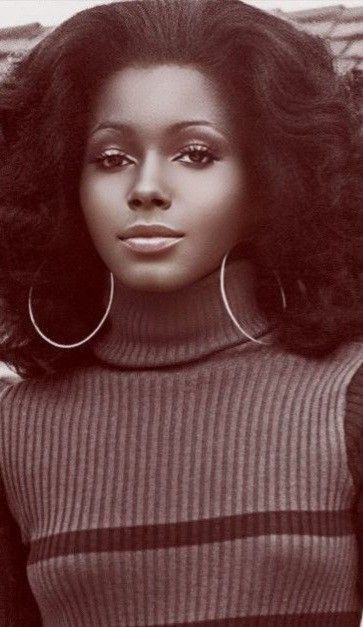
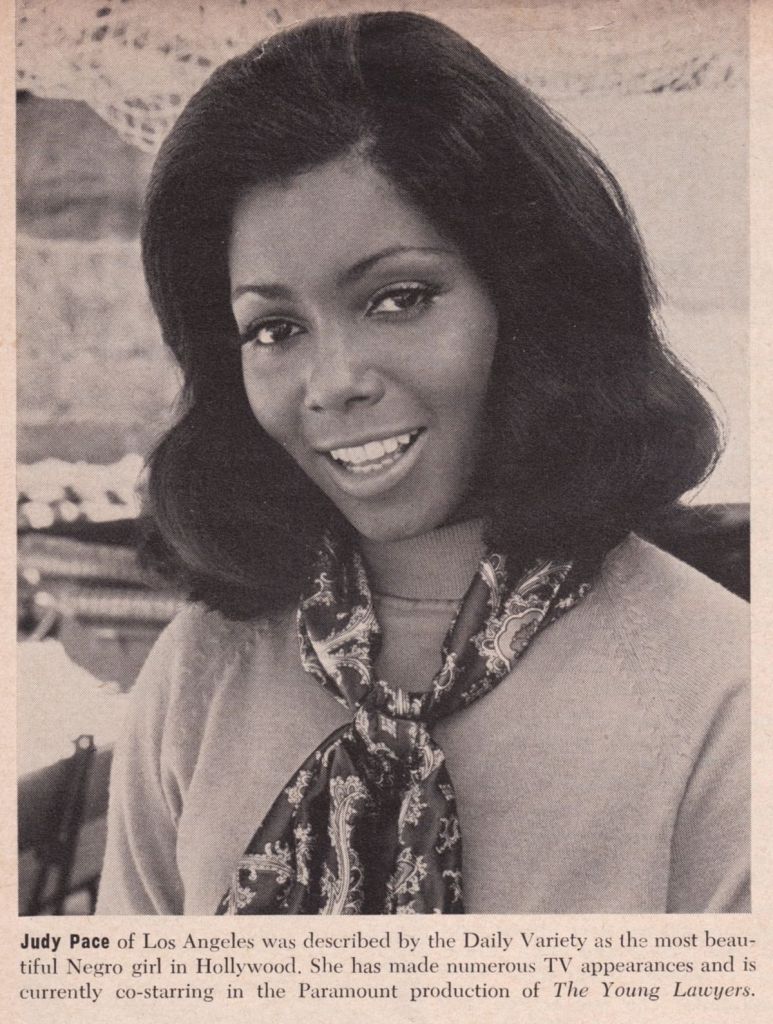
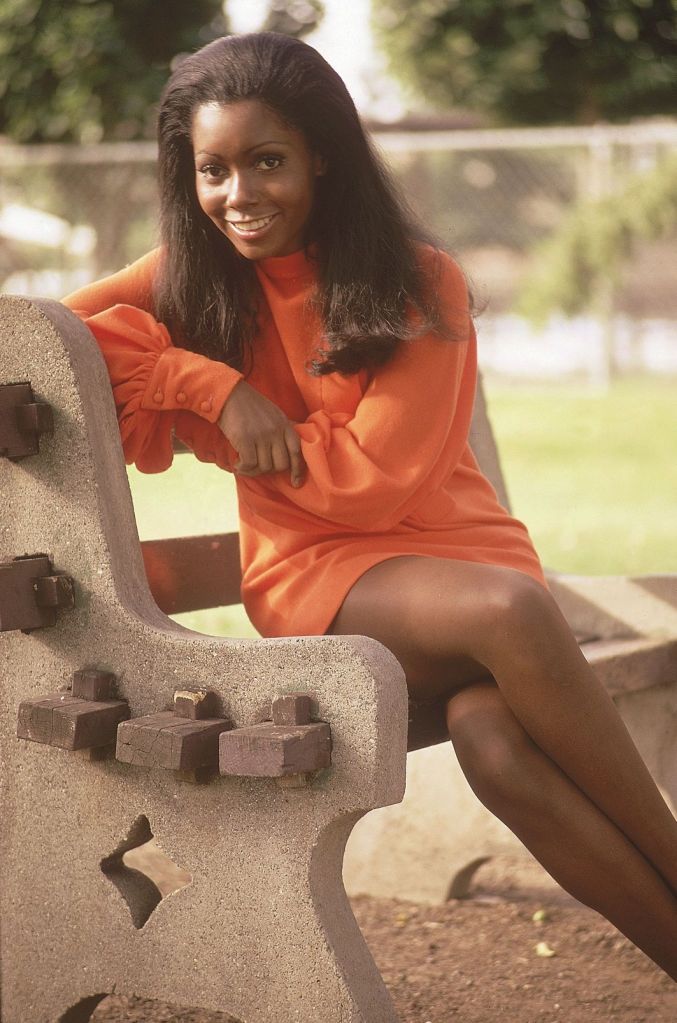
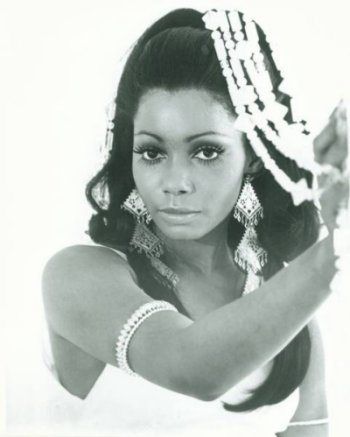
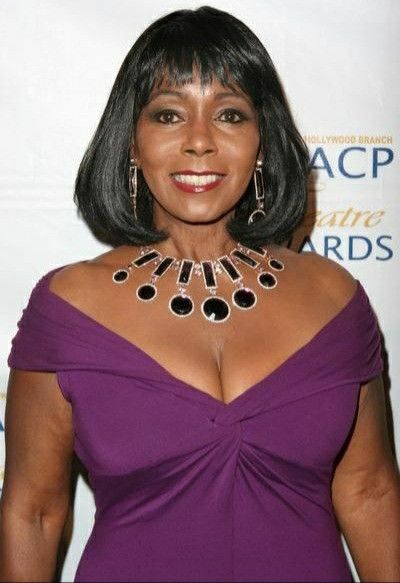
Judy Pace is an American actress and model whose beauty, talent, and groundbreaking presence helped reshape Hollywood’s portrayal of Black women during the 1960s and 1970s. Born Judy Lenteen Pace on June 15, 1942, in Los Angeles, California, she emerged at a time when opportunities for dark-skinned Black actresses were limited, yet she transcended barriers with elegance and strength. She was not simply a performer; she became a symbol of refined Black beauty during an era of cultural transformation.

Raised in Los Angeles, Pace grew up in a creative and supportive household. Her father worked as an airplane mechanic and her mother was a dressmaker. She attended Los Angeles City College, where she studied sociology before transitioning into modeling. Her entry into the entertainment industry came through fashion, and she quickly distinguished herself as the youngest model to participate in the prestigious Ebony Fashion Fair. That platform placed her before national audiences and positioned her as a rising figure in Black fashion and media.

This photograph/article is the property of its respective owner.

Her modeling success opened the door to film. She made her screen debut in 1963 in 13 Frightened Girls, marking the beginning of a steady acting career. However, her true breakthrough came in 1968 when she joined the cast of the television drama Peyton Place, becoming the first Black female villainess in American prime-time television history. This role was culturally significant; it disrupted the narrow stereotypes assigned to Black women and introduced complexity and intrigue to their representation onscreen.

This photograph is the property of its owner. No copyright infringement intended.

Pace continued her television success with a starring role in The Young Lawyers from 1969 to 1971. Her performance earned her the NAACP Image Award for Outstanding Actress in a Drama Series in 1970, affirming both her talent and her cultural impact. Throughout the 1970s, she appeared in numerous popular television shows, including Batman, Bewitched, I Dream of Jeannie, Sanford and Son, and Good Times. Her film credits include Three in the Attic and Cotton Comes to Harlem, further solidifying her versatility across genres.

This photograph is the property of its respective owner.

Beyond her acting, Judy Pace was widely celebrated for her striking appearance. Her dark chocolate complexion, luminous skin, and expressive eyes captivated photographers and audiences alike. During a period when colorism often privileged lighter complexions, she stood unapologetically as a dark-skinned beauty icon. Industry publications described her as one of the most beautiful women to appear on screen. She was affectionately referred to as “The Black Barbie” and “The Black Babydoll,” titles that reflected both admiration and her doll-like elegance.

Her beauty, however, was never detached from intellect or poise. Pace represented a refined femininity that balanced strength with softness. She carried herself with composure and confidence, embodying the spirit of the “Black is Beautiful” movement that was redefining aesthetic standards in America. In this sense, she became more than a glamorous figure; she became a cultural affirmation.

This photograph is the property of its owner. No copyright infringement intended.

In her personal life, she married actor Don Mitchell in 1972. The couple had two daughters, including actress Julia Pace Mitchell. After their divorce in 1984, Pace later married baseball legend Curt Flood in 1986. Flood was a pivotal figure in Major League Baseball’s fight for free agency, and their union linked two pioneering spirits—one in sports justice and the other in entertainment representation. They remained married until Flood’s passing in 1997.

Judy Pace’s lineage reflects African American heritage rooted in Los Angeles, and her life represents the postwar generation of Black Americans who navigated integration, civil rights transformation, and evolving media landscapes. Her career unfolded during a critical historical moment when Black visibility in Hollywood was expanding but still constrained. She stepped into that space with confidence and sophistication.

Why is she a great “Ebony Doll”? Because she embodied grace under pressure. She broke barriers without loud proclamations, simply by being excellent. She proved that dark-skinned Black women could be leading ladies, complex characters, and national beauty icons. She expanded what America saw when it looked at Black womanhood.

This photograph is the property of its respective owner.

Judy Pace is elegant. She is a representation. She is cinematic history. She is the quiet revolution of beauty and talent walking through Hollywood’s doors when they were only slightly open.


References

BlackPast.org. (n.d.). Judy Lenteen Pace (1942– ).
IMDb. (n.d.). Judy Pace – Biography.
NAACP Image Awards archives. (1970). Outstanding Actress in a Drama Series.
Wikipedia contributors. (n.d.). Judy Pace.
Wikipedia contributors. (n.d.). Julia Pace Mitchell.
Wikipedia contributors. (n.d.). Curt Flood.

The Ebony Dolls: Liya Kebede

Ethiopian Supermodel and Maternal Health Advocate

This photograph is the property of its respective owners. No copyright infringement intended.

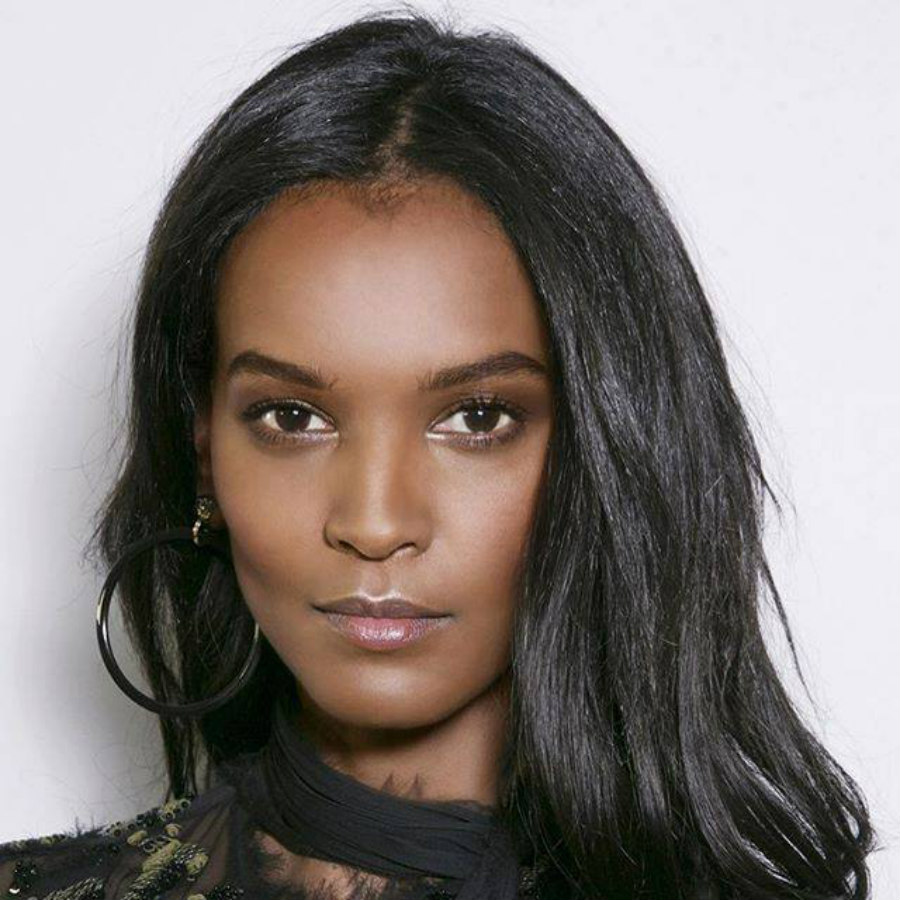
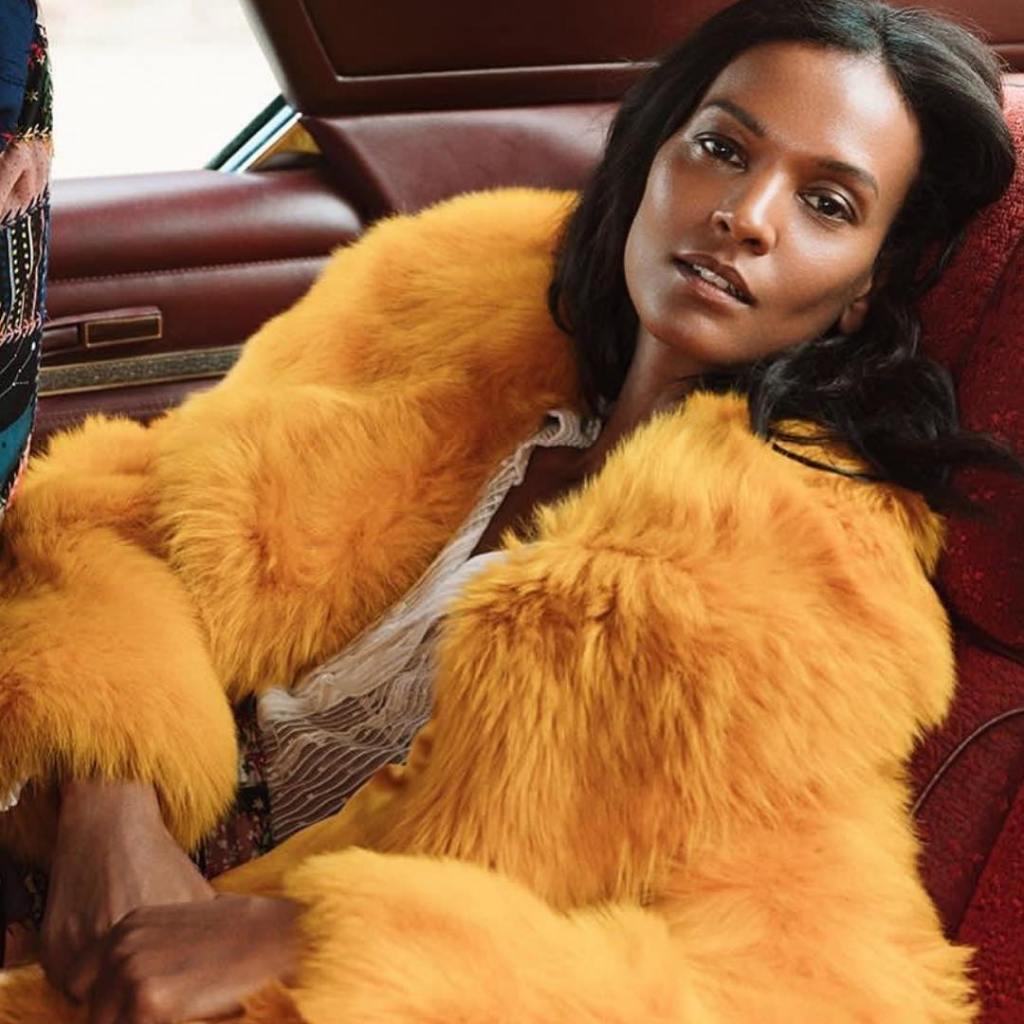
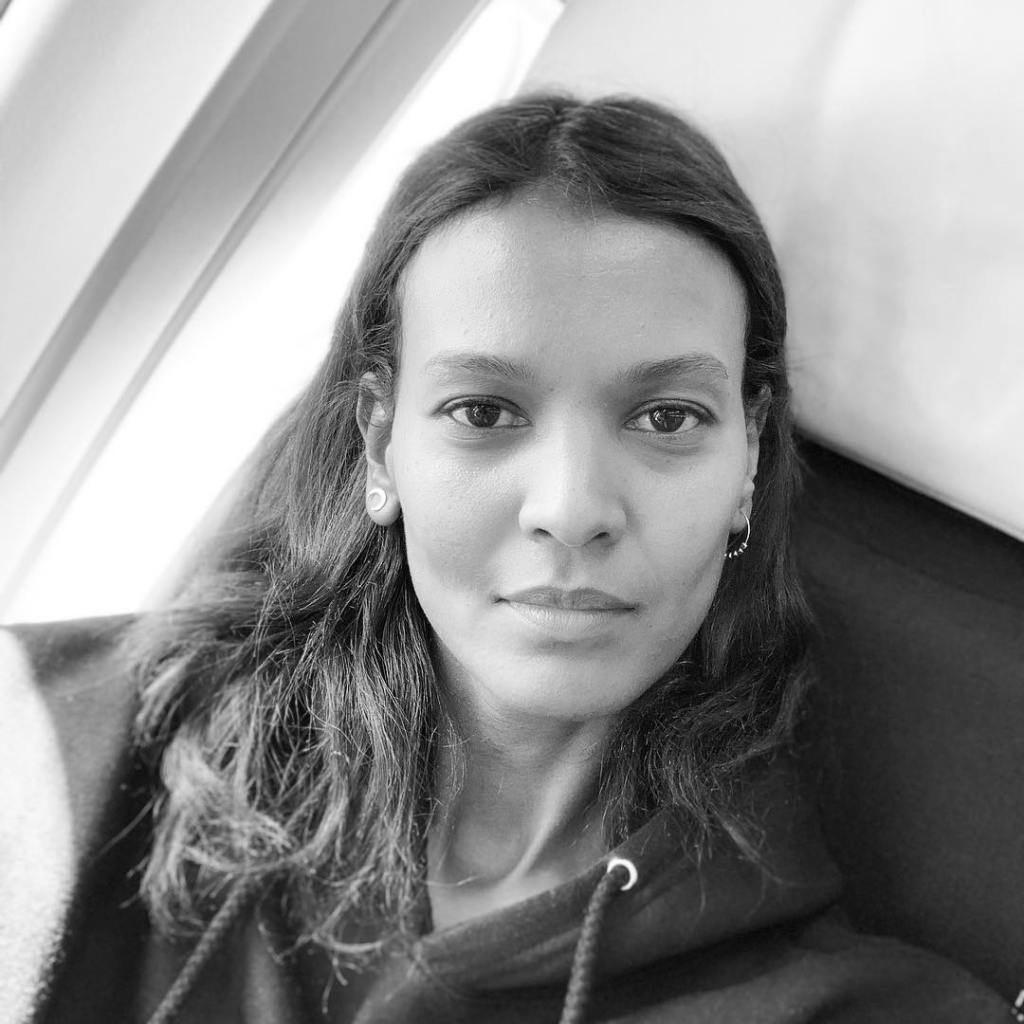
Liya Kebede is an internationally celebrated Ethiopian supermodel, entrepreneur, and global maternal health advocate whose career has transcended fashion to become a platform for humanitarian impact. Born on January 3, 1978, in Addis Ababa, Ethiopia, Kebede emerged as one of the first African models to achieve sustained global dominance in high fashion, redefining the visibility of African beauty within Eurocentric modeling industries.

Kebede was discovered in 1998 while attending Lycée Guebre-Mariam, a French international school in Addis Ababa. A French filmmaker spotted her and encouraged her to pursue modeling in Paris, where she soon signed with a major agency. Her entry into the European fashion scene marked a pivotal moment, as African models had historically been marginalized within elite fashion circuits.

Her breakthrough came in the early 2000s when she walked exclusive runways for designers such as Tom Ford for Gucci, Yves Saint Laurent, Louis Vuitton, Jean Paul Gaultier, and Estée Lauder. In 2003, she made history as the first Ethiopian model to become the face of Estée Lauder, a milestone that placed her among the world’s highest-paid models at the time.

Liya Kebede’s modeling career is distinguished not only by commercial success but by symbolic representation. She embodied a shift in beauty politics, bringing dark-skinned African features into luxury branding spaces that had long privileged whiteness and Eurocentric aesthetics. Her presence disrupted narrow beauty standards and affirmed Black femininity on a global stage.

This photograph is the property of its respective owners. No copyright infringement intended.

In addition to runway and editorial success, Kebede became the face of major advertising campaigns for brands including Estée Lauder, Dolce & Gabbana, Victoria’s Secret, Gap, and L’Oréal. Her campaigns were marked by elegance, refinement, and a classical visual identity that resonated with both haute couture and mass-market audiences.

Beyond fashion, Kebede’s life mission shifted toward global health advocacy, particularly maternal health in Africa. In 2005, she founded the Liya Kebede Foundation, a nonprofit organization dedicated to improving maternal and newborn health in Ethiopia and other developing countries. Her advocacy was inspired by her own experiences and exposure to high maternal mortality rates in sub-Saharan Africa.

In 2011, she was appointed a World Health Organization (WHO) Goodwill Ambassador for Maternal, Newborn, and Child Health. In this role, Kebede worked closely with international institutions to raise awareness about preventable maternal deaths and the structural inequalities affecting African women’s healthcare systems.

Kebede is also a successful entrepreneur. She launched Lemlem, an ethical fashion brand that supports Ethiopian artisans and promotes traditional handwoven textiles. The brand integrates fashion with economic empowerment, creating sustainable employment for African women while preserving indigenous craftsmanship.

Her awards and recognitions include being named among Time Magazine’s “100 Most Influential People in the World” and receiving numerous humanitarian honors for her global advocacy work. These accolades reflect her rare position as both cultural icon and social reformer.

Liya Kebede was married to hedge fund manager Kassy Kebede (Kassé Kebede), and they share two children. Although they later divorced, Kebede has maintained a private family life, emphasizing balance between motherhood, activism, and professional leadership.

As an “Ebony Doll,” Liya Kebede represents a form of Black beauty rooted in classical proportion, regal poise, and ancestral elegance. The term “Ebony Doll” in cultural aesthetics refers not to objectification, but to symbolic idealization—an archetype of dark feminine beauty that embodies grace, depth, and timeless appeal.

Her skin tone, facial symmetry, high cheekbones, almond-shaped eyes, and natural Afrocentric features align with what scholars describe as “classical Black beauty,” a form of aesthetics historically erased or marginalized in Western visual culture. Kebede’s beauty operates not as spectacle but as dignity—quiet, composed, and sovereign.

In contrast to hypersexualized or exoticized portrayals of Black women, Kebede’s image has consistently reflected restraint, intellect, and moral authority. Her modeling persona is refined rather than performative, aligning beauty with character rather than consumption.

From a sociological perspective, Kebede embodies what Pierre Bourdieu would call symbolic capital: beauty converted into cultural authority and ethical influence. She did not merely accumulate visibility; she transformed it into institutional power and social change.

Her role in reshaping African representation in global fashion parallels earlier cultural icons such as Iman, Naomi Campbell, and Alek Wek. However, Kebede’s distinctive legacy lies in her integration of beauty with global health politics.

Liya Kebede stands as a living example of how Black beauty can function as both aesthetic excellence and moral agency. She is not simply admired—she is emulated, respected, and historically significant.

In the broader framework of racial and gender representation, Kebede represents the re-humanization of African femininity within systems that once rendered it invisible. Her success reframes Black womanhood as intellectual, ethical, maternal, and powerful.

Ultimately, Liya Kebede is an Ebony Doll not because she fits a fantasy, but because she transcends one. Her beauty is classical, her mission is humanitarian, and her legacy is cultural sovereignty.


References

Kebede, L. (2010). Liya Kebede Foundation: Maternal health initiatives in Ethiopia. Liya Kebede Foundation.

Time Magazine. (2010). The 100 most influential people in the world: Liya Kebede.

World Health Organization. (2011). WHO Goodwill Ambassador for Maternal, Newborn and Child Health: Liya Kebede.

Entwistle, J. (2009). The aesthetic economy of fashion: Models and symbolic capital. Berg Publishers.

Hunter, M. (2011). Buying racial capital: Skin bleaching and cosmetic surgery in a globalized world. The Journal of Pan African Studies, 4(4), 142–164.

Bourdieu, P. (1986). The forms of capital. In J. Richardson (Ed.), Handbook of theory and research for the sociology of education (pp. 241–258). Greenwood.

Iman. (2011). The beauty of color: Skin, fashion, and representation. HarperCollins.

Crenshaw, K. (1991). Mapping the margins: Intersectionality and identity politics. Stanford Law Review, 43(6), 1241–1299.

The Ebony Dolls: Philomena Kwao

Beauty, Brains, and the Power of Representation

Philomena Kwao stands as one of the most compelling figures in contemporary fashion modeling, not merely for her striking physical beauty, but for the intellectual and cultural depth she brings to an industry long dominated by narrow ideals. With her luminous dark skin, regal posture, and unforgettable, piercing eyes, Kwao represents a modern embodiment of Black elegance—one that challenges both Eurocentric beauty standards and the historical marginalization of plus-size women within fashion. One of Philomena Kwao’s most arresting and unforgettable features is her eyes—mirrored, expansive, and profoundly piercing. They are not merely beautiful; they are commanding. Her large, dark eyes possess a reflective depth that feels almost cinematic, as though they hold both memory and prophecy. In fashion photography, where the gaze is everything, Kwao’s eyes function as a narrative force. They do not simply invite attention; they demand contemplation.

Born in London to Ghanaian parents, Philomena Kwao’s journey into modeling was unconventional. Before the runway and magazine spreads, she pursued higher education, earning a degree in Economics from the University of Birmingham and later a master’s degree in International Health Management. Her academic background already distinguished her as a woman rooted in intellect and global consciousness. Modeling, for Kwao, was not originally a dream but an unexpected calling. She was discovered after submitting photographs to an online modeling platform, initially skeptical of the industry’s limitations but ultimately realizing its potential as a platform for advocacy and change.

Kwao rose to prominence as a plus-size model, though she has often resisted the reductive nature of that label. While she does not conform to traditional sample sizes, her physique defies stereotypes associated with “plus-size” modeling—she is statuesque, toned, and carries herself with the confidence of classical high fashion. Her work with agencies such as Wilhelmina Models and appearances in major publications including Vogue Italia, Essence, Glamour, and Sports Illustrated Swimsuit have placed her firmly among the elite tier of global models.

One of Philomena Kwao’s most defining attributes is her face—often described by critics and fans alike as one of the most beautiful in modern fashion. Her large almond-shaped eyes, sculpted cheekbones, full lips, and smooth melanin-rich complexion create a visage that feels both timeless and contemporary. There is a quiet nobility in her features, evoking the aesthetics of African royalty and classical portraiture. In an industry obsessed with youth and homogeneity, Kwao’s beauty feels ancestral, symbolic, and deeply cultural.

Beyond aesthetics, Kwao’s career is marked by activism and thought leadership. She has become a leading voice in body positivity, diversity, and mental health within fashion. She frequently speaks on panels, contributes to academic and cultural discussions, and advocates for ethical representation of women of color. Her work challenges not only size discrimination but also the sexualization and commodification of Black women’s bodies. She reframes modeling as a site of empowerment rather than objectification.

Philomena Kwao qualifies as an “Ebony Doll” not simply because she is a model, but because she represents the very essence of what the term should signify: a Black woman who is visually exquisite, culturally grounded, intellectually formidable, and socially influential. The Ebony Doll archetype is not about superficial beauty alone—it is about excellence, presence, and representation. Kwao embodies all three. She is living proof that Black beauty is not marginal or niche but global, aspirational, and transformative.

In a world still struggling to reconcile race, gender, and aesthetics, Philomena Kwao stands as a corrective image—one that says Black women do not need to shrink themselves to be seen. They are already monumental.


References

Ashley, L. (2018). The politics of plus-size fashion and representation. Fashion Theory, 22(5), 593–610.

Essence Magazine. (2020). Philomena Kwao on body positivity and mental health.

Glamour. (2017). Meet the model changing the face of fashion: Philomena Kwao.

Sports Illustrated. (2019). Philomena Kwao: Breaking barriers in swimwear.

Vogue Italia. (2016). Curves, color, and couture: A new generation of models.

Wilhelmina Models. (n.d.). Philomena Kwao portfolio and biography.

Kwao, P. (2019). Body image, race, and self-worth in the fashion industry. Journal of Cultural Studies, 14(3), 211–225.

The Ebony Dolls: Nyakim Gatwech

Known as the “Queen of the Dark,” celebrated for extreme melanated skin

This photograph is the property of its respective owner. No copyright infringement intended.

Gatwech’s skin tone isn’t just a physical attribute — it’s central to her identity and public ethos. She is affectionately known as the “Queen of the Dark,” a nickname bestowed upon her by her growing global fan base in admiration of her unapologetic self-love and radiant complexion. Despite encountering colorism and ignorant comments — including being asked if she would bleach her skin for money — she has consistently embraced and celebrated her dark beauty, turning potential humiliation into empowerment for others with similar skin tones.

Nyakim Gatwech is an Ethiopian-born American fashion model of South Sudanese descent whose strikingly deep, radiant dark complexion has positioned her as one of the most visually and culturally significant faces in modern modeling. Widely known as the “Queen of the Dark,” Nyakim represents a powerful redefinition of beauty in an industry historically dominated by Eurocentric standards and color hierarchies. Her skin tone, rich in melanin and visually luminous, is not merely aesthetic but symbolic — a living challenge to global colorism and internalized anti-Black beauty norms. Nyakim’s beauty lies in the contrast she embodies: jet-black skin against high fashion, regal African features within Western luxury spaces, and unapologetic self-love in a world that often pressures Black women to diminish themselves.

Born on January 27, 1993, in Gambela, Ethiopia, to South Sudanese parents who fled civil war, Nyakim spent her early childhood in refugee camps across Ethiopia and Kenya. Her family later immigrated to the United States, settling in Minnesota when she was a teenager. It was in the U.S. that she first encountered intense colorism, particularly in school, where classmates mocked her skin tone, leading to early insecurity and emotional distress. Ironically, the very feature she was taught to feel ashamed of would later become the foundation of her global identity and success.

Nyakim’s entry into modeling occurred organically. While studying in Minnesota, she was invited to walk in a college fashion show, which sparked her interest in the fashion world. Without agency representation or industry connections, she began building her portfolio independently, collaborating with local photographers and using Instagram as her primary platform. Social media became her runway, gallery, and voice — a space where she could present herself without filters, whitening, or apology.

Her breakthrough came when she shared a now-viral story about an Uber driver who asked if she would bleach her skin for money. Her response — rejecting the offer and affirming her love for her natural complexion — resonated globally. The post turned her into a symbol of resistance against skin bleaching culture and a spokesperson for radical self-acceptance. From that moment, Nyakim’s following grew exponentially, and she began receiving international modeling opportunities.

She later became the face of Annabelle Cosmetics’ EDGE campaign, which celebrated unconventional beauty and diversity. Her presence in fashion editorials, beauty campaigns, and cultural platforms marked a shift in representation — not just inclusion of Black women, but elevation of the darkest shades of Blackness as luxurious, desirable, and elite.

This photograph is the property of its respective owner. No copyright infringement intended.

Nyakim’s special significance lies not only in how she looks, but in what she represents. She is part of a new generation of Black models who do not seek proximity to whiteness, but instead reclaim African features, melanin, and cultural identity as high status. Her image disrupts centuries of colonial aesthetics where lightness was equated with beauty, purity, and value. In contrast, Nyakim’s work affirms that darkness itself is divine, regal, and worthy of admiration.

Her skin has become a visual metaphor — a mirror for millions of dark-skinned women and girls who were taught that their complexion was something to “fix.” Through her modeling and public statements, Nyakim reframes melanin as a blessing rather than a burden. She speaks openly about loving her reflection, embracing contrast, and rejecting any narrative that associates darkness with inferiority.

Regarding her personal life, Nyakim is known to be private. There is no publicly verified information confirming that she is married or has children. She has spoken primarily about her parents, siblings, and her journey as a refugee and immigrant, choosing to keep romantic relationships outside of the public spotlight. Her narrative focuses more on identity, culture, and empowerment than celebrity exposure.

This photograph is the property of its respective owner. No copyright infringement intended.

In terms of awards and recognition, Nyakim has not received mainstream fashion industry prizes like Vogue or CFDA awards, but she has been widely honored in cultural and empowerment spaces. She has been recognized by African and diaspora organizations, featured at international beauty and women’s empowerment events, and celebrated across global media as one of the most influential dark-skinned models in the world. While some social media outlets claim Guinness recognition for her skin tone, this remains unverified through official Guinness records.

Nyakim Gatwech is considered an Ebony Doll because she embodies the very essence of what the term signifies: a woman whose Blackness is not diluted, modified, or assimilated, but fully embraced, elevated, and aestheticized. She represents melanin as luxury, African features as elite, and dark skin as high fashion. Her beauty is not rooted in proximity to whiteness, but in proximity to ancestry, identity, and unapologetic self-love.

She stands as both muse and message — proof that the darkest skin can sit at the center of beauty culture, not its margins. Nyakim Gatwech is not simply a model; she is a visual revolution.


References

Cosmopolitan. (2017). Nyakim Gatwech on embracing her dark skin and redefining beauty.

Fashion Magazine. (2018). Nyakim Gatwech: The model changing beauty standards.

Gatwech, N. (2017). Instagram post on skin bleaching and self-love.

Oddity Central. (2017). The Queen of Dark: The model embracing her gorgeous dark skin.

Royal Tee Magazine. (2020). Empowering quotes about self-love from Nyakim Gatwech.

Teen Vogue. (2017). Model Nyakim Gatwech challenges beauty standards on Instagram.

Yahoo Lifestyle. (2017). Dark-skinned model gives Uber driver reality check.

Wikipedia. (2025). Nyakim Gatwech.

Pulse Nigeria. (2023). Nyakim Gatwech and the global celebration of dark skin.

Masculine Perfection Series: Broderick Hunter, Christopher Williams, and Blair Underwood.

Broderick Hunter — “Mesmerizing eyes, boyish charm, modern Black beauty.”

Broderick Hunter Jr., born January 3, 1991, in Fontana, California, is an American model and actor. Originally a basketball player with over fifteen years of experience, an injury shifted his path toward modeling in 2011. Hunter has appeared in editorials and covers for major publications, including Vogue Paris, Italian GQ, Cosmopolitan, Maxim, and Essence. He has also modeled for top brands such as Ralph Lauren. On screen, he has acted in television series, including Insecure, showcasing versatility that combines athleticism, aesthetic polish, and charisma.

Hunter’s allure lies in his “piercing” eyes and boyish charm — a blend of youthful energy and contemporary Black male beauty. His presence conveys both confidence and approachability, making him a standout figure in fashion and media.


Christopher Williams — “Soulful crooner, gorgeous face, velvet voice.”

Christopher Williams, born August 22, 1967, in the Bronx, New York, emerged as a professional recording artist in the late 1980s. His debut album, Adventures in Paradise (1989) introduced his smooth R&B style, and his 1991 single I’m Dreamin’ topped Billboard’s Hot R&B/Hip-Hop Singles chart. Williams continued to produce hits such as Every Little Thing U Do and All I See, solidifying his reputation as a romantic and soulful performer. He has also acted in films, most notably New Jack City, and participated in theatre and smaller screen roles.

Williams embodies a classic form of Black masculinity: his gorgeous face and rich, emotional voice convey vulnerability and romantic depth. His combination of musicality and visual appeal positioned him as a beloved figure in R&B and Black culture.


Blair Underwood — “Demure sophistication, classically handsome, acting excellence.”

Blair Underwood, born August 25, 1964, in Tacoma, Washington, is a classically trained actor with a BFA from Carnegie Mellon School of Drama. He gained prominence with the role of attorney Jonathan Rollins on NBC’s L.A. Law (1987–1994) and has sustained a prolific career in film and television, displaying versatility across genres. Underwood has received two Golden Globe nominations, multiple NAACP Image Awards, and a Grammy Award, underscoring his talent and impact.

Underwood represents a timeless, understated elegance, combining classical good looks with gravitas and sophistication. His refined style and acting skill embody a mature, dignified form of Black masculine beauty, emphasizing poise, intellect, and artistic excellence.


Why these three matter

Together, Broderick Hunter, Christopher Williams, and Blair Underwood illustrate a spectrum of Black male beauty and excellence:

  • Hunter reflects contemporary youth, athleticism, and media-ready aesthetic.
  • Williams represents soulful, romantic, and emotionally resonant masculinity.
  • Underwood embodies classical sophistication, gravitas, and unforgettable actor.

Their collective presence challenges narrow standards of Black male beauty, offering multiple models of excellence in fashion, music, and acting.


References

  • Broderick Hunter — Wikipedia, IMDb, Teen Vogue, Vogue Paris.
  • Christopher Williams — Wikipedia, IMDb, Billboard, UrbanBridgez.
  • Blair Underwood — Wikipedia, TV Guide, BET, Encyclopedia.com.

The Ebony Dolls: Eva Marcille

This photograph is the property of its respective owner. No copyright infringement intended.

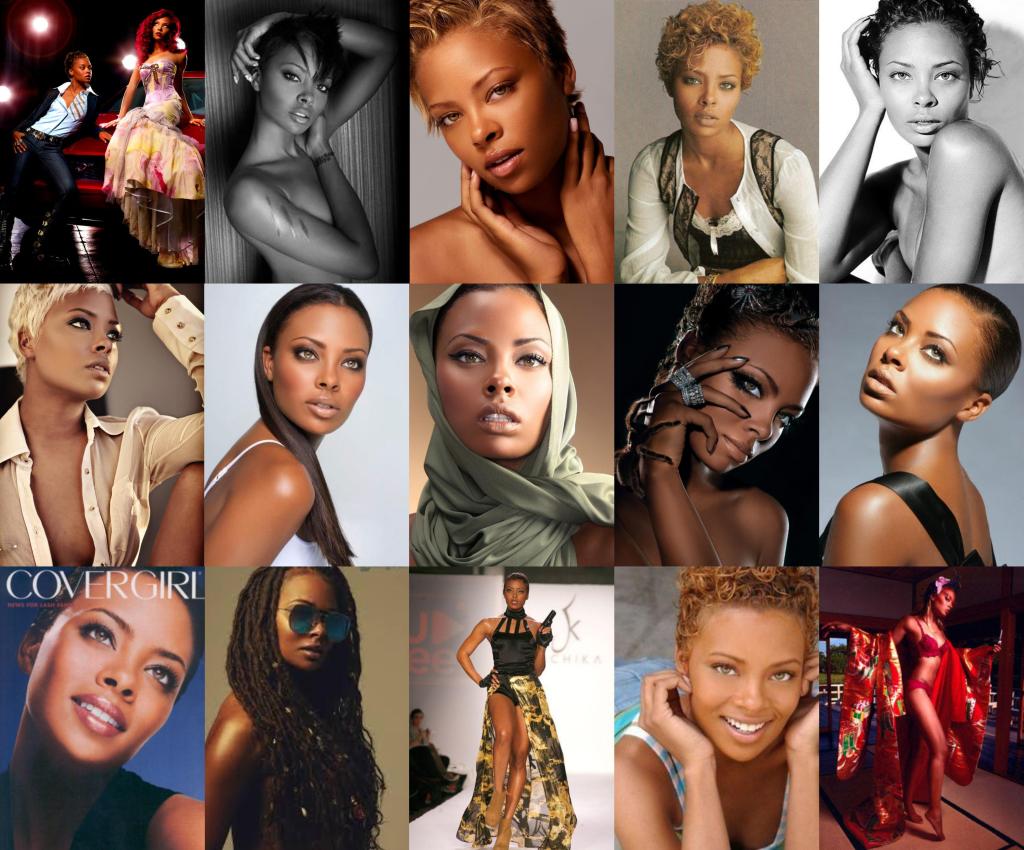
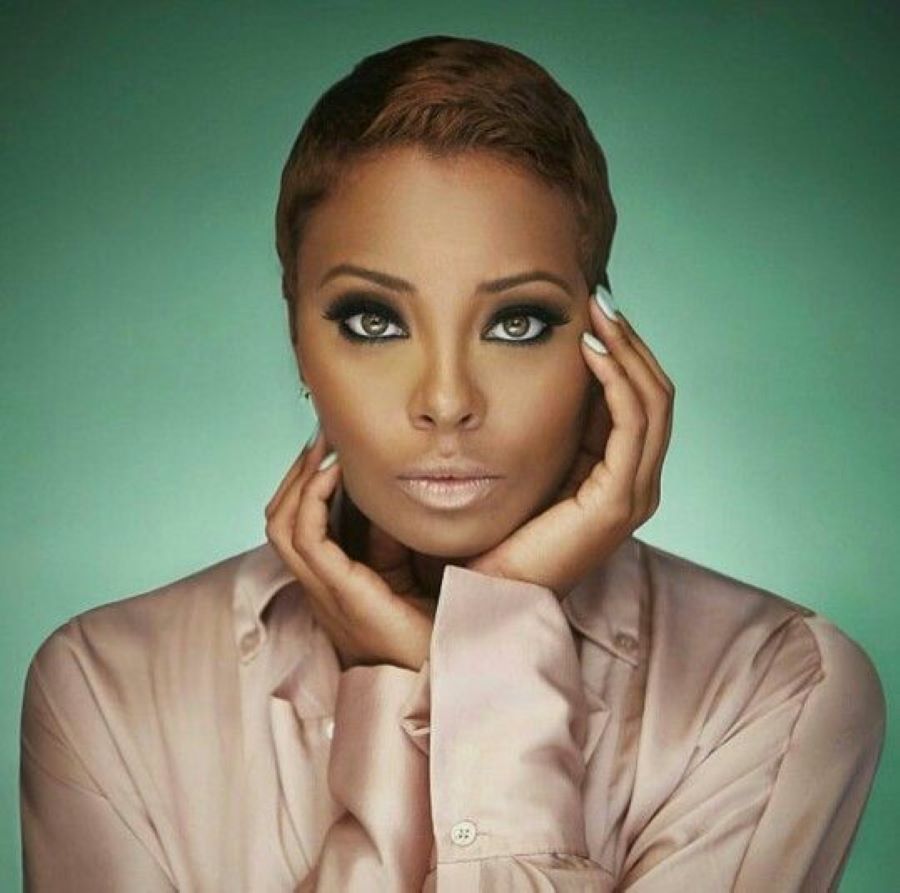
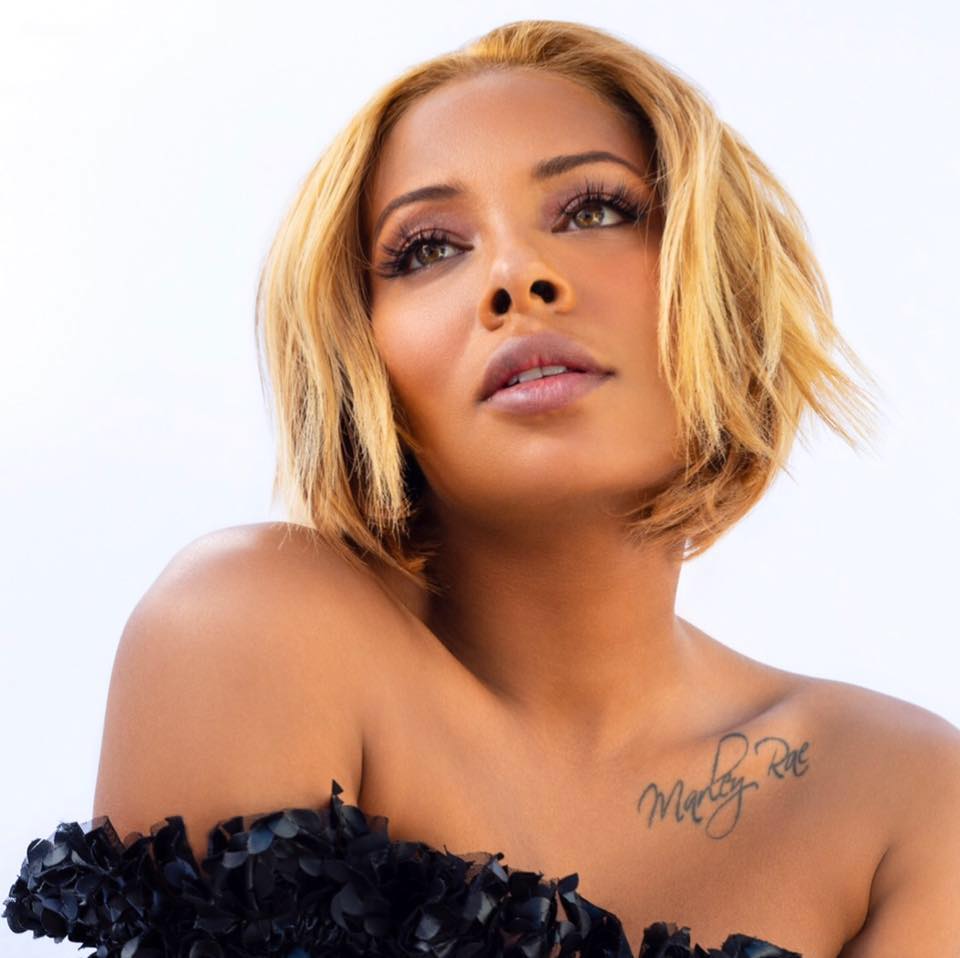
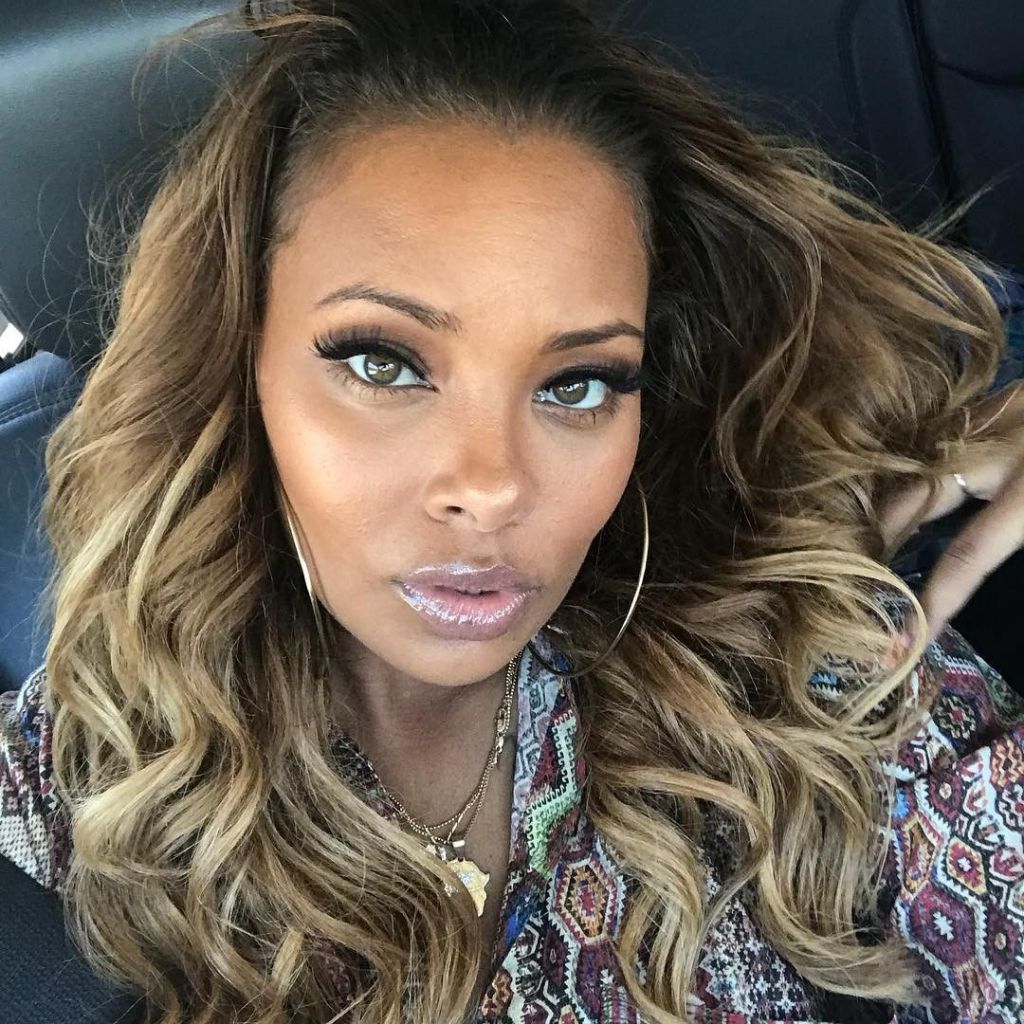
She entered the world like a masterpiece brushed in melanin—a canvas of luminous light ebony-toned skin, warmed with golden undertones that seemed to glow without permission. Her eyes, a mesmerizing hazel-green ocean rimmed with amber, framed by elongated lashes, and her face sculpted in elegant symmetry, carried a porcelain-like softness yet striking angularity that photographers would later call exotic, rare, unforgettable. She was not just beautiful, but possessed an aesthetic harmony where Africa, Europe, and possibility met in one gaze.

Eva Marcille Pigford was born on October 30, 1984, in Los Angeles, California, to Evan Pigford and Michelle Pigford (IMDB, 2024). She identifies as African American and Puerto Rican, with additional European ancestry, making her widely recognized as multiracial/biracial or “mixed, though she embraces her Black identity as dominant in representation and cultural affiliation (Marcille in BET, 2022). She grew up in South Central Los Angeles, later attending Clark Atlanta University, where she studied broadcast journalism before entering the modeling world (Essence, 2020).

Her journey into Hollywood began on one of the most-watched runways on television—America’s Next Top Model (ANTM). In 2004, Eva auditioned for the third cycle of ANTM, impressing judges with her high-fashion potential, bone structure, presence, and magnetic eyes. She won the competition at age 19, securing a CoverGirl cosmetics contract and becoming the first winner with significantly darker skin and exotic features to take the mainstream commercial modeling crown (Banks et al., 2004; Tyra Show Archives).

This photograph is the property of its respective owner. No copyright infringement intended.

Following ANTM, she quickly transitioned into major print and commercial modeling campaigns. She signed with Ford Models, one of the most prestigious agencies globally (Models.com, 2010). Her early post-show momentum included high-profile spreads in Elle, Essence, King Magazine, GQ, and Cosmopolitan, elevating her beyond reality TV into fashion-editorial legitimacy (IMDB, 2024; Elle Archives, 2005).

Marcille became a campaign face for major brands. Her CoverGirl contract was followed by modeling partnerships and appearances in ad work for Samsung, Apple Bottoms, DKNY, Avon, and Macy’s commercials (Advertising Archives via Commercial Database; IMDB, 2024). She also became the face of shea-butter beauty and urban fashion aesthetics through co-signs with Apple Bottoms and beauty editorials celebrating deeper melanin-VS-Eurocentric glam balance (Essence, 2020).

She accumulated numerous accolades during her modeling years. In 2006, she received the Young Hollywood Award for Female Superstar of Tomorrow, marking her crossover potential beyond modeling into scripted media (Young Hollywood Awards, 2006). Her career trajectory would later include multiple NAACP media appearances and beauty acknowledgments for diversifying beauty representation for young Black and multiracial women (NAACP Image Awards Nominations Database).

Eva soon pursued acting, initially through guest television roles before securing recurring characters. Early appearances included roles on Smallville (2005), Everybody Hates Chris (2007), and House of Payne (2008), which helped transition her from model to actress in the early 2000s Hollywood pipeline (IMDB, 2024).

This photograph is the property of its respective owner. No copyright infringement intended.

She later earned significant screen attention in film, appearing in Crossover (2006), followed by roles in I Think I Love My Wife (2007) alongside comedian Chris Rock, and other Black-ensemble screen projects that positioned her as a staple face of the modern ebony Hollywood class (IMDB, 2024).

Her most culturally impactful work in scripted television came decades later. In 2021, she joined the cast of Tyler Perry’s drama-soap powerhouse All the Queen’s Men, portraying Madam’s rival, Marilyn “Ms. Noelle” Deville, a glamorous yet cunning boss-woman role that aligned her beauty with narrative authority, seduction, and psychological complexity (Perry, 2021). This role cemented her presence in the urban neo-noir glam queen archetype (IMDB, 2024).

Her career also expands into hosting, reality television, and brand ambassadorship. In 2018, she joined The Real Housewives of Atlanta (RHOA), increasing her cultural relevance in Black pop-culture media. She leveraged that visibility into business, advocacy, and television commentary (Bravo, 2018).

Her personal life became part of her public narrative. Eva is a mother to three children:

  • Marley Rae McCall (born 2014) with singer Kevin McCall,
  • Michael Todd Sterling Jr. (born 2018),
  • and Maverick Leonard Sterling (born 2019) with her ex-husband, attorney Michael Sterling (Sterling & Marcille in People, 2023).

She married Michael Sterling in 2018 in a star-studded Atlanta ceremony, widely praised for elegance, intimacy, and cultural grandeur (People, 2023). In 2023, she filed for divorce, citing irreconcilable differences, but has publicly maintained a co-parenting-forward family focus (People, 2023).

So what makes her an Ebony Doll archetype? The phrase “Ebony Doll” symbolizes more than skin tone—it represents exotic facial symmetry, soft-spoken glam power, and editorial beauty rooted in Black aesthetics but universal in appeal (Hunter, 2005; Hall, 1997). Eva embodies this through her deep-melanin foundation, mixed-heritage features, commercial runway legitimacy, and Hollywood endurance. But deeper still, an ideal Ebony Doll must influence beauty psychology—she did. Eva helped normalize hazel-green eyes on dark melanin, short-hairstyle femininity in Black fashion media, and soft yet dominant screen presence (Hooks, 1992; Hunter, 2005).

This photograph is the property of its respective owner. No copyright infringement intended.

Her features align with cross-cultural beauty science. Studies on beauty perception highlight the high impact of eye color contrast against deep skin, facial symmetry, upper-cheekbone prominence, oval face sculpting, and universal aesthetic ambiguity (“ethnically mixed facial harmonics”) being perceived as exotically attractive (Rhodes, 2006; Little, Jones, & DeBruine, 2011). This matches Eva’s visual profile and explains her path to fashion-campaign success and sustained camera appeal.

Thus, she is an Ebony Doll ideal not simply because she is beautiful, but because she is representative, aspirational, adaptable, culturally resonant, fashion-validated, screen-anchored, and psychologically unforgettable.


References

Bravo. (2018). The Real Housewives of Atlanta cast archives.

Banks, T., et al. (2004). America’s Next Top Model, Cycle 3 production and judging transcripts. UPN Archives.

Bet. (2022). Interview commentary on multiracial identity, ethnicity, and cultural affiliation archives.

Essence. (2020). Eva Marcille career editorial and modeling retrospective.

Hall, S. (1997). Representation: Cultural representations and signifying practices. Sage.

Hooks, B. (1992). Black looks: Race and representation. South End Press.

Hunter, M. (2005). Race, gender, and the politics of skin tone. Routledge.

IMDB. (2024). Eva Marcille professional filmography and career database archives.

Jones, B. C., DeBruine, L. M., & Little, A. C. (2011). Facial contrast and attractiveness. Psychological Science, 22(1), 57–62.

Marcille, E., Sterling, M. (2023). Marriage and co-parenting public statements. People Magazine Archives.

Perry, T. (2021). All the Queen’s Men production and casting archives.

Rhodes, G. (2006). The evolutionary psychology of facial beauty. Annual Review of Psychology, 57, 199–226.

Black Women in Modeling: Redefining Beauty Standards.

Photo by magapls . on Pexels.com

For decades, the modeling industry has been dominated by Eurocentric ideals of beauty, where light skin, straight hair, and narrow features were privileged as the standard. Within this landscape, Black women faced barriers of both racism and colorism, often excluded from mainstream campaigns and denied equal opportunities. Yet, despite these challenges, Black women have transformed modeling, reshaping global beauty standards and redefining what it means to be seen, valued, and celebrated. Their journey is not only a story of fashion but also of resilience, representation, and cultural affirmation.

The entrance of Naomi Sims in the late 1960s marked a revolutionary moment for dark-skinned Black women in fashion. As the first African American supermodel to gain international recognition, Sims broke through racial barriers when she appeared on the cover of Ladies’ Home Journal in 1968. Her success challenged the industry’s exclusionary practices and paved the way for others, such as Beverly Johnson, who became the first Black model on the cover of Vogue in 1974. These women shattered long-held myths that Black beauty could not sell magazines or luxury products, demonstrating that Blackness itself was aspirational, marketable, and worthy of celebration.

The 1970s and 1980s further opened doors for iconic models like Iman, Grace Jones, and Pat Cleveland. Each redefined beauty in unique ways—Iman with her regal East African features, Grace Jones with her bold and androgynous style, and Cleveland with her theatrical runway presence. Together, they created new aesthetic possibilities that went far beyond Eurocentric limitations. They represented a multiplicity of Black beauty—dark, angular, bold, elegant, and unapologetically different. By their very existence, they destabilized narrow ideals and demanded recognition of global, diverse standards of beauty.

Despite these advances, systemic bias and colorism persisted. Dark-skinned Black women, particularly from Africa and the Caribbean, continued to face underrepresentation well into the 1990s and early 2000s. Lighter-skinned models often received more opportunities due to the industry’s preference for proximity to whiteness. Yet, the rise of models like Alek Wek, who emerged in the 1990s with her deep ebony complexion and Sudanese features, marked another turning point. Wek’s success signaled that beauty could not be confined to a singular mold. She inspired a new generation of dark-skinned models and young Black girls who saw themselves reflected on runways and in magazines for the first time.

In the 21st century, the impact of Black women in modeling has grown exponentially. Figures like Naomi Campbell, who dominated the 1990s supermodel era, paved the way for contemporary icons such as Lupita Nyong’o, Adut Akech, Anok Yai, and Duckie Thot. These women not only dominate global campaigns but also use their platforms to speak against colorism, racism, and lack of diversity in the industry. Their voices are as revolutionary as their beauty, pushing the conversation forward and demanding structural change in fashion houses, casting agencies, and media representation.

Beyond individual representation, Black women in modeling have also changed the commercial landscape. Rihanna’s Fenty Beauty and Iman’s earlier cosmetics line demonstrated that products must reflect the wide spectrum of skin tones that Black women embody. Similarly, natural hair movements and the celebration of Afrocentric features in beauty campaigns signify a shift toward inclusivity. Where once Black women were asked to assimilate into white-centered aesthetics, today they are celebrated for bringing their authentic selves into the fashion world.

The redefinition of beauty standards by Black women in modeling is not merely about fashion—it is deeply cultural and psychological. Representation affirms identity, counters internalized racism, and dismantles harmful hierarchies of color. For Black girls and women, seeing models who look like them is transformative, affirming that their features, skin, and hair are beautiful in their own right. This shift is biblical in scope as well, reflecting Psalm 139:14 (KJV), “I will praise thee; for I am fearfully and wonderfully made.” In reclaiming beauty, Black women in modeling have not only shifted an industry but have spoken life into generations of women once told they were not enough.

Despite the progress, challenges remain. Black models still face pay disparities, tokenism, and limited opportunities compared to their white counterparts. Fashion magazines may showcase diversity on the surface while maintaining exclusionary practices behind the scenes. Yet, the trajectory is undeniable: Black women have fundamentally reshaped the narrative of beauty and continue to expand its horizons.

Ultimately, Black women in modeling represent more than just physical appearance—they embody cultural survival, creativity, and the dismantling of oppressive beauty hierarchies. Their contributions reveal that true beauty cannot be confined to one standard. Instead, beauty is expansive, global, and reflective of God’s diverse creation. Through their presence, talent, and advocacy, Black women in modeling have redefined beauty for themselves and for the world.


References

Collins, P. H. (2000). Black feminist thought: Knowledge, consciousness, and the politics of empowerment. Routledge.
Craig, M. L. (2006). Race, beauty, and the tangled knot of a guilty pleasure. Feminist Theory, 7(2), 159–177.
Hall, R. E. (2010). An historical analysis of skin color discrimination in America: Victimism among victim group populations. Springer.
Johnson, B. (2012). The face that changed it all. Atria Books.
Lewis, R., & Neal, A. (2020). Colorism and the fashion industry: Shifting standards of representation. Journal of Black Studies, 51(5), 452–469.
Nyong’o, L. (2014). Speech on beauty and representation. Essence Awards.
Tate, S. A. (2009). Black beauty: Aesthetics, stylization, politics. Ashgate.
The Holy Bible, King James Version. (1611/2017). Thomas Nelson.

Masculine Perfection Series: LaKeith Stanfield, Ali Amin Carter & Louis Allen III

From the moment they enter a room, these three men command attention—LaKeith Stanfield with his piercing, soul-searching eyes that seem to look straight through you; Ali Amin Carter with his refined, boyish good looks that blend innocence and masculine poise; and Louis Allen III with his breathtaking green orbs and sculpted physique that define him as a genetic marvel. Their appearances alone make them unforgettable, but their talent, charisma, and artistic versatility elevate them into the realm of cinematic and modeling excellence.

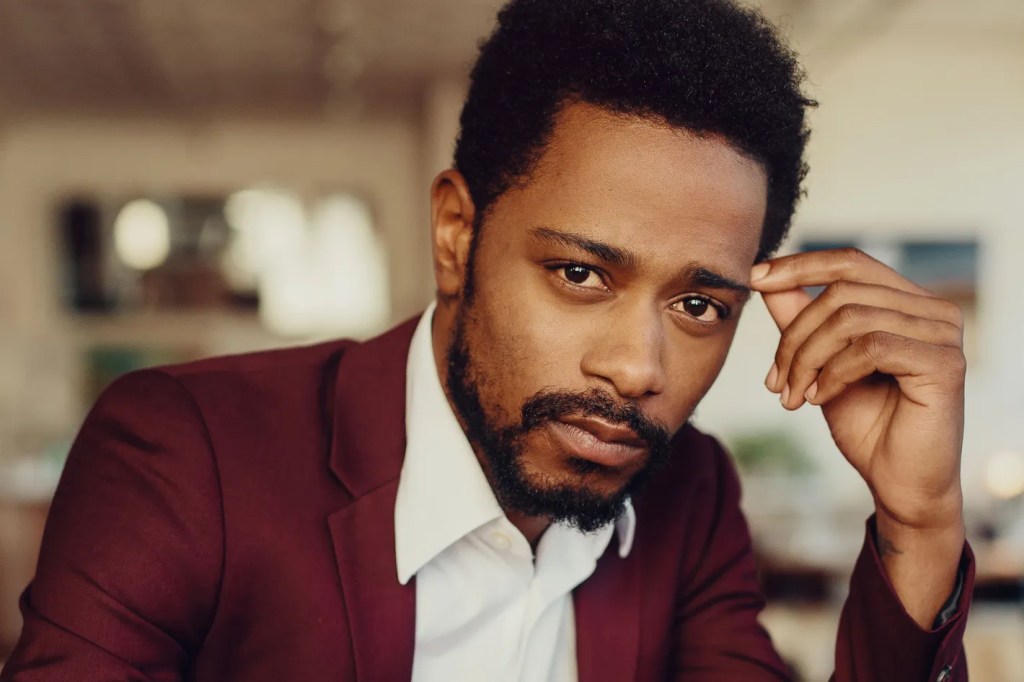
LaKeith Stanfield

“The Enigmatic Soul: A gaze that speaks, a talent that transforms.”

LaKeith Stanfield stands as one of the most intriguing and enigmatic actors of his generation. Born in California, he began acting in high school before training at the John Casablancas Modeling & Career Center, where he developed the poise and facial precision that now define his screen presence. His breakout came with Short Term 12, which earned him an Independent Spirit Award nomination, and he continued rising with roles in Selma, Get Out, Sorry to Bother You, Knives Out, and Judas and the Black Messiah, for which he received an Academy Award nomination. Among his most captivating roles is his leading performance in The Photograph (2020), where his deep, expressive eyes created a magnetic intensity—particularly in the scene where he gazes at Issa Rae’s character with a mix of longing, vulnerability, and desire. The moment became iconic because Stanfield’s eyes communicate an entire emotional universe, piercing straight into the viewer’s heart just as they pierce Issa Rae’s.

On the personal front, Stanfield married model Kasmere Trice and together they welcomed a baby in 2023. He is also father to two daughters from previous relationships and describes fatherhood as “something that completely changes” you. His commitment to protecting the privacy of his family and framing the narrative of his own story underscores a grounded side to the actor’s life amid public visibility.

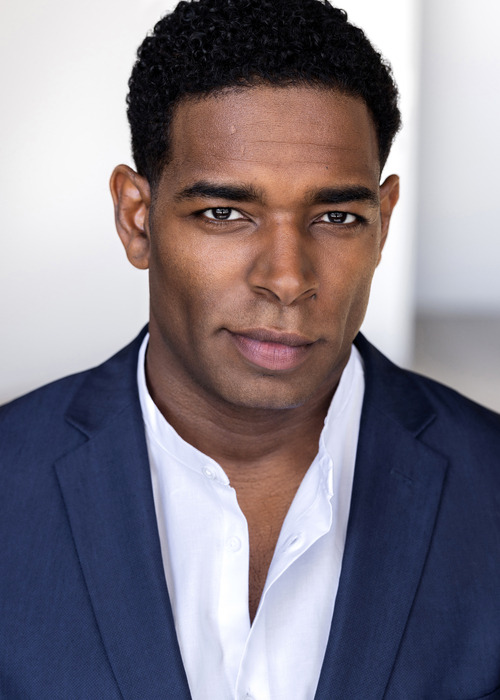
Ali Amin Carter

“Attractiveness in Motion: Where quiet masculinity meets undeniable screen presence.”

This photograph is the property of its respective owner. No copyright infringement intended.

Ali Amin Carter is a striking talent whose tall, elegant frame and natural good looks positioned him for success in both modeling and acting. Beginning his career on the runway, he eventually transitioned into theatre, earning recognition through the acclaimed stage production Ruined. His screen roles include appearances in Lovecraft Country and The Good Lord Bird, each showcasing his ability to blend emotional depth with quiet masculinity. More recently, Carter starred in the feature film Love Unexpected (2023/24), portraying Chase, a college-playboy figure whose world is challenged by love and transformation. His modeling roots gave him the visual confidence and stature that translate naturally to the screen, and he extended his reach further by starring in a music-video production by the singer Joe, demonstrating a versatility that spans modeling, film, and music.

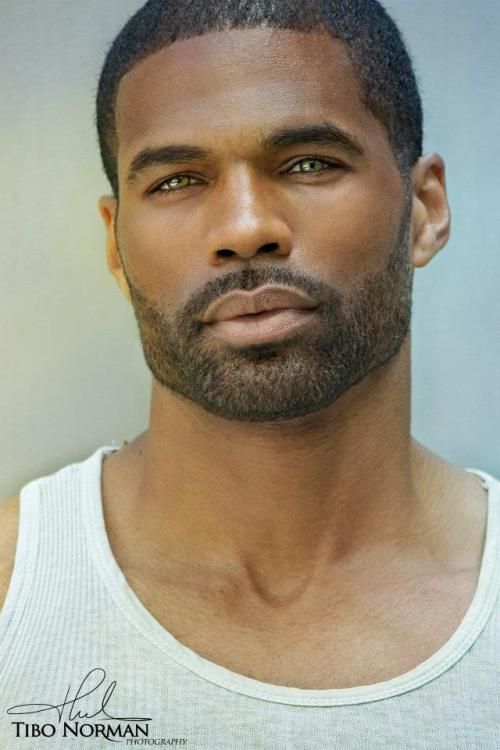
Louis Allen III (LA3)

“The Green-Eyed Hunk: Athletic strength, masculine beauty, and unforgettable allure.”

Photo Credit: Tibo Norman

Louis Allen III, known professionally as LA3, emerged from New Jersey as a modeling force defined by his remarkable green eyes, warm brown complexion, and athletic physique honed from his earlier years in minor-league football. His modeling journey began in high school, and he quickly became known for his commanding appearance in editorial spreads and grooming campaigns. Allen’s features made him a favorite for “Eye Candy” showcases and brand ambassador roles, where he represents the fusion of masculine beauty, athletic power, and classic photogenic appeal. Although his acting portfolio is smaller, he continues to expand his influence in fashion, fitness, and men’s grooming culture.

Together, these three men represent different dimensions of modern Black male beauty—intense, elegant, and powerfully photogenic. Their stories show how physical presence, combined with talent and ambition, opens doors across film, modeling, and public life. Each of them brings a unique energy to the screen or lens: Stanfield with soulful complexity, Carter with polished charm, and Allen with athletic grandeur. They reflect a new era in representation where Black men can embody sensitivity, strength, mystery, and beauty simultaneously. Their careers not only highlight their personal evolution but also expand the cultural imagination of what masculine perfection looks like in the twenty-first century.


References
“Ali Amin Carter – Biography,” IMDb.
“Love Unexpected,” IMDb.
“LaKeith Stanfield – Personal Life,” Essential Magazine.
“LaKeith Stanfield – Biography,” Wikipedia.

IMDb. LaKeith Stanfield – Biography.
Time Magazine. LaKeith Stanfield: Contemporary Chameleon.
Empire Magazine. LaKeith Stanfield Profile.
IMDb. Ali Amin Carter – Biography.
Essence Magazine. Eye Candy: Louis Allen III.
Blinging Beauty. The Face of Blinging Beauty’s Manly Man is LA