Category Archives: black history

Gil Scott-Heron: The Voice of the Revolution that was Televised 🎤

🎤 The Voice of a Generation…..
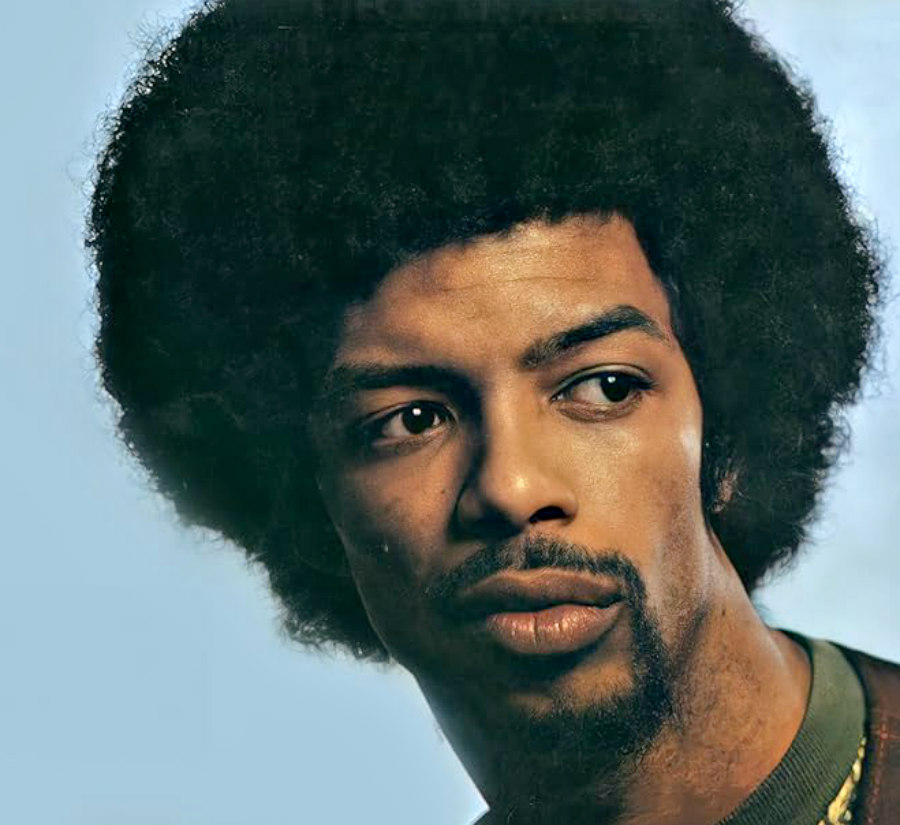
Gil Scott-Heron was a poet, musician, novelist, and spoken-word prophet whose powerful lyrics and uncompromising critique of systemic racism made him a towering figure in Black consciousness and American protest culture. Best known for his seminal work “The Revolution Will Not Be Televised,” Scott-Heron used jazz, funk, and poetry to expose the hypocrisy of American democracy and ignite a deeper understanding of Black identity, oppression, and resilience.


🪶 Biography: A Revolutionary Mind

Gilbert Scott-Heron was born on April 1, 1949, in Chicago, Illinois, and raised in Jackson, Tennessee and later The Bronx, New York. His mother, Bobbie Scott, was a librarian and opera singer; his father, Gil Heron, was a Jamaican-born professional soccer player and the first Black man to play for Scotland’s Celtic FC. Scott-Heron was intellectually precocious, winning a full scholarship to the elite Fieldston School in New York and later attending Lincoln University—a historically Black university in Pennsylvania—where he began collaborating with future jazz great Brian Jackson.

He later earned his master’s degree in creative writing from Johns Hopkins University, blending literary talent with political activism and music.


📢 “The Revolution Will Not Be Televised” – A Cultural Detonation

First recorded in 1970, “The Revolution Will Not Be Televised” became an anthem for Black power and radical critique. Delivered in a gritty, urgent tone over a sparse conga beat, the piece warned against passive consumption of media, urging Black Americans to reject corporate distractions and confront real-world oppression.

“The revolution will not be brought to you by Xerox…The revolution will not go better with Coke.”

It rejected commercialism and fake liberalism, shaking the Black community out of political slumber. For many, it was a wake-up call to reclaim agency, identity, and justice—decades before terms like “woke” were popularized. It remains a cornerstone of hip-hop, neo-soul, and conscious rap, influencing artists like Public Enemy, Kendrick Lamar, Common, and Kanye West.


💍 Marriage, Family, and Struggles

Scott-Heron was married to Brenda Sykes, an actress, and had several children, including Gia Scott-Heron, a poet. His personal life, however, was often turbulent. He struggled with drug addiction, particularly crack cocaine, which led to multiple arrests and prison stints.

He died on May 27, 2011, in New York City, reportedly from complications related to HIV/AIDS, as well as pneumonia.


🏆 Awards and Recognition

Despite his commercial limitations, Scott-Heron was widely revered:

  • Grammy Lifetime Achievement Award (posthumously, 2012)
  • BET Honors and various tributes by musical peers
  • Inducted into the Rock and Roll Hall of Fame (2021) under the category of Early Influence

Critics often credit him as the “godfather of rap,” though he personally rejected the label, arguing that his work was rooted more in Blues, Jazz, and Soul-inflected poetry than the structure of hip-hop.


📚 Literary Work: The Vulture (1970)

Gil Scott-Heron was also an accomplished novelist. His debut novel The Vulture was a gripping urban murder mystery that explored themes of race, violence, and identity in Harlem. The story follows the murder of a young Black man and the perspectives of four friends as they try to uncover the truth.

Written when he was just 19, the novel was raw, honest, and infused with street dialect, jazz rhythms, and sociopolitical tension. Scott-Heron wrote it because he saw literature as another weapon to confront societal neglect and expose the real conditions of inner-city youth. The novel was praised for giving voice to disenfranchised Black characters in a way few literary works had done before.


🤍 Reception from White America

Scott-Heron’s message was unapologetically pro-Black and critical of systemic whiteness, so mainstream (largely white) America viewed him with caution, if not outright hostility. However, progressive white intellectuals and musicians appreciated his genius. Over time, as social justice became a broader conversation, even mainstream outlets began to recognize his prophetic insight.


🧠 What He Thought and Said

Scott-Heron was not only a performer but also a philosopher of Black struggle. One of his most quoted lines:

“The first revolution is when you change your mind.”
—Gil Scott-Heron, The Mind of Gil Scott-Heron (1978)

He believed liberation began with mental transformation—a message that deeply influenced Black consciousness movements.


🔥 Legacy and Influence

Scott-Heron’s work laid the foundation for conscious hip-hop, Black Lives Matter rhetoric, and modern spoken word. His uncompromising style still echoes through the works of artists like Nas, Mos Def, Erykah Badu, and Common.

Though he passed away in 2011, Gil Scott-Heron’s prophetic voice still resonates in every protest, every poem, and every performance that dares to tell the truth.


📚 References

Dilemma:🌹 Navigating Identity — Invisible Yet Indispensable: The Labor of Black Women in Society 🌹

🌹 The Brown Girl🌹

Photo by Ivan Samkov on Pexels.com

The journey of the Black woman is a complex tapestry woven with strands of resilience, faith, pain, and perseverance. Her voice, often muted by systemic oppression, resonates with both the echoes of ancestral struggle and the melody of survival. Despite her indispensable role in the shaping of societies, the Black woman remains caught between visibility and invisibility, celebrated yet silenced, desired yet devalued. This essay examines the layered dilemmas Black women face, focusing on silencing and gaslighting, mental health taboos, and generational trauma, while drawing upon psychology and the King James Bible (KJV) for insight and pathways toward healing.

Black women occupy a paradoxical position in society: they are both invisible and indispensable. Their labor has historically undergirded economies, families, and communities, yet their voices, bodies, and contributions are often dismissed or appropriated. This dilemma—rooted in slavery and perpetuated through systemic inequities—has created a cycle of resilience and exhaustion. Black women are expected to give endlessly while being denied the recognition and care they deserve. As scholar bell hooks (1981) argued, the exploitation of Black women’s labor is foundational to both racism and patriarchy, rendering them crucial yet overlooked participants in social progress.

The Price of Being Heard: Silencing and Gaslighting of Black Women’s Voices

One of the most profound challenges Black women face is the silencing of their voices. Whether in corporate boardrooms, political arenas, or healthcare settings, Black women are often dismissed, interrupted, or told their concerns are exaggerated. The tragic case of Serena Williams—who was ignored by medical staff during childbirth complications—illustrates how even wealthy, high-profile Black women experience silencing. Psychologically, this dismissal results in gaslighting: being made to question one’s reality or truth. Biblically, silencing echoes the injustice condemned in Proverbs 31:8 (KJV): “Open thy mouth for the dumb in the cause of all such as are appointed to destruction.” Scripture affirms that truth-telling is both a moral responsibility and a sacred act, underscoring the need to honor Black women’s testimonies.

Psychology of Silencing

From a psychological standpoint, constant silencing creates cognitive dissonance and internalized self-doubt. Research shows that being unheard increases anxiety and depressive symptoms, while persistent microaggressions erode self-esteem (Sue, 2010). For Black women, the compounded effect of race and gender means their silence is not merely personal but systemic. Overcoming this requires validating their voices, establishing platforms where they are centered, and teaching communities to listen with humility rather than defensiveness.

Solutions for Amplification

To counteract silencing, Black women must be given space in leadership, policy, and media representation. Mentorship programs, advocacy networks, and deliberate inclusion in decision-making structures can elevate voices long ignored. Churches and communities must also challenge patriarchal norms that discourage women from speaking openly. The Apostle Paul’s reminder in Galatians 3:28 (KJV)—“There is neither Jew nor Greek, there is neither bond nor free, there is neither male nor female: for ye are all one in Christ Jesus”—calls for dismantling hierarchies that devalue women’s contributions.

Black Women and Mental Health: Breaking the Taboo of Therapy and Healing

Mental health remains a taboo subject within many Black communities. Generational teachings to “pray it away” or “stay strong” have discouraged women from seeking professional help. The stigma is compounded by historical medical racism, such as the exploitation of Black bodies in the Tuskegee experiments. Psychologically, suppression of emotional struggles manifests as anxiety, depression, and even somatic illnesses like hypertension. Woods-Giscombé (2010) notes that the “Superwoman Schema” forces Black women to conceal vulnerability, worsening mental health outcomes.

Biblical and Psychological Perspective on Healing

The Bible affirms the importance of rest, restoration, and vulnerability. Matthew 11:28 (KJV) declares: “Come unto me, all ye that labour and are heavy laden, and I will give you rest.” This scripture reminds Black women that God does not demand unending strength but invites them into divine rest. Psychologically, therapy provides tools to unpack trauma, process grief, and build resilience. When paired with faith, therapy becomes not a contradiction to spirituality but a complement to healing.

Breaking the Stigma: Examples and Solutions

Examples of progress include the growing movement of Black female therapists, such as Dr. Joy Harden Bradford, founder of Therapy for Black Girls, which normalizes counseling within the community. Support groups, church-based wellness ministries, and culturally competent therapists are helping women dismantle stigma. Overcoming silence around mental health requires both education and representation—seeing women who look like them embrace therapy validates its importance.

Daughters of the Diaspora: Carrying Generational Trauma and Triumph

Black women also bear the dual inheritance of generational trauma and triumph. The legacies of slavery, colonization, and Jim Crow laws passed down unresolved pain—manifesting in patterns of fear, hypervigilance, and mistrust (DeGruy, 2005). At the same time, the triumph of survival, creativity, and spiritual faith continues to shape diasporic identity. For instance, the resilience of mothers and grandmothers who held families together amid oppression reflects triumph woven into trauma. This paradox forms the heart of diasporic womanhood: carrying both burden and brilliance.

Psychology of Intergenerational Trauma

Intergenerational trauma is supported by epigenetic research showing that stress can alter genetic expressions, passing heightened vulnerability to descendants (Yehuda & Lehrner, 2018). For Black women, inherited trauma manifests in hyper-responsibility, guardedness, and sometimes mistrust in relationships. Yet resilience is also passed down, enabling survival and cultural creativity. Psychologists argue that acknowledging both trauma and triumph is critical for holistic healing.

Biblical Understanding of Generational Struggles

The Bible acknowledges generational consequences: “Visiting the iniquity of the fathers upon the children unto the third and fourth generation” (Exodus 20:5, KJV). Yet it also emphasizes redemption: “But the mercy of the Lord is from everlasting to everlasting upon them that fear him” (Psalm 103:17, KJV). For Black women, this means generational pain is real but not final. Faith and intentional healing practices can break cycles of suffering.

Practical Solutions for Diasporic Healing

Healing generational trauma requires storytelling, therapy, and cultural reclamation. Practices such as oral history projects, mother-daughter healing circles, and reconnecting with African heritage provide pathways to empowerment. Community spaces that celebrate Black culture, music, and spirituality affirm the triumph that accompanies trauma. For example, the Gullah traditions in South Carolina preserve ancestral memory, providing cultural pride and connection.

Invisible Yet Indispensable: The Labor of Black Women

Throughout history, Black women have been the backbone of families, churches, and economies. From enslaved women sustaining households to domestic workers of the 20th century, their labor has often been invisible yet essential. Even today, Black women disproportionately fill caregiving roles—nurses, teachers, social workers—while also leading grassroots activism. Their indispensability, however, is rarely matched with recognition or protection. Ecclesiastes 3:13 (KJV) reminds us: “Every man should eat and drink, and enjoy the good of all his labour, it is the gift of God.” This affirms the dignity of labor that must be extended to Black women.

The Psychology of Overwork and Recognition

Psychologically, the invisibility of labor leads to burnout, resentment, and internalized feelings of worthlessness. When contributions are undervalued, women experience the psychological toll of invisibility—feeling unseen despite being overextended. Overcoming this requires systemic recognition of Black women’s work, pay equity, and shared household responsibilities. Within communities, honoring Black women means affirming their contributions without exploiting their endurance.

Toward Healing and Liberation

In overcoming these dilemmas, Black women must reclaim vulnerability, embrace therapy, and center their voices. Society must amplify rather than silence, honor rather than exploit, and protect rather than disregard. As Paul writes in 2 Corinthians 12:9 (KJV): “My grace is sufficient for thee: for my strength is made perfect in weakness.” This verse reframes weakness not as failure but as the gateway to divine empowerment. Solutions lie in a holistic embrace of faith, psychology, and cultural resilience—recognizing that Black women’s survival is not enough; their flourishing is essential for the healing of communities.


References

  • bell hooks. (1981). Ain’t I a woman? Black women and feminism. South End Press.
  • DeGruy, J. (2005). Post Traumatic Slave Syndrome: America’s legacy of enduring injury and healing. Uptone Press.
  • Sue, D. W. (2010). Microaggressions in everyday life: Race, gender, and sexual orientation. Wiley.
  • Woods-Giscombé, C. L. (2010). Superwoman schema: African American women’s views on stress, strength, and health. Qualitative Health Research, 20(5), 668–683.
  • Yehuda, R., & Lehrner, A. (2018). Intergenerational transmission of trauma effects: Putative role of epigenetic mechanisms. World Psychiatry, 17(3), 243–257.

The Moors: The Children of the Crescent and Cross.

Photo by Edson Habacuc Rafael on Pexels.com

The Untold Legacy of the Moors in World History.

The Moors were a people of profound cultural, scientific, and political influence whose legacy shaped Europe, North Africa, and beyond. While the term “Moor” historically referred to Muslim inhabitants of the Maghreb (Northwest Africa), Iberian Peninsula, Sicily, and parts of southern Europe during the Middle Ages, their identity and contributions have often been obscured or misrepresented in modern narratives. Many scholars agree that a significant portion of the Moors were of African descent, including Black and Berber populations (Van Sertima, 1991). They were not only warriors and rulers but also scholars, architects, scientists, and traders whose intellectual and cultural gifts transformed European civilization.


I. Origins and Identity

The word “Moor” derives from the Latin Maurus, meaning an inhabitant of Mauretania, a region of ancient North Africa. By the Middle Ages, European Christian writers used “Moor” as a broad term for Muslims of African origin—especially those who came from the Maghreb and crossed into Spain in 711 CE under the leadership of Tariq ibn Ziyad (Fletcher, 1992). Historical evidence, including contemporary accounts, reveals that many of these people had dark skin and African features, confirming their Black African heritage alongside Berber ancestry (Snowden, 1970).


II. Geographic Location

The Moors’ power base stretched across:

  • Northwest Africa: Present-day Morocco, Algeria, Tunisia, Mauritania.
  • Al-Andalus: Muslim-ruled areas of Spain and Portugal from 711 to 1492.
  • Sicily and Southern Italy during parts of the 9th–11th centuries.

From these centers, they controlled vital trade routes linking Africa, Europe, and the Middle East.


III. Contributions to Europe

The Moors’ eight-century presence in Europe—especially in Spain—sparked what some historians call the European Renaissance before the Renaissance. Key contributions included:

  1. Education and Libraries – Córdoba alone had over 70 libraries, with one housing 400,000–600,000 manuscripts at a time when much of Europe was illiterate (Menocal, 2002).
  2. Science and Medicine – Introduced advanced surgical techniques, optics, and pharmacology (Savage-Smith, 1996).
  3. Mathematics – Brought Arabic numerals, algebra (al-jabr), and astronomical instruments like the astrolabe.
  4. Architecture – Built intricate palaces and mosques such as the Alhambra in Granada, blending geometric design with lush gardens and waterworks.
  5. Agriculture – Introduced new crops (rice, citrus fruits, sugarcane) and advanced irrigation systems.
  6. Philosophy – Preserved and translated works of Aristotle, Plato, and other Greek scholars, influencing Christian theologians such as Thomas Aquinas.

IV. Daily Life and Culture

The Moors lived in cosmopolitan cities with paved streets, public baths, markets, and universities. Their society valued literacy, hygiene, and cultural refinement. Women in elite Moorish households could be educated, and the culture encouraged poetry, music, and scholarly debate. The Moors also engaged in international trade, linking African gold and ivory routes to European markets.


V. Were the Moors Bible Believers?

The majority of Moors were Muslim, following Islam after the Arab expansion into North Africa in the 7th century. However, historical records show that Christian and Jewish communities lived under Moorish rule with relative tolerance compared to medieval Christian kingdoms (Fletcher, 1992). While the Moors were not primarily biblical Israelites in faith practice, some modern Afrocentric and Hebraic Israelite scholars argue that among them were remnants of dispersed Israelites who had migrated into North Africa before and after the Roman destruction of Jerusalem in 70 CE (Ben-Jochannan, 1993).


VI. Decline and Fall

The Reconquista—a centuries-long Christian campaign—gradually reduced Moorish territories. In 1492, Granada, the last Moorish stronghold in Spain, fell to Ferdinand and Isabella. This marked the end of Moorish political power in Europe, followed by forced conversions, expulsions, and persecution.


VII. Legacy

The Moors left a transformative legacy in Europe:

  • They catalyzed intellectual revival in the West.
  • They demonstrated advanced urban planning centuries ahead of much of medieval Europe.
  • Their African heritage challenges the narrative that European advancement came without African influence.
    Today, Moorish architecture, scientific texts, and agricultural practices stand as monuments to their ingenuity.

Conclusion

The Moors were not merely conquerors; they were cultural transmitters whose African and Islamic heritage reshaped Europe’s intellectual and material world. Their presence in Spain and beyond proves that African-descended peoples played a central role in shaping global history. As Psalm 24:1 (KJV) reminds us, “The earth is the LORD’s, and the fulness thereof,”—a truth reflected in the Moors’ bridging of continents, cultures, and civilizations.


References

Ben-Jochannan, Y. (1993). African origins of major “Western” religions. Black Classic Press.
Fletcher, R. (1992). Moorish Spain. University of California Press.
Menocal, M. R. (2002). The ornament of the world: How Muslims, Jews, and Christians created a culture of tolerance in medieval Spain. Little, Brown, and Company.
Savage-Smith, E. (1996). Islamic culture and the medical arts. National Library of Medicine.
Snowden, F. M. (1970). Blacks in antiquity: Ethiopians in the Greco-Roman experience. Harvard University Press.
Van Sertima, I. (1991). Golden age of the Moor. Transaction Publishers.

Form Chains to Change: The Generational Impact of Slavery on Black Identity.

“The most disrespected person in America is the Black woman. The most unprotected person in America is the Black woman. The most neglected person in America is the Black woman.” — Malcolm X
(This quote underscores the systemic marginalization central to the shaping of Black identity, extended to men and the collective African American community.)


Photo by Pavel Danilyuk on Pexels.com

Black identity is a dynamic construct shaped by history, culture, resilience, and resistance. It encompasses heritage, spirituality, values, and communal bonds that define self-perception, social behavior, and relational understanding. The legacy of slavery has profoundly influenced this identity, leaving psychological, social, and cultural marks that persist across generations. Slavery was not merely the forced labor of Africans in the Americas; it was a system designed to strip individuals of lineage, dignity, and autonomy. The chains were physical, yes, but they were also mental, emotional, and spiritual, creating enduring trauma that shaped how Black people see themselves, their communities, and their place in society.


The Generational Impact of Slavery

Slavery systematically disrupted family structures, cultural transmission, and self-definition. Children were separated from parents, languages were suppressed, and cultural traditions were erased. As a result, Black identity was fragmented, and individuals were often forced to reconstruct their sense of self within an oppressive system. Intergenerational trauma, documented in Dr. Joy DeGruy’s Post-Traumatic Slave Syndrome (2005), demonstrates that behaviors such as hyper-vigilance, mistrust of authority, low self-esteem, and coping mechanisms like code-switching are inherited psychological patterns linked to slavery’s brutal legacy. These patterns continue to shape relationships, economic opportunities, and mental health outcomes within the African diaspora.


Slavery and Its Psychological Effects

From a psychological perspective, slavery inflicted both acute and chronic trauma. The denial of autonomy, physical punishment, and social dehumanization resulted in post-traumatic stress-like symptoms, internalized oppression, and the phenomenon of identity conflict. Scholars have compared some aspects of this to Stockholm Syndrome, wherein oppressed groups may internalize the perspectives or values of the oppressor to survive. Moreover, the consistent invalidation and marginalization by dominant society have led to cumulative psychological burdens, often manifesting as anxiety, depression, and intergenerational mistrust. These impacts are not confined to history; they influence educational attainment, community cohesion, and interpersonal relationships today.


Systemic Denial and White Supremacy

One reason white society has often refused to fully acknowledge Black contributions or humanity is the perpetuation of white supremacy. By minimizing African achievements, denying historical truths, and controlling narratives in media, education, and politics, dominant groups reinforced hierarchies and justified oppression. This intentional erasure disrupts the recognition of Black identity, contributing to internalized oppression and societal marginalization. The chains of slavery, therefore, were extended by ideology and policy, leaving psychological imprints that influence racial dynamics today.


Biblical Perspective on Chains and Liberation

The Bible offers insight into the spiritual and symbolic dimensions of bondage. In Exodus 6:6 (KJV), God declares: “Wherefore say unto the children of Israel, I am the LORD, and I will bring you out from under the burdens of the Egyptians, and I will rid you out of their bondage, and I will redeem you with a stretched out arm, and with great judgments.” Chains, in biblical terms, represent oppression, but they also reflect divine awareness and the promise of liberation. Similarly, Psalm 107:14 (KJV) states: “He brought them out of darkness and the shadow of death, and brake their bands in sunder.” These passages underscore that freedom is both physical and spiritual, resonating with the African American struggle to reclaim identity and agency across generations.


The Reflection of the Past in the Present

The generational impact of slavery continues to shape Black identity in the 21st century. Relationships within families, communities, and broader society often reflect inherited trauma: difficulties in trust, overcompensation in professional or social spaces, and complex responses to authority. Psychologists recognize that historical trauma affects not just individuals but entire populations. For instance, intergenerational transmission of trauma can manifest as collective stress, influencing patterns of parenting, community organization, and resilience-building. Yet, this recognition also presents an opportunity: by understanding the chains of history, the Black community can consciously break them and rebuild identity on foundations of knowledge, pride, and spiritual alignment.


Reclaiming Identity and Breaking Chains

Reclaiming Black identity requires multifaceted approaches:

  1. Education: Teaching accurate historical narratives that celebrate African contributions and highlight resistance to oppression.
  2. Psychological Intervention: Addressing intergenerational trauma through therapy, community support, and culturally sensitive mental health practices.
  3. Spiritual Reclamation: Embracing biblical and cultural narratives that affirm dignity, divine purpose, and collective identity.
  4. Community and Cultural Revival: Promoting arts, literature, and practices that reinforce heritage and self-definition.

By addressing these domains, African descendants can transform the lingering impacts of slavery into sources of empowerment, resilience, and self-awareness.


Conclusion

The chains of slavery were both literal and metaphorical, shaping Black identity across generations in profound ways. Psychological scars, systemic marginalization, and cultural erasure are enduring legacies of bondage, yet they also reveal the resilience and strength of African descendants. By studying history, engaging in spiritual and psychological reclamation, and fostering cultural continuity, the Black community can transform generational trauma into conscious identity formation. As Malcolm X and Cornel West emphasize, the acknowledgment of past oppression is the first step toward liberation, self-determination, and collective progress. The future of Black identity depends on understanding the chains of the past and consciously forging paths toward freedom and self-realization.


References

  • DeGruy, J. (2005). Post Traumatic Slave Syndrome: America’s Legacy of Enduring Injury and Healing. Uptone Press.
  • Franklin, J. H., & Moss, A. A. (2000). From Slavery to Freedom: A History of African Americans (8th ed.). McGraw-Hill.
  • West, C. (1993). Race Matters. Beacon Press.
  • Malcolm X. (1965). The Autobiography of Malcolm X. Ballantine Books.
  • Jones, R. (2010). Intergenerational Transmission of Trauma in African Americans. Journal of Black Psychology, 36(1), 1–25. https://doi.org/10.1177/0095798409353752
  • The Holy Bible, King James Version.

Neely Fuller Jr: The Architect of Counter-Racist Logic and Black Empowerment.

Neely Fuller Jr. is a highly influential yet often underrecognized figure in the realm of African American thought, particularly known for his work on racism, white supremacy, and Black empowerment. Born in the United States during the era of Jim Crow segregation, Fuller developed a worldview deeply shaped by systemic racial oppression. Though many of the personal details of his life—including his date of birth, marital status, and family life—remain private, what stands out is his lifelong dedication to analyzing and dismantling the global system of white supremacy through logic, language, and behavioral code.


Who Is Neely Fuller Jr.?

Neely Fuller Jr. is best known as a theorist and author who introduced a unique, structured framework for understanding and addressing racism in America and worldwide. His life’s work revolves around his central thesis: “If you do not understand white supremacy—what it is and how it works—everything else that you think you understand will only confuse you.” This statement has become a foundational mantra for many in the modern Black liberation and Afrocentric consciousness movements.

Fuller served in the U.S. military and worked as a government employee, experiences that contributed to his understanding of institutionalized racism. Despite lacking the mainstream visibility of figures like Malcolm X or Dr. Martin Luther King Jr., Fuller’s teachings have profoundly impacted generations of Black thinkers, including Dr. Frances Cress Welsing, who credited Fuller’s framework as the intellectual foundation for her own work, The Isis Papers.


His Major Work: A Compensatory Counter-Racist Code

Neely Fuller Jr.’s most well-known book is titled The United Independent Compensatory Code/System/Concept: A Compensatory Counter-Racist Code (first published in 1984 and revised in later editions). The book is not a traditional narrative or academic text; rather, it is a manual—a code of conduct designed to guide non-white people in navigating and countering racism in everyday life.

The book is grounded in logic, clarity, and a precise use of language. Fuller argues that white supremacy is a global system that dominates all areas of people activity: economics, education, entertainment, labor, law, politics, religion, sex, and war. His book offers a “code” of behaviors and linguistic patterns that help non-white people avoid conflict, think critically, and engage in constructive activity rather than reacting emotionally or violently to racism.


Highlights of the Code

  1. Definition of White Supremacy: Fuller defines racism and white supremacy as the same thing, a unified system with the primary goal of maintaining power over all non-white people.
  2. Logic-Based Living: He urges Black people to think, speak, and act in ways that produce justice and eliminate confusion.
  3. Constructive Speech: Fuller teaches the use of precise language—coining the term “codification”—to avoid being manipulated by racist ideology hidden in words.
  4. Sexual Politics: He outlines how sex and relationships are also controlled by the system of white supremacy, emphasizing self-discipline and mutual respect in Black relationships.
  5. Compensatory Code: Non-white people must act independently but in a unified and compensatory way—that is, in a manner that “makes up for” the imbalance caused by racism without engaging in emotional retaliation or disorder.
  6. Universal Man and Universal Woman: Fuller envisions a future where justice is the norm and individuals function without needing the system of racism for identity or value.

Reception and Legacy in the Black Community

While Neely Fuller Jr. has never been a household name, his influence in the conscious Black community is immeasurable. He is widely respected by scholars, activists, and critical thinkers who study race and systems of power. Podcasts, YouTube channels, and online forums continue to analyze and promote his teachings, often referring to him as “the master of logic.”

Figures like Dr. Frances Cress Welsing have publicly praised him, and his concepts are foundational in Afrocentric educational spaces, particularly those focused on mental liberation, cultural sovereignty, and counter-colonial thought. Many regard him as a philosophical giant, especially for his emphasis on the psychological dimensions of racial control.

However, his work has also been critiqued by some as overly methodical or lacking in revolutionary emotion. Yet Fuller deliberately avoided traditional activism or protest methods, believing that emotion-driven movements were easier for white supremacy to manipulate or destroy.


What He Is Known For

  • Creating the Counter-Racist Codification System
  • Influencing critical race theorists like Frances Cress Welsing
  • Highlighting the totalizing nature of white supremacy across all domains of human activity
  • Promoting logic, calmness, and consistency in Black liberation thought
  • Developing a philosophy of “maximum thought, speech, and action to produce justice”

Conclusion

Neely Fuller Jr. is a towering intellectual in the struggle for Black liberation and truth. Through his logical, disciplined framework, he provided tools for African Americans and all non-white people to analyze and dismantle the deceptive and destructive power of white supremacy. While his personal life remains largely hidden from public view, his public legacy—one of clarity, code, and consciousness—continues to shape the minds and strategies of freedom fighters around the globe.


Recommended Reading

  • Fuller, N. (2016). The United Independent Compensatory Code/System/Concept: A Compensatory Counter-Racist Code (Revised Edition). Neely Fuller Publications.
  • Welsing, F. C. (1991). The Isis Papers: The Keys to the Colors. Third World Press.
  • Black Dot, T. (2005). Hip Hop Decoded. Momi Publishing.

“Rosewood: A Massacre Fueled by Lies and White Supremacy in 1923 Florida”


Photo by Alexander Zvir on Pexels.com

Introduction

The story of Rosewood, Florida is one of prosperity, racial pride, and horrifying destruction. Once a thriving Black town in Levy County, Rosewood was obliterated in January 1923 due to a racially charged lie that incited white mob violence. Like the tragedies of Tulsa’s Black Wall Street and the Devil’s Punchbowl, Rosewood exemplifies how Black success in early 20th-century America was often met with white rage, systemic racism, and historical erasure.


The Founding and Prosperity of Rosewood

Founded in the late 1800s, Rosewood was a small, self-sufficient, predominantly African American town. Located near the Gulf Coast of Florida, the town was originally established as a timber and turpentine community. Over time, the Black residents of Rosewood built homes, churches, a school, and several successful businesses. By the early 1920s, Rosewood had become a symbol of Black independence.

The town was made up of about 25 Black families, most of whom were landowners—a rarity in the Jim Crow South. Occupations included blacksmiths, carpenters, midwives, and educators. One notable figure was Sarah Carrier, a well-known midwife and one of the community’s matriarchs.

Rosewood residents lived peacefully—until a white woman in a nearby town falsely accused a Black man of assault, setting off a chain of racial terror.


The Incident: Lies and Racial Violence

On January 1, 1923, Fannie Taylor, a white woman from the neighboring town of Sumner, claimed she had been beaten and assaulted by a Black man while her husband was at work. In truth, she had been injured by her white lover, but to hide her infidelity, she blamed an anonymous Black man. This lie sparked a mob of angry white residents, who began scouring the area for any Black man they could find.

The first victim was Sam Carter, a Black craftsman tortured and lynched when he refused to divulge the whereabouts of the alleged assailant. Soon after, white mobs, some from as far as Gainesville and Jacksonville, stormed Rosewood with rifles, torches, and a thirst for vengeance.


The Massacre and Destruction

Between January 1 and January 7, 1923, the town of Rosewood was burned to the ground. Homes, churches, and schools were set ablaze. Eyewitnesses described the scene as a hellish blaze with smoke rising above the pine trees. At least six Black residents were killed, including Sarah Carrier, who died protecting children hiding in her home. Others were shot as they fled or tortured for information.

The number of deaths is still debated. While official records confirm around six to eight, survivors and descendants estimate that dozens were killed, with bodies either burned in the fires or dumped in mass graves.

Most of the survivors hid in the swamps for days without food, before being evacuated by a few courageous white allies, including John and William Bryce, local train conductors who secretly transported Black families to safety.


Why Did It Happen?

The massacre was rooted in racism, economic envy, and the fear of Black advancement. Rosewood’s prosperity challenged the status quo of white supremacy. Many white residents were resentful that Black citizens owned land, ran businesses, and lived independently.

The lie told by Fannie Taylor was simply a spark that ignited deep-seated hatred. As journalist Gary Moore, who helped revive the story in the 1980s, said:

“It was not just a lynching. It was ethnic cleansing.”


The Aftermath and Silence

After the massacre, Rosewood ceased to exist. Survivors never returned, and many were too traumatized or afraid to speak about what happened. For decades, the story of Rosewood remained buried.

Law enforcement never prosecuted any of the perpetrators, and state officials did nothing to investigate or compensate the victims. The fear of retribution or being labeled a “troublemaker” kept survivors silent.

It wasn’t until the 1990s that survivors came forward with their stories. In 1994, the state of Florida passed the Rosewood Compensation Bill, awarding $2.1 million in reparations to nine survivors and establishing scholarships for descendants. This was one of the first instances of reparations in U.S. history for racial violence (D’Orso, 1996).


Personal Testimonies and Survivors

One of the most vocal survivors was Minnie Lee Langley, who was 7 years old at the time of the massacre. In later interviews, she recalled:

“They burned everything. Everything. We hid in the woods. My mama told me to keep quiet so the white folks wouldn’t hear us.”

Another survivor, Arnett Doctor, helped spearhead the movement for recognition and reparations. He later became known as the “father of the Rosewood legislation.”


Economic Impact and Racial Injustice

The destruction of Rosewood devastated families economically and emotionally. Land that once belonged to Black residents was never returned. This contributed to the racial wealth gap that persists today.

The massacre also underscored the legal impunity enjoyed by white mobs. Local sheriffs did nothing to intervene. White silence and complicity made justice impossible.


Legacy and Rebuilding

Though Rosewood was never rebuilt, its legacy lives on in books, documentaries, and even film. The 1997 movie Rosewood, directed by John Singleton and starring Ving Rhames and Don Cheadle, brought national attention to the tragedy.

In recent years, efforts have been made to preserve the memory of Rosewood:

  • A historical marker was erected in 2004
  • Descendants meet annually to commemorate the lost town
  • Florida’s education system has slowly integrated the story into its curriculum

Still, many argue that true justice has not been served.


Conclusion

The Rosewood Massacre was a deliberate act of racial terrorism, rooted in lies, jealousy, and the desire to uphold white supremacy at the cost of Black lives. It represents more than just a violent episode—it exemplifies how racism, unchecked by law or conscience, destroyed Black progress and stole generational wealth.

The tragedy of Rosewood must be remembered, not only to honor the victims and survivors, but to understand how systemic racism shaped American history and continues to shape the Black experience today.


References

  • D’Orso, M. (1996). Like Judgment Day: The Ruin and Redemption of a Town Called Rosewood. Putnam Publishing Group.
  • Moore, G. (1982, July). “Rosewood Massacre.” St. Petersburg Times.
  • U.S. House of Representatives. (1994). Rosewood Compensation Act. Florida State Archives.
  • Singleton, J. (Director). (1997). Rosewood [Film]. Warner Bros.

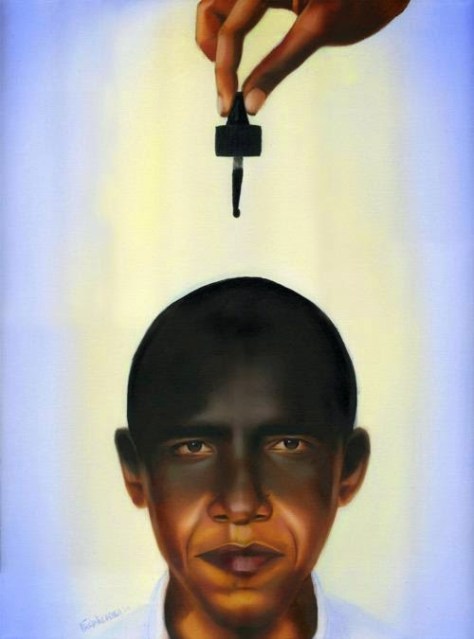
The ONE-DROP Rule: Origins, Biblical Lineage, and the Psychology of Racial Classification.

This artwork/photograph is the property or its respective owner.

The concept of the “one-drop rule” is one of the most insidious legal and psychological tools used in the history of racial oppression in the United States. It declared that any person with even one drop of African ancestry was considered Black, regardless of their appearance or the heritage of their other parent. Rooted in white supremacy and the preservation of a racially stratified society, this rule carried severe social, legal, and psychological implications that are still felt today. While unbiblical in origin, the practice is often at odds with the ancient scriptural understanding that identity, especially tribal or ethnic lineage, is determined through the father’s seed—not the mother.


Origins of the One-Drop Rule

The one-drop rule emerged in the American South during the late 17th and early 18th centuries. While not officially named at the time, colonial slave societies began developing legal statutes that defined the status of individuals with mixed ancestry. The first legal precedent was set in Virginia’s 1662 law: “Partus sequitur ventrem”—a Latin phrase meaning “that which is born follows the womb.” This law ensured that children born to enslaved women, even if fathered by white men, would inherit the status of the mother—remaining enslaved (Higginbotham, 1978). This policy contradicted both biblical and patriarchal norms, where identity typically follows the paternal line.

By the 20th century, particularly with the passage of laws in states like Louisiana (1908) and Tennessee (1910), the idea was codified: any person with any African ancestry, no matter how minimal, was legally Black. This was not science—it was sociology engineered to reinforce segregation, deny land and inheritance, and eliminate ambiguity around racial classification. In 1924, Virginia’s Racial Integrity Act legally enforced the one-drop rule and defined a “white person” as someone with “no trace whatsoever of any blood other than Caucasian.”


The Biblical Law of Lineage Through the Father

Contrary to these racial laws, the Bible teaches that a person’s lineage is determined through the father’s seed. According to the King James Version with Apocrypha, tribal and national identity among the Israelites came from the male line:

“And they assembled all the congregation together on the first day of the second month, and they declared their pedigrees after their families, by the house of their fathers, according to the number of the names, from twenty years old and upward, by their polls.”
Numbers 1:18 (KJV)

This shows that Israelite identity was inherited from the father. The same principle is echoed in several other instances, such as:

  • Nehemiah 7:61-64: Where priesthood and national identity were denied to those who could not trace their lineage through their father’s house.
  • Ezra 2:59: Individuals who could not prove their paternal heritage were considered polluted and excluded from certain offices.

In this context, if a man’s father is from another nation (like Esau, Ishmael, or the Gentiles), the child would inherit that man’s identity—even if the mother is Israelite. Hence, by biblical standards, individuals like Princess Meghan Markle (whose father is white) or Barack Obama (whose father was a Black Kenyan, not an Israelite of the West African diaspora) would not fall under the biblical definition of an Israelite.


Barack Obama and Meghan Markle: Case Studies in Racial Perception

Barack Obama, born to a white American mother and a Black Kenyan father, was consistently identified by society as the first Black U.S. president. This classification followed the one-drop rule logic, even though his lineage was not linked to American slavery or the transatlantic slave trade. Obama’s presidency stirred pride and also complex racial discussions: Was he truly representative of the African American struggle if he was not a descendant of slaves?

Similarly, Meghan Markle, born to a Black mother and a white father, has been racially profiled and discriminated against—especially by British tabloids—despite having Eurocentric features and a light complexion. According to biblical lineage law, her father’s lineage (Gentile, non-Israelite) is what defines her bloodline. Yet under the one-drop rule, she is still considered Black—illustrating how race in the West is often defined not through scripture or science, but through oppressive legal and social constructs.


The Psychology of the One-Drop Rule

The one-drop rule functioned as a psychological weapon to maintain white racial purity and control the growing mixed-race population that resulted from white slave owners raping Black women. This imposed identity robbed many mixed-race children of their right to inherit from their white fathers, and simultaneously denied them access to white privilege.

The idea that one drop of Black blood “taints” a person reflects a belief in the superiority of whiteness and the contamination of Blackness. This psychology persists today, as lighter-skinned Black individuals are often socially pressured to “pick a side,” and multiracial identity is oversimplified.

Psychologists have noted that this binary racial system causes identity confusion, self-hatred, and intra-racial bias. Light-skinned Black individuals are sometimes distrusted within the Black community and marginalized in white spaces—an enduring legacy of forced classification.


Written Into Law

Here are a few major laws that codified the one-drop rule in the U.S.:

  • Virginia Racial Integrity Act (1924): Made it illegal for whites to marry anyone with even 1/16th Black ancestry.
  • Louisiana Act 46 (1908): Defined a “Negro” as anyone with one-thirty-second or more Black ancestry.
  • Tennessee Law (1910): Defined a person as Black if they had any trace of African ancestry.

These laws helped maintain segregation and denied equal rights to mixed-race individuals. Though many of these laws have been repealed or ruled unconstitutional (notably in Loving v. Virginia, 1967), their cultural influence lingers in America’s racial categorization system.


Conclusion

The one-drop rule is not a biblical principle but a man-made policy of racial control and white supremacist ideology. Its legacy persists through cultural perceptions and psychological conditioning that still affect racial identity in 2025. In contrast, the Bible teaches that one’s lineage is determined through the father’s seed, as seen in the Israelites’ tribal identification.

Figures like Barack Obama and Meghan Markle highlight the contradictions between scriptural lineage and Western racial constructs. By understanding these distinctions, we can begin to undo centuries of misinformation and restore a more truthful, biblically-aligned understanding of identity and heritage.


References

  • Higginbotham, A. L. (1978). In the Matter of Color: Race and the American Legal Process: The Colonial Period. Oxford University Press.
  • Williamson, J. (1980). New People: Miscegenation and Mulattoes in the United States. Free Press.
  • Numbers 1:18, Ezra 2:59, Nehemiah 7:61-64 — King James Bible with Apocrypha.
  • Davis, A. (2007). Race and Criminal Justice: One Drop, One Crime, and Racial Boundaries. Harvard Law Review.
  • Loving v. Virginia, 388 U.S. 1 (1967)

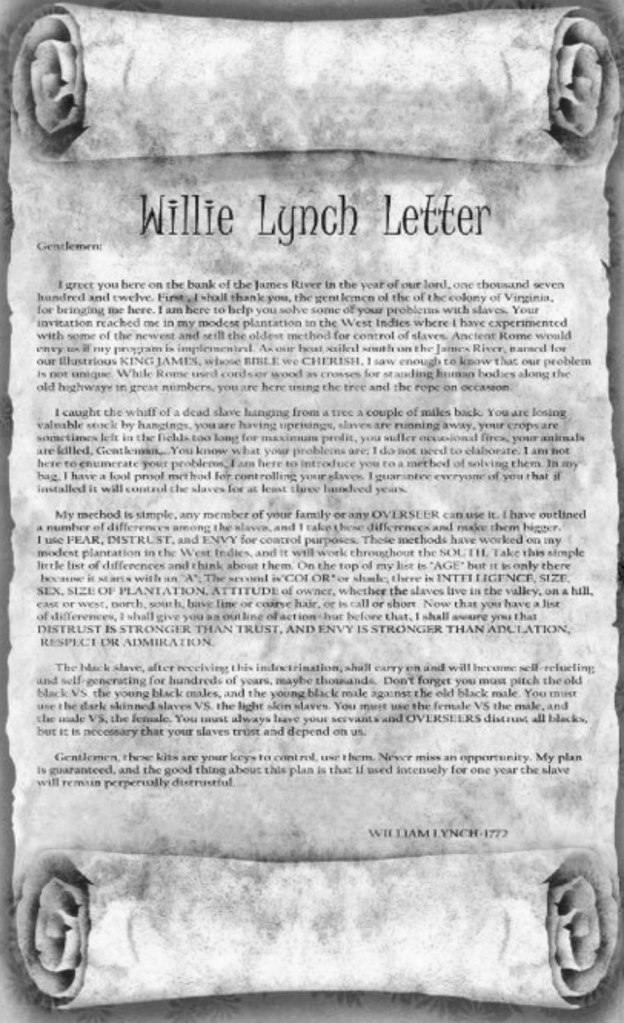
The Legacy of the Willie Lynch Letter: Historical Premise, Racial Division, and Its Ongoing Impact on Black Identity.

The Willie Lynch Letter—widely circulated as a blueprint for controlling enslaved Africans in America—is often cited in discussions surrounding the systemic psychological manipulation and division within the Black community. Although its authenticity has been heavily disputed, the letter remains symbolically powerful. Allegedly delivered by a British slave owner named Willie Lynch in 1712 on the banks of the James River in Virginia, the letter outlines methods to control slaves for generations by instilling division based on skin color, hair texture, age, gender, and other factors. Despite questions surrounding its historical veracity, the themes it presents remain painfully relevant in 2025.


Alleged Origins and Content of the Willie Lynch Letter

According to the document, Willie Lynch was invited from the West Indies to Virginia to share his “expertise” on slave management. The letter begins with Lynch addressing a group of slave owners, promising them a foolproof method to control their slaves for hundreds of years. He outlines a strategy rooted in psychological division, promoting distrust and disunity among slaves through systemic manipulation of differences—particularly skin color (“light vs. dark”), age (“old vs. young”), gender (“male vs. female”), and even hair texture (“nappy vs. straight”).

One of the most notable concepts from the letter is the separation of the enslaved into house Negroes and field Negroes. House slaves, often lighter-skinned due to being the children of white slave masters, were given relatively better living conditions, cleaner clothes, and closer proximity to their enslavers. They were often used to control or report on the darker-skinned field Negroes, who performed brutal labor in plantations under the hot sun. This intra-racial division served the slaveholders by preventing collective rebellion, as envy, mistrust, and intra-group conflict undermined unity.


Historical Debate: Fact or Fiction?

There is considerable scholarly consensus that the Willie Lynch Letter is a hoax. Historians point to linguistic inconsistencies, anachronisms (such as the use of the term “reflex” and modern grammar structures not used in the 18th century), and the lack of historical evidence of a person named Willie Lynch delivering such a speech in 1712. In fact, no credible record of Lynch’s existence or the letter’s origins exists in the colonial archives (Gates, 2003). Nevertheless, the Willie Lynch Letter endures in cultural consciousness because it reflects real strategies historically used to oppress and manipulate African-descended people in America.


Psychological Residue: Division by Design

Despite its dubious authorship, the letter’s ideology of engineered division has echoed throughout centuries of Black experience in the United States. The division by skin tone, known as colorism, has become deeply embedded within the community. Lighter-skinned individuals have often been afforded more social privilege, greater representation in media, and are sometimes perceived as more intelligent or attractive due to Eurocentric beauty standards (Hunter, 2007). This psychological warfare, seeded in slavery, continues to influence hiring practices, dating preferences, and self-esteem in the modern Black population.

Similarly, the division between field Negroes and house Negroes was metaphorically revived in the 1960s during the civil rights movement, particularly in Malcolm X’s speeches. Malcolm used these terms to describe the difference between the “complacent” Black elite who were comfortable within the white establishment (house Negroes) and the oppressed masses pushing for revolutionary change (field Negroes). His framing highlighted the enduring class-based and psychological divisions that hinder Black unity (X, 1963).


Relevance in 2025: The Lingering Divide

In 2025, the spirit of the Willie Lynch Letter remains manifest in subtle and overt ways. Intra-racial tensions still exist around complexion, hair texture, education, economic status, and gender roles. The media continues to elevate lighter-skinned, Eurocentric Black beauty while marginalizing darker-skinned individuals. Black women with natural hair still face discrimination in professional environments, despite the 2019 CROWN Act (Creating a Respectful and Open World for Natural Hair) aiming to combat hair-based bias (Davis, 2020).

Moreover, systemic racism is far from over. Police brutality, educational disparities, housing discrimination, and wage inequality remain daily realities for many African Americans. Movements like Black Lives Matter emerged as a response not just to violence, but also to the broader dehumanization of Black lives. Although progress has been made, including increased Black representation in politics, media, and academia, the legacy of divide-and-conquer tactics continues to erode unity and foster mistrust.


Conclusion

The Willie Lynch Letter, though likely a fabricated artifact, stands as a mirror reflecting real strategies historically employed to psychologically enslave African Americans through division and manipulation. Whether or not Willie Lynch himself existed, the ideology expressed in the letter has been tragically effective in shaping intergenerational trauma and conflict within the Black community. Recognizing and dismantling these residual effects is critical for healing and unity. In 2025, the challenge is no longer only external oppression, but also internalized division. Understanding our history—both factual and symbolic—is a necessary step toward liberation and solidarity.


References

  • Davis, A. (2020). Hair discrimination and the CROWN Act: A legislative response to anti-Black grooming policies. UCLA Law Review, 67(1), 1–25.
  • Gates, H. L. Jr. (2003). The ‘Willie Lynch Letter’: The Making of a Myth. The Root. Retrieved from https://www.theroot.com
  • Hunter, M. (2007). The Persistent Problem of Colorism: Skin Tone, Status, and Inequality. Sociology Compass, 1(1), 237–254.
  • Malcolm X. (1963). Message to the Grassroots. Speech delivered at King Solomon Baptist Church, Detroit.

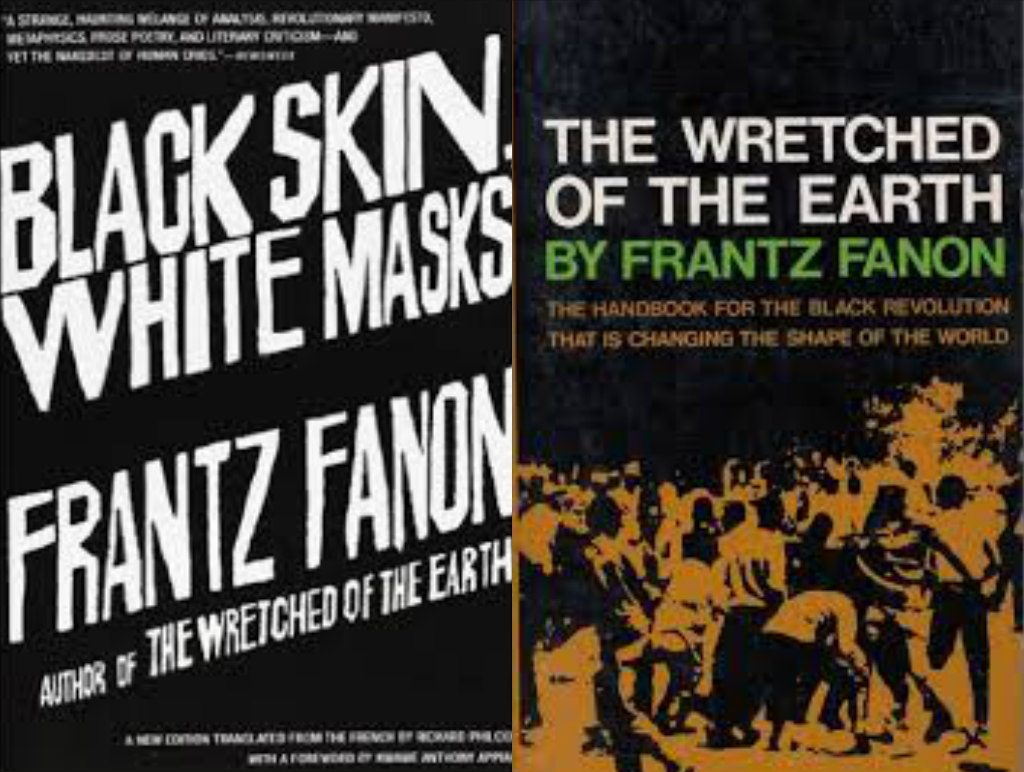
DOUBLE BOOK REVIEW: Black Skin, White Masks & The Wretched of the Earth by Frantz Fanon.

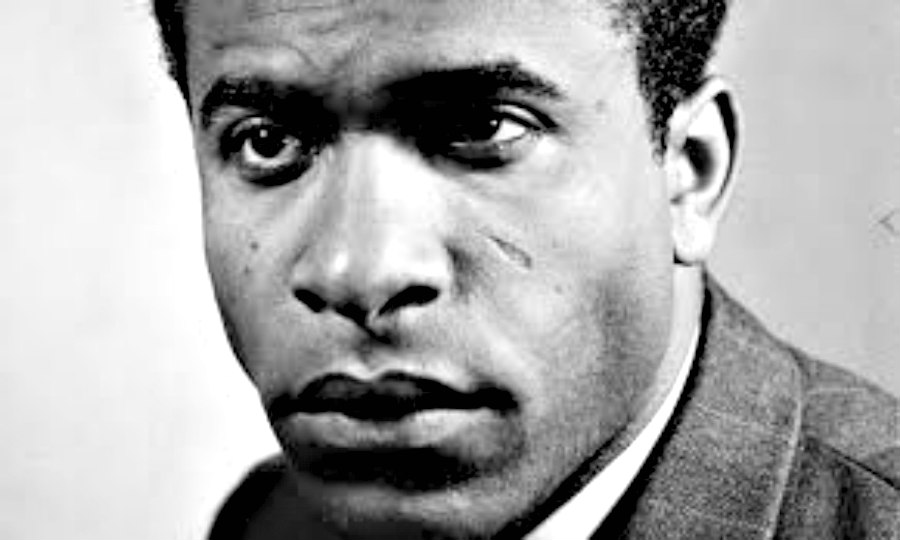
Frantz Fanon: The Revolutionary Mind of Black Liberation
Featuring Reviews of Black Skin, White Masks and The Wretched of the Earth


Who Was Frantz Fanon? Biography & Nationality

Frantz Omar Fanon was born on July 20, 1925, in Fort-de-France, Martinique, a French colony in the Caribbean. He was a Black psychiatrist, writer, revolutionary theorist, and anti-colonial activist. Fanon was of French nationality, since Martinique was a French territory, but he fiercely rejected colonial identity and became one of the most radical critics of French imperialism.

He grew up speaking French and was educated in the French system, but his experience as a Black man in a white-dominated society led him to reject colonial assimilation and instead advocate for African liberation.


His Marriage and Personal Life

Fanon married Josie (Marie-Josephe) Dublé, a white Frenchwoman, who was a nurse. This marriage sparked controversy, as Fanon wrote passionately against white colonialism and the psychological effects of internalized whiteness among Black people. Yet, he also saw personal relationships as complex and never viewed love solely through political binaries.

They had one son, Olivier Fanon.


His Language and Writing

Fanon wrote in French, and both of his major works have been translated into many languages, including English, Spanish, Arabic, and Portuguese, making his ideas accessible to freedom fighters and intellectuals around the world.


Life in Martinique and France: The Formation of a Revolutionary

Growing up in Martinique, Fanon was considered part of the Black middle class. However, he became deeply disillusioned with the racism of the French colonial structure, even in his homeland. He witnessed colorism, elitism, and a system that trained Black people to idolize whiteness.

He later moved to France to study psychiatry. As a young man, he fought in World War II for the Free French forces, believing in liberty and equality. But upon returning, he was met with the same anti-Black racism, even by those who had called him a fellow soldier. This double betrayal pushed him to rethink everything about colonialism, identity, and liberation.


Fanon wasn’t just a theorist; he joined the Algerian Revolution against French colonial rule, working as a psychiatrist and strategist for the National Liberation Front (FLN) in Algeria.

He treated Algerian fighters traumatized by war, and he exposed the use of torture by the French. His writings were not abstract—they were tools of war. The French authorities expelled him from Algeria for his radicalism, and he spent his remaining years helping liberation movements across Africa, including in Ghana and the Congo.


📘 Book Review: Black Skin, White Masks

⭐️⭐️⭐️⭐️⭐️

Published: 1952

Language: French (translated to English by Charles Lam Markmann)

Original Title: Peau Noire, Masques Blancs

This book is a psychological and philosophical dissection of what it means to be Black in a world built on white supremacy. Fanon dives deep into the Black psyche under colonialism, examining how racism shapes identity, self-worth, language, and love.

Key Messages and Themes:

  1. The Inferiority Complex of the Colonized:
    Black people, especially those educated in white systems, are taught to hate themselves and to wear “white masks” to be accepted.
  2. Language as a Tool of Oppression:
    Speaking French “well” became a way to be seen as civilized, but Fanon argued that this was a linguistic betrayal of self.
  3. Desire for Whiteness:
    Fanon was critical of Black men who sought white women to gain status, and Black women who rejected their own features for European beauty standards.
  4. Racism as a Mental Illness:
    He saw racism not just as social injustice but as a psychiatric condition—both for the oppressed and the oppressors.

“The Black man has no resistance against the white man’s culture. He becomes a mimic man.”
—Frantz Fanon, Black Skin, White Masks

🔥 Impact on the Black Psyche

The book shattered illusions. It revealed how colonialism invaded the mind, creating identity crises and self-hatred. It gave Black people language to understand their trauma and tools to decolonize the self.


📕 Book Review: The Wretched of the Earth

⭐️⭐️⭐️⭐️⭐️

Published: 1961 (just before his death from leukemia at age 36)

Translated by: Constance Farrington

Original Language: French

Introduction by: Jean-Paul Sartre

This is Fanon’s revolutionary manual, a blistering indictment of colonial violence and a blueprint for third-world liberation. Written from the frontlines of the Algerian War, it calls for armed struggle, psychological liberation, and national consciousness.

Key Messages and Chapters:

  1. “Violence is cleansing.”
    Fanon controversially argues that for the colonized to reclaim their dignity, violence is inevitable and purifying. It is how the oppressed reclaim agency.
  2. Mental Illness as a Colonial Weapon
    Fanon documents how colonial trauma causes paranoia, psychosis, and inferiority, especially among youth and fighters.
  3. Revolution Must Go Beyond Nationalism
    Independence is not enough. True liberation must dismantle capitalism, Western models of power, and Eurocentric values.
  4. Warning to Post-Colonial Elites
    Fanon criticized new African leaders who replaced white rulers but served the same Western interests, failing to uplift the masses.

“The colonized can see right away if decolonization is taking place or not. The minimum demand is for the colonized to govern their own country.”
—Frantz Fanon, The Wretched of the Earth


Why Was Fanon Revolutionary?

At a time when France still claimed moral superiority, Fanon exposed the brutality of its empire, tearing down illusions of liberal democracy. His insistence on psychological freedom, militant resistance, and cultural pride made him a hero to Black radicals and a threat to white colonial powers.


How Were Black People Seen in His Time?

In France and its colonies, Black people were exoticized, infantilized, and oppressed. They were taught that whiteness was superior, and “becoming French” was their highest goal. Fanon rejected this with rage and clarity.


Did His Light Skin Give Him Privilege?

Fanon was of mixed ancestry, and his relatively light skin may have given him closer access to French intellectual circles, but he rejected any identity built on proximity to whiteness. He used his position to amplify the pain and resistance of the oppressed, never to benefit personally.

His “je ne sais quoi” was not his skin—it was his brilliance, passion, and fearlessness.


What Was His Impact on Black People Worldwide?

Fanon inspired:

  • The Black Panther Party
  • South African anti-apartheid fighters
  • Caribbean and African revolutions
  • Black Lives Matter and global liberation movements
  • Scholars like bell hooks, Ngũgĩ wa Thiong’o, Angela Davis, and Malcolm X

His writings gave language to the rage and hope of colonized people and continue to empower those fighting white supremacy.


💡 Core Messages of Both Books

  • Colonialism is not just political—it is psychological.
  • Racism creates internalized hatred that must be unlearned.
  • Liberation requires both mental and physical decolonization.
  • Black identity must be rebuilt on truth, history, and cultural pride.
  • Freedom is not given—it must be seized.

Conclusion: The Fire That Still Burns

Frantz Fanon lived only 36 years, but he changed the world. He exposed the invisible chains in the Black mind and gave us tools to break them. His books are not just texts—they are weapons.

“Each generation must, out of relative obscurity, discover its mission, fulfill it, or betray it.”
—Frantz Fanon

Fanon fulfilled his mission. The question now is—will we fulfill ours?

BOOK REVIEW: Of Africa by Wole Soyinka

🌍✨

Wole Soyinka: Africa’s Lion of Letters, Conscience of a Continent
Featuring a 5-Star Review of Of Africa.


Who Is Wole Soyinka? A Biographical Portrait

“One’s own self-worth, in any racial equation, comes from within. Black people have been conditioned to see themselves through the lens of others, but we must break that mirror.”
—Wole Soyinka

Wole Soyinka (full name: Akinwande Oluwole Babatunde Soyinka) was born on July 13, 1934, in Abeokuta, Nigeria, during British colonial rule. He is one of Africa’s most revered playwrights, poets, novelists, essayists, and political activists, celebrated globally for his commitment to human rights, intellectual freedom, and the restoration of African dignity.

Soyinka made history in 1986 when he became the first African to win the Nobel Prize in Literature, honored for his poetic, theatrical, and political brilliance. The Nobel committee described him as someone who “in a wide cultural perspective and with poetic overtones fashions the drama of existence.”

Family Life

Wole Soyinka has been married three times. His current wife is Folake Doherty-Soyinka, a Nigerian academic. He is the father of several children, including Dr. Olaokun Soyinka, a physician and former health commissioner in Ogun State, Nigeria.


What Part of Africa Is He From?

Soyinka hails from Nigeria, specifically from the Yoruba ethnic group in the southwestern region. His upbringing was deeply influenced by Yoruba culture and Christian missionary education, which shaped the duality of indigenous spirituality and Western thought that marks his writing.


🧠 What Kind of Writer Is He?

Soyinka is a philosophical writer, dramatist, essayist, poet, and social critic, known for weaving together African mythology, colonial history, Western classics, and moral critique. His tone ranges from satirical and dramatic to elegiac and prophetic. He speaks not only for Nigeria but for the global African experience, standing as a literary giant akin to James Baldwin, Chinua Achebe, and Ngũgĩ wa Thiong’o.

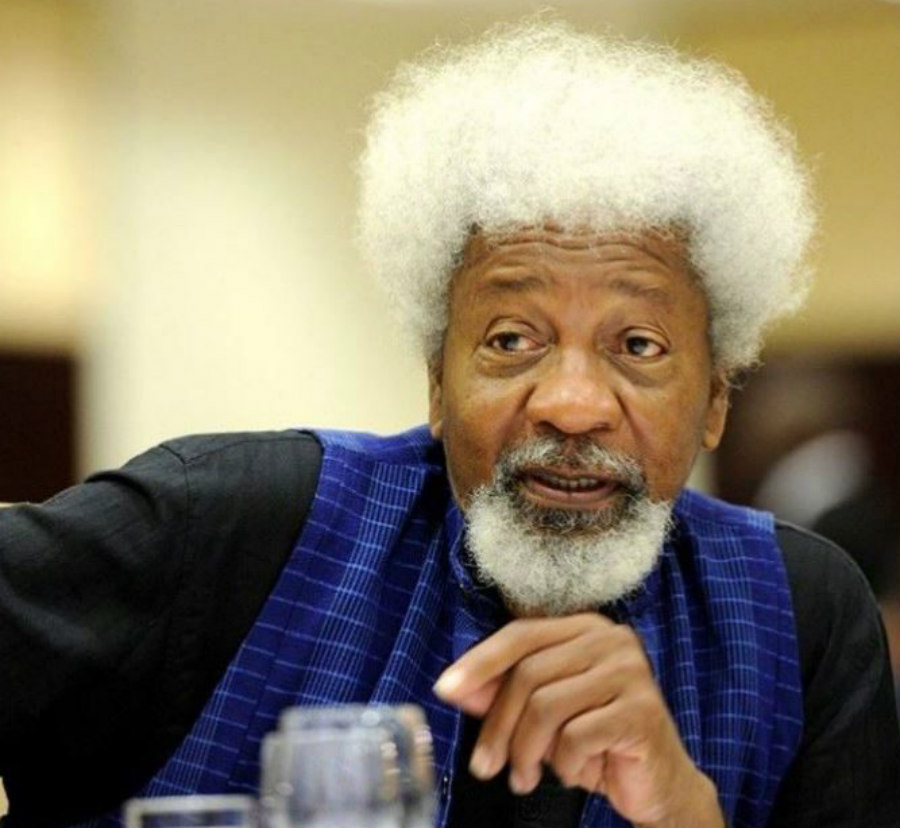
“His gray-white halo speaks volumes, even when he says nothing.”
—A fitting tribute to the dignified, sage-like presence of Wole Soyinka.


📚 Five-Star Book Review: Of Africa

By Wole Soyinka
Rating: ⭐⭐⭐⭐⭐ (Masterpiece of Culture, Memory, and Identity)

Premise and Purpose

Published in 2012, Of Africa is a deeply personal, philosophical, and historical exploration of the continent’s struggles and triumphs. Soyinka aims to reclaim the spiritual and cultural identity of Africa from the misrepresentations of colonialism, slavery, and religious extremism. The book is part memoir, part manifesto, and part historical critique.

What Is Of Africa About?

Soyinka addresses the historical scars of Africa—from the transatlantic slave trade and colonialism to genocides, dictatorships, and religious intolerance. He reflects on the failures of post-independence leadership in many African states, while also uplifting the resilience, creativity, and spiritual wealth of African people.

Key Themes and Discoveries

  1. Spiritual Pluralism vs. Religious Fanaticism
    Soyinka condemns religious extremism, both Islamic and Christian, for fueling violence and suppressing indigenous African wisdom. He calls for religious tolerance and cultural syncretism, rooted in African traditions of peace and coexistence.
  2. Memory as Resistance
    He insists that remembering Africa’s true history—its empires, philosophies, and cosmologies—is essential for reclaiming Black identity and sovereignty.
  3. Pan-Africanism and Black Unity
    Soyinka invokes the diasporic connection between Africans on the continent and those in the Americas, the Caribbean, and Europe, urging solidarity and mutual uplift.
  4. Art as Weapon
    He advocates for the power of literature, drama, and poetry as tools for liberation and truth-telling.

“The black race is the most visible and symbolic victim of an enduring system of global injustice.”
—Wole Soyinka, Of Africa


Soyinka has used his pen, voice, and body in the fight for African liberation:

  • Imprisoned for nearly two years (1967–1969) by the Nigerian government for calling for peace during the Biafran War.
  • Spoke out against military dictatorships in Nigeria, particularly under Sani Abacha, risking exile and even his life.
  • Founded educational and cultural institutions that promoted African literature and history.
  • Mentored African writers, scholars, and activists, creating space for Black thought to flourish globally.

His intellectual work has inspired liberation movements, African-American scholars, and truth-seekers across the diaspora.


Wole Soyinka is a fierce human rights activist and political dissident. Throughout his life, he has challenged:

  • Colonialism
  • Military tyranny
  • Religious extremism
  • Western imperial narratives
  • Internal African corruption

He was forced into exile multiple times for his activism, but never silenced. His speeches, essays, and plays often act as calls to action.


His Role in Nigeria’s History

  • Participated in Nigeria’s civil rights movement during and after independence in 1960.
  • Fought for Biafran peace, which led to his arrest.
  • Opposed authoritarian regimes that suppressed civil liberties and looted the nation’s wealth.
  • Continues to speak out on matters of African governance, education, and Pan-African cooperation.

Wole Soyinka’s life and work are a testament to intellectual liberation for Black people worldwide. He:

  • Challenged white supremacy’s narrative of Africa as primitive.
  • Celebrated Yoruba cosmology, Black resilience, and artistic excellence.
  • Spoke unapologetically to the power, dignity, and capacity of Black people.
  • Helped restore Africa’s intellectual and cultural pride on the global stage.


Conclusion: The Elder Sage of African Letters

Wole Soyinka is not just a writer—he is a keeper of memory, a warrior of truth, and a griot for the global Black soul. His white-gray afro and piercing gaze symbolize a life lived in pursuit of justice and ancestral honor. He is a living bridge between the ancient African past and the liberated Black future.

If you’ve ever been fascinated by Africans, as you said, then Soyinka is one of Africa’s finest mirrors—reflecting truth, pain, beauty, resistance, and eternal pride.


Suggested Reading List by Wole Soyinka

  1. Of Africa (2012)
  2. Death and the King’s Horseman (1975) – A powerful play on colonial conflict and Yoruba ritual.
  3. Ake: The Years of Childhood (1981) – A beautiful autobiographical memoir.
  4. The Man Died: Prison Notes of Wole Soyinka (1972) – His reflections from solitary confinement.
  5. Myth, Literature and the African World (1976) – A profound study of African cosmology and art.