Category Archives: Biographies

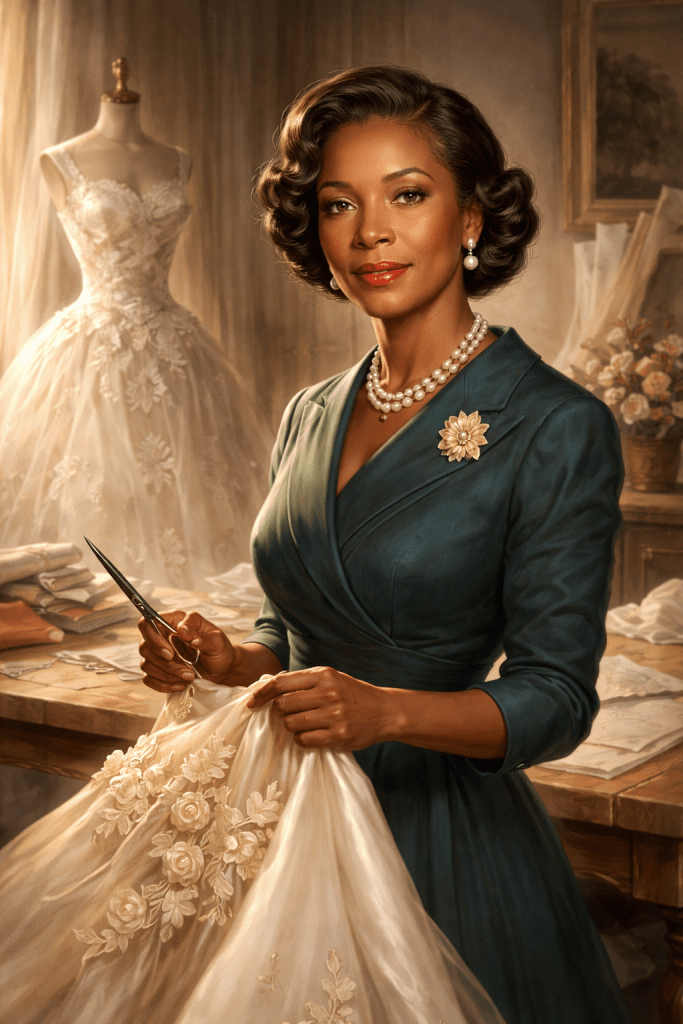
Ann Lowe: The Hidden Architect of Fashion with American Elegance.

Ann Lowe stands as one of the most underrecognized yet profoundly influential figures in American fashion history, a woman whose genius was stitched into some of the most iconic garments of the twentieth century. Born into a lineage shaped by both artistry and oppression, Lowe’s life and career represent a powerful intersection of race, resilience, and refined craftsmanship. Despite working during an era deeply entrenched in racial segregation, she rose to dress some of the most elite women in America, leaving behind a legacy that continues to inspire designers and historians alike.

Born in 1898 in Clayton, Alabama, Ann Lowe was the great-granddaughter of an enslaved seamstress and the daughter of a skilled dressmaker. Her family’s talent for design was cultivated under the harsh conditions of slavery, where Black women were often forced to create garments for wealthy white families. This generational inheritance of skill became Lowe’s foundation, transforming what began as forced labor into a refined art form that would later captivate high society.

Lowe’s early exposure to couture techniques came through her mother and grandmother, who designed elaborate gowns for prominent Southern families. After her mother’s death, Lowe completed an unfinished set of dresses for a governor’s wife at just sixteen years old, astonishing clients with her ability. This moment marked the beginning of her independent career, signaling a rare and extraordinary talent that would defy the limitations imposed on Black women in her time.

Determined to refine her craft, Lowe enrolled in a design school in New York, where she faced segregation even within education. She was separated from her white classmates but excelled beyond expectations, completing her program ahead of schedule. Her perseverance in the face of discrimination highlighted both her resilience and her commitment to excellence.

Lowe eventually established herself in New York City, where she opened her own salon. She became known for her intricate hand-sewn floral appliqués, delicate embroidery, and structured silhouettes that reflected both European couture traditions and her own distinct aesthetic. Her work was often described as ethereal, feminine, and technically masterful.

Among her elite clientele were members of America’s most prominent families, including the Rockefellers and the du Ponts. Yet, despite her high-profile clients, Lowe remained largely uncredited due to the racial dynamics of the era. Many of the women who wore her gowns received public admiration, while Lowe’s name remained hidden behind the seams.

One of the most significant moments in her career came when she was commissioned to design the wedding gown for Jacqueline Bouvier Kennedy, who would later become the wife of John F. Kennedy. This gown would become one of the most iconic bridal dresses in American history.

The dress itself was a masterpiece of ivory silk taffeta, featuring a portrait neckline, fitted bodice, and a voluminous skirt adorned with intricate folds. Lowe also designed the bridesmaids’ dresses, ensuring a cohesive and elegant visual presentation for the entire wedding party. Her attention to detail and commitment to perfection were evident in every stitch.

However, just days before the wedding, a catastrophic flood in Lowe’s studio destroyed the dresses she had painstakingly created. Without informing her client, Lowe worked tirelessly to recreate each garment in time for the ceremony, absorbing the financial loss herself. This act of dedication exemplified her professionalism and unwavering commitment to her craft.

Despite the monumental success of the wedding and the global attention it received, Lowe was not publicly credited at the time. When asked about the designer, Jacqueline Kennedy reportedly described the dress as made by “a colored dressmaker,” reflecting the racial attitudes that obscured Lowe’s recognition.

Lowe’s connection to Jacqueline Kennedy remains one of the most discussed aspects of her legacy, symbolizing both her brilliance and the systemic barriers she faced. It was not until years later that her role in creating the gown was widely acknowledged, allowing her to finally receive the recognition she deserved.

In addition to her work for high society, Lowe also designed dresses for debutantes, particularly for the annual Azalea Ball in Florida. These gowns became a rite of passage for wealthy young women, further cementing her reputation as a designer of elegance and tradition.

Lowe’s designs are now preserved in several prestigious institutions, most notably the Smithsonian Institution, where her work is recognized as a vital part of American cultural and fashion history. Her garments are also held in collections at the Metropolitan Museum of Art, ensuring that her legacy endures for future generations.

Her inclusion in these museums represents a significant shift in how her contributions are valued, transforming her from an overlooked artisan into a celebrated pioneer. These institutions acknowledge not only her technical skill but also the cultural significance of her work as a Black woman navigating a segregated industry.

Lowe’s career was not without hardship. Financial instability plagued her business, partly due to her reluctance to charge her wealthy clients what her work was truly worth. This, combined with systemic racism, limited her financial success despite her immense talent.

Nevertheless, her influence can be seen in the generations of designers who followed. Her emphasis on craftsmanship, detail, and elegance set a standard that continues to resonate within the fashion industry today. She remains a symbol of excellence achieved against overwhelming odds.

Lowe’s story also serves as a lens through which to examine the broader history of Black labor in America. From slavery to the twentieth century, Black artisans have often been the invisible architects of beauty and culture, their contributions minimized or erased. Lowe’s life challenges this narrative, demanding recognition and respect.

Her work embodies a quiet form of resistance, demonstrating that excellence can thrive even in the most restrictive conditions. Through her designs, she asserted her identity and artistry in a society that sought to marginalize both.

Today, Ann Lowe is increasingly celebrated as a trailblazer, a woman who transformed inherited skill into high art. Her story is not just one of fashion but of perseverance, dignity, and the enduring power of creativity.

In reclaiming her legacy, we honor not only Ann Lowe but also the countless unnamed Black women whose talents shaped history from behind the scenes. Her stitches, once hidden, now tell a story of brilliance that can no longer be ignored.

References

Bolton, A. (2016). Jacqueline Kennedy: The White House Years. Metropolitan Museum of Art.

Harris, A. (2018). The Hidden History of American Fashion: Rediscovering Ann Lowe. Fashion Studies Journal, 12(3), 45–62.

Smithsonian Institution. (n.d.). Ann Lowe: American Couturier. National Museum of African American History and Culture.

Vreeland, D. (1965). American Fashion and Its Designers. New York: Harper & Row.

Walker, R. (2020). Threads of Legacy: African American Dressmakers and the Politics of Recognition. Journal of American History, 107(2), 389–412.
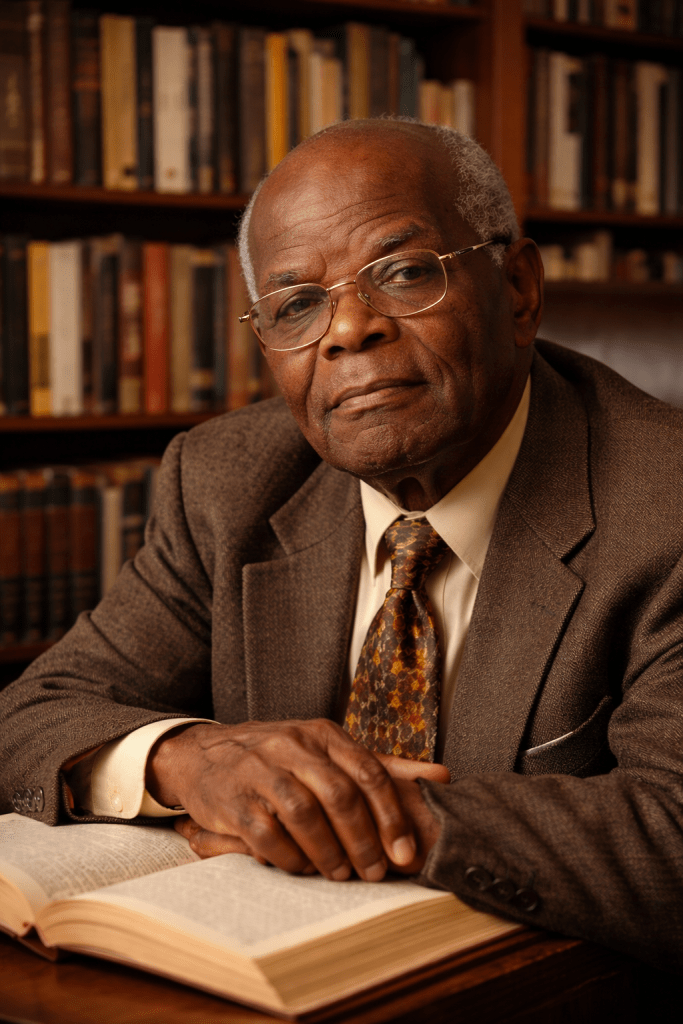
John Henrik Clarke: The Historian Who Restored Africa to World History.

John Henrik Clarke is widely regarded as one of the most influential intellectual activists in modern Black history. A historian, educator, lecturer, and Pan-African thinker, Clarke devoted his life to correcting what he believed were distortions and omissions in Western scholarship regarding African and African-American history. Through decades of teaching, writing, and public speaking, he helped generations of Black people rediscover their historical roots and cultural identity.

Clarke was born John Henry Clark on January 1, 1915, in Union Springs, Alabama, into a family of sharecroppers. Growing up in the racially segregated South during the Jim Crow era, he witnessed firsthand the harsh realities of racism and economic hardship that shaped the lives of many African Americans during the early twentieth century. These early experiences deeply influenced his lifelong mission to understand the historical roots of oppression and to educate Black communities about their past.

Like many African Americans seeking better opportunities, Clarke migrated north during the Great Migration. As a young man, he moved to Harlem in New York City, which at the time was a vibrant center of Black intellectual, artistic, and political life. Harlem introduced Clarke to writers, activists, and scholars deeply engaged in discussions of race, identity, colonialism, and global Black liberation.

Although Clarke did not initially attend a traditional university, he became largely self-educated through extensive reading and mentorship. He studied history, philosophy, literature, and politics with a passion that would later earn him recognition as one of the most respected independent scholars of African history. His intellectual discipline demonstrated that scholarship could emerge both inside and outside formal academic institutions.

One of the individuals who inspired Clarke was the Jamaican-born Pan-African leader Marcus Garvey. Garvey’s philosophy of Black pride, self-determination, and global African unity had a profound influence on Clarke’s worldview. Garvey’s movement emphasized that people of African descent should study their history, celebrate their heritage, and build independent institutions.

Clarke was also inspired by the historian Carter G. Woodson, who founded Negro History Week, which later became Black History Month. Woodson’s work demonstrated that African-American history was worthy of serious academic study. Clarke followed in Woodson’s footsteps by expanding the study of African and diasporic history.

Another major intellectual influence on Clarke was the Senegalese scholar Cheikh Anta Diop. Diop’s research argued that ancient Egypt was fundamentally an African civilization and that African cultures played central roles in early human development. Clarke promoted Diop’s scholarship throughout the United States and helped introduce many Americans to these perspectives.

Clarke’s work centered on correcting what he believed to be Eurocentric interpretations of history. He argued that Western historical narratives often minimized Africa’s contributions to world civilization while exaggerating European influence. Clarke believed that restoring Africa’s historical role was essential for the psychological liberation of African people.

Throughout his career, Clarke emphasized that history shapes identity. He frequently explained that people who do not know their history struggle to understand their place in the world. For African Americans whose ancestry had been disrupted by slavery, historical knowledge became a tool for cultural reconstruction and empowerment.

Clarke believed that African civilizations had made significant contributions to philosophy, science, architecture, and governance long before the rise of Europe. By highlighting ancient African kingdoms and intellectual traditions, he challenged stereotypes that portrayed Africa as historically primitive or disconnected from global progress.

In the 1960s and 1970s, Clarke played a significant role in the development of Black Studies programs in American universities. At a time when many institutions had little or no coursework focused on African or African-American history, Clarke advocated for academic departments dedicated to Africana studies.

He helped establish scholarly organizations that centered African perspectives in research. One of the institutions he helped found was the African Heritage Studies Association, which was created by Black scholars who believed African history should be studied through African and diasporic intellectual frameworks.

Clarke also served as a professor at Hunter College in New York, where he taught courses on African history and the African diaspora. His lectures were widely attended and known for their passionate delivery and depth of knowledge. Many students described him as a master storyteller who could connect historical events across continents and centuries.

Beyond the classroom, Clarke was deeply committed to educating the broader community. He delivered lectures in churches, community centers, and public forums. He believed knowledge should not remain confined within universities but should reach everyday people.

Clarke’s scholarship helped many African Americans develop a stronger sense of cultural pride. By reconnecting Black communities with African history, he challenged narratives that had historically portrayed people of African descent as culturally inferior.

His work also emphasized the global nature of African history. Clarke taught that the African diaspora extended across the Americas, the Caribbean, and Europe, linking the experiences of African people across continents through shared histories of migration, slavery, and cultural resilience.

In addition to teaching, Clarke wrote numerous essays and books. Among his most influential works was African People in World History, which provided a broad overview of Africa’s historical role in global civilization. The book became widely used in Black Studies courses and community education programs.

Clarke also wrote extensively about the relationship between colonialism, slavery, and European economic development. He argued that the transatlantic slave trade and the exploitation of African resources played significant roles in the rise of Western economies.

Regarding race relations, Clarke held complex views about white people and European institutions. He often criticized systems of colonialism, racism, and imperialism that had oppressed African populations around the world. However, his critiques were primarily directed at historical systems of power rather than individual people.

Clarke believed that racism was a structural problem embedded in political and economic institutions. His writings focused on dismantling these systems through historical awareness, education, and cultural self-determination.

At the same time, Clarke maintained that true historical scholarship required honesty and critical thinking. He encouraged students to question dominant narratives and examine historical evidence carefully.

Clarke also stressed that African history should be studied within the broader context of world history. Rather than isolating Africa, he argued that African civilizations interacted with Europe, Asia, and the Middle East through trade, diplomacy, and cultural exchange.

Despite beginning his career outside traditional academic pathways, Clarke eventually received numerous honors and recognition for his scholarship. Universities awarded him honorary degrees acknowledging his contributions to the study of African history.

Clarke was also respected for his mentorship of younger scholars and activists. Many historians, writers, and educators credit Clarke with encouraging them to pursue research in African and African-diasporic history.

His influence extended beyond academia into cultural and political movements focused on Black empowerment. Clarke’s lectures often emphasized self-knowledge, cultural pride, and historical awareness as tools for liberation.

On a personal level, Clarke was married to Augusta Clarke, and together they raised children while balancing family life with his demanding career as a lecturer and writer. Despite his public role as an intellectual leader, he remained deeply committed to family and community.

Clarke continued teaching and writing well into his later years. His dedication to historical scholarship remained unwavering throughout his life. Even as new generations of scholars entered the field of Africana studies, Clarke remained a respected elder within the intellectual community.

He passed away in 1998, leaving behind a legacy that reshaped the way African history is studied and understood in the United States. Today he is remembered as one of the pioneers who helped establish Africana studies as a legitimate academic discipline.

For many scholars and students, Clarke represents the power of intellectual independence and cultural pride. His work reminds people that history is not merely a record of the past but a foundation for understanding identity and shaping the future.

Through his teaching, writing, and activism, John Henrik Clarke helped millions of people see Africa not as a footnote in world history but as one of its central chapters.


References

Clarke, J. H. (1993). African People in World History. Black Classic Press.

Clarke, J. H. (1999). Christopher Columbus and the Afrikan Holocaust: Slavery and the Rise of European Capitalism. A&B Books.

Hine, D. C., Hine, W. C., & Harrold, S. (2018). The African-American Odyssey. Pearson.

Howe, S. (1999). Afrocentrism: Mythical Pasts and Imagined Homes. Verso.

Asante, M. K. (2009). The History of Africa: The Quest for Eternal Harmony. Routledge.

Wikipedia contributors. “John Henrik Clarke.” Wikipedia, The Free Encyclopedia.

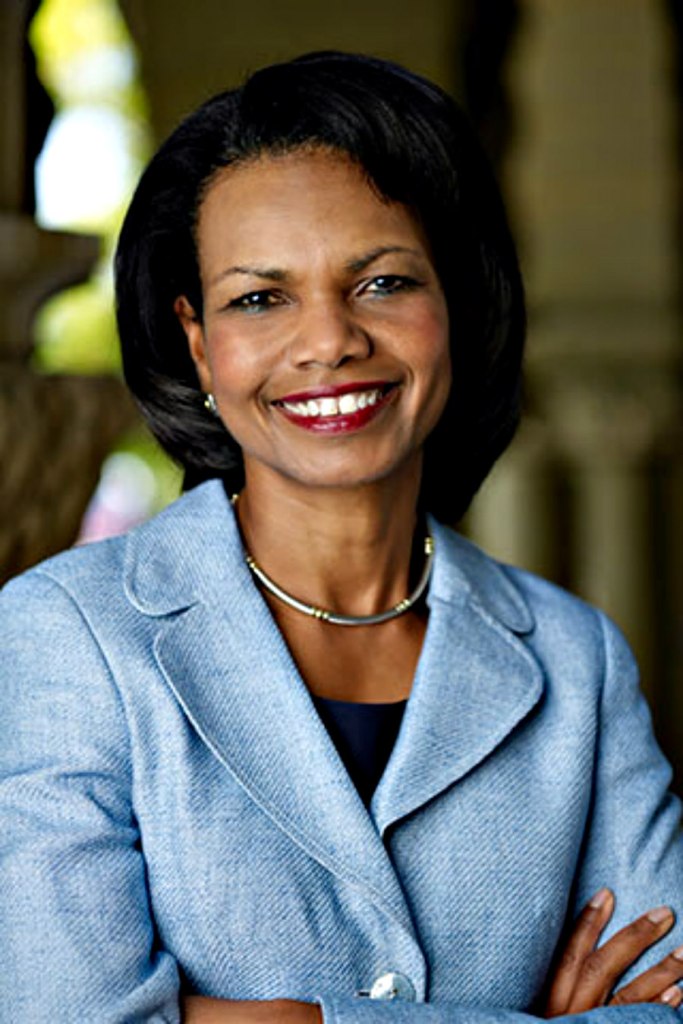
Smart Brown Girl Series: Condoleezza Rice – Strategic Intelligence on a Global Stage.

This photograph is the property of its respective owner. No copyright infringement is intended.

Condoleezza Rice is one of the most remarkable figures of modern American history—a woman whose intellect, poise, and leadership have earned her a place among the world’s most influential statespersons. Born on November 14, 1954, in Birmingham, Alabama, Rice grew up in a segregated South, where racial discrimination was a daily reality. Her parents—her mother a teacher and her father a guidance counselor—instilled in her the importance of education, excellence, and dignity in the face of prejudice. Rice’s early talents were evident: she skipped grades, excelled academically, and demonstrated an exceptional capacity for learning from a young age.

Rice began her college education at age 15 and originally pursued music as a concert pianist before discovering her passion for international politics. She earned her bachelor’s degree in political science from the University of Denver in 1974, a master’s degree from the University of Notre Dame in 1975, and a Ph.D. in political science from the University of Denver in 1981.

Her academic biography itself speaks volumes about her discipline and intellectual breadth. Studying Russian at Moscow State University and gaining expertise in Soviet political structures positioned her as a scholar with a deep understanding of global affairs. Years later, her academic credentials made her a sought-after voice in national security and foreign policy.

Rice began teaching political science at Stanford University immediately after completing her doctorate, quickly ascending through academic ranks. In 1993, she became the first woman and first African American to serve as Stanford’s Provost, the university’s chief academic and budget officer. During her tenure, she helped guide Stanford through financial challenges and expanded educational access.

Her career bridged academia and government. In 1989 she advised President George H.W. Bush on Soviet and Eastern European affairs during a pivotal moment in world history, including the collapse of the Soviet Union. By 2001, Rice had left Stanford to become National Security Advisor to President George W. Bush, the first African American woman to hold the position.

In 2005 she was appointed the 66th U.S. Secretary of State, making her the first African American woman to serve in that role. As Secretary of State, Rice championed what she termed “Transformational Diplomacy,” a strategy aimed at expanding democratic governance and global cooperation, including redeploying diplomats to challenging regions and emphasizing local capacity building.

Her years in Washington coincided with seismic international events, including the post‑9/11 landscape, the wars in Afghanistan and Iraq, and complex negotiations involving North Korea and the Middle East. These arenas tested her diplomatic expertise and strategic resolve at the highest levels of global politics.

Beyond government service, Rice has written extensively, contributing books on statecraft, international relations, and her own experiences, including Extraordinary, Ordinary People and No Higher Honor. These works reflect not only her high‑level engagements but her reflective insights on leadership and service.

Rice’s life is a testament to intellectual rigor and perseverance. Her journey from a segregated Alabama childhood to the world stage underscores how education can equip one to navigate and lead amid global complexity. Her doctoral work in political science is a rare achievement, testifying to her scholarly discipline and analytical acumen.

Despite her professional accomplishments, she has remained single, choosing to devote her life to public service and scholarship. Early in her life she was once engaged to NFL player Rick Upchurch, but she never married.

Rice continues to shape public discourse today. She serves as the director of Stanford University’s Hoover Institution, where she influences research, policy dialogues, and intellectual thought leadership on freedom, democracy, and global rule of law. In 2025 she launched a Substack venture called Freedom Frequency from Hoover, aiming to promote principled ideas rooted in liberty and democratic values.

Her involvement also extends into the private sector and corporate governance. Rice has served on the boards of major companies and institutions, applying her strategic insight beyond academia and government.

Rice’s intellectual influence is widely recognized. She has received numerous honorary degrees, recognition awards, and was one of the first women to be admitted to the historically male Augusta National Golf Club, symbolizing both social progress and her wide‑ranging impact.

Rice’s legacy within the Smart Brown Girl Series lies in her embodiment of disciplined intelligence, academic excellence, and global leadership. She navigated barriers of race and gender to achieve roles once unimaginable for African American women, and her career illustrates that intellect combined with resolve can redefine possibility.

Her life challenges reductive stereotypes about women of color in leadership, demonstrating that scholarly brilliance and strategic acumen are fundamental to shaping world affairs. Her example offers inspiration not only to young Black girls but to anyone striving for intellectual achievement and meaningful impact in public life.

In a broader sense, Condoleezza Rice represents what it means to live a life of scholarship, service, and civic engagement. Her contributions to diplomacy, education, and public thought affirm the importance of intellectual preparation and principled leadership.

She remains a figure of study for students of international relations, leadership, and history, continuing to publish, speak, teach, and guide public discourse well into her later years.

References

Condoleezza Rice | National Women’s History Museum biography. womenshistory.org
Condoleezza Rice | Britannica. britannica.com
Condoleezza Rice | Biography.com. biography.com
Condoleezza Rice PragerU Magazine. assets.ctfassets.net
Rice launches Freedom Frequency from Hoover Institution. axios.com
Condoleezza Rice board and net worth details. architectureadrenaline.com
White House archives Rice biography and honors. georgewbush-whitehouse.archives.gov

The “It Girl” Series: Kimberly Elise

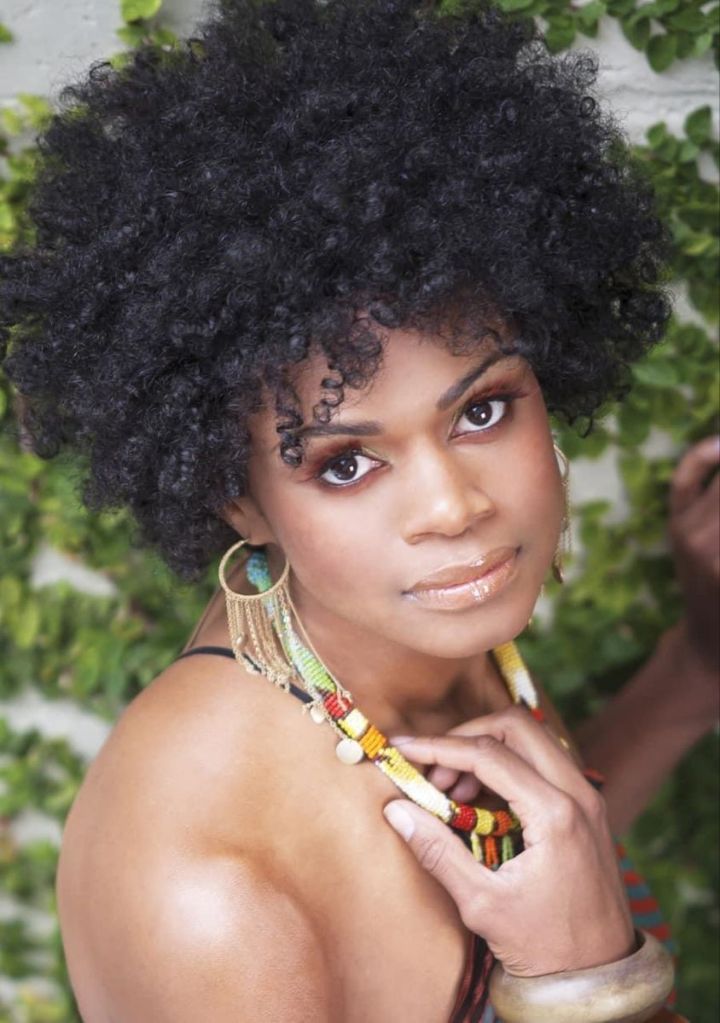
Piercing, expressive eyes and a commanding screen presence—Kimberly Elise blends beauty with depth, talent, and the rare quiet power of a young Cicely Tyson.

This photograph is the property of its respective owner.

Kimberly Elise Trammel was born on April 17, 1967, in Minneapolis, Minnesota, and raised with a deep love for performance and storytelling. She earned a B.A. in Communications from the University of Minnesota before pursuing her acting career in Los Angeles. Elise’s natural talent, intense presence, and distinctively expressive eyes quickly set her apart in dramatic roles. She made her feature‑film debut in the crime action classic Set It Off (1996), portraying Tisean “T.T.” Williams with emotional intensity and strength.

Elise’s career is marked by nuanced, layered performances in films that explore struggle, resilience, and redemption. She appeared in Beloved (1998), John Q (2002), The Manchurian Candidate (2004), Diary of a Mad Black Woman (2005), Woman Thou Art Loosed (2004), Pride (2007), The Great Debaters (2007), For Colored Girls (2010), Dope (2015), Almost Christmas (2016), Death Wish (2018), and Ad Astra (2019).

Her collaborations with Denzel Washington—John Q, The Manchurian Candidate, and The Great Debaters—are particularly notable. Elise has described working with Washington as a professional joy, emphasizing that he is intensely focused, generous in his preparation, and deeply committed to family and craft—qualities she shares as a performer. Elise’s repeated casting opposite him and the respect evident in industry discussions reflect a mutual professional regard and creative rapport.

These photographs are the property of their respective owners.

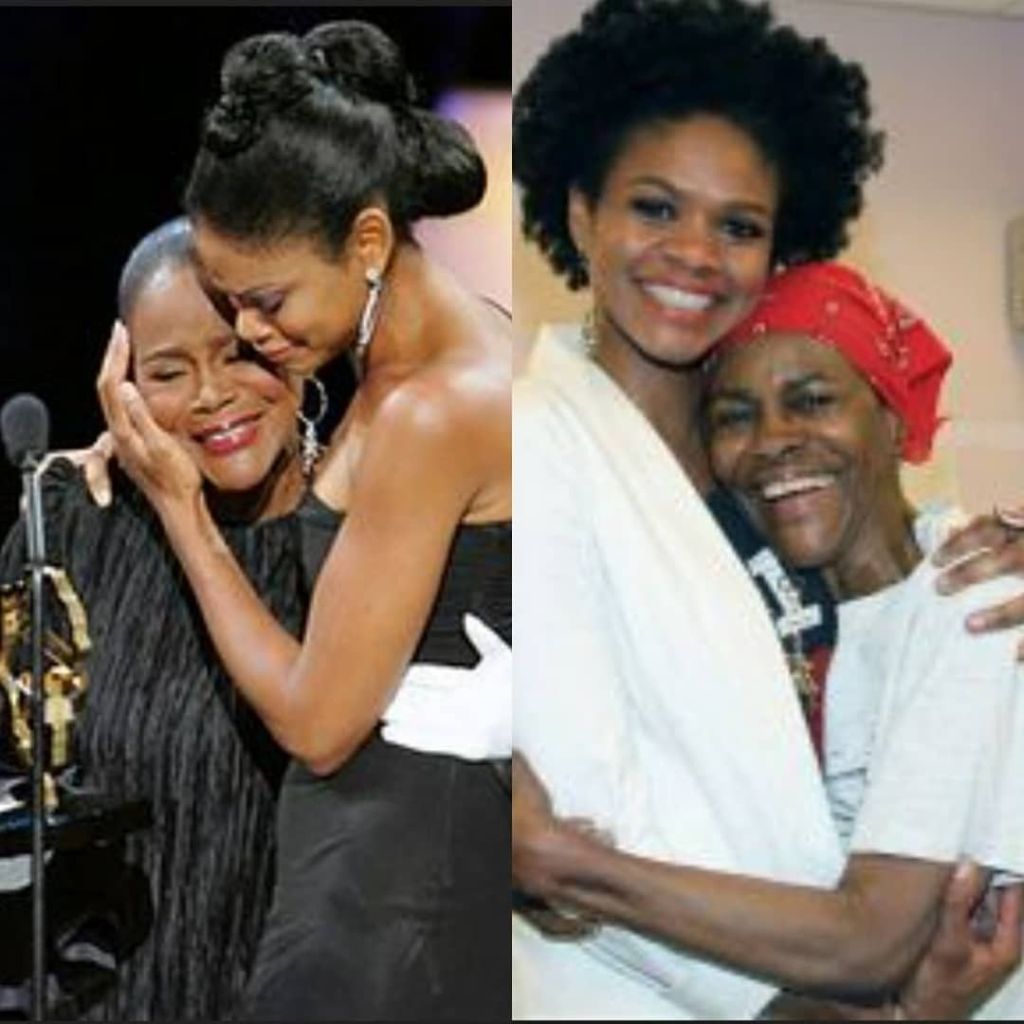
Elise’s expressive, piercing eyes are a hallmark of her acting style: they convey internal life, pain, strength, and transformation without a single line of dialogue. Her presence has drawn comparisons to a young Cicely Tyson, not only for her physical resemblance but for the depth and dignity she brings to every role.

In her personal life, Kimberly Elise was first married to Maurice Oldham (April 21, 1989 – September 29, 2005), with whom she has two daughters, AjaBleu Oldham and Butterfly Rose Oldham. She later married George E. McCrary on August 23, 2023.

Elise’s work has earned critical recognition and industry honors. Early in her career, she won Best Supporting Actress at the 19th Annual CableACE Awards for The Ditchdigger’s Daughters (1997). She also received Independent Spirit Award and NAACP Image Award nominations for Woman Thou Art Loosed (2004), won NAACP Image Awards for Diary of a Mad Black Woman and other projects, and has been celebrated for her powerful contributions to film and television that center Black women’s stories.

Kimberly Elise embodies the qualities of an “It Girl” through a blend of confidence, emotional intelligence, and acting prowess. Her beauty is not superficial but expressive and commanding, rooted in her ability to convey truth through subtle gestures and deep emotional resonance. Whether portraying everyday struggles or extraordinary resilience, Elise’s work resonates with authenticity, intelligence, and grace—making her one of Hollywood’s most compelling and enduring talents.

References:

  1. Kimberly Elise. (2024). IMDb. https://www.imdb.com/name/nm0253708/biography/
  2. Kimberly Elise Filmography. (2024). Fandango. https://www.fandango.com/people/kimberly-elise-197874/film-credits
  3. Kimberly Elise Movies & TV Shows. (2024). Rotten Tomatoes. https://www.rottentomatoes.com/celebrity/kimberly_elise
  4. Kimberly Elise: The Perfect Pairing. (2020). Essence. https://www.essence.com/news/kimberly-elise-the-perfect-pairing/
  5. Actress Kimberly Elise on Working with Denzel Washington. (2013). TheGrio. https://thegrio.com/2013/05/31/actress-kimberly-elise-talks-being-denzel-washingtons-work-wife
  6. Kimberly Elise: Giving Voice to Voiceless. (2018). Chicago Sun‑Times. https://chicago.suntimes.com/2018/4/13/18398979/kimberly-elise-giving-voice-to-voiceless-on-road-to-black-hollywood-royalty
  7. NAACP Image Awards: Past Winners. (2023). NAACP.org. https://naacpimageawards.net/past-winners/

The “It Girl” Series: Regina King

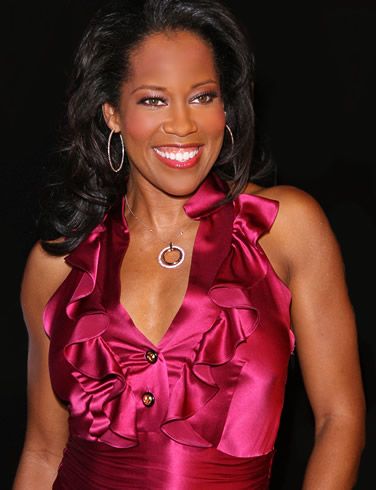
With hazel eyes that see truth and talent that commands history, Regina King doesn’t follow eras — she defines them.

This photograph is the property of its respective owner.

There are actresses, there are auteurs, and then there is Regina King — a woman whose career arc reflects brilliance, endurance, evolution, and cultural gravitas. Regina King is not merely an “It Girl” because of a trend or visibility. She is an It Girl because she embodies excellence — consistently, intelligently, and unapologetically.

From child star to Academy Award winner to Emmy-winning television powerhouse and acclaimed director, King represents the rare Hollywood figure whose relevance deepens with time.


Early Life & How She Got Started

Born January 15, 1971, in Los Angeles, California, Regina King grew up in View Park–Windsor Hills, a historically Black middle-class enclave. After her parents divorced, King was raised primarily by her mother, Gloria, and encouraged to pursue both education and performance.

Her professional career began in 1985 when she was cast as Brenda Jenkins on the NBC sitcom 227. As the witty, sharp-tongued teenage daughter of Mary Jenkins (played by Marla Gibbs), King displayed natural comedic timing and emotional intelligence beyond her years. “227” ran for five seasons and established her as a household name in Black America.

Unlike many child actors, King did not disappear. She transitioned deliberately into film, starring in culturally defining projects such as Boyz n the Hood (1991), Poetic Justice (1993), and Friday (1995). Each role expanded her range — from socially conscious drama to romantic intensity to comedic realism.


This photograph is the property of its respective owner.

Becoming a Hollywood Force

By the 2000s, Regina King was no longer simply a former child star — she was a powerhouse performer. Her television performances in Southland and American Crime earned her critical acclaim and multiple Emmy Awards. In fact, she has won four Primetime Emmy Awards, making her one of the most decorated Black actresses in television history.

Her career-defining film role came in If Beale Street Could Talk, directed by Barry Jenkins. Her portrayal of Sharon Rivers — a fierce, protective mother — earned her the Academy Award for Best Supporting Actress in 2019. In her Oscar acceptance speech, King declared:

“I’m an example of what it looks like when support and love is poured into someone.”

That statement encapsulates her ethos: grounded, grateful, powerful.

She later directed the critically acclaimed film One Night in Miami…, becoming the first Black woman to direct a film selected for the Venice Film Festival in 2020. The film dramatized a fictionalized meeting between Malcolm X, Muhammad Ali, Jim Brown, and Sam Cooke — positioning King not only as an actress but as a cultural curator of Black history.


Portraying Shirley Chisholm

In 2024, King portrayed pioneering congresswoman Shirley Chisholm in the Netflix film Shirley. Chisholm, the first Black woman elected to Congress and the first Black candidate for a major party’s presidential nomination, required gravitas, discipline, and historical sensitivity. King brought both power and tenderness to the role, further solidifying her reputation for portraying strong, intelligent Black women rooted in political and emotional complexity.


Her Family, Marriage & Personal Loss

Regina King married record executive Ian Alexander Sr. in 1997. They divorced in 2007. Together, they had one son, Ian Alexander Jr.

In January 2022, Ian Alexander Jr. died by suicide at age 26. The tragedy stunned Hollywood and the public. King released a statement describing her son as “a bright light who cared so deeply about the happiness of others.”

Her strength in the aftermath was quiet but profound. She requested privacy while expressing gratitude for the outpouring of love. In interviews before his death, she had often described motherhood as her greatest joy. Afterward, she has spoken about grief as something that does not disappear but transforms.

Her resilience has deepened public admiration. She embodies a particular kind of Black maternal dignity — one that does not collapse under public pain but refuses spectacle. All the best to her.


This photograph is the property of its respective owner.

Beauty, Presence & Hollywood Appeal

Regina King’s beauty is understated yet magnetic. Her warm hazel eyes — often highlighted by minimal, elegant styling — convey intelligence and emotional awareness. Casting directors frequently praise her for her ability to “listen on camera,” a rare acting skill that makes her performances feel lived-in rather than performed.

Critics often describe her as:

  • Disciplined
  • Emotionally precise
  • Thoughtful
  • Commanding without arrogance

Viola Davis once publicly praised King’s range and fearlessness, and many directors note her preparation and leadership on set. Her appeal in Hollywood stems from three rare combinations:

  1. Talent across mediums (film, television, directing)
  2. Professional longevity without scandal-driven notoriety
  3. Intellectual depth paired with cultural authenticity

She is popular not because she is loud, but because she is consistently excellent.


This photograph is the property of its respective owner.

Why She Is an “It Girl”

The term “It Girl” is often associated with trendiness, youth, or fleeting fame. Regina King redefines it.

She is an It Girl because:

  • She began as a teenage sitcom star and evolved into an Oscar-winning actress.
  • She commands respect in both acting and directing.
  • She carries herself with moral and intellectual clarity.
  • She uplifts Black history through her work.
  • She balances glamour with groundedness.

She represents aspirational Black womanhood — educated, accomplished, emotionally complex, and culturally conscious.

Her favorites often include roles that explore justice, motherhood, and Black identity — themes aligned with her public values. She has stated in interviews that she chooses projects that matter socially, not merely financially.


Popularity & Cultural Position

Regina King is popular because she bridges generations:

  • Millennials remember her from Friday.
  • Gen X remembers her from 227.
  • Gen Z knows her from Watchmen.
  • Cinephiles respect her Oscar win.
  • Scholars respect her directorial contributions.

Few artists manage that breadth.

In a Hollywood system that often sidelines Black women after a certain age, King has grown more powerful, not less visible. She is the embodiment of sustained relevance.

Regina King is not simply an actress.
She is a cultural institution.

And in the It Girl Series, she stands as proof that brilliance, when cultivated with discipline and dignity, never fades — it evolves.


References

Academy of Motion Picture Arts and Sciences. (2019). 91st Academy Awards winners list.

Emmys. (n.d.). Regina King – Award history. Television Academy.

IMDb. (n.d.). Regina King filmography. Retrieved from https://www.imdb.com

Jenkins, B. (Director). (2018). If Beale Street Could Talk [Film]. Annapurna Pictures.

King, R. (Director). (2020). One Night in Miami… [Film]. Amazon Studios.

Netflix. (2024). Shirley [Film].

NBC. (1985–1990). 227 [Television series].

People Magazine. (2022). Regina King statement on the death of her son.

The Hollywood Reporter. (2019–2024). Interviews and coverage on Regina King’s directing and acting career.

Variety. (2018–2024). Coverage of Regina King’s awards and industry impact.

The “It Girl” Series: Nia Long

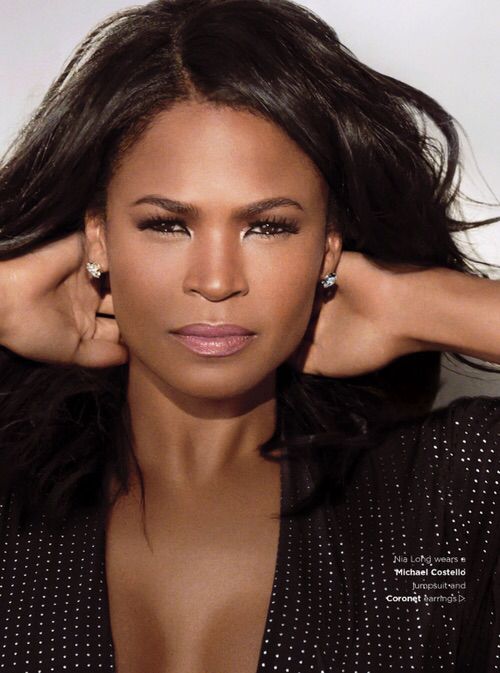
Timeless Brown Beauty, Unshakable Talent, and Cultural Icon

This photograph is the property of its respective owner. No copyright infringement intended.

Nia Long is widely celebrated as one of Hollywood’s most luminous actresses—her elegant brown skin, classic features, and magnetic presence have earned her the affectionate status of a Black Hollywood “It Girl.” Born on October 30, 1970, in Brooklyn, New York, Long grew up steeped in creative influence; her mother was a printmaker and teacher, and her father a poet and educator. She cultivated her talents early, studying acting and performing in television roles before breaking through in one of the defining films of Black cinema, Boyz n the Hood (1991), which showcased her ability to inhabit characters with depth and authenticity that resonated deeply with audiences nationwide.

Long’s career is marked by versatility and longevity that few performers achieve. After Boyz n the Hood, she transitioned fluidly between gritty dramas like Love Jones (1997) and ensemble favorites like Friday (1995), Soul Food (1997), and the Best Man franchise, earning critical praise and becoming a beloved fixture in both film and television. She also garnered accolades, including multiple NAACP Image Awards and a Black Reel Award for her work, and her portrayal of Officer Sasha Monroe on Third Watch earned her two NAACP Image Awards for Outstanding Actress in a Drama Series—proof of her dramatic range and respected craft.

This photograph is the property of its respective owner. No copyright infringement intended.

People have often cited Long’s beauty as timeless and magnetic—her brown skin, expressive eyes, and poised elegance convey an all‑American allure that transcends passing trends. Her aesthetic has matured with grace; in 2025, she was named the first North America Brand Ambassador for Estée Lauder Companies, a partnership that celebrates authentic beauty and self-expression in later adulthood—a powerful statement against ageist beauty norms. She also starred in a striking 2024 shapewear campaign for SKIMS, reinforcing her status as a fashion and beauty icon whose confidence and poise continue to inspire across generations.

Beyond aesthetics, Long has navigated Hollywood’s challenges with resilience and conviction. As a brown‑skinned woman in an industry long defined by narrow beauty standards and racial bias, she consistently chose roles that expanded representation and humanized Black women with nuance, strength, and complexity. From classic sitcoms such as The Fresh Prince of Bel‑Air to contemporary hits like NCIS: Los Angeles, Empire, and Dear White People, Long has refused to be typecast, demonstrating breadth and intentionality in her choices. Off‑screen, she has ventured into production and behind‑the‑camera work, and she continues to develop meaningful projects that reflect her artistic vision and lived experience.

In every sense, Nia Long’s career exemplifies timeless beauty fused with artistic integrity. Her gorgeous brown skin and striking features are just the surface of a deeper legacy—one of cultural impact, emotional intelligence, and transcendent talent. She is not just an actress; she is an enduring symbol of Black beauty, power, and representation in Hollywood and beyond.

References

Estée Lauder Companies. (2025, October 9). Estée Lauder names Nia Long as Brand Ambassador. https://www.elcompanies.com/en/news-and-media/newsroom/press-releases/2025/10-09-2025-140045499

IMDb. (n.d.). Nia Long biography and filmography. https://www.imdb.com/name/nm0000505/bio/

Long, N. (2025). Upcoming memoir announcement. Artist & Brand Management. https://www.artistandbrand.com/clients/nia-long

Wikipedia contributors. (2025). Nia Long. Wikipedia. https://en.wikipedia.org/wiki/Nia_Long

SKIMS campaign coverage. (2024). Nia Long stars in SKIMS shapewear campaign. https://www.aol.com/nia-long-gets-almost-naked-214918936.html

Black History: The Rivalry of Booker T. Washington and W.E.B. Du Bois.

Black Minds, Divergent Paths in the Battle for Black America’s Future.

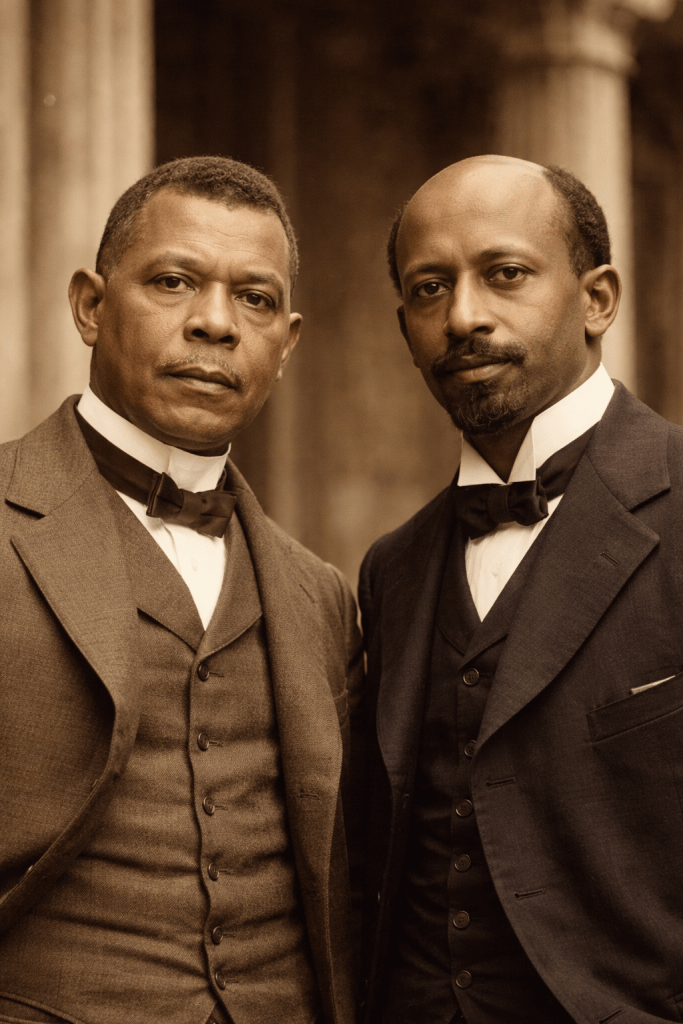
n the long and embattled arc of Black intellectual history, two towering figures emerged at the turn of the twentieth century whose visions would shape the destiny of African Americans for generations: Booker T. Washington and W. E. B. Du Bois. Though contemporaries, their philosophies diverged sharply, reflecting contrasting strategies for racial uplift during the nadir of American race relations. Together, they represent not merely disagreement but the dynamic intellectual tension that propelled Black progress forward.

Booker T. Washington was born into slavery in 1856 in Franklin County, Virginia. Emancipated as a child, he rose from bondage to become one of the most influential Black leaders of his era. His early life of poverty, labor, and illiteracy instilled in him a profound belief in discipline, industrial education, and economic self-sufficiency as the pathway to racial advancement. His autobiography, Up from Slavery, became a testament to perseverance and pragmatism.

Washington’s greatest institutional achievement was the founding of the Tuskegee Institute in Alabama in 1881. There, he emphasized vocational training—carpentry, agriculture, mechanics, domestic science—arguing that economic strength would earn Black Americans respect in a hostile white supremacist society. He believed that dignity could be constructed through labor and ownership, brick by brick.

His philosophy was crystallized in the 1895 Atlanta Exposition Address, often called the “Atlanta Compromise.” In that speech, Washington suggested that Black Americans should temporarily accept segregation and disenfranchisement while focusing on economic development. “Cast down your bucket where you are,” he urged, advocating cooperation with Southern whites in economic matters while avoiding direct agitation for civil rights.

In contrast stood W.E.B. Du Bois, born free in Great Barrington, Massachusetts, in 1868. Du Bois was the first African American to earn a Ph.D. from Harvard University. A scholar of extraordinary brilliance, he mastered history, sociology, economics, and classical studies. His intellect was widely regarded as unmatched among his contemporaries, earning him recognition as one of the greatest thinkers of the twentieth century.

Du Bois rejected Washington’s accommodationist stance. In his seminal work, The Souls of Black Folk, he critiqued what he perceived as Washington’s surrender of political rights. Du Bois introduced the concept of “double consciousness,” describing the psychological tension experienced by African Americans who must navigate a world that views them through the lens of prejudice.

Where Washington championed industrial education, Du Bois advocated for the “Talented Tenth”—the cultivation of a Black intellectual elite who would lead the race toward equality through higher education and political activism. He believed classical education, not merely vocational training, was essential for full citizenship and leadership.

Their disagreement was not simply personal but ideological. Washington emphasized economic gradualism; Du Bois demanded immediate civil rights. Washington sought alliances with white philanthropists and political leaders; Du Bois challenged the very structures of white supremacy. Washington operated behind the scenes, often wielding quiet influence; Du Bois engaged publicly and polemically.

In 1905, Du Bois helped found the Niagara Movement, a precursor to the NAACP, established in 1909. Through this organization, Du Bois became editor of The Crisis, a powerful publication that advocated for anti-lynching legislation, voting rights, and racial justice. His activism laid the groundwork for the modern Civil Rights Movement.

Washington’s influence, however, was equally formidable. He advised U.S. presidents and built networks of Black businesses, schools, and farmers throughout the South. Under his leadership, Tuskegee became a model of Black institutional autonomy. He believed that land ownership, craftsmanship, and financial literacy would fortify Black communities against economic exploitation.

Intellectually, both men were formidable, though in different ways. Washington possessed strategic intelligence and organizational genius. Du Bois embodied scholarly brilliance and philosophical depth. One was a master tactician of survival within oppression; the other a prophetic critic of injustice.

Their views on race also diverged. Washington, shaped by enslavement and Reconstruction’s violent collapse, viewed racial uplift as a long-term project requiring patience and economic stability. Du Bois, shaped by Northern education and exposure to global thought, viewed race as a social construct weaponized by power, demanding immediate dismantling.

Lineage and regional upbringing deeply influenced their perspectives. Washington’s Southern roots, born enslaved, forged a realism rooted in survival. Du Bois, of mixed African and European ancestry, raised in a relatively integrated Northern town, approached race with analytical detachment and global awareness. He later embraced Pan-Africanism, organizing international congresses that connected African diasporic struggles worldwide.

Both men were historically identified and socially classified as Black in the United States, but their ancestry backgrounds were different.

Booker T. Washington was born into slavery in Virginia in 1856. His mother, Jane, was an enslaved African woman. His father was a white man, widely believed to have been a neighboring plantation owner, though Washington never knew him. This means Washington was of mixed African and European ancestry biologically. However, under the racial caste system of the United States—particularly the “one-drop rule”—he was legally and socially defined as Black. Washington identified fully with the Black community and devoted his life to its advancement.

W. E. B. Du Bois was also of mixed ancestry. Born free in Massachusetts in 1868, Du Bois had African, French Huguenot, Dutch, and possibly Native American lineage. He openly acknowledged his multiracial heritage in his autobiographical writings. Despite his partial European ancestry and relatively lighter complexion, Du Bois was socially classified as Black and experienced racial discrimination. He strongly identified as a member of the African American community and became one of its foremost intellectual defenders.

It is important to understand that in 19th- and early 20th-century America, racial identity was not determined by ancestry percentages but by social classification and power structures. The legal doctrine of hypodescent—commonly known as the one-drop rule—assigned anyone with known African ancestry to the Black racial category regardless of admixture.

Genetically speaking, most African Americans descend from a mixture of West and Central African populations with varying degrees of European ancestry due to the history of slavery. Historically speaking, both Washington and Du Bois were Black men operating within and against a racially stratified society that did not recognize “mixed” as a protected or separate political identity.

Du Bois in particular wrestled intellectually with questions of race, ancestry, and identity. In The Souls of Black Folk, he emphasized the social construction of race and the psychological burden imposed upon Black Americans by white supremacy. His mixed heritage did not dilute his commitment to Pan-African solidarity; rather, it sharpened his critique of racial hierarchy.

In summary: biologically, both men had mixed ancestry. Socially, legally, culturally, and politically, they were Black men in America—and they embraced that identity in their scholarship and activism.

Despite their clashes, both men sought the elevation of Black people. Washington feared that agitation would provoke violent backlash. Du Bois feared that silence would entrench permanent subordination. Each perceived the dangers of his time differently, and each responded according to his convictions.

The early twentieth century proved that both strategies held merit. Economic institutions built under Washington provided material foundations for Black communities. Legal activism spearheaded by Du Bois and the NAACP led to landmark challenges to segregation, culminating in victories such as Brown v. Board of Education.

Washington died in 1915, while Du Bois lived until 1963, dying in Ghana on the eve of the March on Washington. Their lifespans bracketed the transformation from Reconstruction’s failure to the threshold of the Civil Rights Movement’s triumphs. History would vindicate aspects of both visions.

Du Bois eventually shifted toward socialism and Pan-African nationalism, critiquing capitalism as a global racial hierarchy. Washington remained committed to American industrial capitalism as a vehicle for Black prosperity. Their economic philosophies reveal deeper tensions about integration, autonomy, and systemic change.

The intellectual rivalry between Washington and Du Bois was not a weakness within Black leadership but a sign of intellectual vitality. Black America was not monolithic; it wrestled with strategy, ethics, and survival in real time. Their debates forced the nation to confront uncomfortable truths about democracy and citizenship.

Today, their legacies continue to shape discussions about education, economic empowerment, protest, and respectability politics. Contemporary debates over vocational training versus liberal arts education echo their arguments. The balance between institutional building and public protest remains central to social justice movements.

To ask who was “smarter” misses the deeper truth. Washington possessed practical genius; Du Bois embodied scholarly brilliance. Intelligence manifested differently in each man, yet both altered the trajectory of history. One built institutions; the other built consciousness.

In the final analysis, Booker T. Washington and W.E.B. Du Bois were not opposites so much as complementary forces within a larger struggle for Black liberation. One carved pathways within the system; the other challenged the system itself. Together, they expanded the intellectual and moral horizons of America, proving that Black thought in the early twentieth century was not only resilient but revolutionary.

References

Du Bois, W. E. B. (1903). The souls of Black folk. A. C. McClurg & Co.

Du Bois, W. E. B. (1968). The autobiography of W. E. B. Du Bois: A soliloquy on viewing my life from the last decade of its first century. International Publishers. (Original work published 1968)

Foner, E. (1988). Reconstruction: America’s unfinished revolution, 1863–1877. Harper & Row.

Harlan, L. R. (1972). Booker T. Washington: The making of a Black leader, 1856–1901. Oxford University Press.

Harlan, L. R. (1983). Booker T. Washington: The wizard of Tuskegee, 1901–1915. Oxford University Press.

Lewis, D. L. (1993). W. E. B. Du Bois: Biography of a race, 1868–1919. Henry Holt.

Lewis, D. L. (2000). W. E. B. Du Bois: The fight for equality and the American century, 1919–1963. Henry Holt.

Logan, R. W. (1954). The betrayal of the Negro: From Rutherford B. Hayes to Woodrow Wilson. Collier Books.

Meier, A. (1963). Negro thought in America, 1880–1915: Racial ideologies in the age of Booker T. Washington. University of Michigan Press.

Washington, B. T. (1901). Up from slavery. Doubleday, Page & Company.

Washington, B. T. (1895). The Atlanta Exposition Address. In L. R. Harlan (Ed.), The Booker T. Washington papers (Vol. 3). University of Illinois Press.

Woodward, C. V. (1955). The strange career of Jim Crow. Oxford University Press.

Betty Boop: The Hidden Black Roots Behind an American Icon.

Betty Boop is widely remembered as one of the most recognizable animated characters in American history—flirtatious, wide-eyed, baby-voiced, and emblematic of the Jazz Age. Created during the Great Depression, she became a cultural symbol of femininity, modernity, and rebellion. Yet beneath the animated glamour lies a layered and contested origin story that intersects with race, music, and the appropriation of Black artistry in early American entertainment.

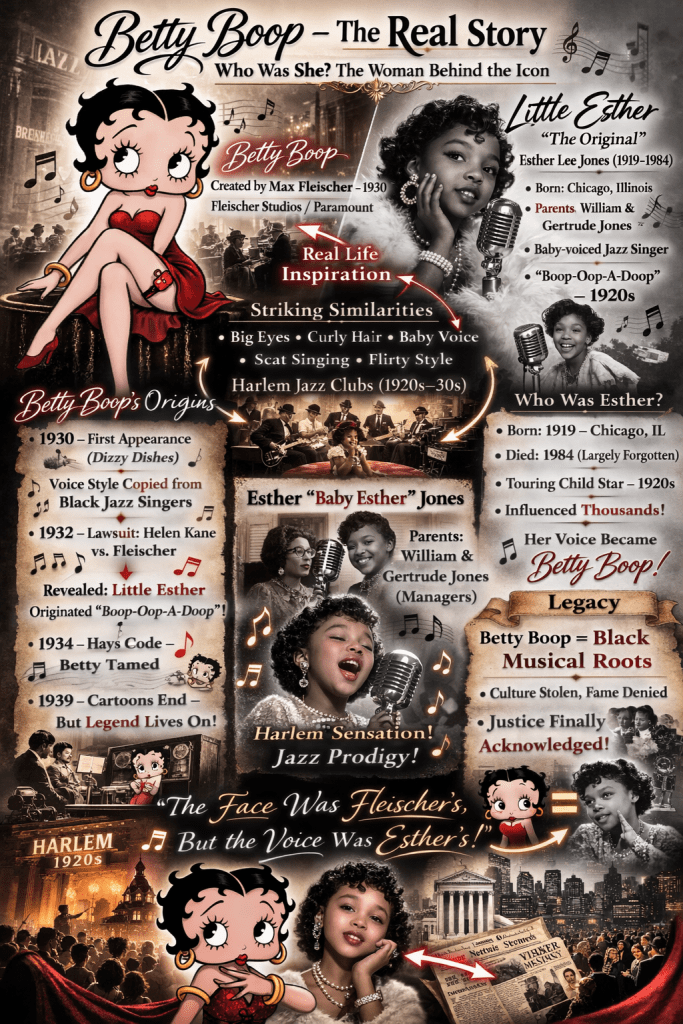
Betty Boop was created by animator Max Fleischer and introduced in 1930 through Fleischer Studios. Her first appearance was in the cartoon Dizzy Dishes, part of the Talkartoons series distributed by Paramount Pictures. Initially, Betty was not even human; she debuted as an anthropomorphic French poodle performing in a nightclub. Over time, her floppy ears were transformed into hoop earrings, and her canine features softened into the human flapper figure audiences recognize today.

The early 1930s were a time when jazz reigned supreme, and animated shorts often borrowed heavily from live musical performances. Fleischer Studios regularly featured jazz musicians and nightclub aesthetics. Betty’s exaggerated baby voice, rhythmic phrasing, and scat-style singing were not accidental inventions but reflections of popular Black musical traditions that had been captivating audiences nationwide.

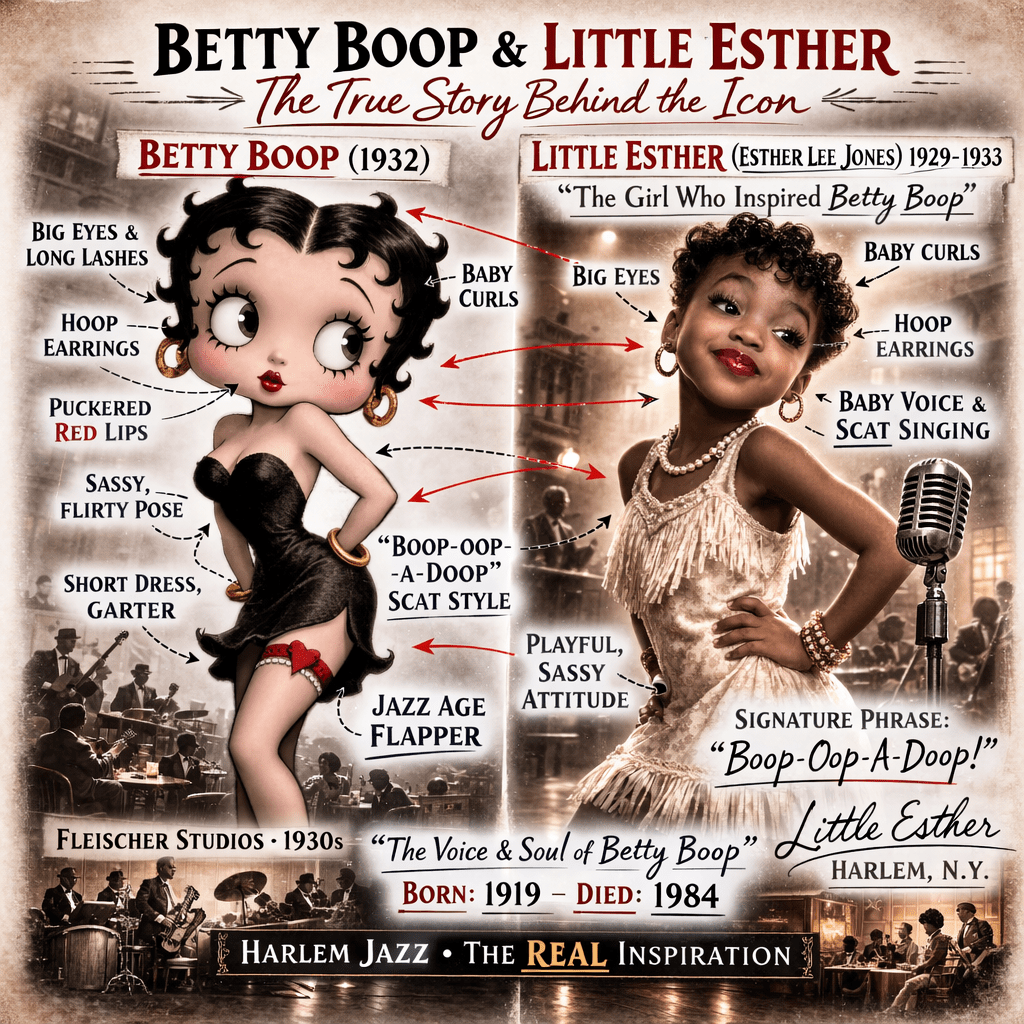
Central to Betty Boop’s origin story is the Black child performer known as Little Esther Phillips, born Esther Lee Jones in Chicago. Known professionally as “Baby Esther” or “Little Esther,” she rose to fame in the late 1920s. Managed by her parents, William and Gertrude Jones, she performed in Harlem nightclubs and toured nationally. Her act included a distinctive baby-voiced scat style filled with sounds like “Boop-oop-a-doop,” a phrase that would later become Betty Boop’s signature catchphrase.

Esther was a prodigy who captivated audiences in venues across New York City, particularly during the height of the Harlem Renaissance. Her performances were known for their playful vocal improvisations, expressive facial gestures, and rhythmic phrasing. Contemporary reports describe her as electrifying, charming, and musically advanced beyond her years.

In 1932, a lawsuit brought national attention to Esther’s connection to Betty Boop. Helen Kane, a white singer famous for her 1928 hit “I Wanna Be Loved by You,” sued Fleischer Studios for allegedly stealing her “boop-boop-a-doop” style for Betty Boop. Kane claimed the animated character was an unauthorized caricature of her persona.

During the trial, however, evidence was introduced showing that Helen Kane herself had borrowed the vocal style from Little Esther. Film footage was presented of Esther performing her baby-voiced scat years before Kane adopted the style. The court ultimately ruled against Kane, concluding that the baby-voice technique was not original to her and therefore could not be exclusively claimed.

This lawsuit, though unsuccessful for Kane, revealed a broader pattern of racial borrowing in American entertainment. Black performers often originated musical styles that were later popularized by white entertainers who received greater financial rewards and national recognition. Betty Boop’s voice and persona thus sit at the crossroads of Black innovation and white commercial adaptation.

Betty Boop herself evolved rapidly. By 1932, she became the first female animated character to star in her own cartoon series. She embodied the flapper archetype—short dress, garter, high heels, and a coquettish demeanor. In many ways, she reflected the liberated woman of the Roaring Twenties, challenging Victorian modesty with playful sensuality.

However, with the enforcement of the Hays Code in 1934, Betty’s overt sexuality was toned down. Her hemlines were lowered, her garter removed, and her storylines became more domestic. This shift marked not only a moral tightening in Hollywood but also a decline in Betty’s rebellious jazz-era spirit.

Meanwhile, Little Esther’s career faced its own challenges. As she matured, the novelty of her childlike voice faded in the eyes of mainstream promoters. Despite her talent, she did not receive the same long-term commercial success as the animated character inspired by her style. Her later life remains less documented than her early performances, reflecting the historical marginalization of many Black entertainers of that era.

The question “Was Esther Betty Boop?” is complex. Legally, Betty Boop was not officially based on Esther. The court did not credit her as the direct inspiration. Yet culturally and musically, the similarities are striking. Esther’s scat syllables, vocal tone, and rhythmic delivery predated both Helen Kane and Betty Boop’s animated persona.

Betty Boop was often compared to the flapper girls of the Jazz Age—bold, urban, and flirtatious. Yet her voice carried the imprint of Harlem’s jazz clubs. The aesthetics of early animation borrowed liberally from Black musical spaces while rarely acknowledging their origins.

Max Fleischer himself was an innovator in animation, pioneering techniques like rotoscoping. Yet like many creators of his time, he operated within an entertainment industry shaped by racial hierarchies. Whether consciously or not, Fleischer Studios benefited from cultural forms birthed in Black communities.

Betty Boop’s popularity soared throughout the 1930s. She appeared in more than 90 cartoons and became a merchandising phenomenon. Dolls, comic strips, and advertisements cemented her as a household name. She remains one of the most enduring animated icons in American pop culture.

Esther Lee Jones, by contrast, did not enjoy such immortality. Her contributions were largely overshadowed in mainstream history. Only in recent decades have scholars and cultural critics revisited the 1932 lawsuit to reconsider her influence on American animation and popular music.

Betty Boop as a character never “died” in the conventional sense; her cartoon series ended in 1939, but she was revived through syndication and nostalgic merchandising. She remains a symbol of retro Americana, appearing on clothing, collectibles, and themed events worldwide.

Little Esther’s death date is less clearly documented in popular historical sources, which itself reflects how incomplete archival records can be for Black performers of the early twentieth century. Her story survives primarily through court transcripts, jazz histories, and cultural scholarship examining appropriation in entertainment.

The legacy of Betty Boop is therefore dual-layered. On the surface, she represents animation history and the Jazz Age aesthetic. Beneath that surface lies a deeper narrative about artistic borrowing, race, and the erasure of Black innovators from mainstream credit.

Today, conversations about Betty Boop increasingly acknowledge Little Esther’s role in shaping the vocal style that defined the character. Scholars argue that recognizing Esther does not diminish Betty’s cultural impact but rather enriches the historical record by restoring context.

Betty Boop’s story reminds us that American pop culture is often a tapestry woven from multiple communities, even when only one thread receives the spotlight. To ask who Betty Boop really was is to uncover not just an animated flapper, but a reflection of jazz, Harlem nightlife, racial complexity, and the enduring influence of a gifted Black child performer whose voice echoed far beyond the stage.


References

Bogle, D. (2001). Toms, coons, mulattoes, mammies, and bucks: An interpretive history of Blacks in American films. Continuum.

Fleischer, R. (2005). Out of the inkwell: Max Fleischer and the animation revolution. University Press of Kentucky.

Maltin, L. (1987). Of mice and magic: A history of American animated cartoons. Plume.

Watkins, M. (1998). On the real side: Laughing, lying, and signifying—the underground tradition of African American humor that transformed American culture. Simon & Schuster.

Court decision: Kane v. Fleischer, 299 F. 533 (S.D.N.Y. 1934).

Black History: Madam C. J. Walker – The First Black Millionaire

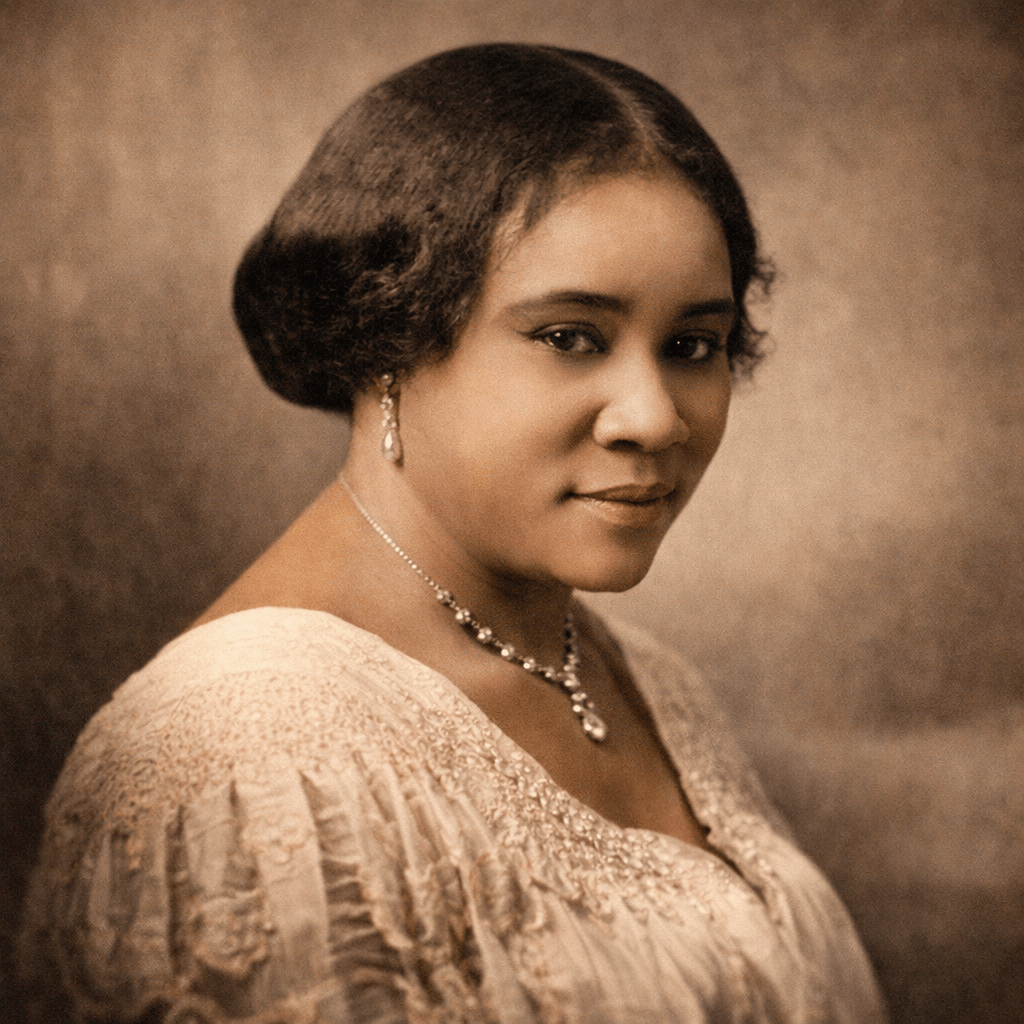
Madam C. J. Walker stands as one of the most extraordinary figures in American history, not only for her business success but for what she represented in an era defined by racial terror, gender exclusion, and economic apartheid. Born into the aftermath of slavery, Walker transformed personal hardship into a global enterprise that reshaped Black beauty culture and redefined what was possible for Black women in capitalism.

Madam C. J. Walker was born Sarah Breedlove in 1867 in Delta, Louisiana, the first child in her family born free after the Emancipation Proclamation. Orphaned by the age of seven, she grew up in extreme poverty, working in cotton fields and as a domestic laborer. Her early life reflected the harsh conditions of post-slavery Black America, where survival itself required resilience.

Walker married at fourteen to escape abuse in her sister’s home, becoming a widow by twenty with a young daughter to raise. She supported herself as a washerwoman, earning barely enough to live while enduring long hours of physical labor. This stage of her life exposed her to the brutal realities faced by Black women—low wages, limited education, and no access to economic mobility.

Her turning point came when she began losing her hair due to scalp diseases caused by poor hygiene conditions, harsh chemicals, and lack of proper hair care knowledge. Hair loss was common among Black women at the time, and there were no reliable products designed for their needs. What began as a personal crisis became the seed of a global industry.

Walker started experimenting with homemade formulas, drawing from folk remedies and early cosmetic chemistry. She eventually developed a scalp treatment that restored her hair and improved overall scalp health. Recognizing the demand, she began selling her products door to door, personally demonstrating their effectiveness to Black women.

She later married Charles Joseph Walker, a newspaper advertising salesman, and adopted the professional name Madam C. J. Walker. The title “Madam” was intentional, projecting authority, elegance, and European-style professionalism in a world that refused to see Black women as legitimate business leaders.

Walker’s most famous innovation was her hair care system, which included scalp ointments, shampoos, and hot-comb styling techniques. Contrary to modern misconceptions, her products were not designed to “make Black women white,” but to promote hair health, hygiene, and growth in an era where basic sanitation was inaccessible for many Black communities.

Her business exploded through a network of Black female sales agents known as “Walker Agents.” These women were trained not only in sales but in financial literacy, hygiene, public speaking, and self-presentation. For many, this was the first time they earned independent income, owned property, or traveled professionally.

Walker built factories, beauty schools, and salons across the United States, the Caribbean, and Central America. Her company employed thousands of Black women at a time when most corporations excluded them entirely. She created an alternative economic system inside a segregated society.

By 1910, she established her headquarters in Indianapolis, turning it into a Black industrial hub. The Madam C. J. Walker Manufacturing Company became one of the largest Black-owned businesses in the nation. Her success made her the first documented self-made Black female millionaire in American history.

Her wealth, however, was never purely personal. Walker was a radical philanthropist who funded Black schools, orphanages, civil rights organizations, and anti-lynching campaigns. She donated large sums to the NAACP, Tuskegee Institute, and Black churches across the country.

Walker used her platform to speak openly about racial violence, economic injustice, and women’s empowerment. She was not merely a beauty entrepreneur but a political figure who believed capitalism should serve liberation, not just profit.

Her daughter, A’Lelia Walker, inherited the business and expanded its cultural influence. A’Lelia became a major patron of the Harlem Renaissance, hosting salons that brought together artists, writers, musicians, and political thinkers. Their wealth became cultural infrastructure for Black intellectual life.

Walker’s legacy also reshaped beauty standards. She taught Black women that grooming and self-care were not signs of vanity but acts of dignity and resistance in a society that dehumanized them. Her message was radical: Black women deserved luxury, care, and self-respect.

She also redefined Black womanhood in business. At a time when women could not vote, and Black women were excluded from most professions, Walker owned property, controlled capital, managed factories, and employed thousands.

Walker died in 1919 at the age of 51, leaving behind an empire and a blueprint. Her funeral was attended by major civil rights leaders, including Booker T. Washington and Mary McLeod Bethune, confirming her status as not just a businesswoman but a historical force.

Her mansion, Villa Lewaro, became a symbol of Black wealth and architectural power in a nation that denied both. It was designed to showcase that Black success did not need to mimic whiteness but could exist on its own cultural terms.

Modern debates about hair politics, natural hair movements, and Black beauty industries all trace back to Walker’s foundational work. Every Black-owned beauty brand today stands on the infrastructure she built.

She proved that generational wealth could emerge from the margins, that Black women could control industries, and that capitalism could be weaponized for racial uplift.

Madam C. J. Walker’s true legacy is not just that she became rich, but that she taught thousands of Black women how to become free.


References

Bundles, A. (2001). On Her Own Ground: The Life and Times of Madam C. J. Walker. Scribner.

Bundles, A. (2015). Madam C. J. Walker: Entrepreneur. Chelsea House.

Gates, H. L., Jr. (2013). Life Upon These Shores: Looking at African American History, 1513–2008. Knopf.

Rooks, N. (1996). Hair Raising: Beauty, Culture, and African American Women. Rutgers University Press.

Walker, A. L. (1925). The Madam C. J. Walker Standard Beauty Manual. Madam C. J. Walker Manufacturing Company.

Hine, D. C., Hine, W. C., & Harrold, S. (2010). The African-American Odyssey. Pearson.

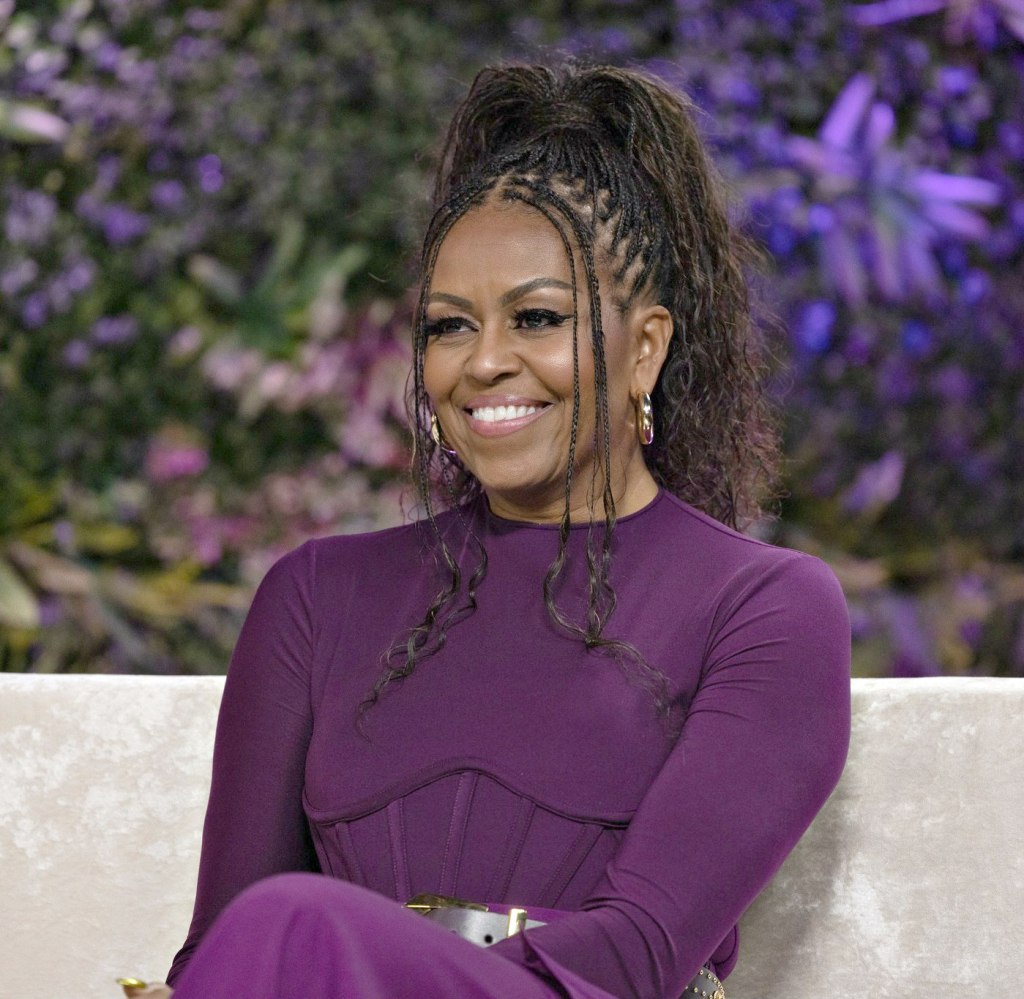
Smart Brown Girl Series: Michelle Obama – Grace in Leadership. Power in Purpose

This photograph is the property of its respective owner. No copyright infringement intended.

Michelle LaVaughn Robinson Obama is one of the most inspirational figures of our era—a woman whose intellect, leadership, and voice have resonated globally. Born on January 17, 1964, on Chicago’s South Side, Michelle was raised by hardworking parents who valued education, discipline, and service. From an early age, she exhibited academic promise and a commitment to excellence.

She attended Princeton University, where she majored in sociology and minored in African American studies, graduating with distinction. She went on to earn her Juris Doctor (J.D.) degree from Harvard Law School, where she further refined her analytical skills and deepened her understanding of the law and society. After law school, Michelle began her legal career in Chicago, where she also met her future husband, Barack Obama.

Michelle’s career has spanned law, public service, education, and advocacy. Early in her professional life, she worked in the Chicago city government and with nonprofit organizations focused on youth and community development. Her leadership abilities were evident long before she stepped onto the national stage.

Her role as First Lady of the United States (2009–2017) elevated her platform and impact. During her tenure, she championed evidence‑based public health initiatives, most notably Let’s Move!, a campaign addressing childhood obesity and promoting nutrition and physical activity nationwide. She also co‑founded the Joining Forces initiative to support military families and launched Reach Higher and Let Girls Learn to expand educational opportunities for youth, especially girls, around the world.

Michelle used her influence to reshape how Americans think about health, education, and family. She also established the White House vegetable garden to educate communities about healthy eating and food justice—an innovative and symbolic project that highlighted her commitment to communal well‑being.

Her communication skills—marked by clarity, warmth, and conviction—made her an admired public speaker. Her 2016 Democratic National Convention address, which included the phrase “When they go low, we go high,” became emblematic of her approach to adversity: principled, gracious, and resilient.

After her tenure in the White House, Michelle channeled her creativity and leadership into writing and media. Her 2018 memoir Becoming became a global bestseller, resonating with millions for its candid exploration of identity, purpose, and resilience. She later published The Light We Carry: Overcoming in Uncertain Times, offering reflections on confidence, community, and navigating life’s uncertainties.

Her storytelling extended into audio media. Michelle launched The Michelle Obama Podcast in 2020, featuring conversations with family, friends, and thought leaders about relationships, community, and personal development. She also developed Michelle Obama: The Light Podcast, based on her book The Light We Carry, which explored similar themes through personal narratives and interviews.

In 2025, Michelle expanded her media presence with a new podcast co‑hosted with her older brother, Craig Robinson, titled IMO with Michelle Obama & Craig Robinson. On this project, they bring their sibling bond to bear on everyday dilemmas, life lessons, and candid conversations about relationships, family, purpose, and personal growth. The podcast is produced by Higher Ground Productions and features a range of guests and topics that emphasize authenticity, humor, and wisdom. The show is available on platforms like YouTube, Apple Podcasts, and Spotify and includes episodes where even former President Barack Obama appears as a guest, illustrating the depth of conversation and familial rapport.

This sibling venture offers Michelle at her most relaxed and relational, demonstrating how her intelligence and insight translate beyond policy and into everyday life.

Michelle continues to engage in philanthropy, storytelling, and mentorship through the Obama Foundation, promoting leadership, civic engagement, and global outreach. Her work focuses on empowering girls and young women through education and opportunity, reinforcing the idea that inclusive leadership is vital to societal progress.

In addition to her media and nonprofit efforts, Michelle remains a cultural influencer. Through public speaking, live events, and social media engagement, she continues to shape discourse on equity, resilience, and intentional living. Her candid discussions about identity, confidence, and community foster connection and inspiration across generations.

Michelle’s legacy is also firmly rooted in her partnership with Barack Obama. Together, they co‑founded Higher Ground Productions, a media company dedicated to uplifting diverse voices and sharing stories that entertain, educate, and inspire. Under their leadership, Higher Ground has produced acclaimed projects, including documentaries and series that highlight underrepresented narratives.

As a mother of two girls, Sasha & Malia, author, advocate, and communicator, Michelle’s journey reflects disciplined intelligence, emotional depth, and the power of service over self. Her story models how individuals can leverage intellect and empathy to create meaningful impact in both private and public arenas.

Her inclusion in the Smart Brown Girl Series honors her scholastic achievement, cultural influence, and dedication to uplifting others—especially young women who see in her example a template for leadership without compromise.

Today, Michelle remains an active voice in public life. Beyond her podcast work with her brother Craig Robinson, she engages audiences through speaking engagements, literary events, and community partnerships, continually advocating for education, empowerment, and thoughtful engagement with the world around us.

Her life demonstrates that true influence flows not just from titles held but from the courage to speak honestly, the wisdom to listen deeply, and the commitment to serve others with integrity and heart.

References

  • Michelle Obama (personal biography and career overview). Wikipedia. en.wikipedia.org
  • IMO with Michelle Obama & Craig Robinson podcast (Apple Podcasts & Spotify description). podcasts.apple.com
  • IMO with Michelle Obama & Craig Robinson launch and details on YouTube. youtube.com
  • Higher Ground Productions background and media activities. en.wikipedia.org
  • The Light We Carry book by Michelle Obama. en.wikipedia.org
  • Obama Foundation YouTube (general involvement and appearances). youtube.com