Category Archives: biblical marriage

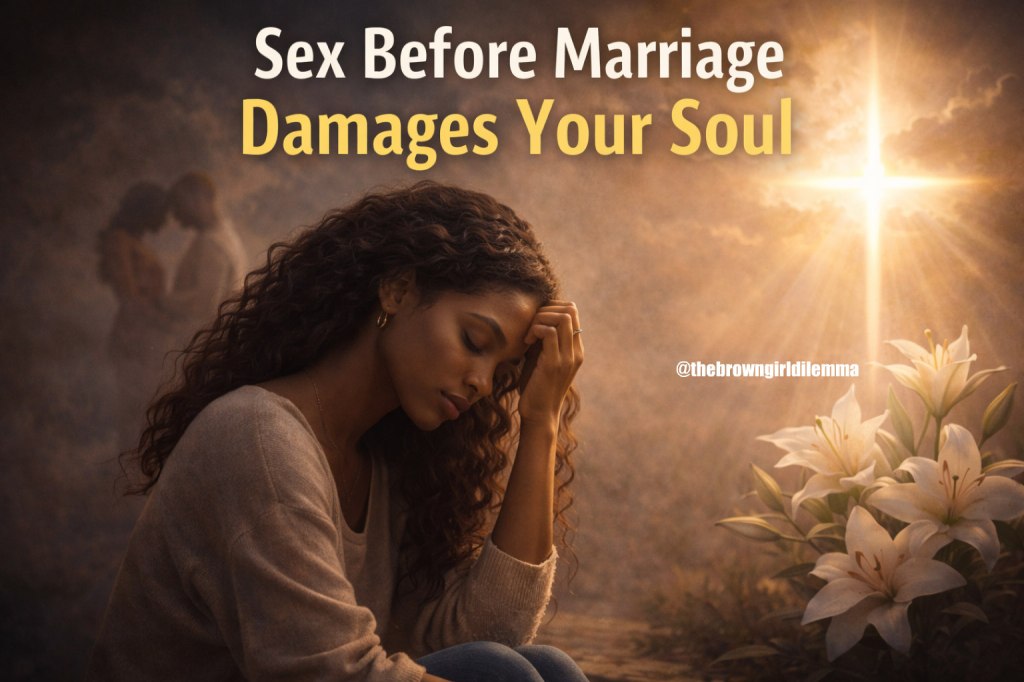
Why Sex Before Marriage Damages Your Soul

Sex is a sacred gift, designed by God to unite a husband and wife in covenantal love. When engaged in outside of God’s ordained framework, it can have spiritual, emotional, and relational consequences. In today’s culture, casual sex is often normalized, yet Scripture reveals the profound purpose of sexual intimacy and the danger of misusing it.

1. Sexual Intimacy is Sacred

Hebrews 13:4 (KJV) states: “Marriage is honourable in all, and the bed undefiled: but whoremongers and adulterers God will judge.”
Sex is intended to be a sacred act within the covenant of marriage. Engaging sexually outside of marriage defiles what God designed to be holy and intimate. The soul is affected because sin leaves a spiritual imprint that separates us from God (Isaiah 59:2, KJV).

2. Premarital Sex Can Lead to Emotional Bonding and Heartbreak

Psychologists have noted that sexual intimacy releases oxytocin and dopamine, chemicals associated with bonding and attachment (Fisher, 1998). When sex occurs outside of marriage, emotional attachment may form without the stability and commitment of covenantal love, often leading to heartbreak, regret, and long-term emotional scars.

3. Spiritual Consequences of Sexual Sin

1 Corinthians 6:18–20 (KJV) warns: “Flee fornication. Every sin that a man doeth is without the body; but he that committeth fornication sinneth against his own body. What? know ye not that your body is the temple of the Holy Ghost…?”
Premarital sex dishonors the body, which is the temple of God. Spiritual damage occurs because the soul experiences guilt, shame, and separation from God’s intended plan, affecting both emotional and spiritual health.

4. Impacts on Self-Worth and Identity

Sex outside marriage can distort self-perception. When intimacy is casual or transactional, individuals may equate sexual activity with value, approval, or validation. Proverbs 31:30 (KJV) reminds us: “Favor is deceitful, and beauty is vain: but a woman that feareth the Lord, she shall be praised.” True worth comes from godliness, not sexual expression.

5. Relationships Are Compromised

Engaging sexually before marriage can create unhealthy patterns in relationships. Expectations, attachments, and relational dynamics can be misaligned when intimacy precedes covenantal commitment. Genesis 2:24 (KJV) teaches: “Therefore shall a man leave his father and his mother, and shall cleave unto his wife: and they shall be one flesh.” Sex is meant to solidify an already committed bond, not create one prematurely.

6. Soul Healing Requires God’s Guidance

Psalm 51:10 (KJV) teaches: “Create in me a clean heart, O God; and renew a right spirit within me.” For those who have engaged in premarital sex, spiritual restoration is possible through repentance, prayer, and realignment with God’s Word. Forgiveness and renewal restore the soul and prepare it for covenantal love.

Conclusion

Sex before marriage can damage the soul spiritually, emotionally, and relationally. It defiles the sacredness of the body, binds hearts prematurely, and can distort self-worth. God’s design for sexual intimacy within marriage is a gift that protects the soul, nurtures emotional health, and strengthens relational bonds. Choosing purity honors God, preserves self-respect, and aligns with eternal purpose.


References

Fisher, H. (1998). Why we love: The nature and chemistry of romantic love. Henry Holt and Company.

Grudem, W. (2004). Systematic theology: An introduction to biblical doctrine. Inter-Varsity Press.

Johnston, W. (2019). Sexual ethics in a modern culture. Zondervan Academic.

The Holy Bible, King James Version. (1769/2017). Cambridge University Press.

Choosing Us in a Disposable World

In a culture that treats relationships as temporary and people as replaceable, choosing commitment has become a radical act. Modern society encourages convenience over covenant, pleasure over patience, and escape over endurance. To choose “us” in such a world requires intentional resistance to disposability and a return to values rooted in responsibility, loyalty, and love.

The rise of disposable relationships is closely tied to consumer culture. Zygmunt Bauman described modern love as “liquid,” meaning easily entered and easily exited, shaped by a marketplace mindset where people are valued for utility rather than humanity. This framework conditions individuals to discard relationships when discomfort arises rather than work through conflict.

Technology has intensified this disposability. Dating apps, social media, and constant access to alternatives create the illusion that something better is always one swipe away. Research shows that the abundance of choice often decreases satisfaction and increases commitment anxiety, making long-term bonds feel restrictive rather than rewarding.

Choosing “us” demands intentionality. Commitment is not sustained by emotion alone but by shared values, boundaries, and vision. Psychological studies consistently show that couples who establish clear expectations and long-term goals report higher relationship satisfaction and stability.

Disposable culture also normalizes emotional detachment. Ghosting, situationships, and non-committal arrangements allow individuals to avoid accountability while still accessing intimacy. This pattern erodes trust and reinforces fear-based attachment styles, particularly avoidant attachment, which undermines relational security.

Historically, marriage and long-term partnership were understood as social anchors, not merely personal preferences. Sociologists note that stable unions contributed to community continuity, intergenerational support, and collective resilience. As commitment declines, social fragmentation increases.

Choosing “us” requires emotional maturity. It involves staying present during conflict, communicating honestly, and accepting imperfection. Relationship scholars emphasize that conflict itself is not destructive; avoidance is. Couples who repair rather than retreat build deeper intimacy over time.

Faith traditions have long framed love as a covenant rather than a contract. A covenant mindset emphasizes permanence, sacrifice, and mutual responsibility. This stands in stark contrast to modern transactional views of relationships, where value is measured by immediate gratification.

The psychology of attachment further explains the cost of disposability. Secure attachment develops through consistency, reliability, and emotional safety. Disposable dating practices disrupt this process, leaving many adults cycling between longing for intimacy and fearing commitment.

Choosing “us” also means resisting individualism. Western culture often prioritizes personal fulfillment over relational responsibility. While self-growth is important, research indicates that meaningful relationships are one of the strongest predictors of long-term happiness and mental health.

Economic instability has also influenced relationship disposability. Financial pressure, delayed milestones, and career uncertainty contribute to hesitancy around commitment. Yet studies show that couples who face hardship together often develop stronger relational bonds through shared resilience.

Media narratives frequently romanticize exit over endurance. Films and television often portray leaving as empowerment, while staying is framed as settling. These narratives shape expectations and diminish appreciation for the quiet strength of perseverance.

Choosing “us” redefines love as an ongoing decision rather than a fleeting feeling. Commitment becomes an act of will, renewed daily. Relationship experts note that long-lasting couples emphasize dedication over emotional highs, especially during difficult seasons.

Healthy boundaries are essential to sustaining commitment. Choosing one another does not mean tolerating abuse or neglect, but it does mean engaging in repair, growth, and accountability rather than impulsive abandonment.

Community support plays a crucial role in resisting disposability. Couples embedded in supportive social, faith, or familial networks are more likely to endure challenges. Isolation increases vulnerability to relational breakdown.

Choosing “us” also protects future generations. Children raised in stable, committed environments tend to experience better emotional, educational, and relational outcomes. Commitment, therefore, becomes both a personal and social investment.

In a disposable world, patience becomes countercultural. Waiting, working through discomfort, and choosing reconciliation reflect values increasingly rare yet deeply necessary. These practices restore dignity to love.

Commitment cultivates trust, and trust fosters freedom. When individuals feel secure in being chosen, they are more able to grow, take risks, and love without fear of abandonment.

Ultimately, choosing “us” is an act of hope. It affirms that love is not meant to be consumed and discarded, but nurtured and sustained. In a world that teaches people to move on quickly, choosing to stay becomes a profound declaration of value.

Choosing “us” does not deny hardship; it confronts it with resolve. It proclaims that love, when rooted in intention, accountability, and mutual respect, can withstand a culture built on disposability.

References

Bauman, Z. (2003). Liquid love: On the frailty of human bonds. Polity Press.

Finkel, E. J., Eastwick, P. W., Karney, B. R., Reis, H. T., & Sprecher, S. (2012). Online dating: A critical analysis from the perspective of psychological science. Psychological Science in the Public Interest, 13(1), 3–66.

Giddens, A. (1992). The transformation of intimacy: Sexuality, love, and eroticism in modern societies. Stanford University Press.

Gottman, J. M., & Silver, N. (2015). The seven principles for making marriage work. Harmony Books.

Hazan, C., & Shaver, P. R. (1987). Romantic love conceptualized as an attachment process. Journal of Personality and Social Psychology, 52(3), 511–524.

Putnam, R. D. (2000). Bowling alone: The collapse and revival of American community. Simon & Schuster.

Twenge, J. M. (2017). iGen. Atria Books.

Choosing Us: The Revival of Black Marriage.

Black marriage has long stood at the crossroads of love, resistance, and survival. From the earliest days of forced separation under chattel slavery to modern pressures of economic instability and cultural fragmentation, the Black marital union has endured extraordinary strain. Yet within that history lies an unbroken desire to choose one another intentionally, to build family in the face of systems designed to dismantle it.

Choosing us is not merely a romantic sentiment; it is a conscious decision rooted in self-worth, discipline, and vision. For Black couples, marriage has never existed in a vacuum. It has always been a complex blend of politics, spirituality, and community. To choose marriage is to choose stability in a world that often profits from Black disunity.

Historically, Black marriages were disrupted by laws that denied enslaved people legal recognition of their unions. Families were torn apart, spouses sold away, and children separated, creating generational trauma that still echoes today. The legacy of these disruptions continues to influence trust, attachment, and expectations within modern relationships.

Despite these historical assaults, Black love persisted. Enslaved people formed unions through ritual, prayer, and communal witness, proving that marriage is more than paperwork. It is a covenant. That same spirit of covenant remains essential for the revival of Black marriage in the present day.

The modern decline in marriage rates among Black Americans is often discussed without adequate historical context. Economic disenfranchisement, mass incarceration, educational inequality, and media narratives that devalue Black family life have all contributed to relational instability. These are not moral failures but structural realities.

Still, revival is possible because Black marriage has always adapted. Revival begins when couples reject deficit narratives and instead center healing, communication, and accountability. Choosing us means refusing to internalize stereotypes that portray Black men as absent or Black women as unlovable or overly independent.

At its core, marriage thrives on intentionality. Intentional Black marriage requires emotional literacy, financial transparency, and spiritual grounding. It asks partners to confront personal wounds rather than project them onto one another. Healing the self becomes an act of love toward the union.

Faith traditions have historically played a vital role in sustaining Black marriages. Biblical teachings frame marriage as a covenant rather than a contract, emphasizing commitment, sacrifice, and mutual respect. Scriptures such as Ecclesiastes 4:12 highlight strength in unity, reinforcing the spiritual dimension of partnership.

The revival of Black marriage also requires redefining gender roles beyond oppression and resentment. Healthy unions are not built on domination but on cooperation. When leadership is understood as service and submission as mutual respect, marriages become spaces of safety rather than a power struggle.

Economic collaboration remains a cornerstone of marital stability. Historically, Black couples pooled resources to survive exclusion from wealth-building opportunities. Today, financial literacy, shared goals, and cooperative economics remain essential tools for sustaining long-term partnerships.

Communication is another critical pillar. Many couples inherit silence as a coping mechanism, passed down from generations that endured trauma without space to process it. Revival demands emotional honesty, active listening, and the courage to address conflict constructively.

Community support further strengthens marriages. In earlier generations, extended family, churches, and neighborhoods reinforced accountability and offered guidance. Rebuilding communal investment in marriage helps counter isolation and provides models of healthy partnership.

Media representation also matters. The overexposure of dysfunctional relationships distorts expectations and normalizes instability. Highlighting examples of enduring Black love restores hope and provides cultural counter-narratives rooted in reality rather than spectacle.

The revival of Black marriage is inseparable from healing masculinity and femininity. Black men must be allowed space to express vulnerability without shame, and Black women must be freed from narratives that demand strength at the expense of softness. Balance nurtures intimacy.

Choosing us also means choosing patience. Many couples rush into commitment without preparation, while others avoid commitment out of fear. Revival calls for intentional courtship, premarital counseling, and spiritual discernment before union.

Marriage is not a cure-all, but it is a stabilizing force when entered wisely. Research consistently links healthy marriages to improved outcomes for children, including emotional security and academic achievement. These benefits ripple across generations.

The children of strong Black marriages witness cooperation, respect, and resilience modeled daily. They learn conflict resolution not through chaos but through example. In this way, marriage becomes both personal and revolutionary.

Revival does not mean returning to outdated ideals that ignored abuse or silenced women. True revival embraces justice, safety, and mutual flourishing. Love that harms is not covenant; love that heals is.

Ultimately, choosing us is an act of faith. It is believed that Black love is worthy of protection, investment, and celebration. It is choosing partnership over fear and unity over fragmentation.

The revival of Black marriage begins one couple at a time. When two people choose healing, accountability, and covenant, they defy history’s wounds and create new legacies. In choosing us, Black couples choose a future rooted in love, stability, and hope.


References

Cherlin, A. J. (2010). The marriage-go-round: The state of marriage and the family in America today. Knopf.

Coates, T.-N. (2015). Between the world and me. Spiegel & Grau.

Frazier, E. F. (1939). The Negro family in the United States. University of Chicago Press.

Hill, R. B. (1999). The strengths of Black families (2nd ed.). University Press of America.

Pew Research Center. (2020). Marriage and cohabitation in the U.S.

Stanley, S. M., Markman, H. J., & Whitton, S. W. (2002). Communication, conflict, and commitment: Insights on the foundations of relationship success. Journal of Family Psychology, 16(4), 659–675.

The Holy Bible, King James Version. (1611/1987). Cambridge University Press.

Wilcox, W. B., & Wolfinger, N. H. (2016). Soul mates: Religion, sex, love, and marriage among African Americans and Latinos. Oxford University Press.

Girl Talk Series: Being That “Ride or Die”

Not for boyfriends. Not for situationships. Not for potential. For the covenant.

🌸 Ladies, Before We Begin… 🌸

Beloved sisters, this conversation is not about being loyal to any man who smiles at you, texts you good morning, or gives you a little attention. The world has romanticized being a “ride or die” for situationships, unproven men, and temporary connections — but Kingdom women do not give wife devotion to boyfriend energy.

This lesson is for covenant, not confusion.
For wives, and for women preparing for the man God has proven, not the man you’re hoping will change.

We are speaking to the woman who understands that loyalty belongs where there is leadership, vision, and God’s covering. To the woman who knows that her heart, her strength, and her devotion are worthy of a man who honors God, honors her, and chooses her publicly and spiritually.

“Every wise woman buildeth her house…”
Proverbs 14:1 (KJV)

We do not build for men still living like boys.
We do not sacrifice for men who do not submit to God.
We do not pour into a vessel that refuses to be filled by the Lord.

Your loyalty is royal.
Your devotion is divine.
Your heart is holy ground.

And the one who receives that kind of love must be a man who has shown consistent character, spiritual maturity, and covenant intention.

This is not about being gullible — it is about being God-led.
Not desperate — but discerning.
Not a placeholder — but a wife in purpose and preparation.

So as we enter this conversation, remember:

You are not proving yourself to a man.
You are preparing yourself for God’s promise.

Let’s talk about what it truly means to stand by a King, and to walk in the grace, wisdom, and strength of a help meet designed by Heaven.

There is a narrative in today’s culture that glorifies being a “ride or die” for any man who shows a little attention. Social media tells women to hold down men who have not proven character, commitment, or covenant. But beloved, God never called daughters of Zion to pour out loyalty, sacrifice, and devotion on untested vessels or unsubmitted men.

This lesson is not for girlfriend status. This is for wives and women preparing for God-ordained marriage, not for anyone entertaining random relationships or men who do not carry the spirit of leadership, responsibility, and faithfulness.

Before you ride, he must have vision.
Before you die to self, he must have died to flesh.
Before you support, he must be submitted to God.

A “ride or die” spirit is righteous when it is covenant-based — when a man has proven himself trustworthy, God-fearing, and aligned with Kingdom purpose. This kind of loyalty belongs inside marriage, not the wilderness of modern dating.

“Whoso findeth a wife findeth a good thing, and obtaineth favour of the LORD.”
Proverbs 18:22 (KJV)

A wife is not “auditioned,” “tested,” or “trial-run.” She is chosen, covered, and covenanted.

💕 A True “Ride or Die” Wife in the Kingdom

She is not desperate — she is discerning.
She does not chase — she is chosen.
She does not break herself — she builds her home.

She stands by her husband because he stands by God.

“Two are better than one… For if they fall, the one will lift up his fellow.”
Ecclesiastes 4:9-10 (KJV)

A Kingdom “ride or die” woman is:

His help meet (Genesis 2:18)
His peace, not his battle (Proverbs 31:26)
His rest, not his restlessness (Proverbs 12:4)
His comfort, not his chaos (Titus 2:4-5)
His support, not his stress (1 Peter 3:1-2)

When she rides, she rides in wisdom, faith, and loyalty.
When she sacrifices, it is for covenant, not confusion.
When she submits, she does so under God’s structure, not man’s ego.

“Wives, submit yourselves unto your own husbands, as unto the Lord.”
Ephesians 5:22 (KJV)

Submission is safe when he submits to God first.


👑 Kingdom “Ride or Die” Looks Like:

  • Praying for him
  • Protecting his name
  • Building him up, not breaking him down
  • Standing with him in spiritual battles
  • Loving him with patience and wisdom
  • Being his rest, warmth, and covering

This is not slavery — it is strength in submission and honor.
This is not weakness — it is divine womanhood.

Remember beloved — loyalty is holy when it is covenant, not chaos.

“The heart of her husband doth safely trust in her…”
Proverbs 31:11 (KJV)

A true “ride or die” woman is not reckless.
She is rooted in God, grounded in peace, and crowned with grace.


🌺 Reflection Questions

  • Am I preparing to be a wife or performing for a boyfriend?
  • Do I give loyalty to men who have not earned leadership?
  • Does the man I envision supporting submit to Christ?
  • Am I building for covenant or clinging to potential?

Girl Talk Series: An Intentional Man

Ladies, always pay attention to an intentional man.
In a dating culture saturated with ambiguity, mixed signals, and emotional convenience, intentionality is a rare and powerful indicator of character. An intentional man does not leave room for confusion because clarity is his language, and purpose is his posture. He understands that a woman’s time, heart, body, and faith are sacred, not casual, and he moves accordingly. Rather than reacting when questioned, he leads with truth, consistency, and visible commitment. His actions align with his words, his pursuit is respectful, and his presence brings peace rather than anxiety—because intentional men do not play games, they pursue with honor.

An intentional man is not merely honest; he is deliberate. While honesty answers questions when asked, intentionality volunteers truth without interrogation. In a culture where ambiguity is often mistaken for romance, an intentional man stands apart by choosing clarity over confusion and purpose over performance.

Biblically, intentionality reflects God’s nature. Scripture reveals a God who plans, declares, and fulfills His word with precision. An intentional man mirrors this divine attribute by aligning his actions, words, and commitments with truth rather than convenience.

Honesty alone can be passive. A man may avoid lying yet still withhold vital information. Intentional transparency, however, actively seeks to protect a woman’s heart, time, and dignity. Proverbs teaches that faithful wounds are better than deceitful kisses, highlighting that truth delivered in love is a form of protection.

Dating, from a biblical lens, is an interview—not an entitlement. An intentional man understands that dating is for discernment, not access. He does not pressure a woman into emotional, physical, or spiritual intimacy prematurely, because he recognizes that sex is reserved for covenant, not curiosity.

Scripture commands believers to flee fornication, emphasizing that sexual discipline is a sign of spiritual maturity. An intentional man does not attempt to negotiate boundaries; he honors them. His restraint is not weakness but strength under authority.

Transparency is evident in visibility. An intentional man does not hide a woman or compartmentalize her existence. He introduces her to his family, community, and spiritual covering, signaling seriousness, accountability, and honorable intent.

Jesus taught that those who walk in the light do not fear exposure. Similarly, an intentional man does not live in secrecy. His life is consistent across spaces—private, public, digital, and spiritual—because integrity leaves no room for dual identities.

Communication is central to intentionality. An intentional man speaks plainly, listens attentively, and seeks understanding rather than dominance. James instructs believers to be swift to hear and slow to speak, a principle that fosters emotional safety and mutual respect.

An intentional man affirms a woman’s worth without objectifying her. His words build confidence rather than dependency. He recognizes her as a daughter of God, not a conquest, and speaks life into her purpose, gifts, and future.

Psychological research affirms that consistent affirmation and emotional reliability foster relational security. Biblically, encouragement is a command, not a courtesy. An intentional man understands the power of his words and uses them responsibly.

Godly intentionality also includes provision—not merely financial, but emotional, spiritual, and moral. A man who plans, saves, and prepares reflects biblical stewardship. Provision begins with foresight, not income level.

An intentional man is teachable and accountable. He submits himself to God, counsel, and correction. Scripture warns that a man who trusts only in his own heart is foolish, underscoring the necessity of humility.

Respect for boundaries is non-negotiable. An intentional man does not test limits to see how much he can take; he honors limits to demonstrate how much he values. Love, according to Scripture, does no harm.

Transparency also includes difficult truths. An intentional man does not future-fake or overpromise. He communicates where he is, what he wants, and what he can offer without manipulation or delay tactics.

Unlike performative spirituality, godliness in an intentional man is consistent and lived. He prays, studies Scripture, and seeks righteousness not to impress but to obey. His faith is not seasonal or situational.

Confidence grows naturally in the presence of an intentional man. His clarity removes anxiety, his consistency removes doubt, and his leadership creates peace. Scripture affirms that God is not the author of confusion.

An intentional man understands that marriage is not a lifestyle upgrade but a covenantal assignment. Therefore, he dates with purpose, not entertainment. His pursuit is aligned with responsibility.

The Bible teaches that whatever is done should be done decently and in order. Intentional dating reflects divine order, protecting both parties from emotional misuse and spiritual compromise.

Ultimately, an intentional man reflects Christ’s love for the church—sacrificial, truthful, patient, and committed. He does not exploit access; he offers covering. He does not demand submission; he earns trust.

Women are not called to chase clarity. When a man is intentional, his intentions are evident. Godly men do not leave women guessing; they lead with truth.

In a world saturated with ambiguity, choosing an intentional man is choosing peace. It is better to wait for transparency than to settle for honesty that requires constant questioning. God honors patience aligned with wisdom.


References

American Psychiatric Association. (2022). DSM-5-TR: Diagnostic and statistical manual of mental disorders (5th ed., text rev.). APA Publishing.

Cloud, H., & Townsend, J. (2017). Boundaries: When to say yes, how to say no to take control of your life. Zondervan.

Gottman, J. M., & Silver, N. (2015). The seven principles for making marriage work. Harmony Books.

Henry, M. (1991). Matthew Henry’s commentary on the whole Bible. Hendrickson. (Original work published 1706)

Piper, J. (2012). This momentary marriage. Crossway.

The Holy Bible, King James Version. (1769/2017). Cambridge University Press.

Townsend, J. (2019). People fuel. Baker Books.

Wright, N. T. (2010). After you believe: Why Christian character matters. HarperOne.

The Marriage Series: What God Joined Together – Marriage Beyond Romance

Marriage, according to Scripture, is not a human invention rooted in emotion but a divine institution established by God Himself. Romance may initiate attraction, but covenant sustains union. Jesus made this distinction clear when He declared, “What therefore God hath joined together, let not man put asunder” (Matthew 19:6, KJV). Marriage, in its biblical form, transcends feeling and rests on divine order, responsibility, and purpose.

From the beginning, marriage was designed as a structural foundation for humanity. In Genesis, God did not merely introduce companionship; He established alignment, function, and continuity. “It is not good that the man should be alone; I will make him an help meet for him” (Genesis 2:18, KJV). This union was purposeful, not performative—created to steward creation, produce legacy, and reflect divine harmony.

Modern culture often reduces marriage to romance, compatibility, and personal fulfillment. While affection is a gift, Scripture never presents emotion as the glue of marriage. Feelings fluctuate, but covenant endures. Biblical marriage is rooted in vow, sacrifice, and obedience to God rather than constant emotional satisfaction.

The Hebrew concept of covenant (berith) implies permanence sealed by accountability to God. Unlike contracts, which can be broken when terms are unmet, covenants bind participants even when circumstances change. Malachi emphasizes this sacred responsibility, stating that God is a witness to the marriage covenant (Malachi 2:14, KJV). This divine witnessing elevates marriage beyond private agreement into a sacred obligation.

Marriage also functions as a spiritual discipline. It exposes selfishness, refines character, and demands humility. Ephesians instructs husbands to love their wives “even as Christ also loved the church, and gave himself for it” (Ephesians 5:25, KJV). This model frames love not as consumption, but as sacrifice—a call largely absent from modern romantic narratives.

For wives, Scripture speaks not of inferiority but of order and wisdom within unity. Submission in the biblical sense is not subjugation, but alignment under God’s structure (Ephesians 5:22–24, KJV). When removed from its theological context, submission is often mischaracterized, yet biblically it reflects trust in divine design, not human dominance.

Marriage is also generational in purpose. It is the primary environment in which children are formed, values are transmitted, and identity is nurtured. Scripture repeatedly links covenant faithfulness in marriage to the stability of future generations (Deuteronomy 6:6–7, KJV). When marriage collapses, societies fracture.

Romance-centered marriages often fail under pressure because emotion was never meant to carry covenant weight. Proverbs warns against building life on unstable foundations, reminding that wisdom—not passion—establishes a house (Proverbs 24:3, KJV). Emotional attraction may ignite love, but wisdom sustains it.

God’s joining in marriage also implies divine authority over the union. When marriage is redefined apart from God, it loses its spiritual covering. Jesus’ words in Matthew 19 were a rebuke to a culture that treated marriage as disposable. The same rebuke applies today, where convenience often overrides commitment.

Marriage reflects Christ and the Church, making it theological as well as relational. Paul calls this union a “great mystery” (Ephesians 5:32, KJV), indicating that marriage is a living metaphor of redemption, forgiveness, and perseverance. To trivialize marriage is to distort this spiritual image.

Historically, the disruption of marriage—especially in Black communities—has been both intentional and traumatic. Enslavement, economic marginalization, and mass incarceration undermined covenant stability. Understanding marriage beyond romance is essential for restoration, as healing requires reclaiming covenant consciousness rather than romantic idealism (Wilkerson, 2020).

Psychologically, covenant-based marriages demonstrate greater resilience. Research shows that commitment rooted in shared values and spiritual meaning predicts longevity more than emotional intensity alone (Gottman & Silver, 2015). Scripture anticipated this truth long before modern psychology named it.

Marriage also demands repentance and forgiveness. No union survives without grace. Colossians commands believers to forgive as Christ forgave, directly applying spiritual discipline to relational endurance (Colossians 3:13, KJV). Romance avoids conflict; covenant confronts it with humility.

When God joins a marriage, He joins purpose, not just people. Two individuals become stewards of a shared calling. Amos asks, “Can two walk together, except they be agreed?” (Amos 3:3, KJV). Agreement here refers not to sameness, but to unified direction under God.

To reclaim marriage beyond romance is to return it to its rightful place—as sacred, demanding, refining, and life-giving. It is not sustained by constant happiness, but by faithfulness. In a culture intoxicated by feeling, biblical marriage stands as a countercultural witness to endurance, order, and divine intention.

Ultimately, marriage joined by God is not preserved by human strength alone. It requires submission to God, reverence for the covenant, and obedience beyond emotion. Where romance fades, covenant speaks. And where God joins, no cultural trend has authority to separate.


References

The Holy Bible, King James Version. (1611). Various passages.

Gottman, J. M., & Silver, N. (2015). The seven principles for making marriage work. Harmony Books.

Wilkerson, I. (2020). Caste: The origins of our discontents. Random House.

Keller, T., & Keller, K. (2011). The meaning of marriage: Facing the complexities of commitment with the wisdom of God. Dutton.

Wright, N. T. (2004). After you believe: Why Christian character matters. HarperOne.

The Marriage Series: Can we Talk?

In every enduring relationship, especially within the covenant of biblical marriage, communication stands as one of the greatest expressions of love. When two people speak openly, listen deeply, and share honestly, they build a foundation that storms cannot destroy. The Scriptures affirm that “a threefold cord is not quickly broken” (Ecclesiastes 4:12, KJV), and communication is one of the strands woven into that sacred cord.

Healthy communication begins with a willingness to be transparent. Marriage was never designed for masks, silence, or emotional withdrawal. Adam and Eve were “naked and not ashamed” (Genesis 2:25, KJV), symbolizing emotional openness and vulnerability. When couples talk honestly, they strip away fear and allow intimacy to flourish.

Trust is the oxygen of communication. Without trust, words become weapons or walls. Proverbs 31 describes the virtuous wife by saying, “the heart of her husband doth safely trust in her” (Proverbs 31:11, KJV). Likewise, a God-fearing husband earns trust by acting with integrity, consistency, and love. Trust grows stronger when both partners are safe places for each other.

Respect is another pillar of healthy dialogue. The Bible commands husbands to dwell with their wives “according to knowledge” (1 Peter 3:7, KJV), meaning with understanding, honor, and patience. Respectful communication avoids sarcasm, belittling words, and assumptions. It listens before reacting and seeks to understand before seeking to be understood.

Love—biblical, selfless love—is the voice of God within marriage. Paul reminds us that “charity…seeketh not her own…is not easily provoked…rejoiceth in the truth” (1 Corinthians 13:4–6, KJV). Communicating in love means speaking truth without cruelty, correcting without condemning, and disagreeing without disrespect.

Healthy marriages thrive when couples intentionally create space for conversation. This means setting aside time to talk without distraction, whether daily check-ins or weekly heart-to-heart sessions. These moments build emotional intimacy and allow couples to realign expectations, share gratitude, and resolve tensions before they grow.

Listening is just as holy as speaking. James teaches, “Let every man be swift to hear, slow to speak, slow to wrath” (James 1:19, KJV). A listening spouse hears not only the words but the emotions behind them. A listening spouse resists defensiveness and responds with grace. Listening is a ministry of presence.

Honesty must be handled gently. Truth without compassion becomes harshness, while compassion without truth becomes compromise. Ephesians 4:15 encourages believers to speak “the truth in love,” which should be the posture of every married couple. Honesty should heal, not harm.

Forgiveness is essential for communication to thrive. Couples who talk openly will eventually bump into misunderstandings or mistakes. Jesus teaches that forgiveness is not optional (Matthew 18:21–22, KJV). In marriage, forgiveness restores conversation and prevents resentment from choking intimacy.

Communication also requires humility. Pride is the enemy of connection, but humility invites grace. Philippians 2:3 teaches, “Let nothing be done through strife or vainglory; but in lowliness of mind let each esteem other better than themselves.” Humility softens tone, shifts perspective, and opens doors that pride keeps shut.

Being trustworthy means being dependable with words, emotions, and commitments. When couples keep promises, show up consistently, and honor boundaries, they reinforce the security needed for open dialogue. Trustworthiness is proven over time through actions, not simply declared with speech.

In a biblical marriage, communication should include prayer. When couples pray together, they speak not only to one another but also to God. Prayer invites divine wisdom, unity, and peace. Matthew 18:19 affirms the power of agreement: “If two of you shall agree on earth… it shall be done.” Couples who talk to God together learn to talk to each other with more grace.

Healthy communication honors emotional needs. Some partners need reassurance; others need organization; some need affection; others need clarity. Understanding these differences prevents unnecessary conflict. Husbands and wives can study each other the way they study Scripture—with intention and reverence.

Setting boundaries for conflict is another key. Couples can agree not to shout, insult, walk away, or bring up unrelated past issues. Ephesians 4:26 warns, “Let not the sun go down upon your wrath,” reminding us that peace is a daily pursuit.

A strong marriage requires accountability. Couples must lovingly hold each other to spiritual, emotional, and relational standards. Accountability is not control but partnership. “Iron sharpeneth iron” (Proverbs 27:17, KJV), and marriage is one of God’s refining tools.

Communication thrives when couples celebrate each other. Appreciation strengthens bonds and encourages positive behavior. Compliments, gratitude, and verbal affection create emotional security. Proverbs 16:24 reminds us that “pleasant words are as an honeycomb.”

Honest communication may require difficult conversations—about finances, family, expectations, boundaries, or disappointment. These conversations should not be avoided, for avoidance breeds fear. Instead, couples should approach difficult topics with prayer, patience, and love.

Couples must guard their marriage from outside influences that corrupt communication. Gossipers, negative friends, meddling relatives, and social media comparisons can poison perspective. The Bible warns, “Be not deceived: evil communications corrupt good manners” (1 Corinthians 15:33, KJV). Protecting the marriage circle is protecting communication.

Healthy relationships require consistent emotional check-ins. Asking simple questions like “How are we doing?” keeps problems from festering. These conversations can be gentle assessments of connection, trust, and emotional well-being.

Ultimately, communication in marriage reflects the couple’s relationship with God. When spouses honor God with their words, they honor each other. When they let the Holy Spirit guide their speech, they speak life. Proverbs 18:21 declares, “Death and life are in the power of the tongue.” In marriage, words can either build a sanctuary or create a battlefield.

At its core, biblical communication is an act of love, service, and covenant faithfulness. When couples commit to honesty, humility, trustworthiness, and grace-filled dialogue, they create a marriage that reflects the heart of God—one rooted in truth, strengthened by forgiveness, and flourishing in love.

References
Holy Bible, King James Version.
Ecclesiastes 4:12; Genesis 2:25; Proverbs 31:11; 1 Peter 3:7; 1 Corinthians 13:4–6; James 1:19; Ephesians 4:15, 4:26; Matthew 18:19, 18:21–22; Philippians 2:3; Proverbs 27:17; Proverbs 16:24; 1 Corinthians 15:33; Proverbs 18:21.

💔 If You’re Not in His Heart: Understanding the Difference Between Being Wanted and Being Chosen 💔

There comes a time in every woman’s life when she must face a difficult but liberating truth: some men want you, but they do not choose you. They enjoy your presence but do not commit to your future. They admire your beauty but do not honor your soul. They like the idea of you, but do not value the responsibility of loving you. And when a man’s heart is not aligned with yours, God gives you the wisdom and courage to walk away.

Many women stay in situationships thinking they are relationships. They confuse attention with affection, chemistry with commitment, and desire with destiny. Yet the Bible warns, “Ye shall know them by their fruits.” (Matthew 7:16). If a man’s actions, consistency, and integrity do not reflect genuine love, then his “interest” is nothing more than a temporary desire.

Being wanted is about what you can provide—companionship, beauty, validation, or pleasure. But being chosen is about who you are—your character, spirit, and values. A man can want you today and want someone else tomorrow. But when a man chooses you, his decision is rooted in identity, not impulse. He chooses with his heart, not his hormones.

The pain of realizing you are wanted but not chosen is real. It hurts because your intentions were sincere. You gave emotionally, spiritually, and sometimes physically. You hoped he would see your worth. But hope cannot keep a relationship alive—honor does. And a man who does not choose you will eventually dishonor you by default.

Walking away requires divine wisdom, not just strength. Wisdom helps you discern the difference between patience and wasting time. Strength helps you leave, but wisdom helps you heal. Wisdom says, “If he does not see your value now, he never will without God’s intervention.” Wisdom says, “Stop auditioning for a man who is not seeking a wife.”

Scripture teaches, “Can two walk together, except they be agreed?” (Amos 3:3). A man who does not choose you cannot walk with you spiritually, emotionally, or purposefully. You can’t force agreement where there is no alignment. You can’t force covenant where there is no commitment. You can’t create a future with someone who only visits your present.

Being wanted is shallow. It requires no responsibility, no integrity, no sacrifice. A man can “want” many women at once. But being chosen is sacred. It means he sees you as a partner, not a pastime. He invests emotionally, prays for your well-being, and respects your body. He doesn’t want your presence alone—he wants your purpose intertwined with his.

The moment you realize he has not chosen you is the moment your healing begins. Accepting the truth is not weakness; it is wisdom. It frees your heart from confusion, anxiety, and false expectations. God cannot send the right man while you’re holding onto the wrong one. Release makes room for restoration.

Walking away with wisdom means you stop explaining your value. You stop proving you are loyal. You stop shrinking to fit his comfort. Instead, you rise into the fullness of the woman God created you to be. The right man will recognize what the wrong man was blind to see.

You walk away by acknowledging that you deserve a love that mirrors Scripture. A love that “beareth all things, believeth all things, hopeth all things, endureth all things” (1 Corinthians 13:7). Not a love that drains you, confuses you, or manipulates you. God wants you to be cherished, not tolerated.

When a man does not include you in his plans, it is because you are not in his heart. When he wants your body but not your covenant, it is because he has not chosen you. When he keeps you as an option while treating others as priorities, it is because you are wanted but not valued. These truths hurt, but they protect.

Being chosen means he waits for you—not just emotionally, but physically. A chosen woman is worth waiting for. A chosen woman is worth committing to. A chosen woman is seen as a future wife, not a temporary pleasure. If he pressures you sexually, he wants you. But if he protects your purity, he has chosen you.

Your worth is not determined by a man’s ability to recognize it. Your value is given by God, not human opinion. Walking away means returning to the One who loved you first, redeemed you, and called you worthy. When God is involved, rejection becomes redirection.

Wisdom says your heart cannot heal in the same place it was wounded. That is why God whispers, “Daughter, depart.” When you walk away with wisdom, you don’t curse him, chase him, or cling to him. You release him. You trust that God has something better, something purer, something aligned with His will for your life.

Being chosen also means peace. When a man chooses you, his presence feels safe. His actions feel consistent. His love feels honest. You won’t have to compete, question, or convince. You won’t feel like you’re fighting for a spot in his life. You are placed there effortlessly.

In the end, being wanted is common. But being chosen is rare. You deserve a love that chooses you, honors you, protects you, and waits for you. And when God sends the right man, you won’t have to wonder if you’re in his heart—his life, his actions, and his commitment will show it.


KJV Scripture References

  • Matthew 7:16
  • Proverbs 4:23
  • Amos 3:3
  • 1 Corinthians 13:4–7
  • Proverbs 18:22
  • Hebrews 13:4
  • Psalm 34:18 – “The Lord is nigh unto them that are of a broken heart…”
  • Romans 8:28

❤️ Are You in His Heart?❤️

This photograph is the property of its respective owner. No copyright infringement intended.

Every woman deserves to be loved with intention, clarity, and sincerity. Yet too many remain unsure, asking silently, “Am I in his heart—or just in his phone?” This question isn’t rooted in insecurity; it’s rooted in discernment. God created women with intuition, spiritual sensitivity, and emotional depth. When something feels off, it usually is. And when something is real, peace confirms it.

To know whether you are in a man’s heart, you must first understand what the heart truly is. In Scripture, the heart isn’t just emotions—it is the center of thought, decision, character, and purpose. Proverbs 4:23 declares, “Keep thy heart with all diligence; for out of it are the issues of life.” If a man places you in that sacred place, he places you in his future, his priorities, and his inner world.

Love is not a feeling alone; love is a behavior. It is shown through consistency, protection, sacrifice, and truth. Feelings can shift with circumstances, but love abides. 1 Corinthians 13 teaches that love is patient, kind, honest, and enduring. If his “love” is unpredictable, unstable, or self-serving, it is attraction—not commitment.

You are in his heart when your well-being matters to him. He cares about how you feel, how you sleep, what worries you, and what brings you joy. You are not an afterthought—you are an emotional priority. He includes you in decisions, values your perspective, and considers how his actions impact your peace.

But perhaps one of the greatest signs that you are in his heart is this: he is willing to wait until marriage to have sex. A man’s discipline reveals his devotion. When a man truly loves you, he protects your body, your dignity, and your relationship with God. He does not pressure you into intimacy; he stewards you with reverence. Hebrews 13:4 reminds us that the marriage bed is honorable, but sex outside of marriage brings consequences.

Waiting requires maturity, self-control, and respect. A man who waits is a man who envisions you as his wife—not his temporary pleasure. He values covenant more than convenience. He chooses holiness over hormones. He understands that time reveals truth and that rushing intimacy only clouds judgment. But waiting builds clarity, strengthens trust, and honors God.

When a man is willing to wait, he shows that he sees you as a treasure, not a tool. He wants a foundation strong enough to support a future—not a relationship built on lust. Lust takes; love protects. Lust consumes; love preserves. Lust rushes; love endures. His ability to wait reveals the depth of his character and the sincerity of his intentions.

You are in his heart when he protects your purity—not just his own image. He sets boundaries, not temptations. He leads the relationship spiritually, not carnally. He encourages prayer, not pressure. He wants a relationship that God can bless, not one that guilt constantly follows.

Another sign is emotional availability. A man who truly loves you lets you into his internal world. He opens up about struggles, dreams, fears, and goals. He trusts you with his truth and doesn’t hide behind emotional walls. Vulnerability is a pathway to intimacy—deeper than physical connection.

You will also know you are in his heart by the atmosphere he brings. Real love brings peace, not anxiety. A man who loves you will never keep you confused about where you stand with him. He communicates clearly, consistently, and intentionally. Confusion is not the fruit of love; confusion is the fruit of mixed motives.

Being in his heart means he honors your purpose. He does not distract you from your calling or belittle your growth. Instead, he supports your dreams, prays for your elevation, and celebrates who you are spiritually, mentally, and emotionally. He sees you as a partner, not competition.

You are in his heart when he protects your name. He doesn’t speak against you behind your back. He doesn’t entertain disrespect. He covers you with integrity. A man who loves you will guard your reputation as though it were his own.

You will know you’re in his heart when he makes room for you in his life. Not just in his free time, but in his priorities, his future plans, and his daily choices. If you’re always on standby, you’re not in his heart—you’re in his convenience.

He shows you you’re in his heart by choosing you consistently. Not sometimes. Not when he’s bored. Not when he wants attention. But daily—intentionally, willingly, and lovingly. Real love doesn’t disappear when things get difficult; it becomes stronger.

A man who truly carries you in his heart will also correct himself for you. He will grow, adjust, communicate, and evolve because he values the relationship more than his pride. Love makes a man humble and teachable.

Spiritual alignment is another sign. If he prays for you, prays with you, and seeks God concerning you, he is investing in the relationship at the deepest level. Any love not rooted in God will eventually break under pressure. But love rooted in Christ will endure.

Finally, understand this truth: a man’s heart always leans toward what he wants to keep. If he sees you as a wife, his love will be honorable, intentional, and pure. If he sees you as temporary, his actions will reveal it through inconsistency, avoidance, and compromise.

You deserve the kind of love that reflects God’s heart—stable, patient, protective, and pure. When you are in a man’s heart, he will love you like Christ loved the church—with sacrifice, honor, and commitment. And when that love is genuine, you won’t have to ask if you’re in his heart—his life will show it.


KJV Scripture References

  • Proverbs 4:23
  • 1 Corinthians 13:4–7
  • Hebrews 13:4
  • Matthew 7:16
  • Ephesians 5:25
  • 1 John 3:18
  • Song of Solomon 8:7
  • Proverbs 18:22

Healing Our Love: Confronting Trauma in Black Relationships.

Photo by Polina Tankilevitch on Pexels.com

The legacy of slavery, segregation, and systemic oppression has left enduring scars on Black communities, particularly affecting relational dynamics within intimate partnerships. Historical trauma, compounded by ongoing structural inequities, has shaped patterns of trust, attachment, and communication in Black relationships, requiring deliberate examination and healing.

Intergenerational trauma, passed down through family narratives, profoundly influences perceptions of love and intimacy. Children who grow up witnessing or experiencing violence, neglect, or emotional suppression may internalize maladaptive relational scripts that manifest in adulthood (Danieli, 1998). This inheritance complicates the development of secure, emotionally healthy partnerships.

Colorism and Eurocentric beauty standards have also affected relational dynamics. Lighter-skinned individuals have historically been afforded preferential treatment in society, sometimes influencing partner selection, self-esteem, and internalized hierarchies within Black relationships (Hunter, 2005). These biases create additional stressors that must be addressed in the pursuit of authentic connection.

Psychologically, many Black individuals contend with hypervigilance and mistrust shaped by societal oppression. Constant exposure to systemic injustice can induce heightened sensitivity to relational slights, fostering conflict and defensive communication patterns (Williams, 2019). Recognizing these patterns is the first step toward relational repair.

Socioeconomic pressures exacerbate relational strain. Financial instability, limited access to quality education, and disproportionate encounters with the criminal justice system can create stress that directly impacts intimacy and partnership stability (Staples, 2013). Healing relational trauma requires acknowledging these structural realities rather than pathologizing individual behavior.

Historical dislocation, particularly the destruction of the Black family under slavery, continues to echo in modern relational structures. Enslaved Black families were often separated, creating long-term disruptions in attachment, trust, and intergenerational guidance about healthy relationships (Davis, 2006). This context illuminates the structural roots of relational dysfunction.

Attachment theory provides a useful framework for understanding relational trauma in Black communities. Many individuals exhibit insecure attachment styles—anxious, avoidant, or disorganized—stemming from early experiences of instability, neglect, or mistrust (Bowlby, 1988). Addressing these patterns requires intentional therapy, self-reflection, and relational accountability.

Emotional literacy is critical in healing Black relationships. Generational norms often discourage the open expression of vulnerability, particularly among Black men, due to hypermasculinity and societal expectations (Hooks, 2004). Encouraging safe spaces for emotional expression allows partners to develop empathy, intimacy, and authentic connection.

Mental health stigma within Black communities further complicates healing. Reluctance to seek therapy or counseling can perpetuate cycles of unresolved trauma, conflict, and relational dysfunction (Ward & Brown, 2015). Culturally competent therapeutic interventions are essential to dismantle barriers to mental wellness.

Communication patterns in Black relationships are often influenced by trauma responses. Hyperreactivity, withdrawal, or conflict avoidance can impede mutual understanding and trust. Couples must learn to identify triggers, engage in reflective listening, and cultivate conflict resolution strategies that honor both partners’ experiences.

Relational trauma also intersects with gender dynamics. Black women and men navigate societal expectations shaped by intersecting oppressions, including racism, sexism, and classism. These pressures can distort relational power dynamics, influence emotional labor, and affect mutual respect (Collins, 2000). Healing requires equitable negotiation of roles and responsibilities.

Community and cultural support networks play a vital role in relational repair. Extended family, faith-based institutions, and peer mentorship can provide models of healthy relationships, emotional support, and guidance in conflict resolution (Chatters et al., 2008). Integrating these networks enhances resilience and relational stability.

Spirituality often functions as both a coping mechanism and a source of relational guidance. Biblical teachings, ancestral wisdom, and faith traditions encourage forgiveness, empathy, and selflessness, offering a framework for confronting trauma and cultivating enduring love (Johnson, 2012).

Self-awareness is foundational to relational healing. Individuals must confront their own wounds, biases, and internalized oppression before expecting sustainable change within partnerships. Practices such as journaling, therapy, meditation, and mentorship foster clarity and emotional growth.

Healthy boundary-setting is critical. Trauma survivors often struggle with enmeshment or over-accommodation, compromising relational integrity. Establishing and maintaining boundaries reinforces trust, respect, and mutual empowerment in Black relationships (Miller & Stiver, 1997).

Conflict is inevitable, but the response to conflict determines relational resilience. Couples can utilize trauma-informed approaches, including de-escalation techniques, reflective dialogue, and restorative practices, to transform disagreements into opportunities for growth (van der Kolk, 2014).

Forgiveness is a nuanced but essential component of healing. Forgiveness in Black relationships does not imply excusing harmful behavior but rather releasing the hold of trauma to enable relational restoration and personal freedom. It requires accountability, empathy, and conscious reflection.

Intergenerational healing involves disrupting cycles of trauma by modeling healthy relational behaviors for younger generations. By demonstrating vulnerability, respect, and effective communication, Black couples can cultivate relational legacies that prioritize emotional intelligence and mutual care (Bryant-Davis, 2005).

Finally, confronting trauma in Black relationships is both a personal and communal endeavor. Healing requires intentionality, cultural competence, spiritual guidance, and a commitment to dismantling internalized oppression. Through these processes, Black couples can redefine love not as inherited dysfunction but as an empowered, restorative, and transformative force.


References

  • Bowlby, J. (1988). A secure base: Parent-child attachment and healthy human development. Basic Books.
  • Bryant-Davis, T. (2005). Thriving in the wake of trauma: A multicultural guide. Praeger.
  • Chatters, L. M., Taylor, R. J., Woodward, A. T., & Nicklett, E. J. (2008). Social support from church and family members and depressive symptoms among older African Americans. American Journal of Geriatric Psychiatry, 16(8), 635–642.
  • Collins, P. H. (2000). Black feminist thought: Knowledge, consciousness, and the politics of empowerment (2nd ed.). Routledge.
  • Danieli, Y. (1998). International handbook of multigenerational legacies of trauma. Plenum Press.
  • Davis, A. (2006). Women, race & class. Vintage.
  • Hooks, B. (2004). The will to change: Men, masculinity, and love. Washington Square Press.
  • Hunter, M. L. (2005). Race, gender, and the politics of skin tone. Routledge.
  • Johnson, A. (2012). Sacred love: Spirituality and intimate relationships in African American communities. Fortress Press.
  • Miller, J. B., & Stiver, I. P. (1997). The healing connection: How women form relationships in therapy and in life. Beacon Press.
  • Staples, R. (2013). Black male-female relationships: How to create and sustain healthy love. Praeger.
  • van der Kolk, B. (2014). The body keeps the score: Brain, mind, and body in the healing of trauma. Viking.
  • Ward, E., & Brown, R. L. (2015). Mental health stigma and African Americans. Journal of African American Studies, 19(2), 137–152.
  • Williams, M. (2019). Trauma and Black relationships: Understanding emotional dysregulation and trust. Routledge.