Category Archives: Academia

🌺 Colored Girls: The Beauty and The Brains 🌺

Photo by Fernanda Simu00f5es on Pexels.com

The term “colored girls” historically referred to Black women, often during eras of segregation and inequality. Though originally used as a label of exclusion, it has been reclaimed to celebrate the beauty, intellect, and resilience of women of African descent. The Bible affirms this dignity, saying, “I am black, but comely” (Song of Solomon 1:5, KJV). This declaration turns what society once treated as inferior into a statement of divine pride and purpose.

Black women have always been pillars of strength, intellect, and creativity. They have excelled in education, becoming one of the fastest-growing demographics in higher education enrollment (NCES, 2022). Proverbs 31:26 (KJV) perfectly describes this brilliance: “She openeth her mouth with wisdom; and in her tongue is the law of kindness.” From classrooms to boardrooms, colored girls are showing that their intelligence is as radiant as their physical beauty.

Psychologists argue that Black women’s determination is partly shaped by generations of survival under oppression. These challenges have forged a strong sense of identity and agency (Collins, 2000). Resilience, often called “the superwoman schema,” is both a blessing and a challenge — a source of strength but also a weight that requires rest and balance.

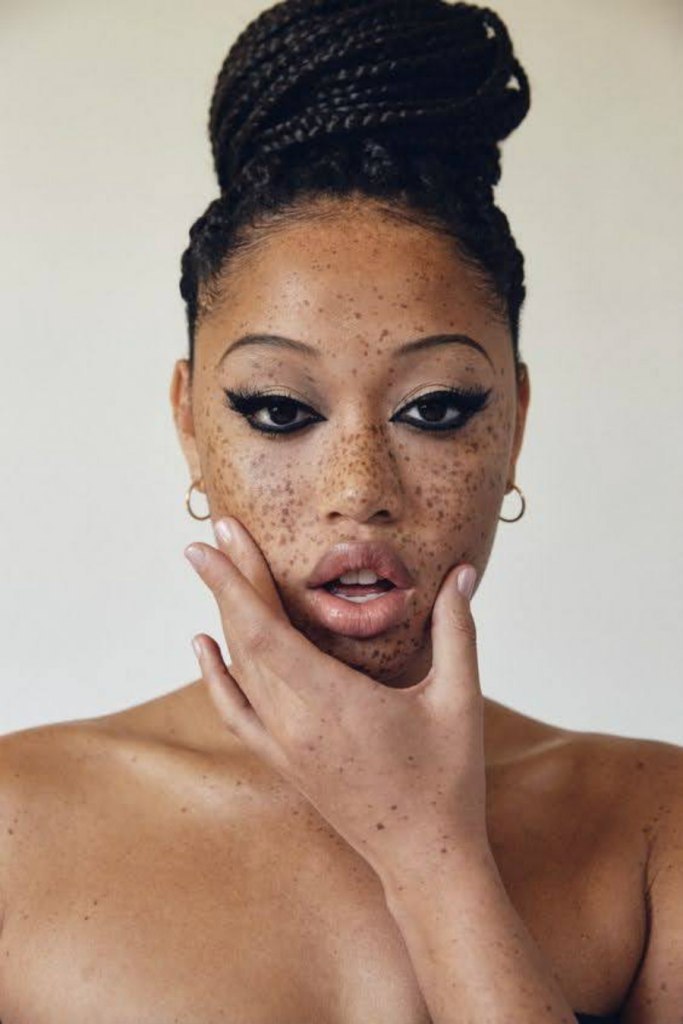
Culturally, the beauty of colored girls is celebrated worldwide. From our glowing melanin to our full lips, textured hair, and diverse body shapes, Black women are natural trendsetters. Global beauty markets have responded with bronzers, lip plumpers, and hairstyles inspired by Black women’s natural features. Psalm 139:14 (KJV) reminds us: “I will praise thee; for I am fearfully and wonderfully made.”

Psychology and science confirm why Black beauty is so striking. Facial symmetry, often associated with genetic health, is highly represented in African phenotypes (Little et al., 2011). Fuller lips, higher cheekbones, and wider-set eyes are viewed as youthful and attractive across cultures. Melanin provides natural photoprotection, slowing skin aging and giving Black women a radiant glow well into later life (Taylor, 2020). These biological features make colored girls admired around the globe.

This admiration has sometimes led to cultural appropriation, where others mimic the aesthetics of colored girls without acknowledging the history or struggles that come with them (Russell et al., 2013). Despite this, Black women continue to lead the way in music, fashion, art, and pop culture, influencing trends and shaping global beauty standards.

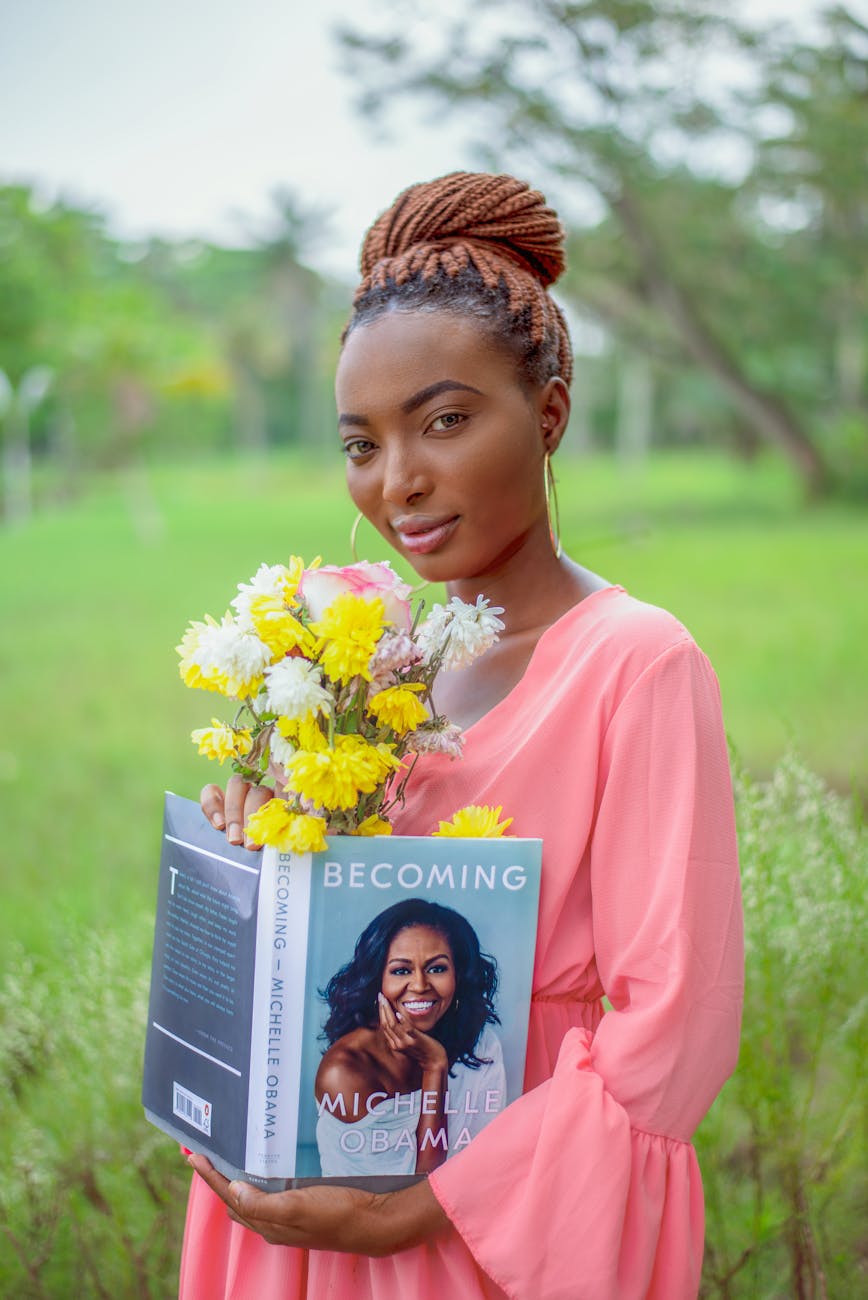
Examples abound of Black women who have shattered stereotypes. Michelle Obama, the first African American First Lady, is a symbol of grace, intelligence, and poise. Her advocacy for education, health, and empowerment of girls worldwide embodies the “brains” of colored girls. Her book Becoming became a bestseller, inspiring millions with her journey.

Maya Angelou is another powerful example. As a poet, writer, and activist, her work gave voice to generations of Black women. Her words “Still I rise” resonate with the resilience of colored girls everywhere. Her life demonstrates that beauty is not just physical but intellectual and spiritual.

In the realm of sports, Serena Williams exemplifies strength, discipline, and excellence. She not only dominated tennis but also challenged narrow definitions of femininity and beauty in athletics. Her journey shows that colored girls are multifaceted — strong competitors and nurturing mothers, unapologetically themselves.

Entertainment also celebrates the beauty and brains of colored girls. Viola Davis, an award-winning actress, uses her platform to tell authentic Black stories and advocate for diversity in Hollywood. Lupita Nyong’o, with her dark skin celebrated on magazine covers, shifted global beauty narratives and encouraged young Black girls to embrace their natural beauty.

Spiritual leadership is another area where Black women shine. Throughout history, they have been prayer warriors, deaconesses, and gospel singers who carried the church through trials. Their faith is not just for survival but for thriving. 1 Peter 3:3–4 (KJV) reminds us that true beauty is “the hidden man of the heart… even the ornament of a meek and quiet spirit.”

Psychologically, their strength has sometimes been romanticized as if they must always be strong. This expectation can lead to stress and emotional exhaustion. Mental health professionals now emphasize that Black women need safe spaces to rest and heal, reclaiming the right to be soft and cared for. Jesus’ words “Come unto me, all ye that labour and are heavy laden, and I will give you rest” (Matthew 11:28, KJV) remind them that strength also means knowing when to lay burdens down.

Globally, colored girls are admired not only for their beauty but also for their intellect and leadership. Nobel Prize winner Toni Morrison transformed literature by centering Black voices. Chimamanda Ngozi Adichie challenges global audiences to rethink feminism and identity through her books and speeches. These women embody beauty with depth and intellect that changes culture.

Even in STEM, women like Dr. Mae Jemison, the first Black woman in space, prove that colored girls literally reach for the stars. Their contributions remind the world that brains and beauty are not mutually exclusive — they coexist powerfully.

In everyday life, colored girls continue to set trends, educate communities, raise leaders, and stand on the frontlines of justice movements. They are the heartbeat of neighborhoods and the backbone of families, carrying forward legacies of survival and triumph.

In conclusion, “colored girls” are indeed the beauty and the brains — fearfully and wonderfully made, leaders in intellect, trailblazers in culture, and examples of strength and faith. The world may try to imitate their features, but it can never duplicate the soul, resilience, and brilliance that define them.


References

  • Collins, P. H. (2000). Black feminist thought: Knowledge, consciousness, and the politics of empowerment. Routledge.
  • Little, A. C., Jones, B. C., & DeBruine, L. M. (2011). Facial attractiveness: Evolutionary based research. Philosophical Transactions of the Royal Society B: Biological Sciences, 366(1571), 1638–1659.
  • National Center for Education Statistics (NCES). (2022). Status and trends in the education of racial and ethnic groups. U.S. Department of Education.
  • Russell, K., Wilson, M., & Hall, R. (2013). The color complex: The politics of skin color among African Americans. Anchor Books.
  • Taylor, S. (2020). Advances in understanding of skin of color. Journal of the American Academy of Dermatology, 82(1), 157–166.
  • The Holy Bible, King James Version.

When Melanin Becomes a Measure: The Psychology of Skin Tone.

This photograph is the property of its respective owner. No copyright infringement intended.

Melanin is more than pigment; it is a living testament of ancestry, survival, and culture. In societies shaped by slavery, colonialism, and systemic white supremacy, skin tone has been weaponized as a marker of value, beauty, and social mobility. For Black people, colorism — the preferential treatment of lighter skin over darker skin — is a persistent psychological burden that affects identity, self-esteem, and opportunities. Understanding this phenomenon requires examining its historical roots, psychological mechanisms, and strategies for healing.

During slavery, skin tone was a tool of division. Lighter-skinned enslaved individuals were often assigned domestic work inside the master’s house, while darker-skinned Africans labored in the fields. This hierarchy, dictated by proximity to whiteness, created a lasting psychological imprint of internalized oppression (Hunter, 2007). Being lighter was subtly equated with safety, status, and relative privilege.

Colorism persisted after emancipation. Institutions such as Black fraternities, churches, and social clubs sometimes implemented color-based exclusions, exemplified by the “brown paper bag test.” This internalized hierarchy caused a psychological rift within the Black community, as self-worth became linked to skin tone rather than character or talent.

Research confirms the mental health consequences of colorism. Darker-skinned individuals often report lower self-esteem, depressive symptoms, and higher anxiety compared to lighter-skinned peers (Monk, 2014). Early exposure to color preference, as demonstrated in Clark and Clark’s (1947) famous doll studies, showed that Black children internalized societal biases favoring lighter skin, demonstrating that colorism affects identity from childhood.

Media and popular culture continue to reinforce Eurocentric beauty standards. Lighter-skinned actors, models, and influencers are often celebrated, while darker-skinned individuals are marginalized or stereotyped. The underrepresentation of dark skin in media contributes to a sense of invisibility and inadequacy.

The psychology of colorism also affects interpersonal relationships. Studies have shown that lighter-skinned Black women often receive more favorable treatment in dating, employment, and social networks compared to darker-skinned women, a pattern that mirrors historical social hierarchies (Hunter, 2007). Men too experience bias, though differently, often being hypersexualized or criminalized based on skin tone.

The global skin-lightening industry illustrates how deep this issue runs. Products promising “fairer” skin are marketed as pathways to success, attractiveness, and social acceptance. Many consumers engage in dangerous bleaching practices, risking long-term health issues to conform to beauty norms imposed by colonial histories (Charles, 2011).

Colorism can also foster divisions within families and communities. Lighter-skinned individuals may be unconsciously favored, creating tension and jealousy. Psychological theories suggest that this intra-group discrimination exacerbates feelings of inadequacy among darker-skinned individuals (Hunter, 2007).

On a spiritual level, colorism challenges the understanding of divine design. Psalm 139:14 (KJV) declares, “I will praise thee; for I am fearfully and wonderfully made.” Every shade of melanin reflects intentionality and purpose. Internalizing this truth is crucial to healing identity wounds caused by centuries of bias.

Social identity theory offers insight into these dynamics. People categorize themselves and others into groups, which can lead to in-group favoritism and out-group bias. Within the Black community, lighter skin can create a perceived “in-group” of privilege, leaving darker-skinned members feeling marginalized (Tajfel & Turner, 1979).

Psychologists have identified the phenomenon of “colorism stress,” where individuals experience chronic stress due to color-based discrimination. This stress can manifest as anxiety, depression, or identity confusion, impacting academic performance, professional success, and interpersonal relationships (Monk, 2014).

Addressing colorism requires interventions at multiple levels. Psychologically, therapy and counseling can help individuals unpack internalized bias and reclaim self-worth. Group support programs, mentorship, and discussion circles provide safe spaces to challenge color hierarchies and affirm dark skin as beautiful.

Culturally, representation matters. Media, literature, and fashion should celebrate all shades of Blackness. Highlighting dark-skinned leaders, role models, and celebrities combats stereotypes and reinforces positive identity formation.

Educational interventions are also vital. Teaching children about the history of colorism, its roots in slavery and colonialism, and the value of all skin tones can prevent internalized bias from forming in the first place (Hunter, 2007).

Faith-based communities can play a transformative role. Scriptures that affirm God’s intentional creation (Genesis 1:27, Psalm 139:14, KJV) offer a theological counter-narrative to societal bias. Spiritual teaching and community reinforcement of dignity and worth can buffer the psychological impact of colorism.

Interpersonal strategies are also important. Black men and women can practice solidarity and advocacy within their communities, intentionally uplifting those who are darker-skinned. Proverbs 31:8-9 (KJV) reminds believers to speak up for the oppressed and defend the vulnerable.

Self-affirmation practices have psychological benefits. Encouraging young Black people to celebrate their natural skin tone, hairstyles, and features can mitigate the harmful effects of internalized bias. Social media campaigns that normalize dark skin and challenge Eurocentric beauty norms are proving effective.

Mentorship is key for breaking cycles of self-rejection. Older Black adults who embrace their identity can model confidence for younger generations, teaching pride in melanin and heritage. Titus 2:2,6 (KJV) emphasizes the importance of teaching younger members of the community to be sober, sound-minded, and grounded.

Public policy can help combat structural colorism. Anti-discrimination laws, equitable hiring practices, and inclusive beauty standards in advertising reduce systemic bias, giving all shades of Black individuals equal opportunities in professional and social spheres.

Intersectionality must also be considered. Colorism interacts with gender, class, and geography to shape experiences uniquely. Dark-skinned women often face compounded biases, whereas lighter-skinned men may experience complex privileges and burdens simultaneously.

The psychology of skin tone ultimately intersects with identity, opportunity, and spiritual well-being. Healing requires intentional cultural, psychological, and spiritual work to dismantle centuries-old hierarchies and affirm the worth of all Black people, regardless of shade.

In conclusion, melanin should never be a measure of value. Understanding the psychology of skin tone — its historical roots, mental health impacts, and spiritual implications — is essential for reclaiming identity and dignity. By combining therapy, mentorship, representation, spiritual guidance, and advocacy, the Black community can move toward unity, pride, and healing.


References (APA)

Charles, C. A. D. (2011). Skin bleaching, self-hate, and black identity in Jamaica. Journal of Black Studies, 42(1), 43–61. https://doi.org/10.1177/0021934710386749

Clark, K., & Clark, M. (1947). Racial identification and preference in Negro children. Journal of Negro Education, 16(3), 169–175.

Hunter, M. (2007). The persistent problem of colorism: Skin tone, status, and inequality. Sociology Compass, 1(1), 237–254. https://doi.org/10.1111/j.1751-9020.2007.00006.x

Monk, E. P. (2014). The color of punishment: African Americans, skin tone, and the criminal justice system. Sociological Inquiry, 84(3), 401–430. https://doi.org/10.1111/soin.12053

Tajfel, H., & Turner, J. C. (1979). An integrative theory of intergroup conflict. In W. G. Austin & S. Worchel (Eds.), The social psychology of intergroup relations (pp. 33–47). Brooks/Cole.

The Holy Bible, King James Version. (1611). Thomas Nelson.

The Psychology and Traits of Highly Intelligent People.

Photo by RF._.studio _ on Pexels.com

Intelligence is one of the most studied and celebrated human traits, yet it remains complex to define. Psychologists generally view intelligence as the ability to learn, adapt, reason, and solve problems in diverse situations (Neisser et al., 1996). Highly intelligent people often stand out not just for their academic or professional success, but for the way they perceive and interact with the world. Their unique habits, thinking patterns, and emotional sensitivities make them easy to recognize — once you know what to look for.

Highly intelligent people are often marked by deep curiosity. They want to know how things work and why things are the way they are. Albert Einstein famously said, “I have no special talent. I am only passionately curious.” This hunger for knowledge is a common sign of a powerful mind. Their curiosity often leads them to explore diverse subjects — science, philosophy, history, technology — connecting ideas across disciplines in ways that others might miss.

Psychologically, intelligence is linked to certain behavioral traits that set people apart. They tend to be introspective, reflective, and observant, often analyzing not just external events but their own thoughts and emotions. Research shows that intelligent individuals are more likely to enjoy solitude and deep thinking, which allows them to develop original ideas (Chamorro-Premuzic & Furnham, 2006). This can sometimes make them seem distant or detached socially, but it is often a sign of deep processing rather than disinterest.

Common Traits of Highly Intelligent People

  • Deep curiosity and love of learning
  • Strong problem-solving skills
  • High adaptability and openness to new experiences
  • Creativity and ability to think outside the box
  • Preference for meaningful conversations over small talk
  • High self-awareness and introspection
  • Ability to see patterns and connections others miss
  • Emotional sensitivity and empathy (in many cases)
  • Good sense of humor, often witty or abstract
  • Desire for independence and autonomy

While IQ is one measure of intelligence, it does not tell the full story. Marilyn vos Savant, with an IQ of 228, is often cited as having one of the highest recorded IQs. However, intelligence can manifest differently — in creativity, emotional intelligence, practical problem-solving, or leadership. Albert Einstein, whose estimated IQ was around 160, transformed physics with the theory of relativity, not just through raw intellectual power but through imaginative thought experiments that challenged conventional wisdom.

It is also essential to recognize the contributions of highly intelligent Black thinkers who have shaped history. W.E.B. Du Bois, the first African American to earn a Ph.D. from Harvard, was a pioneering sociologist and civil rights activist whose insights into race relations remain influential. Dr. George Washington Carver used his intelligence to revolutionize agricultural science, helping poor farmers through sustainable practices. In contemporary times, astrophysicist Neil deGrasse Tyson brings complex science to the public with clarity and charisma, showing how intellectual brilliance can inspire generations.

Biblically, intelligence is tied to wisdom and discernment. James 1:5 (KJV) reminds believers that God is the source of wisdom: “If any of you lack wisdom, let him ask of God, that giveth to all men liberally.” True intelligence, therefore, is not just mental sharpness but the ability to use knowledge righteously. King Solomon, known as the wisest man in Scripture, prayed not for riches but for understanding (1 Kings 3:9). This highlights that the highest form of intelligence is applied for the good of others.

In conclusion, highly intelligent people are often distinguished by their curiosity, creativity, and capacity to think beyond conventional limits. They can be spotted by their hunger for learning, their love for meaningful dialogue, and their ability to see solutions where others see problems. Whether through the genius of Einstein or the intellectual courage of Du Bois, intelligent individuals change the world by challenging it to grow.


References (APA Style)

  • Chamorro-Premuzic, T., & Furnham, A. (2006). Intellectual competence and the intelligent personality: A third way in differential psychology. Review of General Psychology, 10(3), 251–267.
  • Neisser, U., Boodoo, G., Bouchard, T. J., Boykin, A. W., Brody, N., Ceci, S. J., … & Urbina, S. (1996). Intelligence: Knowns and unknowns. American Psychologist, 51(2), 77–101.
  • The Holy Bible, King James Version (1769/2023).

The Corporate Tightrope: Black Women in Professional Spaces.

Photo by Akorede Ojubanire on Pexels.com

Black women in professional spaces often walk a precarious tightrope, balancing the weight of racial and gendered stereotypes while striving for excellence in corporate structures. Their presence in boardrooms, law firms, government offices, and academic institutions reflects both resilience and sacrifice. Despite progress, they remain underrepresented in leadership positions, often facing the “double jeopardy” of being both Black and female (Bell & Nkomo, 2001). The corporate landscape presents opportunities, but also challenges that demand both strategic navigation and cultural resilience.

Prominent figures such as Michelle Obama, who redefined the role of First Lady with her Harvard-trained legal background, and Condoleezza Rice, the first Black female Secretary of State, represent the heights that Black women can achieve in professional spheres. Similarly, Ursula Burns, former CEO of Xerox, broke barriers as the first Black woman to lead a Fortune 500 company. In academia and technology, women such as Dr. Shirley Ann Jackson, a physicist and president of Rensselaer Polytechnic Institute, embody the intersection of brilliance and leadership. These women, though highly accomplished, illuminate how exceptional Black women must be to gain visibility in predominantly white and male-dominated spaces.

The structural barriers remain significant. Black women are frequently subjected to the “glass cliff” phenomenon, where they are promoted into leadership roles during times of organizational crisis, increasing the risk of failure (Ryan & Haslam, 2005). Additionally, they are burdened with “invisibility” in professional settings, where their contributions are overlooked, or “hypervisibility,” where every action is scrutinized. These contradictions force Black women into roles where they must consistently outperform their peers to receive the same recognition.

Black Women in Professional Spaces: Notable Leaders

  • Law and Politics
    • Michelle Obama – Harvard-educated lawyer, former First Lady, advocate for education and public health.
    • Condoleezza Rice – First Black woman to serve as U.S. Secretary of State.
    • Ketanji Brown Jackson – First Black woman to serve on the U.S. Supreme Court.
    • Lori Lightfoot – Former mayor of Chicago, one of the largest U.S. cities led by a Black woman.
  • Business and Corporate Leadership
    • Ursula Burns – Former CEO of Xerox, first Black woman to lead a Fortune 500 company.
    • Rosalind Brewer – Former CEO of Walgreens Boots Alliance and Starbucks COO, one of the few Black female executives in Fortune 500 leadership.
    • Thasunda Brown Duckett – CEO of TIAA, a major financial services firm.
  • Academia and Science
    • Dr. Shirley Ann Jackson – Physicist, president of Rensselaer Polytechnic Institute, first Black woman to earn a Ph.D. from MIT in any field.
    • Dr. Valerie Montgomery Rice – President of Morehouse School of Medicine, advancing Black representation in medicine.
    • Dr. Ruth Simmons – First Black president of an Ivy League university (Brown University).
  • Media and Arts
    • Oprah Winfrey – Media mogul, philanthropist, one of the most influential women in global media.
    • Ava DuVernay – Acclaimed film director and producer, bringing visibility to Black stories in Hollywood.
    • Shonda Rhimes – Television producer and writer, creator of hit shows such as Grey’s Anatomy and Scandal.
  • STEM and Technology
    • Kimberly Bryant – Founder of Black Girls Code, advocating for diversity in tech.
    • Lisa Jackson – Former head of the EPA, now Vice President of Environment, Policy, and Social Initiatives at Apple.
    • Angela Benton – Tech entrepreneur and investor, founder of NewME accelerator.

Psychologically, the weight of corporate tightrope walking contributes to stress and burnout. The stereotype of the “Strong Black Woman” is replicated in professional contexts, where vulnerability is discouraged and endurance is expected (Woods-Giscombé, 2010). While Black women excel in education—earning advanced degrees at higher rates than their male counterparts—their advancement in corporate hierarchies lags. This disconnect reflects systemic inequities, implicit bias, and the lack of mentorship opportunities that are critical for career progression.

Faith and cultural identity often serve as sources of resilience. For many, spirituality grounds their pursuit of excellence and provides a counterbalance to corporate pressures. Proverbs 31:25 (KJV) describes the virtuous woman as clothed with “strength and honour,” an affirmation that aligns with the dignity Black women carry into boardrooms and offices. Yet the challenge remains to ensure that their humanity is honored alongside their productivity. Professional spaces must not only benefit from Black women’s labor but also foster environments where they can thrive without compromise.

In conclusion, the corporate tightrope for Black women illustrates the broader tension between opportunity and inequality. Figures such as Michelle Obama, Condoleezza Rice, Ursula Burns, and Shirley Ann Jackson stand as evidence of possibility but also as reminders of how exceptionalism is often the price of recognition. To create sustainable change, corporate structures must move beyond tokenism and genuinely dismantle barriers to equity. Only then can Black women’s presence in professional spaces be celebrated not as extraordinary exceptions, but as integral leaders shaping the future of business, government, and academia.


References

  • Bell, E. L. J. E., & Nkomo, S. M. (2001). Our separate ways: Black and White women and the struggle for professional identity. Harvard Business School Press.
  • Ryan, M. K., & Haslam, S. A. (2005). The glass cliff: Evidence that women are over‐represented in precarious leadership positions. British Journal of Management, 16(2), 81–90.
  • Woods-Giscombé, C. L. (2010). Superwoman schema: African American women’s views on stress, strength, and health. Qualitative Health Research, 20(5), 668–683.