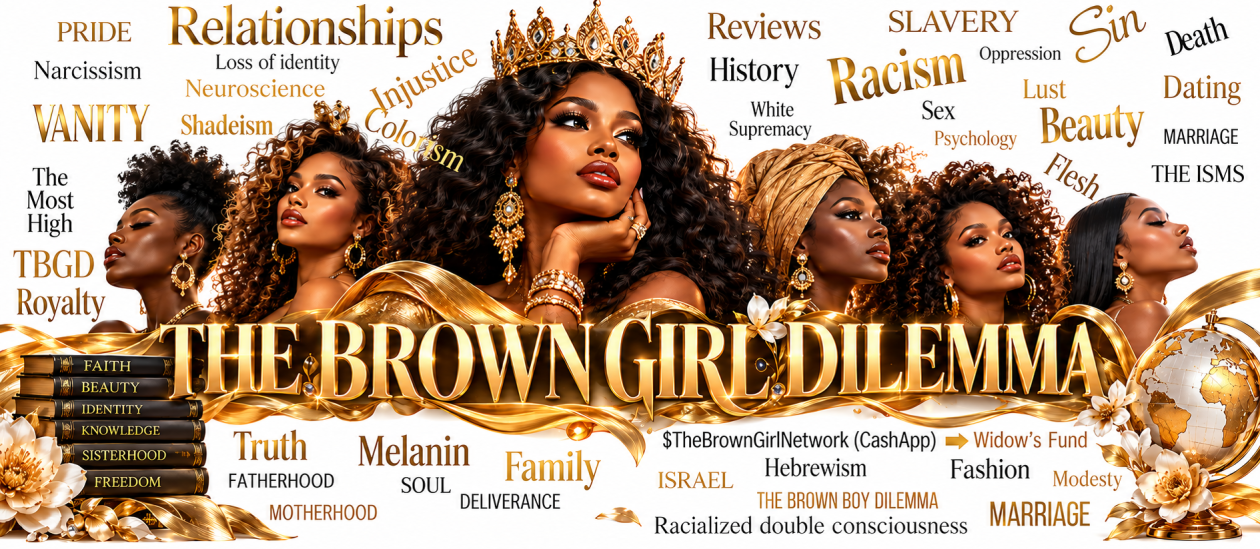

The “isms” are the beliefs and systems through which society categorizes people—and, too often, determines who is valued, privileged, excluded, celebrated, or oppressed.

Human beings have always created categories. We classify people by race, complexion, beauty, age, sex, hair, facial features, wealth, education, nationality, and social position. Categories can help us describe the world, but they become dangerous when description turns into hierarchy. The dilemma begins when difference is no longer simply difference, but evidence—supposed evidence—that one human being deserves more admiration, opportunity, protection, dignity, or love than another.
Racism is perhaps one of the most consequential of these dilemmas because racial classifications have been used historically to justify slavery, segregation, colonial domination, exclusion, and unequal treatment. Racism does more than produce individual prejudice; it can become embedded in institutions, practices, opportunities, and inherited social conditions. The racial dilemma asks a disturbing question: How did something as morally irrelevant to human worth as racial classification become powerful enough to influence where people live, how they are perceived, and what opportunities they receive?
Racism also demonstrates the extraordinary power of perception. A stranger can know almost nothing about another person’s intelligence, morality, faith, education, personality, or character and still make assumptions based upon appearance. That is one of prejudice’s fundamental failures: it substitutes a category for a person. Instead of discovering who someone is, prejudice decides who that person must be.
Colorism takes the dilemma deeper because discrimination does not always occur only between racial groups. It can operate within them. Academic literature describes colorism as discrimination associated with gradations of skin tone and related appearance characteristics, and researchers continue to examine its consequences for health and social experience. A society can reject racism publicly while quietly maintaining hierarchies based upon complexion.
Shadeism is closely related to colorism and is often used to describe the ranking or differential treatment of people according to shades of skin. Dark brown, medium brown, caramel, tan, beige—the language may sound innocent until particular shades repeatedly become associated with beauty, desirability, refinement, intelligence, wealth, or social status. Human skin exists along an extraordinary continuum, yet society repeatedly attempts to turn that continuum into a ladder.
Lightism, another term within this broader conversation, focuses specifically on the privileging of lighter skin. Here lies an uncomfortable paradox: a person may belong to a historically marginalized racial group while still receiving certain social advantages because their complexion more closely approximates a preferred beauty or racial ideal. This does not mean every light-skinned person experiences privilege in every circumstance, nor does it erase racism against them. It means that racial identity and skin-tone bias can operate simultaneously.
Colorism, shadeism, and light-skin preference therefore should not be discussed as though they are entirely unrelated phenomena. They overlap considerably. Their importance lies in revealing how extraordinarily precise human hierarchies can become. Even after society divides people into racial categories, it can divide those categories again—lighter from darker, straighter hair from tightly coiled hair, narrow features from broad features—creating smaller hierarchies inside larger ones.
Lookism expands the discussion beyond race. Lookism is preferential or discriminatory treatment associated with physical attractiveness or appearance. Attractive people may sometimes receive social advantages that have little to do with their ability or character, while people judged less attractive can be ignored, mocked, underestimated, or excluded. Beauty itself is not the problem. Appreciating beauty is human. The dilemma begins when beauty becomes a qualification for receiving humanity.
Lookism is especially complicated because beauty standards are not created in a vacuum. Race, complexion, body size, disability, age, hair, gender expectations, fashion, wealth, and culture can all influence what a society calls beautiful. A face does not walk into the world carrying an objective social ranking. Human beings create rankings, repeat them, market them, photograph them, reward them, and eventually begin treating those rankings as natural truths.
Ageism introduces another contradiction: if we live long enough, nearly all of us eventually enter an age group that can be stereotyped. The World Health Organization defines ageism as stereotypes, prejudice, and discrimination toward ourselves or others based upon age. It can affect younger and older people and appear in institutions, interpersonal relationships, and even our attitudes toward ourselves.
Our obsession with youth makes ageism particularly visible in conversations about beauty. Wrinkles become defects. Gray hair becomes something to conceal. A woman’s changing face is sometimes discussed as though aging represents the disappearance of her value. Yet aging is not a failure of beauty; it is evidence of life. The deeper dilemma is not that people grow older. It is that cultures can teach people to fear becoming the very thing they are fortunate enough to survive long enough to become.
Sexism creates another hierarchy by assigning expectations, opportunities, characteristics, or worth according to sex or gender. Women have historically faced restrictions in education, employment, political participation, property ownership, leadership, and personal autonomy in many societies. Even where formal barriers have fallen, cultural assumptions can survive. A woman may still find herself evaluated simultaneously for competence, femininity, age, attractiveness, motherhood, sexuality, and appearance in ways that men do not always experience identically.
For Black women, these dilemmas can converge. A Black woman can encounter racism because she is Black, sexism because she is a woman, colorism because of her complexion, texturism because of her hair, featurism because of her facial characteristics, lookism because of how others evaluate her attractiveness, ageism as she grows older, and class prejudice because of her economic position. These are not necessarily separate experiences occurring neatly one at a time. They can intersect within a single encounter.
Texturism describes bias attached to hair texture, particularly when straighter or looser textures are treated as more beautiful, manageable, professional, or socially desirable than tightly coiled textures. Hair consequently becomes more than hair. For Black women especially, it has carried cultural, political, aesthetic, and historical meanings. Afros, braids, locs, coils, silk presses, wigs, and natural textures can become subjects of judgment when they should primarily remain matters of personal and cultural expression.
Featurism describes another appearance hierarchy: assigning greater desirability or social value to certain facial features. Narrower noses, particular lip shapes, eye shapes, facial proportions, or features associated with Eurocentric standards may be privileged in some contexts. This exposes another contradiction of beauty culture. A society can celebrate Black beauty rhetorically while continuing to reward Black faces selectively according to how closely particular features fit an established ideal.
Classism proves that appearance is not the only visible marker through which people are ranked. Clothing, neighborhoods, occupations, accents, cars, schools, possessions, and even vocabulary can become signals of presumed social worth. Wealth can purchase access, presentation, leisure, cosmetic treatments, education, fashionable clothing, and networks that are subsequently mistaken for intrinsic superiority. Poverty, meanwhile, can be treated as a character defect even when economic hardship results from circumstances far more complicated than individual choices.
These ten dilemmas are interconnected because they arise from a similar human temptation: ranking people. Racism ranks race. Colorism and shadeism rank complexion. Lightism privileges proximity to lighter skin. Lookism ranks appearance. Ageism ranks people according to age. Sexism creates hierarchies around sex and gender. Texturism ranks hair textures. Featurism ranks facial characteristics. Classism ranks people according to socioeconomic position. Different criteria—similar impulse.
The psychological consequences can become internal as well as external. When people repeatedly encounter a hierarchy, they may begin applying it to themselves. The dark-skinned girl may wonder whether she would be prettier if lighter. The woman with tightly coiled hair may question whether her natural texture is sufficiently professional. The aging woman may fear becoming invisible. The person struggling financially may interpret poverty as personal worthlessness. At that point, society no longer needs to speak the prejudice aloud; the hierarchy has been internalized. WHO similarly recognizes self-directed ageism alongside interpersonal and institutional forms, illustrating how social stereotypes can eventually influence how people perceive themselves.
Yet we should be careful not to turn discussions of discrimination into another form of determinism. Not every dark-skinned person will experience the same colorism. Not every conventionally attractive person will receive the same advantages. Not every older person will encounter identical ageism. Race, sex, geography, culture, socioeconomic status, personality, disability, education, and circumstance alter individual experiences. Social patterns are real without making every human story identical.
There is also a moral dilemma hiding beneath all ten: human beings condemn hierarchies that disadvantage them while sometimes participating in hierarchies that benefit them. Someone can oppose racism while practicing colorism. Someone can condemn colorism while ridiculing another person’s appearance. Someone can demand respect for women while insulting older women. Someone can celebrate natural Black beauty while ranking hair textures and facial features. Equality becomes meaningful only when we are willing to question the hierarchies that favor us as vigorously as those that hurt us.
Beauty itself does not need to disappear for discrimination to disappear. We can recognize extraordinary beauty without declaring ordinary-looking people inferior. We can admire youth without degrading age. We can appreciate every shade of Blackness without pretending that every complexion is identical. We can recognize differences between men and women without using those differences to justify domination. Equality does not require sameness. It requires the radical recognition that difference does not determine human worth.
Perhaps that is the greatest dilemma of all. Humanity possesses extraordinary diversity, yet we repeatedly convert diversity into competition. We take skin, faces, bodies, ages, hair, money, and identity—things that make the human family visually and culturally remarkable—and construct systems for deciding who should stand at the top and who must remain at the bottom. Then generations inherit those rankings and mistake what society constructed for what nature intended.
The answer to these dilemmas begins with seeing the human being before the hierarchy. A dark-skinned woman does not need lighter skin to become beautiful. An older woman does not need youth to remain valuable. A person does not need wealth to possess dignity. A Black person does not need proximity to whiteness to deserve equality. A face does not need cultural approval to deserve respect. When we finally separate difference from worth, many of humanity’s oldest dilemmas begin to lose their power.
References
World Health Organization. Ageism and Global Report on Ageism. WHO explains ageism as stereotypes, prejudice, and discrimination based upon age and documents its interpersonal, institutional, and self-directed forms.
World Health Organization. Ageing: Ageism. WHO discusses the reach of ageism across generations and its intersections with other forms of disadvantage.
Patterson, J., & Grob, K. Health Implications of Colorism: A Narrative Review of the Literature. Journal of Racial and Ethnic Health Disparities. The review examines colorism and its relationship to skin tone and other phenotypic characteristics.
World Health Organization. Initiating a Conversation About Ageism. The guide examines how stereotypes and prejudices can become embedded in institutions, relationships, and individual perceptions.
Discover more from THE BROWN GIRL DILEMMA
Subscribe to get the latest posts sent to your email.