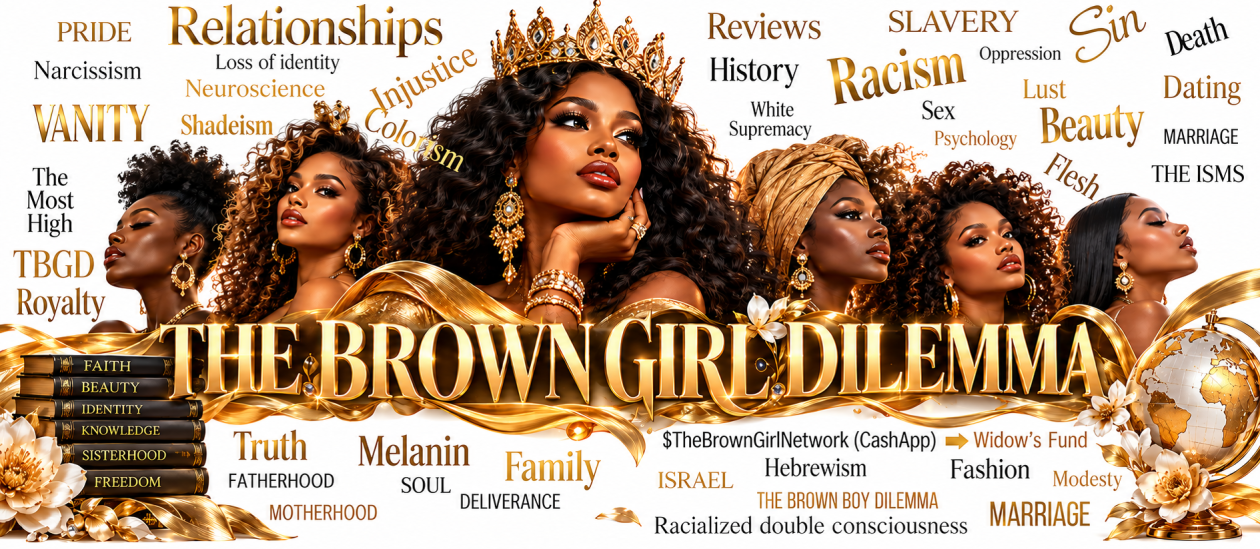

Beauty has long been treated as a blessing, yet for many women—particularly Black women—beauty operates as a double-edged sword. To be perceived as attractive can open doors to visibility, admiration, and opportunity, but it can also invite punishment, suspicion, and control. The paradox of being pretty and powerful is that it often provokes backlash in systems threatened by women who possess both.
From a sociological perspective, beauty functions as social capital. Attractive individuals are more likely to receive positive evaluations, higher wages, and social leniency. However, when beauty is paired with intelligence, ambition, or authority, it disrupts patriarchal expectations that women should be pleasing but not commanding. This disruption frequently results in subtle and overt forms of punishment.
Historically, women’s beauty has been framed as something to be managed, owned, or subdued. In colonial and enslaved contexts, the bodies of women of African descent were simultaneously fetishized and brutalized, admired and violated. This legacy established a pattern in which beauty did not protect women from harm but instead intensified surveillance and exploitation.
The punishment of beautiful women often takes the form of moral suspicion. Attractive women are frequently assumed to be manipulative, promiscuous, or less competent, particularly in professional environments. Research demonstrates that women who are perceived as both attractive and assertive are more likely to be labeled as intimidating or untrustworthy, a phenomenon sometimes described as the “beauty-is-beastly” effect.
Power further complicates this dynamic. When women occupy leadership roles, beauty can undermine their authority rather than enhance it. A beautiful woman in power is often perceived as having earned her position through appearance rather than merit, forcing her to work harder to prove legitimacy while navigating resentment from peers and subordinates.
For Black women, these dynamics are racialized. Beauty that aligns with Eurocentric standards may grant conditional acceptance, while simultaneously reinforcing proximity-to-whiteness hierarchies. Conversely, Black women whose beauty reflects African features may be hypersexualized or deemed threatening, illustrating how racialized beauty standards dictate which forms of attractiveness are rewarded and which are punished.
Media plays a central role in reinforcing these contradictions. Beautiful women are celebrated in imagery yet diminished in narrative complexity, often reduced to love interests, visual symbols, or cautionary tales. When such women assert agency, ambition, or moral authority, media narratives frequently respond with character assassination or vilification.
Social punishment also manifests through envy and relational aggression. Studies indicate that attractive women experience higher levels of social exclusion, gossip, and hostility from both men and women. Rather than solidarity, beauty can provoke competition and resentment in environments shaped by scarcity-based value systems.
The workplace offers a clear example of this paradox. While attractiveness may increase hiring prospects, it can hinder promotion into leadership, particularly in male-dominated fields. Women are expected to be aesthetically pleasing but not distracting, confident but not dominant, visible but not commanding—an impossible balance that ensures continual discipline.
Religious and moral frameworks have likewise contributed to the punishment of beauty. Women’s attractiveness has often been framed as a source of temptation and moral danger, shifting responsibility for male desire onto female bodies. This narrative positions beauty not as neutral but as inherently suspect, requiring modesty, restraint, or correction.
Psychologically, the punishment of beauty can lead to isolation and self-doubt. Women may downplay their appearance, diminish their achievements, or internalize guilt for the reactions they provoke. This self-regulation mirrors broader systems of control, in which women are taught to make themselves smaller to maintain social harmony.
The contradiction of being pretty, powerful, and punished reveals a deeper cultural anxiety about women’s autonomy. Beauty becomes acceptable only when it serves others—male desire, corporate branding, or aesthetic consumption. Power becomes acceptable only when it is divorced from attractiveness. The combination of both challenges entrenched hierarchies.
Resistance begins with naming the pattern. Recognizing that punishment is not personal failure but structural backlash allows women to reclaim their narratives. It also invites communities to interrogate why beauty paired with authority feels threatening rather than inspiring.
A more equitable culture would allow women to be complex without consequence—to be beautiful without apology, powerful without suspicion, and visible without punishment. Such a shift requires dismantling the myths that equate beauty with moral deficiency and power with deviance.
Ultimately, the story of being pretty, powerful, and punished is not about individual women but about systems that fear women who cannot be easily categorized or controlled. Liberation lies not in rejecting beauty or power, but in refusing the punishment attached to either.
References
Berdahl, J. L., & Martorana, P. (2006). Effects of power on emotion and expression during a controversial group discussion. European Journal of Social Psychology, 36(4), 497–509.
Collins, P. H. (2004). Black sexual politics: African Americans, gender, and the new racism. Routledge.
Dion, K., Berscheid, E., & Walster, E. (1972). What is beautiful is good. Journal of Personality and Social Psychology, 24(3), 285–290.
Eagly, A. H., & Karau, S. J. (2002). Role congruity theory of prejudice toward female leaders. Psychological Review, 109(3), 573–598.
Heilman, M. E., & Saruwatari, L. R. (1979). When beauty is beastly: The effects of appearance and sex on evaluations of job applicants for managerial and nonmanagerial jobs. Organizational Behavior and Human Performance, 23(3), 360–372.
Hunter, M. (2007). The persistent problem of colorism: Skin tone, status, and inequality. Sociology Compass, 1(1), 237–254.
hooks, b. (1992). Black looks: Race and representation. South End Press.
Wolf, N. (1991). The beauty myth: How images of beauty are used against women. HarperCollins.
Discover more from THE BROWN GIRL DILEMMA
Subscribe to get the latest posts sent to your email.