
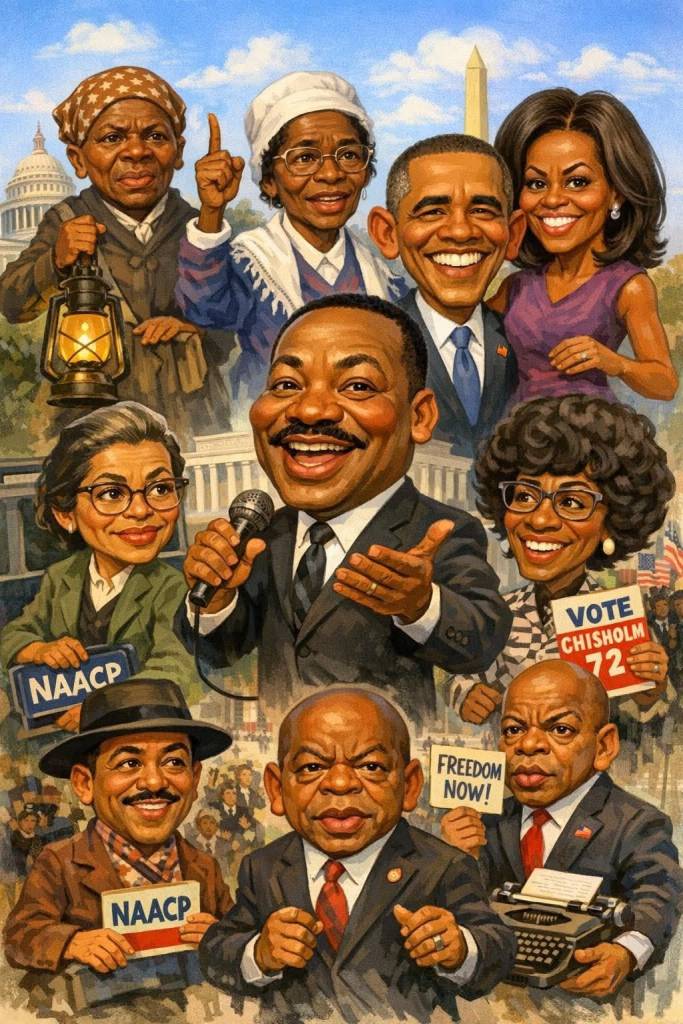
Black history is a testament to endurance, resistance, and transformation in the face of systematic dehumanization. It is not merely a narrative of suffering, but a chronicle of a people who, despite being buried under centuries of oppression, continually rose with dignity, innovation, and strength.
The journey begins with the Transatlantic Slave Trade, one of the most devastating forced migrations in human history. Millions of Africans were taken from their homelands, stripped of identity, language, and kinship, and thrust into a system designed to exploit their labor and erase their humanity.
Chattel slavery in the Americas institutionalized the idea that Black people were property rather than persons. Enslaved Africans were subjected to unimaginable violence, yet they preserved elements of their culture, spirituality, and communal identity, laying the groundwork for future resistance.
Resistance took many forms, from subtle acts of defiance to organized rebellions. Figures like Nat Turner led uprisings that challenged the institution of slavery, while others resisted through escape, sabotage, and the preservation of African traditions.
The abolition of slavery following the Civil War marked a significant turning point, yet freedom was incomplete. The Reconstruction era promised integration and equality, but these gains were quickly undermined by the rise of the Jim Crow Laws, which codified racial segregation and disenfranchisement.
During this period, Black Americans built institutions—churches, schools, and businesses—that served as pillars of community resilience. These institutions fostered education, leadership, and collective empowerment despite systemic barriers.
Violence remained a constant threat. Lynchings and racial terror were used to enforce white supremacy and suppress Black advancement. These acts were not isolated incidents but part of a broader system of control and intimidation.
The early twentieth century saw the rise of intellectual and cultural movements that redefined Black identity. Thinkers like W. E. B. Du Bois emphasized the importance of education and political engagement, while the Harlem Renaissance celebrated Black creativity and expression.
Migration also played a crucial role in reshaping Black history. The Great Migration saw millions of Black Americans move from the rural South to urban centers in the North and West, seeking economic opportunity and escape from racial violence.
The mid-twentieth century marked the emergence of the Civil Rights Movement, a transformative period characterized by mass mobilization and demands for legal equality. Leaders such as Martin Luther King Jr. advocated for nonviolent resistance and justice.
Simultaneously, figures like Malcolm X called for Black empowerment, self-defense, and a reevaluation of identity beyond the constraints imposed by a racially oppressive society.
Legislative victories, including the Civil Rights Act of 1964 and the Voting Rights Act of 1965, marked significant progress. However, these achievements did not eradicate systemic racism or economic inequality.
The late twentieth century introduced new challenges, including mass incarceration, economic restructuring, and persistent educational disparities. These issues disproportionately affected Black communities, reinforcing cycles of disadvantage.
Scholars like Michelle Alexander have argued that the criminal justice system functions as a modern mechanism of racial control, echoing earlier systems of oppression.
Despite these challenges, Black culture has profoundly influenced global society. Music, literature, art, and language rooted in Black experiences have shaped mainstream culture, often without equitable recognition or compensation.
The resilience of Black women and men alike has been central to this journey. Figures such as Harriet Tubman exemplify courage and sacrifice, leading others to freedom and inspiring generations.
Faith and spirituality have also played a vital role. The Black church has historically served as a center for resistance, community organization, and moral guidance, reinforcing a sense of hope and purpose.
In the twenty-first century, movements such as Black Lives Matter have reignited global conversations about racial justice, police brutality, and systemic inequality. These movements continue the legacy of resistance established by earlier generations.
Black history is not confined to the past; it is a living, evolving narrative. It encompasses both the pain of oppression and the triumph of survival, reflecting the complexity of the Black experience.
To study Black history is to confront uncomfortable truths about power, privilege, and inequality. It challenges dominant narratives and calls for a more inclusive and accurate understanding of the past.
Ultimately, the story of Black history is one of rising despite being buried—of reclaiming identity, asserting humanity, and striving for justice. It is a testament to the enduring strength of a people who refused to be erased.
References
Alexander, M. (2010). The New Jim Crow: Mass incarceration in the age of colorblindness. The New Press.
Du Bois, W. E. B. (1903). The souls of Black folk. A.C. McClurg & Co.
Foner, E. (2014). Reconstruction: America’s unfinished revolution, 1863–1877. Harper & Row.
Franklin, J. H., & Higginbotham, E. B. (2010). From slavery to freedom: A history of African Americans. McGraw-Hill.
Gates, H. L. (2013). Life upon these shores: Looking at African American history, 1513–2008. Alfred A. Knopf.
Hine, D. C., Hine, W. C., & Harrold, S. (2006). The African-American odyssey. Pearson.
Kendi, I. X. (2016). Stamped from the beginning: The definitive history of racist ideas in America. Nation Books.
Wilkerson, I. (2010). The warmth of other suns: The epic story of America’s great migration. Random House.
Discover more from THE BROWN GIRL DILEMMA
Subscribe to get the latest posts sent to your email.
 THE BROWN GIRL DILEMMA