
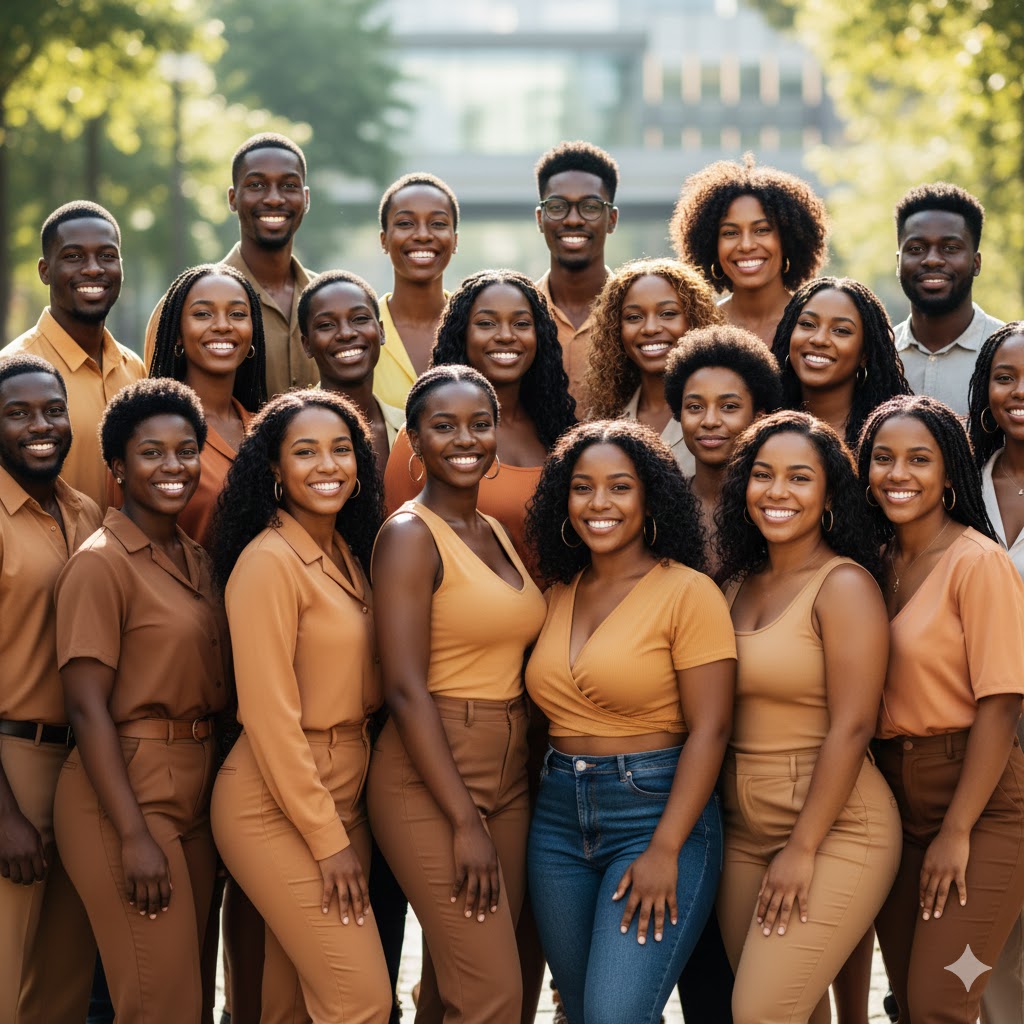
The Melanin Manuscripts begin with a truth older than nations: that Blackness is not an accident but an inheritance. It is a coded brilliance written by the Creator Himself, woven into the skin of a people who have shaped the world with intellect, beauty, resilience, and spiritual depth. These manuscripts are not bound in leather but in lineage, carried in memory, DNA, culture, and faith. They tell a story the world tried to bury, yet like seeds planted deep, the story rose again.
In these manuscripts, melanin becomes both metaphor and miracle. Scientifically, melanin protects, preserves, and sustains life. Spiritually, it symbolizes endurance—an outward sign of an inward strength developed through centuries of struggle and triumph. This duality makes Blackness both biological and sacred, a mark of identity that connects descendants of Africa to ancient civilizations, sacred texts, and future generations.
The first chapter of the Melanin Manuscripts stretches back to African antiquity, where knowledge, philosophy, and mathematics flourished. Civilizations like Kush, Axum, Kemet, and Mali wrote history long before Europe learned to read it. Their scholars studied the stars, their architects built wonders, and their communities thrived through systems that valued family, spirituality, and communal strength. This ancient brilliance forms the prologue of Black identity, reminding the world that African contributions are foundational, not peripheral.
The manuscripts turn their pages to the era of the transatlantic slave trade, where the brilliance of melanin came under assault. Millions of men, women, and children were forced into captivity, their bodies commodified and their identities stripped. Yet even in chains, their holiness could not be erased. The manuscripts record that their survival was not luck but divine intervention, a testament to a God who heard their cries and preserved their descendancy.
Embedded in these pages is the spiritual power of the enslaved. They found in Scripture the God of Exodus—the One who breaks chains and lifts oppressed people into promise. They turned fields into sanctuaries, sorrow into songs, and nights of terror into mornings of hope. Their hymns carried coded messages of freedom, their prayers sustained their souls, and their faith ignited movements that would one day shake nations. These entries in the manuscripts shine with spiritual fire.
The Melanin Manuscripts record the intellectual genius of Black pioneers. Inventors like Garrett Morgan, scientists like George Washington Carver, educators like Mary McLeod Bethune, and physicians like Dr. Charles Drew wrote new chapters through innovation. Their brilliance overturned stereotypes and carved space for Black excellence in disciplines where doors had long been locked. Their achievements were not mere victories—each was a reclamation of stolen dignity.
The manuscripts also honor the warriors and liberators whose courage reshaped history. Nat Turner, Queen Nzinga, Toussaint Louverture, Harriet Tubman, and Ida B. Wells appear in their pages like prophets and generals. They waged war against systems built to crush them, insisting that freedom was non-negotiable. Their stories reveal a pattern: wherever oppression rose, resistance rose higher.
No manuscript would be complete without the artistry of Black culture. From spirituals to jazz, from gospel to hip-hop, from poetry to modern cinema, the creative power of a people who endured unthinkable pain gave birth to some of the world’s most influential art forms. These artistic chapters demonstrate that beauty, rhythm, and innovation arise naturally from melanin-rich souls who turn trauma into triumph and silence into symphonies.
The modern chapters of the Melanin Manuscripts reflect a global diaspora still rising. Scholars, activists, creators, and thinkers continue to shape conversations about identity, justice, leadership, and liberation. Their voices echo across continents, tying together Africa, the Caribbean, Europe, and the Americas. The global Black experience remains interconnected, bound by shared memory and ancestral strength.
These manuscripts reveal that melanin is more than pigment—it is a legacy. In a world that attempted to define Black people by struggle alone, these documents reclaim identity as powerful, intellectual, spiritual, and dignified. They argue that a people who built civilizations, survived enslavement, and transformed every society they touched cannot be reduced to stereotypes or oversight.
The Melanin Manuscripts affirm that Blackness is a story of survival, but also of sovereignty. It is not only about suffering; it is about strategy, leadership, beauty, and brilliance. It is the story of a people who refuse to disappear, who bloom in deserts, who rise from ashes, and who turn oppression into opportunity. This resilience is not accidental—it is inherited.
The manuscripts speak of family, of mothers whose hands held together entire bloodlines, and fathers who fought silently to protect their children’s futures. These domestic chapters reveal that survival often happens in private spaces long before it is visible in public records. Their sacrifices, though unrecorded, are written in the margins of these sacred archives.
The Melanin Manuscripts highlight the spiritual dimension of Black identity. Biblical connections to ancient African nations, the presence of Ethiopian and Cushite peoples in Scripture, and the prophetic resilience of a people familiar with exile and restoration make Black identity deeply intertwined with sacred text. This theological lineage strengthens the manuscripts’ authority.
Within these pages lies a call to remembrance. To forget the brilliance of Black history is to forget the sacredness of survival. To ignore the manuscripts is to lose part of the world’s greatest story of endurance, innovation, and faith. These documents demand reverence because they are written with the ink of ancestors and the blood of martyrs.
They also offer a call to future generations: continue writing. Every Black child becomes a new page in this divine anthology. Every achievement becomes a new chapter. Every act of courage, creativity, scholarship, or leadership expands the text. The manuscripts will never be complete because the story is still unfolding.
The Melanin Manuscripts are also testimonies. They testify that no system can erase God’s imprint on a people. They testify that truth surfaces even when buried. They testify that melanin, in all its richness, reflects not only beauty but a blueprint for resilience and royalty. These truths echo across generations.
Ultimately, these manuscripts remind the world that Black history is more than a subject—it is a sacred scroll. It is scripture written through lived experience, a holy archive that blends anthropology, theology, science, and poetry. It is the record of a people who endured the impossible and still shine like gold refined in fire.
The Melanin Manuscripts end where they began—with identity. A proud, powerful, God-ordained identity that no one can diminish. And so long as the manuscripts exist in memory, culture, and bloodline, Black brilliance will continue to rise, generation after generation, as both testimony and triumph.
References:
Psalm 68:31 (KJV); Jeremiah 30:10; Genesis 10:6–12; Gates, H. L. The African Americans: Many Rivers to Cross; Asante, M. K. The History of Africa; Diop, C. A. The African Origin of Civilization; Franklin, J. H. From Slavery to Freedom; Raboteau, A. Slave Religion; Oluadah Equiano, The Interesting Narrative; Davis, A. Women, Race & Class.
Discover more from THE BROWN GIRL DILEMMA
Subscribe to get the latest posts sent to your email.
 THE BROWN GIRL DILEMMA