
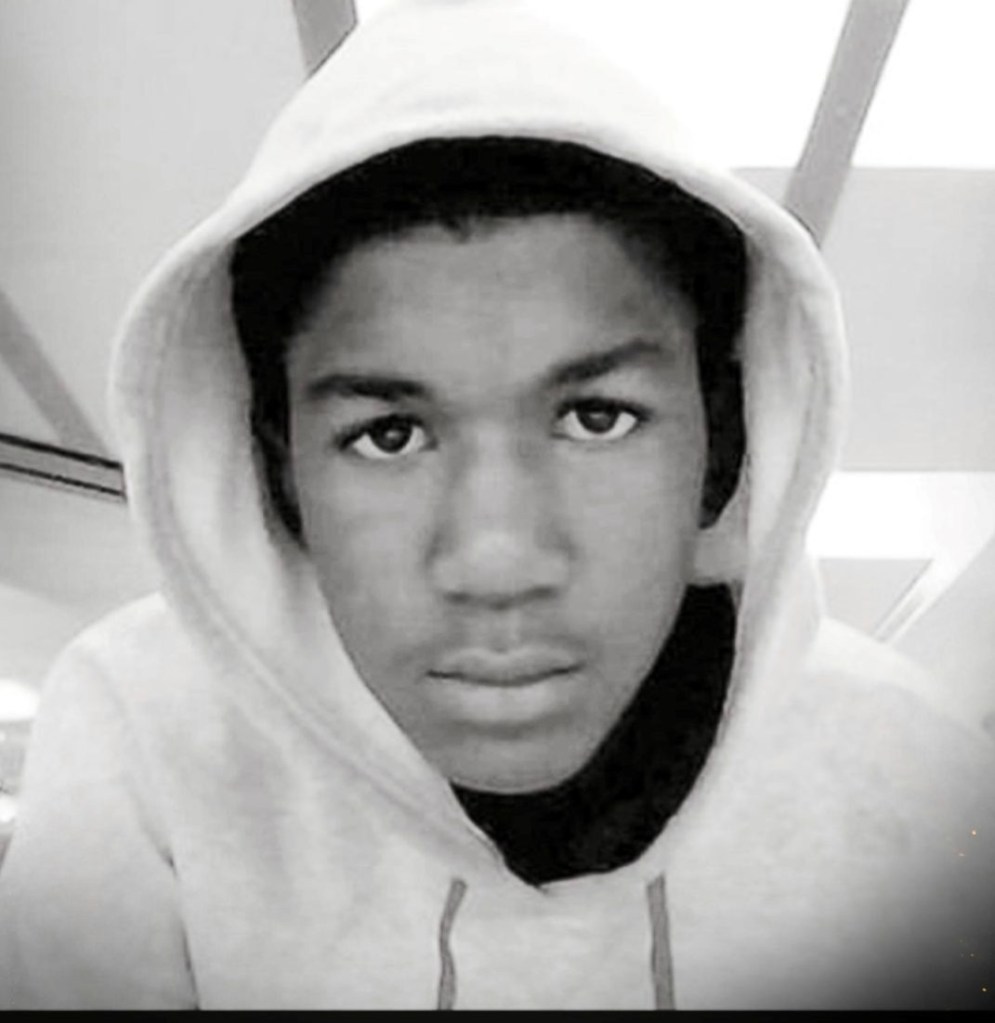
Trayvon Benjamin Martin was born on February 5, 1995, in Miami, Florida. He was a young African American teenager known by his family and friends as kind-hearted, playful, and full of potential. Trayvon enjoyed sports, especially football and basketball, and aspired to become an aviation mechanic. Like many young Black boys in America, his life reflected both ordinary youthful dreams and the inherited weight of navigating a society shaped by racial stereotypes and systemic inequality.
What Happened to Trayvon Martin
On the evening of February 26, 2012, Trayvon Martin was walking back to his father’s fiancée’s home in Sanford, Florida, after purchasing snacks from a convenience store. He was unarmed, wearing a hoodie, and talking on the phone with a friend. George Zimmerman, a neighborhood watch volunteer, reported Trayvon as “suspicious” to police, followed him despite being advised not to, and ultimately shot and killed him.
Zimmerman claimed self-defense and was later acquitted of all charges in 2013. The verdict sparked national and international outrage, as many saw the case as a reflection of how Black bodies are often criminalized, feared, and devalued within American society.
His Impact on the World
Though his life was tragically cut short at just 17 years old, Trayvon Martin’s death became a historical turning point. His name became a symbol of racial injustice and the dangerous consequences of racial profiling. The case helped ignite the modern civil rights movement known as Black Lives Matter, founded in 2013 by Alicia Garza, Patrisse Cullors, and Opal Tometi in response to Trayvon’s killing and Zimmerman’s acquittal.
Trayvon’s story forced America to confront uncomfortable truths about race, surveillance, fear, and the unequal application of justice. His hoodie became a global symbol of protest, representing how something as simple as clothing could become a perceived threat when worn by a Black male.
He Would Have Been 31 This Year
In 2026, Trayvon Martin would have been 31 years old. He could have been a husband, a father, a professional, or a leader in his community. Instead, his life exists in collective memory as a reminder of stolen futures and unrealized potential. His age now represents not just time passed, but the depth of loss — a life that never had the chance to fully begin.
Racism in America: A Broader Context
Trayvon Martin’s death cannot be understood in isolation. It exists within a long historical continuum of racial violence in America, from slavery and lynching to mass incarceration and police brutality. Sociologists describe this phenomenon as systemic racism — a structure in which laws, institutions, and cultural narratives disproportionately harm Black people.
The fear that led to Trayvon’s death reflects what scholars call implicit racial bias, where Black males are often subconsciously associated with danger, criminality, and threat. These biases influence everything from policing and surveillance to legal outcomes and media portrayals.
Trayvon’s case exposed how even in the absence of a crime, Black existence itself can be treated as suspicious. His death became a mirror held up to American society, forcing the nation to ask: Who is allowed to be innocent? Who is allowed to be safe? And whose life is presumed valuable?
Legacy
Trayvon Martin’s legacy is not defined by his death, but by the global movement that arose because of it. His name is spoken alongside others — Michael Brown, Tamir Rice, Sandra Bland, Breonna Taylor, George Floyd — as part of a growing historical archive of racial injustice.
Yet Trayvon remains unique: he was not arrested, not resisting, not committing a crime. He was simply walking home.
His life and death continue to educate, mobilize, and challenge the world to build a society where Black children can exist without fear, where justice is not selective, and where no family must bury a child for simply being seen as “out of place.”
References
Alexander, M. (2012). The new Jim Crow: Mass incarceration in the age of colorblindness. The New Press.
Bonilla-Silva, E. (2018). Racism without racists: Color-blind racism and the persistence of racial inequality in America (5th ed.). Rowman & Littlefield.
CBS News. (2013). George Zimmerman acquitted in Trayvon Martin case.
Garza, A. (2014). A herstory of the #BlackLivesMatter movement. The Feminist Wire.
Newman, K. S., & Cohen, A. (2014). Race, place, and building a youth movement: The case of Trayvon Martin. American Sociological Review, 79(3), 449–476.
Pew Research Center. (2016). On views of race and inequality, Blacks and Whites are worlds apart.
U.S. Department of Justice. (2013). Investigation of the Sanford Police Department’s handling of the Trayvon Martin shooting.
Discover more from THE BROWN GIRL DILEMMA
Subscribe to get the latest posts sent to your email.
 THE BROWN GIRL DILEMMA