
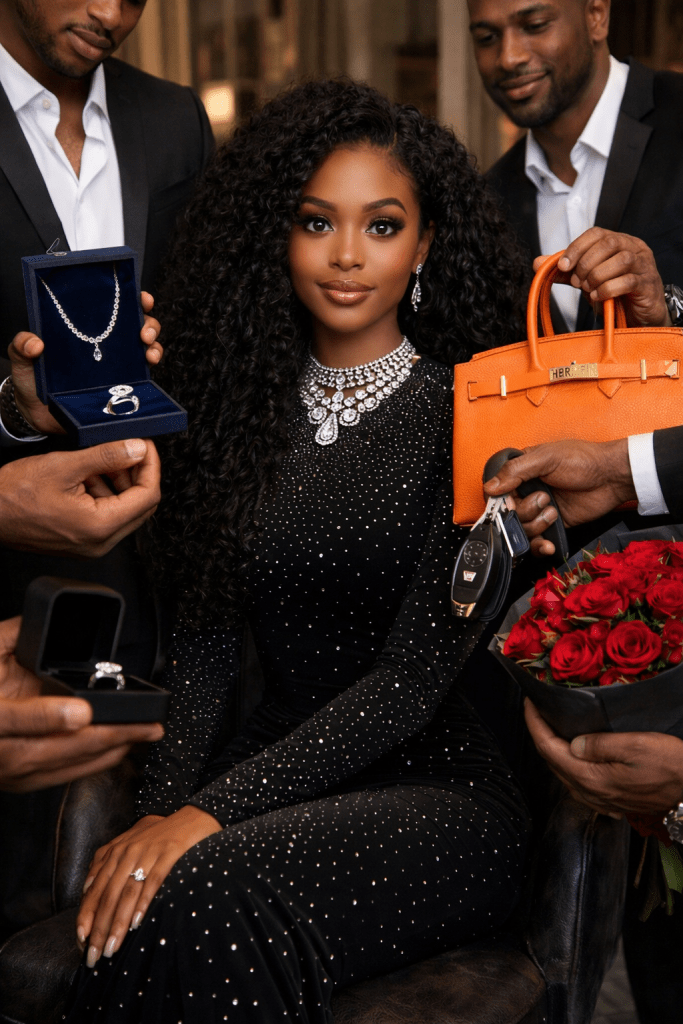
Pretty privilege refers to the unearned social advantages granted to individuals who are perceived as physically attractive. These advantages operate subtly yet powerfully, shaping how people are treated in workplaces, relationships, legal systems, and everyday interactions. Beauty, though often framed as subjective, functions as a social currency with measurable outcomes.
From early childhood, attractive individuals are often assumed to possess positive traits such as intelligence, kindness, and competence. Psychologists refer to this as the “halo effect,” where one favorable characteristic influences the perception of unrelated qualities. As a result, beauty becomes conflated with worth.
Pretty privilege affects economic outcomes in profound ways. Studies consistently show that attractive people earn higher wages, receive more promotions, and are evaluated more favorably in hiring processes. This advantage persists even when qualifications are equal, revealing beauty as a silent determinant of success.
In contrast, those deemed unattractive often face bias that mirrors other forms of discrimination. “Ugly” women, in particular, are more harshly judged, penalized for aging, weight, facial features, or nonconformity to beauty standards. Their competence is questioned, their femininity policed, and their presence minimized.
For women, beauty functions as both a blessing and a burden. Attractive women may receive preferential treatment, yet they are also sexualized, objectified, and dismissed as intellectually inferior. Their achievements are often attributed to appearance rather than effort or skill, creating a double bind.
Men experience pretty privilege differently. Attractive men are often perceived as leaders, trustworthy, and confident, while unattractive men are stereotyped as incompetent, socially awkward, or threatening. Masculinity is closely tied to appearance, height, and facial structure, influencing dating and professional opportunities.
Romantic relationships magnify the effects of pretty privilege. Attractive individuals have larger dating pools, more options, and greater forgiveness for negative behavior. Meanwhile, unattractive individuals are often expected to compensate through humor, resources, or emotional labor to be considered worthy of partnership.
Media plays a central role in reinforcing beauty hierarchies. Films, television, and advertising overwhelmingly center attractive bodies as protagonists while assigning unattractive characters to comic relief, villains, or moral lessons. These portrayals teach society who deserves love, power, and happiness.
Beauty standards are not neutral; they are racialized, gendered, and class-based. Eurocentric features, youth, thinness, and able-bodiedness dominate ideals of attractiveness, disproportionately disadvantaging Black women, dark-skinned individuals, disabled people, and those who do not conform to narrow norms.
Colorism intersects with pretty privilege in devastating ways. Lighter skin, looser hair textures, and finer features are often rewarded within and outside Black communities, creating internal hierarchies that replicate white supremacist beauty ideals. This compounds harm for darker-skinned women labeled as “less feminine” or “unattractive.”
The psychological toll of beauty bias is significant. Those consistently marginalized for their appearance experience lower self-esteem, depression, anxiety, and social withdrawal. Chronic rejection teaches people to internalize societal judgments, mistaking bias for personal failure.
Ugly women are often denied empathy. Their pain is minimized, their loneliness mocked, and their standards questioned. Society treats its desire for love as an entitlement while framing attractive people’s desires as natural and justified.
Men who lack conventional attractiveness may also suffer in silence. Cultural expectations discourage emotional expression, leaving them isolated when facing romantic rejection or social exclusion. Their struggles are often dismissed as personal inadequacy rather than structural bias.
Pretty privilege also distorts morality. Attractive individuals are more likely to receive lighter prison sentences, more lenient discipline in schools, and greater benefit of the doubt in conflicts. Beauty becomes confused with goodness, while unattractiveness is associated with guilt or deviance.
In religious and ethical frameworks, this bias reveals a deeper moral failure. Scripture repeatedly warns against judging by outward appearance, emphasizing that true worth lies in character and righteousness rather than form. Yet modern society continues to elevate the external over the internal.
Social media has intensified beauty-based stratification. Algorithms reward conventionally attractive faces with visibility and validation, while others remain unseen. Filters and cosmetic procedures further normalize artificial perfection, raising the cost of being considered acceptable.
Pretty privilege creates resentment and division, not because beauty exists, but because fairness does not. When society refuses to acknowledge this bias, those harmed are gaslit into silence while beneficiaries are told their success is purely merit-based.
Challenging pretty privilege requires cultural honesty. It demands recognizing beauty bias as real, measurable, and unjust. It also requires expanding representations of worth, desire, and competence beyond narrow aesthetic ideals.
Education, media reform, and ethical leadership can help disrupt these patterns. When children see diverse faces valued equally, when workplaces audit appearance bias, and when communities affirm dignity over desirability, healing begins.
Ultimately, beauty is not sinful, but the worship of it is. When appearance determines access to humanity, love, and opportunity, society commits a quiet injustice. True equity begins when people are valued not for how they look, but for who they are.
References
Dion, K., Berscheid, E., & Walster, E. (1972). What is beautiful is good. Journal of Personality and Social Psychology, 24(3), 285–290.
Eagly, A. H., Ashmore, R. D., Makhijani, M. G., & Longo, L. C. (1991). What is beautiful is good, but… Psychological Bulletin, 110(1), 109–128.
Hamermesh, D. S. (2011). Beauty pays: Why attractive people are more successful. Princeton University Press.
Hunter, M. (2007). The persistent problem of colorism. Sociology Compass, 1(1), 237–254.
Langlois, J. H., et al. (2000). Maxims or myths of beauty? Psychological Bulletin, 126(3), 390–423.
Rhode, D. L. (2010). The beauty bias: The injustice of appearance in life and law. Oxford University Press.
The Holy Bible, King James Version. (1611/1987). Cambridge University Press. (1 Samuel 16:7)
Tiggemann, M. (2011). Sociocultural perspectives on body image. Journal of Social Issues, 67(4), 601–616.
Discover more from THE BROWN GIRL DILEMMA
Subscribe to get the latest posts sent to your email.
 THE BROWN GIRL DILEMMA