
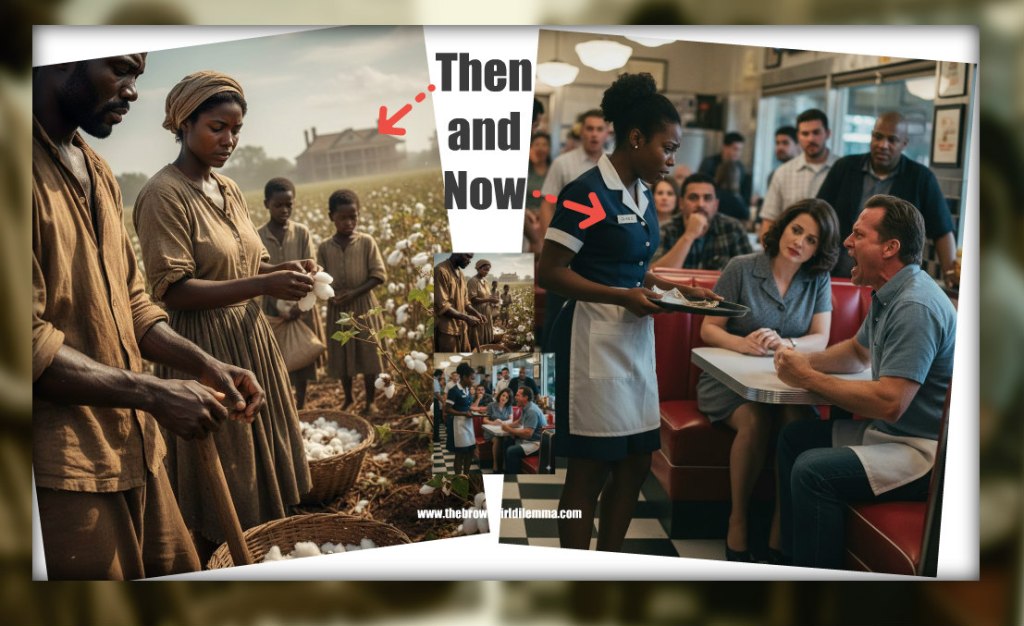
The history of Black people is deeply intertwined with the global forces of oppression, beginning with the transatlantic slave trade. This system not only uprooted millions from Africa but laid the foundations for systemic racism, economic disparity, and social exclusion that persist to this day (Eltis & Richardson, 2015). Understanding this continuum is critical for confronting modern forms of slavery and exploitation.
Historical Context of the Transatlantic Slave Trade
The transatlantic slave trade, beginning in the 16th century, forcibly transported over 12 million Africans to the Americas (Lovejoy, 2012). African kingdoms were disrupted, familial structures destroyed, and cultural practices suppressed as enslaved people were commodified and dehumanized (Smallwood, 2007).
Black History Timeline: Transatlantic Slave Trade to Modern-Day Slavery
16th–19th Century – Transatlantic Slave Trade
- Over 12 million Africans were forcibly transported to the Americas.
- African societies were disrupted; enslaved people were commodified for labor in plantations.
17th–19th Century – Enslavement on Plantations
- Brutal labor in sugar, cotton, and tobacco fields.
- Resistance through rebellions, escapes, and spiritual preservation.
Late 18th–Early 19th Century – Abolition Movements
- Activists like Frederick Douglass, Olaudah Equiano, and William Wilberforce fought to end slavery.
- Slavery challenged morally, economically, and politically.
1865 – Emancipation (U.S.)
- Slavery was legally abolished with the 13th Amendment.
- The Reconstruction era begins; systemic oppression continues through Black Codes.
Late 19th–Early 20th Century – Jim Crow and Lynching
- Segregation laws institutionalized racial inequality.
- Ida B. Wells documents lynching and campaigns for justice.
1916–1970s – The Great Migration
- Millions of Black Americans move from the rural South to northern urban centers.
- Encounter economic opportunities, yet face housing discrimination and segregation.
1950s–1960s – Civil Rights Movement
- Landmark legal victories: Brown v. Board of Education, Civil Rights Act.
- Leaders like Martin Luther King Jr., Rosa Parks, and Medgar Evers advance equality.
Post-1960s – Structural Inequalities
- Economic disparities persist: redlining, wage gaps, and limited access to quality education.
- Mass incarceration disproportionately impacts Black communities.
21st Century – Modern-Day Slavery
- Exploitation continues through human trafficking, forced labor, and systemic oppression.
- Vulnerable populations, especially women and children, are disproportionately affected.
Contemporary Resistance and Advocacy
- Organizations combat slavery and exploitation: Polaris Project, Anti-Slavery International, UN initiatives.
- Education, activism, and policy reform empower communities and promote justice.
Economic Motivations and Colonial Powers
European colonial powers profited immensely from enslaved labor, fueling the growth of plantation economies in the Americas (Inikori, 2002). Sugar, cotton, and tobacco industries relied heavily on Black labor, creating wealth for Europe while entrenching racial hierarchies and economic inequalities.
Resistance and Revolts During Slavery
Despite brutal conditions, enslaved Africans resisted through rebellion, escape, and cultural preservation. Notable revolts such as the Haitian Revolution (1791–1804) demonstrated resilience and challenged notions of racial inferiority (Geggus, 2001).
The Role of Religion and Spirituality
Religion, particularly Christianity, adapted within African traditions, became a tool for both control and resistance. Spirituals, coded messages, and the church provided emotional sustenance and a framework for community solidarity (Raboteau, 2004).
Abolition Movements
Abolitionists, both Black and White, fought to end the transatlantic slave trade. Figures such as Frederick Douglass, Olaudah Equiano, and William Wilberforce highlighted the moral and economic arguments against slavery (Drescher, 2009).
Emancipation and Its Limitations
Even after emancipation in the 19th century, former enslaved people faced systemic discrimination through Black Codes, Jim Crow laws, and sharecropping systems, which perpetuated economic and social marginalization (Litwack, 2009).
The Great Migration and Urban Struggles
The Great Migration of the early 20th century reshaped Black America as millions moved from the rural South to urban centers, seeking opportunity yet encountering new forms of racial segregation and economic exploitation (Wilkerson, 2010).
Racial Violence and Lynching
Lynching and racial terror were pervasive tools of oppression. Ida B. Wells’ investigative journalism exposed the scale of violence, advocating for legal reform and civil rights (Wells-Barnett, 1895/1999).
Civil Rights and Legal Progress
The mid-20th century Civil Rights Movement achieved landmark legal victories, including Brown v. Board of Education and the Civil Rights Act, challenging systemic barriers and inspiring global movements for racial justice (Branch, 1988).
Economic Inequalities Post-Civil Rights
Despite legal progress, Black communities continue to face structural economic disparities. Redlining, discriminatory lending, and wage gaps reflect persistent inequality rooted in historical oppression (Rothstein, 2017).
Modern-Day Slavery Defined
Contemporary slavery includes human trafficking, forced labor, and exploitation in both domestic and global contexts. The International Labour Organization estimates over 40 million people are affected worldwide, with women and children disproportionately impacted (ILO, 2017).
Human Trafficking and Exploitation
Human trafficking networks prey on vulnerability. Migrants, impoverished communities, and marginalized groups are often coerced into labor or sexual exploitation (Bales, 2012). Black communities remain disproportionately affected due to historical legacies of marginalization.
Systemic Racism and Modern Oppression
Modern slavery is intertwined with systemic racism. Structural inequalities, over-policing, and mass incarceration continue patterns reminiscent of historical exploitation (Alexander, 2010).
Global Supply Chains and Labor Exploitation
Modern industries, including agriculture, textiles, and technology, often rely on exploitative labor practices. Ethical consumerism and corporate accountability are critical for addressing contemporary forms of slavery (Crane, 2013).
Intersection of Gender and Race
Black women face compounded vulnerabilities in modern slavery contexts. Gender-based violence, limited access to education, and economic precarity exacerbate exploitation (Amnesty International, 2017).
Education and Empowerment as Resistance
Education remains a crucial tool against exploitation. Historical and contemporary movements emphasize literacy, advocacy, and economic empowerment as pathways to resilience (Gates, 2019).
Global Movements Against Modern Slavery
Organizations like Anti-Slavery International, Polaris Project, and UN initiatives mobilize resources and awareness to combat trafficking and forced labor worldwide (Bales & Soodalter, 2009).
Continuity of Historical Struggles
The legacy of the transatlantic slave trade is not confined to the past. Modern slavery and systemic oppression reflect a continuum of exploitation, demanding sustained advocacy, education, and structural change (Smallwood, 2007).
Conclusion
Black history is a testament to resilience and resistance. From the horrors of the transatlantic slave trade to the challenges of modern-day slavery, understanding this history is essential for dismantling systemic oppression and fostering justice for future generations.
References
Alexander, M. (2010). The new Jim Crow: Mass incarceration in the age of colorblindness. New Press.
Amnesty International. (2017). Women and modern slavery: Understanding vulnerability. Amnesty International Publications.
Bales, K. (2012). Disposable people: New slavery in the global economy (3rd ed.). University of California Press.
Bales, K., & Soodalter, R. (2009). The slave next door: Human trafficking and slavery in America today. University of California Press.
Branch, T. (1988). Parting the waters: America in the King years 1954-63. Simon & Schuster.
Crane, A. (2013). Modern slavery as a management practice: Exploring the conditions and strategies. Journal of Business Ethics, 114(3), 505–518.
Drescher, S. (2009). Abolition: A history of slavery and antislavery. Cambridge University Press.
Eltis, D., & Richardson, D. (2015). Atlas of the transatlantic slave trade. Yale University Press.
Gates, H. L. (2019). Stony the road: Reconstruction, white supremacy, and the rise of Jim Crow. Penguin Press.
Geggus, D. P. (2001). Haitian revolutionary studies. Indiana University Press.
Inikori, J. E. (2002). Africans and the industrial revolution in England: A study in international trade and economic development. Cambridge University Press.
International Labour Organization (ILO). (2017). Global estimates of modern slavery: Forced labour and forced marriage. ILO Publications.
Litwack, L. F. (2009). Trouble in mind: Black southerners in the age of Jim Crow. Knopf.
Lovejoy, P. E. (2012). Transformations in slavery: A history of slavery in Africa (2nd ed.). Cambridge University Press.
Raboteau, A. J. (2004). Slave religion: The “invisible institution” in the antebellum South (20th anniversary ed.). Oxford University Press.
Rothstein, R. (2017). The color of law: A forgotten history of how our government segregated America. Liveright.
Smallwood, S. E. (2007). Saltwater slavery: A middle passage from Africa to American diaspora. Harvard University Press.
Wells-Barnett, I. B. (1999). The Red Record: Tabulated statistics and case histories of lynching in the United States. Dover Publications. (Original work published 1895)
Wilkerson, I. (2010). The warmth of other suns: The epic story of America’s Great Migration. Random House.
Discover more from THE BROWN GIRL DILEMMA
Subscribe to get the latest posts sent to your email.
 THE BROWN GIRL DILEMMA