
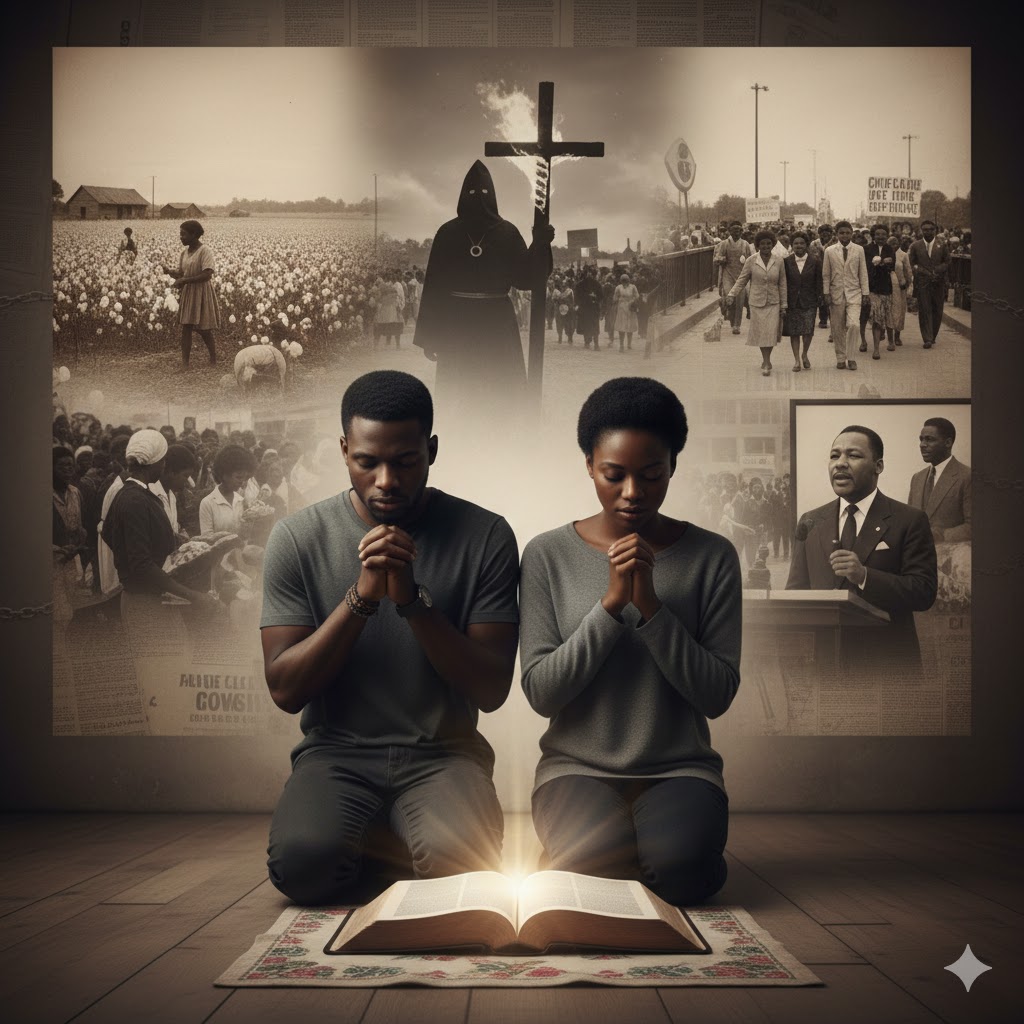
Black history is not merely a sequence of dates or the retelling of oppression; it is sacred terrain. It is a landscape shaped by the footprints of a people who carried faith, culture, dignity, and divine resilience across centuries. To stand in the presence of Black history is to stand on holy ground, because the journey of African-descended people bears witness to a God who walked with them through fire, flood, chains, and liberation.
Black history is holy ground because it begins long before slavery. It stretches back to kingdoms and civilizations where Black people ruled, built, studied, invented, and worshiped. From Nubia to Kush, from Ghana to Songhai, from Kemet to Ethiopia, Africa cultivated intellectual and spiritual traditions that the world still draws from. This heritage elevates Black history beyond pain; it anchors it in glory.
The holiness of this history is also found in its endurance. A people torn from their homeland survived one of the greatest atrocities in human history. They survived not by accident, but by providence. Their survival testifies to a divine hand at work in the shadows of suffering, shaping a remnant that would rise again. Every preserved family line, every song sung in the cotton fields, every whispered prayer in the midnight hour speaks of sacred resilience.
Black history is holy ground because it contains a narrative of faith that never died. Enslaved Africans did not inherit Christianity from their oppressors; they discovered in Scripture a God who understood bondage, deliverance, and covenant. Through the stories of Israel, they recognized themselves. Through the Psalms, they voiced their heartbreak. Through the Gospels, they found a Messiah who stood with the broken. Their faith was not borrowed but reborn.
The holiness of this narrative deepens when we consider the spiritual resistance embedded in Black culture. Spirituals were not just songs; they were coded prayers, liberation messages, and theological declarations. The rhythmic moans of the fields became a liturgy of survival. These traditions laid the foundation for the Black church, a sacred institution that shaped activism, family, and identity for generations.
Black history is holy ground because of its prophets and pioneers. Figures like Harriet Tubman, Frederick Douglass, Sojourner Truth, and countless unnamed leaders operated with a calling that mirrored biblical deliverers. They challenged systems, freed the oppressed, and stood firmly on righteousness. Their bravery was not merely political; it was spiritual warfare.
The holiness of this story extends to the mothers of the movement. Women whose names never made textbooks carried families on their backs. They prayed children into safety, held together broken homes, and passed down wisdom that sustained the community. Their hands were altars, their kitchens sanctuaries, their lives sermons of endurance and love.
Black history is holy ground because it carries the scent of sacrifice. Countless lives were laid down—from the Middle Passage to Jim Crow, from lynching trees to segregated streets. Their blood cries out like Abel’s, reminding the world that injustice is seen by God. Their sacrifices fertilized the soil from which future generations would rise.
That rising continues through the dreamers, scholars, activists, and artists who broadened the path toward freedom. Each breakthrough was a step deeper into holy territory—a reminder that progress is not simply social, but spiritual. Civil rights victories were not just legal milestones; they were manifestations of divine justice.
Black history is holy ground because it illuminates a people who refused to be erased. Despite centuries of oppression, their culture, creativity, and identity could not be destroyed. Instead, they transformed suffering into song, brokenness into brilliance, and hardship into hope. This divine alchemy marks their journey as sacred.
Modern Black life continues this sacredness. Every achievement—from academia to art, from science to business, from ministry to music—is a continuation of a holy lineage. Each accomplishment is a chapter in a story that began thousands of years before American soil ever felt the presence of African feet.
Black history is holy ground because it challenges the world to see humanity through a divine lens. The struggle for justice reflects God’s heart for righteousness. The fight for dignity reflects God’s image within humanity. Every act of resistance is a declaration that Black life is sacred and cannot be diminished.
The sacredness of Black history is also found in its wounds. Healing requires honesty, and Black history invites the world to confront painful truths without running. Yet this truth-telling is not meant to reopen scars but to restore what was lost. There is holiness in remembering, because memory heals and honors.
Black history is holy ground because it holds prophetic power. It warns against repeating the sins of the past, calls nations to repent, and demands transformation. It speaks with the authority of a testimony shaped by centuries of struggle and triumph. It teaches that liberation is a divine mandate, not a political suggestion.
This holiness also lies in the future. Black children today inherit not just a history of suffering but a legacy of brilliance. They stand on the shoulders of kings, queens, scholars, inventors, freedom fighters, and saints. Their existence is a continuation of the sacred promise that a people once enslaved would rise beyond anything intended to destroy them.
Black history is holy ground because it reveals God’s faithfulness. In every generation, He preserved a remnant, raised leaders, empowered movements, and poured creativity into a people who refused to surrender. Their story is evidence of divine purpose. Nothing about their survival is accidental.
To walk through Black history is to walk through a sacred story—one that encompasses creation, covenant, oppression, deliverance, restoration, and glory. It is a story intertwined with Scripture, echoing the journeys of ancient Israel and the hope of future redemption. It is a holy narrative wrapped in melanin and majesty.
Ultimately, Black history is holy ground because it embodies the miracle of endurance. It reveals that no chain is stronger than the human spirit, no system stronger than divine justice, and no hatred stronger than the love planted deep within a people chosen to carry light through centuries of darkness. Black history is not just remembered; it is revered.
And for those who study it, teach it, write it, or live it—it calls them to remove their shoes. For the place where they stand is sacred.
References:
Genesis 15:13–14 (KJV); Exodus 3:5; Psalm 68:31; Isaiah 61:1–4; Luke 4:18; Revelation 7:9; Curtin, P. The Atlantic Slave Trade; Gates, H. L. Africa in World History; Raboteau, A. Slave Religion; Franklin, J. H. From Slavery to Freedom.
Discover more from THE BROWN GIRL DILEMMA
Subscribe to get the latest posts sent to your email.
 THE BROWN GIRL DILEMMA