
“Injustice anywhere is a threat to justice everywhere.” — Martin Luther King Jr.
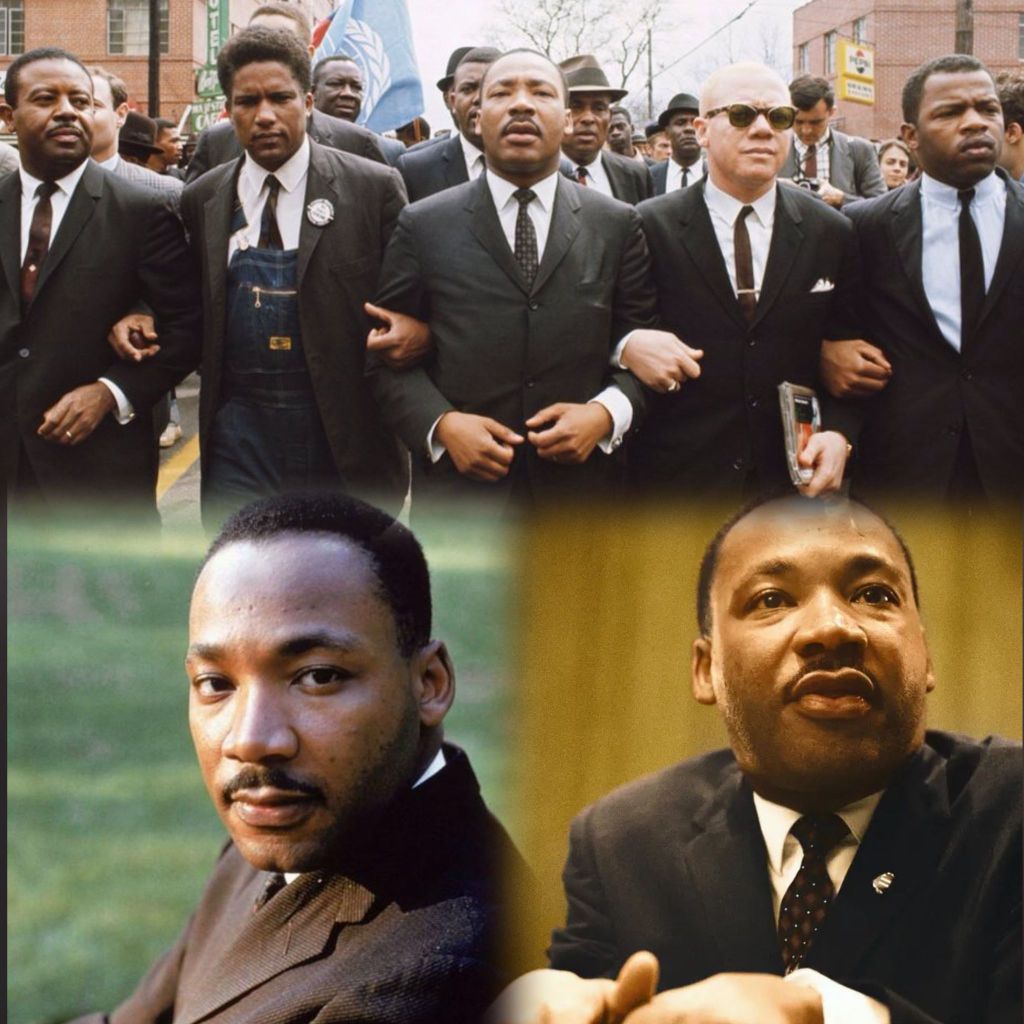
Martin Luther King Jr. Day is a federal holiday in the United States dedicated to honoring the life, legacy, and moral leadership of Dr. Martin Luther King Jr., one of the most influential figures in American history. The holiday serves not only as a remembrance of a man, but as a national reflection on justice, equality, nonviolence, and the unfinished work of civil rights.
The holiday was officially established in 1983, when President Ronald Reagan signed it into law, and it was first observed nationally on January 20, 1986. The date was chosen to fall on the third Monday of January, close to King’s birthday on January 15. The creation of the holiday followed years of public advocacy, grassroots organizing, and political struggle, reflecting the very democratic processes King championed.
He was born on January 15, 1929, with the name Michael King Jr. His father was also born Michael King. In 1934, after a trip to Germany, King’s father was deeply inspired by the 16th-century Protestant reformer Martin Luther. As a result, he changed his own name to Martin Luther King Sr. and also changed his son’s name to Martin Luther King Jr. The change reflected a theological and spiritual admiration for Martin Luther’s stand against corruption and injustice within the church.
Although the name change was used publicly and professionally from that point forward, King Jr.’s birth certificate was not formally amended, meaning “Michael King Jr.” technically remained his legal birth name on record. This renaming carried symbolic weight. Just as Martin Luther challenged entrenched systems in his era, Martin Luther King Jr. would later challenge racial injustice and moral hypocrisy in America, making the name prophetically aligned with his life’s mission.
Dr. Martin Luther King Jr. was born on January 15, 1929, in Atlanta, Georgia, into a deeply rooted Black Christian family. His father, Martin Luther King Sr., was a Baptist minister, and his mother, Alberta Williams King, was an educator and church organist. From an early age, King was immersed in faith, scholarship, and the lived reality of racial segregation in the Jim Crow South.
King was a brilliant academic. He earned a Bachelor of Arts degree from Morehouse College, a Bachelor of Divinity from Crozer Theological Seminary, and a PhD in Systematic Theology from Boston University. His education shaped his ability to articulate moral arguments against racism, drawing from Christian theology, philosophy, and social ethics.
While studying in Boston, King met Coretta Scott, a gifted musician and intellectual in her own right. They married in 1953, forming a partnership rooted in faith, justice, and shared purpose. Coretta Scott King would later become a civil rights leader herself, preserving and advancing her husband’s legacy long after his death.
Together, Martin and Coretta King had four children: Yolanda Denise King, Martin Luther King III, Dexter Scott King, and Bernice Albertine King. Each child has, in various ways, contributed to the continuation of their father’s vision for justice, equity, and nonviolent social change.
King’s public career as a civil rights leader began in earnest in 1955 during the Montgomery Bus Boycott, sparked by Rosa Parks’ arrest. As a young pastor, King emerged as the spokesperson for a mass movement that successfully challenged segregation through disciplined, collective nonviolent resistance.
Central to King’s philosophy was nonviolence, deeply inspired by the teachings of Jesus Christ and the example of Mahatma Gandhi. King believed nonviolence was not passive submission but a powerful moral force capable of transforming enemies into allies and unjust systems into redeemed institutions.
King became a central figure in the Civil Rights Movement, helping to lead campaigns against segregation, voter suppression, economic injustice, and racial violence. He co-founded the Southern Christian Leadership Conference (SCLC) in 1957, which mobilized Black churches as engines of social change.
One of King’s most iconic moments came during the 1963 March on Washington, where he delivered the “I Have a Dream” speech. This address articulated a prophetic vision of America living up to its founding ideals, resonating across racial, religious, and national boundaries.
King’s activism played a crucial role in the passage of landmark legislation, including the Civil Rights Act of 1964 and the Voting Rights Act of 1965. These laws dismantled legal segregation and expanded democratic participation for millions of Black Americans.
In recognition of his moral leadership and commitment to peace, King was awarded the Nobel Peace Prize in 1964, becoming the youngest recipient at the time. He used the prize money to further the civil rights struggle, emphasizing collective responsibility over personal gain.
Despite his global recognition, King faced constant opposition, surveillance, and threats. He was criticized by segregationists, political leaders, and even some allies who viewed his stance against war and economic inequality as too radical.
On April 4, 1968, Dr. Martin Luther King Jr. was assassinated in Memphis, Tennessee, while standing on the balcony of the Lorraine Motel. He had traveled there to support striking sanitation workers, demonstrating his growing focus on labor rights and economic justice.
King was killed by James Earl Ray, who later pleaded guilty, though questions and controversies surrounding the assassination persist. King’s death sent shockwaves through the nation and the world, igniting grief, protests, and renewed calls for justice.
In the wake of his death, Coretta Scott King founded The King Center in Atlanta in 1968. The King Center serves as a living memorial, dedicated to education, research, and nonviolent social change, ensuring that King’s philosophy remains active rather than merely historical.
The campaign to establish Martin Luther King Jr. Day was led by activists, lawmakers, and artists, including Stevie Wonder, whose song “Happy Birthday” helped galvanize public support. After years of resistance, the holiday was finally recognized as a federal observance.
Martin Luther King Jr. Day is unique among U.S. holidays because it is designated as a National Day of Service, encouraging Americans to honor King’s legacy through volunteerism and community engagement rather than leisure alone.
Today, King’s legacy lives on through movements for racial justice, voting rights, economic equity, and global human rights. His writings, sermons, and speeches continue to inform scholars, activists, theologians, and policymakers across the world.
Dr. Martin Luther King Jr. is remembered not simply as a civil rights leader, but as a moral visionary whose life testified that love, justice, and courage can bend the arc of history toward righteousness when people are willing to stand, sacrifice, and believe.
References
Carson, C. (2001). The autobiography of Martin Luther King, Jr. New York, NY: Warner Books.
King, M. L., Jr. (1963). Why we can’t wait. New York, NY: Harper & Row.
King, M. L., Jr. (1964). Nobel Peace Prize acceptance speech. Oslo, Norway.
The King Center. (n.d.). The life of Dr. Martin Luther King, Jr. Atlanta, GA.
U.S. Office of Personnel Management. (n.d.). Martin Luther King Jr. Day. Washington, DC.
Carson, C. (2001). The autobiography of Martin Luther King, Jr. New York, NY: Warner Books.
Discover more from THE BROWN GIRL DILEMMA
Subscribe to get the latest posts sent to your email.
 THE BROWN GIRL DILEMMA