
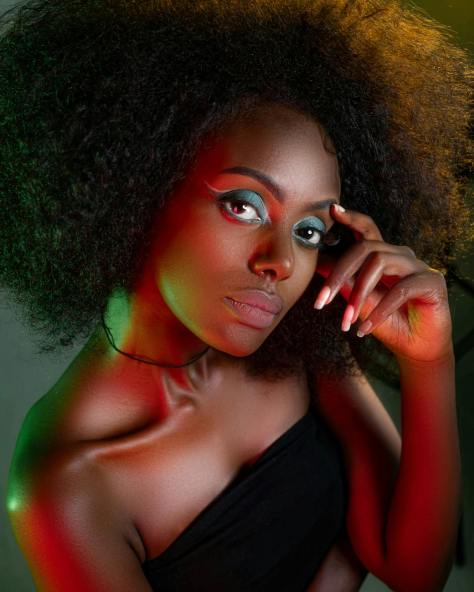
Beauty has long been racialized and hierarchized, with Eurocentric and light-skinned ideals dominating media, fashion, and cultural representation. Lighter skin has often been associated with elegance, refinement, and desirability, giving rise to systemic biases that valorize women like Yara Shahidi, Salli Richardson, and Mari Morrow. These women are celebrated for their features, poise, and charm, yet the broader narrative has historically marginalized darker-skinned women, deeming their beauty less desirable despite its richness, depth, and cultural significance.
Dark-skinned women, however, embody a powerful and resilient form of beauty that defies these narrow societal standards. Lupita Nyong’o, Kenya Moore, and Issa Rae represent a celebration of melanin-rich skin, diverse features, and cultural pride. Lupita’s radiant skin and delicate facial symmetry have been hailed as a “modern masterpiece,” earning her acclaim on red carpets and in film alike. Kenya Moore’s high cheekbones, full lips, and commanding presence have made her a standout in the pageant and reality TV worlds, while Issa Rae’s authenticity and radiant complexion have inspired countless young women to embrace their natural beauty.
While light-skinned beauty continues to dominate mainstream media, the representation of dark-skinned women is gradually increasing, challenging long-held biases. Yara Shahidi, Salli Richardson, and Mari Morrow exemplify elegance and style within lighter-complexion parameters, but their visibility contrasts with the historical underrepresentation of darker-skinned women. This disparity underscores the importance of highlighting figures like Lupita, Kenya, and Issa, whose successes demonstrate that beauty is not bound by shade but by confidence, talent, and presence.
Facial features play a critical role in this narrative. Dark-skinned women often possess unique and striking attributes—full lips, broad noses, defined jawlines, and high cheekbones—that have been historically undervalued. Lupita Nyong’o’s delicate facial symmetry and luminous skin redefine red carpet standards, while Kenya Moore’s sculpted features and radiant smile showcase the allure of dark-skinned aesthetics. Issa Rae combines natural texture, expressive eyes, and a warm, rich complexion to exemplify how authenticity enhances beauty. These features remind us that aesthetic appeal is diverse and culturally embedded.
Cultural and historical context is essential in understanding the challenges dark-skinned women face. For centuries, colonial and Eurocentric beauty standards privileged lighter skin as an aspirational ideal, relegating darker tones to marginal status. Media reinforcement of this hierarchy contributed to colorism, internalized bias, and social exclusion. By celebrating dark-skinned icons, society begins to dismantle these limiting narratives, validating beauty in all shades and promoting a more inclusive understanding of attractiveness.
Psychologically, representation impacts self-esteem and identity. Visibility of dark-skinned role models fosters confidence and resilience, counteracting the effects of colorism and societal marginalization. When young girls see Lupita, Kenya, and Issa celebrated for their melanin-rich skin and natural features, it reinforces the notion that their beauty is valid, desired, and powerful. This affirmation nurtures self-love, pride, and the courage to embrace natural aesthetics in the face of prevailing biases.
Fashion and personal style amplify the power of dark-skinned beauty. Lupita Nyong’o is known for her bold, colorful ensembles that complement her rich skin tone, while Kenya Moore often employs glamorous, classic styling that emphasizes her elegance. Issa Rae embraces chic, modern attire that highlights her unique features and authenticity. These women demonstrate that confidence is expressed not only through physical traits but through presentation, poise, and individuality.
The broader cultural impact of celebrating dark-skinned beauty extends to media, entertainment, and social movements. #BlackGirlMagic and #UnapologeticallyBlack emphasize the power, intelligence, and allure of dark-skinned women. Celebrating these figures challenges ingrained hierarchies, creates space for diverse representation, and educates society on the value and beauty of all skin tones. By centering dark-skinned icons, cultural narratives are reshaped to reflect authenticity, heritage, and resilience.
In conclusion, crowning confidence involves redefining societal standards to celebrate dark beauty in a world that historically prioritized lighter skin. Figures like Lupita Nyong’o, Kenya Moore, and Issa Rae exemplify this celebration through talent, poise, and unapologetic pride in their features and complexion. While light-skinned icons like Yara Shahidi, Salli Richardson, and Mari Morrow remain influential, the elevation of dark-skinned women challenges colorism, promotes inclusive beauty standards, and empowers a generation to embrace melanin-rich aesthetics with confidence, pride, and grace.
References
Hunter, M. (2007). The persistent problem of colorism: Skin tone, status, and inequality. Sociology Compass, 1(1), 237–254.
Byrd, A. D., & Tharps, L. L. (2014). Hair Story: Untangling the Roots of Black Hair in America. New York, NY: St. Martin’s Press.
Fardouly, J., Diedrichs, P. C., Vartanian, L. R., & Halliwell, E. (2015). Social comparisons on social media: The impact of Facebook on young women’s body image concerns and mood. Body Image, 13, 38–45.
Rhodes, G. (2006). The evolutionary psychology of facial beauty. Annual Review of Psychology, 57, 199–226.
Discover more from THE BROWN GIRL DILEMMA
Subscribe to get the latest posts sent to your email.
 THE BROWN GIRL DILEMMA