
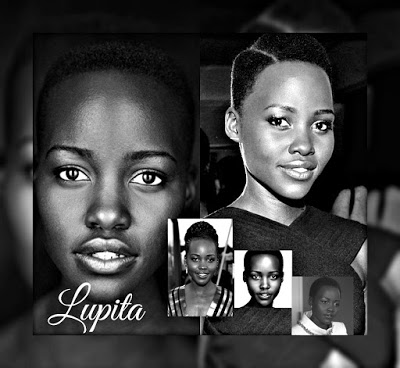
Beauty is often described as both universal and culturally specific, yet when it comes to Black women, their beauty holds a transcendent quality that blends strength, heritage, and physical distinctiveness. Across history and continents, the attributes of Black women’s appearance have not only been celebrated within their own communities but also mimicked and admired around the world. From their radiant skin tones to their sculpted bone structures and captivating eyes, Black women embody an aesthetic that challenges and redefines global standards of beauty.
One of the most celebrated attributes of Black women is their skin tone. Ranging from deep ebony to warm café au lait, their melanin-rich complexions are often associated with vitality, health, and timeless youthfulness (Russell, Wilson, & Hall, 2013). In fact, many cosmetic brands now attempt to market products that replicate the “glow” of melanin. Another defining feature is the diversity of facial structures—high cheekbones, expressive almond-shaped eyes, and full lips—which create a sense of balance and harmony that aligns with principles of facial symmetry often linked to attractiveness (Little et al., 2011).
Globally, women of other races have long sought to mimic elements of Black women’s physicality. In the West, the pursuit of full lips has become one of the most obvious examples, with lip fillers and cosmetic procedures inspired by the natural beauty of Black women. Additionally, curvaceous body types—once marginalized—are now celebrated, with emphasis on rounded hips, narrow waists, and toned figures, reflecting the global fascination with Black women’s natural silhouettes (Patton, 2006). Hairstyles, too, have been widely imitated, with braids, twists, and natural textures moving from cultural tradition to global fashion trends.
Around the world, the admiration often focuses on both face and body, though in different contexts. Western beauty markets tend to idolize Black women’s curves, while fashion and modeling industries highlight their striking facial features and versatility in style. This dual admiration underscores the holistic nature of Black beauty—embodying both power and delicacy, sensuality and elegance.
Hollywood has offered a stage where the beauty of Black women has shone in diverse ways. Consider Lupita Nyong’o, whose deep, luminous skin and regal bone structure epitomize classic African beauty; her features challenge Eurocentric ideals while affirming natural radiance. Kenya Moore, celebrated for her pageant-winning beauty, combines high cheekbones with a radiant smile that exudes confidence and allure. Halle Berry, often hailed as one of the most beautiful women in the world, blends striking hazel eyes, a delicate nose, and flawless symmetry, making her a symbol of crossover appeal.
Nia Long embodies girl-next-door charm with soulful eyes and a glowing complexion, while Gabrielle Union is admired for her timeless smile and smooth, youthful skin that seems untouched by time. Vanessa L. Williams, the first Black Miss America, captivated audiences with her green-blue eyes and luminous skin, offering a rare blend of features that challenged stereotypical norms of beauty. Salli Richardson dazzles with her elegant bone structure and silky complexion, while Stacey Dash became a 90s icon with her doll-like features and expressive eyes.
Completing this constellation of Hollywood beauty are Sanaa Lathan, with her soft yet commanding features and effortlessly natural look, and Sandra Justice, a model and actress whose statuesque frame and bold facial features reflect both strength and sophistication. Together, these women demonstrate the range of Black beauty, from delicate to striking, natural to glamorous, affirming that there is no single definition—only a celebration of diversity.
Ultimately, the beauty of Black women lies not only in their physical appearance but in the way their features embody history, resilience, and cultural pride. Their influence is seen in the global beauty industry, fashion runways, and popular culture, where elements of Black aesthetics are both imitated and celebrated. As the world continues to expand its definitions of beauty, Black women remain at the forefront—timeless, trendsetting, and undeniably powerful.
References
Little, A. C., Jones, B. C., & DeBruine, L. M. (2011). Facial attractiveness: Evolutionary based research. Philosophical Transactions of the Royal Society B: Biological Sciences, 366(1571), 1638–1659.
Patton, T. O. (2006). Hey girl, am I more than my hair?: African American women and their struggles with beauty, body image, and hair. NWSA Journal, 18(2), 24–51.
Russell, K., Wilson, M., & Hall, R. (2013). The Color Complex: The Politics of Skin Color in a New Millennium. Anchor.
Discover more from THE BROWN GIRL DILEMMA
Subscribe to get the latest posts sent to your email.
 THE BROWN GIRL DILEMMA