
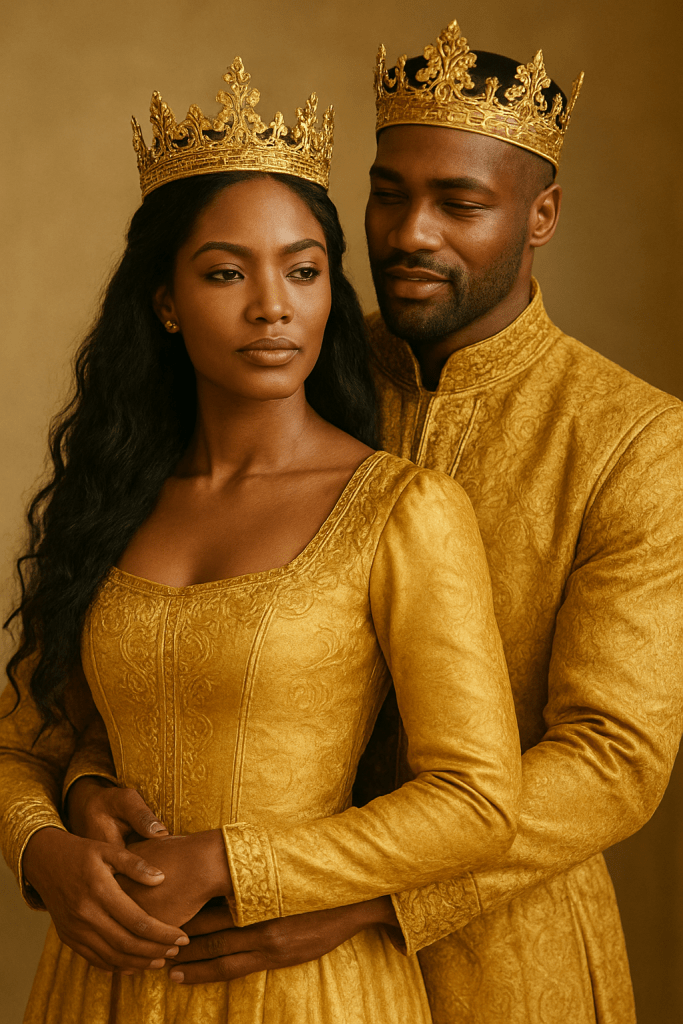
Black marriage has long stood at the crossroads of love, resistance, and survival. From the earliest days of forced separation under chattel slavery to modern pressures of economic instability and cultural fragmentation, the Black marital union has endured extraordinary strain. Yet within that history lies an unbroken desire to choose one another intentionally, to build family in the face of systems designed to dismantle it.
Choosing us is not merely a romantic sentiment; it is a conscious decision rooted in self-worth, discipline, and vision. For Black couples, marriage has never existed in a vacuum. It has always been a complex blend of politics, spirituality, and community. To choose marriage is to choose stability in a world that often profits from Black disunity.
Historically, Black marriages were disrupted by laws that denied enslaved people legal recognition of their unions. Families were torn apart, spouses sold away, and children separated, creating generational trauma that still echoes today. The legacy of these disruptions continues to influence trust, attachment, and expectations within modern relationships.
Despite these historical assaults, Black love persisted. Enslaved people formed unions through ritual, prayer, and communal witness, proving that marriage is more than paperwork. It is a covenant. That same spirit of covenant remains essential for the revival of Black marriage in the present day.
The modern decline in marriage rates among Black Americans is often discussed without adequate historical context. Economic disenfranchisement, mass incarceration, educational inequality, and media narratives that devalue Black family life have all contributed to relational instability. These are not moral failures but structural realities.
Still, revival is possible because Black marriage has always adapted. Revival begins when couples reject deficit narratives and instead center healing, communication, and accountability. Choosing us means refusing to internalize stereotypes that portray Black men as absent or Black women as unlovable or overly independent.
At its core, marriage thrives on intentionality. Intentional Black marriage requires emotional literacy, financial transparency, and spiritual grounding. It asks partners to confront personal wounds rather than project them onto one another. Healing the self becomes an act of love toward the union.
Faith traditions have historically played a vital role in sustaining Black marriages. Biblical teachings frame marriage as a covenant rather than a contract, emphasizing commitment, sacrifice, and mutual respect. Scriptures such as Ecclesiastes 4:12 highlight strength in unity, reinforcing the spiritual dimension of partnership.
The revival of Black marriage also requires redefining gender roles beyond oppression and resentment. Healthy unions are not built on domination but on cooperation. When leadership is understood as service and submission as mutual respect, marriages become spaces of safety rather than a power struggle.
Economic collaboration remains a cornerstone of marital stability. Historically, Black couples pooled resources to survive exclusion from wealth-building opportunities. Today, financial literacy, shared goals, and cooperative economics remain essential tools for sustaining long-term partnerships.
Communication is another critical pillar. Many couples inherit silence as a coping mechanism, passed down from generations that endured trauma without space to process it. Revival demands emotional honesty, active listening, and the courage to address conflict constructively.
Community support further strengthens marriages. In earlier generations, extended family, churches, and neighborhoods reinforced accountability and offered guidance. Rebuilding communal investment in marriage helps counter isolation and provides models of healthy partnership.
Media representation also matters. The overexposure of dysfunctional relationships distorts expectations and normalizes instability. Highlighting examples of enduring Black love restores hope and provides cultural counter-narratives rooted in reality rather than spectacle.
The revival of Black marriage is inseparable from healing masculinity and femininity. Black men must be allowed space to express vulnerability without shame, and Black women must be freed from narratives that demand strength at the expense of softness. Balance nurtures intimacy.
Choosing us also means choosing patience. Many couples rush into commitment without preparation, while others avoid commitment out of fear. Revival calls for intentional courtship, premarital counseling, and spiritual discernment before union.
Marriage is not a cure-all, but it is a stabilizing force when entered wisely. Research consistently links healthy marriages to improved outcomes for children, including emotional security and academic achievement. These benefits ripple across generations.
The children of strong Black marriages witness cooperation, respect, and resilience modeled daily. They learn conflict resolution not through chaos but through example. In this way, marriage becomes both personal and revolutionary.
Revival does not mean returning to outdated ideals that ignored abuse or silenced women. True revival embraces justice, safety, and mutual flourishing. Love that harms is not covenant; love that heals is.
Ultimately, choosing us is an act of faith. It is believed that Black love is worthy of protection, investment, and celebration. It is choosing partnership over fear and unity over fragmentation.
The revival of Black marriage begins one couple at a time. When two people choose healing, accountability, and covenant, they defy history’s wounds and create new legacies. In choosing us, Black couples choose a future rooted in love, stability, and hope.
References
Cherlin, A. J. (2010). The marriage-go-round: The state of marriage and the family in America today. Knopf.
Coates, T.-N. (2015). Between the world and me. Spiegel & Grau.
Frazier, E. F. (1939). The Negro family in the United States. University of Chicago Press.
Hill, R. B. (1999). The strengths of Black families (2nd ed.). University Press of America.
Pew Research Center. (2020). Marriage and cohabitation in the U.S.
Stanley, S. M., Markman, H. J., & Whitton, S. W. (2002). Communication, conflict, and commitment: Insights on the foundations of relationship success. Journal of Family Psychology, 16(4), 659–675.
The Holy Bible, King James Version. (1611/1987). Cambridge University Press.
Wilcox, W. B., & Wolfinger, N. H. (2016). Soul mates: Religion, sex, love, and marriage among African Americans and Latinos. Oxford University Press.
Discover more from THE BROWN GIRL DILEMMA
Subscribe to get the latest posts sent to your email.
 THE BROWN GIRL DILEMMA