
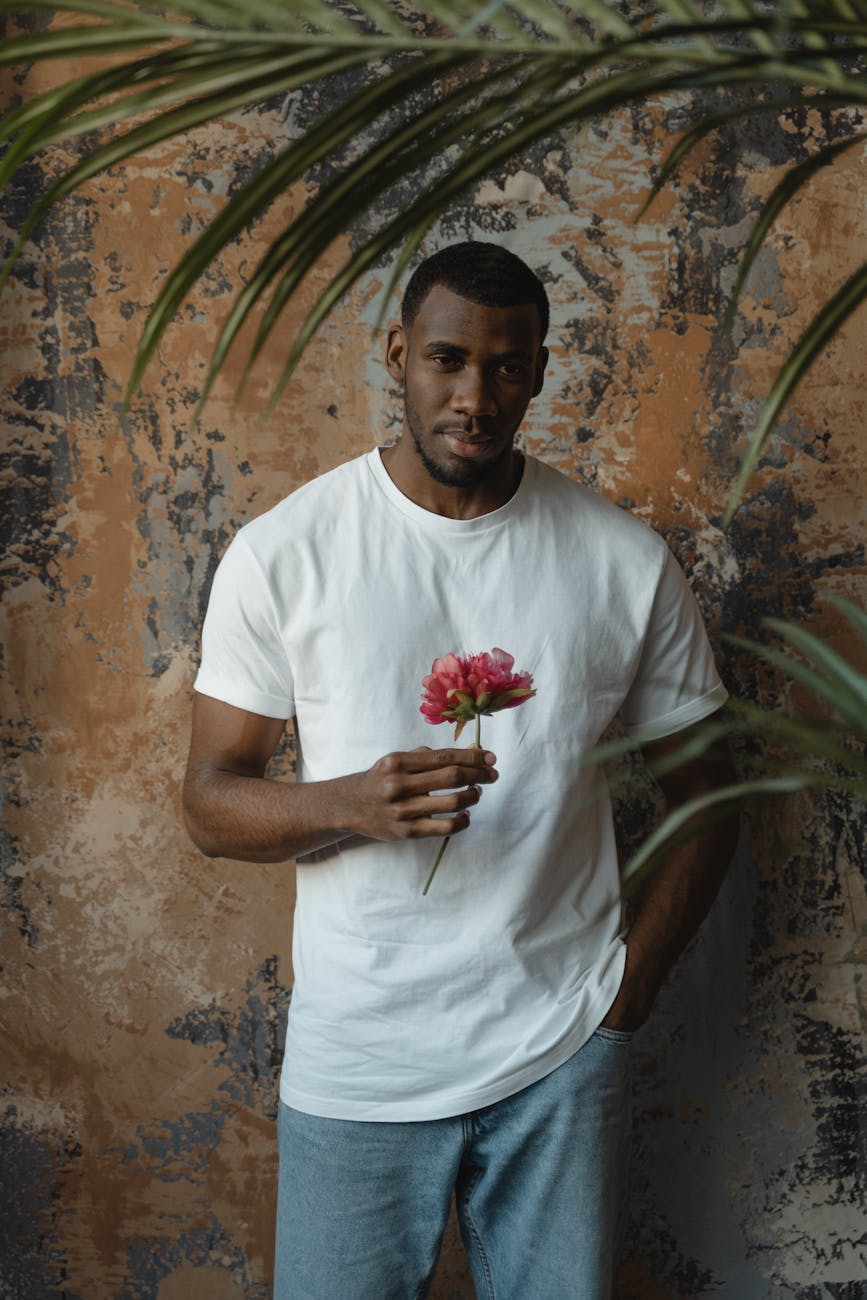
The Black male form has historically been a site of layered meanings, embodying beauty, strength, spirituality, and cultural identity. Across African civilizations and the African diaspora, the body of the Black man has not been merely physical; it has been imbued with sacred significance, functioning as a living symbol of ancestral wisdom, divine design, and communal responsibility.
In classical African societies, particularly among the Yoruba, the male form was seen as a conduit of spiritual energy. Artworks and sculptures emphasized proportion, posture, and musculature to convey not only physical health but also moral and spiritual integrity. The ideal male body reflected balance between the corporeal and the metaphysical.
Sacred aesthetics in African art often focus on symmetry, rhythm, and geometric forms. Masks, statues, and ceremonial regalia depicted the male figure with precision, conveying strength, vitality, and divine favor. These depictions emphasized the interconnection between cosmic order and human form, suggesting that physical appearance mirrored spiritual alignment.
The concept of “divine design” is rooted in the belief that God or the creator imbues the human body with intentionality. In African thought, the male body is a sacred vessel through which leadership, wisdom, and ancestral legacy are expressed. The aesthetics of the body—posture, musculature, and gait—communicate character and spiritual authority.
Colonialism and the transatlantic slave trade disrupted these understandings, replacing sacred narratives with dehumanizing representations. The Black male form was often depicted through lenses of criminality, hypersexuality, or physical dominance, stripping it of spiritual and cultural significance. These distortions have had long-lasting impacts on perception and identity.
Contemporary scholars highlight the reclamation of the Black male form as sacred and beautiful. Artistic movements, photography, and visual culture increasingly celebrate muscularity, elegance, and poise not merely for physical appeal but as symbols of resilience, dignity, and ancestral continuity.
Symbolism in African diasporic communities emphasizes the interconnectedness of mind, body, and spirit. The Black male form is portrayed as a holistic entity, with physicality representing moral courage, intellectual acumen, and spiritual alignment. In this framework, beauty is inseparable from purpose and character.
In religious contexts, the Black male body has often been invoked as a vessel for divine presence. Ceremonial dancers, priests, and elders embody sacred principles through posture, movement, and attire. Each gesture and stance is deliberate, communicating reverence, authority, and protection for the community.
The aesthetics of hair, skin, and facial features have profound cultural and spiritual resonance. Cornrows, dreadlocks, and other traditional styles are not merely cosmetic; they signify lineage, social role, and spiritual alignment. Similarly, attention to skin tone and complexion reflects both ancestral heritage and divine creation.
Artistic representations in sculpture, painting, and photography often highlight muscularity as a manifestation of vitality and spiritual strength. Broad shoulders, erect posture, and fluid movement are not only aesthetic choices but also indicators of a person’s ability to embody sacred responsibility and leadership.
In contemporary media, the Black male body has often been objectified or stereotyped. However, intentional portrayals that emphasize sacred aesthetics counteract these narratives, emphasizing dignity, grace, and spiritual authority over reductive physicality.
Athleticism in African diasporic communities has historically been intertwined with spiritual and social values. Warriors, hunters, and athletes were revered not solely for strength but for their embodiment of divine principles: endurance, discipline, and moral integrity.
Fashion and attire have always enhanced the sacred aesthetics of the Black male form. Traditional garments, ceremonial robes, and even contemporary clothing can signify rank, virtue, and spiritual alignment. How the body is adorned communicates intentionality, respect, and presence.
Photography and film are increasingly used to celebrate sacred aesthetics. Projects that showcase Black men in natural light, embracing posture, symmetry, and expression, reclaim narratives historically distorted by racism. These images assert that the Black male form is inherently dignified and spiritually resonant.
Cross-cultural influences have enriched the understanding of sacred aesthetics. African traditions have merged with Caribbean, Latin American, and North American practices, creating hybrid expressions that celebrate ancestry, resilience, and divine design.
Scholarship in psychology and sociology emphasizes the importance of representation for self-perception. When Black men are depicted as sacred, powerful, and beautiful, it fosters positive identity formation, resilience against stereotypes, and alignment with cultural heritage.
The Black male form as sacred challenges Western aesthetic paradigms that often marginalize or distort non-European bodies. Recognizing divine design requires an appreciation of proportion, symmetry, posture, and expression that transcends Eurocentric frameworks.
Sacred aesthetics also extend to gestures and movement. Dance, martial arts, and ritual performance exemplify how physicality communicates spirituality. Each motion becomes a conduit for cultural memory, divine homage, and ancestral strength.
Education on sacred aesthetics fosters intergenerational knowledge. Boys and young men learn posture, grooming, and comportment not merely for social acceptance but as expressions of spirituality, leadership, and respect for lineage.
Ultimately, the sacred aesthetics of the Black man reclaim the body as both a vessel of divine creation and a symbol of cultural continuity. By recognizing the intrinsic beauty, power, and spiritual resonance of the Black male form, communities affirm identity, heritage, and cosmic order.
References
Beckford, R. (Ed.). (2009). Black religion and aesthetics. Palgrave Macmillan.
SpringerLink
Campbell, B. (n.d.). Divinity, creativity and humanity in Yoruba aesthetics. Rhode Island School of Design.
RISD Faculty
Campbell, B. (n.d.). Embodying the sacred in Yoruba art. ObafemiO.
OBAFEMIO.COM
Lawal, B. (n.d.). The construal of Yoruba colour philosophy and symbolism. ObafemiO.
OBAFEMIO.COM
Oladesu, J. O., & Otu, J. (2019). The construal of Yoruba colour philosophy and symbolism. Journal of African Arts & Culture, 3(1), 59–69.
OBAFEMIO.COM
Pinn, A. B. (Ed.). (2009). Black religion and aesthetics. Palgrave Macmillan.
SpringerLink
Discover more from THE BROWN GIRL DILEMMA
Subscribe to get the latest posts sent to your email.
 THE BROWN GIRL DILEMMA