
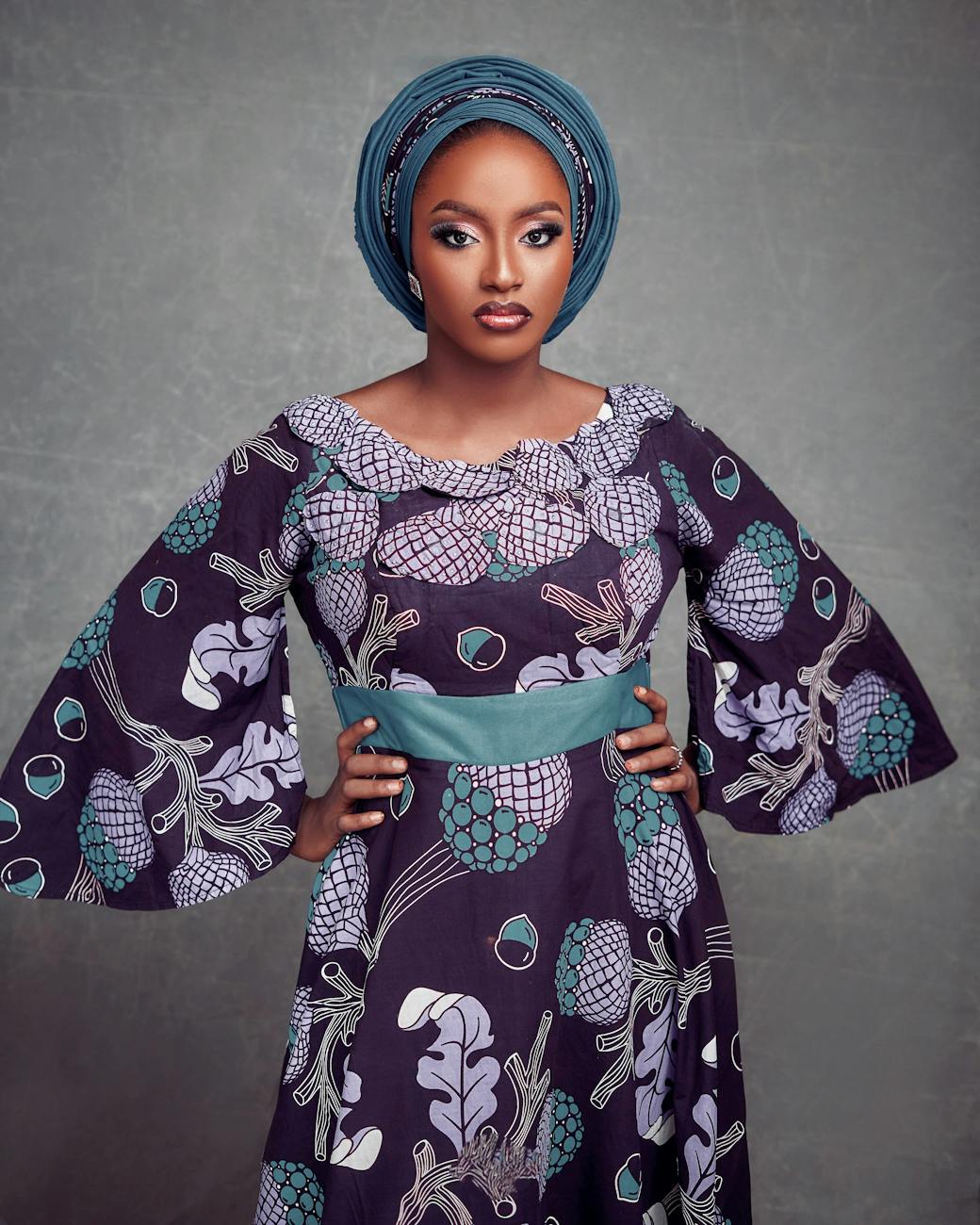
Afrocentric beauty is more than an aesthetic—it is a cultural reclamation, a spiritual declaration, and a political stance. Rooted in the acknowledgment of African heritage and identity, it transcends Eurocentric ideals that have long dictated global standards of attractiveness. Afrocentric beauty celebrates the divine design of melanin, texture, and form, declaring that Blackness itself is not a deviation from beauty but its original expression (hooks, 1992).
Historically, Western civilization portrayed African features as inferior, using pseudo-science and colonial ideology to justify enslavement and oppression. These narratives reduced Black identity to caricature while promoting whiteness as purity and perfection. Afrocentric beauty emerges as the antidote—restoring dignity to features once demonized and affirming that African phenotypes are symbols of resilience and majesty (Asante, 2003).
The roots of Afrocentric beauty lie in ancient Africa, where adornment and aesthetics held spiritual significance. In Kemet (Egypt), Nubia, and other regions, hairstyles, body paint, and jewelry symbolized power, status, and connection to the divine. Beauty was seen as harmony between the physical and the spiritual, reflecting the Creator’s craftsmanship. This ancient understanding opposes modern beauty industries that commodify insecurity and conformity (Diop, 1974).
In the transatlantic slave era, African aesthetics were systematically stripped away. Enslaved Africans were forced to adopt Western dress and grooming as a means of control. Yet even in bondage, cultural expression survived through braiding, fabrics, and oral traditions. The Afrocentric aesthetic persisted in coded ways, a quiet rebellion against erasure.
Afrocentric beauty today reclaims that stolen narrative. It celebrates the broad nose, full lips, and coiled hair as divine architecture—not flaws to be corrected. The natural hair movement of the 1960s and 1970s reignited this consciousness, encouraging Black women and men to wear their natural textures with pride. The afro became both hairstyle and halo—an emblem of power, freedom, and pride (Byrd & Tharps, 2014).
This movement was more than fashion; it was theology in motion. To love one’s natural self is to accept the Creator’s intention. Genesis 1:31 (KJV) declares, “And God saw everything that He had made, and, behold, it was very good.” Afrocentric beauty, then, is not vanity—it is gratitude. It proclaims that the melanin-rich skin, the kinks and coils, and the ancestral features are reflections of divine artistry.
In the modern era, Afrocentric beauty finds expression in media, music, and art. Artists like Erykah Badu, Janelle Monáe, and Solange use their platforms to redefine elegance through Afrocentric symbolism—headwraps, natural hair, and African textiles. These visual languages reject homogenization and celebrate authenticity. Representation, when rooted in Afrocentrism, becomes restoration rather than imitation.
In film and television, productions like Black Panther (2018) reawakened global fascination with African aesthetics. The film’s costume design, inspired by real African tribes, merged tradition with futurism, birthing a movement of “Wakandan beauty.” This cultural phenomenon proved that Afrocentric aesthetics are not confined to the past—they are timeless, innovative, and regal.
Afrocentric beauty also challenges colorism, which remains one of the greatest internalized remnants of colonialism. While media often glorifies lighter skin, Afrocentrism re-centers dark skin as luminous and sacred. The melanin spectrum becomes a continuum of divinity, not hierarchy. When darker complexions are celebrated, the chains of inferiority forged by slavery begin to break (Hunter, 2005).
For men, Afrocentric beauty dismantles hypermasculine stereotypes and redefines Black male allure as intellectual, spiritual, and elegant. From the dignified presence of Chadwick Boseman to the refined strength of Idris Elba, modern representations of Black men embody a balance between power and grace. Their beauty is not aggression—it is majesty.
Fashion plays a vital role in advancing Afrocentric aesthetics. Designers such as Kerby Jean-Raymond, Aurora James, and Mowalola Ogunlesi blend African artistry with contemporary design, asserting that Black creativity drives global style. The presence of African textiles, beads, and natural palettes in haute couture reflects a cultural shift: the world is looking to Africa not for inspiration, but for leadership.
Social media has amplified this revolution. Movements like #BlackIsBeautiful and #MelaninPoppin continue the legacy of 1960s activism in digital form. Through photography, makeup, and storytelling, Black creators present images that affirm self-love and community pride. Afrocentric beauty, in this sense, democratizes representation—giving voice to those once silenced by mainstream platforms (Noble, 2018).
Afrocentric beauty is also intellectual. It questions who defines attractiveness and why. Eurocentric systems profit from the insecurities of others, selling straighteners, bleaching creams, and surgical alterations. Afrocentrism, however, promotes balance and self-knowledge. True beauty, as Proverbs 31:30 (KJV) reminds us, “is vain: but a woman that feareth the Lord, she shall be praised.” Holistic beauty emerges from spiritual alignment, not cosmetic perfection.
The theology of Afrocentric beauty recognizes that the Black body is sacred space. It bears the imprint of divine creativity and ancestral memory. To honor it is to resist systems of oppression that commodify or exploit it. The skin becomes a testimony; the hair becomes a crown; the presence becomes prophetic.
Within the diaspora, Afrocentric beauty connects people across continents and cultures. From the Maasai to the Maroons, from the Yoruba to the Gullah, shared symbols of adornment—beads, braids, gold—bind the global African family. These traditions transcend borders and time, reminding the world that beauty was African before it was commercialized.
Artistic movements continue to expand the Afrocentric aesthetic beyond the body. Painters like Harmonia Rosales and Kehinde Wiley reinterpret classical art through African features and settings, placing Black faces in divine and royal narratives from which they were excluded. This artistic reclamation teaches that representation is both creative and corrective.
Ultimately, Afrocentric beauty invites a paradigm shift. It challenges society to see Blackness not as an exception to beauty but as its essence. When melanin glows, when curls coil toward the heavens, when confidence radiates from self-acceptance—beauty returns to its source. Afrocentric aesthetics remind us that creation itself began with darkness before light (Genesis 1:2–3).
This understanding is revolutionary because it redefines beauty as cultural sovereignty. It is not dictated by Western approval but grounded in ancestral truth. Afrocentric beauty restores wholeness where colonization imposed fragmentation, allowing individuals to exist as both spiritual and physical reflections of their heritage.
In the end, Afrocentric beauty is freedom—the liberation of the mirror from falsehood. It is the harmony of heritage, the poetry of pigment, and the testimony of creation. It whispers that beauty is not conformity but authenticity, not imitation but inheritance. To embrace Afrocentric beauty is to honor the divine image within and the lineage from which we came.
References
Asante, M. K. (2003). Afrocentricity: The Theory of Social Change. African American Images.
Byrd, A. D., & Tharps, L. L. (2014). Hair Story: Untangling the Roots of Black Hair in America. St. Martin’s Press.
Craig, M. L. (2006). Race, Beauty, and the Tangled Knot of a Guilty Pleasure. Feminist Theory, 7(2), 159–177.
Diop, C. A. (1974). The African Origin of Civilization: Myth or Reality. Lawrence Hill Books.
hooks, b. (1992). Black Looks: Race and Representation. South End Press.
Hunter, M. L. (2005). Race, Gender, and the Politics of Skin Tone. Routledge.
Noble, S. U. (2018). Algorithms of Oppression: How Search Engines Reinforce Racism. NYU Press.
The Holy Bible, King James Version (KJV). (1611).
Discover more from THE BROWN GIRL DILEMMA
Subscribe to get the latest posts sent to your email.
 THE BROWN GIRL DILEMMA