
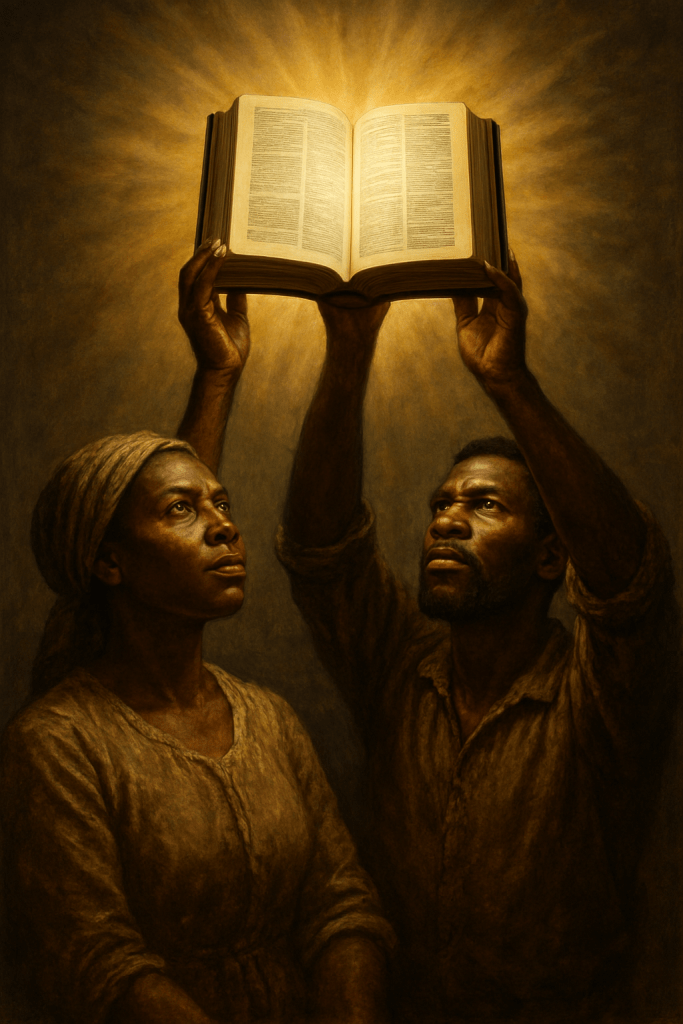
The question of the first Black religion is not merely historical—it is existential, cultural, and theological. For many, religion is tied to identity, ancestry, trauma, and liberation. The dilemma emerges when history asserts one origin, scripture hints another, and lived experience narrates yet another.
Long before colonization, African spirituality flourished in elaborate cosmologies. These systems honored divine hierarchy, ancestral intercession, sacred symbols, covenantal obedience, and moral law. In parallel, biblical scripture references lands populated by Cushites, Egyptians, Ethiopians, and early civilizations where Black peoples interfaced with God’s unfolding plan (Gen. 10:6).
The lineage of Ham—particularly through Cush, Mizraim, and Canaan—places Africa at the dawn of human migration, culture, and worship. Though often misrepresented due to later interpretations, scripture never describes Ham as cursed in skin, but in lineage outcome concerning Canaan only (Gen. 9:25).
The Bible clearly presents Cush as a progenitor of nations in Africa. The Hebrew term Cush historically corresponds to regions of Northeast Africa, modern Sudan, Ethiopia, Eritrea, and the Nile Valley. These were lands where worship, civilization, and monarchal structures first developed.
African spirituality centered upon the belief in a supreme creator long before Western intrusions. This mirrors biblical revelation that God made Himself known to early nations, even outside later Israelite identity formation. Scripture affirms that all nations descend from one blood under God’s dominion (Acts 17:26).
Black contact with biblical worship begins even in patriarchal narratives. Moses married a Black Cushite woman, indicating cultural and religious intersections before formalized Judaic religion emerged (Num. 12:1). This disrupts the narrative that Black spiritual identity began only through Western Christianity.
Ethiopia is mentioned dozens of times in scripture, often as a land already acquainted with monarchy, worship, prophecy, and divine awareness. “Princes shall come out of Egypt; Ethiopia shall soon stretch out her hands unto God” (Psa. 68:31). This implies pre-existing spiritual consciousness and later global alignment toward Yahweh.
The dilemma intensifies when analyzing the transatlantic slave trade. Enslaved Africans were forcibly baptized into Christianity—a religion used both to console the oppressed and to justify the oppressor. Yet scripture declares that God sides with the afflicted: “He shall deliver the needy when he crieth; the poor also, and him that hath no helper” (Psa. 72:12).
Colonial Christianity reframed African spirituality as pagan, though much of it was built on a belief in one high God, sacred law, covenant allegiance, and moral accountability. This resembles the biblical world before the codified Torah existed—where God spoke, not systems.
Abraham encountered Melchizedek, a priest outside his nation, already worshipping the most high God (Gen. 14:18). This supports the theological idea that God’s first priesthood and worship were not geographically European.
Egypt, a Black African empire, was the first nation where God demonstrated Himself in national judgment and spiritual distinction. The Exodus confrontations show Yahweh contending with Egypt’s religion, not introducing spirituality to the world for the first time (Exo. 7:5).
God made Himself known in Egypt through plague and judgment: “And the Egyptians shall know that I am the Lord, when I stretch forth mine hand upon Egypt” (Exo. 7:5). This verifies Africa as the stage for one of God’s earliest religious confrontations.
Africa was not spiritually empty—it was spiritually contested. The world’s first recorded civilization, religious systems, libraries, priesthoods, temple economies, astronomy, sacred initiations, and moral codes began on African soil.
The Queen of Sheba—an African monarch—recognized Solomon through divine fascination, wealth exchange, and theological awe (1 Kings 10). This demonstrates that African worship already operated in sacred curiosity toward Yahweh before forced conversions ever existed.
Another scriptural Ethiopian, Ebed-melech, feared God, rescued the prophet Jeremiah, and was divinely delivered for his faithfulness, showing independent African knowledge of Yahweh before Christian imperialism (Jer. 38:7-13; 39:16-18).
Then comes Philip and the Ethiopian eunuch, a royal treasury official already reading the prophet Isaiah before being instructed and baptized (Acts 8:27-38). This passage is central to the argument that Black peoples engaged biblical religion before Western mediation, dismantling the claim that Christianity was Africa’s first encounter with God.
“He was led as a sheep to the slaughter” (Isa. 53:7; Acts 8:32) foreshadows Christ’s redemptive suffering—a passage preserved in Africa’s royal religious archives long before institutional Christianity dominated the continent.
Some assert that the “slave Bible” created a counterfeit Christian origin for Black people. But scripture pre-dates slavery and repeatedly spotlights African worshipers siding with God’s prophets, kings, and divine revelation (Psa. 87:4).
African spirituality practiced sacred law long before Western religion arrived. This reflects biblical truth: “I have put my law in their inward parts, and write it in their hearts” (Jer. 31:33). God embedded spiritual cognition into early peoples before institutions claimed ownership of Him.
Faithful obedience—not geographical religion—is the foundation of true worship. Jesus confirms this principle: “They that worship him must worship him in spirit and in truth” (John 4:24). Truth existed before titles like Christianity even did.
The real dilemma is not whether Black religion began in Africa or in the Bible—the crisis is when the world convinced Black people their spirituality came from chains, not the covenant.
God foretold long suffering for His chosen people: “And ye shall be sold unto your enemies… and no man shall buy you” (Deut. 28:68). Many scholars connect this to the transatlantic captivity as a prophetic cycle, showing that biblical identity could explain the Black religious experience more than colonial religion ever did.
Still, the truth remains: scripture shows Black peoples worshiping God, protecting prophets, reading prophecy, engaging the priesthood, serving royal courts, and stretching hands toward Yahweh before Christianity baptized Africa by force.
The dilemma of First Black Religion confronts three realities: Africa birthed the world’s oldest spiritual systems, the Bible records Africa’s earliest interactions with God, and slavery weaponized Christianity into both comfort and confusion.
Black religion did not begin in Europe, in plantations, or in forced baptism. It began wherever God first spoke to Black peoples—and scripture confirms that Africa heard His voice early, often, and sovereignly.
The question now shifts from origins to inheritance. God promised restoration: “And the Lord thy God will turn thy captivity… and have compassion upon thee, and will return and gather thee from all the nations” (Deut. 30:3).
The future of Black religion, identity, and covenant is not found in the hands that rewrote history, but in the God who wrote ancestry, suffering, deliverance, and spiritual consciousness into scripture from the beginning.
References
The Holy Bible, King James Version.
American Bible Society. (1611). KJV.
Discover more from THE BROWN GIRL DILEMMA
Subscribe to get the latest posts sent to your email.
 THE BROWN GIRL DILEMMA