
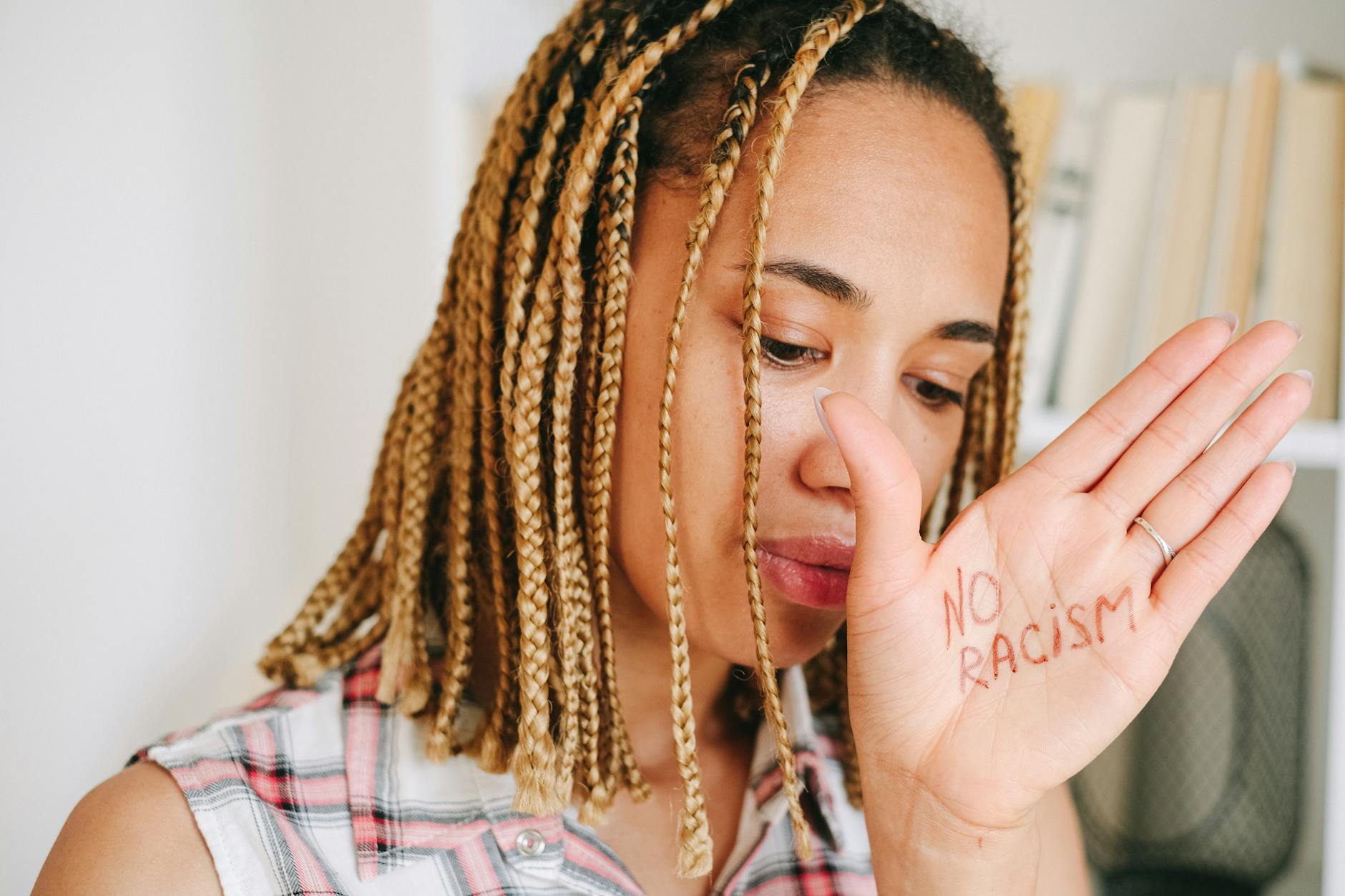
Racism operates in both overt and subtle forms—each reinforcing the other to sustain inequality. Active racism refers to direct, intentional acts of racial discrimination, hostility, or violence. Covert racism, by contrast, functions subtly, often hidden beneath social norms, coded language, or institutional practices that appear neutral on the surface. Both are destructive, yet covert racism can be more insidious because it disguises itself within respectability, making it harder to identify, challenge, or dismantle (Tatum, 2017).
Active racism is the most visible and aggressive form of racial prejudice. It includes explicit actions such as hate crimes, racial slurs, segregationist behavior, and overt discrimination in hiring, housing, and public accommodations. Historically, active racism was embodied in slavery, Jim Crow laws, and colonial conquest—systems that openly justified racial hierarchy through law, violence, and pseudoscience (Feagin, 2013).
The modern forms of active racism continue through white supremacist movements, racially motivated attacks, and hate speech, particularly amplified by digital media. Social platforms have become breeding grounds for racial hatred, often protected under the guise of “free speech.” These expressions remind us that active racism is not a relic but a residue—one that mutates across generations (Daniels, 2018).
Covert racism, often referred to as passive racism or subtle racism, manifests through indirect behaviors, coded language, and implicit biases that maintain racial hierarchies without overt hostility. It thrives in environments that claim to be “colorblind” yet perpetuate inequality through silence, avoidance, or denial (Bonilla-Silva, 2014).
Examples of covert racism include discriminatory hiring practices masked as “cultural fit,” biased media narratives, and educational curricula that center whiteness as the norm. It also includes everyday microaggressions—small, often unintentional comments or behaviors that communicate racial inferiority, such as questioning someone’s intelligence or assuming their success is an exception (Sue et al., 2007).
Active racists are those who consciously engage in racism. They believe in racial superiority and act upon it through deliberate harm or exclusion. Covert racists, however, may see themselves as “not racist” while unconsciously supporting racist structures through complicity or inaction. The silence of the latter allows the violence of the former to persist (DiAngelo, 2018).
In the workplace, active racism might appear as open hostility toward employees of color, whereas covert racism might appear as systematic underpromotion, exclusion from networks, or the tokenization of minority staff to showcase “diversity.” Both forms undermine trust, belonging, and professional advancement for people of color (Wingfield, 2019).
In education, active racism historically took the form of segregation and exclusion, while covert racism persists through biased testing, Eurocentric curricula, and lower expectations for Black and brown students. These hidden practices sustain inequities under the appearance of meritocracy (Ladson-Billings, 2006).
Media representation also reflects both forms. Active racism can appear in explicitly racist caricatures or storylines that demonize people of color. Covert racism, however, operates through underrepresentation, stereotypical casting, or framing white experiences as universal (hooks, 1992).
Religious institutions have often participated in both active and covert racism. Historically, theology was used to justify slavery and colonialism. Today, covert racism continues when churches remain silent on racial injustice or treat racial reconciliation as symbolic rather than systemic (Cone, 1984).
Active racism thrives on visible hostility, while covert racism thrives on the illusion of neutrality. The latter often cloaks itself in politeness, professional language, or institutional bureaucracy—making it difficult to call out without social backlash. Its quietness gives it longevity (Ahmed, 2012).
Covert racism also includes implicit bias, the unconscious associations individuals hold about race. Research shows that these biases affect how people evaluate competence, trustworthiness, or threat based on skin color—even among those who consciously reject racism (Greenwald & Krieger, 2006).
Another form of covert racism is colorblind ideology, which denies the relevance of race altogether. While it may seem egalitarian, colorblindness ignores the historical and structural realities that produce racial disparities. By refusing to see race, this ideology refuses to see racism (Bonilla-Silva, 2014).
The criminal justice system reflects both active and covert racism. Active racism is evident in racial profiling and police brutality. Covert racism is embedded in sentencing disparities, cash bail systems, and juror selection—all mechanisms that disproportionately affect people of color under a façade of neutrality (Alexander, 2010).
Healthcare also reveals this duality. Active racism once appeared in medical experimentation on enslaved Africans, such as the procedures performed by J. Marion Sims. Today, covert racism persists through the dismissal of Black patients’ pain, lack of representation in medical research, and inequitable access to treatment (Washington, 2006).
In housing and urban development, active racism took the form of redlining and racial covenants that excluded Black families from homeownership. Covert racism continues through zoning laws, lending practices, and gentrification that displace long-standing communities of color while masking discrimination behind economics (Rothstein, 2017).
Covert racism is often more dangerous than active racism because it can be denied. Those who benefit from it rarely feel responsible, allowing inequality to persist without confrontation. It hides behind policies, euphemisms, and “neutral” systems that reproduce racial stratification (Bonilla-Silva, 2014).
To combat racism effectively, both forms must be recognized and confronted. Focusing solely on overt acts ignores the deeper social structures that perpetuate racial inequality. Anti-racism demands not only condemning active hate but dismantling the silent systems that enable it (Kendi, 2019).
True racial healing begins with acknowledgment. Naming covert racism disrupts its invisibility; exposing active racism confronts its violence. Both require courage, accountability, and education. Only when both are addressed can equity move from theory to transformation.
In the end, active and covert racism function as two sides of the same coin—one loud and unapologetic, the other polite and persistent. The visible wound may scar, but the invisible one festers. Dismantling both requires a collective willingness to see, to speak, and to act against injustice in all its disguises.
References
Ahmed, S. (2012). On being included: Racism and diversity in institutional life. Duke University Press.
Alexander, M. (2010). The new Jim Crow: Mass incarceration in the age of colorblindness. The New Press.
Bonilla-Silva, E. (2014). Racism without racists: Color-blind racism and the persistence of racial inequality in America. Rowman & Littlefield.
Cone, J. H. (1984). For my people: Black theology and the Black church. Orbis Books.
Daniels, J. (2018). Cyber racism: White supremacy online and the new attack on civil rights. Rowman & Littlefield.
DiAngelo, R. (2018). White fragility: Why it’s so hard for White people to talk about racism. Beacon Press.
Feagin, J. R. (2013). Systemic racism: A theory of oppression. Routledge.
Greenwald, A. G., & Krieger, L. H. (2006). Implicit bias: Scientific foundations. California Law Review, 94(4), 945–967.
hooks, b. (1992). Black looks: Race and representation. South End Press.
Kendi, I. X. (2019). How to be an antiracist. One World.
Ladson-Billings, G. (2006). From the achievement gap to the education debt. Educational Researcher, 35(7), 3–12.
Rothstein, R. (2017). The color of law: A forgotten history of how our government segregated America. Liveright Publishing.
Sue, D. W., Capodilupo, C. M., & Holder, A. M. B. (2007). Racial microaggressions in everyday life. American Psychologist, 62(4), 271–286.
Tatum, B. D. (2017). Why are all the Black kids sitting together in the cafeteria? Basic Books.
Washington, H. A. (2006). Medical apartheid: The dark history of medical experimentation on Black Americans from colonial times to the present. Doubleday.
Wingfield, A. H. (2019). Flatlining: Race, work, and health care in the new economy. University of California Press.
Discover more from THE BROWN GIRL DILEMMA
Subscribe to get the latest posts sent to your email.
 THE BROWN GIRL DILEMMA