
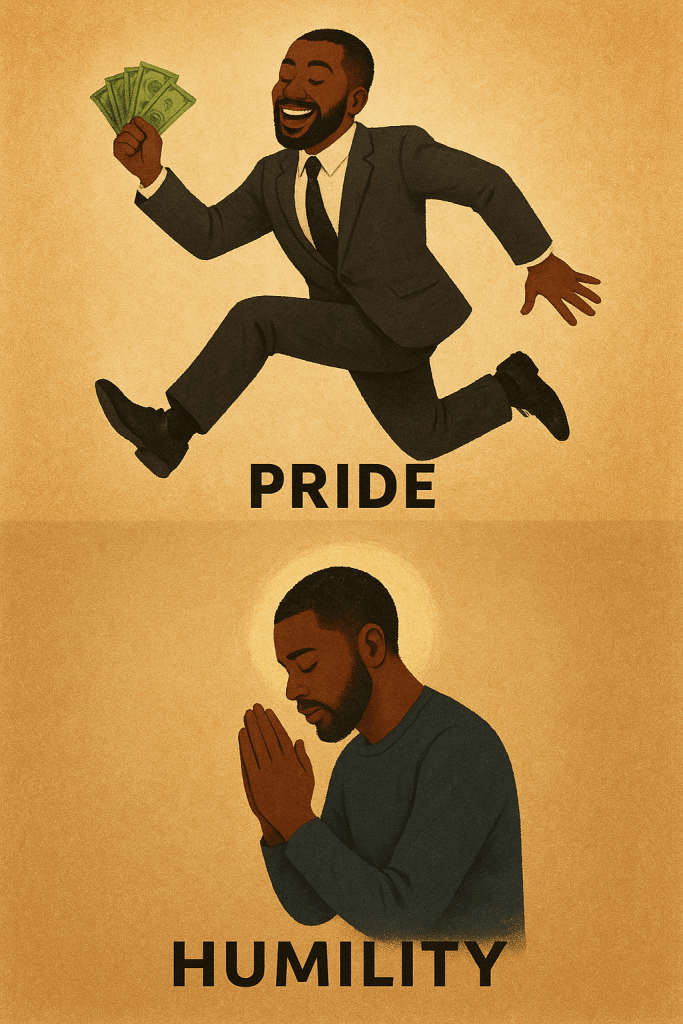
Pride and humility represent two opposing forces in the spiritual and moral life of every believer. Pride exalts the self, while humility exalts God. The Bible often contrasts these traits to show how one leads to destruction and the other to divine favor. Pride focuses inward, seeking recognition and control, whereas humility focuses upward, seeking submission to the Most High. Understanding the nature of both helps us discern the path that aligns with righteousness and truth.
Pride, at its core, is self-exaltation. It is the elevation of one’s own will, wisdom, or worth above others—and even above God. Scripture describes pride as the root of rebellion, the seed of disobedience, and the foundation of sin. In Proverbs 16:18 (KJV), it warns, “Pride goeth before destruction, and an haughty spirit before a fall.” This verse reveals that pride precedes downfall, for it blinds a person to correction, truth, and repentance.
The origin of pride can be traced back to Satan himself. Once known as Lucifer, he was an angel of light who allowed pride to consume his heart. In Isaiah 14:12–15 (KJV), it says, “How art thou fallen from heaven, O Lucifer, son of the morning!… For thou hast said in thine heart, I will ascend into heaven, I will exalt my throne above the stars of God.” His desire to be like the Most High led to his downfall. Pride transformed a glorious being into the adversary of all righteousness.
Lucifer’s pride was rooted in self-glorification. He desired worship, power, and independence from God’s authority. This spirit of pride did not end with his fall; it entered humanity in the Garden of Eden. When Satan tempted Eve, he promised that eating the forbidden fruit would make her “as gods, knowing good and evil” (Genesis 3:5, KJV). That temptation was pride disguised as enlightenment—the same rebellion that led to Lucifer’s expulsion from heaven.
The danger of pride lies in its subtlety. It often disguises itself as confidence, ambition, or success, yet its core motive is self-centeredness. Pride closes the heart to instruction and correction. It blinds the eyes of the proud so that they no longer see their faults or need for God. In Obadiah 1:3 (KJV), it declares, “The pride of thine heart hath deceived thee.” Pride deceives the soul, leading it into false security and spiritual blindness.
Pride not only affects individuals but also nations and societies. Babylon, Egypt, and even Israel fell because of pride. In Daniel 4, King Nebuchadnezzar learned this lesson when his arrogance caused God to humble him. After losing his kingdom and living among beasts, he finally acknowledged, “Those that walk in pride he is able to abase” (Daniel 4:37, KJV). Pride brings humiliation, but humility brings restoration.
Ten Attributes of Pride
- Arrogance – A sense of superiority that elevates oneself above others. (Proverbs 8:13) “Pride, and arrogancy, and the evil way, and the froward mouth, do I hate.”
- Self-Reliance – Depending on one’s own wisdom and strength instead of trusting in God. (Proverbs 3:5–6) “Lean not unto thine own understanding.”
- Boastfulness – Constantly speaking of one’s achievements or abilities to gain praise. (Proverbs 27:2) “Let another man praise thee, and not thine own mouth.”
- Unteachableness – Refusing correction, counsel, or instruction from others. (Proverbs 13:10) “Only by pride cometh contention: but with the well advised is wisdom.”
- Judgmental Spirit – Looking down on others and magnifying their flaws while excusing one’s own. (Luke 18:11–12) The Pharisee who exalted himself in prayer.
- Desire for Recognition – Craving validation, admiration, and honor from men instead of from God. (Matthew 6:1–2) “Take heed that ye do not your alms before men, to be seen of them.”
- Rebellion – Resisting authority and divine instruction; refusing to submit to God’s will. (1 Samuel 15:23) “Rebellion is as the sin of witchcraft, and stubbornness is as iniquity and idolatry.”
- Envy and Competition – Comparing oneself to others and striving to outshine them. (Galatians 5:26) “Let us not be desirous of vain glory, provoking one another, envying one another.”
- Hypocrisy – Pretending righteousness while harboring pride in the heart. (Matthew 23:27) “Ye are like unto whited sepulchres… within full of hypocrisy and iniquity.”
- Ingratitude – Failing to acknowledge God as the source of all blessings. (Deuteronomy 8:14, 17) “Then thine heart be lifted up… and thou say in thine heart, My power and the might of mine hand hath gotten me this wealth.”
The attributes of prideful people are easy to recognize in Scripture. They are boastful, arrogant, unteachable, and often quick to judge others. They rely on their own understanding rather than God’s wisdom. Proverbs 21:4 (KJV) describes pride as a sin of the heart: “An high look, and a proud heart… is sin.” The proud speak more than they listen, seek praise rather than peace, and strive to be served rather than to serve.
In contrast, humility is the posture of submission and reverence before God. It is not weakness but strength under control. A humble person recognizes their dependence on the Creator and acknowledges that all wisdom, success, and life flow from Him. James 4:6 (KJV) reminds believers, “God resisteth the proud, but giveth grace unto the humble.” Grace is the reward of humility—it opens doors that pride closes.
The Bible gives us many examples of humble men and women who found favor with God. Moses is called “very meek, above all the men which were upon the face of the earth” (Numbers 12:3, KJV). Despite leading an entire nation, Moses never exalted himself; he depended on God for guidance. His humility allowed him to be used mightily by the Most High.
King David also exemplified humility when confronted by the prophet Nathan after his sin with Bathsheba. Rather than defending himself, David repented deeply, saying, “Create in me a clean heart, O God” (Psalm 51:10, KJV). His willingness to confess and seek forgiveness restored his relationship with the Lord. Humility brought redemption where pride would have brought destruction.
The ultimate model of humility is Yahusha HaMashiach (Jesus Christ). Philippians 2:5–8 (KJV) declares that though He was in the form of God, He “made himself of no reputation, and took upon him the form of a servant.” His humility led Him to the cross, where He laid down His life for others. True humility, therefore, is sacrificial—it seeks to serve, not to be served.
Humility produces a spirit of gratitude. The humble recognize that all blessings come from God and not from personal merit. They walk in thankfulness, not entitlement. This attitude keeps them grounded even in seasons of success. 1 Peter 5:6 (KJV) instructs, “Humble yourselves therefore under the mighty hand of God, that he may exalt you in due time.” Exaltation comes through surrender, not self-promotion.
The danger of pride is not only moral but spiritual. Pride distances a person from God’s presence. It was pride that caused Saul to lose his kingdom, while humility crowned David. Pride whispers, “I don’t need God,” but humility cries, “Without You, I can do nothing.” This distinction determines the outcome of one’s destiny.
Those who possess humility often demonstrate patience, gentleness, and compassion. They listen more than they speak and give more than they receive. Their speech is seasoned with grace, and their actions reflect love. Colossians 3:12 (KJV) encourages believers to “put on therefore… humbleness of mind, meekness, longsuffering.” These attributes reflect the very heart of the Messiah.
Humility also invites wisdom. Proverbs 11:2 (KJV) states, “When pride cometh, then cometh shame: but with the lowly is wisdom.” Pride closes the ears to instruction, but humility opens the heart to learning. Those who are humble are teachable, willing to grow, and quick to correct their wrongs. This posture of openness allows God to shape their character.
Pride, on the other hand, isolates. It separates people from community and from truth. A proud heart cannot fellowship because it always seeks to dominate. Pride makes one defensive and resentful of correction. In contrast, humility builds relationships because it values peace over ego. The humble understand that strength lies in unity and love.
Spiritually, humility is essential for prayer and repentance. The Most High does not hear the prayers of the proud-hearted, for they approach Him without reverence. 2 Chronicles 7:14 (KJV) declares, “If my people, which are called by my name, shall humble themselves, and pray… then will I hear from heaven.” Humility opens the door to divine mercy and restoration.
Ten Attributes of Humility
- Meekness – A gentle and patient spirit that endures without anger or pride. (Matthew 5:5) “Blessed are the meek: for they shall inherit the earth.”
- Teachability – A willingness to receive correction, wisdom, and instruction. (Proverbs 9:9) “Give instruction to a wise man, and he will be yet wiser.”
- Gratitude – Recognizing that every blessing and ability comes from God. (1 Thessalonians 5:18) “In every thing give thanks: for this is the will of God in Christ Jesus concerning you.”
- Dependence on God – Trusting in the Lord rather than in one’s own strength or understanding. (Proverbs 3:5–6) “Trust in the Lord with all thine heart… and he shall direct thy paths.”
- Repentance – A heart that quickly acknowledges sin and seeks forgiveness. (Psalm 51:17) “A broken and a contrite heart, O God, thou wilt not despise.”
- Servanthood – A desire to serve others rather than to be served. (Mark 10:44–45) “Whosoever of you will be the chiefest, shall be servant of all.”
- Obedience – Submitting to God’s will and commandments without resistance. (Philippians 2:8) “He humbled himself, and became obedient unto death, even the death of the cross.”
- Patience – Enduring trials, offenses, and delays without murmuring or resentment. (Ephesians 4:2) “With all lowliness and meekness, with longsuffering, forbearing one another in love.”
- Compassion – Showing mercy and understanding toward others, even those who do wrong. (Colossians 3:12) “Put on therefore… bowels of mercies, kindness, humbleness of mind, meekness, longsuffering.”
- God-Centeredness – Living to glorify God rather than self. (James 4:10) “Humble yourselves in the sight of the Lord, and he shall lift you up.”
The fruit of humility is peace. A humble spirit does not strive or compare but rests in God’s will. Pride produces envy and contention, while humility produces contentment. The humble can rejoice in others’ success because they know their worth comes from God, not human approval. This mindset frees them from jealousy and self-ambition.
In the end, pride and humility determine our spiritual trajectory. Pride leads to a fall, but humility leads to exaltation. The proud seek glory for themselves; the humble give glory to God. Micah 6:8 (KJV) summarizes this truth beautifully: “What doth the Lord require of thee, but to do justly, and to love mercy, and to walk humbly with thy God?”
Therefore, believers are called to reject pride in all its forms and to cultivate humility daily. Pride is the spirit of Satan—rebellion and self-worship—while humility is the spirit of Christ—obedience and love. Choosing humility is choosing life, for it invites grace, wisdom, and divine favor. The humble will be lifted up in due time, for God honors those who walk low before Him.
References (KJV Bible)
- Proverbs 16:18
- Isaiah 14:12–15
- Genesis 3:5
- Obadiah 1:3
- Daniel 4:37
- Proverbs 21:4
- James 4:6
- Numbers 12:3
- Psalm 51:10
- Philippians 2:5–8
- 1 Peter 5:6
- Proverbs 11:2
- Colossians 3:12
- 2 Chronicles 7:14
- Micah 6:8
Discover more from THE BROWN GIRL DILEMMA
Subscribe to get the latest posts sent to your email.
 THE BROWN GIRL DILEMMA