
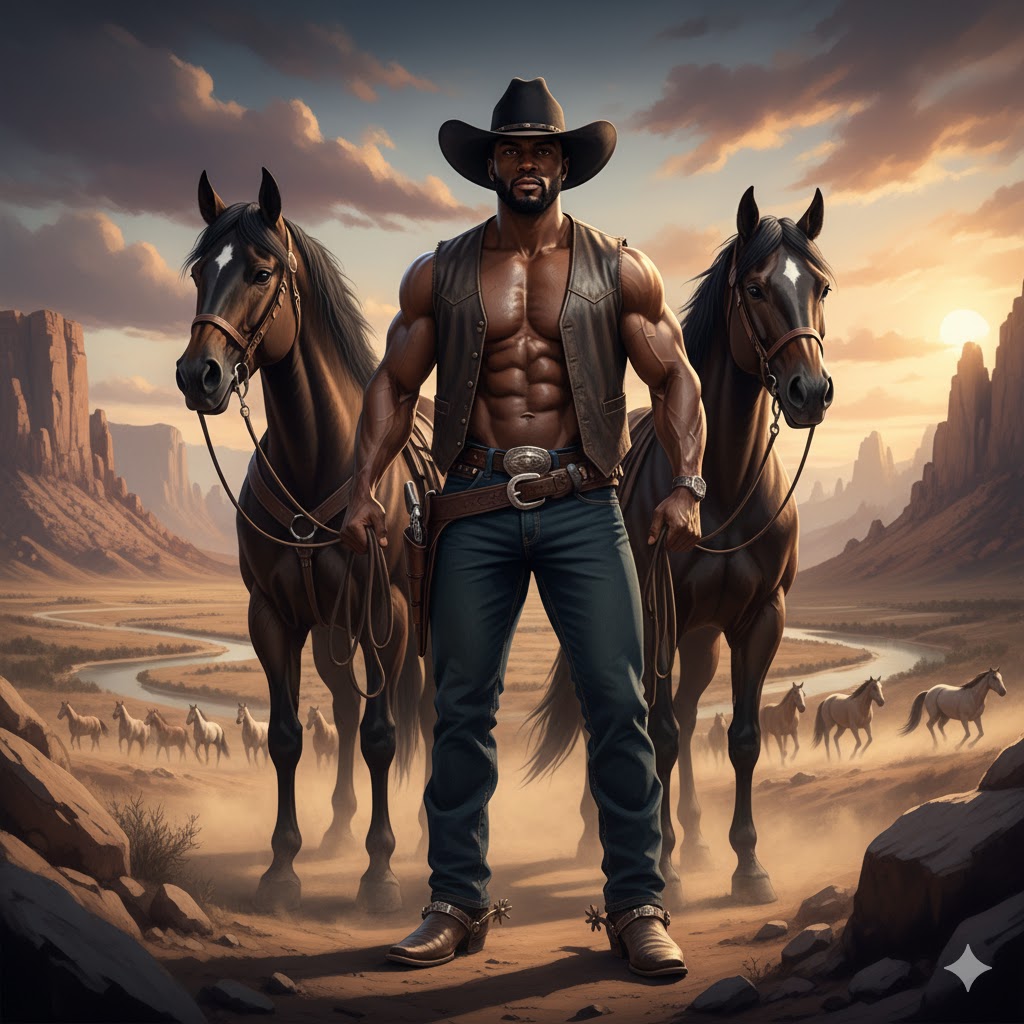
For centuries, the Black male body has existed at the crossroads of reverence and exploitation. In ancient African civilizations, the Black man was often crowned as divine—embodying leadership, spiritual authority, physical excellence, and intellectual brilliance. Yet through the transatlantic slave trade and subsequent Western sociopolitical systems, this image was distorted into a commodified form—an object to be controlled, feared, marketed, consumed, and surveilled. The Black male aesthetic, once a symbol of sovereignty, was stripped and weaponized for profit, entertainment, and domination.
The transformation from king to commodity began during slavery, where enslaved Black men were appraised for strength, endurance, and reproductive potential rather than humanity or intellect. Plantation records reveal how enslavers measured, bred, and traded Black men as physical capital (Gomez, 1998). This legacy birthed an enduring paradox: the Black male admired for his athletic body and masculine power, yet simultaneously denied autonomy, dignity, and emotional depth.
In the modern era, this commodification evolved into media, sports, fashion, and entertainment industries that profit from Black male image and labor. Professional athletics serve as a modern plantation metaphor, where predominantly white ownership capitalizes on Black physicality while often suppressing political voice and cultural authenticity (Rhoden, 2006). Rap and film industries selectively magnify hyper-masculinity, aggression, and sexual prowess, reinforcing stereotypes rooted in slavery’s breeding logic. Even luxury fashion and modeling spaces now celebrate melanin, strong facial structure, and athletic builds—traits historically mocked or criminalized—yet Black men still navigate barriers to economic ownership and narrative control in these industries.
Paradoxically, while the Black male body is commodified, the Black male spirit remains heavily policed. Society praises the physique but fears the presence; celebrates the style but rejects the voice; desires the look but not the lived experience. This duality contributes to mental strain, identity conflict, and hyper-visibility intertwined with invisibility. Black men must constantly negotiate spaces where their beauty is praised but their humanity is questioned.
Yet reclaiming sovereignty is underway. Increasingly, Black men reject objectification and redefine beauty beyond physicality—embracing intellectual excellence, emotional intelligence, spiritual grounding, and entrepreneurial power. Cultural movements uplift the dignified, introspective, protective, visionary roles Black men play as fathers, scholars, artists, healers, and leaders. From ancient Kemet to Nubia, from Timbuktu to Harlem Renaissance salons, the Black man’s beauty has always been multidimensional—rooted not in body alone, but in mind, spirit, and legacy.
The journey forward requires dismantling systems that consume Black masculinity for profit while denying agency and humanity. It calls for honoring the king before the commodity, the purpose before the performance, the soul before the spectacle. The Black male is not merely to be viewed—he is to be valued, respected, and restored to his rightful place in the narrative of global civilization.
References
Gomez, M. A. (1998). Exchanging our country marks: The transformation of African identities in the colonial and antebellum South. University of North Carolina Press.
Rhoden, W. C. (2006). Forty million dollar slaves: The rise, fall, and redemption of the Black athlete. Crown Publishing.
Discover more from THE BROWN GIRL DILEMMA
Subscribe to get the latest posts sent to your email.
 THE BROWN GIRL DILEMMA