
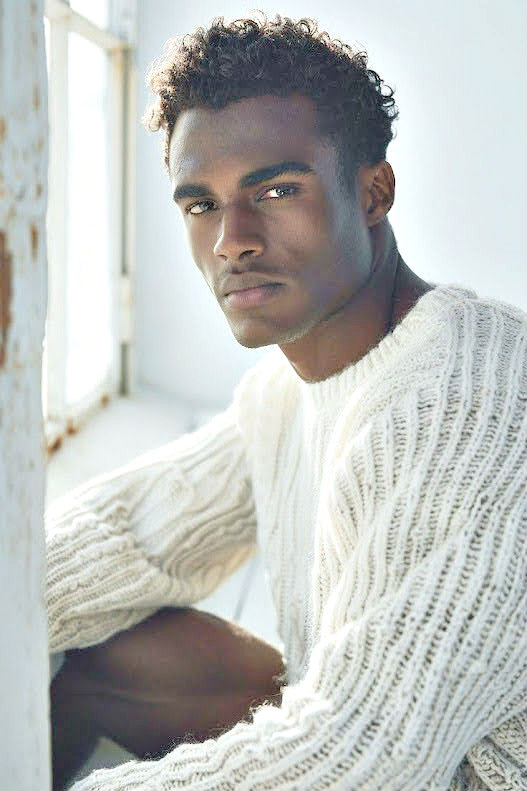
The portrayal of Black men in media has evolved significantly over the past century, moving from marginalization and tokenism to a recognition of multifaceted beauty and sovereignty. Historically, Black male bodies and faces were often framed through stereotypes—hypermasculine, criminal, or subservient—reflecting societal prejudices rather than authentic representation. These depictions perpetuated colorism, limited opportunities, and constrained cultural narratives.
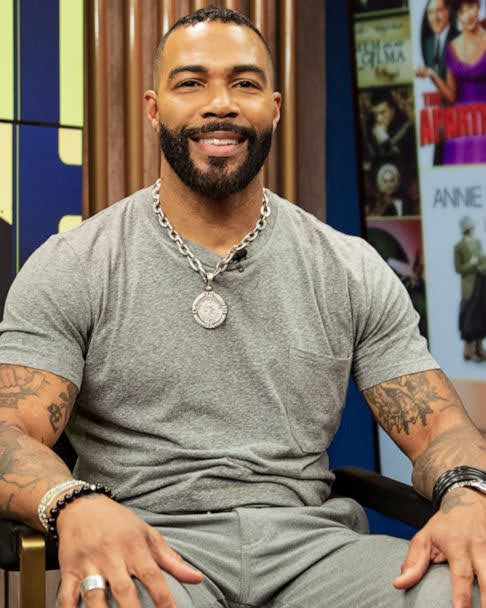
Actor Omari Hardwick (above) represents the affirmation of Black male sovereignty and diversity in beauty, showing that talent, style, and charisma can redefine mainstream perceptions of attractiveness. He exemplifies the visibility of lighter skin tones in an industry historically favoring lighter-complexioned men. His inclusion emphasizes that Black male beauty is multidimensional, encompassing physical attractiveness, style, charisma, and cultural presence, not just Eurocentric ideals.By highlighting Hardwick alongside other figures like Idris Elba and Shemar Moore, the essay underscores that modern Black men in media are recognized for elegance, desirability, and complex masculinity, rather than being confined to stereotypes.
In early Hollywood, Black men were largely confined to supporting roles or caricatures. Figures such as Stepin Fetchit embodied the submissive, comical trope, reinforcing racial hierarchies. Meanwhile, the broader public rarely saw Black male actors as romantic leads or symbols of aesthetic excellence. This tokenistic inclusion maintained visibility but denied depth and agency.
The civil rights era catalyzed change, with the media beginning to experiment with more complex portrayals. Actors like Sidney Poitier disrupted stereotypes by embodying dignity, intelligence, and emotional nuance. Poitier’s presence on screen challenged audiences to reimagine Black masculinity beyond previously imposed constraints.
Television also played a transformative role. Shows like The Cosby Show introduced Black men as family-oriented, professional, and attractive, highlighting intelligence and charisma alongside physical appeal. These portrayals marked a gradual shift from tokenism toward broader representation.
Yet, media’s obsession with Eurocentric beauty standards continued to influence perceptions of Black male attractiveness. Lighter skin tones and facial features resembling Western ideals were often celebrated, leaving darker-skinned men and features such as broad noses or full lips marginalized in mainstream beauty discourse. Colorism intersected with media representation to restrict the spectrum of Black male beauty.
The 1980s and 1990s introduced a new era of Black male icons who combined talent with compelling aesthetics. Figures like Denzel Washington, Will Smith, and Laurence Fishburne embodied power, charisma, and physical appeal, demonstrating that Black male beauty could coexist with authority and cultural respectability. Their images began to counteract negative tropes while expanding aspirational representations.
Fashion and music further amplified the visibility of Black male beauty. Hip-hop culture, R&B, and modeling brought Black men into global spotlight, emphasizing style, grooming, and physique. Media coverage increasingly showcased not only professional success but also aesthetic excellence as part of a holistic public persona.
Digital media has accelerated this transformation. Social platforms allow Black men to curate their image, exercise creative autonomy, and reach global audiences without gatekeeping by traditional Hollywood institutions. The rise of influencers, athletes, and entertainers has democratized visibility and diversified representations of beauty.
Contemporary Black male actors such as Michael B. Jordan, John Boyega, Regé-Jean Page, and Yahya Abdul-Mateen II exemplify sovereign representation. They are celebrated not only for talent but for embodying multidimensional attractiveness—combining physicality, style, intellect, and emotional depth. Their visibility reflects a shift from objectified or tokenized roles toward empowered self-definition.
Media representation also intersects with social consciousness. Campaigns featuring Black men in advertising, luxury fashion, and cultural storytelling challenge lingering stereotypes and celebrate a spectrum of masculinity. This shift fosters both industry accountability and audience awareness, redefining what Black male beauty signifies in contemporary culture.
Film and television narratives increasingly explore vulnerability, romance, and intellectual depth, further humanizing Black men and challenging historical hypermasculine caricatures. Audiences are exposed to characters whose attractiveness is as much about personality, integrity, and emotional intelligence as it is about physical features.
Colorism within the Black community also continues to influence perception. Media now faces the responsibility to showcase diverse skin tones and facial features, ensuring that representation does not perpetuate internalized biases. Actors like Idris Elba, Shemar Moore, and Omari Hardwick highlight the beauty of dark-skinned men in mainstream media.
Global cinema has contributed to redefining Black male beauty. Nollywood and Afrocentric storytelling celebrate Black men in roles that blend cultural authenticity with universal appeal, expanding the narrative beyond Western-centric standards. Representation now includes historical figures, romantic leads, and heroes, all framed through indigenous aesthetics and values.
The fashion industry has embraced Black male models as symbols of elegance and refinement. Campaigns by brands such as Gucci, Louis Vuitton, and Tom Ford feature Black men prominently, not merely as diversifying elements but as central figures embodying luxury, style, and desirability.
Music videos, particularly in hip-hop and R&B, have cultivated visibility for Black male style, physique, and grooming. Artists craft images that emphasize individuality and sovereignty, challenging prior notions that Black male beauty must adhere to Eurocentric ideals.
Social commentary and academic discourse have also emerged, analyzing Black male beauty in media and its cultural impact. Scholars emphasize the importance of self-representation, challenging historical narratives of objectification, and highlighting how visibility influences societal perceptions of masculinity and worth.
The evolution from tokenism to sovereignty reflects not only industry changes but broader societal shifts. As audiences demand authenticity, diversity, and multidimensionality, the media have responded by celebrating Black men as complex, desirable, and culturally significant figures.
Current trends suggest that Black male beauty in media will continue to expand, integrating fashion, performance, activism, and digital presence. Sovereign representation allows Black men to define their own aesthetic narrative, blending traditional ideals with innovative expressions of identity.
In conclusion, the evolution of Black male beauty is a journey from marginalization to empowerment. From tokenized early roles to contemporary portrayals that celebrate diversity, intellect, style, and emotional depth, Black men in media have claimed agency over their image. Sovereign representation affirms their value, reshapes cultural standards, and inspires future generations.
References
- Coleman, R. (2013). Say it loud: African Americans, media, and the politics of representation. Routledge.
- hooks, b. (2004). We real cool: Black men and masculinity. Routledge.
- Smith-Shomade, B. E. (2002). Shaded lives: African-American women and television. Rutgers University Press.
- Nama, A. (2015). Race on the QT: Blackness and the films of Quentin Tarantino. University of Texas Press.
- Warner, K. J. (2015). The cultural politics of colorblind TV casting. Routledge.
Discover more from THE BROWN GIRL DILEMMA
Subscribe to get the latest posts sent to your email.
 THE BROWN GIRL DILEMMA