
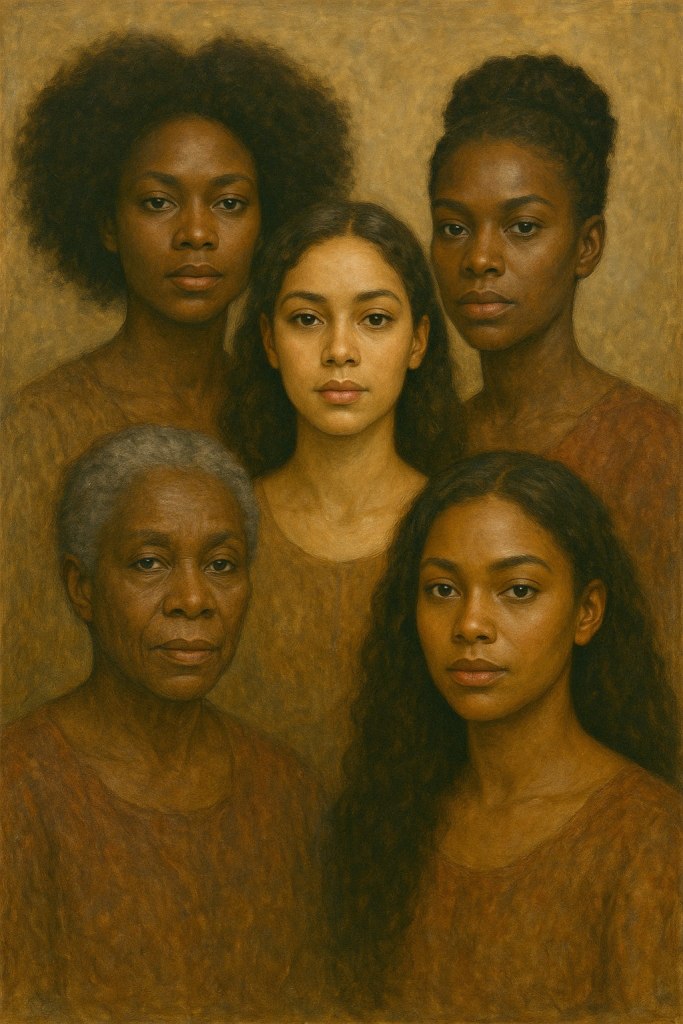
Throughout history, beauty has been a reflection of power, culture, and identity. Within the African diaspora, the concept of Black beauty has been shaped and reshaped by colonialism, enslavement, media influence, and self-determination. The hierarchies of Black beauty—those unwritten but deeply felt rules about who is seen as beautiful and who is not—continue to influence how Black people perceive themselves and each other.
During slavery, Eurocentric beauty ideals were imposed on African people through forced assimilation and comparison. The features of African women and men—broad noses, full lips, rich brown skin, and tightly coiled hair—were mocked and demonized by white society. Whiteness became the standard of purity, civility, and desirability, while Blackness was equated with inferiority. This created a psychological wound that still lingers across generations.
Enslaved women who were lighter-skinned or bore more “European” features were often treated differently by slaveholders. They were more likely to work in the house, to be dressed better, or to be exploited sexually under the guise of preference. These patterns of color-based privilege established early hierarchies that divided enslaved communities and birthed the seeds of colorism (White, 1999).
After emancipation, those same hierarchies persisted within the Black community. Lighter skin, looser hair textures, and narrower features were celebrated as signs of refinement and social mobility. Many institutions—such as schools, churches, and fraternities—adopted discriminatory practices like the “brown paper bag test,” where one’s acceptance depended on being lighter than a brown bag. Beauty became political; it was no longer just personal.
As the 20th century progressed, mass media amplified Eurocentric standards. Hollywood, fashion, and advertising celebrated light-skinned actresses and models while marginalizing darker-skinned women. Magazines like Ebony and Jet often centered on fairer complexions, perpetuating internalized bias. These images subtly taught Black people that to be closer to whiteness was to be closer to beauty.
The emergence of the Civil Rights and Black Power movements in the 1960s challenged these ideologies. The slogan “Black is Beautiful” became a revolutionary cry against centuries of self-rejection. Afros, dark skin, and African attire became symbols of resistance and pride. This era reclaimed Black aesthetics as divine and powerful, reflecting the truth of Psalm 139:14: “I will praise thee; for I am fearfully and wonderfully made” (KJV).
However, even within this movement, hierarchies persisted. Light-skinned Black women often continued to dominate media and modeling, while darker women were celebrated more for their strength or resilience than for their beauty. This subtle bias revealed how deeply colonial beauty norms had been internalized.
For Black men, these hierarchies influenced attraction and desirability. Many internalized the belief that lighter-skinned women were more refined or feminine, while darker women were strong but less delicate. This mindset perpetuated generational harm and fractured romantic relationships within the Black community. Proverbs 31:30 reminds, “Favour is deceitful, and beauty is vain: but a woman that feareth the Lord, she shall be praised.”
In the modern era, social media has both challenged and reinforced these hierarchies. Platforms like Instagram and TikTok have given rise to diverse representations of beauty, yet filters and algorithms often favor lighter skin tones. The digital age has democratized visibility but not erased bias. Beauty, once judged by proximity to whiteness, is now measured by digital exposure.
Hair remains a defining element of Black beauty. From natural kinks and coils to braids, locs, and wigs, Black hair is a cultural language of resistance and creativity. Yet, the “good hair” myth—rooted in slavery—still shapes self-esteem. The CROWN Act (2020) seeks to protect against discrimination based on hair texture, a sign that the fight for beauty equality continues in policy as well as perception.
Colorism also affects the modeling and entertainment industries. Despite the progress symbolized by figures like Lupita Nyong’o and Viola Davis, lighter-skinned actresses still receive disproportionate attention and roles. The industry’s selective inclusivity sends a mixed message: Black beauty is accepted only when it aligns with global marketability.
These hierarchies have deep psychological consequences. Many darker-skinned Black women internalize feelings of invisibility, leading to anxiety, low self-esteem, and social withdrawal. Conversely, lighter-skinned individuals may feel pressure to justify their Blackness or face resentment from peers. This emotional tension reflects the distorted mirror that colonialism left behind.
Biblically, the elevation of one shade over another contradicts divine creation. Song of Solomon 1:5 declares, “I am black, but comely, O ye daughters of Jerusalem.” The verse reclaims darkness not as deficiency but as beauty and strength. God’s creation exists in gradients of glory; the sun-kissed skin of Africa is a reflection of divine artistry.
Education and cultural reclamation have become powerful tools for dismantling these hierarchies. Movements celebrating melanin-rich skin, natural hair, and Afrocentric aesthetics have redefined beauty from within. When Black youth see models, influencers, and scholars who look like them, they begin to internalize self-love rather than self-doubt.
Still, the struggle continues. Even within the Black community, shade-based humor and preferences persist in dating, entertainment, and family dynamics. These microaggressions perpetuate division under the guise of personal taste. Healing requires accountability and unlearning centuries of indoctrination.
To truly dismantle the hierarchies of Black beauty, society must recognize that beauty is not a ladder but a spectrum. The diversity of Black skin tones, facial features, and textures testifies to the richness of African ancestry. Each shade tells a story of survival, migration, and divine design.
Beauty standards, once defined by oppression, are now being redefined through liberation. Modern movements like “Dark Skin Appreciation” and “Melanin Magic” remind the world that Black beauty is not monolithic—it is infinite. It encompasses every hue, from ebony to honey, each deserving of reverence and celebration.
In reclaiming these narratives, Black people restore what was stolen: the right to see themselves as beautiful in their natural form. Isaiah 61:3 speaks of God giving “beauty for ashes.” The ashes of colonialism, slavery, and colorism can give rise to new beauty when identity is rooted in truth.
Ultimately, the hierarchies of Black beauty dissolve when the gaze shifts from societal validation to divine affirmation. When Black men and women recognize themselves as reflections of God’s image, beauty ceases to be hierarchical—it becomes holy. The journey to self-acceptance is, therefore, both political and spiritual, an act of resistance and worship.
References
Holy Bible, King James Version. (1611).
White, D. G. (1999). Ar’n’t I a Woman?: Female Slaves in the Plantation South. W.W. Norton & Company.
Russell, K., Wilson, M., & Hall, R. (2013). The Color Complex (Revised): The Politics of Skin Color Among African Americans. Anchor Books.
Craig, M. L. (2002). Ain’t I a Beauty Queen?: Black Women, Beauty, and the Politics of Race. Oxford University Press.
Hunter, M. (2007). The persistent problem of colorism: Skin tone, status, and inequality. Sociology Compass, 1(1), 237–254.
Discover more from THE BROWN GIRL DILEMMA
Subscribe to get the latest posts sent to your email.
 THE BROWN GIRL DILEMMA