
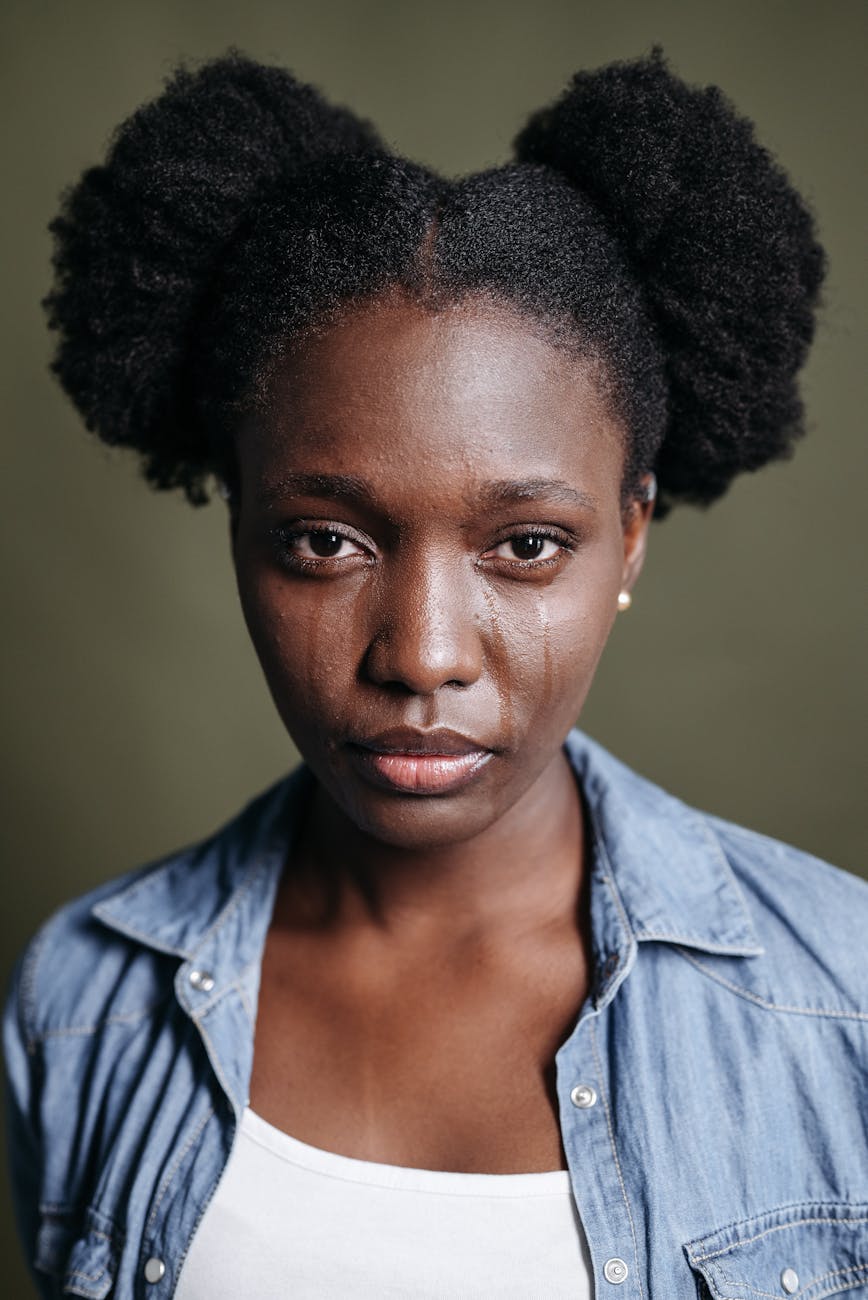
The question “Am I pretty enough?” echoes painfully in the hearts of many brown girls, shaped by centuries of colonialism, colorism, and the politics of beauty. This question, though personal, is deeply historical. It emerges from a social system that has long placed Eurocentric aesthetics above the natural beauty of African-descended women. The dilemma is not that brown girls lack beauty—it is that the world has refused to recognize it.
For generations, the definition of beauty has been filtered through a Eurocentric lens that idealizes fair skin, straight hair, and delicate features. Such imagery, perpetuated through media, advertising, and even religious iconography, has systematically marginalized darker complexions. The brown girl’s dilemma is thus not about self-hate, but about surviving within a framework that weaponizes aesthetics as a form of psychological control.
Colorism, a byproduct of slavery and colonial rule, created a hierarchy within the Black community itself, rewarding proximity to whiteness. Lighter skin often granted access to privilege, while darker tones were stigmatized. Scholars such as Hunter (2007) and Russell et al. (1992) have documented how skin tone discrimination persists in education, employment, and romantic relationships. The “brown girl”—situated between light and dark—often experiences a unique form of invisibility, neither exalted nor celebrated.
Psychologically, this produces what researchers term aesthetic trauma—the internalized belief that one’s natural appearance is inferior or undesirable. Brown girls grow up navigating dual consciousness: seeing themselves through their own cultural pride, yet perceiving rejection through society’s biased gaze. W. E. B. Du Bois described this tension as “double consciousness,” a feeling of “two-ness” that fractures identity.
The dilemma extends beyond beauty; it touches self-worth, femininity, and belonging. When darker shades are deemed “too strong” and lighter ones “more beautiful,” brown girls are often caught in an unspoken limbo. Their beauty is acknowledged only when diluted—when softened by makeup, filtered lighting, or proximity to Eurocentric features. Such conditional acceptance reinforces the idea that natural Black aesthetics must be modified to be marketable.
Media representation continues to play a defining role in shaping this bias. Studies by Dixon and Linz (2000) reveal that lighter-skinned Black women are more frequently cast in romantic or leading roles, while darker-skinned actresses are often stereotyped as aggressive or hypersexual. The absence of diverse shades in mainstream beauty campaigns reinforces a singular, exclusionary image of desirability.
The brown girl’s dilemma is further compounded by intra-community pressures. In some social circles, the preference for “light-skinned girls” or “mixed features” becomes normalized, creating internalized color hierarchies. This manifests in subtle forms—compliments like “You’re pretty for a dark girl,” or “You have good hair,” implying that beauty among Black women is exceptional rather than inherent.
Biblically, however, beauty has always been defined by divine design, not social hierarchy. “I will praise thee; for I am fearfully and wonderfully made” (Psalm 139:14, KJV). In this verse, the Creator’s craftsmanship affirms all shades of melanin as sacred. Spiritual truth dismantles the illusion that one hue holds higher value than another. Beauty, in divine law, reflects purpose, not pigment.
Historically, pre-colonial African societies celebrated deep skin tones as symbols of vitality, ancestry, and divinity. Statues, murals, and oral traditions across kingdoms such as Kush, Mali, and Benin exalted dark, radiant complexions. The notion that beauty must be fair-skinned is a colonial import, not an indigenous truth. When the brown girl reclaims this ancestral knowledge, she begins to heal the historical wounds of erasure.
In psychological terms, healing from colorism involves dismantling internalized oppression—the process by which marginalized individuals adopt the beliefs of the oppressor. Scholars like hooks (1992) and Fanon (1952) have emphasized that self-acceptance requires both personal and collective re-education. For the brown girl, this means redefining beauty on her own terms, rejecting the gaze that measures her worth by foreign standards.
The brown girl’s dilemma is also spiritual warfare. The enemy of identity thrives on confusion and comparison. When women compete for validation instead of recognizing their shared divinity, the entire community suffers. Scripture warns, “For we wrestle not against flesh and blood, but against principalities, against powers” (Ephesians 6:12, KJV). Beauty bias is not merely social—it is systemic and spiritual.
Modern beauty industries exploit this insecurity through marketing strategies that equate lightness with luxury and desirability. Skin-lightening products, often harmful, remain billion-dollar markets in parts of Africa, the Caribbean, and Asia. These products perpetuate a colonial logic: that to be lighter is to be better. Psychologists argue this is a form of self-objectification, where self-value is determined by external validation rather than internal affirmation.
The digital age offers both healing and harm. Social media has become a mirror where brown girls either find empowerment through representation or further isolation through comparison. Movements such as #MelaninMagic and #BlackGirlMagic have challenged dominant beauty narratives, fostering a collective celebration of color and confidence. Yet, even within these spaces, lighter tones sometimes dominate visibility, showing that the struggle is far from over.
Cultural reclamation is an act of resistance. When brown women wear their natural hair, embrace darker lip tones, or showcase deep skin in high fashion, they are not merely expressing style—they are restoring truth. They are rewriting the visual theology of beauty. Each unfiltered photo, each confident step, is an act of protest against centuries of misrepresentation.
Educational reform also plays a role in reshaping perception. Schools and curricula rarely teach the aesthetics of African beauty. Incorporating art, history, and literature that celebrate Black womanhood can help dismantle generational bias. As Lorde (1984) wrote, “The master’s tools will never dismantle the master’s house.” The redefinition of beauty must emerge from within, not from systems built to exclude.
Faith-based communities, too, must challenge colorism. Churches and ministries that elevate lighter features in leadership or imagery unconsciously reinforce worldly standards. The gospel calls believers to unity in diversity. “There is neither Jew nor Greek… for ye are all one in Christ Jesus” (Galatians 3:28, KJV). In spiritual terms, beauty reflects God’s infinite creativity, not man’s limited ideal.
Healing the brown girl’s dilemma requires visibility, validation, and voice. Visibility means more inclusive representation across media and art. Validation means recognizing beauty as intrinsic, not comparative. Voice means creating spaces where brown girls can articulate their experiences without shame. Each of these elements forms part of the collective restoration of self-image.
Ultimately, the brown girl’s dilemma can only be resolved by truth—truth that her beauty was never deficient, only denied. The revolution begins in the mirror, when she looks upon her reflection and sees royalty, not rejection. Her melanin is not a burden but a blessing, her hue not a hindrance but heritage.
The words of Solomon resonate prophetically: “I am black, but comely, O ye daughters of Jerusalem” (Song of Solomon 1:5, KJV). This verse stands as a divine affirmation across time, countering every lie told by colonizers, media, or misinformed culture. The brown girl was never “not pretty enough”—she was always more than enough, divinely sculpted, fearfully made, and chosen to reflect the richness of creation itself.
References
- The Holy Bible, King James Version (KJV)
- Du Bois, W. E. B. (1903). The Souls of Black Folk. Chicago: A. C. McClurg.
- Fanon, F. (1952). Black Skin, White Masks. Grove Press.
- hooks, b. (1992). Black Looks: Race and Representation. South End Press.
- Hunter, M. (2007). The Persistent Problem of Colorism: Skin Tone, Status, and Inequality. Sociology Compass, 1(1), 237–254.
- Lorde, A. (1984). Sister Outsider: Essays and Speeches. Crossing Press.
- Russell, K., Wilson, M., & Hall, R. (1992). The Color Complex: The Politics of Skin Color Among African Americans. Doubleday.
- Dixon, T. L., & Linz, D. (2000). Overrepresentation and Underrepresentation of African Americans and Latinos as Lawbreakers on Television News. Journal of Communication, 50(2), 131–154.
Discover more from THE BROWN GIRL DILEMMA
Subscribe to get the latest posts sent to your email.
 THE BROWN GIRL DILEMMA