
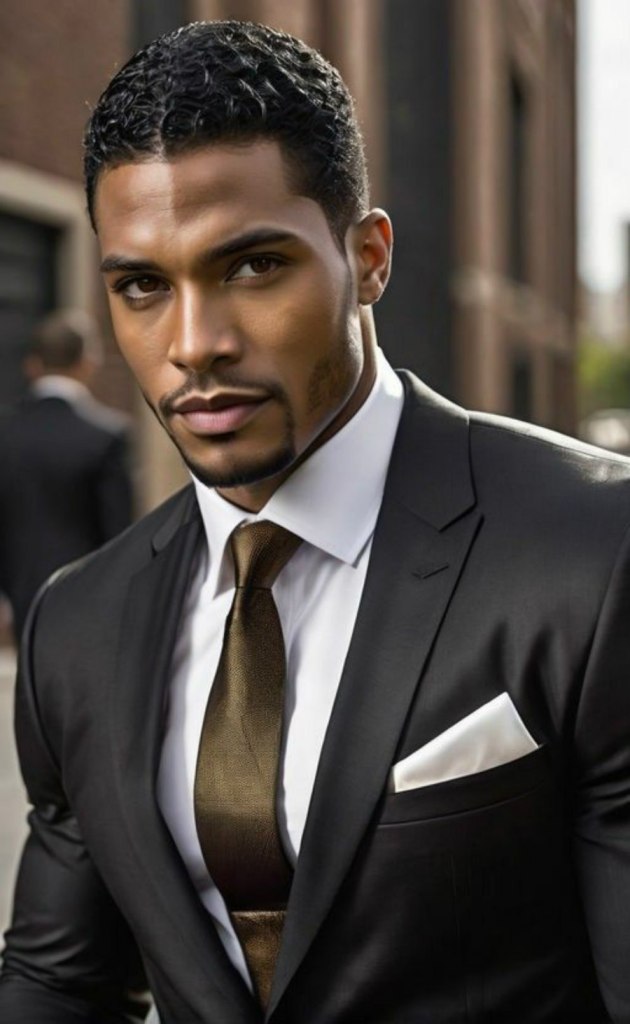
Physical beauty has long been a currency in society, shaping social interactions, economic opportunities, and romantic desirability. For Black men, however, beauty is a double-edged sword. While aesthetically appealing features may garner admiration, they often invite stereotyping, envy, and social pressures that complicate self-identity. Colorism—the preferential treatment of lighter-skinned individuals—further complicates these dynamics, particularly for Black men whose physical appearance challenges or conforms to prevailing ideals.
Historical Context of Male Beauty
The legacy of colonialism and slavery established Eurocentric standards of beauty, privileging lighter skin, straight hair, and specific facial features. Black men with lighter complexions or features closer to these standards were sometimes afforded relative advantages, creating an intra-racial hierarchy. These historical frameworks continue to shape perceptions of male beauty today, making physical attractiveness a socially loaded trait.
The Intersection of Masculinity and Beauty
Black masculinity is often measured against cultural ideals of strength, dominance, and resilience. Handsome Black men frequently face a tension between being admired for physical beauty and being perceived as less “authentically” masculine. Society sometimes infantilizes or exoticizes attractive men, undermining their authority and complicating professional and interpersonal relationships.
Colorism and the Male Experience
Within Black communities, colorism manifests in subtle and overt ways. Darker-skinned men are often stereotyped as hyper-masculine, aggressive, or less refined, while lighter-skinned men are sexualized or praised for their aesthetic appeal. These dynamics pressure Black men to negotiate their attractiveness carefully, balancing self-expression with societal expectation.
Beauty as a Source of Pressure
Attractive Black men may experience heightened scrutiny. Physical appeal often leads to assumptions about wealth, charm, or promiscuity, creating unrealistic expectations. This pressure can be psychologically taxing, as men are forced to navigate admiration, envy, and objectification simultaneously.
Romantic Dynamics
In dating and romantic contexts, colorism intensifies the stakes. Studies show that lighter-skinned Black men are often perceived as more desirable partners in heterosexual dating markets, a reflection of internalized beauty hierarchies. Yet this perceived desirability can provoke jealousy, resentment, or fetishization, complicating genuine connection.
Stereotypes and Misperceptions
Attractive Black men frequently confront damaging stereotypes. For example, the “playboy” or “dangerous” tropes cast them as either hypersexual or intimidating, regardless of personal character. These misperceptions are rooted in long-standing racialized narratives, which amplify the burdens of beauty.
Professional Implications
In professional settings, beauty is both an asset and a liability. Handsome men may initially benefit from “halo effects” in hiring or social situations, but they may also encounter bias if colleagues assume they rely on appearance rather than competence. For Black men, this dynamic intersects with racial bias, creating a complex terrain of advantage and disadvantage.
The Mental Health Dimension
Navigating the politics of attraction can take a toll on mental health. Anxiety, imposter syndrome, and social isolation are common for Black men whose beauty provokes both admiration and envy. The pressure to maintain a particular image can undermine authenticity, leading to long-term psychological strain.
Media Representation
Media often reinforces beauty hierarchies. Lighter-skinned, conventionally attractive Black men are more visible in film, television, and advertising, while darker-skinned men are underrepresented or cast in stereotypical roles. This disparity perpetuates the notion that beauty equates to social value, influencing both self-perception and public perception.
The Role of Social Media
Social media amplifies the politics of male beauty. Platforms that celebrate aesthetics can magnify both praise and criticism, creating intense pressure to conform to beauty standards. Viral trends, beauty filters, and online discourse reinforce colorism, shaping public ideas of desirability in real-time.
Familial and Community Pressure
Within families and communities, male beauty can create envy or favoritism. Attractive sons may receive praise or elevated expectations, while less conventionally attractive siblings experience neglect or judgment. This dynamic reinforces internalized hierarchies and complicates self-worth.
Navigating Relationships with Women
Attractive Black men may face challenges in dating due to assumptions about their intentions or availability. Women—shaped by societal narratives about race and beauty—may fetishize or distrust these men, forcing them to navigate romantic spaces cautiously. These dynamics complicate intimacy and trust.
The Burden of Hypervisibility
Physical attractiveness can make Black men hypervisible in public spaces. This visibility can invite unwanted attention, harassment, or stereotyping. While beauty may open doors, it simultaneously exposes men to risk, judgment, and over-scrutiny, reinforcing the duality of their experience.
Intersectionality and Identity
The burden of beauty cannot be separated from intersecting identities. Factors such as socioeconomic status, hair texture, body type, and regional culture influence how male beauty is perceived. Colorism interacts with these factors, shaping a multifaceted experience of privilege and limitation.
The Role of Education and Awareness
Addressing the politics of male beauty requires education and awareness. Families, schools, and communities can challenge stereotypes and dismantle colorist norms, fostering environments where Black men are valued beyond aesthetics. Cultural literacy and critical engagement with media play essential roles in this process.
Psychological Resilience and Self-Acceptance
Developing resilience is key to navigating beauty-related pressures. Mindfulness, therapy, and mentorship can help Black men cultivate self-worth independent of appearance. Emphasizing character, integrity, and skill counters societal narratives that equate physical appeal with value.
Cultural Reclamation
Black communities can reclaim beauty narratives by celebrating diverse skin tones and features. Highlighting achievements and authentic representations of Black men challenges Eurocentric standards, promotes self-pride, and diminishes the burden of external validation.
Toward a More Equitable Standard
Society must interrogate the ways colorism and attractiveness intersect. By questioning biased beauty standards, promoting diverse representation, and acknowledging the pressures faced by Black men, communities can foster environments where beauty is not a burden but a facet of holistic identity.
Conclusion
The politics of male beauty reflect complex intersections of race, colorism, masculinity, and societal expectation. For Black men, physical attractiveness is simultaneously a privilege and a burden, offering opportunity while inviting stereotyping, objectification, and psychological strain. True liberation lies in redefining value beyond appearance, embracing diversity within Black masculinity, and dismantling the colorist hierarchies that shape attraction and social perception.
References
- Uzogara, E. E. (2014). A comparison of skin tone discrimination among African American men. Retrieved from https://pmc.ncbi.nlm.nih.gov/articles/PMC4365794/
- Keyes, L., Small, E., & Nikolova, S. (2020). The complex relationship between colorism and poor health outcomes with African Americans: A systematic review. Retrieved from https://www.researchgate.net/publication/346409176_The_complex_relationship_between_colorism_and_poor_health_outcomes_with_African_Americans_A_systematic_review
- Young-Jones, N. A. (2020). African American men’s perceptions of colorism. Walden Dissertations and Doctoral Studies. Retrieved from https://scholarworks.waldenu.edu/cgi/viewcontent.cgi?article=10588&context=dissertations
- Chukwu, R. (2021). “Dark Is Not Fair”. Retrieved from https://fisherpub.sjf.edu/journal3690/vol2021/iss1/2/
- Uzogara, E. E. (2014). Color costs: Intersections of gendered skin tone discrimination. Retrieved from https://deepblue.lib.umich.edu/bitstream/handle/2027.42/108952/ekeoma_1.pdf
- Phoenix, A. (2024). Skin shade and relationships: How colourism pits Black men against each other. Retrieved from https://pmc.ncbi.nlm.nih.gov/articles/PMC11696280/
- Lee, M. H. J., & Jeon, S. (2024). Vision-Language Models Represent Darker-Skinned Black Individuals as More Homogeneous than Lighter-Skinned Black Individuals. arXiv. Retrieved from https://arxiv.org/abs/2412.09668
- Miller, M. L. (2025). Black male beauty, respectability in all its complexity at the Met. The Washington Post. Retrieved from https://www.washingtonpost.com/style/2025/05/03/black-male-beauty-respectability-all-its-complexity-at-the-met/
Discover more from THE BROWN GIRL DILEMMA
Subscribe to get the latest posts sent to your email.
 THE BROWN GIRL DILEMMA