
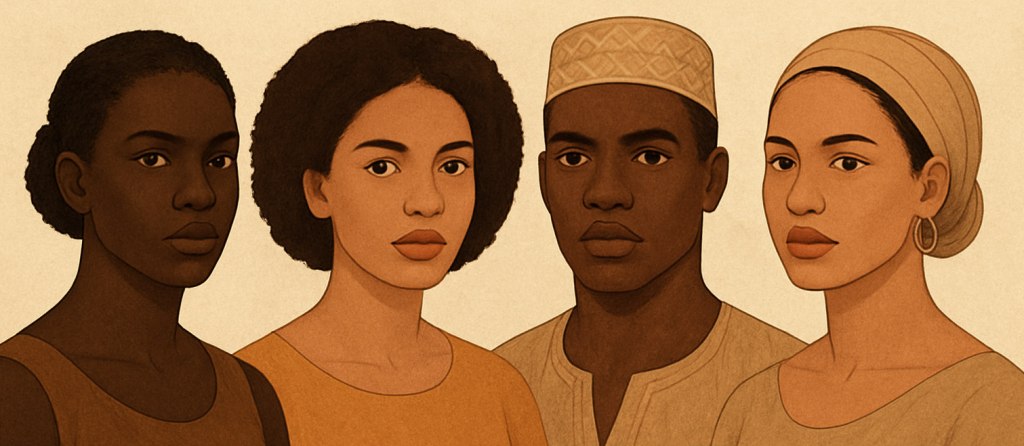
Colorism, the preferential treatment of lighter-skinned individuals over darker-skinned individuals, has deep historical roots in Africa. Its origins are complex, shaped by indigenous hierarchies, colonial influence, and global perceptions of beauty. While often associated with the transatlantic slave trade and European colonization, colorism predates these periods in African history.
In many pre-colonial African societies, lighter skin was sometimes associated with elite status or spiritual purity. Certain ethnic groups linked complexion to lineage, nobility, or proximity to power. However, these distinctions were not uniform across the continent.
In West Africa, for example, the Yoruba and Igbo societies had intricate social hierarchies where physical features, including skin tone, played a symbolic role in determining social standing. Lighter skin was occasionally linked to a higher social rank or a closer relation to ruling families.
Colorism in Africa became more pronounced with the expansion of trade networks. Contact with North African, Arab, and European traders introduced new aesthetic ideals, privileging lighter skin as a mark of beauty, sophistication, and social mobility.
The arrival of Europeans during the colonial period amplified these biases. Colonizers often positioned themselves as racially and culturally superior, framing African features as inferior. This instilled a hierarchy of skin tones that favored proximity to whiteness.
Colonial administration reinforced color-based hierarchies through legal and social systems. Access to education, economic opportunities, and positions in governance were often easier for lighter-skinned Africans. This institutionalized colorism at systemic levels.
Missionary activities also played a role. Western missionaries frequently associated lighter skin with morality, civility, and Christian virtue, while darker skin was linked to backwardness or paganism. This created a lasting cultural association between skin tone and virtue.
During the era of slavery and the transatlantic slave trade, European traders specifically valued lighter-skinned Africans for domestic roles, believing them to be more “manageable” or aesthetically appealing. This preference further entrenched color-based biases.
Colorism was not only external; internalized notions of skin hierarchy emerged within African communities. Families and communities sometimes perpetuated preferential treatment of lighter-skinned children, associating their complexion with potential social advantage.
In urban centers during the 20th century, the rise of Western media, cinema, and advertising propagated ideals of beauty centered on lighter skin. Africans were exposed to globalized beauty standards, often favoring Eurocentric features.
Skin-lightening practices became widespread in some regions, driven by the desire for social mobility, attractiveness, and acceptance. This practice reflects a deep-rooted historical preference for lighter skin that continues to impact African societies.
In contemporary Africa, colorism manifests in employment, education, marriage, and media representation. Lighter-skinned individuals frequently receive preferential treatment, while darker-skinned individuals face prejudice and stereotyping.
Celebrity culture plays a role in perpetuating these ideals. Public figures with lighter complexions often receive heightened visibility and acclaim, reinforcing societal biases about beauty and status.
In East Africa, historical interactions with Arab traders introduced complexions lighter than the indigenous population, which sometimes became associated with higher status or exotic beauty. These interactions created a nuanced color hierarchy in the region.
In North Africa, colorism intersected with issues of ethnicity, particularly between Arab and Sub-Saharan African populations. Skin tone became a marker not only of beauty but also of social belonging and perceived racial identity.
In Southern Africa, colonial settlers imposed racial hierarchies that privileged whiteness. Colorism extended beyond colonial times, influencing post-apartheid perceptions of beauty, success, and social capital.
Despite its long history, colorism is not universally accepted or uncontested. African societies have consistently resisted imposed hierarchies through cultural pride, advocacy, and artistic expression celebrating darker skin.
Literature and oral traditions in Africa often feature protagonists and heroes of darker complexions, challenging prevailing narratives and asserting the value of all skin tones.
In media, the portrayal of lighter-skinned Africans as elite or desirable continues to marginalize darker-skinned individuals, influencing self-esteem, mental health, and social dynamics.
Educational campaigns in several African countries aim to combat colorism by promoting skin positivity and cultural pride, highlighting the historical roots and contemporary consequences of prejudice based on complexion.
Colorism also intersects with gender. Women, in particular, face heightened pressures to conform to lighter-skinned beauty ideals, affecting marriage prospects, career opportunities, and social mobility.
The legacy of slavery, colonization, and global beauty standards collectively shaped colorism as a pervasive social issue. Understanding its historical trajectory is crucial to addressing contemporary manifestations.
Today, scholars emphasize the need to recognize colorism as distinct from racism, though the two often overlap. Colorism is an intraracial and intracultural phenomenon with unique historical and social determinants.
African diasporic communities continue to grapple with colorism, which has been transmitted across generations. Media, education, and family practices all play a role in sustaining or challenging these biases.
Activism, particularly among young Africans and diasporic communities, seeks to dismantle colorist standards. Campaigns promoting melanin appreciation and diverse beauty standards are part of a broader movement toward social equity.
In conclusion, colorism in Africa is a multi-layered phenomenon with origins in pre-colonial social structures, intensified by colonialism, slavery, and globalized beauty ideals. Combating it requires historical understanding, cultural advocacy, and systemic change.
References
- Hunter, M. (2007). The persistent problem of colorism: Skin tone, status, and inequality. Sociology Compass, 1(1), 237–254.
- Glenn, E. N. (2008). Yearning for lightness: Transnational circuits in the marketing and consumption of skin lighteners. Gender & Society, 22(3), 281–302.
- Lewis, R. (2018). Skin deep: Race and colorism in modern African societies. African Studies Review, 61(2), 45–67.
- Tate, S. A. (2009). Black beauty: Skin color and the cultural politics of race. New York, NY: Routledge.
- Nzewi, M. (2016). Historical roots of colorism in Africa. Journal of African Cultural Studies, 28(3), 245–263.
- Hunter, M., & Davis, D. (2021). Colorism, identity, and African social structures. Journal of African Sociology, 12(1), 101–122.
- Williams, L. (2015). Shades of privilege: Colorism and social hierarchy in Africa. International Journal of African Studies, 7(2), 89–105.
Discover more from THE BROWN GIRL DILEMMA
Subscribe to get the latest posts sent to your email.
 THE BROWN GIRL DILEMMA