
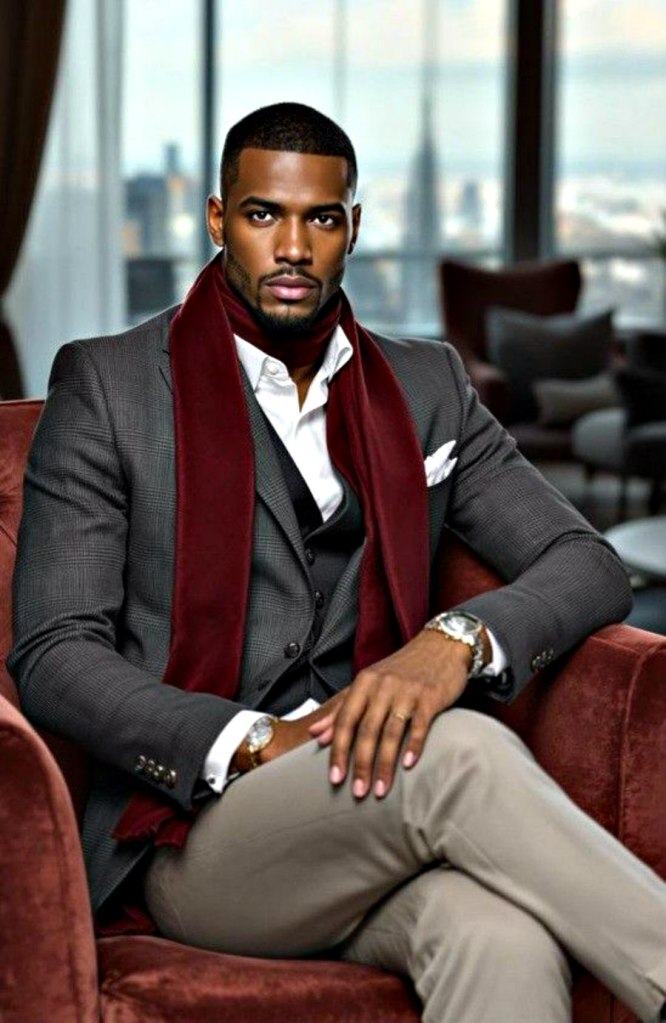
Beauty has long been regarded as a feminine domain, while masculinity has been associated with power, dominance, and stoicism. Yet, as societal norms evolve, the concept of male beauty is emerging as a subject worthy of both admiration and analysis. The psychology of male beauty extends beyond the physical—it encompasses identity, confidence, self-worth, and cultural conditioning. To understand male beauty is to examine not only what the eye sees but what the mind perceives and the heart internalizes.
Historically, male beauty was revered in ancient civilizations. In classical Greece, statues such as the Doryphoros by Polykleitos celebrated the harmony between physical strength and aesthetic symmetry. The male body was seen as a vessel of divine proportion—a reflection of moral and physical perfection. However, in modern Western culture, this balance has shifted. The muscular ideal has overtaken the spiritual and intellectual aspects of beauty, reducing masculinity to performance rather than essence.
The modern man faces a paradox. He is told to be confident yet humble, strong yet sensitive, rugged yet refined. This psychological tension creates a quiet identity crisis, forcing men to constantly negotiate their worth through external validation. Studies have shown that men increasingly suffer from body image dissatisfaction, influenced by unrealistic media portrayals and fitness culture (Leit, Pope, & Gray, 2001). What was once considered natural masculinity has become a carefully constructed performance.
Social media has intensified this struggle. Platforms like Instagram promote curated images of muscular men with chiseled abs, perfect lighting, and designer wardrobes. These depictions reinforce narrow ideals of attractiveness, mirroring the same pressures once imposed on women. The male body, once celebrated for strength and functionality, is now commodified as spectacle. This shift reveals that beauty standards are not gender-exclusive—they are societal instruments of control.
The psychology behind male beauty is deeply tied to perception. Men, like women, internalize beauty expectations through social learning and cultural conditioning. Psychologist Albert Bandura’s theory of observational learning (1977) suggests that individuals model behaviors and self-concepts after what they repeatedly see rewarded or admired. When beauty is equated with muscularity or status, men subconsciously adopt these measures as prerequisites for self-worth.
However, physical appearance is only one layer of male beauty. True attraction and presence stem from confidence, integrity, and emotional intelligence. Research in evolutionary psychology indicates that while symmetry and strength play roles in attractiveness, traits such as kindness, humor, and authenticity hold equal if not greater weight in long-term relational appeal (Buss, 1989). Thus, male beauty should be understood as both an aesthetic and moral construct—an integration of outer form and inner character.
The danger of equating beauty solely with physique is that it narrows the definition of manhood. Many men who do not fit the stereotypical ideal—those who are thinner, shorter, or softer in demeanor—are made to feel invisible. This invisibility often leads to psychological distress, including depression and low self-esteem. In this way, patriarchy harms men as much as it controls women, enforcing emotional suppression and unattainable ideals.
To move beyond muscles, men must redefine masculinity in holistic terms. True masculine beauty is not found in dominance but in discipline, not in stoicism but in spiritual strength. Christ Himself embodied perfect manhood—not through physique or aggression but through humility, compassion, and sacrifice. Isaiah 53:2 (KJV) notes that there was “no beauty that we should desire him,” yet His spiritual beauty redeemed humanity. This suggests that divine beauty transcends the physical—it is rooted in purpose and love.
The cultural redefinition of male beauty also demands that society make room for diversity. Men of different races, body types, and aesthetics must be affirmed. The Western ideal often glorifies whiteness, angular features, and specific body types, while men of color are either fetishized or ignored. To celebrate the full range of male beauty is to challenge Eurocentric standards and affirm that grace, style, and strength manifest in every hue.
For Black and brown men, this journey of redefinition carries extra weight. They must navigate not only the pressure to appear strong but also the historical dehumanization that cast their bodies as threatening rather than beautiful. The dark-skinned man’s physique has been both hypersexualized and criminalized, stripping him of vulnerability and complexity. Reclaiming his beauty, therefore, is an act of resistance—a reassertion of his humanity and divine reflection.
In psychological terms, male beauty involves harmony between the ideal self and the real self. Carl Rogers’ theory of self-congruence explains that mental health flourishes when individuals accept themselves authentically rather than conforming to imposed ideals (Rogers, 1951). When a man embraces his unique appearance—his scars, his aging, his imperfections—he experiences liberation from comparison. Beauty, in this sense, becomes acceptance rather than aspiration.
This acceptance must also extend to aging. Society celebrates youth as the pinnacle of attractiveness, yet wisdom and maturity carry their own allure. The silver-haired man, marked by time and experience, embodies a different beauty—one defined by endurance and self-assurance. Proverbs 20:29 (KJV) reminds us, “The glory of young men is their strength: and the beauty of old men is the gray head.” Age, therefore, is not decline but refinement.
The psychological power of self-image also affects behavior and social success. Men who view themselves as attractive often exude more confidence, which in turn influences how others perceive them (Langlois et al., 2000). Yet, this confidence should not be mistaken for arrogance; it is the quiet assurance of a man who understands his worth beyond aesthetics. When inner confidence aligns with external presentation, a man becomes magnetic—not because of perfection, but because of authenticity.
Faith and spirituality further expand the definition of male beauty. The Psalms describe men of faith as “trees planted by rivers of water” (Psalm 1:3, KJV)—strong, rooted, and fruitful. This metaphor captures the essence of divine masculinity: grounded, life-giving, and steadfast. A man’s beauty is not fleeting like a muscle’s tone but enduring like his moral character and spiritual depth.
The relationship between beauty and ego must also be examined. In a culture obsessed with self-presentation, beauty can easily become vanity. Yet, there is a fine line between self-care and self-worship. When beauty becomes a means to glorify self rather than serve others, it loses sacredness. True masculine beauty reflects humility—the awareness that one’s gifts are divine, not self-made.
Emotional vulnerability enhances male beauty. A man unafraid to express love, to admit pain, or to cry demonstrates depth. Society often conditions men to suppress emotion, equating stoicism with strength. Yet, psychological studies affirm that emotional intelligence correlates with relational satisfaction and mental well-being (Salovey & Mayer, 1990). Vulnerability, therefore, is not weakness but wisdom—the courage to be fully human.
In modern times, the fashion and wellness industries are beginning to embrace this broader narrative. Campaigns that feature men of various sizes, ethnicities, and styles are helping dismantle rigid beauty standards. This inclusivity redefines attractiveness not as conformity to a mold but as confidence in authenticity. Male beauty is no longer the privilege of the few—it is the inheritance of all.
Beyond muscles and masculinity lies the truth that beauty is energy. It is how a man carries himself, how he treats others, and how he reflects purpose in his walk. His laughter, intellect, empathy, and faith radiate attractiveness more profoundly than any aesthetic standard. In the end, the most beautiful man is one who knows who he is and whom he serves.
In conclusion, the psychology of male beauty is a journey of self-acceptance, emotional liberation, and spiritual awakening. The truly beautiful man is not enslaved by mirrors or measurements; he is guided by balance and inner peace. When he transcends external validation and embraces authenticity, he redefines what it means to be a man in every sense—body, mind, and soul. Beyond muscles and masculinity, there exists a quiet power: the beauty of a heart aligned with purpose and a spirit anchored in truth.
References
Bandura, A. (1977). Social Learning Theory. Prentice Hall.
Buss, D. M. (1989). Sex differences in human mate preferences: Evolutionary hypotheses tested in 37 cultures. Behavioral and Brain Sciences, 12(1), 1–49.
Langlois, J. H., et al. (2000). Maxims or myths of beauty? A meta-analytic and theoretical review. Psychological Bulletin, 126(3), 390–423.
Leit, R. A., Pope, H. G., & Gray, J. J. (2001). Cultural expectations of muscularity in men: The evolution of body image. International Journal of Eating Disorders, 29(4), 442–448.
Rogers, C. R. (1951). Client-Centered Therapy. Houghton Mifflin.
Salovey, P., & Mayer, J. D. (1990). Emotional intelligence. Imagination, Cognition and Personality, 9(3), 185–211.*
Biblical references: Isaiah 53:2 (KJV); Proverbs 20:29 (KJV); Psalm 1:3 (KJV).
Discover more from THE BROWN GIRL DILEMMA
Subscribe to get the latest posts sent to your email.
 THE BROWN GIRL DILEMMA