
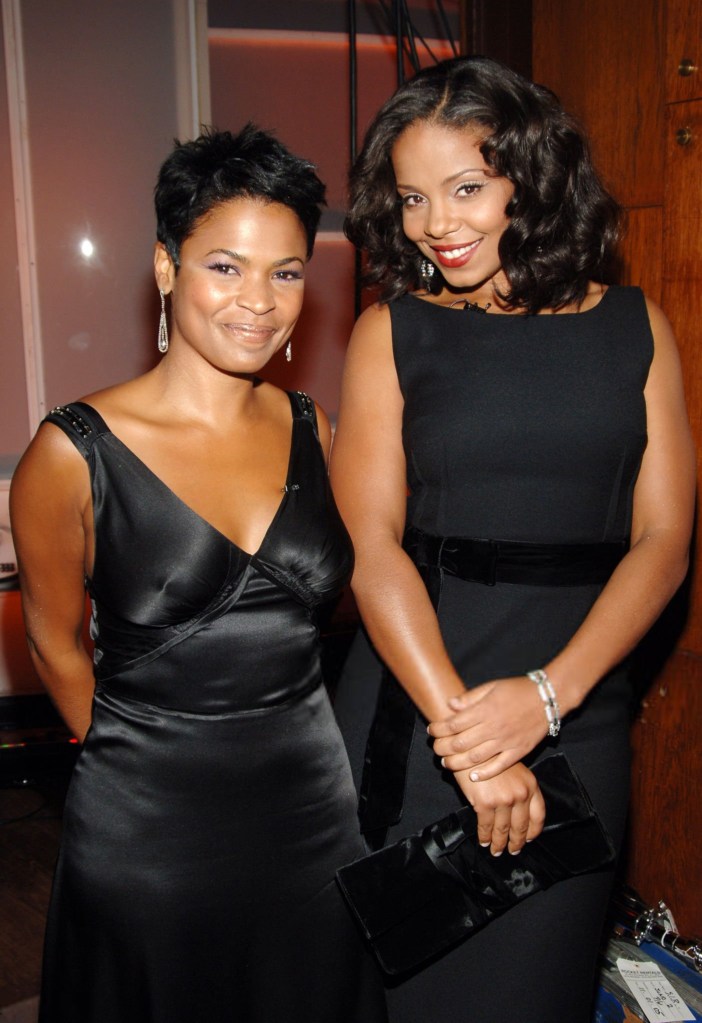
There are the light-skin and the dark-skin battles, but what about the beauties who stand in the middle? The brown-skinned woman often finds herself overlooked in discourses of colorism, as society tends to highlight either the lighter-skinned “acceptable” beauty or the darker-skinned woman who has become a symbol of resilience and resistance. Yet women like Nia Long, Sanaa Lathan, Regina Hall, Regina King, and Gabrielle Union embody a milk chocolate or dark caramel hue that represents a vast population of Black women whose struggles and triumphs within color politics deserve closer attention. These women symbolize the “in-between” battle, caught in a racialized beauty hierarchy that often denies them full recognition, even as they embody both elegance and resilience.
The politics of skin tone within the Black community are not new. Historically, slavery introduced a hierarchy in which lighter skin was associated with privilege, while darker skin was associated with field labor and hardship (Hunter, 2007). Brown-skinned women were often placed ambiguously within this dynamic, neither deemed “light enough” for preferential treatment nor “dark enough” to embody radical cultural pride. This liminal positioning has created a unique psychological and cultural battle for brown-skinned women, one that continues in modern media and social interaction.
The biblical record acknowledges the beauty of darker hues. In Song of Solomon 1:5 (KJV), the Shulamite woman declares, “I am black, but comely, O ye daughters of Jerusalem.” This passage not only affirms dark and brown skin as beautiful, but also challenges cultural stigmas that denigrate melanin-rich hues. For the brown-skinned woman, such scriptural validation becomes a source of strength when society questions her worth or diminishes her presence within the spectrum of desirability.
Psychology affirms that colorism can create deep wounds in identity formation. According to Hill (2002), intra-racial skin tone bias affects self-esteem, peer acceptance, and perceived attractiveness. Brown-skinned women often feel invisible, struggling with the pressure to compete against both lighter-skinned women who are elevated as “ideal” and darker-skinned women who are celebrated in the context of social justice movements. This sense of invisibility has been termed the “middle battle” of skin tone politics.
Celebrities like Gabrielle Union often use their platforms to articulate this struggle. Union has spoken candidly about her experiences navigating Hollywood, where casting directors sometimes overlook her for roles favoring lighter or darker actresses (Union, 2017). Similarly, Nia Long’s career has thrived, yet she is often remembered more for her relatability than as a cultural “standard of beauty,” highlighting how the brown-skinned woman is subtly typecast as “safe” but not necessarily the pinnacle of desirability.
This cultural coding connects to psychological theories of “relative deprivation,” where individuals perceive their worth not in isolation, but in relation to others (Runciman, 1966). Brown-skinned women often feel “stuck” in comparison, not fully celebrated in either camp. This phenomenon contributes to stress, anxiety, and strained self-concept, particularly in formative years of adolescence when appearance is tied to identity.
The issue also emerges in romantic preferences. Research shows that within Black dating patterns, lighter-skinned women are often perceived as more attractive or marriageable (Keith & Herring, 1991). Conversely, darker-skinned women are sometimes eroticized as exotic or “strong.” Brown-skinned women, positioned in between, may be stereotyped as “average” or overlooked. This contributes to feelings of displacement within the Black female collective.
Yet brown-skinned women embody a rich cultural beauty that cannot be ignored. Regina King’s award-winning acting, coupled with her political voice, reflects strength and poise. Sanaa Lathan’s roles often portray a relatable, girl-next-door character who bridges relatability with sensuality. These women serve as cultural icons of balance, occupying the middle ground between two extremes.
The “brown-skinned battle” is therefore not simply about aesthetics—it is also about identity, belonging, and representation. Psychology suggests that when individuals feel excluded from representation, their sense of social worth diminishes (Tajfel & Turner, 1986). Representation matters, and the under-discussion of brown-skinned women in colorism discourse perpetuates their invisibility.
The Bible continually affirms equality in God’s creation. Genesis 1:27 (KJV) proclaims, “So God created man in his own image.” This truth dismantles hierarchical thinking that places one hue above another. From a theological perspective, brown skin—like all shades—is a manifestation of divine artistry. The struggle of brown-skinned women, therefore, is not a reflection of God’s truth, but of man-made systems of prejudice.
Historically, the “brown battle” appeared in African American literature as well. Writers like Zora Neale Hurston and Alice Walker often explored nuances of complexion within Black womanhood. Hurston’s characters frequently embodied the brown-skin aesthetic, neither elevated to the pedestal of “light” privilege nor anchored fully in the rhetoric of “dark” pride. This reflects the long-standing ambiguity attached to brown hues in cultural imagination.
Hollywood has played a role in perpetuating the divide. Spike Lee’s School Daze (1988) illustrated colorism tensions between light- and dark-skinned women, but brown-skinned women were largely blended into the ensemble, rarely positioned as the central debate. This absence mirrors broader social silences surrounding their struggles.
Psychologically, such invisibility parallels the concept of “liminality,” where individuals exist on the threshold of categories but belong fully to neither (Turner, 1969). Brown-skinned women embody this liminality—caught between extremes, always present but rarely spotlighted.
The brown battle is also spiritual. In a society that continually asks brown-skinned women to define themselves in relation to others, the biblical call is to find identity in Christ. Romans 8:16-17 (KJV) affirms that believers are “heirs of God, and joint-heirs with Christ.” This inheritance transcends complexion hierarchies, grounding worth in divine kinship rather than human prejudice.
Nevertheless, practical strategies are necessary for healing. Psychology highlights the importance of “self-affirmation” practices, where individuals reframe narratives of exclusion by affirming intrinsic worth (Steele, 1988). For brown-skinned women, cultivating spaces of affirmation—whether through literature, sisterhood, or faith—becomes a radical act of self-preservation.
Cultural icons like Lauryn Hill, whose song “Brown Skin Lady” (1996) celebrated the richness of mid-tones, demonstrate the need for artistic affirmation. Such affirmations counter societal messages that overlook brown beauty, restoring dignity to the middle ground.
The generational impact of colorism must also be considered. Brown-skinned girls often inherit subtle messaging about their worth, sometimes hearing remarks that they are “not light enough” or “not dark enough.” These remarks shape their self-perception well into adulthood, underscoring the need for intentional cultural and spiritual interventions.
The brown-skinned battle, therefore, calls for both scholarly acknowledgment and spiritual restoration. It is not enough to focus only on light-skin privilege or dark-skin pride—brown-skinned women must be centered in the dialogue. Their beauty, resilience, and complexity embody a truth that society must embrace.
Ultimately, the middle ground is not a place of lack, but of balance. The milk chocolate and caramel hues reflect harmony, warmth, and depth. Brown-skinned women, from Nia Long to Regina King, remind us that beauty is not confined to extremes but flourishes most richly in the spectrum’s center. In affirming them, we affirm the fullness of Blackness and dismantle the false hierarchies that divide us.
References
- Hill, M. E. (2002). Skin color and the perception of attractiveness among African Americans: Does gender make a difference? Social Psychology Quarterly, 65(1), 77–91.
- Hunter, M. (2007). The persistent problem of colorism: Skin tone, status, and inequality. Sociology Compass, 1(1), 237–254.
- Keith, V. M., & Herring, C. (1991). Skin tone and stratification in the Black community. American Journal of Sociology, 97(3), 760–778.
- Runciman, W. G. (1966). Relative deprivation and social justice. University of California Press.
- Steele, C. M. (1988). The psychology of self-affirmation: Sustaining the integrity of the self. Advances in Experimental Social Psychology, 21, 261–302.
- Tajfel, H., & Turner, J. (1986). The social identity theory of intergroup behavior. In S. Worchel & L. W. Austin (Eds.), Psychology of intergroup relations (pp. 7–24). Nelson-Hall.
- Turner, V. (1969). The ritual process: Structure and anti-structure. Aldine.
- Union, G. (2017). We’re going to need more wine: Stories that are funny, complicated, and true. Dey Street Books.
- The Holy Bible, King James Version.
Discover more from THE BROWN GIRL DILEMMA
Subscribe to get the latest posts sent to your email.
 THE BROWN GIRL DILEMMA