
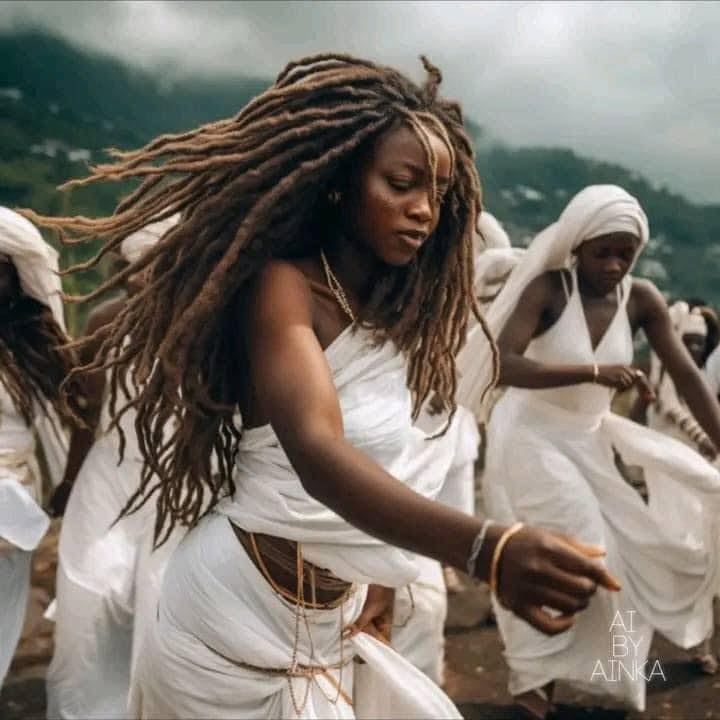
Beauty has always been contested ground, a terrain where power, culture, and identity collide. For people of African descent, the question of beauty is deeply entangled with histories of slavery, colonialism, and white supremacy. The privileging of light skin and Eurocentric features has long marginalized darker-skinned men and women, creating a hierarchy within the Black community itself. “Pretty privilege” is often granted selectively, leaving the richness of Blackness fragmented instead of embraced in its fullness.
The phrase Beauty Without Borders calls us to dismantle these false boundaries. It challenges the lie that only certain shades, hair textures, or facial features are beautiful, while others are devalued. God created the “full spectrum of Blackness,” from the deepest ebony to the lightest brown, from tight coils to loose curls, each carrying divine intention. Scripture affirms, “I will praise thee; for I am fearfully and wonderfully made” (Psalm 139:14, KJV). Any system that denies this truth is a distortion of God’s design.
Historically, pretty privilege in the Black community is a colonial residue. During slavery, lighter-skinned enslaved people were often given roles inside the house, while darker-skinned people were forced to labor in the fields. This artificial division sowed seeds of mistrust and envy that still linger. What began as a tool of control has evolved into a system of internalized bias that shapes dating, employment, and self-esteem.
Psychology recognizes the damaging impact of colorism. Research shows that darker-skinned individuals often face harsher judgments, fewer opportunities, and lower levels of perceived attractiveness compared to lighter-skinned peers (Hunter, 2007). These biases function even within communities of color, revealing how deeply internalized oppression becomes. Beauty, once a gift of identity, is turned into a weapon of division.
At the heart of pretty privilege is authenticity lost. When Blackness is reduced to a narrow ideal, the wide heritage of African beauty is erased. The straightened hair, bleached skin, or surgically altered features testify to a world that demands conformity to white aesthetics. Yet, “Can the Ethiopian change his skin, or the leopard his spots?” (Jeremiah 13:23, KJV). God did not make a mistake in creating Blackness. To deny one’s natural self is to deny a portion of His craftsmanship.
The restoration of Black beauty requires breaking free from envy and competition. Too often, darker-skinned women are told they are “less desirable,” while lighter-skinned women are accused of being “privileged frauds.” Both are victims of the same oppressive system. Instead of fighting each other, the call is to unite, affirming that “the eye cannot say unto the hand, I have no need of thee” (1 Corinthians 12:21, KJV). All shades and textures are essential to the wholeness of Black identity.
Black men also suffer under pretty privilege. Those with darker complexions are often stereotyped as dangerous or hyper-masculine, while lighter-skinned men may be viewed as “softer” or less authentic. These caricatures rob men of individuality and humanity. True liberation allows every man to embrace his God-given identity without the burden of imposed stereotypes.
Another layer is media representation. The entertainment industry frequently elevates a single “acceptable” type of Black beauty, often lighter and closer to European standards. This limited visibility reinforces the idea that only one look is marketable. The body of Christ, however, rejects such favoritism: “But if ye have respect to persons, ye commit sin” (James 2:9, KJV). Favoring one shade over another is a spiritual as well as cultural injustice.
Pretty privilege also intersects with economic systems. Beauty standards often dictate who is hired, promoted, or endorsed. Studies show that skin tone can influence income levels, with lighter-skinned individuals sometimes earning more than darker-skinned peers with similar qualifications (Monk, 2014). In this sense, beauty bias becomes structural racism in disguise.
Theological reflection reveals a deeper wound. When people internalize the belief that only certain forms of Blackness are valuable, they align more with Pharaoh than with God. Pharaoh sought to oppress, to divide, and to strip identity. God, by contrast, affirms freedom, dignity, and beauty. The Song of Solomon reminds us of the beloved who declares: “I am black, but comely” (Song of Solomon 1:5, KJV). Her words reject shame and affirm worth.
Restoring beauty without borders requires healing from envy. Jealousy fuels division, making one sister resent another’s complexion or one brother mock another’s features. But envy corrodes love. Scripture warns: “Wrath is cruel, and anger is outrageous; but who is able to stand before envy?” (Proverbs 27:4, KJV). The fight is not with each other but with the system that taught us to hate ourselves.
It also requires courage to stand against assimilation. To wear natural hair in a workplace, to reject skin-lightening creams, or to affirm dark skin in a culture that worships lightness is a radical act. This courage reflects the biblical call to resist conformity: “Be not conformed to this world: but be ye transformed by the renewing of your mind” (Romans 12:2, KJV).
Education plays a role in this restoration. Children must be taught from a young age that their beauty is not conditional. Dolls, storybooks, and media must reflect the full range of Blackness. Without this affirmation, young girls and boys may grow up doubting their worth, seeking validation in destructive ways.
Community is equally vital. A supportive community celebrates every shade, affirms natural beauty, and challenges colorist jokes or biases. Churches especially have a responsibility to dismantle these patterns, modeling inclusivity and love. After all, the kingdom of God is not divided by shade but united by spirit.
Psychology teaches that affirmations and representation can rewire negative beliefs. Exposure to diverse images of beauty can disrupt the internalized hierarchy of skin tone (Burke, 2019). This aligns with Scripture’s command to renew the mind, for transformation begins with thought.
In practice, restoring beauty without borders means celebrating African features globally. Broad noses, full lips, kinky hair, and dark skin should not only be accepted but exalted as beautiful. These features tell stories of resilience, heritage, and divine artistry. They are markers of identity, not liabilities.
The movement also calls for accountability in industries that perpetuate bias. Fashion, film, and advertising must be challenged to widen their representation. Token inclusion is not enough. Full restoration means full spectrum visibility.
Ultimately, pretty privilege is dismantled not just by redefining beauty but by grounding it in God’s truth. “Man looketh on the outward appearance, but the Lord looketh on the heart” (1 Samuel 16:7, KJV). True beauty radiates from character, integrity, and love. External features, no matter how celebrated or scorned, are only temporary.
The vision of Beauty Without Borders is both cultural and spiritual. It is a call to honor the artistry of God in the Black body. It is a challenge to uproot envy, favoritism, and bias. And it is a promise that restoration comes when we see each other fully, without restriction.
When the spectrum of Blackness is embraced, the community heals. Daughters will grow up knowing they are beautiful as they are. Sons will walk without the burden of stereotypes. And the entire community will reflect the glory of a God who makes no mistakes.
In this way, beauty without borders is not just a concept but a prophetic vision. It restores dignity, dismantles lies, and brings honor back to the full spectrum of Blackness—a beauty that was always complete in God’s eyes.
References
- Burke, M. (2019). Colorism and the Politics of Skin Tone in the Black Community. Sociology Compass, 13(6), e12693.
- Hunter, M. (2007). The Persistent Problem of Colorism: Skin Tone, Status, and Inequality. Sociology Compass, 1(1), 237–254.
- Monk, E. P. (2014). Skin Tone Stratification among Black Americans, 2001–2003. Social Forces, 92(4), 1313–1337.
- Holy Bible, King James Version.
Discover more from THE BROWN GIRL DILEMMA
Subscribe to get the latest posts sent to your email.
 THE BROWN GIRL DILEMMA