
“I believe unconditionally in the ability of people to respond when they are told the truth. We need to be taught to study rather than believe, to inquire rather than to affirm.” — Septima P. Clark
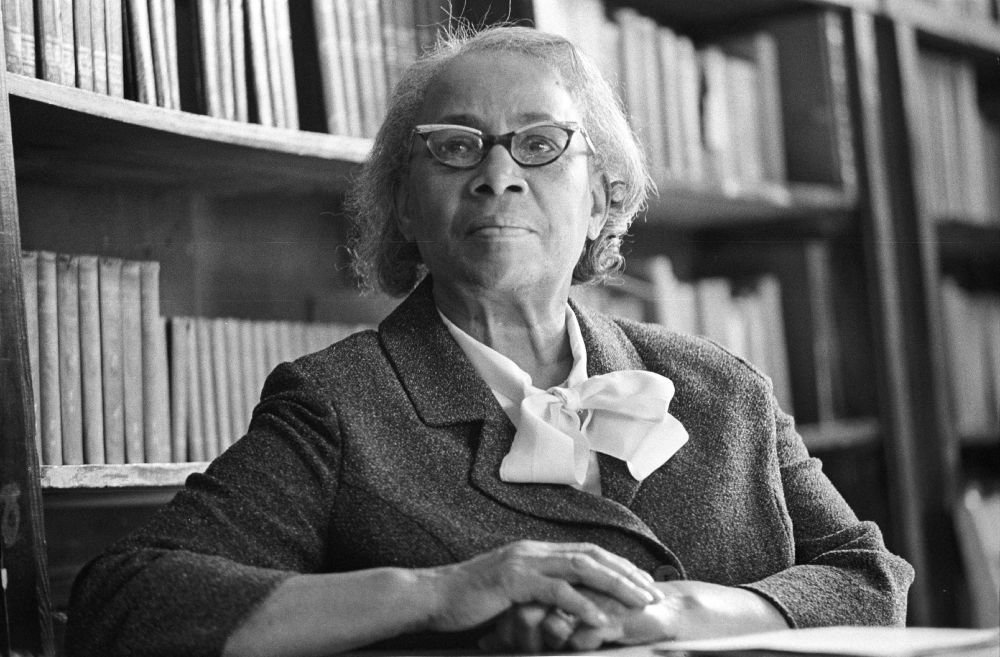
Septima Poinsette Clark is often referred to as “The Mother of the Civil Rights Movement” because of her tireless efforts to blend education with grassroots activism. Her life was devoted to dismantling systemic barriers that excluded Black Americans from full participation in civic life. Clark believed that true freedom could not exist without literacy, and she spent her lifetime proving that education was the most powerful weapon against oppression.
Born on May 3, 1898, in Charleston, South Carolina, Septima was the daughter of a washerwoman and a former enslaved father who emphasized dignity and self-respect. Despite segregationist laws barring her from higher education opportunities in the South, she pursued teaching at the Avery Normal Institute and later advanced her studies at Columbia University and Benedict College. Her family background, particularly her mother’s insistence on hard work and her father’s resilience, shaped her commitment to justice and service (Charron, 2009).
Clark’s vision extended beyond the classroom. She understood that systemic racism was not only about physical segregation but also about intellectual deprivation. She founded and expanded Citizenship Schools, grassroots institutions designed to teach African Americans literacy skills so they could pass the literacy tests required for voter registration. These schools became essential in dismantling Jim Crow voter suppression, transforming ordinary men and women into empowered citizens ready to claim their constitutional rights (Clark, 1986).
Her collaborations with leading organizations and figures in the Civil Rights Movement amplified her reach. Clark worked with the NAACP, where she campaigned for equal pay for Black teachers, and with the Highlander Folk School, which became a training ground for activists such as Rosa Parks. She later partnered with the Southern Christian Leadership Conference (SCLC) under Martin Luther King Jr., spreading the Citizenship Schools across the South. In these partnerships, Clark blended her quiet strength with bold strategies, proving that the foundation of mass movements lies in community education (Payne, 1995).
Clark’s achievements were numerous and groundbreaking. She successfully challenged laws that denied Black teachers tenure in Charleston. She helped create a model of civic education that was adopted nationwide. In recognition of her contributions, President Jimmy Carter awarded her the Living Legacy Award in 1979, and she received the Martin Luther King Jr. Nonviolent Peace Prize in 1987. Her lifelong commitment to education, justice, and equality earned her recognition as one of the movement’s most influential yet often overlooked leaders.
Septima Clark’s legacy lies in the simple yet revolutionary idea that teaching literacy is teaching liberation. She understood that the right to vote was meaningless without the knowledge to exercise it. By empowering thousands of African Americans to read, write, and participate in democracy, she dismantled one of the most insidious barriers of segregation. Her life’s purpose was not only to fight oppression but to create a generation of leaders who could continue the work of justice. For this reason, Clark remains indispensable to the history of civil rights and to the enduring struggle for Black freedom.
📚 References
- Clark, S. P. (1986). Ready from Within: Septima Clark and the Civil Rights Movement. Wild Trees Press.
- Charron, K. M. (2009). Freedom’s Teacher: The Life of Septima Clark. University of North Carolina Press.
- Payne, C. M. (1995). I’ve Got the Light of Freedom: The Organizing Tradition and the Mississippi Freedom Struggle. University of California Press.
- National Women’s History Museum. (n.d.). Septima Poinsette Clark. Retrieved from https://www.womenshistory.org
Discover more from THE BROWN GIRL DILEMMA
Subscribe to get the latest posts sent to your email.
 THE BROWN GIRL DILEMMA