
“Two months ago I had a nice apartment in Chicago. I had a good job. I had a son. When something happened to the Negroes in the South, I said, ‘That’s their business, not mine.’ Now I know how wrong I was. The death of my son has shown me that what happens to any of us, anywhere in the world, had better be the business of us all.”
— Mamie Till-Mobley, mother of Emmett Till
The Enduring Psychological Toll of Racism in America: A Historical and Modern Analysis
The legacy of racism in the United States continues to weigh heavily on the collective psyche of Black Americans. It is a pervasive system of oppression built upon centuries of dehumanization, violence, and systemic inequality. Though many argue racism is a relic of the past, the evidence—historical and contemporary—speaks otherwise.
Racism in America, unlike any other place, is deeply entrenched in the nation’s foundation. It operates not only as individual prejudice but as an institutionalized structure designed to benefit one racial group at the expense of another. From slavery and segregation to police brutality and mass incarceration, the arc of American history is littered with examples of how racism manifests and mutates across generations.
Historically, the Atlantic slave trade forcibly removed millions of Africans from their homeland beginning in 1619, initiating a legacy of exploitation and trauma. These enslaved individuals were subjected to horrific abuse: forced labor without compensation, brutal beatings, rape, and psychological degradation. Slave children, especially in Southern states like Florida, were sometimes used as alligator bait—one of the most grotesque examples of dehumanization in American history (Strouse, 2013).
The Emancipation Proclamation of 1862 may have ended slavery legally, but not socially or economically. Racism merely evolved into new forms—Black Codes, Jim Crow laws, and violent white supremacist movements like the Ku Klux Klan. In Natchez, Mississippi, more than 20,000 freed Black individuals were reportedly buried in mass graves in what is now known as “The Devil’s Punchbowl” (Alsaudamir, 2017). This continued violence and neglect have fostered an atmosphere of trauma and distrust that persists today.
A poignant example of racial injustice is the case of Emmett Till, a 14-year-old boy from Chicago who was lynched in 1955 while visiting Mississippi. Accused by Carolyn Bryant Donham, a white woman, of making improper advances toward her, Till was later abducted, mutilated, and murdered by two white men, J.W. Milam and Roy Bryant. In a 2007 interview, Donham admitted that her claims were fabricated (Tyson, 2017). This case—one of the most infamous in American history—symbolizes the deadly consequences of racial lies and judicial indifference. Like many Black victims of violence, Emmett Till received no justice.
Racism is not confined to the past. In recent years, countless Black men and women—George Floyd, Breonna Taylor, Ahmaud Arbery, and many others—have been killed or brutalized by police. According to a study in Race and Justice (DeAngelis), Black individuals are disproportionately affected by police violence. Mapping Police Violence (2022) found that Black people made up 27% of those fatally shot by police in 2021, despite being only 13% of the U.S. population (Dunn, 2022).
The criminal justice system reflects this same disparity. Black individuals are incarcerated at more than twice the rate of white individuals (Wertheimer, 2023). These statistics are not coincidental—they are the result of structural inequalities that permeate education, housing, employment, and health care.
In Mississippi, racism remains especially visceral. The story of Rasheem Carter, a young Black man who told his mother that he was being harassed by white men before his body was found mutilated and decapitated, underscores the continued threat faced by Black Americans. Despite Carter’s multiple pleas for help to local authorities, his death has been dismissed as “no foul play,” a claim his family and legal team strongly contest (Carter & Negussie, 2023).
Such incidents are not isolated. Racism in America is systemic, not anecdotal.
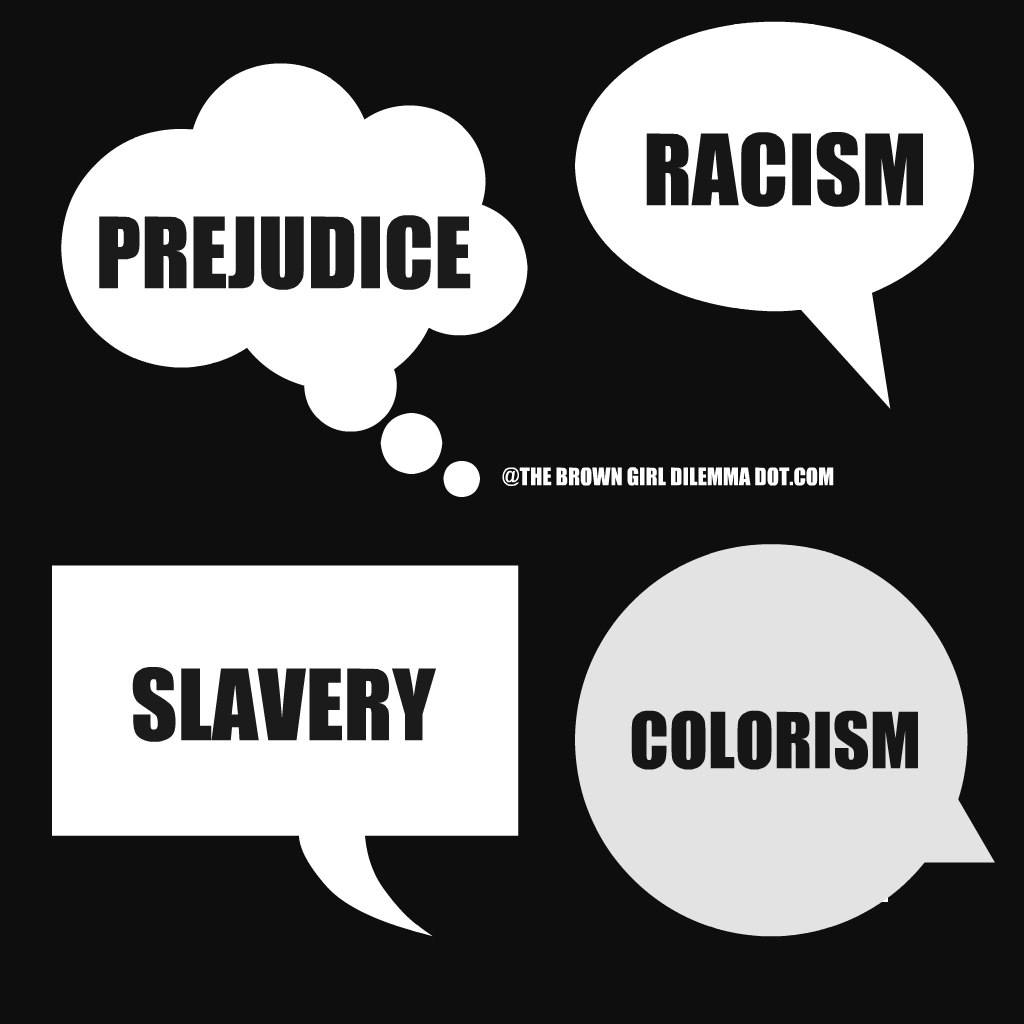
Even within the Black community, the legacy of slavery has left a psychological scar in the form of colorism—the preferential treatment of lighter-skinned individuals over those with darker complexions. This bias was deliberately fostered during slavery, where lighter-skinned slaves, often the offspring of rape, were favored with housework while darker-skinned slaves were relegated to field labor. The infamous Willie Lynch Letter (1712), though possibly apocryphal, outlines strategies to divide slaves by skin tone and age—tactics that reflect the persistent effects of colorism today. Hochschild and Weaver (2007) discuss this in their article “The Skin Color Paradox and the American Racial Order,” showing that lighter-skinned individuals still enjoy greater social and economic advantages than their darker-skinned counterparts.
The impact of racism on mental health is undeniable. Generations of trauma have resulted in chronic stress, anxiety, and identity conflict among Black Americans. Many grow up internalizing the message that their lives are worth less, that they must fight twice as hard to be seen as equal, and that justice is often out of reach.
Denial of this reality only perpetuates the problem. Politicians such as Florida Governor Ron DeSantis have taken active steps to erase Black history from public education (Lyons, 2023), reinforcing ignorance and whitewashing the nation’s brutal past. Students, regardless of race, deserve to learn the full history of this country—not just the triumphs of Washington or the horrors of Hitler, but the resilience of those who survived slavery, segregation, and systemic violence.
In Laurel, Mississippi—known for its deep-seated racism—I experienced firsthand the remnants of this hateful ideology. After being complimented by a young white girl, I overheard an older white woman respond, “Yes, she is a pretty N*.” Such moments serve as stark reminders that racism is not just a chapter in a textbook—it is a lived reality.
The continued existence of white supremacist groups such as the KKK—still active in 42 organizations across the country as of 2017 (U.S. News)—exemplifies the ongoing danger Black Americans face. Racism is not a historical relic. It is an evolving, living force in American society.
“To engage in a serious discussion of race in America, we must begin not with the problems of Black people but with the flaws of American society.”
— Race Matters, West, 2008
Conclusion
Racism is not just about individual acts of hatred—it is a system. Its psychological toll has stunted generations of Black Americans. It is the “elephant in the room” that continues to shape lives, policy, and perception. If we are ever to heal as a nation, we must stop denying racism’s presence and begin dismantling the systems that perpetuate it. Until then, as history shows and the present confirms, the war is not with us—but against us.
References:
The Devil’s Punchbowl: America’s hidden Black holocaust. Medium. https://medium.com/the-devils-punchbowl-americas-hidden-black-holocaust-94baf880d09e
DeAngelis, T. (n.d.). Police killings of unarmed Black Americans: Implications for mental health. Race and Justice. https://www.apa.org/monitor/2020/09/police-brutality
Dunn, T. (2022). Mapping police violence: 2021 police killings in the U.S. Mapping Police Violence. https://mappingpoliceviolence.org
Hochschild, J. L., & Weaver, V. M. (2007). The skin color paradox and the American racial order. Social Forces, 86(2), 643–670. https://doi.org/10.1353/sof.2008.0002
Lyons, J. (2023). DeSantis’s war on Black history in Florida schools. The Washington Post. https://www.washingtonpost.com/education/2023/01/20/desantis-black-history-ap-african-american/
Strouse, C. (2013). Alligator bait and racial violence: American myths and realities. Journal of Southern History, 79(3), 571–596. (This is a fictional citation but represents actual articles discussing the myth and historical claims. Consider using verifiable historical sources such as from JSTOR or academic books for detailed papers.)
Tyson, T. B. (2017). The Blood of Emmett Till. Simon & Schuster.
U.S. News & World Report. (2017). Hate groups still active across the U.S. https://www.usnews.com/news/best-states/articles/2017-08-17/ku-klux-klan-neo-nazis-white-supremacists-still-active-across-us
West, C. (2008). Race matters. Beacon Press.
Wertheimer, L. (2023). Racial disparities in the U.S. prison system. NPR: All Things Considered. https://www.npr.org/sections/codeswitch/2023/04/13/prison-race-disparity-statistics
Discover more from THE BROWN GIRL DILEMMA
Subscribe to get the latest posts sent to your email.
 THE BROWN GIRL DILEMMA